
Thirty-Four Countries, One Table.
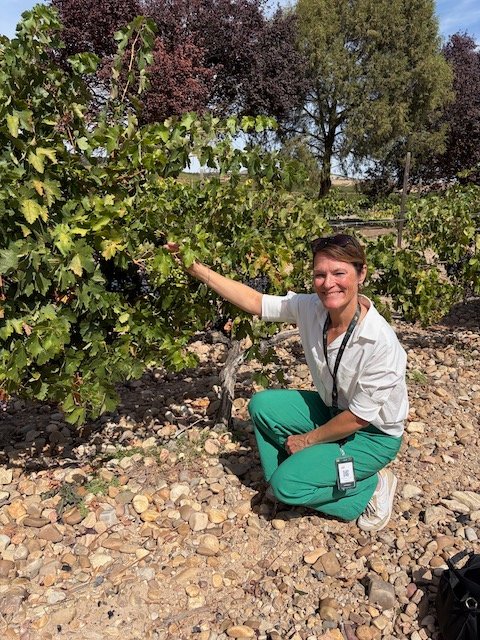
Valladolid, and the Table That Kept Growing from the VinoInfluencers World Awards 2026 This was my first time at the VinoInfluencers World Awards, and I arrived in Valladolid not quite knowing what to expect — only that the week had promised to be magical. It kept that promise before I’d even unpacked. The wine train pulled in and the week began the way the best wine weeks always do: not with trophies, but with people. A bus met us at the station and carried us to the International School of Cooking, where we shared a welcome breakfast, collected our credentials, and listened to a few words from the Head of Tourism for Castilla y León. Then came the first small secret of the week: we’d be sent into the vineyards with our destinations unannounced, so the land could introduce itself before anyone told us its name. Two of those afternoons have already made their way onto the page — the gates swinging open onto Dehesa de los Canónigos on Ribera del Duero’s Golden Mile, and the color and clarete of Cigales at Bodegas Sinforiano. But what stays with me most isn’t any single stop. It’s the shape of the days around them — the way Castilla y León gathered a room full of the world for three days and nights, and how, somewhere in the middle of it, a nomination quietly found its place. Never at the center. Always among friends. An Evening of Roses and Choreography The welcome evening at Villa Augusta Spa & Garden in Arroyo de la Encomienda brought roses, chandeliers, and the gentle choreography of an event determined to make you feel beautiful while still getting you on the bus by nine. VWA Connect brought wineries and communicators together from around the globe, conversation flowing easily across tables not yet set for ceremony. We made a few new discoveries that night, chief among them Bodegas Marqués de Cáceres’ Los Altares Gran Reserva Blanco de Guarda 2016 — creamy, yet lifted by a refreshing thread of acidity, finishing long, poised, and wonderfully complex. There was also an impromptu Sherry tasting with Ruth Amaya of Vinos de Jerez, the kind of unplanned moment that so often turns out to be the best one of the night. Wine Routes, and the Scent of Harvest Friday sent us out again along the Wine Routes, each group following its own thread of adventure, the scent of harvest still hanging in the air. By seven we were back; by 8:15, another bus carried us into Valladolid, to the Tourist Office and Exhibition Hall of San Benito, for the pre-awards gala. There were speeches, meet-and-greets, and that particular hush of anticipation that settles in before a big night. One of my personal highlights, every time, is seeing Laura Catena — one of my favorite women in wine, and a woman with a rare gift for making everyone in the room feel welcome, her smile as infectious as her energy. That evening was also when the room cast its vote for Nos Impulsa Castilla y León — not a jury prize, but a peer prize honoring charisma, professionalism, commitment, and camaraderie. The winners would be revealed at the gala, and by the time we left, the anticipation for the next day was electric. Stepping outside for a breath of fresh air brought its own discovery: Javier Abrego’s Re-Cordis, a “fever dream” Malbec, juicy and vibrant, bursting with blackberry, ripe plum, violet, and a whisper of spice — plush on the palate, beautifully balanced, utterly moreish. It was the kind of wine that makes you pause mid-conversation and quietly go back for another glass. The label tells its own story too: a romantic scene of Javier’s family universe, from his father down to his daughter, Catalina. Beautiful, in every sense. A Sea of White, and a Few Surprise Pours Saturday opened with the Prelude Awards at Sotoverde, sunlight catching in the glass before anyone had changed for the evening. The crowd moved in a sea of white between tapas, MasterChef Carlos Alba’s oyster creations, laughter, and wine samplings gathered from across Spain — with a few surprises tucked in along the way. Luis XIV was expressive, ripe dark fruit meeting gentle spice and a polished finish. The Fondillón offered dried fig, raisin, and toasted nuts against a balanced sweetness, while the Fondillón Gran Solera 1980 was utterly captivating — layers of date, caramel, walnut, and orange peel unfolding one after another. These were wines built for sipping slowly, between conversations, while the afternoon gathered itself around us. A welcome change of pace arrived from Bolivia: high-altitude wines from Tarija showing freshness, concentration, and elegance. My personal star among them was the Campos de Solana Esther Ortiz Petit Verdot — blackberry, black plum, violet, and spice, with fine tannins, lively acidity, and a long, polished finish. Pure high-altitude elegance, the kind of wine that seems to say, quietly, look at me, and wonder. The Gala The grand finale was the VinoInfluencers Gala itself, and it unfolded exactly as galas do: a green-carpet arrival, photographs among nominees and invitees, and the unmistakable sense that it was finally, actually time. Music and entertainment carried the evening forward, building toward ten gold cups celebrating ten different ways of telling the story of wine — style, travel, marketing, communication, consulting, events, education, sommellerie, gastronomy, and the prize chosen by the room itself. My name was among the nominees for Wine Educator Innovation. The award went elsewhere. But winning, I’ve learned, was never really the point. What stayed with me instead was a quieter kind of recognition — for the journey itself: the long hours, the leap from project management into wine, a young family waiting at home, and the courage it took to start from scratch in a place not exactly known for vines. This calling still draws me forward. I suspect it always will. As the hall emptied, the foyer filled. The Wine Experience began — tables from participating
Cigales in Color: A Day at Bodegas Sinforiano
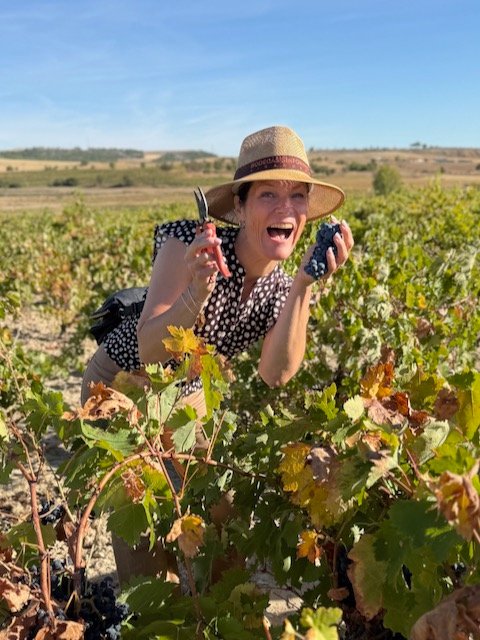
Some winery visits are about tasting. This one felt like stepping into the heart of what Cigales has always meant. Cigales is one of those rare Spanish regions where rosado is not a seasonal afterthought, but the very soul of the place. For generations, clarete was the tradition here: red and white grapes grown side by side, harvested and fermented together. The DO now produces reds and other styles, but the heartbeat remains pink. That sense of identity greets you as soon as you arrive. At Bodegas Sinforiano, tradition and innovation move together. The family cares for bush vines that have seen more than a century of seasons, spread across three valleys. About 100 hectares are farmed organically, with a portion certified, and the modern cellar—first filled in 2004—sits above the old underground cave where earlier generations worked. The winery runs with care for the land, from energy use to water treatment. Beneath the easy smiles and laughter, there is a steady, practiced hand guiding it all. Then came that joyful kind of chaos that only harvest can bring, the sort that calls for celebration. We climbed into jeeps and bumped along sunbaked roads toward the oldest vineyards—bush vines that have seen 105 harvests. This is where the rosado story starts, slow and steady. Josan, our colorful host for the day, welcomed us with a knowing smile and hinted at surprises. Most grapes had already been picked, but a few clusters remained, almost as if they were waiting for us. We were invited to harvest, taste, and enjoy the fruits of our work over a traditional lunch among the vines, with another surprise waiting back at the winery. With pruning shears ready, we paired up and grabbed our buckets. Before we started, Josan paused to explain why this place and its rosado are so important. Eight grape varieties, both white and red, are picked together from these old bush vines and co-fermented to create a clarete rosé that could only come from Cigales. This is not a pale, delicate rosé, but a wine with vivid color, bright fruit, and a sense of history in every glass. The harvest is timed for freshness, and when you open a bottle, it offers pleasure and energy that linger long after the first sip. After picking, we gathered for lunch right there among the vines. Plates of local cheese, spicy chorizo, and slices of pan candeal—the dense, white Castilian bread with its tight crumb—were passed around, perfect for catching every bit of flavor. Glasses of Sinfo clarete, with its orange label, shone bright and cool in the heat of the Castilian sun. Sinfo Rosado This is the wine that defines the house. Its deep strawberry-pink color catches the eye. Ripe red fruit leads the way, with a touch of fennel and peach, and a lively acidity that keeps it all in balance. It is a picnic wine with backbone. Once opened, the bottle empties quickly, and at our table, no one wanted it to end. After the harvest, we returned to the winery for a tasting of four rosado wines. The formal lineup, La versatilidad del rosado, was led by Josan Solano Ávila, whose warmth and humor made each wine feel like a new discovery rather than a lesson. Liala Espumoso Rosé Brut Nature This is the first sparkling rosado from DO Cigales. The bubbles are fine, the palate dry and crisp. Pink fruit and a touch of chalk lead to a clean, refreshing finish. Rosado with bubbles, and it shines. Quelías Rosé 2025 This wine is all about elegance. Five months on lees give it subtlety and depth. Pale in color, precise on the palate, with notes of citrus blossom and stone. It is the quiet wine that lingers longest in the glass. Sinfo Rosado Fermentado en Barrica 2023 This is rosado with the soul of a red. Oak fermentation and aging bring grip and spice, but the fruit remains at the center. It is a serious, structured pink—made for the table. Liala Clarete 2020 This wine honors their beginnings. An old-vine field blend, aged in Spanish oak, it shows a deeper color and flavors of dried strawberry, earth, and gentle maturity. Here is that joyful madness, bottled. Josan invited us outside for the next surprise. Since we had picked the grapes, we were handed the chance to stomp them as well, and taste the juice we pressed. We laughed, feet in a wooden bucket, tasting juice still warm from the sun. This was my first harvest, my first grape stomp, and it was harder than I imagined. You need a partner to steady you, the fruit is cold beneath your feet, and that first rush of juice is something you never forget. Josan and the family toasted our visit and handed out glass charms as keepsakes. Every detail felt thoughtful. The grill sent up the scent of lamb and blood sausage, and soon we were back in the winery for lunch, music, and dancing. It was the kind of afternoon that explains why families keep returning to this work, even when the easier path would be to stop. At Sinforiano, rosado is more than a specialty—it is a way of life. The family tends their old mixed vineyards with care, harvests for the style they believe in, and welcomes visitors to share in the process. Here, heritage and celebration are woven together, with tradition and innovation moving side by side. In a country celebrated for Tempranillo reds, Cigales has held fast to its rosado roots. Clarete remains a living memory, and freshness is something you taste, not just a word on a label. Pink finale I arrived as a visitor and left with grape juice on my feet and a clearer sense of why this region endures. In Cigales, rosado is not an afterthought. It is rooted in family, tradition, and a future that can sparkle, age, or remain in the old mixed vineyards. Sinforiano keeps this spirit alive, always remembering the table—the pan
Secret Gates: An Afternoon at Dehesa de los Canónigos
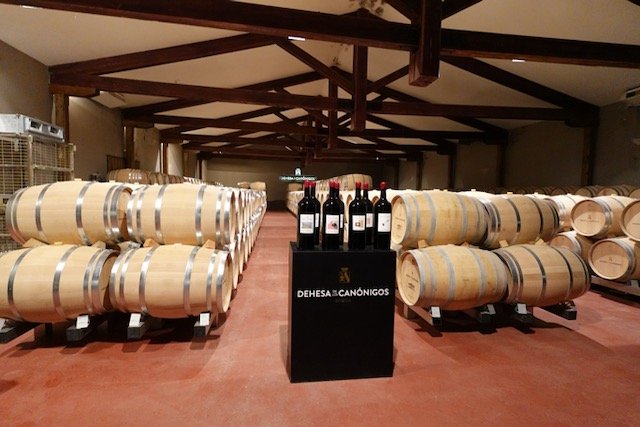
We set out with VinoInfluencers, the road ahead a mystery. The destinations remained secret, and that sense of not knowing brought a quiet thrill to the air, heightening every moment. When the gates finally opened, the purpose behind the secrecy revealed itself. A Basque farmhouse stands quietly on the Golden Mile of Ribera del Duero. Pines and vines share the same golden light, and the scent of harvest lingers in the air. Dehesa de los Canónigos does not announce itself. Instead, it invites you in, letting the land and its stories speak first. This stretch of river between Pesquera and Valbuena earned its name honestly. The Duero cuts a high, spare valley. Nights fall cold. Tempranillo — Tinto Fino — finds the tension that made Ribera famous. Cascajo underfoot: gravel, sand, soil that makes a vine work. Across the water, Vega Sicilia. The two estates have been speaking for generations. Dehesa was once church land, named for the twenty-two canons of the Cathedral of Valladolid. The Lecanda family built the Basque farmhouse that still stands; Eloy would found Vega Sicilia, and his brother Teodosio inherited this bank of the river. For years the fruit crossed the water. Then the Cid family took the estate in 1931. Luis Sanz Busto and María Luz Cid brought it home, planted more vines, and — after years of selling grapes to that legendary neighbor — kept the story in their own bottle—first vintage: 1989. The motto still sounds like a handshake: antes uvas que cubas—vine before barrel. Sixty-five hectares of vineyard are nestled within a wider world of forest and farmland. Tinto Fino forms the heart of it all, with Cabernet, Merlot, Garnacha, and Albillo Mayor woven in. The fourth generation is here now, with Belén Sanz Cid guiding the cellar. This was the journey we were welcomed into, not simply a tour but a family opening their door and sharing their world. Elena Intyakova guided us through rows of Tempranillo, the vines still heavy with fruit, clusters just beginning to yield to harvest. Inside the house, Julio Galán’s sculptures and installations appear at every turn—dreamlike figures, echoes of Mexican Baroque, folk memory, and a touch of New York grit. The estate seems to gather kindred spirits as thoughtfully as it gathers barrels. We came to a door carved in the shape of a Tempranillo leaf and stepped into the barrel room. One by one, we signed a barrel to mark our visit, our names joining the oak—a guest book written in scent and memory. There, Elena told us about the Godfather of the Harvest. Each year the family chooses a Spanish figure who shares their values. A special barrel is set aside. Years later — five, when the wine is ready — it is bottled and sold at a private auction, and the money goes to a cause the godfather names. Journalists, artists, public voices have stood in that role. What began as a gesture has become a house ritual: one harvest, one name, one barrel that leaves the cellar as care. There, among the barrels, they poured Luzianilla 2022, Belén’s clarete. Wild strawberry and crushed raspberry rose from the glass, with a hint of rose and sour cherry, followed by the subtle mineral thread of old vines and cascajo. As fresh as a rosé, as deep as a red—Belén crafted it so you never have to choose. That glass has lingered in my memory ever since. It should have been enough. It wasn’t. Lunch in the garden felt like a kind of magic. Every delicacy the land could offer found its way to the table. Flamenco music drifted between the roses. Two wines were poured under the open sky. Dehesa de los Canónigos 2023, 15 meses en barrica is the house in a glass. Blackberry and dark cherry, licorice and warm oak, thyme and the Duero wind. Velvet tannin. Honest acidity. Generous, grounded, already at ease. Solideo Reserva 2022 is reserved for the years Belén trusts enough to call by this name. Plum and black cherry steeped in cedar, cocoa, a thread of mint and rosemary. Silk over structure. Long. The kind of finish that makes conversation fall away for a second — then come back softer. Three wines. One house.The cellar held its memories. The garden sang with life. Once, this estate sent its grapes across the river. Later, the family chose to keep the fruit and begin their own story. After a loss too heavy to name, Belén returned to the cellar, and still, every door was open to us. Wine has a way of gathering people, of making strangers lean in at the same second. Sometimes, wine lets you sit quietly inside someone else’s heart, if only for an afternoon. Thank you, VinoInfluencers, for the secret.Thank you, Elena & Belén, for the day.
Maria Cristina De Simone Avallone: Freedom, Certainty & Roses
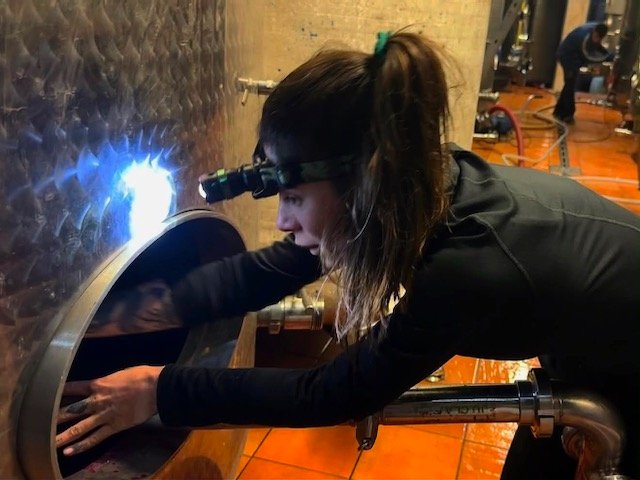
When I first walked the vineyards of Villa Matilde last April, the landscape felt like a kind of paradise: green, still, and precise. Only later, sitting down with Maria Cristina De Simone Avallone, did I understand how much of that stillness was earned. She grew up here, among the vines of the ancient Ager Falernus, surrounded by women who taught her that grapes are never just grapes. To meet her is to meet someone who knows both the pull of inheritance and the discipline of making it her own. The Winery Villa Matilde Avallone lies in Cellole, in the province of Caserta, held between the Tyrrhenian coast and the quiet slopes of the extinct Roccamonfina volcano. This is the heart of the Ager Falernus, home to Falerno, the wine Pliny, Virgil, and Horace once praised and the world later believed lost to phylloxera. In the 1960s, a Neapolitan lawyer named Francesco Paolo Avallone refused to accept that loss. From a handful of surviving biotypes of Falanghina, Aglianico, and Piedirosso, he rebuilt not just a wine, but a place. He named the estate for his wife, Matilde. Today the family tends three Campanian landscapes: Maria Cristina, daughter of Maria Ida Avallone, now leads as head winemaker and head of production. She is the third generation to shape that vision, and she brings to it her own sense of style and precision. For the wider landscape of my spring visit during Campania Stories, see my earlier piece: [link] A Calling Heard at Night Her story with the estate began almost at once. Maria Cristina arrived at Villa Matilde when she was ten days old. Her mother and grandparents carried her early into the cellar, the vineyard, and the restaurant. What stayed with her was never a lesson in grape varieties. It was her mother’s way of telling the story: not just Falanghina, but the people behind it. As a girl, she dreamed of becoming a veterinary surgeon. She was drawn to animals and to the idea of rescuing them in southern Italy. Then, somewhere between nineteen and twenty-one, she found herself torn between winemaking and law. Her mother sensed the hesitation. She did not argue. She simply invited her daughter to a night harvest at Sessa Aurunca. In the darkness among the vines, the answer became clear. The tenderness she once felt for animals never left her. It found another living subject. Wine, she told me, is like an animal. It changes. It asks to be understood over time. She describes Villa Matilde as an Italian love story. It belongs as much to her grandmother as to her grandfather, a man who understood the importance of the women around him. The Piano in the Cellar Nowhere is that love story more present than in the cellar itself. When I asked which object from her childhood still speaks to her, Maria Cristina did not hesitate. She named the piano that stands there among the barrels. It belonged to her grandmother, a professional pianist from Genoa who set aside her career to support the family and the winery. For Maria Cristina, the piano is a reminder of presence. It is also a quiet instruction to keep going and not look back. Her own days hold to a simple rhythm. She has coffee with her mother, who lives just across the way. She walks with her dog, Yuma. She reads, to step away from the pressure that builds as harvest nears. And at sunset over the vineyards, she feels grounded and grateful. It is the same view that struck me in April, and I understood then why it holds her. Freedom, Yellow, Rose When I asked her to describe her wines in three words, Maria Cristina did not reach for technical language. She answered with her life. Freedom. She had to fight to be taken seriously as a woman, and she believes everyone should be allowed to be themselves. Yellow. The happiness of sun on skin, the feeling she wants a glass to give. Rose. The women of her life: her mother, aunts, sister, cousins, grandmother. Beauty and strength together. Petals, and thorns. It struck me that she could have been describing herself. For her, wine is closer to jazz than to a fixed score. She comes from contemporary dance and knows how a melody can shift beneath you. Each person, she insists, will hear the bottle in their own way. That openness is not a weakness. It is the wine’s heart, and perhaps hers too. Her imagined dinner table carries the same spirit. She would invite three women: the painter Artemisia Gentileschi, Matilda, and her grandmother. She would ask them whether they would be proud of the freedom women have reached by 2026. For Gentileschi, she would pour an Aurunca wine alongside vegetable soup, for strength and personality in the glass. For her grandmother, a white Falerno with potatoes, the comfort of a traditional Neapolitan table. Still the Work to Be Done That question of freedom is not only a dinner-party thought. Campania has changed, and leadership is no longer out of reach for women. Yet the old reflex lingers. In her own cellar, Maria Cristina told me, male employees sometimes still turn to her male colleagues first. A generation earlier, her mother met the same skepticism selling wine at twenty. The industry is moving forward, but the work is not finished. What still needs to be won is true respect as a leader, not merely as a symbol. Her advice to women entering wine is practical and unsparing. Be proud of who you are. Study. Work with your hands. Smell. Taste widely. Keep an open mind, and keep talking to people. Isolation, she made clear, is not a strategy. What Harvest Asks Her eyes are already on what comes next. She wants to keep exploring Falanghina, a grape that changes its face from one Campanian hillside to the next. When we spoke, she was also weighing the closure. Traditional cork still holds a certain romance
What The Nomination Actually Meant
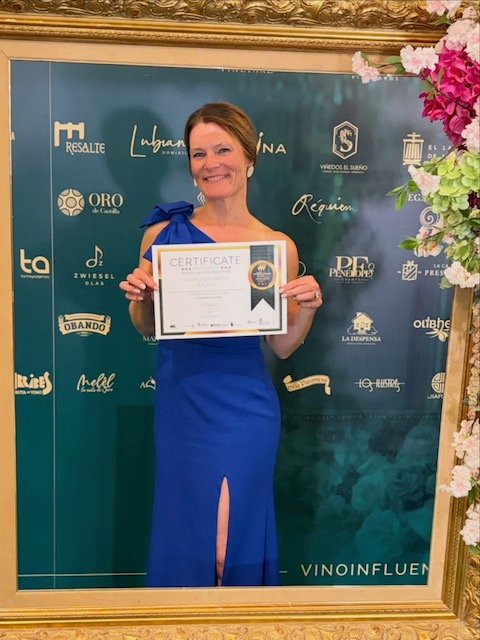
Not All Milestones Come With a Trophy I am still holding that feeling…. I did not see it coming. Being nominated was unexpected—and rewarding on so many levels. Winning was never the point. The nomination itself felt like a recognition of the hard work and the long hours: of completely pivoting my career from project management into wine as a brand strategist and communicator, while raising a young family at home, and starting from scratch in a region that is not known for wine. Early mornings writing. Late nights editing. Tastings that become conversations. Glasses that open into someone else’s land, family, and work. A passion that has never felt like a career so much as a calling I keep answering. What I will not forget is the room. Communicators from 34 countries. Castilla y León opening its vineyards and tables. That hush when a bottle is poured and, for a moment, everyone leans in together. Instant friendships. No pretense. Just the warmth of a global community that already speaks the same language. Thank you to everyone who has followed my journey as The Happy Vine, sat at a tasting, shared a post, or believed that wine education can be warm, sensory, and human. We would not be here without the winemakers. They are the soul of the bottle. Every piece of content, every pairing, every “can you taste the limestone?” begins with them. The Happy Vine has never been about the spotlight. It has always been about the people who grow, ferment, and bottle something that carries place and memory. A nomination is a beautiful pause.The work continues — the next vineyard walk, the next glass, the next story that deserves to be told with care. Grateful. Grounded. Still completely in love with this world. Kathleen Smith, DipWSET
Filomena Iacobucci: Powerful, Magic and Dream
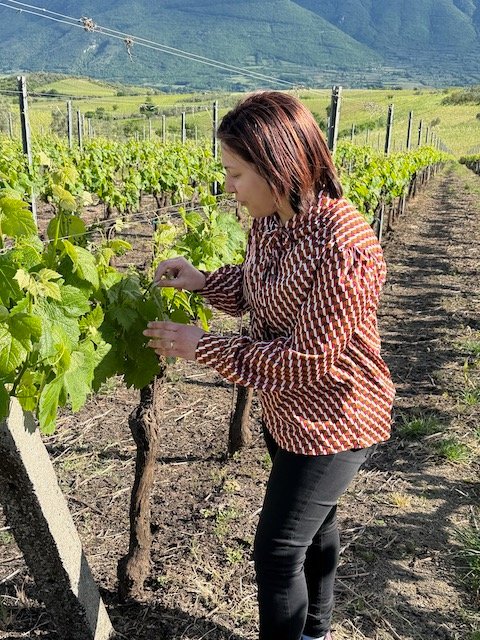
The hills of Guardia Sanframondi hold a particular kind of quiet — the scent of earth mixed with a spark of possibility. When I met Filomena Iacobucci at Terre Stregate, I noticed immediately how she leads with both the patience of nature and a quietly determined imagination. In the hills of Guardia Sanframondi, at the heart of Sannio Beneventano, she moves with ease between the vineyard’s daily rhythms and a broader vision shaped by her time away. Her voice carries both roots and reach, steady and quietly powerful. The Winery and the Land of the Bewitched Terre Stregate, meaning ‘bewitched lands,’ rests among the gentle hills of Guardia Sanframondi, with views stretching over the Telesina Valley and the Calore River. The Matese massif stands quietly in the distance. The name calls up old stories of witches gathering beneath walnut trees, legends that still seem to linger in the air. The Iacobucci family has tended this land since 1898, beginning with Filippo Iacobucci. For a time, wine gave way to the olive mill, but in the late 1990s and early 2000s, Armando Iacobucci brought the winery back to life. Now, Filomena and her brother Carlo guide the estate. About 25 hectares are under vine, with Falanghina at the heart, joined by Greco, Fiano, and Aglianico, all rooted in clay-limestone soils at 400 to 450 meters. Just a short walk away, the olive mill lets visitors taste the land’s full spectrum, from grape to oil. Under Filomena and Carlo, the cellar, gardens, and tasting spaces reflect a place where tradition and thoughtful modernity meet. A Wine of Bright Positivity Here, with Filomena, I tasted the Svelato Falanghina del Sannio DOP 2024 for the second time this year, the first being at VinItaly this past April. The wine was as always bright and precise, alive with energy. Its freshness seemed to echo the clarity and confidence Filomena brings to her work. There is a kind of openness in both the wine and the woman behind it—a way of meeting complexity with light rather than weight. A Journey of Distance and Return That brightness, I realized, did not come easily. Filomena once dreamed of studying international relations, drawn to the ways farmers connect with the wider world. She left for university in Rome, hesitant at first to step away from the family winery. Distance changed her perspective. Seeing the estate from afar, she began to imagine new possibilities for Falanghina and for honoring tradition while building something modern and outward-looking. When she returned, she brought a deeper respect for the land’s timing and a quiet determination to help the project grow without losing its soul. Nature became her guide. The vineyard, unlike the city, asks for patience and the willingness to wait and respond. That blend of vision and daily patience shapes her leadership. Respect for Time and the Act of Pruning If there is one object that captures Filomena’s approach, it is the pruning shears. For her, pruning is the most important time of year—a practice that honors time, patience, and the careful decisions that shape the vineyard’s future. It is both practical and thoughtful: looking ahead while staying close to what the vines need right now. She speaks of a modern management style built on study and sensitivity. In her view, an entrepreneur is someone who sees what others might miss. Respect for nature is essential, but control is never absolute. That balance of vision and humility is at the heart of her leadership, a quiet strength that need not be declared. Sensory Memory and Daily Grounding For Filomena, happiness is woven into the sensory life of the land and its traditions: the scent of fresh bread from the bakery, the first taste of seasonal fruit, the olive harvest that arrives each November. Living in step with these rhythms, she believes, is at the heart of a good life. The oil mill’s closeness to the winery lets visitors experience that connection for themselves. When challenges come, she turns to music and the simple act of letting go. Together, softness and energy help her recover and return to her work with an open mind. In this way, resilience is not just an idea but a daily practice: feeling fully, releasing what needs to be released, and coming back to the work without losing either gentleness or strength. Imagination for the Next Generation She pays close attention to the pressures facing young people, especially her own daughters. For her, protecting dreams and imagination is essential, especially in a world that often feels rushed or demanding. Leadership, she believes, begins with the freedom to think for oneself. In summer, her children’s days are filled with outdoor play, rest, and the gift of unscheduled time. She sees this freedom as a way to help them grow into their own leadership. Her advice to the next generation is simple: be determined, trust your vision, and do not simply follow the crowd. Independent thinking and holding onto your own personality matter. She finds inspiration in Campania’s historical women, like the physician Trotula and the writer Matilde Serao, who connect past strength with future possibility. Their stories remind her that women have always shaped the life of this region, and that resilience is part of that legacy. Labels, Symbols, and the Essence of the the labels at Terre Stregate are meant to spark imagination. Symbols like the eye and the moon appear—the moon guiding through the night, the eye inviting us to see our place in nature, connecting what came before with what is still to come. When I asked Filomena to describe her work in three words, she chose ‘powerful,’ ‘magic,’ and ‘dream.’ The words fit. They hold both the strength needed to lead and the sense of wonder that keeps the work alive, shaping how she shares her vision, her leadership. Legacy Without Obligation Looking to the future, she hopes to share the winery’s story and passion with her children, but never to force them onto
Cristina Varchetta: Landscape, Silence and Continuity
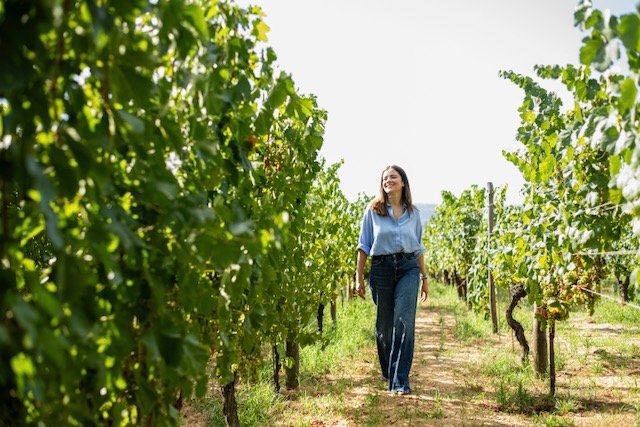
Some encounters immediately feel like a homecoming. Speaking with Cristina Varchetta of Cantine Astroni, I was struck by her sense of place and genuine hospitality, and by how naturally our perspectives aligned: a love of independent travel, the joy of learning new languages, and the determination to shape a career around meaningful connections rather than rigid traditions. With Cristina, the Campi Flegrei became less an imposing volcanic backdrop and more an open invitation—to listen, to belong, and to return transformed. Our conversation moved easily between the practical work of the winery and the deeper emotional currents that sustain it, showing how closely the two are linked. The Winery Cantine Astroni sits on the outer slopes of the Astroni crater, between Naples and Pozzuoli, in the heart of the Campi Flegrei. Once a Bourbon hunting reserve, the area is now a WWF nature oasis. The Varchetta family has been connected to wine here for more than a century, beginning in 1891 with great-grandfather Vincenzo. The modern project took shape in the late 1990s. It was formalized around the birth of the Campi Flegrei DOC, transforming a family farm and holiday retreat into a focused boutique winery. Today the emphasis is on single-vineyard expression—an approach Cristina likens to the cru system of Burgundy—working primarily with ungrafted Falanghina and Piedirosso on sandy volcanic soils. Cousin Gerardo Vernazzaro is the winemaker. Hospitality is central to the place. Guests are invited not only to taste, but to understand the land through the stories that have shaped it. A Wine of Quiet Intensity My favorite wine from the estate was the Piedirosso. In its mineral depth, red-fruit lift, and volcanic tension, I felt the same quiet intensity that runs through Cristina’s way of speaking about this land. It does not shout. It holds its ground with elegance and a sense of place that lingers long after the glass is empty—much like the conversations that unfold around the table at Astroni. In that glass I tasted the resilience of the Campi Flegrei and the care with which this family interprets it. A Journey of Leaving and Returning As a child, Cristina did not dream of a specific profession. She dreamed of seeing the world. Languages, different cultures, and distant places fascinated her. She never imagined that wine would become the way she could travel while still carrying home with her wherever she went. She began in accounting, then made a deliberate shift toward the family winery. Seeking deeper technical knowledge and a different work rhythm, she studied with the Italian Sommelier Association (AIS) and the Wine & Spirit Education Trust (WSET). Today her role centers on hospitality, communication, and export, work that satisfies her love of travel and independent movement while keeping her rooted in the Campi Flegrei. Her advice to her younger self is simple and hard-earned: do not be afraid of leaving, of studying, of making mistakes. Only by going away did she truly learn to appreciate her roots. That experience of departure and return shapes everything she does. She carries that lesson into her work with guests and into the way she speaks about the next generation. Hospitality as Inheritance More than any object, Cristina carries the memory of her grandparents’ hands—strong from years of work, yet incredibly gentle when they held a bunch of grapes. They taught her that respect always comes before technique. Today, when she welcomes guests, she tries to offer the same care they showed the land and the people around them. That, she says, is her most valuable inheritance. For her, the table remains the true center. Growing up, it was where her family shared stories, laughed, celebrated, and found comfort after difficult days. Wine is not the protagonist of the table; it is simply a way to create connection. What she hopes every guest takes home is not only the memory of a tasting, but the feeling of belonging—of having been part of something larger than a single bottle. Landscape, Silence, and Continuity When she stands alone in the vineyard at sunset, it is the silence that connects her most deeply to the women who came before her. In that slowing of the day, she feels as if the land still holds their voices. It reminds her that she does not own this place—she is simply passing through, with the responsibility of leaving it a little better than she found it. That sense of temporary stewardship runs through her approach to both the vines and the people who visit them. If her life in wine were a piece of music, it would be a melody that starts softly and grows with time. She would be a cello: an instrument that does not need to be the loudest in the orchestra to touch people’s hearts. Like the best wines of the Campi Flegrei, the most beautiful music does not rush. It matures, layer after layer, revealing more the longer one listens. Joy as Creative Fuel Even amid the seriousness of the wine world, Cristina protects small, unserious pleasures. One of them is dancing in her kitchen while cooking, even when she is completely alone. Those are the moments when she stops overthinking and enjoys life. Creativity, she believes, often comes from joy, and joy is usually found in the simplest moments. It is a reminder that hospitality and storytelling require not only discipline, but also lightness. What She Would Bottle If she could bottle one fleeting emotion from her journey and share it with younger women entering the industry, she would label it “Coming Home.” Leaving is important, she says, but coming back with new eyes is even more meaningful. She hopes every young woman understands that she never has to choose between her dreams and her roots. She can carry both, and in doing so, turn them into strength. What Remains What surprised Cristina most about stepping into the world of wine in Campania was discovering that it is first and foremost about people. A bottle may
Ilaria Petitto: Courage, Identity, and Quiet Strength
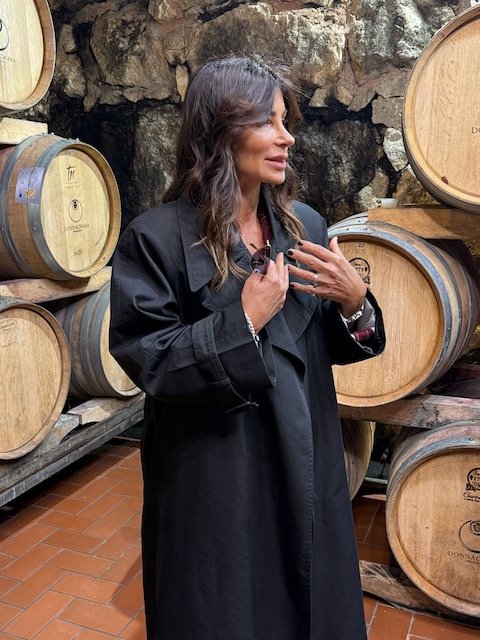
Every so often, a conversation opens a window into another person’s world. Meeting Ilaria Petitto of Donnachiara in early August, I was immediately struck by her clarity and the quiet strength guiding her choices. She traded a conventional career in law for the uncertainty of wine, embracing the courage needed to define her own identity in a world that too often clings to familiar expectations. For Ilaria, authenticity is not just an ideal—it’s a source of power. Our conversation felt less like an interview and more like a recognition of a shared commitment to authenticity. The Winery Donnachiara sits in Montefalcione, in the heart of Irpinia, at roughly 400 meters above sea level among clay and fractured rock soils. The modern winery was established in 2005 by the Petitto family and named in tribute to Ilaria’s great-grandmother, Donna Chiara Mazzarelli Petitto—a woman who cared for the family’s vineyards through both world wars with the same attention one might give a child. The family’s roots in the land stretch back generations; for many years they grew grapes that were sold to others. In 2005 that changed. The project became a full expression of place, focused on Irpinia’s three DOCGs—Fiano di Avellino, Greco di Tufo, and Taurasi—as well as Aglianico and Falanghina. Ilaria now leads the estate as CEO, working with a predominantly female team and the guidance of consulting oenologist Riccardo Cotarella. Together, they pursue a clear philosophy: elegant wines that are never banal and that need time to reveal themselves. For a fuller immersion in the tasting, the verticals, and the atmosphere of my visit during Campania Stories, see my earlier piece: https://thehappyvine.net/campania-stories-giorno-0-1-campi-flegrei-irpinia/ A Wine That Silenced Me During my visit to the estate, one wine in particular moved me into another realm of emotion: the 2007 Fiano di Avellino. It began with the fresh pear and white florals of youth, then opened slowly into chamomile, honey, petrol, dried herbs, and a smoky complexity that only time can give. The older Esoterica vintages carried extraordinary tension and depth, proving just how beautifully Fiano can evolve. That bottle did not simply impress me—it quieted me. In its layered evolution, I felt the patience and integrity that define Ilaria’s approach to the wines and the life she has chosen. A Journey from Law to the Land That patience was hard-earned. Ilaria did not plan to return to Avellino. She studied law and prepared for the notary exams, a path chosen in part to please her father. After years of study and a life oriented toward a different future, she realized it was not her dream. When her mother Chiara began the winery project, Ilaria eventually decided to leave the legal path behind and join the family endeavor. In the years that followed, she took the reins more fully, bringing both the clarity of legal training and a deep attachment to the land. The transition required courage. In a traditionally male-dominated industry, she learned quickly that assumptions about what a woman “understands” about the business can be persistent. Her advice to young women entering wine is straightforward and hard-won: remain courageous, prioritize your own identity, and do not allow yourself to be intimidated by external judgment. Authenticity, she insists, must come before the need to please or to fit existing expectations. This is where our shared experience became most evident: the decision to walk away from a carefully constructed professional path in favor of something more true, even when the outcome was uncertain. Landscape, Balance, and Daily Grounding For Ilaria, the Campania landscape—particularly Irpinia—is an authentic, still somewhat hidden treasure. It offers a deep emotional resonance and a sense of tranquility that feels increasingly rare in more commercialized wine regions. That connection is not abstract; it is the place that steadies her and grounds the work that follows. The demands of running a winery are constant. To stay grounded, Ilaria makes time for regular workouts and for nature. She spoke openly about how physical changes, including menopause, can heighten anxiety and stress, making those practices of movement and time outdoors essential rather than optional. Imagination and commitment must be protected; balance is part of the work itself. There is a quiet resilience in the way she describes these daily choices—an understanding that strength is not only about pushing forward but also about knowing how to restore oneself to continue. Defining the Winery—and a Wider Responsibility When asked to characterize Donnachiara, Ilaria returned to three themes: the power of a supportive, predominantly female team; the freedom to express herself and learn from mistakes; and the goal of creating a lasting legacy that transcends generations. That sense of responsibility extends beyond the estate. She is clear that promoting the entire region, rather than only one’s own winery, is essential for success in international markets. She has found consumers in places like the United States often more curious and open-minded than those at home. At the same time, she remains deeply committed to Irpinia’s reds—particularly Taurasi and Aglianico, which she refers to with affection and determination as “The Tori.” While white wines may currently be easier to sell and more aligned with trends, she is dedicated to earning lasting respect for the region’s red wines, which have long suffered from historical misconceptions. She is frank about the challenges of intense local competition. Producers, she believes, must learn to collaborate more effectively if the region is to present a coherent and compelling face to the outside world. Her hope rests with the next generation, which she believes may foster a more cooperative spirit. That belief in collective progress, rather than isolated success, felt especially resonant. The Women at the Table When I asked Ilaria which three women she would invite to a meal, her choices revealed a great deal about her values. She named her mother’s grandmother—the original Donna Chiara whose strength and care for the land still echo through the winery’s name. She chose the actor Sophia Loren, in part to discuss the regional inferiority
Gilda Martusciello: The Woman Who Holds Her Ground
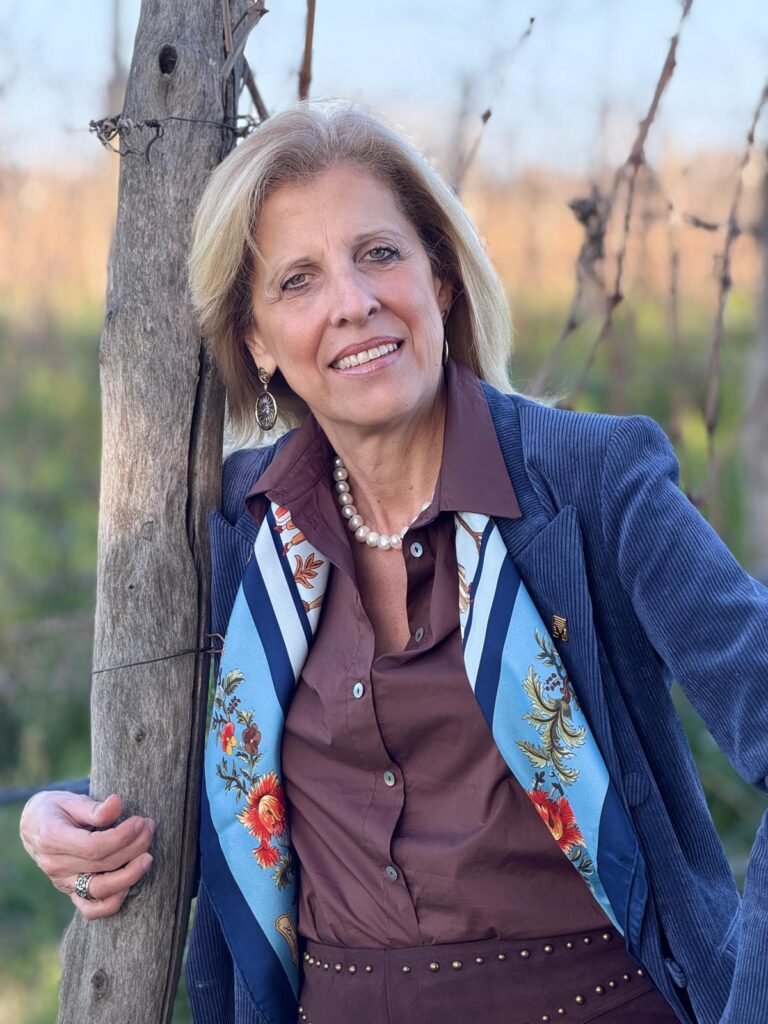
Some conversations stay with you, like the smell of wet earth after rain, sulfur in the air, or the comfort of morning coffee. My recent talk with Gilda Martusciello was like that. We spoke in early August, just after a 4.7-magnitude earthquake struck Campi Flegrei and the surrounding areas Portici and Pozzuoli. There was damage to homes, stress on infrastructure, and protests. Even so, Gilda spoke with calm and steadiness. The winery was safe, her family and friends were fine, and the Asprinio sparkling harvest would still start at the end of the month. That calmness came through in everything she said. That steadiness is central to both Gilda and Salvatore Martusciello wines. I could talk to her for hours—she inspires with her determination and courage. Gilda is modern but respects tradition. She enjoys cooking and caring for her herbs, and she also takes an active role in women-in-wine groups, helping shape the future of the industry with quiet strength. The Winery In 2015, Gilda Guida and her husband Salvatore Martusciello started a small, focused project called Salvatore Martusciello in the heart of Campi Flegrei. Building on the family’s work with local Campanian grape varieties and the creation of important DOCs, they focus on wines that reflect the identity of Campi Flegrei, Agro Aversano, and Penisola Sorrentina. These include Asprinio from the historic alberata system, Falanghina and Piedirosso on their own roots, and the Ottouve blends from Gragnano and Lettere. Their philosophy is simple: Vini di persistenza, or wines of persistence. For a fuller immersion in the winery, the vineyards, and the tasting experience during Campania Stories, see my earlier piece: Campania Stories Day 1 A Wine That Rooted Me to the Spot During my visit, one wine truly caught my attention: the Falanghina dei Campi Flegrei “Settevulcani” 2018. Its mineral depth, salinity, and quiet intensity reminded me of Gilda herself—her strength, determination, and deep love for this land. This wine did not try to impress with boldness or drama. Instead, it stood firm like Gilda. That bottle remains one of the most memorable experiences of my trip, a true reflection of persistence and place. A Woman Shaping the Future of Campanian and Italian Wine Gilda has been a member of Le Donne del Vino since 2004 and today serves as the regional Delegate for Campania, a role she assumed after years of progressive responsibility as former Campanian vice-delegate, National Counselor, and member of the Commission for International Relations. The association, founded in 1988 in Campania itself, has grown into the largest organization of its kind in the world, uniting more than 1,200 women across Italy who work to promote wine culture and elevate the visibility and leadership of women throughout the supply chain. Gilda’s long involvement gives her a unique perspective on how women’s roles have changed. She has seen the association grow from a small group of pioneers, including her mother-in-law Elena Martusciello, a former national president, into a structured network that builds skills, encourages international partnerships, and supports the next generation through projects like D-Vino. In Campania, which has one of the highest percentages of women-led or women-influenced wineries in Italy, her work turns individual stories into collective strength. She also holds important roles in the region, serving as Vice-President of Vitica, the Consorzio Viticoltori del Casertano, and as Counselor of the Consorzio Penisola Sorrentina DOP. In these positions, she encourages collaboration instead of working alone, urging producers to promote the region’s biodiversity, authentic lower-alcohol wines, and unique training systems like the alberata as shared strengths. “Previous generations found cooperation difficult,” she told me. Today, working together is both necessary and possible. Through these roles, Gilda helps drive a bigger change: women in Campania and across Italy now lead in strategy, education, sustainability, and storytelling. A Journey Written in Precision and Belonging Her own journey reflects that quiet change. Gilda did not plan to make wine. As a child, she wanted to be a cardiac surgeon, a goal that required the same precision she later used in the vineyard and cellar. She earned a degree in Economics from Università Parthenope and a master’s in international business. In 1998, she joined Grotta del Sole. What started as a job soon became full immersion. “It was not only a job,” she said about those early years, “but an abrupt entry into a new world.” Salvatore and his family, pioneers in protecting Campania’s native grapes, introduced her to a world of soil, patience, and intuition. She married Salvatore in 2005, and in 2015 they started their own small project so their experiences could finally have a voice. She sees tradition clearly. For her, honoring history does not mean staying the same. “Find a personal interpretation,” she suggests. Bring your own style into the historical framework so the winery stays alive. This is the quiet change she lives every day: staying true without rigidity. Sensory Grounding and the Women Who Shape Her When I asked Gilda about her favorite place in Campania, she answered with a memory of scents: sulfur, wet soil, and sea air. This unique smell of the Phlegraean landscape takes her back to childhood and her late mother. These memories keep her grounded. They are her private guide as she moves through harvest, meetings, and leadership roles. Her daily routine is simple and intentional: first coffee, tending to her herbs, and a quiet moment before the day begins. To the next generation, including her daughter, she offers clear advice: keep learning, build a good reputation, and stay true to yourself. She believes these are the qualities that last. Three women inspire her, each showing a different kind of strength, continuity, and identity. The first is her mother, who taught her to cook and whose presence lives on in Gilda’s daily routines: making morning coffee and tending to aromatic herbs as the seasons change. These small, repeated actions are more than habits. They connect her to the woman who first showed her that care, precision, and love can be
A Legacy In The Pour
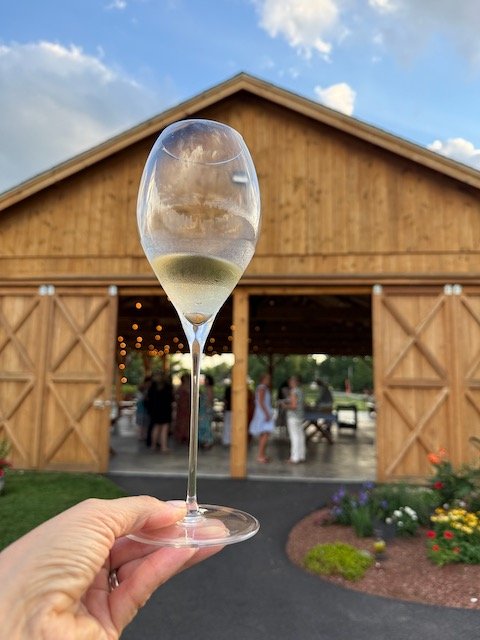
A Room Full of Dames Certain invitations carry a quiet weight, signaling that something meaningful is about to unfold. When I was invited to present as a fellow Dame at the Les Dames d’Escoffier International Legacy Awards Boston Experience, I recognized the significance right away. At Verrill Farm in Concord, we gathered to celebrate Melinda Carbajal. From the moment we stepped inside, the energy was unmistakable—a room alive with women who lead with both heart and skill, each there to lift another. What the Legacy Awards Mean Since 2009, with support from The Julia Child Foundation for Gastronomy and the Culinary Arts, Les Dames d’Escoffier International has presented the Legacy Awards. The vision is generous and straightforward: to offer women in food, beverage, and hospitality mentorship that can truly change the course of a career. Awardees spend five days immersed alongside Dames in a host city. They step into kitchens, dining rooms, and businesses that might otherwise remain out of reach, and leave with a circle of women cheering them on. I love that this program is tied to Julia Child’s name. She was an honorary Dame, and she never stopped learning or teaching. The Legacy Awards carry that spirit forward, one woman at a time. Celebrating Melinda Melinda pours her energy into restaurant ownership and hospitality—two worlds that ask for everything you have to give. [Add a sentence or two about Melinda: where she works, what she’s building, and what she hopes to take from her Legacy experience.] To celebrate her among so many Dames who have built restaurants, wine programs, and businesses of their own felt exactly right. Every woman in the room understood what it takes to keep a dining room full and a team inspired, and every one was cheering her on. Two Stories of Craftsmanship The bites, prepared by fellow Dames, carried the kind of care you can taste. The glasses we raised told their own stories of craftsmanship. Stölzle Lausitz (USA) generously donated their feather-light Fino Champagne glasses and Starlight white wine glasses, and Hermann J. Wiemer Vineyard shared three expressive Finger Lakes wines. Great stemware almost disappears in your hand. It lets the wine speak, and as I poured, I watched each wine find its voice in the right glass. The 2019 Cuvée Brut in the Fino Champagne Glass I began with the elegant 2019 Cuvée Brut, poured into the Fino Champagne glass. It was the perfect way to open a celebration. The Fino’s bowl tapers gently toward a sheer rim. The bubbles rose in a fine, steady stream, and that tapered shape gathered the aromas right where you breathe them in. The toasty, brioche notes of a traditional-method sparkling and the wine’s bright citrus arrived together, before the first sip. Then came the rim. It is so thin that the mousse felt creamy rather than sharp, and the wine’s crisp Finger Lakes acidity glided across the palate. The glass weighs almost nothing in your hand, so all your attention stays on the wine. The Dry Riesling and Dry Rosé in the Starlight White Wine Glass For the precise 2024 Dry Riesling and the vibrant 2024 Dry Rosé, I reached for the Starlight white wine glass. Its walls are remarkably thin, and its slender stem keeps warm hands away from the bowl, so both wines stayed cool and lively from the first pour to the last sip. The Riesling came alive here. A gentle swirl lifted its citrus, stone fruit, and stony minerality, and the narrowing rim kept those aromas focused instead of letting them drift away. On the palate, the thin rim delivered the wine cleanly, and its bright acidity felt precise rather than sharp. The rosé loved the same glass for different reasons. Its delicate red berry and floral aromas can get lost in a wide bowl, but the Starlight held them close. The clear, thin glass showed off its soft pink color beautifully, and every sip felt fresh, juicy, and bright. With each sip, I reflected on how these three wines echoed the work Melinda has chosen. The sparkling welcomes you at the door. The Riesling brings the quiet precision behind the scenes, all the details guests never see but always feel. The rosé is the warmth that draws people back. True hospitality needs all three. Here’s to Legacy I am grateful to my fellow Dames for creating a space that feels both supportive and inspiring, and to Melinda for the work she brings to our table. It was a privilege to be part of this celebration. Leaving Verrill Farm, I found myself thinking about what legacy truly looks like. It is a woman who has already made the climb, reaching back for the next. It is a table set by friends, a glass poured with care, and a room that believes in you before you have finished proving yourself. Here’s to legacy, to women lifting women, and to always pouring with intention.Here’s to legacy, to women lifting women, and to always pouring with intention.