
Liù Pambuffetti: Persistence, Clarity, and the Protected Nest of Montefalco
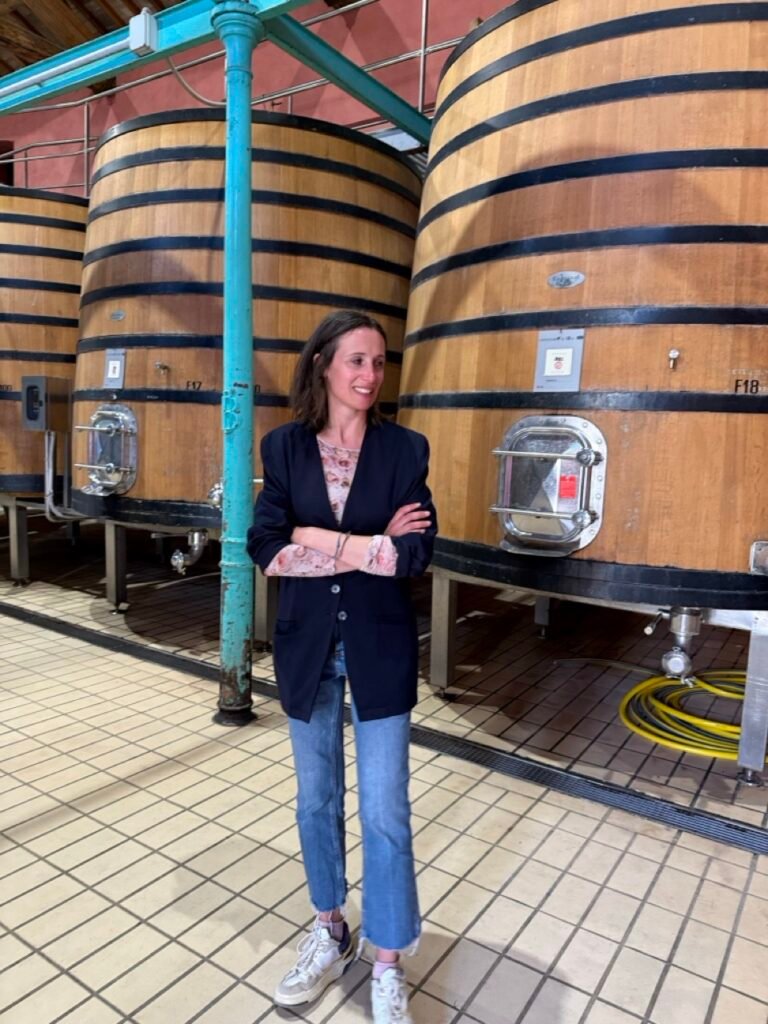
Some conversations feel like catching up with a friend you have only just met. Within minutes of speaking with Liù Pambuffetti of Scacciadiavoli, we discovered a shared early love of ancient Greek literature, archaeology, and the old myths. In her, I found someone who had carried that fascination with beginnings into a life of stone walls, vineyards, and a four-generation-deep family history. Early on, she told me that Montefalco feels like a protected nest. Hills, mountains, and valleys gather the villages and vineyards close, as if cupping them in two hands. The image stayed with me. It is where she comes from, and it shapes how she moves through her world. The Winery Scacciadiavoli sits in the hills of Montefalco, a historic estate whose name recalls a local legend of an exorcist who used the region’s wine to free a young woman from a demon. Founded in 1884 and long in the Pambuffetti family’s hands, the winery is now guided by Liù and her cousin Iacopo. They continue to work with native varieties—Sagrantino foremost among them—on clay soils at about 400 meters. For more on the estate’s history, the vineyards, and my visit during the Montefalco press trip 2026 From the Classics to the Cellar Liù grew up visiting the winery, but wine was not her first love. She studied the classics, Greek literature and archaeology, the same world that once captured me. Only later did the estate call her back. She went to Bordeaux and stepped into a wine culture built on structure, hierarchy, and complexity. Then she came home to a place still rural, still run by farmers and families. Bordeaux gave her systems and rigor; Montefalco gave her a sense of home. The region saw a wave of French influence in the 1960s through estates like Adanti, she notes, but its real character belongs to the families who work the same hillside year after year. A Plant in the Cement One of her strongest memories is of a university tutor in Bordeaux who also owned an estate. No matter how busy he was, he noticed small things. Once he stopped to admire a plant pushing up through cement. For Liù that kind of attention became the true measure of passion for wine. Technique matters, but so does seeing what other people walk past. When I asked what strikes her most in the vineyard, she skipped the skyline and the rows. She pointed to the soil—every shade of brown, dark to light, changing with the clay and the organic matter. She called it an earthy rainbow. The land, she said, is never just one color. You have to learn to read it. Strength in a Traditional World Montefalco is traditional and rural, and men have long run its wine business. After eighteen years in the industry, Liù knows what it takes for a woman to stay and slowly shift the room’s mood. Strength matters. So does time. Change comes slowly here, but she trusts that persistence and clarity will open doors for the women who follow. She does not dramatize the difficulty. She names it plainly, then goes back to work. A Wine Like Zorro When I asked Liù to describe Montefalco’s wines without using a single wine word, she answered in pictures. She said Sagrantino is Zorro: charming, mysterious, and lasting. Trebbiano Spoletino is sage green, the color of a calm mind. Sagrantino seemed closest to her. Dark, tannic, and patient, it does not give itself away all at once. It asks for time and attention, then slowly reveals a character that is both powerful and graceful. In that glass, I heard the same steady presence I had been listening to all afternoon. Like Liù, it fills the room without ever needing to announce itself. The Sparkling That Stopped Me The wine that truly took me somewhere else was the 2021 Pas Dosé Spoleto DOC Spumante. I had never tasted a sparkling Spoleto before. It opened with a firm, clear minerality that stopped me in my tracks—the kind of wine that taps you on the shoulder and says, notice me. Few would think to turn this grape into sparkling wine at all. Liù went further, making it Pas Dosé, with nowhere for the wine to hide. It stood on its own fruit, its own acidity, its own ground. With every sip it unfolded another layer, and in that quiet opening I felt the same patience and integrity that run through her work and the life she has chosen. Objects That Hold Memory The first is an old map of the estate as it looked on the day the founder arrived: the shape of the land, the placement of the original buildings, the plan Prince Ugo brought with him from Rome. Studying it, she can trace a past that still shapes the present—proof that someone laid out this place with care long before her generation arrived. The second is a wooden game called Ruzzolone, which her great-grandfather once played. You roll a wooden piece down Montefalco’s steep streets. It is a simple, almost childlike game, but it holds the memory of the town’s slopes and of everyday life here. For Liù, it connects her to a man she never met, through an object that still knows the ground he walked. One Guest for Dinner If Liù could invite one woman to dinner, it would be Agnes’s Borghese, mother of the winery’s founder. She wants to know what moved a wealthy noble family to leave Rome in the 1800s for a still-rural, undeveloped Montefalco. I suspect it’s also a question about herself: what moves someone to leave one life for another, and what do they find when they arrive? In the Protected Nest Liù Pambuffetti came to Scacciadiavoli through family. She stayed by choice—through study, through persistence, and through a clear sense of what it means to be a woman in a traditional wine region. She holds on to the map and the game, to Bordeaux and Montefalco, to the legend of the exorcist and
Choosing the Land That Chose Them: The Women of La Veneranda
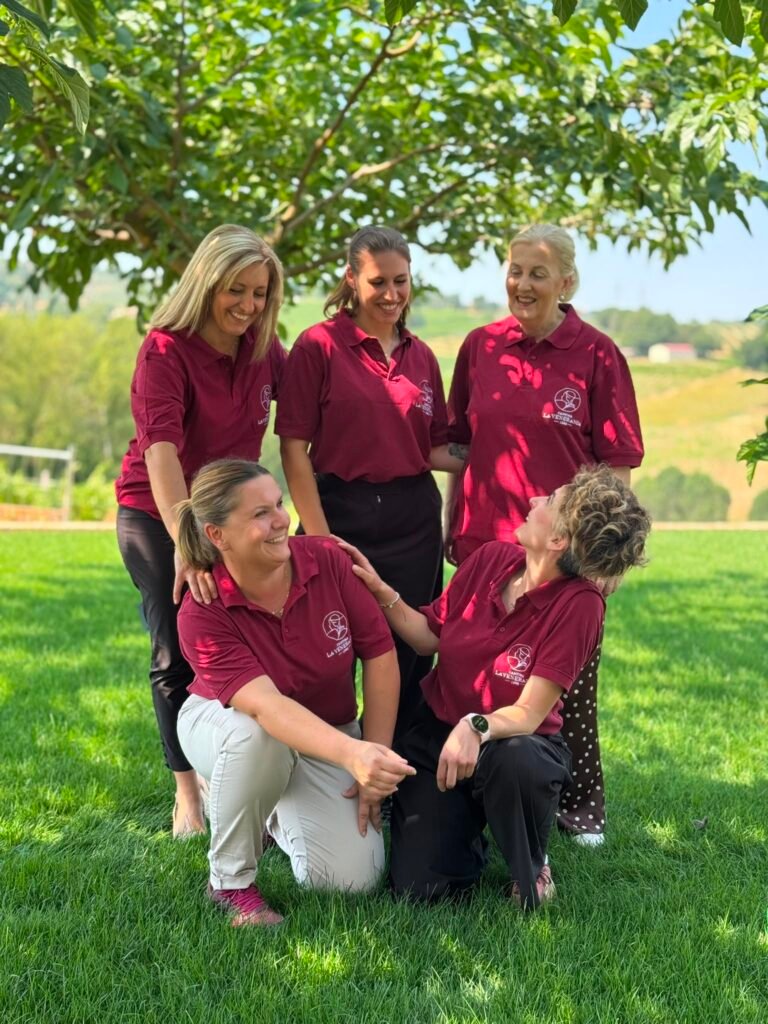
La Veneranda sits quietly within this landscape, its story stretching well beyond the first bottles. The Moncelli family has been part of Montefalco since 1568, their roots woven into the land. In 1827, Maria Aloisa Moncelli led the estate with calm strength and a cultured spirit, earning the affectionate name “La Veneranda,” the Venerable. Her presence lingers in the winery’s name, a thread connecting past and present to the women who continue her work today. That spirit lives on today, warm and determined. Eleonora Alessandrelli and Anna Rita Scarca, together with their families—descendants of Maria Aloisa Moncelli—guide La Veneranda. Valeria Gasparri stands beside them, shaped by years spent far from these hills. Together, they tend about 18 hectares of vines and make Montefalco Sagrantino DOCG, Montefalco Rosso, Grechetto, and other wines from the land. Olive trees, free-range animals, and the cheeses and cured meats that reach the tasting table are part of the daily rhythm. From vineyard to table, hospitality here is not a gesture, but a way of being. Guests are welcomed into a living story, where land, family, and quiet generosity remain at the center. Anna Rita Scarca: Choosing the Land That Chose Her Anna Rita is the steady heart of La Veneranda. She grew up here, carrying meals to seasonal workers in the fields and learning early that hard work and community belong together. Those summers shaped her understanding of kindness as a form of leadership, and that sense of belonging continues to guide her. In that way, her story begins not with wine, but with the life that surrounds it. “I was the one who actively chose this path,” she says, “because Montefalco has always been my home and I knew that my future was here.” She wanted to create something that carried her identity and her bond to the land — wine as the natural language of that belonging. The women who came before her, women who ran businesses when it was still uncommon, gave her the confidence to lead with respect, care, and good manners while building something meaningful for the community. Valeria Gasparri: A Link Between Two Worlds Valeria’s path took her far from Montefalco, but it shaped her just as deeply. She spent a decade in China, seven years immersed in Italian wine import and distribution. That experience taught her to adapt and meet each day with openness, and it eventually led her back to La Veneranda. From there, her return feels less like a detour than a continuation. “If there is one thing I have brought back with me, it is adaptability… This mindset helps me every day, especially in my work, where I constantly face new challenges and work with international markets.” One ordinary phone call changed everything. A client in southern China asked for a great Sagrantino and, knowing she was Umbrian, turned to her. That request led her to La Veneranda and, eventually, home. “Looking back, it feels like a beautiful connection between my experience abroad and my roots in Umbria—a bridge between two worlds that became my present.” The Quiet Strength of Small Gestures Listening to them, a shared sensibility emerges: authenticity matters more than performance, presence is valued over hurry, and small gestures keep hospitality real. Anna Rita still keeps a simple napkin close, just as it has always belonged on the family table. At La Veneranda, it quietly does its work: catching a drop of wine spilled in laughter, drying a tear of celebration, fluttering as a fan on a warm afternoon, or waving goodbye at the end of a visit. “A napkin may seem insignificant,” she says, “but to me it tells a story: it is a symbol of hospitality, of emotions shared around a table, and of the small gestures that make people feel welcome.” What Keeps Them Grounded Standing alone in the vineyard as the sun sets, she listens for hawks overhead. That sound connects her to the women who once walked these slopes and to the land she still tends. “That sound feels almost timeless. It reminds me that I am connected to something much bigger than myself… And sometimes I wonder: perhaps they stopped here too, perhaps they listened to the same sounds of nature, watched the same sunsets, and felt the same connection with this land.” If she could bottle one emotion to share with younger women entering the industry, it would be humility—written on the label in very small letters. “In this world, where it is easy to focus on success, recognition, and appearances, humility is a value we need more than ever. It allows us to keep learning, to listen, to respect others, and to remember that every achievement is built with many people and many experiences.” Valeria’s counsel to her younger self is equally clear: do not be afraid of the road less traveled. Leaving home for China was one of the biggest decisions of her life. “Growth begins the moment you step outside your comfort zone… Being authentic is far more valuable than trying to meet other people’s expectations.” What keeps Anna Rita grounded in a fast, noisy world is her connection with the people around her—family, friends, colleagues. “Being a source of encouragement and support for the people I love reminds me of the importance of staying human, listening, and being present.” The moments she treasures most are the laughter shared with the women who work alongside her every day: funny stories, unexpected episodes, the freedom to laugh with her and sometimes at her. “Creating a team means creating a family… These small moments of laughter and lightness are very important to me. They tell us that, behind the work, the wine, and the responsibilities, we are still people who need connection, joy, and genuineness.” The Sound of a Life in Wine If her life in wine were music, it would be a peaceful classical melody—timeless, elegant, full of emotion—and the instrument would be the violin. “Perhaps it reflects who I
Behind the Red Doors: My Dream Day at America’s Test Kitchen
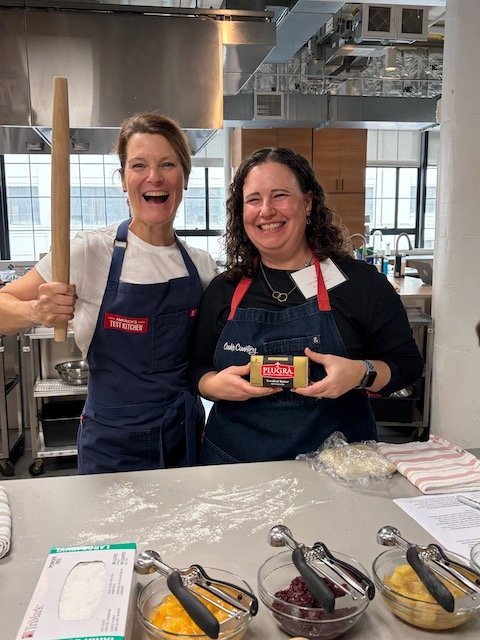
Some invitations arrive and ask you to pause, to read them again just to be certain. This one, from Plugrà Butter and America’s Test Kitchen, was an invitation to step inside ATK’s Boston home as a Les Dames d’Escoffier member for a content-creator gathering. The pairing makes perfect sense: Plugrà is a European-style butter, slow-churned to 82% butterfat, and that richness is exactly what a kitchen devoted to flaky crusts and foolproof results reaches for. While my world is wine, food has always been a parallel passion—woven into memory and daily life. The decision to accept felt as natural as breathing. Walking through those doors (excuse me, those red doors) felt like stepping into a dreamworld. For someone who loves to cook and bake the way I do, it felt like stepping onto the set of my own life. Where It All Began The connection to America’s Test Kitchen began years ago, on the couch beside my mom. Together we watched as bubbling sauces simmered and recipes unfolded with careful explanation. Somewhere in those moments, the idea of cooking as both craft and curiosity took root. That sense of wonder never faded. The ATK cookbooks on my shelf, their spines softened by years of use, remain the trusted guides when precision matters. To stand inside the place where these recipes are born felt like returning to a home glimpsed only through a screen. The Heart of the Kitchen Is Its People The kitchens dazzled, but it was the people who shaped the day. ATK organizers, the Plugrà Butter team, and the familiar hosts brought warmth and genuine welcome. There was no barrier between those in front of the camera and those behind it—just shared stories, thoughtful questions, and a sense that everyone belonged at the same table. Hospitality, so often the heart of wine, revealed itself here in full measure—a rare generosity that transforms a visit into a lasting memory. A Peek Behind the Red Doors Our tour moved from one wonder to the next. Dan Souza, our guide for the day (as well as Chief Content Officer and host of I Changed My Mind and What’s Eating Dan). We saw the studio where the show is filmed, a space so familiar from home that I half expected to hear the opening music. The team films 26 episodes in three weeks flat, a pace that made me appreciate every calm, unhurried demonstration I have ever watched. We walked through the main test kitchens, where the team bakes and re-bakes each recipe until it is right, and where 86 ovens stand ready for the work. Next came the photography and content studios. There we learned how the team produces their YouTube videos and meticulously styles the mouthwatering photos that fill their website and cookbooks. One wall held floor-to-ceiling shelves of every prop you could imagine, each plate, linen, and wooden spoon waiting for its moment to make a picture perfect. We also visited the equipment testing space, where Lisa and her team put tools through their paces so that home cooks like me can buy with confidence. I have trusted those recommendations for years, and seeing the rigor behind them only deepened that trust. Then came one of my favorite moments of the day. Lisa McManus invited us to take part in an actual ATK tasting in the Rewiews Lab, sampling four different pie crusts side by side. We compared flakiness, flavor, and tenderness, then shared our favorites around the table. As we tasted, Lisa explained the care that goes into testing every recipe and every piece of equipment. For a few delicious minutes, I wasn’t just watching America’s Test Kitchen. I was part of it. Then came the cookbook library, the largest privately held cookbook collection on the Northeast coast. Shelf after shelf of culinary history, and I could have stayed all afternoon. Last was the equipment room, a cook’s dream with everything you could ever need, neatly waiting for its next recipe. Lunch on Set Next was a moment I never imagined: a cooking demo with Dan Souza and Christie Morrison in the very kitchen where they film the show. Dan joked that he wasn’t used to having a live audience in the studio, and the room filled with laughter. It felt less like a demonstration and more like being invited into a friend’s kitchen. And lunch? They made it for us. Browned butter seared scallops, golden at the edges, over a creamy, saffron-gold risotto Milanese. Every bite was absolutely decadent, and a delicious reminder of what a little extra butter can do. A Sweet Finish Then came my fellow guests: beautiful bakers from all corners of the United States, each bringing their own passion to the ATK table. We came from different kitchens and different stories, yet we spoke the same language of butter, flour, patience, and the quiet joy of pulling something perfect from the oven. Those conversations were as much a gift as the tour itself. Then it was our turn to bake in the main ATK kitchens. Lan Lam, host of Techniquely, and Morgan Bolling, Executive Editor at ATK, showed us how to make hand pies, folding and crimping with the ease of people who have done it a thousand times. Then we got our hands dirty and made our own. There we were, in the ATK test kitchens, flour on our aprons, swapping baking secrets as our hand pies took shape. What a thrill! To end the day on a sweet note, we were led into the Cook’s Country studio kitchen to meet Joseph Gitter, Executive Editor at ATK and master mixologist. We nibbled on millionaire’s shortbread while Joe demonstrated a recipe from the new Cocktails Illustrated cookbook: a Browned Butter Old-Fashioned. I’ll confess, I have never been an Old-Fashioned fan. But as Joe walked us through the science and technique behind each step, something shifted. By the last sip, he had made me a convert. A Seat at the Table As I stepped back out through those
Founded by Monks, Farmed on Stone: An Impromptu Visit with Martin Mittelbach
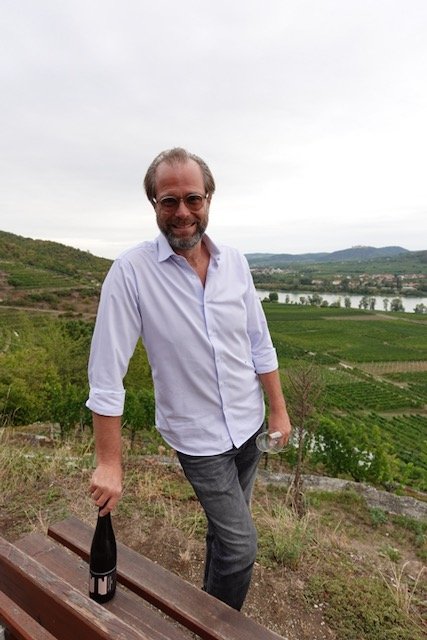
Some wine histories are told in decades. Martin Mittelbach tells his in centuries, and he does it casually, the way you might mention what you had for lunch. A monastery here, an emperor there, a date like 1176 dropped into the conversation without ceremony. Then he reaches for the next glass, and the story slips from the past into the present tense. In the Wachau, history always seems to live. This visit wasn’t on the itinerary. It began with a glass: Tegernseerhof’s Ried Schütt Grüner Veltliner Smaragd 2025, which I fell for at the ÖTW Single Vineyard Summit and couldn’t stop thinking about. So we made our way to Unterloiben, just below Dürnstein, and sat down with Martin at Weingut Tegernseerhof, a large map of the Wachau on the wall behind him. By the end of the afternoon, it was clear that the wines and the history were the same story told two ways: precise, unhurried, and rooted in stone. The First House of the Eastern Wachau The Tegernseerhof story begins not in Austria but in Bavaria. The Benedictine monks of Tegernsee Abbey tended vineyards here in the Danube valley, a very long way from home. “The land was owned by the monastery of Tegernsee,” Martin told us, “and this started in the year 1002.” Then came the house. “The monks built a house for making wine in 1176, so we were the very first winery in this part of the region.” He is quick to give credit where it is due. “Nikolaihof is a little older than we are,” he says. Then he draws a distinction I found fascinating. The southern Wachau carries a Roman influence. Here, it was something else entirely. “We had the Bavarian influence, the German influence.” It is a small sentence, but it explains the name on the label, which comes from a Bavarian abbey rather than anywhere in Austria. The monks’ era ended with the sweep of history. “After that, in 1803, all the land was taken from the churches by the emperor, and then it was sold. And this is where, actually, our story started.” The family’s own chapter began sometime in the mid-19th century, in what Martin calls a gray zone. “I’m the sixth generation,” he said. Then, with a smile: “Working every day on the seventh.” Stone, Wind, and Steel That long continuity now rests on about 23 hectares at the eastern end of the Wachau. Ninety-five percent of the vineyards are planted to white grapes: two-thirds Grüner Veltliner, one-third Riesling, and a little Pinot Noir. The estate is certified organic, and around 65 percent of its wine is exported. Martin works under the strict Codex of Vinea Wachau, which classifies wines by weight and ripeness. The lighter, fresher Federspiel wear orange labels. The richer, riper Smaragd wear pink. But it is the ground that holds everything together. These are steep terraces of primary rock: Gföhler gneiss, with loess laid over it. They sit in a climatic tug-of-war between warm Pannonian air from the east and cold air pouring down the Mental Gorge from the Waldviertel. At Höhereck, a half-hectare terraced by hand some sixty years ago, the night wind cools the vines like a stone cellar door left ajar. You can taste it in the glass: tension, salt, lift. The Tasting Martin poured generously, moving from the current vintage back through time. The range opened brightly. The Federspiel Grüner Veltliner, from fifty-year-old vines on Loiben’s deep sandy soils, was fruity, ripe, and generous. The Federspiel Riesling tasted of golden apple and stone, with a cool breath of peppermint. The single sites grew richer from there. Superin was creamy and exotic. An experimental Smaragd from below the Loibenberg had a saline edge that kept pulling me back. A Höhereck vertical showed time at work: spicy intensity in 2025, Asian spice and white pepper by 2016. Even a 2010 Pfaffenberg Riesling, a neighbouring wine region, right at the border to the Wachau, made an appearance, mineral and herbal, and a little shy with age. Then came the Bergdistel, which, to me, was simply the estate’s number one. The name also plays on the mountain thistle that loves limestone, and on Distelberger’s own name reversed. Both the Grüner and the Riesling were smoky and intensive, the Grüner spicy and creamy, the Riesling ripe with white peach. Yet as the afternoon went on, four wines kept calling me back. My Top Four All four are Smaragd, all wear the same pink label, and two of them came as pairs: the same vineyard, years apart, side by side in the glass. Ried Schütt Grüner Veltliner Smaragd 2025 & 2019. Schütt sits in the west on an alluvial fan of weathered primary rock, and night air sweeping down from the Mental Gorge cools it decisively. The 2025 was the young half of the conversation. The 2019 was the wine that stopped my pen: golden, ripe, apricot jam, with an almost uncanny intelligence. Several vintages on, and still unmistakably Schütt. Ried Kellerberg Riesling Smaragd 2025. Dürnstein’s steep landmark mountain, on Gföhler gneiss, showing everything it has. Bright, intensive, ripe, and exotic. Layered and complex, even complicated in the best sense, like a conversation that keeps changing direction. Its older sibling, the 2012, showed where that conversation leads. Thirteen vintages on, the wine had turned warm and spicy, herbal and petrolly, with a streak of gooseberry. It was a lesson in what time does to stone. Ried Steinertal Riesling Smaragd 2016. Steinertal is a giant amphitheater cut into solid rock, and the wine has a performer’s poise to match. Ripe and fruity, with a flicker of kerosene, it was tart and salty in one moment and peachy the next. Into the Vineyard Then we left the glasses behind and went out among the vines. This is where words begin to fail. The views over Tegernseerhof’s Erste Lage terraces were cinematic: winding hills, narrow lanes, stone-cut terraces stacked up the slopes like a staircase for giants. It is one of those
Cadgal: Moscato d’Asti, Reimagined
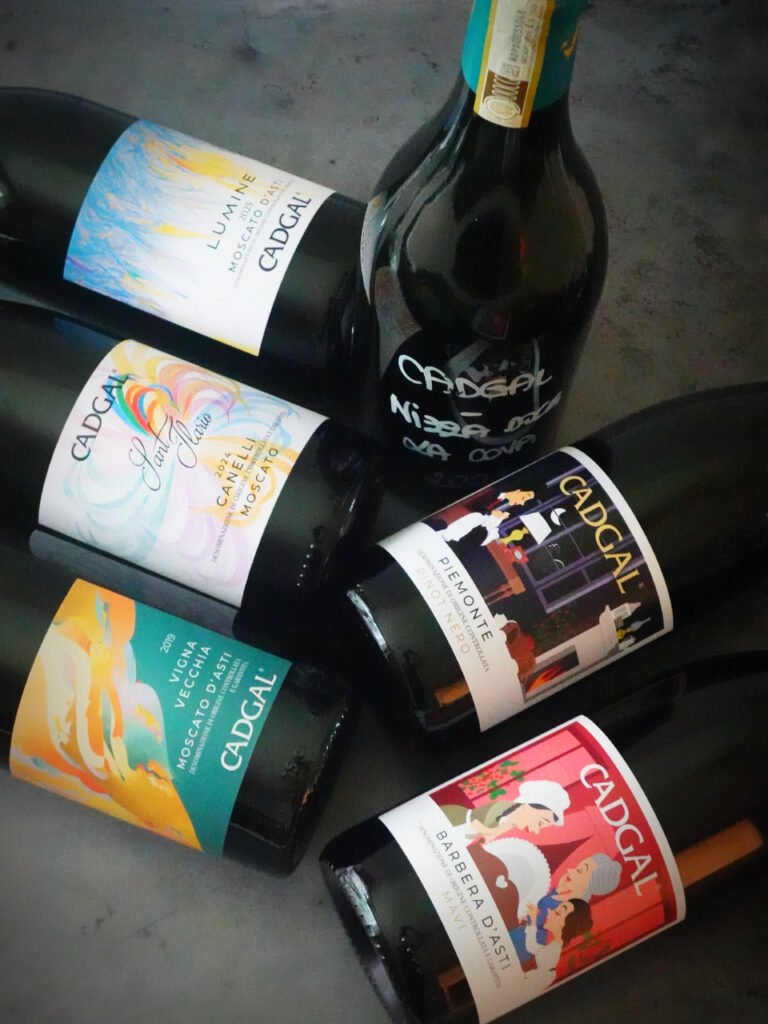
A virtual tasting has its own quiet intimacy. The bottles arrive ahead of time and wait in a row on the kitchen table. Then, on the chosen evening, a winemaker half a world away opens a window onto his hills, his vines, and his family’s stories, and the glass in your hand connects two distant places. Last month, Studio Cru gathered us for an evening with Alessandro Varagnolo of Cadgal in Piedmont. The invitation promised a lesson in Moscato d’Asti. By the end of the night, I realized this grape had been quietly outpacing my expectations for years. Valdivilla and the Sunlit Slopes Cadgal sits in Valdivilla, a hamlet of Santo Stefano Belbo in the province of Cuneo. This is the beating heart of Moscato country, where families have coaxed the grape from steep hillsides for generations. As Alessandro described the land, I could almost feel the hills rising beneath my feet. Once a seabed, the soil here is laced with marine sediment: crumbly, varied, and richer in limestone on the south-facing slopes known as sorì. These sunlit inclines give Cadgal’s Moscato its backbone, a gentle spine that anchors all that fragrance. These hills have inspired more than winemakers. Santo Stefano Belbo is the birthplace of novelist Cesare Pavese, who wrote of these vine-striped ridges with an ache of longing that still seems to hang in the air. Today, the vineyard landscapes of Langhe-Roero and Monferrato are a UNESCO World Heritage Site, and it’s easy to see why. Rows of vines trace every contour, on slopes so steep that much of the work is still done by hand. The grape is Moscato Bianco, known elsewhere as Muscat à Petits Grains and one of the world’s oldest varieties. Here it grows on home turf, near the town of Canelli, whose name has long been shorthand for Italy’s finest Moscato. Tradition, Reimagined Cadgal’s story weaves family tradition together with a spirit of renewal. For decades under Alessandro Boido, the estate quietly championed Moscato with the depth and poise to age. In 2023, Alessandro Varagnolo stepped in with a vision: to give Moscato d’Asti a new identity, to let the variety speak in its highest register, and to reveal the soul of a truly great sweet white. The philosophy is hands-on and patient. The vines are tended without chemical weedkillers, the soil is cared for with attention rather than haste, and the cellar favors a gentle touch. The estate now unites two properties: the Moscato vineyards in Valdivilla and Tenuta La Cova in Calamandrana, home to the reds. The true treasure is the old vines. In the Vigna Vecchia parcel grows an ancient clone of Moscato Bianco di Canelli, nearly fifty years old, its roots reaching deep into marine sediment and drawing out a concentration only time can give. The wine from this parcel rests sixty months in sand before release, a quiet testament to the grape’s gift for aging. Inside Alessandro’s Vision The event felt less like a formal tasting and more like a seat at Alessandro’s kitchen table. The group was small and the conversation easy, drifting from soil and clones to family and memory. His passion begins with a memory. At a family celebration when he was a boy, his grandfather poured him a glass of Moscato and told him to remember the flavor, because it tasted of home. He never forgot it. When the chance came in 2023 to guide Cadgal’s future, it felt less like a purchase than a return to that first invitation. For Alessandro, wine is woven from stories and emotion, and Moscato tastes of his own heritage. He isn’t trying to reinvent it. He wants it seen in its fullness, perhaps for the first time. His vision balances reverence with ambition. Moscato, he believes, has too often been poured as an afterthought and judged by its simplest expressions. He wants the world to know what locals always have: on the right slopes, given patience, this grape stands among Italy’s great whites. Each wine in the range has its own voice, from the joyful Lumine to the contemplative Vigna Vecchia. He champions the Canelli designation, which even allows for a Riserva, and above all he is determined to prove, one bottle at a time, that Moscato can age. He speaks of the land as something held in trust. The UNESCO-listed hills, the hand-tended rows, the warmth that greets visitors are all threads of a single story, and he hopes Cadgal will tell it with care. By the end, I felt I had met not just a producer but an ambassador for this corner of Piedmont, and that Cadgal’s story is only beginning to be told. The Wines Six wines filled the evening, three reds and three Moscatos, building from brightness and freshness toward the estate’s old-vine centerpiece. Each glass revealed a new facet of these hills. Looking for naturally lower-alcohol wines? Moscato makes a delightful alternative, clocking in at around 5% ABV. Piemonte DOC Pinot Nero 2023An unexpected opener in Barbera and Moscato country, and a charming one. Pale, translucent ruby, with wild strawberry, sour cherry, and a hint of rose petal. Silky and light, finishing with a cool mineral edge. Pinot Nero with a Piedmontese accent: pure, graceful, quietly assured. Barbera d’Asti DOCG Mavi 2023Barbera is the everyday red of these hills, and Mavi wears that role with pride. Deep purple and brimming with bright red cherry, ripe plum, and a touch of spice, soft tannins with juicy, vibrant acidity that keeps it lively. This is the bottle to open midweek with a bowl of pasta, and always a good decision. Nizza DOCG La Cova 2023Nizza is Barbera in evening attire, and La Cova, from Calamandrana, carries real presence. Dark and brooding, with blackberry, morello cherry, cocoa, and a trace of violet. Fuller and more layered than Mavi, with polished tannins and that hallmark Barbera freshness carrying into a long, savory finish. Serious, generous, and built to age. Moscato d’Asti DOCG Lumine 2025The signature Moscato
The Quiet Work Behind a Sensory Evening
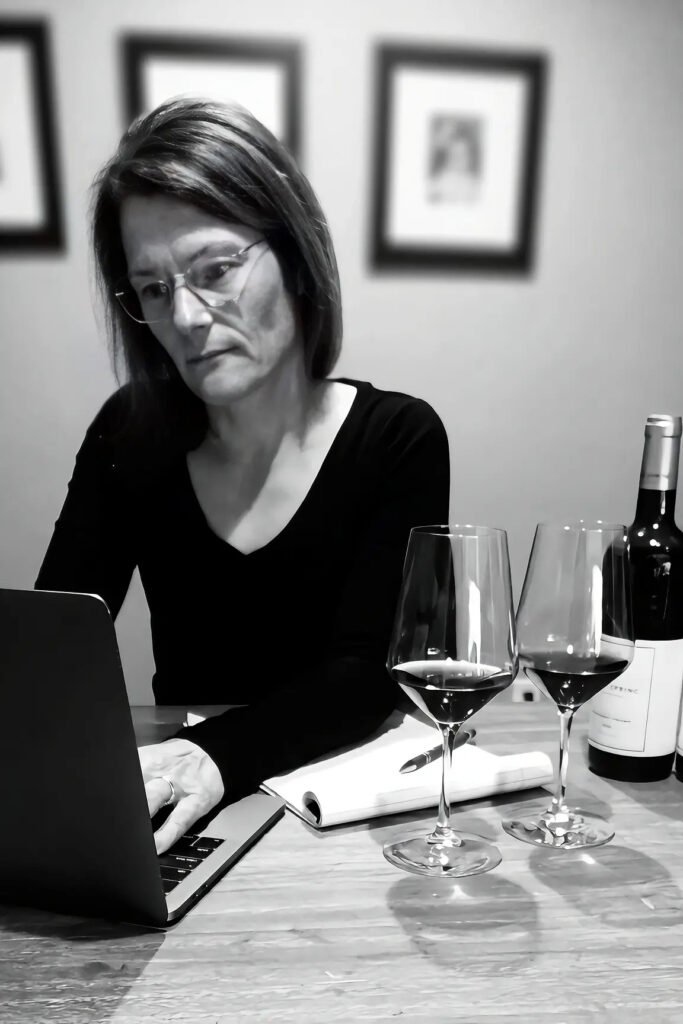
There’s a moment, just before guests walk in, when the room feels quietly ready. The glasses are set. The wines have already been opened and tasted more than once. Somewhere nearby, the chef is finishing a dish chosen not only because it would taste good with the wine, but because it would help the wine show a little more of itself. None of it happens by chance, and none of it happens quickly. When I put together an evening that brings wine, glassware, and food together, it usually takes longer than people expect. It begins with research—looking into glass shapes and volumes, reading about how a particular wine tends to behave, and then setting up side-by-side tastings of the same bottle in three or four different glasses. I take notes, step away, come back, and taste again. Some evenings I realize a wine that seemed promising on paper needs to be replaced. Other times a glass I was sure would work doesn’t, and the process starts over. Those hours of quiet tasting and reflection add up. They are not dramatic, but they are necessary if the wine is going to have a chance to show who it really is. The same measured pace applies to the food. Conversations with the chef and team are rarely settled in one sitting. We talk about texture, temperature, and acidity, then taste together, adjust, and taste again. A bright white might need the right amount of citrus or fat to keep its energy lively. A structured red might ask for a dish that echoes its depth without competing. Finding that balance takes time—sometimes several tries—until the combination feels right, not merely pleasant. I do this work because I love it. When you care deeply about the details, the hours spent researching, tasting, and rethinking don’t feel like work. They feel like listening. Still, I know that from the outside, the finished evening can look effortless. Guests see the glasses in place and the first pour. They don’t see the earlier evenings of notes, the second and third tastings, or the quiet decisions that shaped the table. That gap is understandable, yet it matters. Time lets each wine stand on its own and gives creativity room to emerge. What I hope people notice is a little spark of curiosity. When a wine arrives in a glass they weren’t expecting, they often pause—the kind that makes someone look again and wonder, “Wait, this is different.” That pause is useful. It invites people to slow down, smell again after the first sip, and realize the wine shows something specific about who it is. The food then joins the same conversation. Together they create a sequence that feels more complete than any single element would on its own. Most of the preparation stays invisible once the evening begins. That invisibility is part of why people underestimate the time investment. The research, the reflection, and the creative adjustments are quiet by nature. Yet every carefully chosen glass and every refined pairing comes from those hours. When you love the work, the time feels worthwhile—even necessary. In the evening, all that quiet preparation becomes something people can taste, notice, and remember. Afterward, I write about these evenings because the moments feel unfinished until they’re shared. Whether I’m hosting or simply there as a guest, the experience continues when I put it into words. A particular aroma that suddenly made sense once the food arrived, a glass that shifted the entire impression of a wine, a conversation that started because someone noticed something unexpected—these are the details that stay. Writing them down is a way of keeping the table open a little longer, so others can sit with the same questions and small discoveries—and, perhaps, understand a little more of the time and care that went into creating them.
A Hill, An Astronaut, & A Glass With Fritz Wieninger
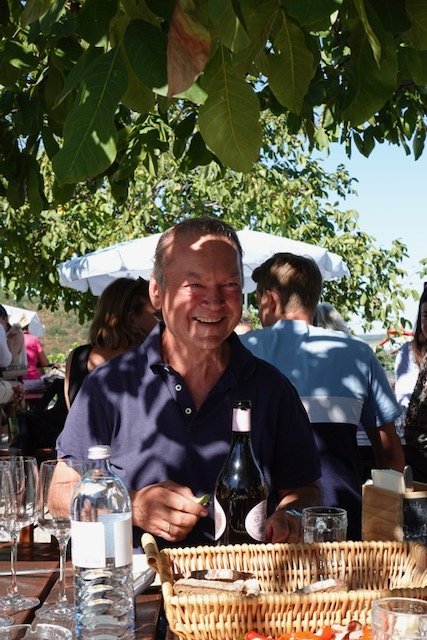
We arrived at Weingut Wieninger just as the sun reached its peak, golden light over the vines. Smiling faces waited in a gentle line for something crisp and cold. Long tables stretched between the rows, and the view ran all the way to Vienna and the Danube. After the train and the city, this was the welcome: not a grand hall, but a picnic table under a shade tree, a glass in hand, and the rooftops unfolding below. If I could choose, every winery visit would begin like this. A Hillside That Belongs to Everyone The afternoon was thanks to a friend. After VieVinum in May, Pasi Ketolainen MW — a friend, and a former colleague of Fritz — spoke about Nussberg with such conviction that I made a note to come during the ÖTW Single Vineyard Summit. Standing there in the sun, I realized he had described it exactly. Nothing exaggerated. What caught me first was not the view, extraordinary as it is. It was the people. Families in easy conversation, children weaving between tables, the small music of glasses over the grass. Fritz Wieninger’s hospitality was unmistakable from the first minute, and it was clearly not a show for visitors. This is where locals come to spend an afternoon among the vines. To understand the place, you have to understand the heuriger. In Austria it is the grower’s own tavern: their wine, usually with simple, honest food. The word means “this year’s,” a nod to the new wine, and the tradition goes back centuries. A pine branch over the door once announced that it was ready. Around Vienna, heurigen are a way of life — casual, convivial, and built on the idea that the best place to drink a wine is as close to the vineyard as possible. A City With Vineyards Vienna is one of the only capitals with serious winegrowing inside its limits. Wieninger farms both sides of the Danube: the sandy, loess-rich Bisamberg to the north, and the limestone slopes of the Nussberg across the river, close enough that the vines look down on the rooftops. That closeness is why single vineyards matter here. Growers knew their hills by name long before any classification. Limestone and sandstone, steep sun-facing terraces, a cooling breeze off the river: the Nussberg does not make the wine of the flatter, sandier Bisamberg. In 2017, twelve Viennese vineyards were classified Erste Lage for the first time. Four of them belong to Wieninger. Tasting from the slope in front of me was the gentlest possible introduction. An Astronaut, a Mother, and a Calling Over lunch he told stories, and the first one made me grin. “When I was a small boy, I wanted to be an astronaut,” he said, “and discover new civilizations.” He pictured himself on the Enterprise, beside Captain Kirk. The mission changed because of his mother. She was among the first women to graduate from the enology program at Klosterneuburg, at a time when the wine world was overwhelmingly male, and she held her ground. Around her graduation she had friends over, and young Fritz had been coached. If anyone asked what he wanted to be, he knew the line: “I want to go to winemaking school like my mom.” It proved a wise answer. He loved to learn, and his father encouraged the path, promising it would open doors. The spark came in the second year, when the winemaking lessons began. From the first day he was captivated by how sticky, sweet grape juice becomes something elegant. He took the question home. Cherry wine in his bedroom. Rice wine. Anything with sugar, fermented to see what it would become. Some of it exploded. All of it was messy. He had never even tasted rice wine, and it fascinated him most. That, he told us, was the moment he knew. He had yet to learn how demanding the vineyard could be: cold mornings, relentless sun, nature’s unpredictability. At first all he wanted was to make wine. The rest came with time. “A wine’s story starts in the vineyard itself, with the quiet questions of what to plant, and where. It begins long before the cellar door.” He took over the family estate in 1987, after Klosterneuburg and a vintage in California, and turned a traditional tavern into one of Austria’s most admired urban wineries. I can’t help thinking a woman who graduated in a man’s world, and a boy who rehearsed his line for her guests, had a great deal to do with that. The Winemaker Behind the Wines Fritz farms biodynamically, certified organic and biodynamic since 2011, and part of respekt-BIODYN. Healthy living soil, biodiversity between the rows, a lower yield if that is the price of quality. Slower work, much of it by hand. He is also Vienna’s great champion of Wiener Gemischter Satz. The idea is as old as farming: many varieties in one vineyard, grown together, picked together, pressed together, so the wine speaks with one voice. When he began, nobody wanted it. Tavern wine. The worst of the worst. “In my beginnings, I did not want to have to do with the Buschenschank wine,” he told us. “Because I knew this is for my image, not good.” He bottled instead, and sold to the top restaurants. It worked. People came looking for the wines, then for the place. In 2013 Gemischter Satz received its own DAC. Today it is Vienna’s signature. In the Glass Four bottles on the table, each with the ÖTW Erste Lage seal, all from the Nussberg: three from the Rosengartel, the heart of the hill, and one from the Ulm, on the steep southern slope toward the river. The Rosengartel back label puts it simply. The Nussberg has long been Vienna’s best-known vineyard, and at its center lies the Rosengartel, the Filetstück, the prime cut, planted in part to ancient Riesling. Ried Rosengartel Riesling 2024. The newcomer, quick and bright. Cool limestone, citrus blossom, a shiver of freshness
Does This Glass Taste Like Here? Inside Austria’s Erste Lagen
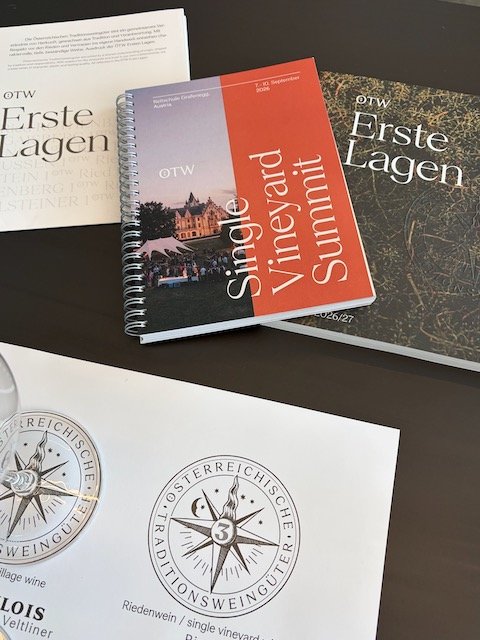
Some moments in a wine life make the room itself part of the tasting. Grafenegg was one of those. I recently attended the ÖTW (Österreichische Traditionsweingüter) Single Vineyard Summit at Schloss Grafenegg, Austria in the former riding school now reborn as the Rudolf Buchbinder Hall, and spent my days walking the quiet, concentrated aisles of Austria’s most demanding professional tasting. Six glasses at a time. No chatter at the table. Just the wines, the sites, and the people who farm them. Around 600 ÖTW Erste Lagen wines from 92 estates and 145 classified vineyards, plus another wave from Burgenland, the STK growers of Styria, and Vinea Wachau. And for the first time, every bottle on the tables was certified organic, biodynamic, or Nachhaltig Austria. That’s not a footnote. That’s the statement. First Stop: Wieninger, Above Vienna We arrived in Vienna and headed straight to Weingut Wieninger, and the week began the way I wish every week would: outdoors, in the vineyards, on a gorgeous summer day. To find Wieninger, you leave the Vienna of palaces and coffeehouses behind and head to Stammersdorf, a village-like corner of the city’s northern edge at the foot of the Bisamberg, lined with heurigen, the traditional wine taverns. The winery began as one. Fritz Wieninger grew up in the family heuriger, serving the wines made by his mother, one of the first women to graduate from the enology program at Klosterneuburg. He took over the family estate in 1987 and turned a tavern into one of Austria’s most admired urban wineries, farming vines on both sides of the Danube: the sandy, loess-rich Bisamberg and the limestone slopes of the Nussberg. Fritz is also a great champion of Wiener Gemischter Satz, Vienna’s traditional field blend, and when the ÖTW classified twelve Viennese vineyards as Erste Lage for the first time in 2017, four were his. We tasted and lunched under a shaded tree at a picnic table in the vines, with the charming Fritz telling stories about his family, about the beauty of the Nussberg overlooking the city, and about much more. It was the gentlest possible introduction to Erste Lagen, and my coup de coeur was the Wiener Gemischter Satz DAC Ried Rosengartel Nussberg 2023. Many varieties, grown together, picked together, and speaking in a single voice, from a site whose wines were among the most sought-after in Habsburg days. A perfect first lesson for a week about place. An Open-Air Overture The week opened not with wine but with music: an evening concert under the open sky at the Wolkenturm that set an exquisitely romantic tone for everything still to come. The Orchestra Giovanile Luigi Cherubini performed Cimarosa’s overture to Il matrimonio segreto and Mozart’s Piano Concertos KV 467 and KV 466, with Rudolf Buchbinder leading from the piano after Riccardo Muti withdrew from conducting on doctor’s orders ahead of a necessary medical procedure. Sitting there, before a single glass had been poured, I felt the week find its register: precise, unhurried, and quietly moving. The same qualities I would spend the following days chasing in the glass. Before the Hall All good things begin with bubbles, and this week was no exception. Before the induction, before a single note went into my notebook, we were handed a glass from a magnum of Malat Brut Nature Reserve. A long line of glasses glowed pale gold under the bar lights. Brut Nature means zero dosage: nothing added, nothing hidden. Bone-dry, bright, and the perfect first statement for a week devoted to letting places speak for themselves. Then came Inside ÖTW, an induction at Mörwald Gutshof in Feuersbrunn. Two hours with Michael, who told the story of an association now 35 years old, founded by ten producers from the Kamptal and Kremstal who wanted to bring order to Austria’s tangle of vineyard names. Today it counts 91 members and 3,600 hectares. Of Austria’s 4,300 named single vineyards, just 145 are ÖTW, all of them certified organic, biodynamic, or Nachhaltig Austria. This is Austria’s Premier Cru, the Erste Lage, on the same level as Beaune, with the Grand Cru still to come. The ÖTW waited 15 years to get here, and the system is built to adapt as the climate does. My favorite line of the morning was about the people behind it. Winemakers, Michael said, have to react like jazz musicians, in the moment. And the passion driving it all is simple: to make wine that brings people together. Let The Tasting Begin The tasting format itself is deceptively simple and completely rigorous. You build your own flights. You set your own pace. The winemakers pour. You taste in silence, then you talk, really talk, once you step away from the table. That mix of focus and human contact is exactly why this summit matters to me. Why single vineyards matter? Because they are a bet that place outranks brand. In this room you are not comparing producers, you are comparing ground: Heiligenstein against Käferberg, Loibenberg against Kellerberg, the same grape, sometimes the same winemaker’s hand, pulled apart by nothing but where the vines are rooted. A single vineyard won’t let a good winemaker hide an average site, or an average winemaker waste a great one. The glass has nowhere to hide. That, more than any score, is what keeps me coming back. Four Tastings in the Hall The hall offered four tastings, each a different slice of Austria. The White-Wine Spine. Kremstal Riesling, linear and stony, made me sit up straighter. Then Kamptal arrived with extra length and breeding, and I wrote in the margin, half laughing: crazy for aristocratic Kamptal. A Heiligenstein Riesling had the lift of youth and the gravity of old sandstone. Carnuntum and the Wachau. A pulse of red after all that white precision, then the Wachau’s tension, salt, and lift. Standing with Martin Mittelbach of Tegernseerhof, rustic romance became the phrase I kept circling: not rustic as simple, but as lived-in beauty. Widening the Map. Wagram’s loess generosity, Weinviertel’s pepper and pull, and Styrian guests with a Zieregg Chardonnay and Sauvignon
Al Dente: Alwin Jurtschitsch and the Stone Beneath the Kamptal
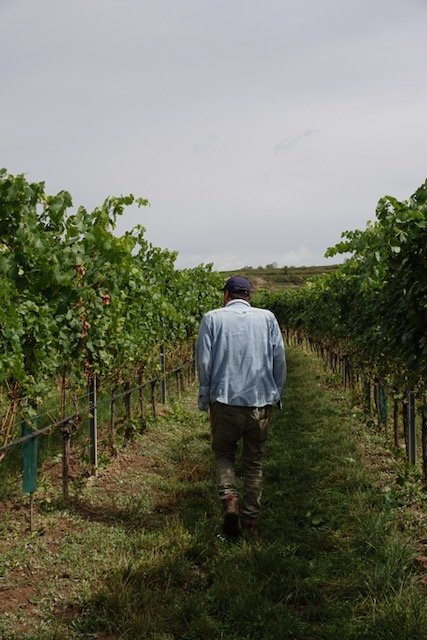
Some winemakers talk about their wines. Alwin Jurtschitsch talks about the ground beneath them, and about time: how it is made, how it erodes, and how very little of it you have when the grapes are ready. He talks about terroir the way a farmer talks about weather. Not as a marketing word, but as the thing you live with every single day. After my time at the ÖTW Single Vineyard Summit, and after hearing him talk through the geology of his vineyards, I understood why his Kamptal wines kept pulling me back to the glass. They feel cool even when they are generous, composed rather than showy, and they linger long after the glass is empty. An Eye-Opening Visit This was my first visit to Kamptal, and it opened my wine eyes. It didn’t hand me a few new facts so much as change the scale at which I look: from the region, to the valley, to a single slope, to the stone underfoot. Time with Alwin made one thing plain. The Kamptal is not one terroir with a few famous names attached. It is many terroirs, folded into a single valley, and the people who farm it know each fold by heart. A Valley of Many Soils That variety is what makes the Kamptal so special. At around 3,000 hectares, the region is almost three times the size of the Wachau, and its geology runs the full range. In the west, around Zöbing and Kammern, steep terraced slopes of primary rock dominate: gneiss, mica schist, amphibolite, the glittering silvery mica of Gföhler gneiss. Moving east toward Langenlois, Gobelsburg and the Danube, the hills soften and the soil turns to deep, nutrient-rich loess left behind by the ice ages, with clay in places like Strass. Between them sit oddities that barely exist anywhere else, such as the amphibolite of Schenkenbichl, and, at the top of it all, the Permian desert sandstone of Heiligenstein. The climate stitches it together. Cool, damp air flows in from the Waldviertel to the north and west, while warm, dry Pannonian air arrives from the southeast, and that daily push and pull of warm days and cool nights gives the wines their aromatic tension. The old rule of thumb in the valley follows the ground: Riesling on the lean, terraced upper slopes, Grüner Veltliner on the deeper loess and loam below. Stand on a single ridge and you can walk across several geological eras in an afternoon. As Alwin would later put it, that’s why one hill can make so many different wines. A House Older Than Its Name The roots of Weingut Jurtschitsch run deeper than the family name. In Langenlois, parts of the estate’s cellars reach back to the 14th century, and its beginnings are tied to the nearby Franciscan monastery that first worked these vines. The Jurtschitsch family acquired the estate in 1868 and has run it ever since, most recently the three brothers Edwin, Paul and Karl, before the next generation stepped in. That generation is Alwin, Edwin’s son, and his wife Stefanie, who comes from the Gunderloch winemaking family of Rheinhessen. Nearly two decades ago the two of them took the reins of a historic Kamptal house with holdings in some of the valley’s best sites, and began asking what it would look like to let those sites speak without interruption. Below Ground: A Cellar Older Than the Estate If the vineyards are the geology of the estate, the cellar is its memory. Weingut Jurtschitsch sits in the heart of Langenlois, and beneath it lies an enormous natural cellar roughly 700 years old, with parts dating to the 14th century, that once belonged to the Franciscan monastery. It was dug deep underground, where the earth keeps its own cool, steady temperature without any help from machinery. Above it, the former harvest farm, the Sonnhof, dates to the 16th century, and the old press house carries the same weight of time. The estate did not stop with history. In 2000 a new terraced cellar with a modern press house was added alongside it, so that centuries-old stone and contemporary craft now work under one roof. Inside, the vessels are as varied as the soils: huge old foudres, smaller barrels, stainless steel, small tanks. The wines ferment spontaneously, and sulfur is added only before bottling, in moderate doses. The cellar is built to protect time, not to speed it up, which suits a house whose whole philosophy is patience. Almost No Makeup What they built from that inheritance is less revolution than clarification. The farming is organic. Since 2006, the wines have been fermented with native yeast. The Erste Lagen rest in large old wood, and the cellar approach is deliberately light: almost no makeup, as I wrote in my notes. There is room left in the vineyards for the life that grows beside and between the vines, and you taste that vitality in the fruit. One small story captures the spirit of the place. Among their Heiligenstein holdings, Alwin and Stefanie found a little plot with completely different vegetation from the rest of the hill, reeds growing where you would expect vines. They bottle it unfined and unfiltered as Quelle. Because it sits outside the formal boundaries, it legally cannot carry the Heiligenstein name on the label, yet it is, by every account, one of that famous vineyard’s purest voices. Four Hills, Four Temperaments The heart of the estate is a handful of ÖTW Erste Lage sites. I met them in the ÖTW tasting room, six glasses at a time, and each one introduced itself differently. Heiligenstein is the Kamptal’s most famous vineyard and the home of the estate’s Riesling. Alwin makes a single-vineyard Riesling from the whole hill, then two microparcels that pull it apart. Side by side, the three read like siblings who share a face but not a temperament. Käferberg, the cool head. The hill above Langenlois, and to Grüner Veltliner what Heiligenstein is to Riesling. In the glass: cool
Milena Pepe: Quiet Determination
Some people tell you who they are in the first five minutes. Milena Pepe of Tenuta Cavalier Pepe did it in her first few sentences. She spoke about the land and the work plainly and surely, the way someone does when she has already made her choices and is still glad she made them. Her story starts in Belgium, winds through the vineyards of France, and ends in the hills of Irpinia, where she arrived more than twenty years ago. Meeting her, I sensed someone who knew exactly what was expected of her and decided early on to go her own way. A Father’s Return Tenuta Cavalier Pepe sits in the middle of Irpinia, between Luogosano and Sant’Angelo all’Esca, in the green hills of Avellino. The name honors Milena’s father, Angelo Pepe. He left Italy as a young man and made his life in Belgium, where he promoted Italian food and culture and was named Cavaliere del Lavoro. He brought what he earned there back here. His family had always grown grapes and sold them to others. Angelo wanted to bottle his own. When Milena took over in 2005, the estate began making wine from all three of Irpinia’s DOCGs (Fiano di Avellino, Greco di Tufo, and Taurasi) along with other native grapes. Today, the estate also has a restaurant and a place to stay, so visitors can eat, drink, and sleep among the vines. (For more on the vineyards, the vertical tastings, and my visit during Campania Stories, see my earlier piece: Campania Stories: Initial Sips — Campi Flegrei & Irpinia.) From Brussels to Irpinia Her father’s story was about leaving and coming back. Milena’s was about arriving somewhere she had only heard about. She grew up in Brussels with an Italian father and a Belgian mother, switching languages at the dinner table and learning how a restaurant runs while she studied marketing and management. Her father talked about Irpinia constantly, about the vineyards he was bringing back to life, and little by little those stories pulled her south. She did not go unprepared. First came wine marketing in France, then viticulture and enology, then hands-on work with producers including Chapoutier in the Rhône. In 2005, at twenty-five, she moved to Irpinia to run the estate’s first harvest under its own label. Day and Night Those first years took everything she had. Milena worked day and night, learning every slope of the land while building a business from scratch. France had taught her two things she still swears by. One is discipline in the vineyard. The other is tasting the grapes together as a team and deciding together when they are ready. Every year as harvest nears, she still walks her crew through it. Bottling an estate’s own wine in a place used to selling grapes takes skill, and it takes years. It also meant facing pressures unrelated to the vines. Two Jobs at Once Milena is frank about what women in wine still carry. There is the work, and then there is everything expected of a woman at home, and the two do not divide neatly. On top of that, she was an outsider, a woman who had grown up in another country and arrived in a close-knit rural place. What has helped her most is other women in the business. She leans on networks where women share what they have been through, swap what they know, and feel less alone. We both agreed these groups are how women in wine get through the hard years and keep growing. Hills Worth the Trip She brings the same stubbornness to Irpinia itself. The altitude, the cool nights, and the soils give these wines their tension and their ability to age for years. But getting travelers to come here is hard work. The roads and services are still catching up, and the Amalfi Coast is only a couple of hours away, drawing the crowds. Milena is practical about it. She gives international guests the comfort they expect, but she won’t dress Irpinia up as something it isn’t. She also has strong feelings about how we farm. She says industrial agriculture has cost us flavor and knowledge. Small, local wine made from its own ground keeps that knowledge in use, so the next generation can learn it by doing. The 2011 Taurasi I tasted that idea in a glass. During my spring visit, one wine kept pulling me back: the 2011 Taurasi DOCG. It didn’t show off. It simply held my attention and wouldn’t let go. Dried cherry, violets, and leather moved through fine, long tannins, and each layer took its time to appear. The longer I sat with it, the more it gave. It reminded me of Milena: strong without raising its voice, and generous with anyone patient enough to listen. Coming Home Milena Pepe chose to come back to a place she had first known only through her father’s stories. She arrived trained and ready, and she has spent twenty years building something lasting in a region more used to supplying grapes than making a name for itself. Brussels restaurants, French vineyards, and Taurasi’s long patience all went into it. Now she is helping Irpinia imagine what it could become. I keep thinking of her alongside that 2011 Taurasi. Neither one needs to be loud to fill a room. In the cool hills of Irpinia, where good wine refuses to be rushed, Milena is building her own story. It honors her father, who had the courage to leave. And it honors her own decision, maybe the braver one, to come home.