
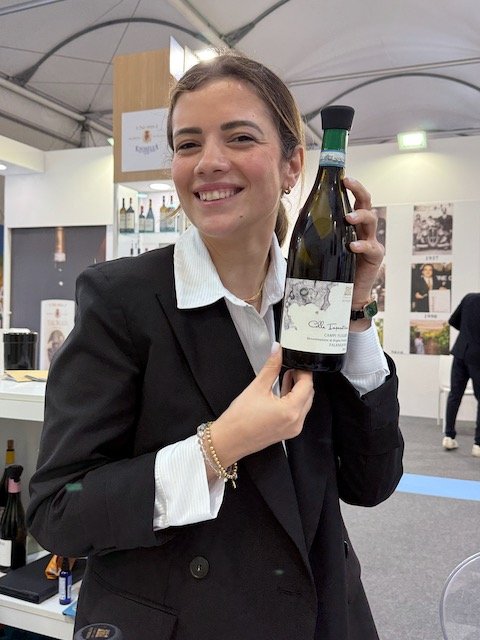
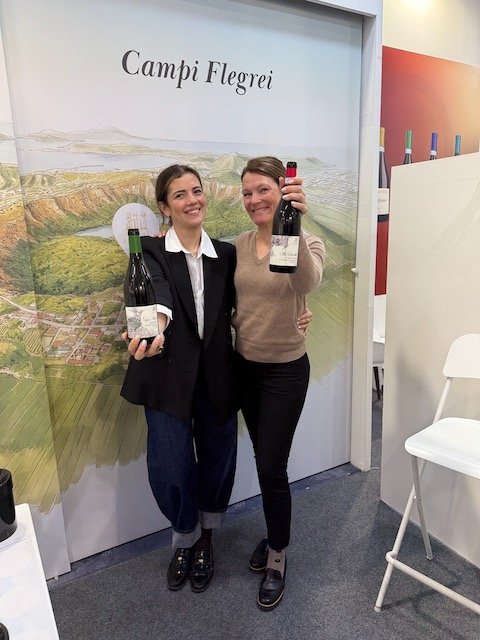
Some encounters immediately feel like a homecoming. Speaking with Cristina Varchetta of Cantine Astroni, I was struck by her sense of place and genuine hospitality, and by how naturally our perspectives aligned: a love of independent travel, the joy of learning new languages, and the determination to shape a career around meaningful connections rather than rigid traditions. With Cristina, the Campi Flegrei became less an imposing volcanic backdrop and more an open invitation—to listen, to belong, and to return transformed.
Our conversation moved easily between the practical work of the winery and the deeper emotional currents that sustain it, showing how closely the two are linked.
The Winery
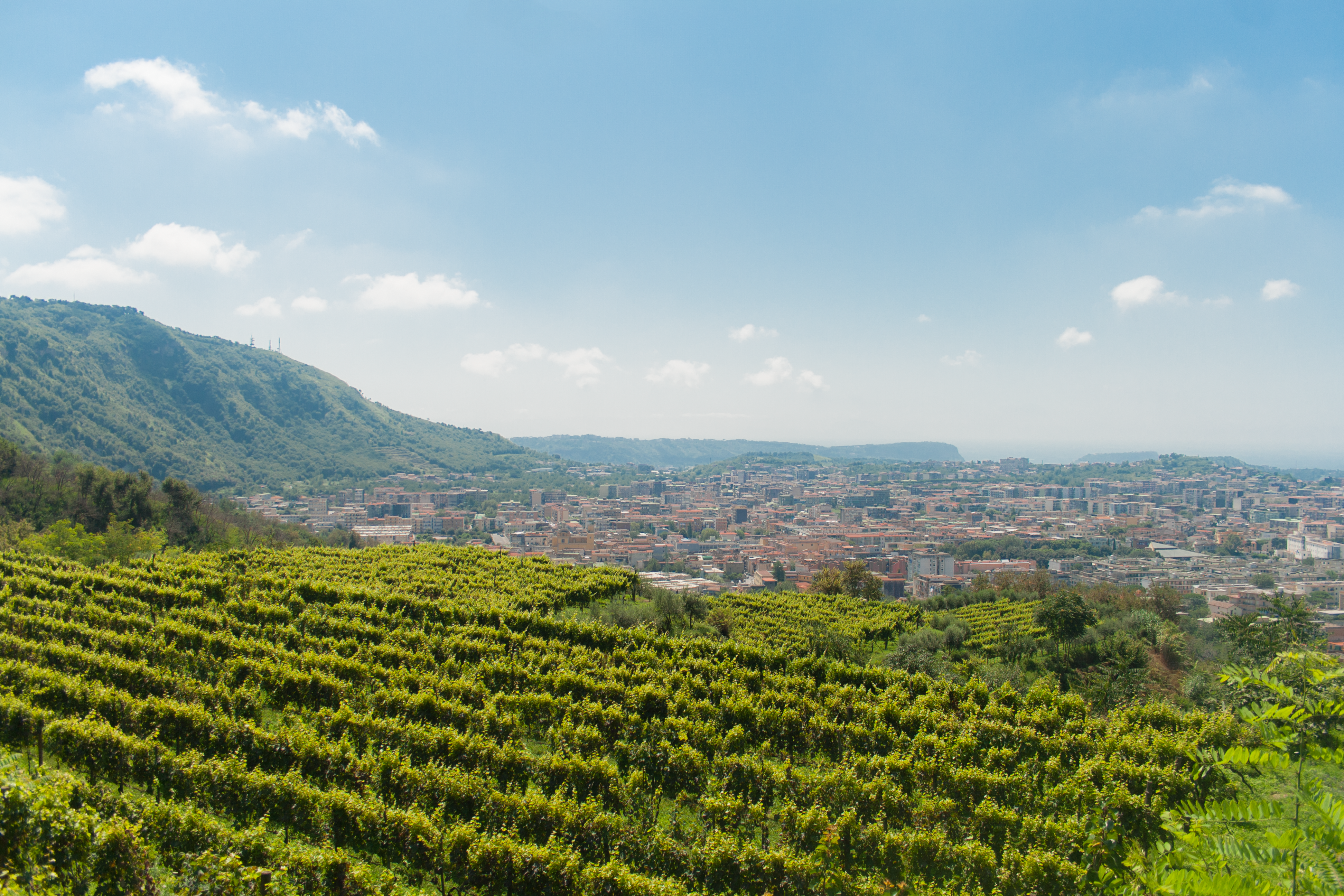
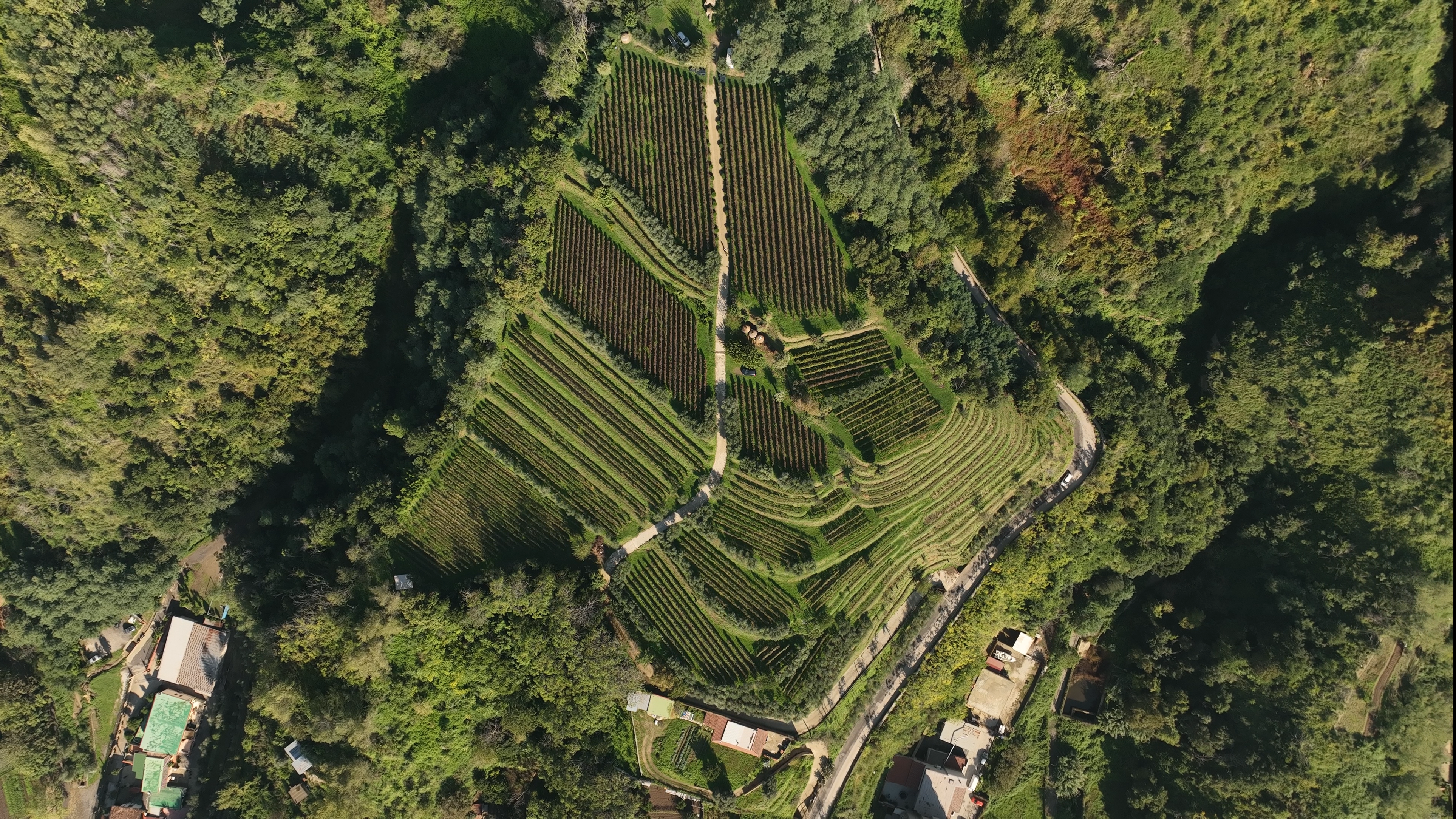
Cantine Astroni sits on the outer slopes of the Astroni crater, between Naples and Pozzuoli, in the heart of the Campi Flegrei. Once a Bourbon hunting reserve, the area is now a WWF nature oasis. The Varchetta family has been connected to wine here for more than a century, beginning in 1891 with great-grandfather Vincenzo. The modern project took shape in the late 1990s. It was formalized around the birth of the Campi Flegrei DOC, transforming a family farm and holiday retreat into a focused boutique winery. Today the emphasis is on single-vineyard expression—an approach Cristina likens to the cru system of Burgundy—working primarily with ungrafted Falanghina and Piedirosso on sandy volcanic soils. Cousin Gerardo Vernazzaro is the winemaker. Hospitality is central to the place. Guests are invited not only to taste, but to understand the land through the stories that have shaped it.
A Wine of Quiet Intensity
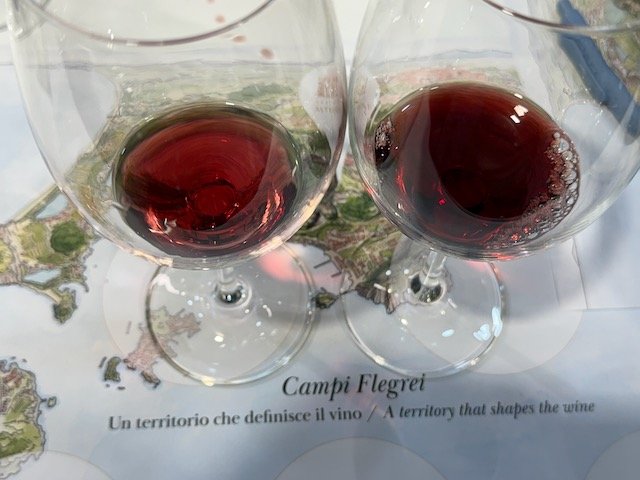
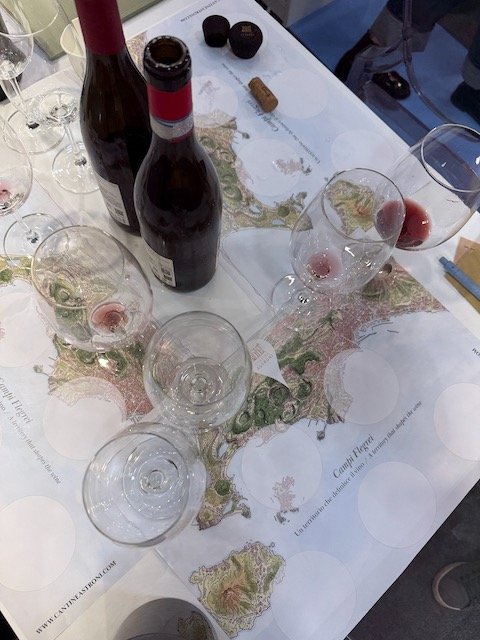
My favorite wine from the estate was the Piedirosso. In its mineral depth, red-fruit lift, and volcanic tension, I felt the same quiet intensity that runs through Cristina’s way of speaking about this land. It does not shout. It holds its ground with elegance and a sense of place that lingers long after the glass is empty—much like the conversations that unfold around the table at Astroni. In that glass I tasted the resilience of the Campi Flegrei and the care with which this family interprets it.
A Journey of Leaving and Returning
As a child, Cristina did not dream of a specific profession. She dreamed of seeing the world. Languages, different cultures, and distant places fascinated her. She never imagined that wine would become the way she could travel while still carrying home with her wherever she went.
She began in accounting, then made a deliberate shift toward the family winery. Seeking deeper technical knowledge and a different work rhythm, she studied with the Italian Sommelier Association (AIS) and the Wine & Spirit Education Trust (WSET). Today her role centers on hospitality, communication, and export, work that satisfies her love of travel and independent movement while keeping her rooted in the Campi Flegrei.
Her advice to her younger self is simple and hard-earned: do not be afraid of leaving, of studying, of making mistakes. Only by going away did she truly learn to appreciate her roots. That experience of departure and return shapes everything she does. She carries that lesson into her work with guests and into the way she speaks about the next generation.
Hospitality as Inheritance
More than any object, Cristina carries the memory of her grandparents’ hands—strong from years of work, yet incredibly gentle when they held a bunch of grapes. They taught her that respect always comes before technique. Today, when she welcomes guests, she tries to offer the same care they showed the land and the people around them. That, she says, is her most valuable inheritance.
For her, the table remains the true center. Growing up, it was where her family shared stories, laughed, celebrated, and found comfort after difficult days. Wine is not the protagonist of the table; it is simply a way to create connection. What she hopes every guest takes home is not only the memory of a tasting, but the feeling of belonging—of having been part of something larger than a single bottle.
Landscape, Silence, and Continuity
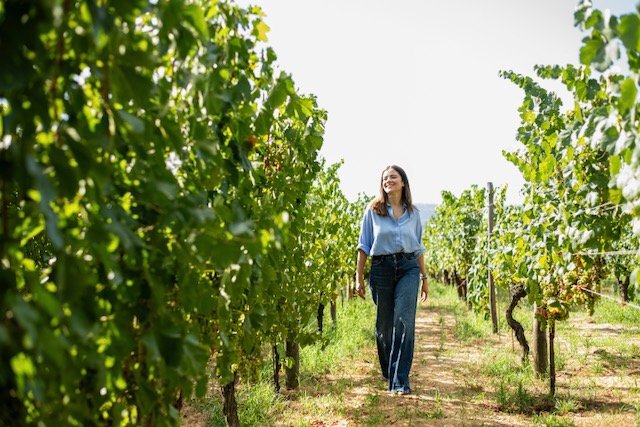
When she stands alone in the vineyard at sunset, it is the silence that connects her most deeply to the women who came before her. In that slowing of the day, she feels as if the land still holds their voices. It reminds her that she does not own this place—she is simply passing through, with the responsibility of leaving it a little better than she found it. That sense of temporary stewardship runs through her approach to both the vines and the people who visit them.
If her life in wine were a piece of music, it would be a melody that starts softly and grows with time. She would be a cello: an instrument that does not need to be the loudest in the orchestra to touch people’s hearts. Like the best wines of the Campi Flegrei, the most beautiful music does not rush. It matures, layer after layer, revealing more the longer one listens.
Joy as Creative Fuel
Even amid the seriousness of the wine world, Cristina protects small, unserious pleasures. One of them is dancing in her kitchen while cooking, even when she is completely alone. Those are the moments when she stops overthinking and enjoys life. Creativity, she believes, often comes from joy, and joy is usually found in the simplest moments. It is a reminder that hospitality and storytelling require not only discipline, but also lightness.
What She Would Bottle
If she could bottle one fleeting emotion from her journey and share it with younger women entering the industry, she would label it “Coming Home.” Leaving is important, she says, but coming back with new eyes is even more meaningful. She hopes every young woman understands that she never has to choose between her dreams and her roots. She can carry both, and in doing so, turn them into strength.
What Remains
What surprised Cristina most about stepping into the world of wine in Campania was discovering that it is first and foremost about people. A bottle may eventually be forgotten, but the way you make someone feel will stay with them forever. That realization changed her perspective. Today her goal is not simply to pour a glass of wine, but to leave every visitor with an emotion, a memory, and a reason to fall in love with her land.
In the volcanic soils of the Campi Flegrei, between the silence of sunset and the warmth of a shared table, Cristina Varchetta continues a quiet hospitality that feels both ancient and entirely her own. She is a woman who left to return more fully, who uses wine as a language of connection, and who understands that the most lasting impression is never the wine alone, but the feeling of having been welcomed home.