
When I first walked the vineyards of Villa Matilde last April, the landscape felt like a kind of paradise: green, still, and precise. Only later, sitting down with Maria Cristina De Simone Avallone, did I understand how much of that stillness was earned. She grew up here, among the vines of the ancient Ager Falernus, surrounded by women who taught her that grapes are never just grapes. To meet her is to meet someone who knows both the pull of inheritance and the discipline of making it her own.
The Winery
Villa Matilde Avallone lies in Cellole, in the province of Caserta, held between the Tyrrhenian coast and the quiet slopes of the extinct Roccamonfina volcano. This is the heart of the Ager Falernus, home to Falerno, the wine Pliny, Virgil, and Horace once praised and the world later believed lost to phylloxera.
In the 1960s, a Neapolitan lawyer named Francesco Paolo Avallone refused to accept that loss. From a handful of surviving biotypes of Falanghina, Aglianico, and Piedirosso, he rebuilt not just a wine, but a place. He named the estate for his wife, Matilde.
Today the family tends three Campanian landscapes:
- the historic vineyards of San Castrese and Parco Nuovo near Sessa Aurunca and Cellole
- Tenuta Pietrafusa in Irpinia, where Greco, Fiano, and Aglianico destined for Taurasi grow
- Tenuta Roccaleoni in the Sannio
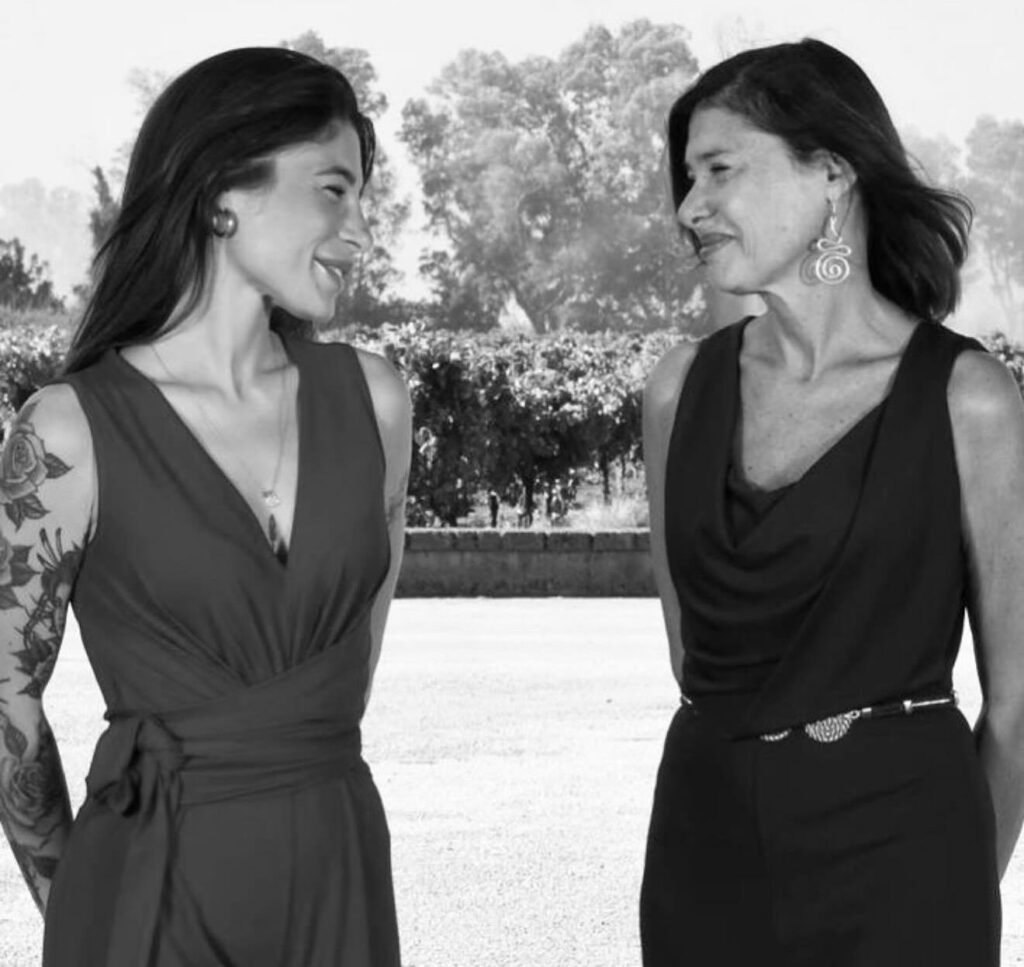
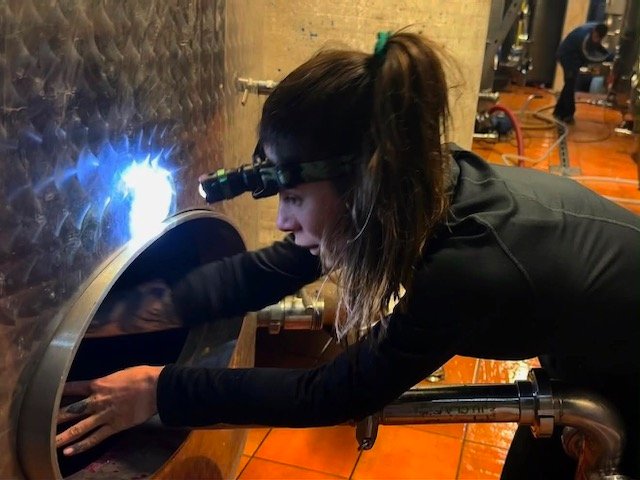
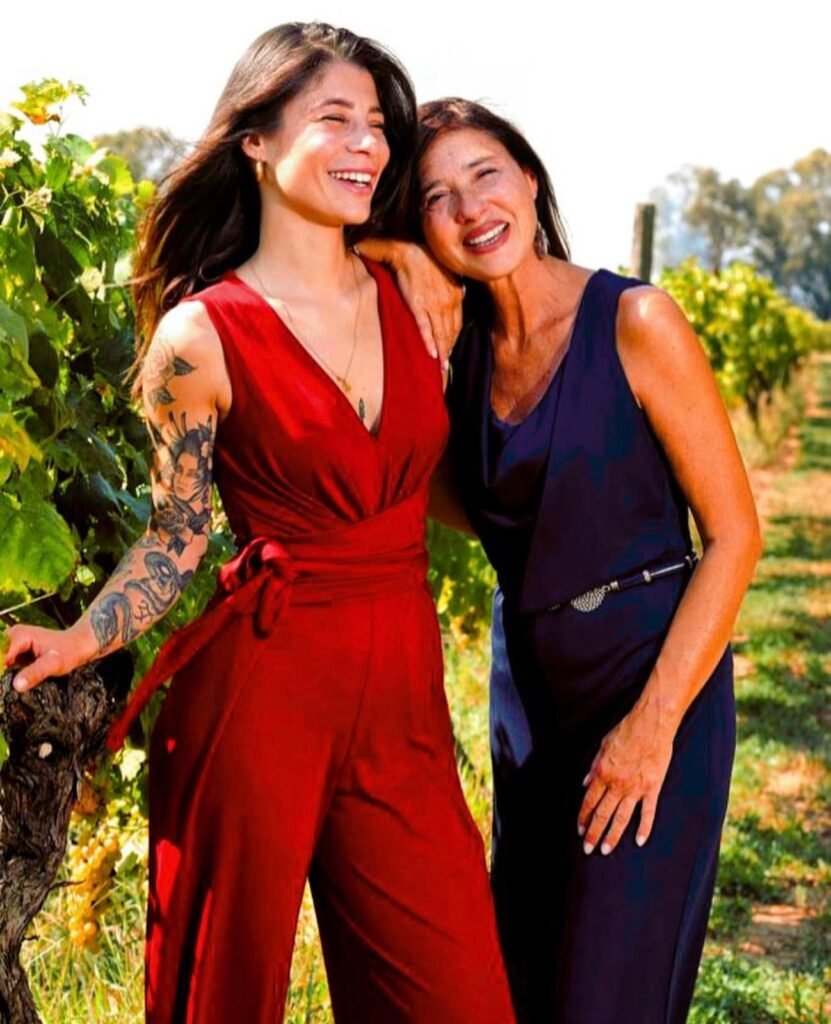
Maria Cristina, daughter of Maria Ida Avallone, now leads as head winemaker and head of production. She is the third generation to shape that vision, and she brings to it her own sense of style and precision.
For the wider landscape of my spring visit during Campania Stories, see my earlier piece: [link]
A Calling Heard at Night
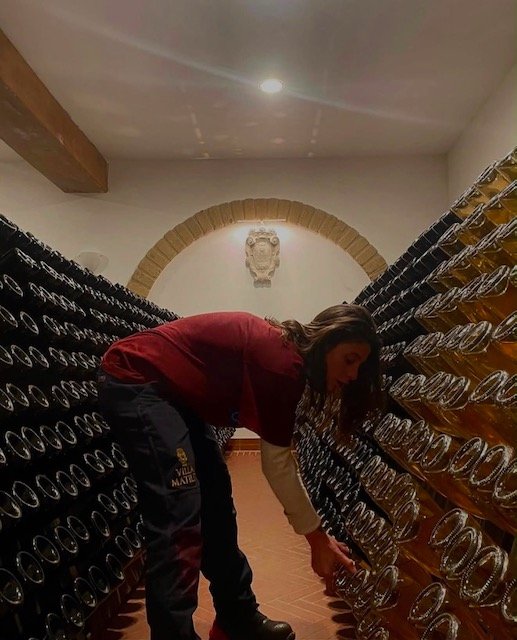
Her story with the estate began almost at once. Maria Cristina arrived at Villa Matilde when she was ten days old. Her mother and grandparents carried her early into the cellar, the vineyard, and the restaurant. What stayed with her was never a lesson in grape varieties. It was her mother’s way of telling the story: not just Falanghina, but the people behind it.
As a girl, she dreamed of becoming a veterinary surgeon. She was drawn to animals and to the idea of rescuing them in southern Italy. Then, somewhere between nineteen and twenty-one, she found herself torn between winemaking and law. Her mother sensed the hesitation. She did not argue. She simply invited her daughter to a night harvest at Sessa Aurunca.
In the darkness among the vines, the answer became clear.
The tenderness she once felt for animals never left her. It found another living subject. Wine, she told me, is like an animal. It changes. It asks to be understood over time.
She describes Villa Matilde as an Italian love story. It belongs as much to her grandmother as to her grandfather, a man who understood the importance of the women around him.
The Piano in the Cellar
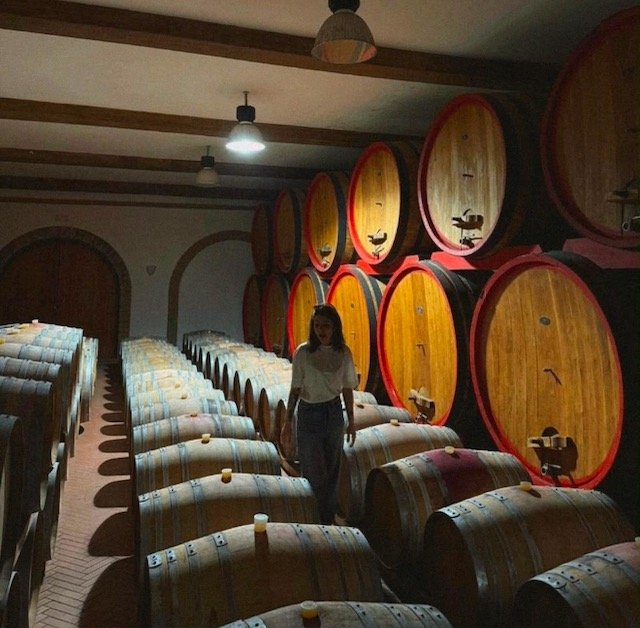
Nowhere is that love story more present than in the cellar itself. When I asked which object from her childhood still speaks to her, Maria Cristina did not hesitate. She named the piano that stands there among the barrels.
It belonged to her grandmother, a professional pianist from Genoa who set aside her career to support the family and the winery. For Maria Cristina, the piano is a reminder of presence. It is also a quiet instruction to keep going and not look back.
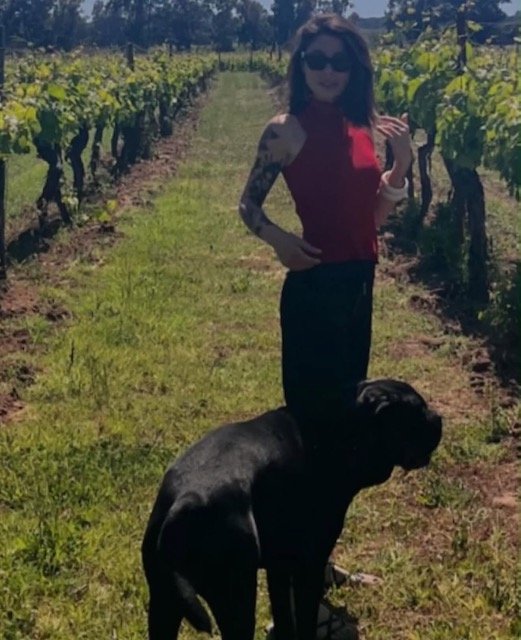
Her own days hold to a simple rhythm. She has coffee with her mother, who lives just across the way. She walks with her dog, Yuma. She reads, to step away from the pressure that builds as harvest nears. And at sunset over the vineyards, she feels grounded and grateful. It is the same view that struck me in April, and I understood then why it holds her.
Freedom, Yellow, Rose
When I asked her to describe her wines in three words, Maria Cristina did not reach for technical language. She answered with her life.
Freedom. She had to fight to be taken seriously as a woman, and she believes everyone should be allowed to be themselves.
Yellow. The happiness of sun on skin, the feeling she wants a glass to give.
Rose. The women of her life: her mother, aunts, sister, cousins, grandmother. Beauty and strength together. Petals, and thorns.
It struck me that she could have been describing herself.
For her, wine is closer to jazz than to a fixed score. She comes from contemporary dance and knows how a melody can shift beneath you. Each person, she insists, will hear the bottle in their own way. That openness is not a weakness. It is the wine’s heart, and perhaps hers too.
Her imagined dinner table carries the same spirit. She would invite three women: the painter Artemisia Gentileschi, Matilda, and her grandmother. She would ask them whether they would be proud of the freedom women have reached by 2026. For Gentileschi, she would pour an Aurunca wine alongside vegetable soup, for strength and personality in the glass. For her grandmother, a white Falerno with potatoes, the comfort of a traditional Neapolitan table.
Still the Work to Be Done
That question of freedom is not only a dinner-party thought. Campania has changed, and leadership is no longer out of reach for women. Yet the old reflex lingers. In her own cellar, Maria Cristina told me, male employees sometimes still turn to her male colleagues first. A generation earlier, her mother met the same skepticism selling wine at twenty.
The industry is moving forward, but the work is not finished. What still needs to be won is true respect as a leader, not merely as a symbol.
Her advice to women entering wine is practical and unsparing. Be proud of who you are. Study. Work with your hands. Smell. Taste widely. Keep an open mind, and keep talking to people.
Isolation, she made clear, is not a strategy.
What Harvest Asks
Her eyes are already on what comes next. She wants to keep exploring Falanghina, a grape that changes its face from one Campanian hillside to the next.
When we spoke, she was also weighing the closure. Traditional cork still holds a certain romance for her, but it brings inconsistency. She was curious about glass stoppers and what they might offer a wine meant to last.
She spoke of the coming harvest the way a painter might speak of a canvas. Difficult conditions for the vine, she said, often create a more striking picture. She hoped it would be the best harvest of her life.
What Remains
Maria Cristina De Simone Avallone’s story is one of early belonging and later choice. She was a child carried into the cellar. She grew into the woman responsible for everything that leaves it.
The thread runs through the night harvest at Sessa Aurunca and the piano still waiting among the barrels. It runs through her mother’s stories about people rather than grapes, and through a language of wine that moves like jazz. Along the way, she is shaping more than Falerno and Falanghina. She is shaping a way to stand inside a famous name without losing herself.
What stays with me is the triad she gave her wines, because it is really a portrait. Freedom: a fight to be heard. Yellow: the wish that a glass might feel like sunlight. Rose: a lineage of women whose beauty always included strength.
In the hills of the Ager Falernus, an ancient wine was once called back to life. There, Maria Cristina is writing its next chapter with both hands on the work, and with the quiet certainty of someone who knows exactly where she stands.