
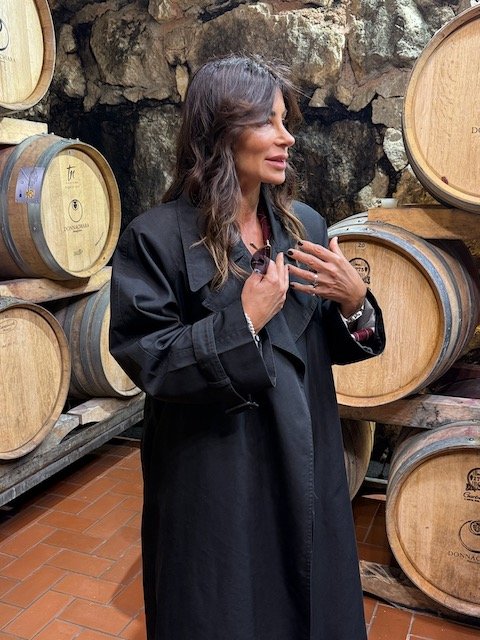
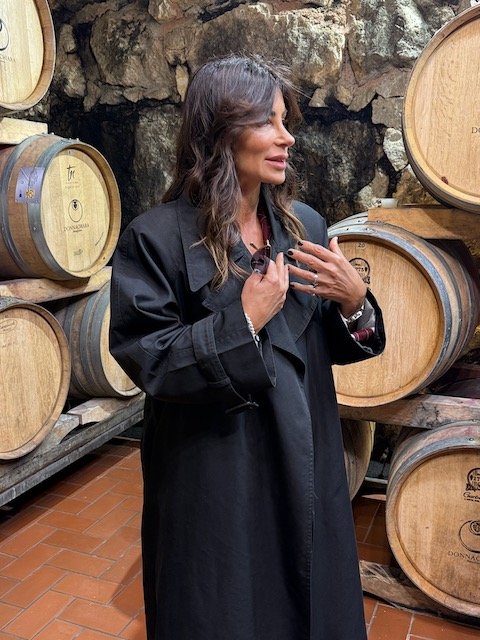
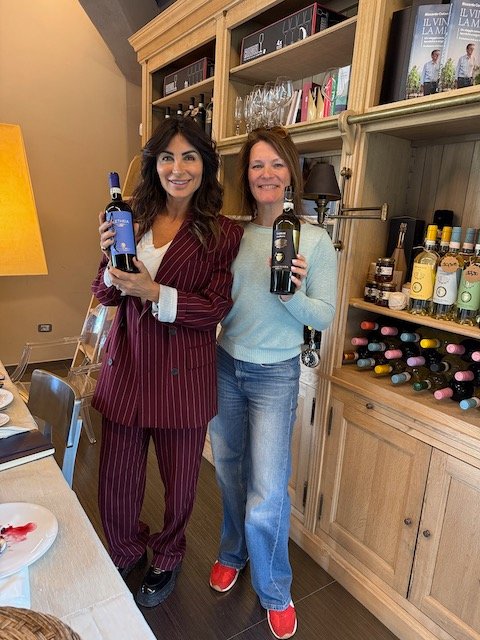
Every so often, a conversation opens a window into another person’s world. Meeting Ilaria Petitto of Donnachiara in early August, I was immediately struck by her clarity and the quiet strength guiding her choices. She traded a conventional career in law for the uncertainty of wine, embracing the courage needed to define her own identity in a world that too often clings to familiar expectations. For Ilaria, authenticity is not just an ideal—it’s a source of power.
Our conversation felt less like an interview and more like a recognition of a shared commitment to authenticity.
The Winery
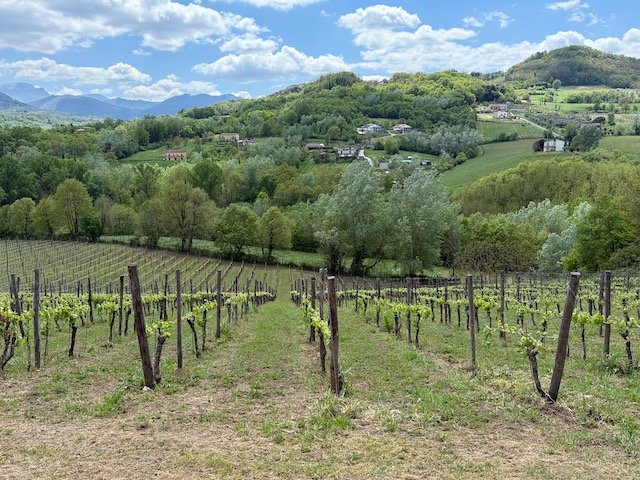
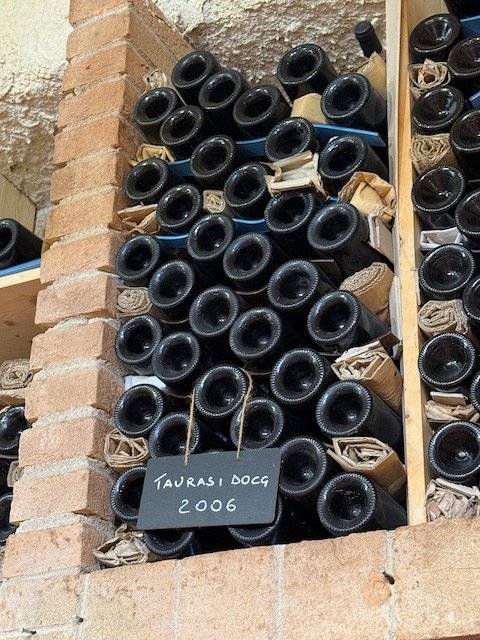
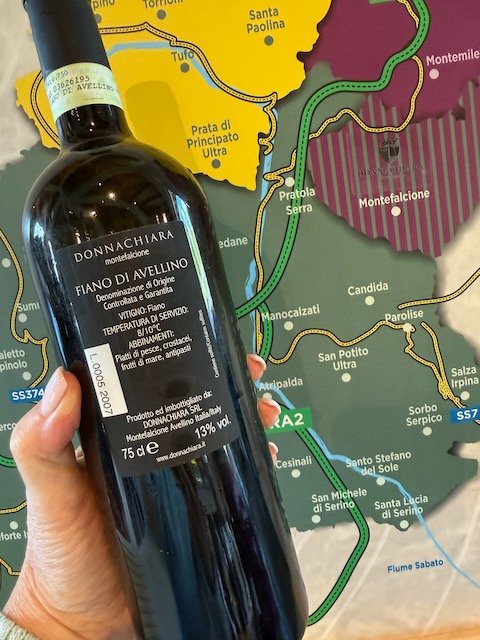
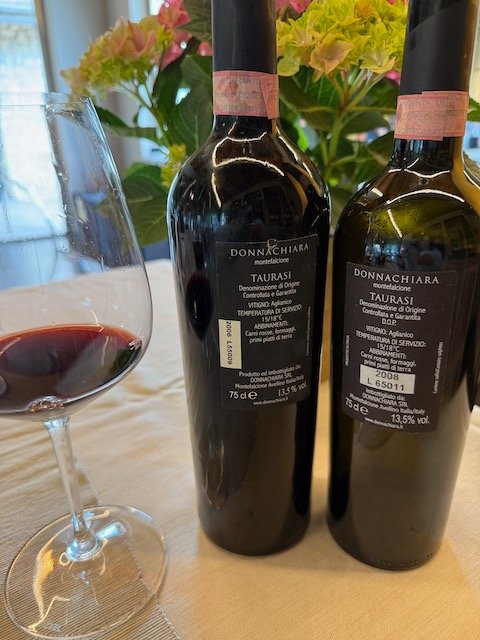
Donnachiara sits in Montefalcione, in the heart of Irpinia, at roughly 400 meters above sea level among clay and fractured rock soils. The modern winery was established in 2005 by the Petitto family and named in tribute to Ilaria’s great-grandmother, Donna Chiara Mazzarelli Petitto—a woman who cared for the family’s vineyards through both world wars with the same attention one might give a child. The family’s roots in the land stretch back generations; for many years they grew grapes that were sold to others. In 2005 that changed. The project became a full expression of place, focused on Irpinia’s three DOCGs—Fiano di Avellino, Greco di Tufo, and Taurasi—as well as Aglianico and Falanghina.
Ilaria now leads the estate as CEO, working with a predominantly female team and the guidance of consulting oenologist Riccardo Cotarella. Together, they pursue a clear philosophy: elegant wines that are never banal and that need time to reveal themselves.
For a fuller immersion in the tasting, the verticals, and the atmosphere of my visit during Campania Stories, see my earlier piece: https://thehappyvine.net/campania-stories-giorno-0-1-campi-flegrei-irpinia/
A Wine That Silenced Me
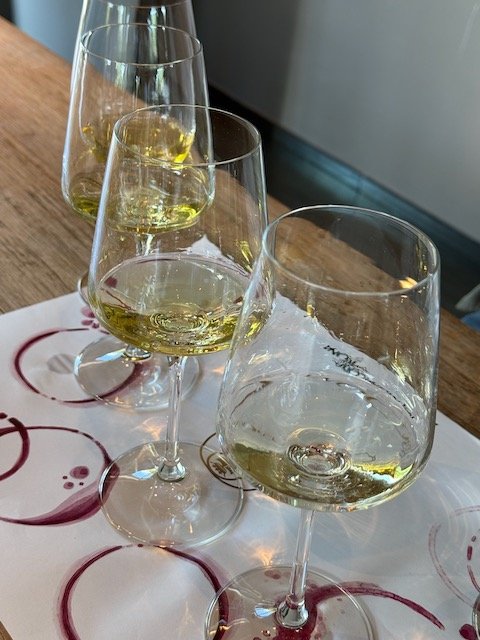
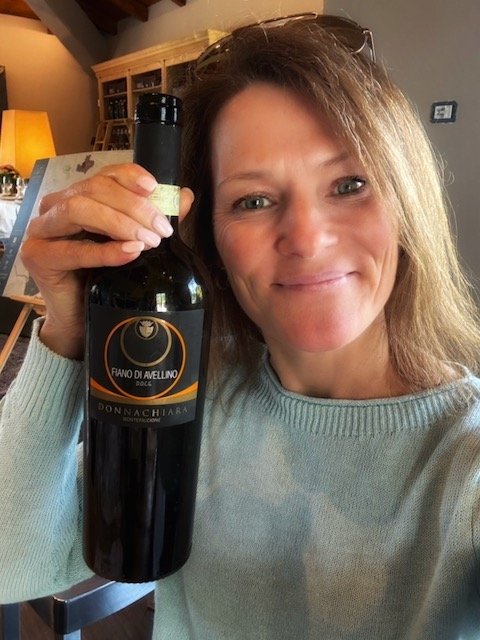
During my visit to the estate, one wine in particular moved me into another realm of emotion: the 2007 Fiano di Avellino. It began with the fresh pear and white florals of youth, then opened slowly into chamomile, honey, petrol, dried herbs, and a smoky complexity that only time can give. The older Esoterica vintages carried extraordinary tension and depth, proving just how beautifully Fiano can evolve. That bottle did not simply impress me—it quieted me. In its layered evolution, I felt the patience and integrity that define Ilaria’s approach to the wines and the life she has chosen.
A Journey from Law to the Land
That patience was hard-earned. Ilaria did not plan to return to Avellino. She studied law and prepared for the notary exams, a path chosen in part to please her father. After years of study and a life oriented toward a different future, she realized it was not her dream. When her mother Chiara began the winery project, Ilaria eventually decided to leave the legal path behind and join the family endeavor. In the years that followed, she took the reins more fully, bringing both the clarity of legal training and a deep attachment to the land.
The transition required courage. In a traditionally male-dominated industry, she learned quickly that assumptions about what a woman “understands” about the business can be persistent. Her advice to young women entering wine is straightforward and hard-won: remain courageous, prioritize your own identity, and do not allow yourself to be intimidated by external judgment. Authenticity, she insists, must come before the need to please or to fit existing expectations. This is where our shared experience became most evident: the decision to walk away from a carefully constructed professional path in favor of something more true, even when the outcome was uncertain.
Landscape, Balance, and Daily Grounding
For Ilaria, the Campania landscape—particularly Irpinia—is an authentic, still somewhat hidden treasure. It offers a deep emotional resonance and a sense of tranquility that feels increasingly rare in more commercialized wine regions. That connection is not abstract; it is the place that steadies her and grounds the work that follows.
The demands of running a winery are constant. To stay grounded, Ilaria makes time for regular workouts and for nature. She spoke openly about how physical changes, including menopause, can heighten anxiety and stress, making those practices of movement and time outdoors essential rather than optional. Imagination and commitment must be protected; balance is part of the work itself. There is a quiet resilience in the way she describes these daily choices—an understanding that strength is not only about pushing forward but also about knowing how to restore oneself to continue.
Defining the Winery—and a Wider Responsibility
When asked to characterize Donnachiara, Ilaria returned to three themes: the power of a supportive, predominantly female team; the freedom to express herself and learn from mistakes; and the goal of creating a lasting legacy that transcends generations.
That sense of responsibility extends beyond the estate. She is clear that promoting the entire region, rather than only one’s own winery, is essential for success in international markets. She has found consumers in places like the United States often more curious and open-minded than those at home. At the same time, she remains deeply committed to Irpinia’s reds—particularly Taurasi and Aglianico, which she refers to with affection and determination as “The Tori.” While white wines may currently be easier to sell and more aligned with trends, she is dedicated to earning lasting respect for the region’s red wines, which have long suffered from historical misconceptions.
She is frank about the challenges of intense local competition. Producers, she believes, must learn to collaborate more effectively if the region is to present a coherent and compelling face to the outside world. Her hope rests with the next generation, which she believes may foster a more cooperative spirit. That belief in collective progress, rather than isolated success, felt especially resonant.
The Women at the Table
When I asked Ilaria which three women she would invite to a meal, her choices revealed a great deal about her values. She named her mother’s grandmother—the original Donna Chiara whose strength and care for the land still echo through the winery’s name. She chose the actor Sophia Loren, in part to discuss the regional inferiority complexes that can still linger in southern Italy. And she selected Prime Minister Giorgia Meloni, curious about the leadership qualities required to navigate complex public responsibilities.
These are not abstract icons. They are figures through whom she contemplates continuity, cultural confidence, and the exercise of power and presence. In choosing them, Ilaria mapped a personal constellation of influence: ancestral resilience, cultural self-assurance, and contemporary leadership.
Legacy Without Obligation
Looking ahead, Ilaria is clear about what she wants for her own daughter. She wants her to have the freedom to explore the world and to pursue her own path. The winery is a family treasure and part of their shared background, but it should never become a burden or an obligation. True legacy, in her view, includes the grace of choice. There is both strength and tenderness in this stance—a refusal to romanticize inheritance at the expense of individual freedom.
What Remains
Ilaria Petitto’s story is one of deliberate return, of choosing identity over expectation, and of building something enduring in a place that rewards patience. From the law books to the vineyards of Montefalcione, and from the quiet determination to elevate Taurasi alongside the more immediately fashionable whites, she continues to shape both a winery and a wider conversation about what Campania’s wines—and its women—can become. Her story endures because it is rooted in conviction, patience, and the freedom to choose.
What remains with me most is the shared recognition we found in each other: two women who left safer paths for something more honest, who believe in the long work of authenticity, and who understand that strength often looks like quiet persistence rather than loud declaration. The memory of a 2007 Fiano remains as well, asking for silence and repaying it with depth.
In the hills of Irpinia, where the air is clearer and the wines ask for time, Ilaria Petitto is writing a story of courage and continuity—one that honors the women who came before her while leaving space for those who will follow. What remains most is its quiet force: a life shaped by conviction, patience, and the freedom to choose. That is the strength that stays.