
The Shape of the Pour- Part 1
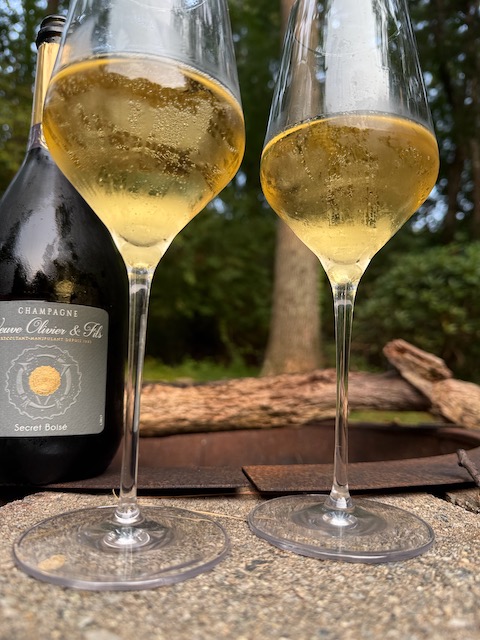
Why the Stölzle Lausitz Starlight White Wine Glass Is My New Go-To for Champagne Veuve Olivier Secret Boisé Brut meets filigree crystal — creamy bubbles, toasted seduction, and zero fizz fatigue collide. In the world of fine Champagne, the vessel matters as much as the wine itself. Pour Veuve Olivier Secret Boisé Brut into a classic flute, and it performs admirably. But experience it in the Stölzle Lausitz Starlight white wine glass, and it ascends to something truly transcendent. The flute has had its moment. This is the new standard of luxury. The Producer & Artisanal Winemaking Veuve Olivier et Fils embodies refined grower-producer excellence in the Vallée de la Marne. Founded in 1922, the estate is now guided by winemaker Sandrine Charpentier-Olivier, whose feminine sensibility infuses every cuvée with grace and depth. Across 18 hectares of prized clay-limestone terroir, the family crafts wines of exceptional poise and minerality. Secret Boisé Brut (a distinguished non-vintage cuvée led by Chardonnay) is a masterclass in elegance: • Meticulous grape selection and gentle pressing capture pristine fruit and vibrant acidity. • Traditional méthode champenoise with second fermentation in bottle. • Prolonged lees aging develops exquisite autolytic complexity — toasted brioche, toasted nuts, and silken creaminess. • A whisper of “boisé” influence from carefully selected barrel-aged reserves adds luxurious body and nuanced caramel, honey, and woody undertones, all while preserving freshness and balance. The outcome is a Champagne of rare sophistication: opulent yet refined, generous yet precise. Tasting Notes: Layers of Pure Indulgence In the Starlight glass, Secret de Boisé Brut reveals its full splendor: • Aromas: Alluring notes of honeyed peach and ripe orchard fruit entwine with caramel, toasted brioche, nougat, and delicate white florals. A subtle, smoky wood nuance adds intrigue and depth. • Palate: Velvety, persistent bubbles caress the palate with a lush, almost creamy texture. Bright grapefruit zest and crystalline chalky minerality provide exquisite lift, while refined wood tannins lend structure and remarkable length. The finish is pure silk — harmonious, lingering, and utterly captivating. • Overall Impression: A feminine expression of power and poise. Confident, layered, and irresistibly seductive. The Starlight Glass: Masterpiece of Form and Function The Stölzle Lausitz Starlight collection redefines luxury in machine-made crystal. With its ultra-thin walls, delicately pulled stem, and filigree silhouette, it offers a near mouth-blown experience that is both exquisite and practical. This glass elevates Secret de Boisé Brut through: • Superior Aromatic Revelation: The elegant bowl optimizes gentle aeration, allowing every nuanced layer of toast, honey, and fruit to unfold with breathtaking clarity. • Flawless Bubble Mastery: Fine mousse rises with grace and endurance, preserving the wine’s signature creamy texture. • Harmonious Balance: Ideal proportions maintain perfect temperature and showcase the Chardonnay’s refinement, minerality, and luxurious length. It transforms each sip into a moment of pure sensory delight. Luxurious Food Pairings This refined pairing invites unforgettable tableside moments: • Timeless Elegance: Seared scallops or butter-poached lobster with a delicate beurre blanc — the wine’s creaminess mirrors the dish while its zest cuts through with precision. • Sophisticated Indulgence: Herb-roasted chicken, veal chop with wild mushrooms, or pan-seared foie gras. The subtle boisé notes harmonize beautifully with earthy, savory depths. • Effortless Luxury: A selection of fine soft cheeses, toasted Marcona almonds, or an artisanal charcuterie board. For adventurous flair, pair with subtly spiced Asian cuisine — the bubbles and acidity provide exquisite contrast. • Dessert Reverie: A peach tart with caramel drizzle or lightly toasted brioche — echoing the wine’s own seductive notes. The Final Pour In a world of fleeting pleasures, the marriage of Veuve Olivier’s masterful Secret de Boisé Brut and the Stölzle Lausitz Starlight glass represents true connoisseurship. This is where heritage winemaking meets contemporary crystal excellence — an invitation to savor life’s finer moments with intention and joy. Flutes served their purpose. Now, elevate yours. What glass has transformed your favorite Champagne into something unforgettable? Share your discoveries below — I’m always in pursuit of the next exquisite find. Watch the Reel on Instagram @thehappyvineks to witness the luxurious difference firsthand.
Terroir Through the Glass: How Glassware Elevates Wine Tasting
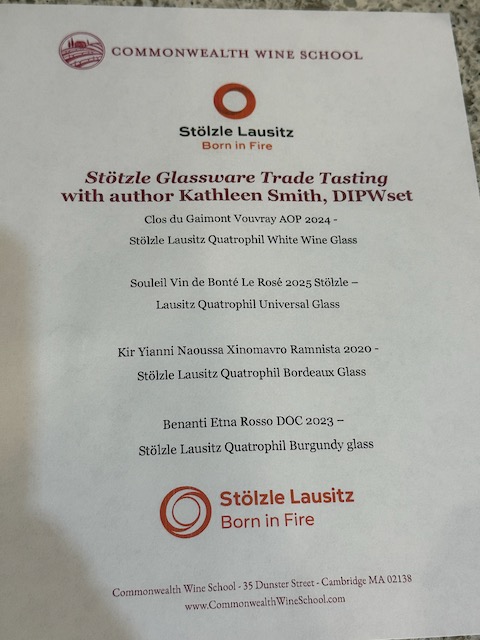
Last week I had the absolute pleasure of hosting Terroir Through the Glass in partnership with Stölzle Lausitz at the Commonwealth Wine School – an intimate and interactive tasting evening for trade professionals in Cambridge, MA. The concept was simple but powerful: explore how glassware shapes — and elevates — our perception of wine, especially its connection to terroir. We tasted four exceptional, place-driven wines side-by-side in Stölzle Lausitz Quatrophil glasses versus the standard ISO. The differences were eye-opening (and nose-opening!). Here’s a full recap of the evening, complete with specific food pairing ideas. Why the Glass Matters: The Fundamentals Before we lifted a single glass, we broke down the science and sensory impact: We are creatures of habit. Just like that favorite coffee mug you instinctively reach for every morning — the one with the perfect weight, handle feel, and capacity — your go-to wine glass genuinely enhances enjoyment. I asked the room to share their favorites, and the responses were wonderfully varied and passionate. The Wines & Their Perfect Glass Partners 1. Souleil Le Rosé 2025 – Stölzle Quatrophil Universal GlassFounders Marianne Fabre-Lanvin and Thomas Delaude created this as a love letter to endless summer in southern France. Organic grapes from Mediterranean vineyards deliver saline minerality and bright sunshine. In the glass: Explosive wild strawberry, citrus zest, white peach, white cherry, and a refreshing saline finish. The Universal Glass concentrated the delicate aromatics beautifully while preserving the wine’s breezy, approachable charm. It felt like pure joy in liquid form. Specific Food Pairings: 2. Clos du Gaimont Vouvray 2024 – Stölzle Quatrophil White Wine GlassFrom the historic Clos du Gaimont parcel in Vouvray (owned by the Chainier family with 18th-century roots). Chalky tuffeau soils and Loire influence produce vibrant Chenin Blanc. The white wine glass highlighted white flowers, green apple, pear, quince, citrus, and piercing minerality. Its narrower shape and chimney directed the wine precisely, emphasizing Chenin’s hallmark acidity and purity. Specific Food Pairings: 3. Benanti Etna Rosso 2023 – Stölzle Quatrophil Burgundy GlassA benchmark from the Benanti family on Mount Etna. Volcanic soils, high elevation, and native Nerello Mascalese (80-85%) + Cappuccio create something truly special. The wide Burgundy bowl allowed the wine to breathe, revealing ethereal red cherry, floral notes, smoky minerality, salinity, and silky tannins. It transformed from “good” in the ISO to “magical” in the Stölzle. Specific Food Pairings: 4. Kir-Yianni Naoussa Xinomavro Ramnista 2020 – Stölzle Quatrophil Bordeaux GlassFrom the Boutaris family’s estate in Naoussa, Greece. Xinomavro (“acid black”) from Mount Vermio slopes delivers power and aging potential. The Bordeaux glass tamed the firm tannins while concentrating black cherry, plum, black pepper, spice, tobacco, and earth. It let this warrior grape show its noble structure and depth. Specific Food Pairings: The afternoon was lively and participatory. Attendees swirled, sniffed, sipped, and compared glasses in real time, sharing observations about how each shape changed the wine. Laughter and great insights flowed freely! Final Takeaways A heartfelt thank you to all the trade professionals who joined me with open minds and curious palates, and to Stölzle Lausitz for providing such excellent glasses that performed brilliantly. The glass doesn’t change the wine — it simply helps it tell its story more completely.
VieVinum 2026: Vienna & Vineyards
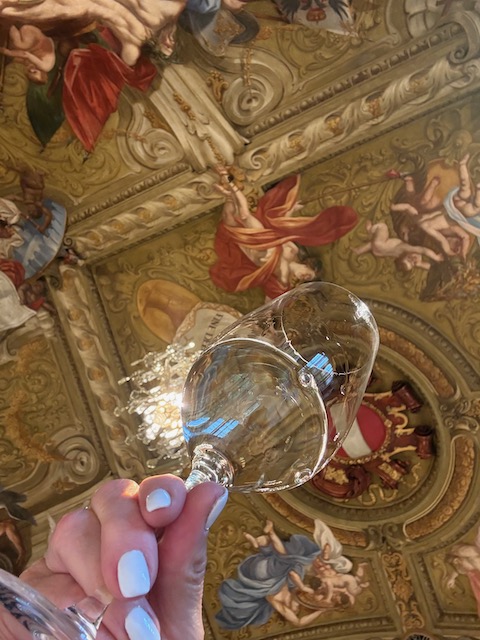
Vienna has a way of making wine feel cinematic. Perhaps it’s the imperial grandeur. The late-night glow spilling from historic cafés. The effortless blend of culture, history, and hospitality. Or perhaps it’s because Austrian wine itself mirrors the city — precise yet emotional, intellectual yet deeply soulful. For four days in May every two years, VieVinum 2026 transformed Vienna into the epicenter of the wine world, bringing together approximately 550 wineries and exhibitors from across Austria and beyond. Hosted within the magnificent Hofburg Palace, VieVinum remains one of Europe’s most important wine events—not simply because of its scale, but because of the conversations happening inside the glass. This year felt particularly electric. Not loud. Not flashy. Confident. Austria knows exactly who it is right now. The Energy of VieVinum VieVinum isn’t a fair you casually stroll through. It’s a marathon of tastings, interviews, masterclasses, meetings, press conferences, and spontaneous conversations that somehow become the most memorable part of the experience. From the Welcome Event at the MAK to ÖTW gatherings throughout the city, every day offered a deeper look into the evolution of Austrian wine. What stood out most was the remarkable balance between tradition and innovation. Austria’s producers aren’t chasing trends. They’re doubling down on authenticity, site expression, sustainability, and precision. The wines reflect that philosophy beautifully. Grüner Veltliner continues to evolve into one of the world’s most compelling white varieties, combining freshness, texture, and mineral detail. Blaufränkisch is cementing itself as one of Europe’s most exciting red grapes, capable of delivering both power and finesse with remarkable clarity of place. But let’s not loose sight of the racy Sauvignon Blanc, the finessed Chardonnay, that mineral driven Pinot Noir.. Austria is more than Grüner my friends. Discovering Austria’s Next Generation One of the highlights of the week was meeting producers who are helping define the next chapter of Austrian wine. The Schuller sisters of Weingut Schuller brought a fresh, modern energy to their wines—vibrant, expressive, and deeply connected to place while embracing a contemporary vision for the future. At Schlumberger, Austria’s historic sparkling wine house, traditional method Sekts demonstrated elegance, creamy texture, and remarkable precision. Bauer-Pöltl showcased Blaufränkisch with dark fruit, spice, structure, and a vibrant sense of energy that felt distinctly Burgenland. Weingut Toni Hartl impressed with refined, site-driven reds that balanced concentration with elegance. Weingutstift Göttweig offered wines that reflected centuries of history, delivering purity, minerality, and timeless sophistication. Familie Reinisch once again demonstrated why Thermenregion remains one of Austria’s most exciting regions, crafting Pinot Noir and white wines of remarkable finesse and detail. Puklavec Family Wines brought an international perspective, producing vibrant, approachable wines with aromatic clarity and freshness. Among the most fascinating conversations were those with childhood friends Philipp Grassl and Markus Huber, both members of Österreichische Traditionsweingüter (ÖTW) and two of Austria’s most respected voices in modern winemaking. Philipp Grassl has become one of Carnuntum’s defining producers, crafting wines he describes as having “silence, depth, and tension.” His wines unfold slowly, revealing layers of texture and complexity while maintaining a quiet confidence that demands attention without ever shouting. The master of St. Laurent, he calls “a diva in the vineyard.” Markus Huber, meanwhile, continues to elevate Traisental through wines defined by precision and elegance. His remarkably pure expressions capture the crystalline freshness and mineral character that have made him one of Austria’s benchmark producers. Together, they embody a generation of winemakers acting as artists for their respective regions, lifting them onto the international stage through authenticity rather than imitation. Wine, History and Hospitality Some of the most memorable moments happened away from the tasting halls. What makes Vienna unique is that wine isn’t something that exists outside the city—it is woven directly into its identity. As Europe’s only capital city with significant vineyards planted within its city limits, wine is never far away. One afternoon led to Schönbrunn Palace, the former imperial summer residence of the Habsburgs. With its staggering 1,441 rooms and miles of vast manicured gardens stretching across the landscape, it felt less like visiting a palace and more like stepping into a living history book. No visit to Vienna would be complete without embracing its culinary traditions. Discovering the rich elegance of a true Sacher Torte and the delicate layers of freshly prepared apple strudel offered a delicious reminder that Austria’s obsession with craftsmanship extends far beyond wine. At Pfarrwirt, Vienna’s oldest Heuriger, lunch provided a deeper understanding of Vienna’s wine culture through a tasting of wines from Mayer am Pfarrplatz and Mayer Rotes Haus. Surrounded by centuries of history, we explored vineyard-designated wines that showcased the precision and freshness that define modern Viennese wine. We tasted the range from Mayer am Pfarrplatz: Gelber Muskateller, Grüner Veltliner (Grinzing), Riesling Ried Alsegg and Riesling Nussberg, plus two examples of Wiener Gemischter Satz (from Weingut Rotes Haus and Mayer am Pfarrplatz). Wiener Gemischter Satz is a beautiful, chaotic field blend—multiple varieties planted side by side in the same vineyard, harvested and fermented together. It’s a living snapshot of Vienna’s historic vineyards, where complexity, texture and tension are woven naturally into every glass. Dinner at the legendary Plachutta delivered another Austrian classic: Wiener Schnitzel and white asparagus season in full force. Light, airy, delicate and impossibly crisp, it was arguably the finest example of the dish I’ve ever tasted—a masterclass in how simplicity becomes extraordinary when executed perfectly. Austria at a Turning Point What struck me most throughout VieVinum 2026 was how internationally relevant Austrian wine has become. Not as a trend. Not as a niche. But as a benchmark for terroir-driven, precision-focused winemaking. Climate challenges continue to reshape wine regions across the globe, yet Austria appears uniquely positioned for this moment. The balance between freshness, ripeness, structure, and elegance aligns perfectly with what sommeliers, collectors, and consumers increasingly seek. The wines feel sharper than ever. More articulate. More confident. And yet they retain their soul. That balance is difficult to achieve. Austria is doing it remarkably well. Leaving Vienna As VieVinum came