
Filomena Iacobucci: Powerful, Magic and Dream
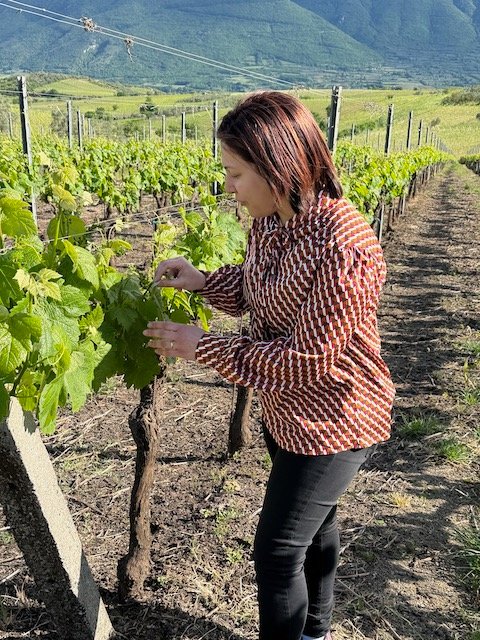
The hills of Guardia Sanframondi hold a particular kind of quiet — the scent of earth mixed with a spark of possibility. When I met Filomena Iacobucci at Terre Stregate, I noticed immediately how she leads with both the patience of nature and a quietly determined imagination. In the hills of Guardia Sanframondi, at the heart of Sannio Beneventano, she moves with ease between the vineyard’s daily rhythms and a broader vision shaped by her time away. Her voice carries both roots and reach, steady and quietly powerful. The Winery and the Land of the Bewitched Terre Stregate, meaning ‘bewitched lands,’ rests among the gentle hills of Guardia Sanframondi, with views stretching over the Telesina Valley and the Calore River. The Matese massif stands quietly in the distance. The name calls up old stories of witches gathering beneath walnut trees, legends that still seem to linger in the air. The Iacobucci family has tended this land since 1898, beginning with Filippo Iacobucci. For a time, wine gave way to the olive mill, but in the late 1990s and early 2000s, Armando Iacobucci brought the winery back to life. Now, Filomena and her brother Carlo guide the estate. About 25 hectares are under vine, with Falanghina at the heart, joined by Greco, Fiano, and Aglianico, all rooted in clay-limestone soils at 400 to 450 meters. Just a short walk away, the olive mill lets visitors taste the land’s full spectrum, from grape to oil. Under Filomena and Carlo, the cellar, gardens, and tasting spaces reflect a place where tradition and thoughtful modernity meet. A Wine of Bright Positivity Here, with Filomena, I tasted the Svelato Falanghina del Sannio DOP 2024 for the second time this year, the first being at VinItaly this past April. The wine was as always bright and precise, alive with energy. Its freshness seemed to echo the clarity and confidence Filomena brings to her work. There is a kind of openness in both the wine and the woman behind it—a way of meeting complexity with light rather than weight. A Journey of Distance and Return That brightness, I realized, did not come easily. Filomena once dreamed of studying international relations, drawn to the ways farmers connect with the wider world. She left for university in Rome, hesitant at first to step away from the family winery. Distance changed her perspective. Seeing the estate from afar, she began to imagine new possibilities for Falanghina and for honoring tradition while building something modern and outward-looking. When she returned, she brought a deeper respect for the land’s timing and a quiet determination to help the project grow without losing its soul. Nature became her guide. The vineyard, unlike the city, asks for patience and the willingness to wait and respond. That blend of vision and daily patience shapes her leadership. Respect for Time and the Act of Pruning If there is one object that captures Filomena’s approach, it is the pruning shears. For her, pruning is the most important time of year—a practice that honors time, patience, and the careful decisions that shape the vineyard’s future. It is both practical and thoughtful: looking ahead while staying close to what the vines need right now. She speaks of a modern management style built on study and sensitivity. In her view, an entrepreneur is someone who sees what others might miss. Respect for nature is essential, but control is never absolute. That balance of vision and humility is at the heart of her leadership, a quiet strength that need not be declared. Sensory Memory and Daily Grounding For Filomena, happiness is woven into the sensory life of the land and its traditions: the scent of fresh bread from the bakery, the first taste of seasonal fruit, the olive harvest that arrives each November. Living in step with these rhythms, she believes, is at the heart of a good life. The oil mill’s closeness to the winery lets visitors experience that connection for themselves. When challenges come, she turns to music and the simple act of letting go. Together, softness and energy help her recover and return to her work with an open mind. In this way, resilience is not just an idea but a daily practice: feeling fully, releasing what needs to be released, and coming back to the work without losing either gentleness or strength. Imagination for the Next Generation She pays close attention to the pressures facing young people, especially her own daughters. For her, protecting dreams and imagination is essential, especially in a world that often feels rushed or demanding. Leadership, she believes, begins with the freedom to think for oneself. In summer, her children’s days are filled with outdoor play, rest, and the gift of unscheduled time. She sees this freedom as a way to help them grow into their own leadership. Her advice to the next generation is simple: be determined, trust your vision, and do not simply follow the crowd. Independent thinking and holding onto your own personality matter. She finds inspiration in Campania’s historical women, like the physician Trotula and the writer Matilde Serao, who connect past strength with future possibility. Their stories remind her that women have always shaped the life of this region, and that resilience is part of that legacy. Labels, Symbols, and the Essence of the the labels at Terre Stregate are meant to spark imagination. Symbols like the eye and the moon appear—the moon guiding through the night, the eye inviting us to see our place in nature, connecting what came before with what is still to come. When I asked Filomena to describe her work in three words, she chose ‘powerful,’ ‘magic,’ and ‘dream.’ The words fit. They hold both the strength needed to lead and the sense of wonder that keeps the work alive, shaping how she shares her vision, her leadership. Legacy Without Obligation Looking to the future, she hopes to share the winery’s story and passion with her children, but never to force them onto
Cristina Varchetta: Landscape, Silence and Continuity
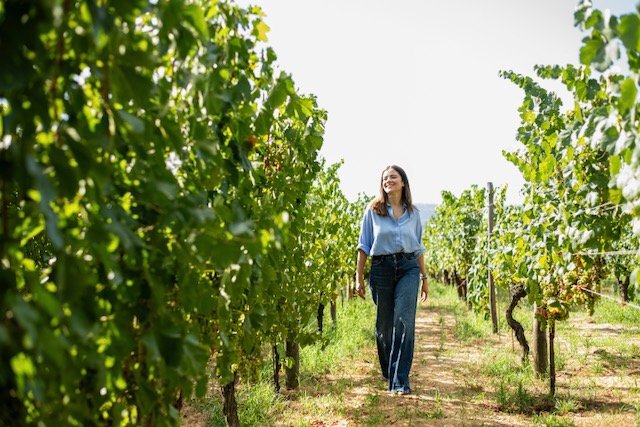
Some encounters immediately feel like a homecoming. Speaking with Cristina Varchetta of Cantine Astroni, I was struck by her sense of place and genuine hospitality, and by how naturally our perspectives aligned: a love of independent travel, the joy of learning new languages, and the determination to shape a career around meaningful connections rather than rigid traditions. With Cristina, the Campi Flegrei became less an imposing volcanic backdrop and more an open invitation—to listen, to belong, and to return transformed. Our conversation moved easily between the practical work of the winery and the deeper emotional currents that sustain it, showing how closely the two are linked. The Winery Cantine Astroni sits on the outer slopes of the Astroni crater, between Naples and Pozzuoli, in the heart of the Campi Flegrei. Once a Bourbon hunting reserve, the area is now a WWF nature oasis. The Varchetta family has been connected to wine here for more than a century, beginning in 1891 with great-grandfather Vincenzo. The modern project took shape in the late 1990s. It was formalized around the birth of the Campi Flegrei DOC, transforming a family farm and holiday retreat into a focused boutique winery. Today the emphasis is on single-vineyard expression—an approach Cristina likens to the cru system of Burgundy—working primarily with ungrafted Falanghina and Piedirosso on sandy volcanic soils. Cousin Gerardo Vernazzaro is the winemaker. Hospitality is central to the place. Guests are invited not only to taste, but to understand the land through the stories that have shaped it. A Wine of Quiet Intensity My favorite wine from the estate was the Piedirosso. In its mineral depth, red-fruit lift, and volcanic tension, I felt the same quiet intensity that runs through Cristina’s way of speaking about this land. It does not shout. It holds its ground with elegance and a sense of place that lingers long after the glass is empty—much like the conversations that unfold around the table at Astroni. In that glass I tasted the resilience of the Campi Flegrei and the care with which this family interprets it. A Journey of Leaving and Returning As a child, Cristina did not dream of a specific profession. She dreamed of seeing the world. Languages, different cultures, and distant places fascinated her. She never imagined that wine would become the way she could travel while still carrying home with her wherever she went. She began in accounting, then made a deliberate shift toward the family winery. Seeking deeper technical knowledge and a different work rhythm, she studied with the Italian Sommelier Association (AIS) and the Wine & Spirit Education Trust (WSET). Today her role centers on hospitality, communication, and export, work that satisfies her love of travel and independent movement while keeping her rooted in the Campi Flegrei. Her advice to her younger self is simple and hard-earned: do not be afraid of leaving, of studying, of making mistakes. Only by going away did she truly learn to appreciate her roots. That experience of departure and return shapes everything she does. She carries that lesson into her work with guests and into the way she speaks about the next generation. Hospitality as Inheritance More than any object, Cristina carries the memory of her grandparents’ hands—strong from years of work, yet incredibly gentle when they held a bunch of grapes. They taught her that respect always comes before technique. Today, when she welcomes guests, she tries to offer the same care they showed the land and the people around them. That, she says, is her most valuable inheritance. For her, the table remains the true center. Growing up, it was where her family shared stories, laughed, celebrated, and found comfort after difficult days. Wine is not the protagonist of the table; it is simply a way to create connection. What she hopes every guest takes home is not only the memory of a tasting, but the feeling of belonging—of having been part of something larger than a single bottle. Landscape, Silence, and Continuity When she stands alone in the vineyard at sunset, it is the silence that connects her most deeply to the women who came before her. In that slowing of the day, she feels as if the land still holds their voices. It reminds her that she does not own this place—she is simply passing through, with the responsibility of leaving it a little better than she found it. That sense of temporary stewardship runs through her approach to both the vines and the people who visit them. If her life in wine were a piece of music, it would be a melody that starts softly and grows with time. She would be a cello: an instrument that does not need to be the loudest in the orchestra to touch people’s hearts. Like the best wines of the Campi Flegrei, the most beautiful music does not rush. It matures, layer after layer, revealing more the longer one listens. Joy as Creative Fuel Even amid the seriousness of the wine world, Cristina protects small, unserious pleasures. One of them is dancing in her kitchen while cooking, even when she is completely alone. Those are the moments when she stops overthinking and enjoys life. Creativity, she believes, often comes from joy, and joy is usually found in the simplest moments. It is a reminder that hospitality and storytelling require not only discipline, but also lightness. What She Would Bottle If she could bottle one fleeting emotion from her journey and share it with younger women entering the industry, she would label it “Coming Home.” Leaving is important, she says, but coming back with new eyes is even more meaningful. She hopes every young woman understands that she never has to choose between her dreams and her roots. She can carry both, and in doing so, turn them into strength. What Remains What surprised Cristina most about stepping into the world of wine in Campania was discovering that it is first and foremost about people. A bottle may
Ilaria Petitto: Courage, Identity, and Quiet Strength
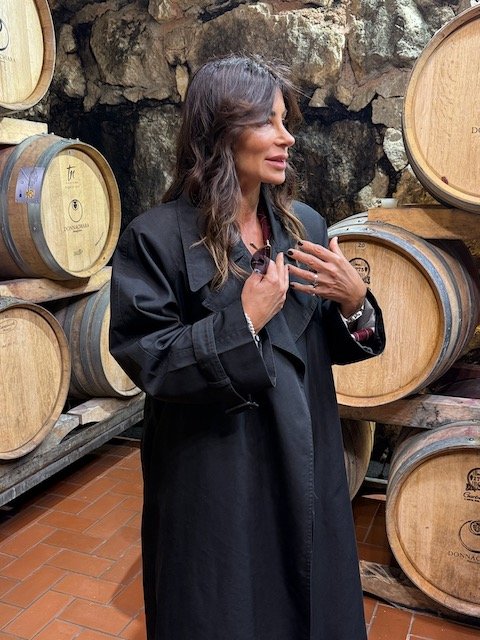
Every so often, a conversation opens a window into another person’s world. Meeting Ilaria Petitto of Donnachiara in early August, I was immediately struck by her clarity and the quiet strength guiding her choices. She traded a conventional career in law for the uncertainty of wine, embracing the courage needed to define her own identity in a world that too often clings to familiar expectations. For Ilaria, authenticity is not just an ideal—it’s a source of power. Our conversation felt less like an interview and more like a recognition of a shared commitment to authenticity. The Winery Donnachiara sits in Montefalcione, in the heart of Irpinia, at roughly 400 meters above sea level among clay and fractured rock soils. The modern winery was established in 2005 by the Petitto family and named in tribute to Ilaria’s great-grandmother, Donna Chiara Mazzarelli Petitto—a woman who cared for the family’s vineyards through both world wars with the same attention one might give a child. The family’s roots in the land stretch back generations; for many years they grew grapes that were sold to others. In 2005 that changed. The project became a full expression of place, focused on Irpinia’s three DOCGs—Fiano di Avellino, Greco di Tufo, and Taurasi—as well as Aglianico and Falanghina. Ilaria now leads the estate as CEO, working with a predominantly female team and the guidance of consulting oenologist Riccardo Cotarella. Together, they pursue a clear philosophy: elegant wines that are never banal and that need time to reveal themselves. For a fuller immersion in the tasting, the verticals, and the atmosphere of my visit during Campania Stories, see my earlier piece: https://thehappyvine.net/campania-stories-giorno-0-1-campi-flegrei-irpinia/ A Wine That Silenced Me During my visit to the estate, one wine in particular moved me into another realm of emotion: the 2007 Fiano di Avellino. It began with the fresh pear and white florals of youth, then opened slowly into chamomile, honey, petrol, dried herbs, and a smoky complexity that only time can give. The older Esoterica vintages carried extraordinary tension and depth, proving just how beautifully Fiano can evolve. That bottle did not simply impress me—it quieted me. In its layered evolution, I felt the patience and integrity that define Ilaria’s approach to the wines and the life she has chosen. A Journey from Law to the Land That patience was hard-earned. Ilaria did not plan to return to Avellino. She studied law and prepared for the notary exams, a path chosen in part to please her father. After years of study and a life oriented toward a different future, she realized it was not her dream. When her mother Chiara began the winery project, Ilaria eventually decided to leave the legal path behind and join the family endeavor. In the years that followed, she took the reins more fully, bringing both the clarity of legal training and a deep attachment to the land. The transition required courage. In a traditionally male-dominated industry, she learned quickly that assumptions about what a woman “understands” about the business can be persistent. Her advice to young women entering wine is straightforward and hard-won: remain courageous, prioritize your own identity, and do not allow yourself to be intimidated by external judgment. Authenticity, she insists, must come before the need to please or to fit existing expectations. This is where our shared experience became most evident: the decision to walk away from a carefully constructed professional path in favor of something more true, even when the outcome was uncertain. Landscape, Balance, and Daily Grounding For Ilaria, the Campania landscape—particularly Irpinia—is an authentic, still somewhat hidden treasure. It offers a deep emotional resonance and a sense of tranquility that feels increasingly rare in more commercialized wine regions. That connection is not abstract; it is the place that steadies her and grounds the work that follows. The demands of running a winery are constant. To stay grounded, Ilaria makes time for regular workouts and for nature. She spoke openly about how physical changes, including menopause, can heighten anxiety and stress, making those practices of movement and time outdoors essential rather than optional. Imagination and commitment must be protected; balance is part of the work itself. There is a quiet resilience in the way she describes these daily choices—an understanding that strength is not only about pushing forward but also about knowing how to restore oneself to continue. Defining the Winery—and a Wider Responsibility When asked to characterize Donnachiara, Ilaria returned to three themes: the power of a supportive, predominantly female team; the freedom to express herself and learn from mistakes; and the goal of creating a lasting legacy that transcends generations. That sense of responsibility extends beyond the estate. She is clear that promoting the entire region, rather than only one’s own winery, is essential for success in international markets. She has found consumers in places like the United States often more curious and open-minded than those at home. At the same time, she remains deeply committed to Irpinia’s reds—particularly Taurasi and Aglianico, which she refers to with affection and determination as “The Tori.” While white wines may currently be easier to sell and more aligned with trends, she is dedicated to earning lasting respect for the region’s red wines, which have long suffered from historical misconceptions. She is frank about the challenges of intense local competition. Producers, she believes, must learn to collaborate more effectively if the region is to present a coherent and compelling face to the outside world. Her hope rests with the next generation, which she believes may foster a more cooperative spirit. That belief in collective progress, rather than isolated success, felt especially resonant. The Women at the Table When I asked Ilaria which three women she would invite to a meal, her choices revealed a great deal about her values. She named her mother’s grandmother—the original Donna Chiara whose strength and care for the land still echo through the winery’s name. She chose the actor Sophia Loren, in part to discuss the regional inferiority
Gilda Martusciello: The Woman Who Holds Her Ground
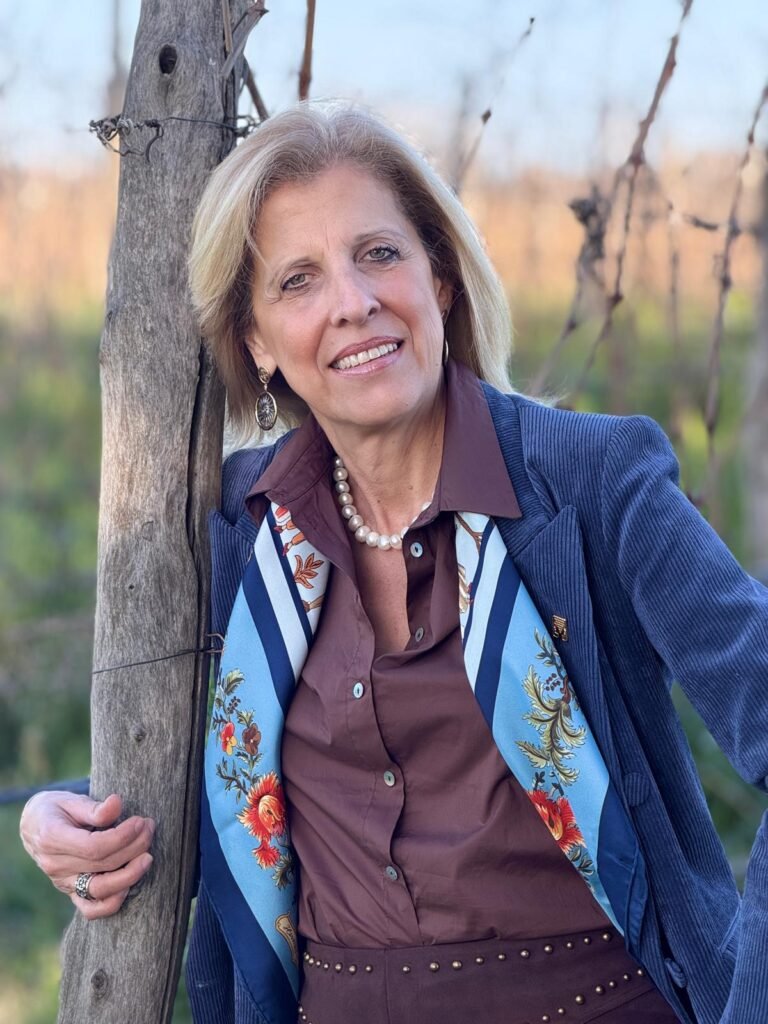
Some conversations stay with you, like the smell of wet earth after rain, sulfur in the air, or the comfort of morning coffee. My recent talk with Gilda Martusciello was like that. We spoke in early August, just after a 4.7-magnitude earthquake struck Campi Flegrei and the surrounding areas Portici and Pozzuoli. There was damage to homes, stress on infrastructure, and protests. Even so, Gilda spoke with calm and steadiness. The winery was safe, her family and friends were fine, and the Asprinio sparkling harvest would still start at the end of the month. That calmness came through in everything she said. That steadiness is central to both Gilda and Salvatore Martusciello wines. I could talk to her for hours—she inspires with her determination and courage. Gilda is modern but respects tradition. She enjoys cooking and caring for her herbs, and she also takes an active role in women-in-wine groups, helping shape the future of the industry with quiet strength. The Winery In 2015, Gilda Guida and her husband Salvatore Martusciello started a small, focused project called Salvatore Martusciello in the heart of Campi Flegrei. Building on the family’s work with local Campanian grape varieties and the creation of important DOCs, they focus on wines that reflect the identity of Campi Flegrei, Agro Aversano, and Penisola Sorrentina. These include Asprinio from the historic alberata system, Falanghina and Piedirosso on their own roots, and the Ottouve blends from Gragnano and Lettere. Their philosophy is simple: Vini di persistenza, or wines of persistence. For a fuller immersion in the winery, the vineyards, and the tasting experience during Campania Stories, see my earlier piece: Campania Stories Day 1 A Wine That Rooted Me to the Spot During my visit, one wine truly caught my attention: the Falanghina dei Campi Flegrei “Settevulcani” 2018. Its mineral depth, salinity, and quiet intensity reminded me of Gilda herself—her strength, determination, and deep love for this land. This wine did not try to impress with boldness or drama. Instead, it stood firm like Gilda. That bottle remains one of the most memorable experiences of my trip, a true reflection of persistence and place. A Woman Shaping the Future of Campanian and Italian Wine Gilda has been a member of Le Donne del Vino since 2004 and today serves as the regional Delegate for Campania, a role she assumed after years of progressive responsibility as former Campanian vice-delegate, National Counselor, and member of the Commission for International Relations. The association, founded in 1988 in Campania itself, has grown into the largest organization of its kind in the world, uniting more than 1,200 women across Italy who work to promote wine culture and elevate the visibility and leadership of women throughout the supply chain. Gilda’s long involvement gives her a unique perspective on how women’s roles have changed. She has seen the association grow from a small group of pioneers, including her mother-in-law Elena Martusciello, a former national president, into a structured network that builds skills, encourages international partnerships, and supports the next generation through projects like D-Vino. In Campania, which has one of the highest percentages of women-led or women-influenced wineries in Italy, her work turns individual stories into collective strength. She also holds important roles in the region, serving as Vice-President of Vitica, the Consorzio Viticoltori del Casertano, and as Counselor of the Consorzio Penisola Sorrentina DOP. In these positions, she encourages collaboration instead of working alone, urging producers to promote the region’s biodiversity, authentic lower-alcohol wines, and unique training systems like the alberata as shared strengths. “Previous generations found cooperation difficult,” she told me. Today, working together is both necessary and possible. Through these roles, Gilda helps drive a bigger change: women in Campania and across Italy now lead in strategy, education, sustainability, and storytelling. A Journey Written in Precision and Belonging Her own journey reflects that quiet change. Gilda did not plan to make wine. As a child, she wanted to be a cardiac surgeon, a goal that required the same precision she later used in the vineyard and cellar. She earned a degree in Economics from Università Parthenope and a master’s in international business. In 1998, she joined Grotta del Sole. What started as a job soon became full immersion. “It was not only a job,” she said about those early years, “but an abrupt entry into a new world.” Salvatore and his family, pioneers in protecting Campania’s native grapes, introduced her to a world of soil, patience, and intuition. She married Salvatore in 2005, and in 2015 they started their own small project so their experiences could finally have a voice. She sees tradition clearly. For her, honoring history does not mean staying the same. “Find a personal interpretation,” she suggests. Bring your own style into the historical framework so the winery stays alive. This is the quiet change she lives every day: staying true without rigidity. Sensory Grounding and the Women Who Shape Her When I asked Gilda about her favorite place in Campania, she answered with a memory of scents: sulfur, wet soil, and sea air. This unique smell of the Phlegraean landscape takes her back to childhood and her late mother. These memories keep her grounded. They are her private guide as she moves through harvest, meetings, and leadership roles. Her daily routine is simple and intentional: first coffee, tending to her herbs, and a quiet moment before the day begins. To the next generation, including her daughter, she offers clear advice: keep learning, build a good reputation, and stay true to yourself. She believes these are the qualities that last. Three women inspire her, each showing a different kind of strength, continuity, and identity. The first is her mother, who taught her to cook and whose presence lives on in Gilda’s daily routines: making morning coffee and tending to aromatic herbs as the seasons change. These small, repeated actions are more than habits. They connect her to the woman who first showed her that care, precision, and love can be