
Tavel Rosé – A Richer Style
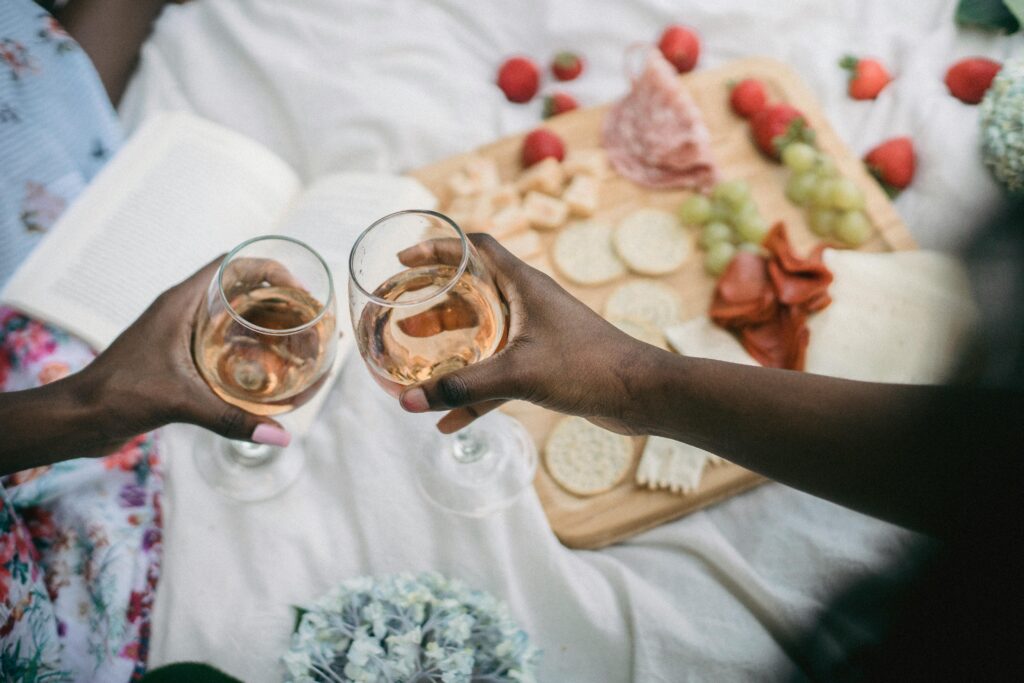
Tavel is an area in the Rhône valley that only produces Rosé wines. It is located in the southwest part of the Rhône Valley. The area has warm continental temperates with Mediterranean influences and very windy. The grapes are all handpicked. The grapes are all destemmed and go through a 24 hour maceration period on the skins in order to achieve an intense, vibrant colour and fuller aromas from the varietal. The juice then undergoes a cool fermentation at 16°C to 20°C for 8 to 10 days. For more information on How Rosé Is Made follow this link on my site. This wine from Domaine Lafond Tavel Roc-Epine is a blend of Grenache 60%, Cinsault 10%, Syrah 5 %, Carignan 5% and Clairette, Picpoul, Bourboulenc, Mourvèdre. The color is a very vibrant pink with aromas of cherry, strawberry candy, rhubarb, rosemary and lavender. On the palate the wine is dry with medium intensity and medium to high acid. The flavors are rich strawberry, grapefruit, cherry, minerals, peach, rhubarb rosemary, pepper, lavender and licorice. Pair with spiced herbs de Provence chicken, grilled sausages, grilled salmon or tuna steaks, Asian dishes, brandade, bourride, bouillabaisse.
G.D. Vajra Dolcetto d’Alba
Dolcetto is a refreshing, lively and delicate Italian varietal. G.D. Vajra estate was established in the late 1960’s and is located in the Piedmont region of Italy. They are renowned for their Nebbiolo, Barbera and Dolcetto wines. They have been compared to a Bourgogne style wines because of their finesse and elegance. The estate has about 40 hectares of vineyards planted, mostly Nebbiolo grape for their Barolo wines. The vines are mostly old vines on rocky, chalky soils. This particular wine from G.D. Vajra Dolcetto d’Alba 2018 is from the Vjara family that has farmed Bricco delle Viole, the highest cru in Comune di Barolo, since the 1880s. The vineyard was the first to receive organic certification in 1971 in the region. They are today a solely owned and family run estate. The grapes are harvested from 4 different plots in Barolo and Novello to create a wine with freshness and concentration. The grapes are hand harvested and in order to preserve the fruit integrity. The fermentation lasts 7-15 days and is aged in stainless steel till the following spring. The wine is a pretty purple color. Aromas of black cherry, plum currant, blackberry, bramble, violet and earthy. Palate is dry with fine tannins and lively acidity. Flavors of black cherry, plum, mint, minerals, violet leather, raspberry, blackberry, earthy plum, black currant ,licorice, pepper, stone, tobacco linger on the palate. Dolcetta is a great summer red well chilled and thirst quenching. Pair with grilled vegetarian pizza, roasted tomato sauce tagliatelle, eggplant parmesan, grilled lamb chops with rosemary.
Provence Style Summer Salad
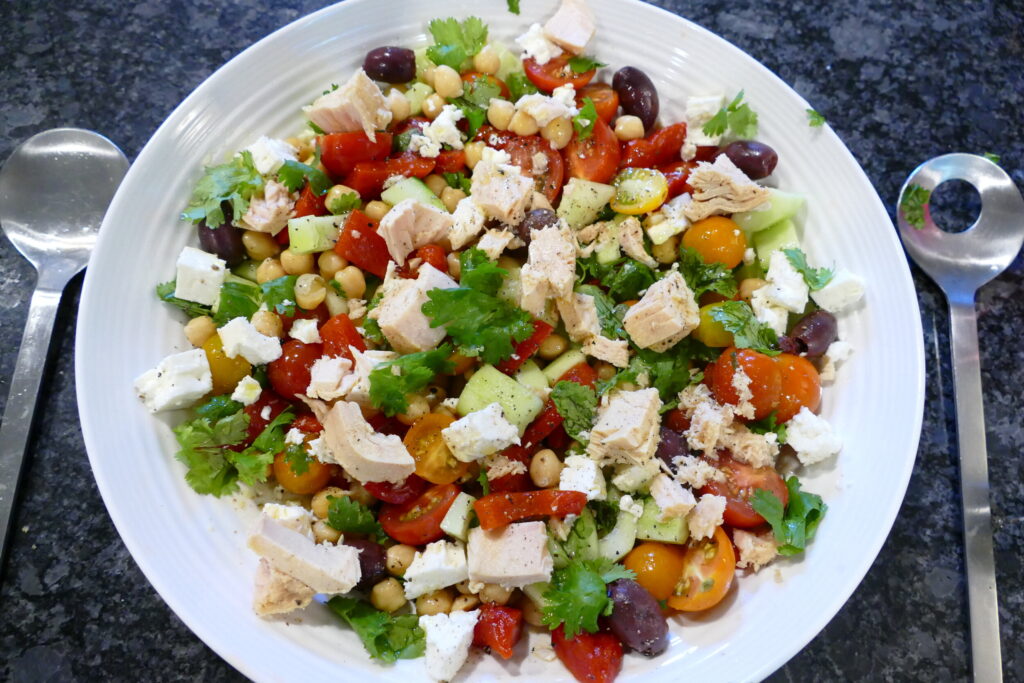
1 15oz. can chick peas, drained 1 cucumber, peeled and chopped into 1/2 inch pieces 1 pint cherry tomatoes, various colors, halved 1/2 cup pitted Kalamata olives 1/2 cup sliced roasted red peppers 1 5oz can solid tuna, drained 1/2 buch of corriander, leaves only 1/2 cup crumbled feta cheese 3 tbsp. red wine vinegar 3 tbsp. extra virgin olive oil salt and pepper Assemble the salad by placing the cucumbers, tomatoes, chick peas, peppers in the bowl. Mix. Top with the olives, tuna, feta cheese and coriander leaves. Drizzle with the vinegar and oil. Season with salt and pepper to taste. Serves 2
La Spinetta Il Rose Di Casanova

The La Spinetta estate was founded in 1977 by the Rivetti family. The label is has a picture of a hand drawn rhinoceros. Why a rhinoceros you ask? Giorgio Rivetti greatly admired the works of German artist Albrecht Durer. He originally carved his depiction of a rhinoceros in 1515 on a piece of wood without ever having seen one! The producer has a diverse array of wines including those from grapes Nebbiolo, Colorino, Barbera, Sauvignon Blanc, Chardonnay, Vermentino (Rolle), Muscat Blanc a Petits Grains. In 2001 the family wanted a new challenge in a new region of Italy and a new varietal. They turned their attention to Tuscany and created a new winery, Casanova della Spinetta. The soils are sandy containing ocean sediments. The vineyard is at an altitude of 300m. They do extensive green harvesting in order to keep the yields low and maximizes grape quality. The do not use any chemicals, fertilizers or pesticides as well as 75% of vineyards are biodynamicly farmed. FACT: IGT (Indicazione Geografica Protetta) inidcated on the back of the wine bottle is a category is used only in Italy. It’s equivalent in France is IGP (Indication Géographique Protégée). IGT labelling laws state the producer has to indicate the vintage, the producer name, they must be made from at least 85% of the grape variety, and the region of origin must be stated on the label. Sangiovese is the most widely planted grape variety in Italy. Synonyms for Sangiovese are Nielluccio, Sangioveto, Sangiovese Grosso, Sangiovese Piccolo, Brunello, Prugnolo Gentile and Morellino. This wine is a blend of 50% Sangiovese 50% and 50% Prugnolo Gentile (a Sangiovese clone native to the area). The vines are 15 year old. The grape must spends 1 hour on skin contact, then is drained and undergoes a cool fermentation at 18ºC with natural yeast for 15 days. The wine is naturally clarified and aged in stainless steel tanks for 3 months on natural yeast. It’s no wonder with such a short maceration that the wine is the palest of pale orange-pink color. The wine has aromas of tart cherry, yeast, grapefruit and peach. The body has a round texture with a crisp acidity. Flavors of tart cherry, strawberry, meat, raspberry, grapefruit, lemon, white peach, floral mineral, pepper, pear, and grass. Pair with Chinese food, Thai Curries, caprese salad, prosciutto, slow-roasted pork with white bean mash, pappardelle pasta with a rabbit and porcini mushroom ragù.
A Pioneer Of Crémant d’Alsace
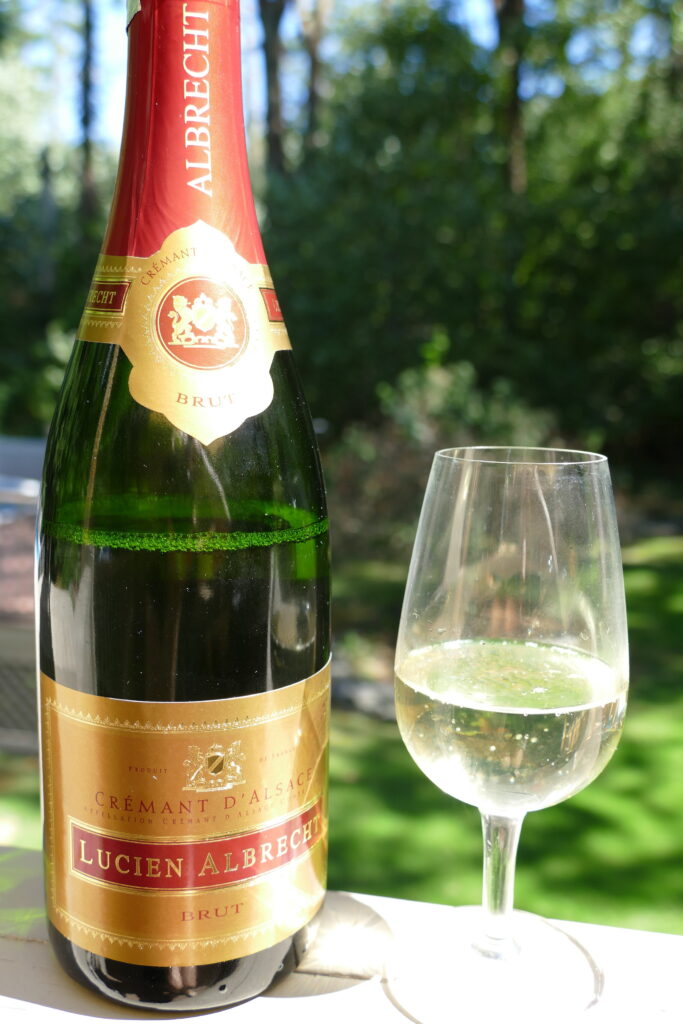
What is a Crémant d’Alsace? It is a sparkling wine made in the same method as Champagne. It has similar brioche, bread, yeasty flavors except you can’t call it Champagne unless it’s made in Champagne (French wine law). This is France’s answer to other AOC denominated regions making the same style of wine in another region = Crémant. There are 9 regions in France that make Crémant – Loire, Bourgogne, Alsace, Bordeaux, Limoux, Jura, Savoie, Luxembourg and Die. In addition, Crémant is less expensive alternative to Champagne and formidable quality. This particular producer Balthazar Albrech founded the family winery in Alsace in 1698. Through passion, care and love of the land the family created the institution known as Maison Lucien Albrecht. Eight generations later the family winery is an image of quality, passion and love of the terroir. In 1971 Lucien Albrecht pioneered the Crémant Alsace movement. The AOC Crémant d’Alsace was established in 1976. With 300 plus years of tradition, experience and love of Alsace they created a standard of Crémant d’Alsace that wine lovers know and love today. This particular wine is a vibrant sparkling wine that screams of freshness. The aromas and flavors of fresh lemon, crisp green apple, pear, peach, minerals, slate, smoke and caramel are just intoxicating. The bubbles are fine and the acid is lively. My video review is available on Instagram Lucien Albrecht Crémant d’Alsace Brut Pair with soft cheeses such as brie or goat cheese, charcuterie or smoked salmon with chive cream cheese.
Charcoal Grilled Ham & Cheese Herb Pizza
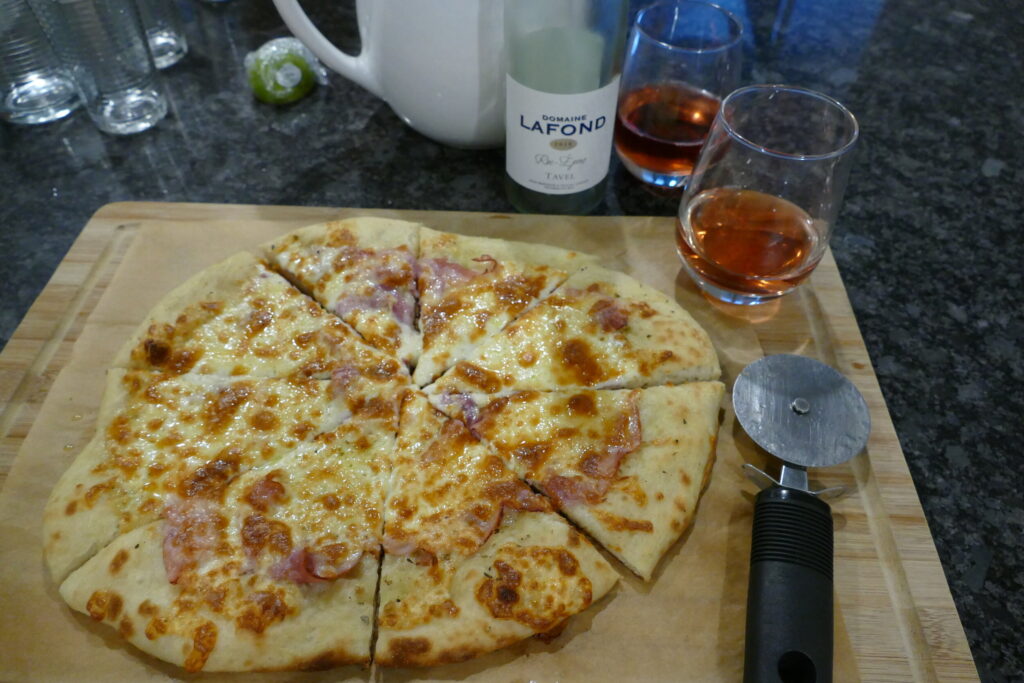
1 pizza dough 1 clove of garlic 1/2 tsp. dried oregano 1/4 tsp each sea salt and pepper 2 tbsp olive oil 6 slices sliced ham off-the-bone 1/2 lb. low moisture skim milk mozzarella cheese, shredded Take the pizza dough out of the fridge and bring to room temperature at least 1 hour before baking. This will relax the gluten and make it easier to shape. Heat the BBQ with the pizza stone on the grill to medium high heat for 10-15 minutes or until the stone is piping hot. Roll out the pizza dough to about a 13 inch rustic circle on a sheet of parchment paper. Spread the olive oil all over the dough. Add the seasoning, layer with him and leave a 1 inch curst rim. Top with cheese and cook on the grill at medium heat for 9-12 minutes or until golden and bubbly. Cut into 8 wedges and serve. Serves 4. Pair with a Dolcetto d’Alba or Schiava.
Vaglio Chacra Malbec
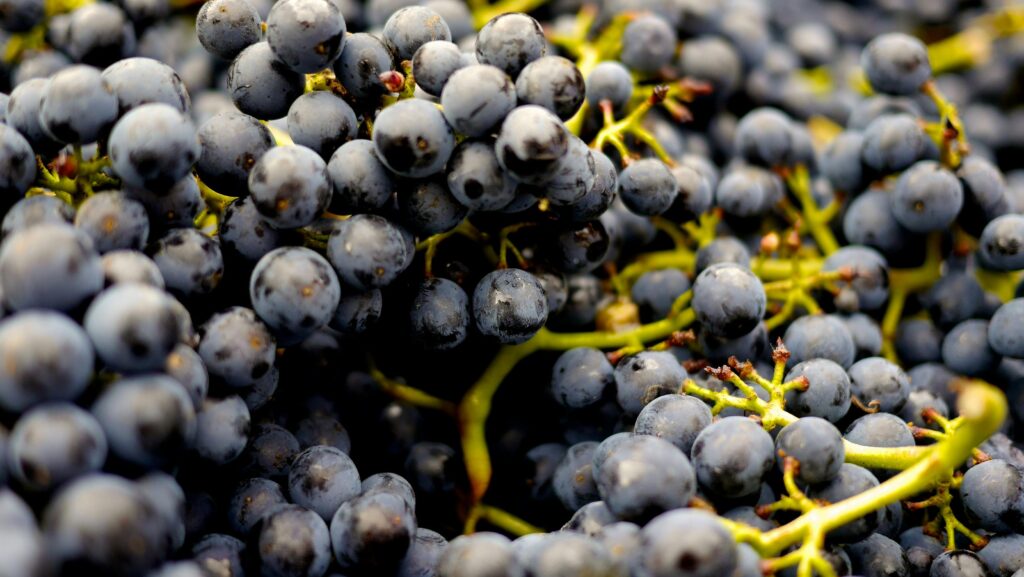
Argentina’s flagship grape is the Malbec. Malbec originates from the Cahors region in the southwest of France. The wines from Cahors are big, bold and rustic, they have a savoriness to them, tart, firm tannins and meaty with plum. Whereas the Argentina Malbec are black fruit-forward, plummy with a velvety texture. The grape is thin skinned, needs lots of sunshine and dry climate but not too much sun or it will turn into a jam bomb. It asl o needs a certain type of soil to thrive, ie. limestone or calcareous soil which challenges the grape to dig deep and seek water to ripen while maintaining it’s acidity. Grapes need stress to thrive which is rather the opposite to what one would think. The need certain stress such as water stress and lack of nutrients at certain times in the growth phases in order to thrive. This particular wine from winemaker Jose Lovaglio Balbo is from Gualtallary in Valle de Uco region in Mendoza, Argentina. The grapes grown at an altitude of 3,838 feet which contributes a freshness and balanced acidity to the wine. The soils are calcareous soils with stony alluvial origins contribute the minerality and lighter style of the wine. The vines were planted in 2008. The wine is made a single vineyard grown in a micro-climate. The wine is fermented with natural yeasts with a 3 months of lees aging. The wine is then matured in 40% new French oak for 8 months. This is Jose’s independent project from the family Susana Balbo Wines (which I greatly admire and adore) his winemaking style creates beautiful wines that are truly unique to their climate, terroir and vineyard. This wine is a deep purple color. The aromas of fresh baked blueberry pie, rich ripe plum, chocolate, graphite and minerals jump out of the glass. The palate is dry with flavors of ripe blueberry, rich ripe plum, chocolate, graphite, minerals, butterscotch, chocolate, pepper and hazelnut. It’s balanced, lengthy, creamy and delicious. Paired with made roasted pork with apples and plums and mashed sweet potatoes and turnip.
Big Bold & Beautiful Y. Rousseau Tannat
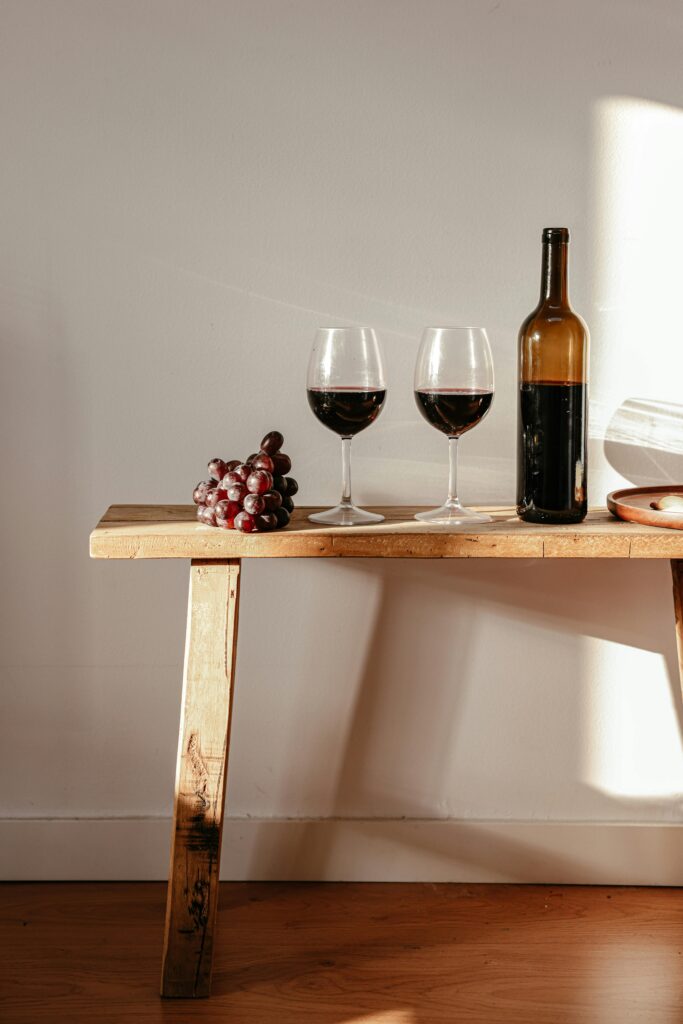
Tannat is a grape that originates and is the star of the Madiran region in the southwest of France. It is a big, gutsy, bold, tannic grape that needs lots of sun and heat to ripen properly. The grape is known for it’s grippy tannins. If done right, it rivals a velvety Cabernet Sauvignon and perfect pairing for any red meat. Tannat is also grown in Uruguay where it is their top red varietal, Argentina, California and Brazil to name a few. Y. Rousseau Wines succeeded tenfold with this wine. Yannick Rousseau is from Gascogne, France which is located in the southwest of France. He grew up surrounded by these big beautiful bold reds and his dream was to create his own expression of these wines. He moved to California where he met his wife and they built Y. Rousseau Wines. Through sustainable farming and winemaking, care and respect for the land and vines, they have created very unique expressions of the southwestern varietals. Yannick wanted to plant varietals that he grew up with, i.e. Tannat, Colombard, Merlot to name a few. His vision is to create beautiful wines that pair well with food. After all the French Moto is to have beautiful wines with beautiful food. This single vineyard wine, in Clarksburgh, CA went through a cold soaking and aged in 35% new French oak. The wine is a deep purple gorgeous color. On the nose the wine is ripe blueberries freshly picked from the orchard, along with delicate violets, black olives and cured meats. The palate is dry, with velvety tannins and balanced acidity. The flavors of blueberries, blackberries, black cherries, currant, violets, black olives, meat, licorice, cinnamon, mint, pepper and vanilla all harmoniously work together in this wine. Perfect pairing with red meat – grilled rosemary lamb chops, bison burgers, grilled T-bone steak or roasted duck breast. My video review is available on Instagram Y. Rousseau Tannat
Corsica Rosé – A Beautiful Wine and Island
Corsica is an island located in the Mediterranean Sea between the southeastern coast of Provençe and the western coast of Tuscany. The island, which is part of France, has a long history of winemaking. Having spent an unforgettable vacation there, I can attest the island is as beautiful as it is enchanting. The island in distance is closer to Italy as are it’s influence is reflected in the grape varieties which are mostly Italian, Sangiovese (Nielluccio on this island) and Vermentino. The island’s Mediterranean climate and the mountainous, hilly terrain;, the soils are mainly granite, shale and limestone soils and cooling sea breezes are all ideal elements for grape growing and winemaking. This wine is labelled “Ile de Beauté IGP”. IGP means Indication Géographique Protégée which is between Vin de Table (VDT) and Appellation d’Origine Contrôlée (AOC). The wine laws are less constrained which gives more flexibility to the wine produces and benefits the consumers. For example the list of grape varieties are broader, the geographical area is much larger than an AOC and the wine maker can label the grape varietal on the wine which helps consumers know what they are getting. For instance, Corsica IGP is made up of a mixture of traditional Corsican, Spanish, French and Italian grape varieties. The vineyard is located in Patrimonio region in the Ile de Beauté IGP region. The old vines are planted in the north on limestone hillsides and treated to organically grown and made by owner Eric Poli. Domaine Poli Sciaccarellu (a perfumed varietal primarily grown in Corsica) Niellucciu (similar to Sangiovese) Rosé Ile de Beauté 2019. Pale salmon pink color. This wine jumps out fruity – lavender and more lavender with strawberry on the nose. The palate flavors of lemon, crisp pear, lime, grapefruit, strawberry, raspberry, rosemary peach, thyme , earthy, and saline. It’s high acid, dry to offdry and refreshingly long finish. Lip smacking ultra fresh and so easy to drink! Pair with a seafood platter, fried calamari or grilled sea bass.
Pinto Grigio = Pinot Gris
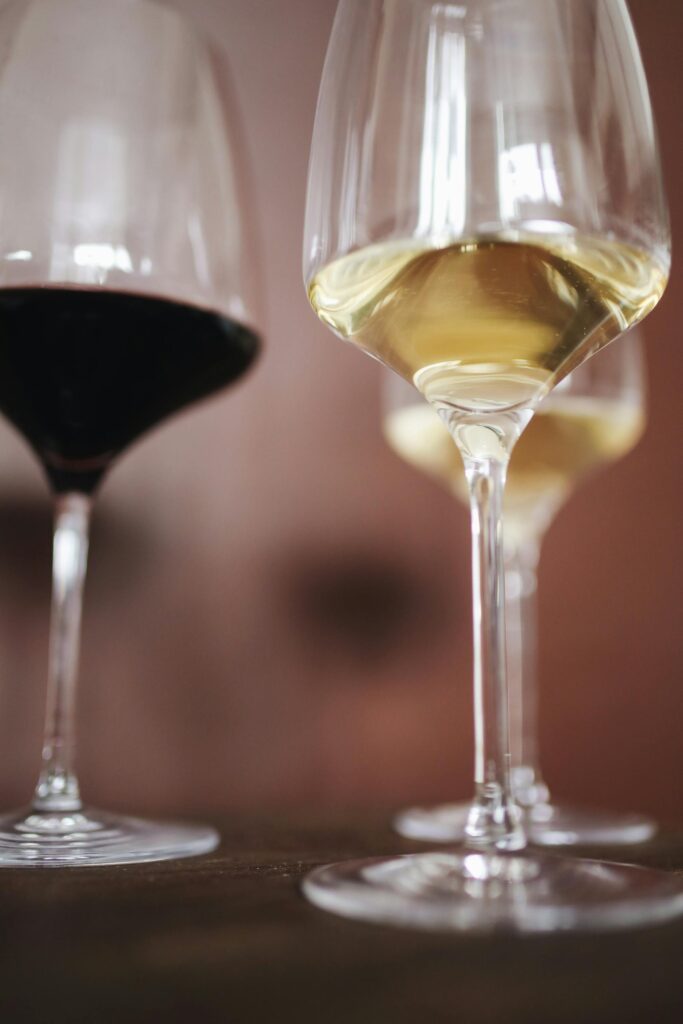
Most people don’t realize that Pinot Grigio is the same thing as Pinot Gris. Pinot Gris is the French term for the grape and Pinot Grigio is the Italian term. Pinot Gris is a pink grape mutation of Pinot Noir – fun fact! It’s a vibrant white wine that ranges from dry to sweet. I have quite a few friends who are big fans of these wines. Little do they realize that there many quality wines for reasonable prices grown in various regions such as Germany (Baden, Rheinhessen and Pfalz), USA (Oregon, CA), Australia (Adelaide Hills, Yarra Valley, Mornington Peninsula), France (Alsace) and Moldova to name a few. Cantine Ermes is a well known Sicilian producer who produces a wide variety of quality wines. This one in particular wine labelled Sirocco Terre Siciliane 2019 is their entry level Pinot Griogio. This is more affordable than many Terre Siciliane IGT wines. For those of your who are watching sugar content, this wine is relatively low for a still wine at 3.3g of sugar/L. Bear in mind still wine (be it white, rosé or red) will have some residual sugar to balance out the acid and tannins respectively. If you are looking for a very low sugar option try a sparkling wine such as Crémant from the Loire or Bourgogne or a Cava from Spain. Sparkling wine grapes are picked earlier than still wine grapes because they want higher acidity and less ripening/sugar whereas still wines want riper grapes and a higher sugar content. Pinot Grigio is best served well chilled, 45-55˚F . The wine is light-medium in body, medium in acidity and exhibits flavors aromas of white peach, pear, lemon zest, cantaloupe, fresh almonds and minerality to name a few. If you like Pinot Grigio why don’t you try Pinot Blanc or Albariño (Rias Baixas, Spain – a go to of mine for shellfish), Grechetto (Orvietto in Umbria, Italy – delicious wines by the way) Pair it with chicken, white fish and foods that accompany a fresh fruit element such as lemon, peaches or apricots. Try it with sole with lemon sauce or chicken with roasted apricots. You won’t be sorry…..