
Underground Wine Project’s Idle Hands 2015
Before getting into these stellar wines & winery, I’ll give a quick tour of Red Mountain AVA. Red Mountain AVA is the smallest AVA in Washington State. It’s located within the subregion of Yakima Valley AVA, which is located in Columbia Valley AVA, basically it’s 4 layers down in the appellation system. It has a dry, almost desert like arid climate thanks to the rain shadow of the Cascade Mountains to the west. The steep slopes are made up of sandy loam and gravel soils with high alkalinity and a rich calcium carbonate. This helps reduces the vigor of the vines resulting in much smaller berries which concentrates the flavors tenfold. Combine all this with the cooling winds from the Yakima River, high diurnal temperature shifts and elevation ranges of 150-450m creates richer, fruity wines & higher tannin levels. The Underground Wine Project started in 2009 as a collaboration of rockstar winemakers and long time friends Mark Ryan (Mark Ryan Winery) and Trey Busch (Sleight of Hand Cellars) which quickly blossomed into a cult following amongst wine enthusiasts. These guys are true winemakers in every sense of the word. They stick to what does well with what Mother Nature has given them and let’s the varietal shine in the bottle. No nonsense, purity and elegance all musically dancing together at the same time. Limited release wines that show the pureness and true character of Red Mountain – think loads of ripe red fruits, currants, cocoa, minerality and spicy tobacco . Both Mark and Trey are huge music fans, especially Pearl Jam. They started an initiative with the band for this special Valentine’s Day release of a limited production 2-bottle box set to help support Pearl Jam’s Vitlalogy Foundation in an effort to alleviate homelessness. They also produce a mouthwatering rich Rosé wine called “Mr. Pink” (think of the movie Reservoir Dogs), Devil’s Playground ( 90% Cabernet Sauvignon and 10% Syrah) and Idle Hands (90% Syrah and 10% Cabernet Sauvignon ). Today’s wine is Idle Hands 2015. As mentioned above, it’s a blend of 90% Syrah and 10% Cabernet Sauvignon. The grapes are from the outstanding Red Heaven Vineyard. The wines are aged for 16 months in 20% new American oak (extra tight grained) barrels and 80% neutral French oak. The wine is a deep inky purple colored wine with raspberry, black cherry, rich dark plums, cassis, smoke, tobacco, black pepper, licorice, vanilla, chocolate, black olives, anise and berry jam. The acidity is fresh and balanced with the medium soft tannins. The fruit is well integrated with the high 14.9% abv (approach with caution on that second glass). Pair roast duck with raspberry sauce, deer burgers, venison medallions, herb crusted roast leg of lamb or as I did, braised pork loin with prunes and port.
Emiliana Adobe Chardonnay
Emiliana Adobe Chardonnay Reserva 2019 Chardonnay from Casablanca Valley, Chile is not only an organic but a vegan wine as well. What does that mean, vegan wine? Sure it’s made from grapes so all wines must be vegan. Well during the process of making wine, in order to make the wine clear for us consumers, the wine goes through a process called clarification and fining the wine. All young wines are hazy and contain tiny molecules such as proteins, tartrates, tannins and phenolics. These are all natural, and in no way harmful. It’s up to the winemaker to decide what type of fining and clarification agent to use to make it look clear and bright. Emiliana happens to make the wines using vegan products. For more information on why Chardonnay does so well in Chile – Introduction to Chile Chardonnay Emiliana Organic Vineyards is top producing Chilean winery and one of the largest organic and biodynamic wineries in the world. It makes a large range of wines including Carmenère, Cabernet Sauvignon, Syrah, Chardonnay and Sauvignon Blanc. The winery has vineyards in Colchagua, Maipo, and the Casablanca Valley. What practices do they use to be organic and biodynamic? Well chickens are used for pest control, and alpacas and horses live alongside the vines to encourage biodiversity. Native greenery and cover crops are planted in between the vine rows. “Across all vineyard and winery processes, various projects in energy efficiency, carbon emission reduction and waste management are employed, and environmentally friendly packaging is used.” This wine is a pale lemon color with a creamy texture. The flavors and aromas are yellow plum, pineapple, green apple, lemon, lime, minerals, orange blossom, green pepper and coriander, it ends on a herbaceous note. It’s balanced in fruit, medium alcohol and body. Pair with classic Roast Chicken, roasted salmon filets with chive butter, roast swordfish with capers or grilled shrimp kebabs. The acidity and citrus flavors in several of these wines also will stand up to a dish like these.
Terres Dorées Charmes Crémant de Bourgogne NV

What is Crémant de Bourgogne exactly? Well, it’s a sparkling wine made in the traditional method (think Champagne) from Bourgogne (Burgundy), France which is just south of Champagne. Secret weapon – they use similar grapes as Champagne for sparkling. Crémant is a great alternative to Champagne in France. There are 8 appellations in France where Crémant is produced with slightly different rules by appellation on ageing, grape varietals and label laws. Bourgogne is allowed to use Pinot Noir, Chardonnay, Gamay, Aligoté, Gamay, Pinot Gris, Pinot Blanc, Melon and Pinot Blanc. The dominant varieties are Pinot Noir and Chardonnay. Label Tips for Crémant de Bourgogne: Crémant: minimum 9 months ageing Eminent: Minimum of 24 months on the lees Grand Eminent: Minimum 36 months on the lees, only Pinot Noir and Chardonnay Terres Dorées Charmes de Jean-Paul Brun Crémant de Bourgogne NV is made of 100% Chardonnay grapes and aged 18 months on its lees. Pale lemon color with medium intensity of lemon, green apple, pear, peach, lemon, toast, mushroom, minerals and acacia. Palate is off-dry, medium + acid, medium body, medium alcohol, medium intensity of lemon, green apple, pear, peach, lemon, grapefruit, brioche, toast, mushroom, minerals, acacia and salinity. Pair with smoked salmon with chive cream, tuna tartare, butter poached shrimp, mini brioche lobster rolls, smoked ham crostini, chicken and apple compote bites. I paired it with Grilled Swordfish Steaks with Sicilian Caponata (the grilled eggplant, red peppers, cherry tomatoes, kalmata olives, basil with a vinaigrette of grilled lemon, garlic, honey, olive oil and warm spices – the C’s – coriander, cumin, cinnamon,& nutmeg. 🤩 wow it was delicious 🥂 Paired beautifully with the freshness and crisp nature of the wine made the dish sung with happiness.
L.A. Cetto Nebbiolo
What comes to mind when you think of alcoholic beuvies from Mexico? What pops into my mind are Tequilla and Cerveza Modelo. But that’s not what I am going to post about today….. center stage today ladies and gentlemen, L.A. Cetto Reserva Privada Nebbiolo 2015. First off, let’s go through a quick and dirty history lesson on winemaking in Mexico: During the 17th century, the Spanish were the first to plant grapes in Mexico. Fast forward to the 1970’s whereby modern winemaking really started coming to the forefront in the country. The varietals planted are a hodge bodge of French, Italian and Spanish, mostly Red Wines include Cabernet Sauvignon, Zinfandel, Cabernet Franc, Carignan, Grenache, Merlot, Malbec, Syrah, Petit Verdot, Tempranillo, Nebbiolo, Dolcetto, Barbera, Petite Sirah, and Pinot Noir.. White Wines include Chardonnay, Chasselas, Chenin Blanc, Macabeo, Muscat Blanc, Palomino, Riesling, Semillon, Sauvignon Blanc and Viognier. How, you ask, are they able to grow grapes in such a hot region so close to the equator? Well for one, the climate is arid and vines need to struggle in order to grow quality grapes. Add in vineyards located at high altitudes, which provides cooler air and a higher diurnal range, as well as microclimates throughout the region. The main wine growing regions are Baja California, Sonora, La Laguna and Central Mexico. Today’s wine is from Baja California, which is located on the west coast. This region produces about 90% of the countries wine. The soils for this particular wine are grown in a blend of sand, decomposed granite and silt. These types of soils help create wines that are elegant, aromatic and paler in color. Enter Nebbiolo – a highly aromatic and pale colored wine with awesome grippy tannins. Nebbiolo is known as the king of grapes, home to Piedmont, Italy. However, it is also grown in other parts of the world and is making headway in California’s Central Coast, Santa Ynez, Paso Robles and Mexico’s Valle de Guadalupe. Nebbiolo is a very “terroir expressive” varietal that really picks up the characteristics of where it’s grown (soil, climate etc). The wines will be very floral (think rose petals), fresh fruit aromas and flavors, less intense and more approachable. If you are a Nebbiolo fan this is a must try. L.A. Cetto is one of the oldest and prestigious wineries in Baja California. In 1928, Angelo Cetto decided to take his skills and knowledge in winemaking from his native Trentino, Italy and move to Baja California, Mexico. In 1963, Augustin, his son, modernized the winery with updated equipment and began to focus on the varietals that would thrive in the microclimates of the Guadalupe Valley. Now they are a successful and highly regarded third generation winemaking family. They promote Mexican wine culture internationally and increase consumer awareness, showcase the terroir and varietals in their wines. L.A. Cetto makes a wide variety of wines from sparkling wines to aromatic, full-bodied white wines and of course rich, age-worthy reds. Nebbiolo Reserva Privada was created as a tribute to Don Luis Angelo’s birthplace. The grapes come from an average age of 40 year old vines. The wine is 100% Nebbiolo. The wines are fermented in warm temperatures of 28-30C for 15 to 20 days. Matured in French oak barrels for 14 months. The wine is a rich ruby color. The nose is delicately perfumed with dark plum, red cherry, rose petals, dusty earth, leather, oak, anise and tar. The flavors of dark plum, red cherry, rose petals, dusty earth, leather, anise, tar, tobacco leaf, bramble, mint and tomato leaf. It has a fresh acidity, smooth yet chalky tannins, well rounded body and a finish that is long and lovely. Pair with a grilled porterhouse steak, bison camembert burgers, broiled portobello mushroom or chunks of Parmesan or grilled Italian sausages and peppers like I did.
Intro to Chilean Chardonnay
Chile’s is a cool-climate region which benefits from the effects of the cold Humboldt Current of the Pacific Ocean, morning fog, breezes, long sunny growing season. All this combine allows for grapes to ripen fully and develop complexity while still retaining acidity. As a result it produces bright, vibrant wines made from Sauvignon Blanc, Pinot Noir, Chardonnay. These varietals do very well in Chile. Look for regions in Chile for Sauvignon Blanc: Casablanca Valley, San Antonio Valley, Limari Valley, Colchagua Valley and Maule Valley. Chile offers some of the best values for Chardonnay wines. This week’s featured wine with FITish with Lara – get ready for a good home workout everyone! Viña Laurent’s Diabolico Chardonnay Is made with natural ambient yeast, biodynamic wine is unique in its own right, not a California type Chardonnay. The wine is golden color, balanced acidity with aromas and flavors of lemon, crisp green apple, peach, nectarine, melon, just ripe pineapple and acacia. Fresh, fruity and creamy texture makes it pleasant to drink on its own or paired Gravlax and chive cream, ahi tuna sashimi, lobster with mayonnaise dip or a A camembert type cheese. Excellent quality to value!
Beautiful Champagne Drappier

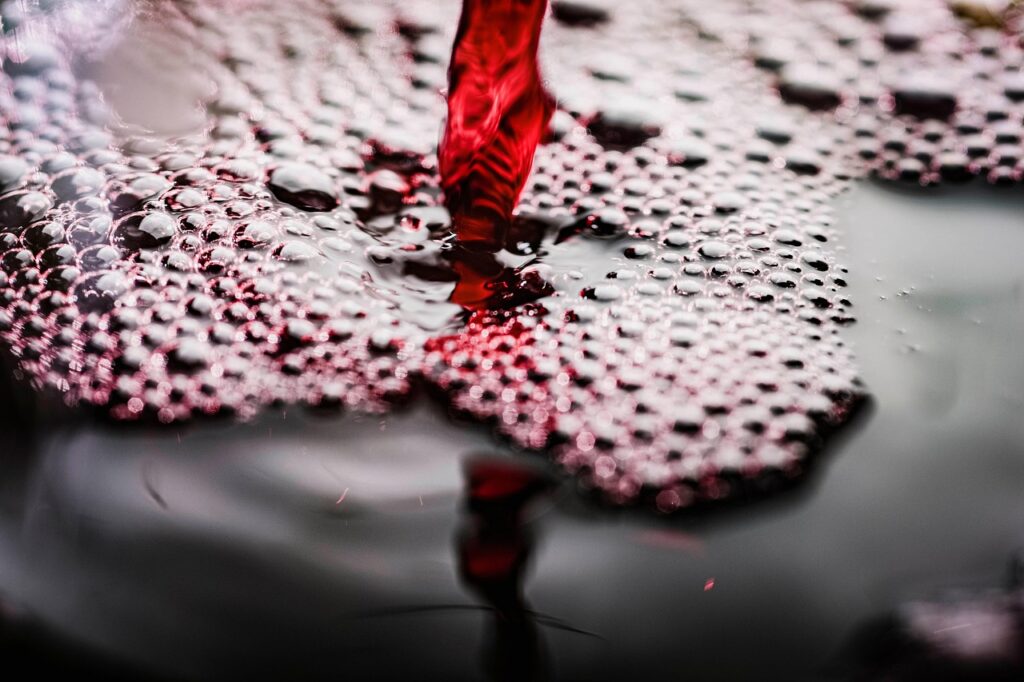
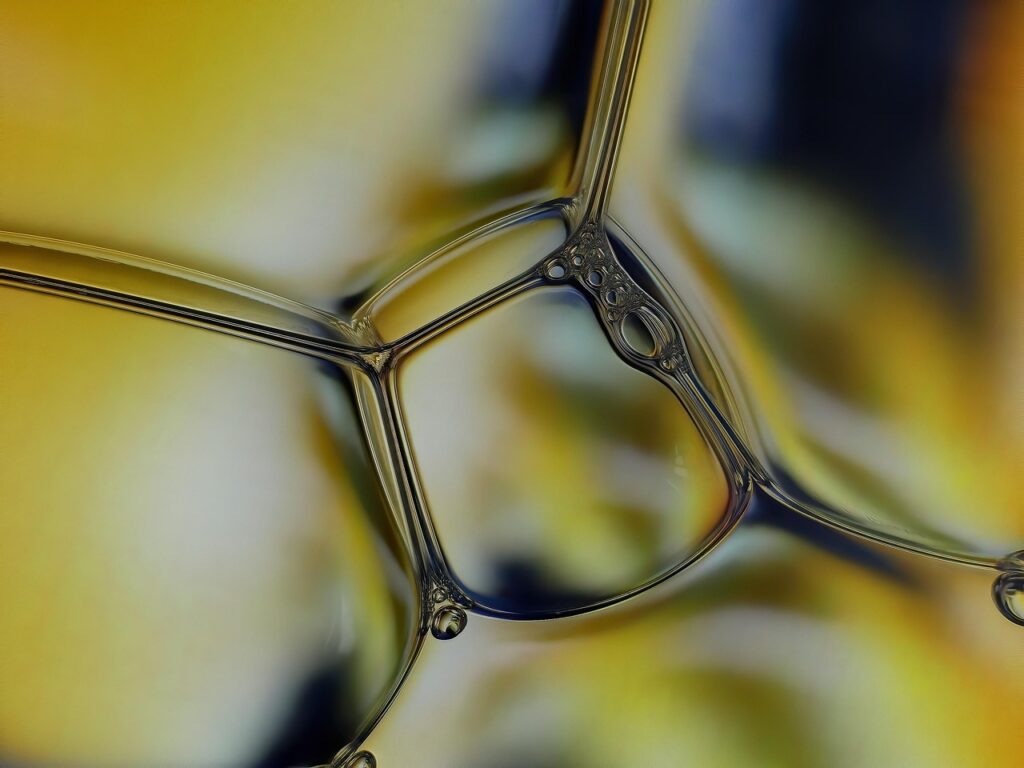
When it comes to wine, I not just interested in the wine itself but also the story behind the wine…. Where does it come from? Who created this beautiful wine? What is the history behind the glass? Drappier is considered one of the finest boutique champagne producers in the world. It was founded in 1808 by Francois Drappier in Urville, Aube which is located in Côte des Bar subregion of Champagne, France. But wait…. The story doesn’t start there…. the story began 2000 years ago when the Romans first planted vines in the area. Fast forward to 1152 when Saint Bernard, the founder of Clairvaux Abbey, built the Abbey’s cellars where Drappier is now located. The Drappier family started in 1604, about the same time as the Ruinard house -both selling upholstery in Reims. It wasn’t until 1803 that one of his ancestors moved to Urville to begin the family legacy of winemaking. The cellars in which the wine is stored are among the oldest and most extensive in Europe, and were the only cellars that were not damaged during the two world wars or the fires that raced through the area in the 1950s. In 1952 they launched their flagship yellow label Carte d’Or Cuvée, a dedication to quince jelly, it’s yellow fruit aromatics are found in every bottle. Drappier is a seven generation grower-producer house which prides themselves on creating wines that focus on the terroir’s unique characteristics – it’s distinctive Jurassic Kimmeridgian soil and individualistic character of the varietals. They are highly regarded as innovators of the area…. Case in point – In the 1930s the family were the first to plant Pinot Noir to the region which, at the time, was considered ridiculous. Now over 86% of the region is covered in Pinot Noir. Today they not only have the classic Champagne varieties of Pinot Noir, Chardonnay and Meunier but also less known ones such as Petit Meslier, Blanc Vrai and Arbane. The end result are gorgeously complex, savory wines with character that are fresh and dry thanks to little dosage. Their vineyard practices are organic. One third is cultivated organically and the rest with sustainable and natural principles. They are the first house to have reduced carbon footprint with the use of solar and wind energy. The winemaking has AS LITTLE human intervention as possible in order to highlight the natural colors, aromas and flavors of the wines. Basically, let nature be center stage and reflected in the glass. Their wines are range from non-vintages brut, rosé, blanc de blancs, zero dosage (blanc de noirs), the cuvée made in honor of Charles de Gaulle, vintages, and the prestige cuvée Grande Sendrée. This particular wine, their Carte D’or has a lovely, bright acidity, balanced with a creamy mousse and texture. It is a blend comprised of 80% Pinot Noir, 15% Chardonnay and 5% Meunière. Flavors and aromas of green apple, cherry, peach, lemon, brioche, pastry, cream, white blossom, wet stone, ginger, hazelnut and bitter almond finish. I paired this gorgeous wine with Nova Scotia Smoked Salmon & Capers. The crisp acidity and flavors meld perfectly with the unctuous, silky salmon. An even better pairing was the bubbles in the bottle with the bubbly seafoam of the ocean, which was the inspiration for the below pictures. View fullsize View fullsize View fullsize View fullsize
Montgras Chile Sauvignon Blanc
Chile’s is a cool-climate region which benefits from the effects of the cold Humboldt Current of the Pacific Ocean, morning fog, breezes, long sunny growing season. All this combine allows for grapes to ripen fully and develop complexity while still retaining acidity. As a result it produces bright, vibrant wines made from Sauvignon Blanc, Pinot Noir, Chardonnay. These varietals do very well in Chile. Look for regions in Chile for Sauvignon Blanc: Casablanca Valley, San Antonio Valley, Limari Valley, Colchagua Valley and Maule Valley. Chile offers some of the best values for Sauvignon Blanc wines. Typical flavors of a Sauvignon Blanc from Chile are lime, lemon, kiwi, honeydew melon, gooseberry, tomato leaf, grass, peas, saline. It has lively acidity and is refreshing. Vina MontGras is a vineyard with a soul. Their goal since it’s inception was to create world class wines from the best terroir in Chile. Brothers Hernán and Eduardo Gras, together with their partner Cristián Hartwig, gave life to the vineyard in 1993, combining state-of-the-art technology with the talent and passion of a very special team. This particular wine from Vina MontGras – Amaral Sauvignon Blanc 2019 from Leyda Valle was hand harvested. 50% of the grapes were whole-cluster pressed, while the rest were cold-soaked for 8 hours at 8°C-10°C / 46°F – 50°F, in order to extract more aromatics. The wine was aged for 4 months on the lees in stainless steel tanks. It has a lovely pale lemon-green color. The aromas and flavors have a vibrant intensity of green apple, grapefruit, lime, honeydew melon, gooseberry, grass, bell pepper, jalapeño, minerals. It has a medium body with a lively, crisp acidity typical of this varietal. Very fresh and lively – just lovely. Pair with white fish ceviche, grilled tarragon shrimp skewers, goat cheese crostini, burrata, Caprese salad with mozzarella di bufala, parmesan and asparagus spears, avocado bites, cilantro guacamole, zucchini and crème fraiche bites, oysters with mignonette, calamari, smoked salmon, Thai chicken skewers or Vietnamese spring rolls Alternatives to Sauvignon Blanc:: Verdejo, Vermentino or Chenin Blanc
Crémant du Jura Rosé
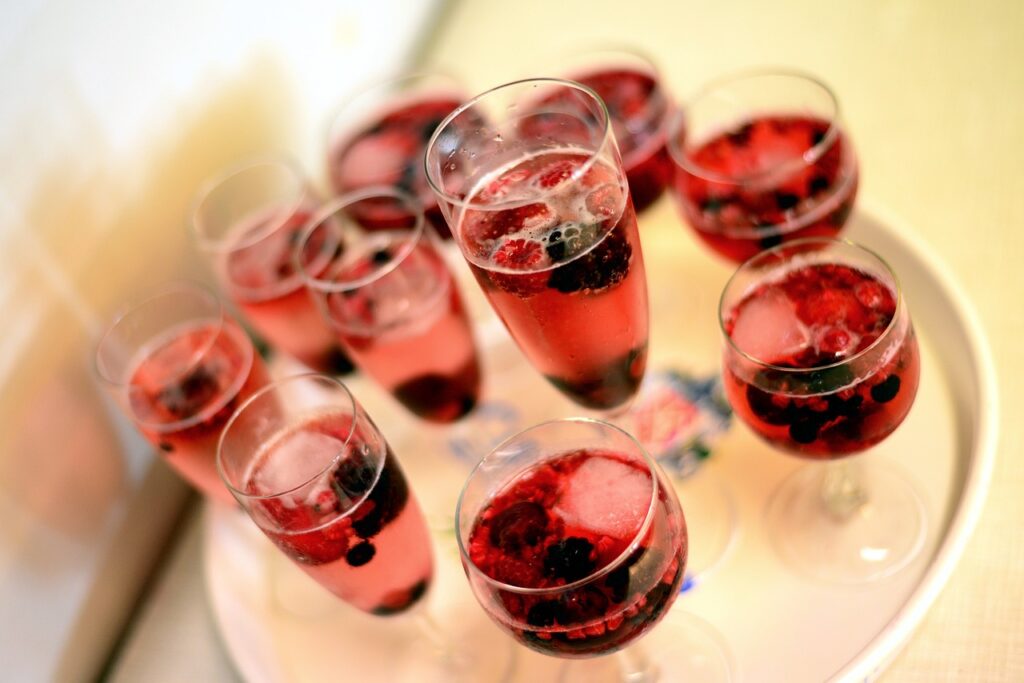
Domaine Rolet is the largest wine estate in Jura and run by the four siblings. Together they sustainably farm prized old vine vineyards in Arbois, Côtes du Jura and L’Étoile. Jura is a primo location with prized limestone and marl soils as well as altitude (average 350m) bringing freshness and minerality to their organically made wines. 🥂 This Crémant du Jura Rosé NV is a blend of 50% Poulsard, 25% Chardonnay, 15% Pinot Noir, 10% Trousseau from 30+ year old vines. They used ambient yeast in the fermentation with a minimum of 24 months on the lees. 🥂This bubbly lively acidic, medium bodied, slightly off-dry bubbly with a stunning creamy salmon pink color. It has flavors and aromas of rich pomegranate, ripe cherry strawberry, blood orange, honeydew melon, lemon, rhubarb, gooseberry, sulfur minerals, cream, yeast and biscuits. 🥂 It is perfect as an apératif, with smoked fish or sushi. I personally paired it with dancing the night away on New Year’s Eve – awesome
Gnocchi With Brown Butter & Sage

2 lb floury potatoes, such as Yukon Gold 2/3 cup/ 100 g Tipo 00 flour , plus extra for dusting 1 stick of unsalted butter (8 tbsp) 1 whole nutmeg, for grating 3-4 sprigs sage leaves salt and pepper Parmesan cheese, grated for serving Use potatoes of a fairly even size, as you’re going to cook them whole. Cook in a large pan of boiling salted water for 20 to 25 minutes, or until tender. Drain and leave until cool enough to handle, then remove the skins. Mash the potatoes using a potato ricer or masher on to a large clean board. Fill a pot with water and add a small handful of salt. Bring to a boil. Sprinkle over the flour, finely grate over half the nutmeg, season well with sea salt and black pepper, then scrunch and push the mixture together with clean hands. Depending on the potatoes, you may need to add a little more flour. Knead on a flour-dusted surface for a few minutes until pliable, then divide into 4 equal pieces and roll each into a sausage about 3/4 inch thick. Slice into 1 1/4 lengths. Now you can gently roll each piece down the back of a fork to create a groove, which will help your sauce to stick, or simply roll into balls. Meanwhile heat the butter in an nonstick skillet on medium-low heat. Melt the butter slowly until it foams and the milky whiteness turns brown and sinks to the bottom of the pan. Add in the sage at the very end, it’ll cook quickly. It’ll take a total of about 5-8 minutes. Set aside when done. Cook in the boiling salted water for 2 to 3 minutes – as soon as they come up to the surface they’re ready. Remove with a slotted spoon into a large serving dish. Toss with the browned butter and sage leaves, top with parmesan cheese and serve. Paired beautifully with a beautiful Swartland, South Africa Chenin Blanc from Vincent Careme. The acidity cut through the richness of the sauce and amplified the gorgeous flavors of the meal.
Banana Spiced Chocolate Chip Muffins
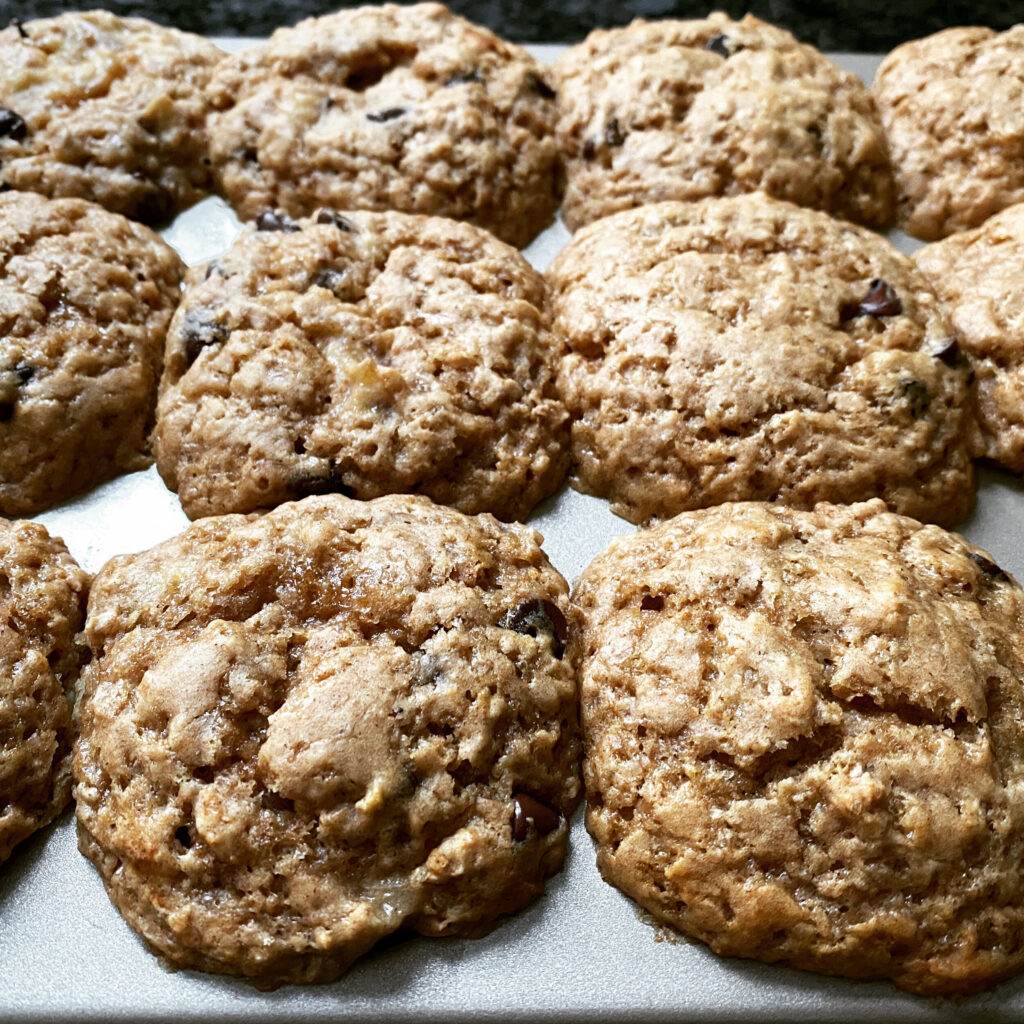
1 1/2 cups all-purpose flour 1 cup whole wheat flour 1 cup packed brown sugar 1 1/2 tsp baking powder 1 tsp baking soda 1/2 tsp sea salt 1 tsp ground cinnamon 2 eggs 1 cup buttermilk 1 cup mashed banana 1/3 cup vegetable oil 1 teaspoon vanilla 3/4 cups chocolate chips In large bowl, whisk together flours, sugar, baking powder, baking soda, salt and cinnamon. In separate bowl, beat eggs; blend in buttermilk, bananas, oil and vanilla. Pour over dry ingredients. Sprinkle with chocolate chips; stir just until dry ingredients are moistened. Spoon into greased or paper-lined muffin cups, filling three-quarters full. Bake in centre of 375°F oven until tops are firm to the touch, 20 to 25 minutes. Let cool in pan on rack for 5 minutes; transfer to rack and let cool. Makes 12 muffins