
Domaine Alliet Vielles Vignes Chinon
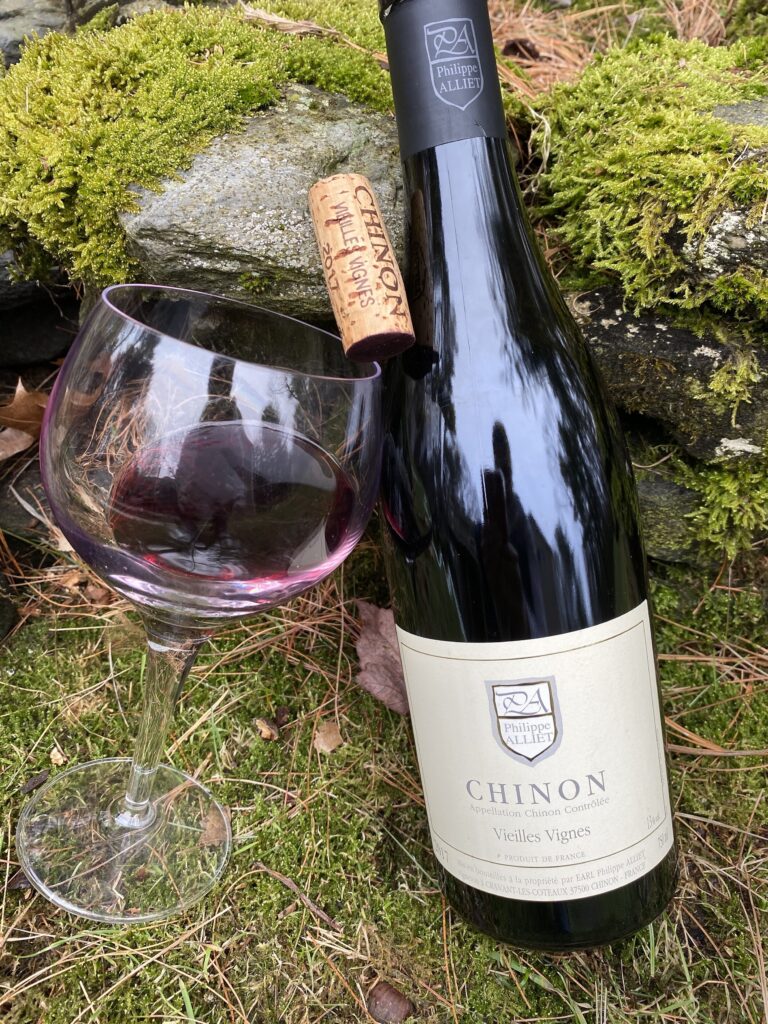
Father-son team Philippe and Pierre Alliet are the new generation of winemakers in Chinon. Located in small area of Cravant-les-Côteaux, this area produces some of the best Cabernet Franc in the Loire Valley thanks to the tuffeau limestone slopes and cooler climate. These winemakers are dedicated to lower yields, quality ripe fruit and optimal vineyard management. This Vieilles Vignes’ 2017 is from 60+ year-old vines that has been aged in cement to preserve its aromatics. The wine is a great balance between fruit and acidity. Rich ruby color. Refreshing medium bodied, soft grainy tannins and lively acidity. This wine explodes aromatics of raspberry, cherry, graphite, pepper, bell pepper, sage, red pepper flakes, tobacco leaf, dusty earth and finishes on a herbal mint note. Excellent wine due to its acidity level and body, I paired it with grilled turkey sage burgers 😋 you could also try black lentil vegetable stew or rustic tomato zucchini tart.
Recaredo Corpinnat
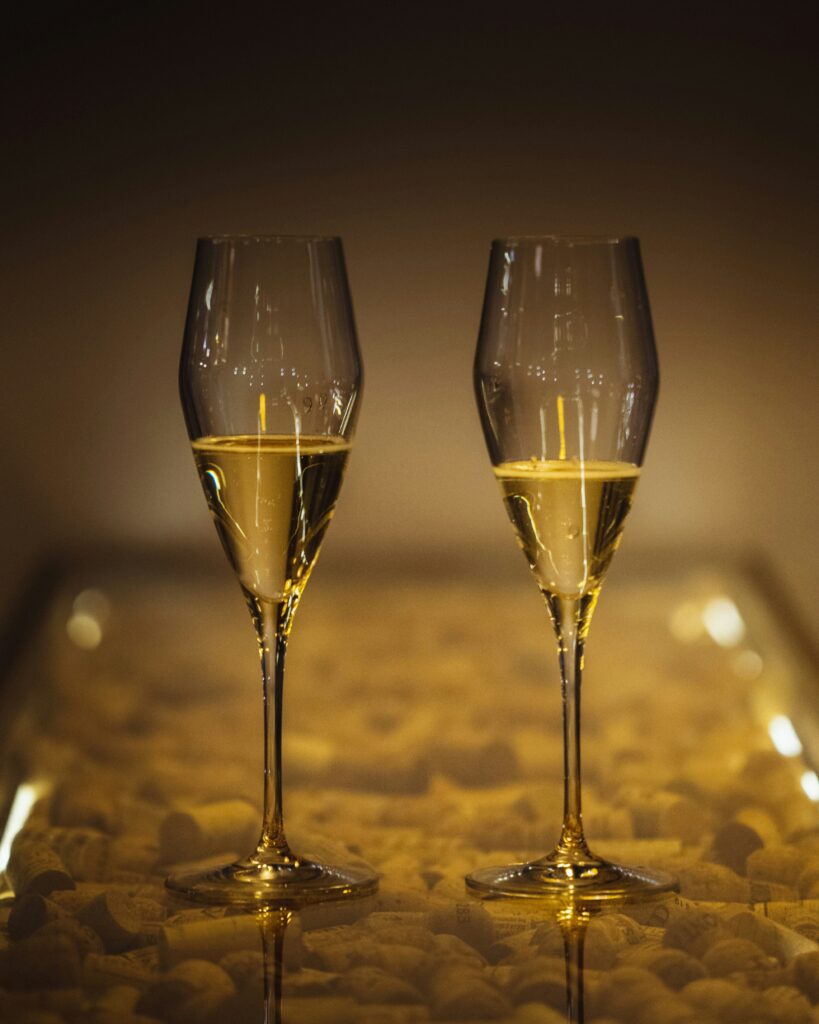
What is Corpinnat? Let’s be clear – it’s not “Cava.” It’s a small group of high quality sparkling wine producers that banded together and dared to be different. Corpinnat is a brand, not a region. However, its only made in the heart of the Penedès region in Sant Sadurni d’Anoia. Corpinnat is all about terroir and quality. Similar to what grower champagne producers do – artists in their zone. A craft that creates style and elegance in the bottle. They adhere to stricter standards which is why their wines are so good! Here’s what makes it a Corpinnat so special: – 100 % organic grapes, sustainable farming promoting environment conservation – All hand harvested – Lower yields – Indigenous varietals in the blend– Made in the traditional method– Grown, vinified on the premises of the winery– Longer ageing requirements (3 categories of minimum 18, 30 and 60 months) Recaredo Terres Brut Nature 2014 Corpinnat – Sant Sadurni D’Anoia is a blend of 58% Xarello, 42% Macabeu, 2% Paralleda was aged on the lees for 49 months. It’s a pale gold color with intense aromas of smoke, anise, white blossom, wet stone, green apple, lemon, toast and cream.The first sip of flavor explosion of smoke, anise, white blossom, mineral, green apple, pear, lemon, toast, cream, pastry, brioche, fennel and finishes in a fresh tarragon, herbal flavor. It has lively acidity paired with creamy bubbles. Stop what you are doing, pour a glass and enjoy with some Jamon Croquettes and smoked Marcona almonds to start. Pour a second glass and enjoy with Galician style grilled Pimentòn octopus, broiled garlic anise Argentina shrimp or swordfish in a saffron sauce
Benanti Carricante Etna Bianco
Carricante is the white varietal darling of Etna, Sicily. It loves to be left on its own in volcanic rich soils at high altitudes. It doesn’t like to share it’s toys in the sandbox but will play with others if it has to 😆 It can be found in Etna Bianco 100% Carricante or in blends with other varietals (Chardonnay or Minnella as an example). It’s the third most planted varietal in Sicily, mostly old vines that are more than 50 years old. It has depth, complexity and racy acidity that just zings. It’s often mistaken for a dry Riesling look alike but it’s lower alcohol and intense citrus & saline minerality finish are a few differentiating factors. Benanti Etna Bianco 2019 is 100% Carricante has zingy high acidity, creamy medium bodied texture, low alcohol and an intense mineral character with zippy lemony , grapefruit, green apple, orange blossom, flint, wet stone, chamomile and finishes on anise and salinity. I cannot wait to drink this wine in the heat of summer. What grows together goes together – fish and seafood all the way my friends : Grilled swordfish with grilled lemons and smoked capers, shrimp skewers with cherry tomatoes, zucchini and oregano or as I paired with amazing seared Salmon soft tacos with avocado crema, radish, cilantro and spinach slaw.
Mullineux Old Vine Chenin Blanc
South Africa is able to produce high quality wines even though it’s stinking hot- how do you ask? A few reasons – the Benguela Current from Antarctica provides brisk ocean breezes as well as cooler, high-elevation vineyard sites provides an evening ripening conditions and retention of acidity. Enter their signature white varietal, Chenin Blanc. Chenin Blanc (aka Steen in South Africa) is a chameleon grape varietal – it can can shine in every style from bone dry to unctuously sweet, oaked or unoaked, still or sparkling. It’s most striking quality is it’s searing, crescendo acidity that just hums in your mouth leaving you feeling oh so happy. Chenin Blanc is the darling of the Loire Valley BUT Fun Fact, South Africa has double the amount of acreage of Chenin Blanc planted than France. Mullineux a small, family-run boutique winery. They handcraft beautiful wines with the love and affection as they would treat another member of the family. Located in the rolling hills of Swartland, South Africa filled with ideal soils of granite and shale. Kloof Street Old Vine Chenin Blanc 2019, is from 40 years old average vines, sustainably farmed. They follow a less is more principal – the least amount of intervention to showcase the natural expression of the terroir and varietals, this wine is whole bunch pressed, naturally fermented in neutral oak barrels with minimal SO2 addition. Pale lemon color with fresh aromas of lemon, lime, orange blossom, pear, hay, honeysuckle, grapefruit and wet stone. Palate is well balanced with an energetic acidity that lovely amplifies the fresh cut lemon, lime, hay, honeysuckle, honey, pear, bruised apple, grapefruit, nectarine, wet stone, saline, ginger, minerals,m. It has a creamy texture yet lively refreshing at the same time. There was no question that this wine would sing fried cashews, smoked trout with coriander creme fraiche, chicken breasts stuffed with triple cream brie or grilled peppercorn crusted pork chop.
Champagne Laherte Frères Meunier & Meslier Brut Rosé
Aurélien Laherte believes that Champagne should be for everyone. I couldn’t agree more. Champagne Laherte Frères was founded in 1889 by Jean-Baptiste Laherte in the village of Chavot. Seven generations later, Aurélien Laherte is a grower champagne producer who makes terroir driven wines of power yet playful, decadent and full of energy. Laherte is one of the most innovative and dynamic grower-producers in the region. The wines are known for their intense acidity and long, mineral packed finish. Maybe it is because of his natural, biodynamic approach, maybe it’s the individual parcels of terroir that they choose for their wines or maybe they are just that good at what they do. Laherte Frères are located in the Côteaux Sud D’Epernay which is a sub region squished between Cotes des Blancs and Vallée de la Marne. It has the best of both soils from both regions. The chalk imparts shelly aromas and minerality, the clay promotes ripe flavors and texture to the wines. They focus on single parcel fermentation so they can create wines of purity of sense of place and terroir. They then carefully blend to create wines with their own unique personalities. These wines are all vinified in used neutral barrels, no malolactic fermentation, without fining or filtering. They use little or no dosage as to not mask the beautiful individualistic terroir. What so special about Champagne Laherte Frères Meunier & Meslier Rosé Brut Nature? For one, it’s made of a blend of 50% Petit Meslier and 50% Meunier – a very rare blend. Recap – Chardonnay and Pinot Noir are the 2 principal varietals used (and legally designated) in the Champagne region. Meunier is generally used in to contribute floral aromatics and femininity in a champagne blend. Meslier is used in TINY amounts in champagne blends, if at all. That being said, both varietals suffered severe frost in 2016 harvest, significantly reduced yields for Laherte. Secondly, Petit Meslier is special as it has an incredible ability of preserving high acidity and mineral notes even during hot weather. Lastly, Laherte had the foreshadowing and instinct to know that with changing conditions in the vineyard, it was time to look at other options for their wines. The 50% Meunier is made in the saignée method (hence the incredible color) balanced with the aromatics of Meslier. After a 24-hour maceration the grapes were naturally fermented in a single, neutral barrel, produced 336 bottles of rare goodness, aged for 36 months on the lees before disgorgement. The wine is a stunning, crazy deep pink color. It has intense yet delicate aromas of tart apple, pear, raspberry, cranberry, cherry, geranium, rose petal, chalk, brioche, pastry and cream. The texture is just so pure and uninhibited with lively acid & fine bubbles. The tart apple, pear, raspberry, cranberry, cherry, tangerine, geranium, rose petal, red licorice, chalk, brioche, pastry,cream, wet stone and hazelnut are fresh, elegant, full of expression and very complex. Pop open that gorgeous bottle and pour a glass with roasted halibut with lime chili butter, bacon wrapped rosemary chicken thighs, smoked salmon eggs Benedict or sriracha crab cakes with lemon aioli.
Elegant Napa Cabernet From Matthiason Winery

Born in 2003 out of their mutual respect and love of nature, Matthiason Winery is a family business run by Steve and Jill with their sons Kai and Harry. Steve is the winemaker and viticulturist, Jill takes care of the business side of the operations. Organic practices as well as sustainability are way of life at this winery, not an obligation. They are farmers and environmentalists to the core. “Winemaking, for us, is a natural extension of farming.” From Matthiason Winery Located in Napa Valley, this winery makes exceptional whites as well as reds, which are all classical representations of the varietals in every way. Matthiasson has been named Winemaker of the Year by both the San Francisco Chronicle and Food and Wine Magazine, and the winery is a six-time nominee for the prestigious James Beard Award. I love the detail on their label, the one pruning shear indicates a very limited production of wines. Their wines are complex yet refreshing, moderate alcohol and lovely with food…… Hang on, a lower/moderate alcohol wines from Napa? Yes! Lets’s take a step back and think about what is involved in making complex wines, lower in alcohol AND an abundance of fresh fruit in an area such as Napa ?!? I don’t think there’s time to detail how much skill, craftsmanship and dedication it takes to accomplish this. If you were to taste their wines, you would swear they were made from a cooler climate. That’s how incredibly well made their wines are. These winemakers are in a league of their own. The 2016 Cabernet Sauvignon is sourced from grapes in six different Napa Valley vineyards that cover three distinct AVAs — Coombsville, Rutherford and Oak Knoll. This one in particular is a blend of 86% Cabernet Sauvignon, 7% Petit Verdot, 5% Merlot, 2% Cabernet Franc. The fruit was fermented at low temperatures and pumped over twice per day. Their goal is for delicate aromas and fresh flavors. Since the fermentation temperatures were cool, the fermentation was long and slow, lasting for three weeks. The wine was aged for 20 months in a combination of mostly old barrels with a sprinkling of new. This unique Cabernet Sauvignon has a deep ruby color. Aromas are loaded with red fruits and bramble-berries, i.e. red cherry, black raspberry blackberry, bramble, bell pepper, cedar, all wrapped in minerality and pencil shavings. The fresh acidity is balanced with the soft, fine tannins. The flavors of bright red cherry, black raspberry cranberry blackberry, bramble, bell pepper, cedar, mint, chocolate, savory, graphite all end in a herbaceous long finish. Heaven on a plate was the pairing of braised beef short ribs with garlic mashed potatoes, roasted asparagus
Chicken Tikka Masala
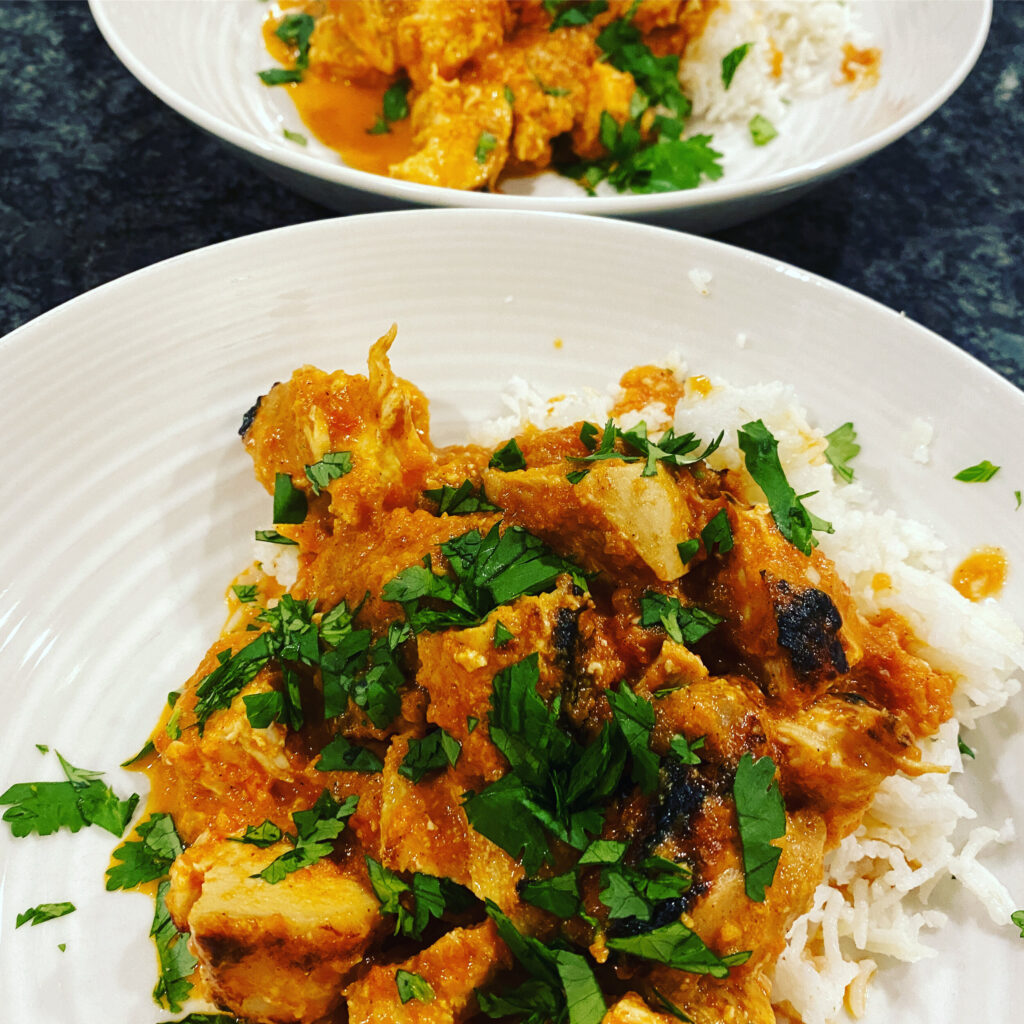
Chicken 1/2 tsp ground coriander 1/2 tsp ground cumin 1 tsp table salt 1/4 tsp cayenne pepper 1 tbsp grated fresh ginger 2 tbsp vegetable oil 2 medium garlic cloves, minced 1 cup plain greek yogurt 2 lbs boneless, skinless chicken breasts, trimmed of fat Masala Sauce 3 tbsp vegetable oil 2 tsp grated fresh ginger 1 medium onion, diced fine 2 medium garlic cloves, minced 1 fresh serrano chile, ribs and seeds removed, flesh minced- optional if you don’t want it too spicy 1 (28-oz) can crushed tomatoes 1 tbsp garam masala 1 tbsp tomato paste 1/2 tsp sea salt 2 tsp sugar 1/2 cup heavy cream 1/4 cup chopped fresh cilantro leaves Instructions 1. FOR THE CHICKEN: Combine salt, cayenne, coriander, cumin and in small bowl. Sprinkle both sides of chicken with spice mixture, pressing gently so mixture adheres. Place chicken on plate, cover with plastic wrap, and refrigerate for 30 to 60 minutes. In large bowl, whisk together ginger, garlic, oil, and yogurt; set aside. 2. FOR THE MASALA SAUCE: Heat oil in large Dutch oven over medium heat until shimmering. Add onion and cook, stirring frequently, until light golden, 8 to 10 mins. Add ginger, garlic, tomato paste, chile, and garam masala; cook, stirring frequently, until fragrant, about 3 mins. Add salt, sugar, and crushed tomatoes; bring to boil. Reduce heat to medium-low, cover, and simmer for 15 mins, stirring occasionally. Stir in cream and return to simmer. Remove pan from heat and cover to keep warm. 3. While sauce simmers, adjust oven rack to upper-middle position (about 6 inches from heating element) and heat broiler. Using tongs, dip chicken into yogurt mixture (chicken should be coated with thick layer of yogurt) and arrange on wire rack set in foil-lined rimmed baking sheet or broiler pan. Discard excess yogurt mixture. Broil chicken until thickest parts register 160 degrees on instant-read thermometer and exterior is lightly charred in spots, 10 to 18 mins, flipping chicken halfway through cooking. 4. Let chicken rest 5 mins, then cut into 1-inch chunks and stir into warm sauce (do not simmer chicken in sauce). Stir in cilantro, adjust seasoning with salt, and serve. Serves 4 to 6. Based on recipe by ATK cookbook Crack open a cold lager – I like Cobra 🇮🇳 beer or an off-dry Riesling or fruity Rosé if you prefer vino.
Chateau Yvonne Saumur
The Loire Valley holds a special place in my heart. It’s an incredibly romantic and beautiful region filled with history, stunning wines ranging from Crémant de Loire, Rosé D’Anjou, Muscat Sevres et Mains, Chinon to the famed Sancerre and Vouvray. Let’s not forget the gastronomical choices that the region has – game, duck, river fish, cheeses and the like. Lastly, the gardens, castles, the countryside oh my – Chateaux de Chenonceau, Chambord, Chaumont, Royale Ambroise etc. If you want to truly discover the region as I did, get in a car, drive around and go off of the beaten path. You will meet the most hospitable and friendly people, discover some of the best wine producers as I did that way with many stories to tell. That being said, this is where I fell in love with Cabernet Franc, which is the shining star in Chinon and Saumur-Champigny. The varietal is charming, feminine and flirtatious. It has a silky texture, lively acidity, soft tannins and aromas of with aromas of raspberry, bramble, bell pepper and pencil shavings. Fun Fact it’s the parent of both Cabernet Sauvignon and Merlot to name a few. This grape was a busy bee back in the day. Chateau Yvonne is located in Parnay, Saumur in the Loire Valley of France. The Chateau dates to the 16th century, with winemaking in the region dominated by the monks from the Abbey de Fontevraud since the Middle Ages. Fast forward to 2007 when Matthieu Vallée took over the chateau and decided to keep the name Chateau Yvonne in honor of all of the hard word that the previous owners had put It. One of the best producers in Saumur-Champigny, the estate is composed of 3 hectares of Chenin Blanc and 8 hectares of Cabernet Franc. These wines are biodynamic and certified organic in small production. All of the vineyard work here is done manually, and Matthieu makes the wines with as little manipulation as possible: ambient yeast fermentation, no additions other than SO2, slow malolactic fermentation, minimal racking, and bottling unfined and unfiltered. The soils are sandy-clay mixed with limestone and tuffeau (signature oyster-flecked limestone soil of the region) which gives completely different expressions of Cabernet Franc and Chenin Blanc. Chateau Yvonne Saumur-Champigny L’Ile Quatre Sous wine is made from average aged vines of 30-50 years old from a single vineyard 100% Cabernet Franc. Hand-harvested, ambient yeast fermentation in concrete vats for 3 weeks without pump over to limit extraction, followed by an ageing of 8 months in concrete vats. The wine is unfined and unfiltered with no additions besides minimal SO2. This wine is a beautiful example of a Loire Saumur-Champigny – deep purple color who’s aromas wrap you up in earthy, graphite, raspberry, blackberry red plum, bell pepper, chili flakes, sage and violet. The palate is dry with a lively acidity, medium body, alcohol and tannins which make it a great food pairing wine. The flavors are earthy, graphite, raspberry, blackberry red plum, bell pepper, chili flakes, mushrooms, sage, violets that just lingers oh so happily in your mouth. The wine is polished, elegant with perfect balanced. It’s savory, mouth filling Cabernet Franc that just screams freshness, pure character of the varietal. Open the bottle and enjoy with wild mushroom bisque topped with crème fraiche, oysters with horseradish, grilled duck breast with sour cherry jus, smoked venison carpaccio with pickled onions, wild boar medallions crusted with pink peppercorns or a traditional Loire favorite of duck rillette with country bread and cornichons.
Champagne Salmon : The Meunier Experts
There are 19,000 growers in Champagne only 5,000 make their own champagne = do the math, that’s 26% people, that’s peanuts! Out of the 26% – 28 , yes 28 are part of the exclusive “Club Trésors de Champagne” – Champagne Salmon being one of them. Put simply, they put an extreme amount of attention, care and love into their champagnes. Champagne Salmon is a third generation of winemakers who’s wines have a sense of place and embody the individual grape variety’s soul, of which is predominantly Meunier. They carry 3 lines of champagne – Collection Montgolfière, Collection Meunier and Collection Spécial Club. The Montgolfière line is a reflection of an enormous passion that Olivier and Alexandre have for hot air ballooning. A Montgolfière is French for hot air balloon, their label of this line is a hot air balloon AND they have a very large sculpture of a hot air balloon at the winery’s entrance. It’s a poetic union of their two passions – wine and hot air balloons : “Flying over Champagne in a hot-air balloon, as we like to do, anchors us down to this terroir. We take it to heart to express tradition and exception through the quality and finesse of our productions. Our family passion for traveling in hot-air balloons is akin to that which makes us gather in the vineyards, around the great grape press and in the cellars where we elaborate the cuvées of the house Salmon.” They have a profound respect for tradition that carries from the the vineyards into the winery. These winemakers were sustainable farmers and winemakers before it became “à la mode” – I mean they still use horses to plow the rows! In their vineyards of Chaumuzy in Montagne des Reims, 85% are dedicated to the Meunier varietal. They focused on this varietal for a few reasons – it buds later protecting it from frost, it ripens earlier with a perfect balance of ripeness and acidity and lastly the clay-limestone soil heightens the minerality and fruitiness. Their wines are like a woman – elegant, feminine, powerful and have a strength of character. Champagne Salmon Montgolfière Sélection Brut is a blend of 50% Meunier, 25% each Chardonnay and Pinot Noir. It’s deep golden hue with lovely aromatics of floral honeysuckle, green apple, peach, apricot, smoke, pear, brioche and honey. It’s lively, persistent bubbles amplify the delicious flavors of golden apple, peach, apricot, pear, smoke, honeysuckle, brioche, pastry, honey, ginger, light hazelnut and beeswax. It’s elegant, lively and complex all in one gorgeous bottle. I enjoyed this lovely bubbly with herbed butter, browned butter lobster rolls but it would also we lovely with lightly poached scallops with cream and dill, oysters and white peach mignonette, lobster bisque, turkey vol au vent or mushroom stroganoff. The possibilities are endless.
Sinful Caramel Chocolat Chip Blondies
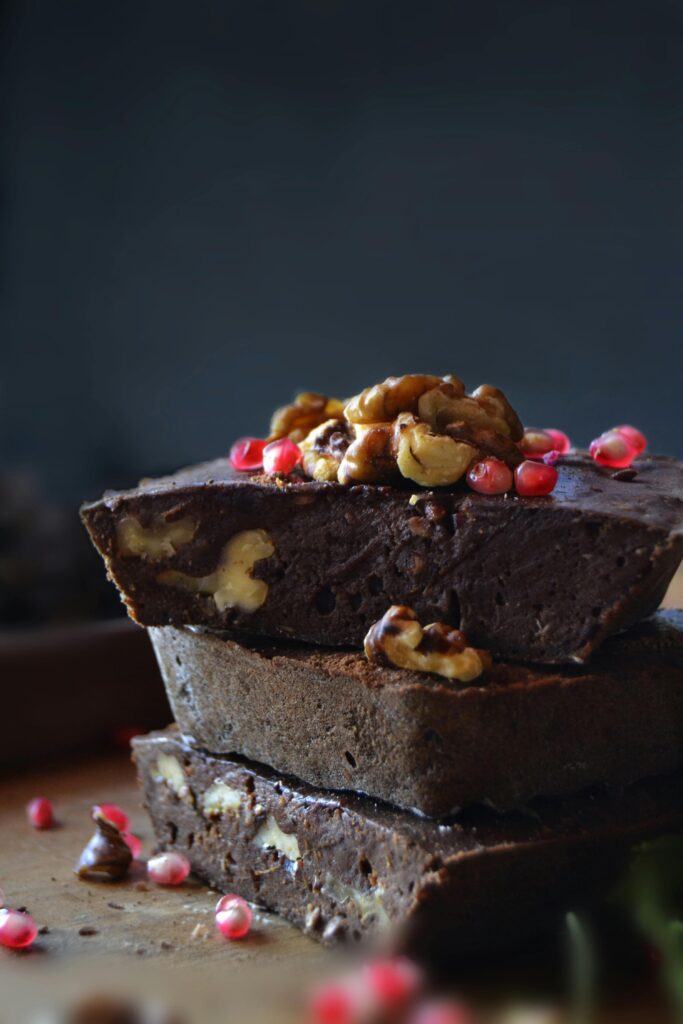
1 cup plus 1 tablespoon (250g) unsalted butter 2 large eggs, at room temperature 1 3/4 cups dark brown sugar, packed 1 1/2 teaspoons vanilla extract 1 1/4 cups all-purpose flour 1/2 cup dark rye flour 1 1/4 teaspoon baking powder, preferably aluminum-free 1 teaspoon kosher or flaky sea salt 4 1/2 ounces (125g) chopped good-quality milk or dark chocolate, bittersweet or semisweet 1/4 cup toasted pecans Preheat the oven to 325ºF (160ºC). Butter a 9″ baking pan and line the bottom with parchment paper. Melt the butter in a small pot over low heat. Remove from heat and set aside. In a large bowl, whisk together the eggs, sugar, and vanilla until light and smooth. Whisk in the slightly cooled melted butter. In a medium bowl, whisk together the flours, baking powder and salt. Using a spatula, gradually add the flour mixture to the eggs and butter, almost until completely combined. Add the chocolate and nuts, mix just until combined. Scrape the batter into the prepared pan and smooth the top. Scatter the shards of caramel over the surface of the batter and bake until the center just feels like it’s just set, but is still quite soft, about 25-30 minutes. Best to err on the side of underbaking than overbaking as you want them soft in the middle when cool. Let cool in the pan and cut into squares. Although just fine eaten the same day they are made, I found them even better the second day as the caramel pieces mellowed and melded better to the chewy blondies. Enjoy with a glass of Rutherglen Muscat, Tawny Port or Malmsey Madeira. Based on the recipe from Claire Ptak’s Violet Bakery