
Stachlburg Vinschgauer Blauburgunder

Italy’s Alpine beauty of a wine region, the mountainous glacial valley of Northern Italy region of Trentino-Alto Adige is located just south of Austria. It is made up of 2 separate regions – Trentino and Alto Adige (a.k.a. Südtirol). The regions are heavily influenced by Austrian-Italian cultures. Alto Adige is quite tiny at only 13,000 acres but the region varies enough to have 7 distinct growing sub-regions. Vineyards in Alto Adige creep up the sides of glacial valleys in horizontal rows. Stachlburg Vinschgauer Blauburgunder 2016 Alto Adige Südtirol DOC, Italy Baron Sigmund von Kripp founded the Stachlburg wine estate in 1990 whereby he first planted with Pinot Noir (Blauburgunder) and Chardonnay. The castle itself is family owned since 1547. Steepest terraced vineyards at 650 meters, Vinschgau can only be reached by foot and the grapes are brought down by ropeway – hence only hand picked. Climate is sunny and dry in summer, best conditions for picky Pinot Noir – sustainably made and farmed. Vinified in steel tanks at controlled temperature, then ages for 18 months in small oak barriques with a small amount new. 4000 bottles were produced. Can be aged for 6 -8 years 12% abv Pours in the glass a pale ruby red color with garnet rim. Swirl and elegant wild red berries, forest floor, wet leaves, earthy, smoke and cloves, cured meat (bacon) and leather. Sip and fresh (medium+/high) acidity envelops the soft medium tannins while the lively flavors of cranberry, raspberry, cherry,rose petal cloves wet leaves forest floor earthy milk chocolate vanilla tobacco medium+ acid medium – soft tannins medium+ finish. It has elegance, depth and complexity. It just envelopes you like a silk scarf or a warm hug. Pairing with roasted salmon with bacon & farro risotto, lobster ravioli, wild mushroom & goat cheese pizza.
Aia dei Colombi Falanghina
Falanghina is the queen in Southern Italy. It is predominantly found in Campania and the star white of the region. There is a little grown in Puglia and Abruzzo regions of Italy. Falanghina arrived on the shores surrounding the Bay of Naples roughly 2,800 years ago with settlers from Thessaly in ancient Greece. Named for the Greek word “falango” referring to the stake used to train the vines. Aia dei Colombi Falanghina 2019 Falanghina del Sannio DOC Campania, Italy The Pascale family come from a long line of viticulturists. The 20 hectare Azienda Agricola Aia dei Colombi was founded in 2002. Located east of Naples in the chalky, limestone & clay hills of Campania. They bring their passion and knowledge previous generations. Their goal is to grow grapes and produce wines that truly and uniquely express the inherent terroir of the vineyard sites. The estate produces Falanghina, Fiano, and Aglianico. Farming methods follow the traditional with minimal to zero intervention – no or little use of chemicals, hand harvested, use of ambient yeasts. This particular wine was cool fermented in stainless steel for 5-6 months in order to preserve the freshness and aromatics. Pour into the glass pale lemon color Swirl and the fragrance of freshly picked ripe peaches & nectarines jump out of the glass along with lemon, pear, minerals and honeysuckle. Sip and the creamy, slightly oily textured wine with a fresh, lively weighted acidity and medium bodied wine. The flavors of peach, nectarine, apricot kernel, orange peel, lemon, pear, grass, honeysuckle, hazelnut, almond, brioche & honey finishes on a shiny mineral note. This is an intriguing type of wine – it has freshness, good acidity and excellent harmony. I for one fell in love with it at first taste. If you are a fan of Chardonnay this is one to give a try. I paired it with a Seafood Stew (local clams, shrimp, tomato broth topped with fried garlic, lemon zest, toasted panko crumbs & parsley) – this is a wine that shines with seafood.
Legendary Lapierre & Raisins Gaulois 2020
Gamay is Beaujolais and Beaujolais is Gamay. Located south of Burgundy, it creates a range of styles of Gamay from the newly released Beaujolais nouveau to the gorgeously ageable Cru’s. Unfortunately the regions nouveau style gave the region a bad rap in the 80s for it’s overproduction. Thanks to the Gang of Four (Marcel Lapierre, Jean Foillard, Jean Paul Thévenet and Guy Breton) the regions reputation was changed. They were the forward thinking winemakers, the revolutionary rebels who not only changed winemaking but promoted quality – less is more mentality. No more herbicides or pesticides, “natural wine” focused on old vines with lower yields = higher quality fruit. They let the grapes stay longer on the vine to develop the flavors in order to create a more structured wine. They only used the healthiest grapes and avoiding adding any sulfur, if none at all. They took a stand. They wanted change. They forever changed the perception of Beaujolais. You can’t argue with that now an you 😉 INFO: What is carbonic maceration? Beaujolais wines are made in the traditional fashion using carbonic maceration – gravity helps the fermentation happens naturally. Using whole clusters of berries which are stacked on top of each other in a sealed tank, The high levels of CO2 starts the fermentation inside the berry. The bottom berries get gently crushed due to the weight from above and provides a wine with light color, little tannins and a very approachable fruity wine. The winds are light, fresh fruit, heat of a tad spice and earthiness Marcel LaPierre Raisins Gaulois 2020 Vins de Pays, France Raisins Gaulois was the brain child the late Marcel Lapierre’s son & daughter, Mathieu & Camille. Raisins Gaulois translates to “Gaillic Grapes” which is a clever play on words by Lapierre. It’s more or less the French equivalent to shit happens, deal with it. The label itself is a giggle cartoon that reminds me of the Just for Laughs comedy festival in Montreal, Canada. The grapes are from young vines mostly within the Morgon appellation with some Beaujolais AOC. There is no “Vin de Pay Beaujolais” designation in the region therefor it has to be labelled “Vin de Pays France.” The grapes undergo typical semi-carbonic maceration without the addition of SO2, for 4-6 days. This wine is as “natural” as it gets. Their aim was to make an approachable and affordable wine that EVERYONE will enjoy. The result is a juicy red-loaded fruit wine with bright, playful fruit is low in alcohol and delightfully refreshing. Pours into the glass a spectacular, bright, jeweled ruby color with a violet rim. Swirl and pretty notes of tart red and black fruits, violets and wet earth embody the glass. Sip and let the good times roll. Bright fruit flavors of strawberry, blueberry, raspberry, cherry, bubblegum, banana, wet stone and finishes on a hum of cinnamon. It has bright acidity and light tannins. It’s a silky, aromatic and juicy unadulterated pleasure of a wine. The is a wonderful introduction to the domaine’s wines. It was made to be a fun, carefree quaffing wine. It’s as they say a “glou-glou” wine. You can’t NOT love this wine – I dare you to try and not love it. This wine begs for a slight chill and to be served alongside charcuterie, cheeses, picnics or just about anything involving fun.
Southern Italian Whites
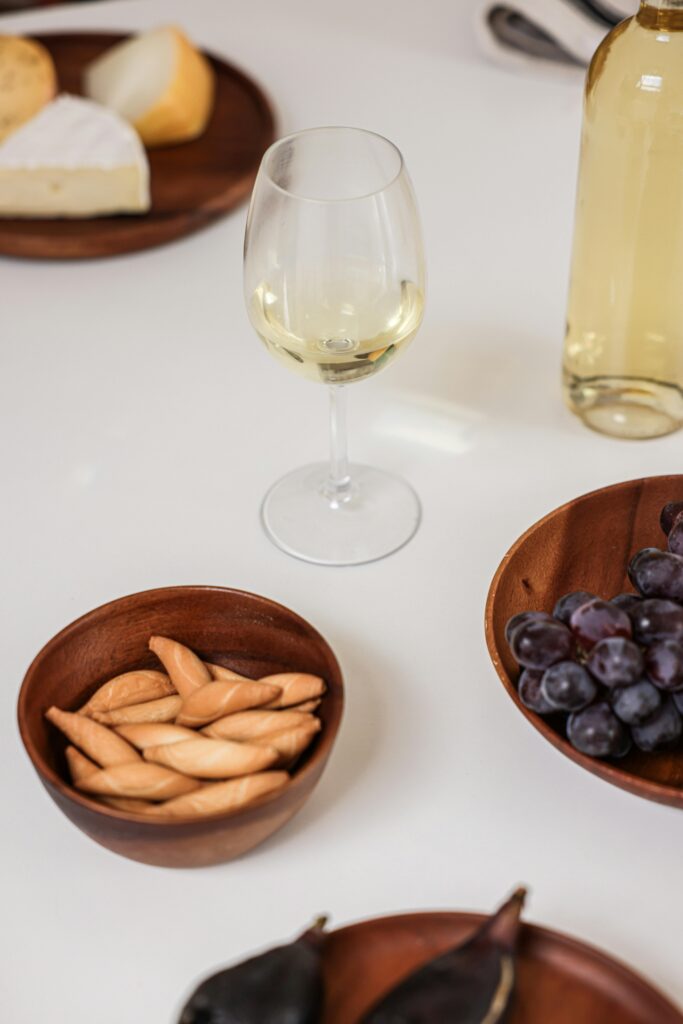
What is your go to summer white wine/varietal? Albariño? Pinot Grigio? Sauvignon Blanc? I have been looking back through the glass in Campania and thoroughly enjoying Southern Italian White varietals. Campania brings visions of Mount Vesuvius, the Amalfi Coast and the ancient city of Pompeii. It is also one of the most varied regions in terms of topography and soils. The same volcanic soils that create unbelievable San Marzano tomato (hello Pizza Margherita that I have tried to recreate unsuccessfully back home) and squeaky, beautiful buffalo mozzarella, also produces incredibly diverse wines. Most people would “assume” that because the wines are from Southern Italy that they will be rich in flavor and full bodied. It’s quite the opposite – they are bursting with freshness and simply thirst quenchingly delicious. The wines really allows you to taste and learn about each terroir through the glass. Quick summary: Campania is the shin of Italy’s boot. Campania loosely translates to “happy land” in Latin. The region has strong a very long history dating back to the 12th century BC to both wine and vine and is one of Italy’s very oldest wine regions. The Greeks, Romans and Byzantines ancient empires all left their mark on this region. This region has an abundance of sunshine, long growing season, volcanic soils and coastal breezes – all of which encourage a bright acidity in the fruit. The top red varietal is Agliancio (big and bold) and the top white varietals in Campania are Falanghina, Fiano and Greco: Falanghina: zesty minerality with apricot kernel, honey, lemon, orange blossom and almonds notes. Fiano: green apple, pear, white blossom, orange zest and hazelnut notes Greco: brisk minerality, citrus, stone fruit, delicate herbal and yellow flowers, They all have in common – they all thrive in Campania, they all have fresh flavors, have a great acid structure, very good food pairing wine and so affordable! Who is thirsty and ready to jump on board to discover Campania?
Domaines Bunan Bandol Mas de la Rouviere Rosé
Bandol is the most revered appellation in the Provence. Mouvèdre shines in this region thanks to the coastal proximity, mediterranean climate. Provence’s leader in concentrated, big and bold age-worthy red wines as well as aromatic rosé Domaines Bunan Bandol Mas de la Rouviere Rosé 2020 Founded in 1961, Paul and Pierre Bunan, men steeped in winemaking history of the the Mediterranean, fell in love with an estate in the Bandol.The wines of the Bunan domaines are farmed organically and all hand harvested. es, that’s how much they love their vines and what they do. Blend: Mourvèdre 40%, Grenache 30%, Cinsault 30% Pours in the glass a beautiful medium salmon color. Swirl and you are hit with a bang of aromas – rose petals, watermelon, strawberry, red currant, peach and fresh wild anise. Sip and you are transported to Bandal – the medium bodied rosé has a vibranthigh acidity. The flavors are fresh and bright with nice depth – gooseberry, grapefruit, rose petals, strawberry, redcurrant and cranberry leads to fleshy ripe peach, fresh-cut watermelon, grass, lemon, melon, apple, finishing with a distinctive, salty minerality and slight bitter finish of herbs – wild lavender, rosemary, fennel, pepper, thyme & mint. I have to say this wine blew me away in it’s depth, complexity and longevity. It was just stunning from beginning to end. The wine has an edge to it which I loved. Pair with black olive tapenade & goat cheese crostini, grilled eggplant, grilled lamb burgers, roast chicken with herbs de Provence (lavender, basil, mint, rosemary, tarragon and thyme) or Lebanese or moroccan cuisines.
Chateau Vignelaure Coteaux d’Aix en Provence Rosé

Now we are in the second largest and western side of Provence, Coteaux d’Aix en Provence (Aix is pronounced “Ex”). It is a coastal, hilly region whose variations in elevations and microclimates make it ideal for viticulture. Rosé dominates however you will find red and whites made from Rhône style varietals. Chateau Vignelaure Coteaux d’Aix en Provence Rosé 2020 A coastal, hilly region whose variations in elevations and microclimates make it ideal for viticulture. Château Vignelaure established in the 60s by Georges Brunet, one time owner of Bordeaux third growth Château La Lagune. At 350m elevation, he decided to plant Cabernet Sauvignon using cuttings taken from his Bordeaux estate in order to make interesting and approachable rosé wines. Vine age: between 25 to 40 years old. Soft gentle press and cooled to macerate on the skins for 48 hours. Slow fermentation at controlled temperature (17°C) in stainless-steel tank. Partial malolactic fermentations. Aging of three months on fines lees, with bâtonnage before bottling. Blend: 40% Grenache, 30% Syrah, 20% Cabernet Sauvignon, 10% Vermentino Pours in the glass a pale pink salmon color. Swirls of red berries (strawberry, raspberry), watermelon, peach, grapefruit, wet stone fill the air. Sip and the light bodied wine is fruity and fresh. It has a lively medium+ acidity with flavors of strawberry, raspberry, watermelon, peach, grapefruit, honeysuckle, wet stone and finishes on a savory mint and pepper note. It’s classical, softer approachable wines that represents the flavors of the region. It’s classical, softer and fresh approachable wine that represents the flavors of the region. Pair for risotto with scallops, seafood paella, grilled herbs de Provence chicken and stuffed zucchini flowers.
Figuiere Atmosphere Rose Extra Brut 2017
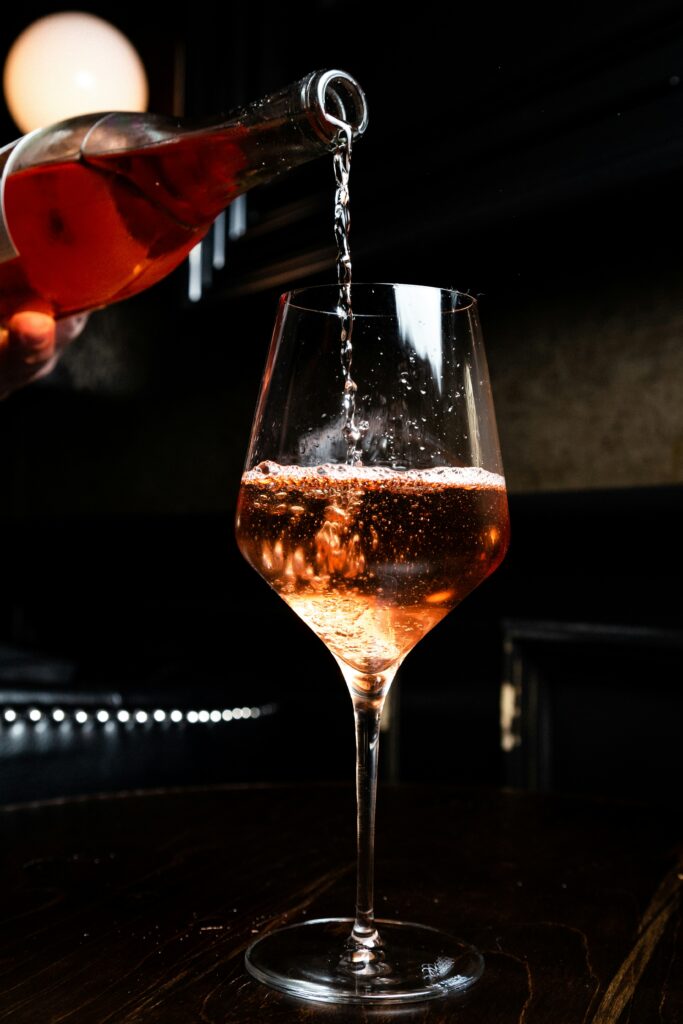
Rosé wines from Provence come in a variety of styles. Versatile warm weather wines, with or without food. These wines are pretty in pink color with lively acidity, creamy mouthfeel. The region produces 75% rosé wines for good reason. It has warm temperatures to ripen the grapes, cooling influences from the mediterranean and altitude of the hilly sub regions that help retain the acidity and freshness. The wines are have fresh vivid flavors and crisp acidity. Figuiere Atmosphère Rose Extra Brut 2017 Méthode Traditionnelle Cotes de Provence, France An Organicly farmed 210 acre estate located 250m from the Mediterranean seaside. Made in the traditional method (think Champagne, Trentodoc or Cava as examples), first fermentation in stainless steel tanks followed by second fermentation in bottle, 9 months of lees ageing. Style: Extra Brut (5g/L) Blend: 50% Grenache, 50% Cinsault Pours into the glass a pale salmon pink color. Swirl and find aromas of ripe red berries, freshly picked peaches, citrus and minerals tickle your nose. Sip and the flavors are fruity and lean – strawberry, cherry, raspberry, peach, lemon, grapefruit, a salty minerality mixed with light toast. The vibrant acidity and the light bubbles are all very pleasant. Pair with smoked salmon crostini, freshly shucked oysters, cherry tomato and bocconcini salad, fried calamari.
Brunnenhof Mazzon Chardonnay

Brunnenhof Mazzon Chardonnay 2019 Südtirol – Alto Adige, Italy Italy’s smallest, Alpine beauty of a wine region, the mountainous glacial valley of Northern Italy region of Trentino-Alto Adige is located just south of Austria. It is made up of 2 separate regions – Trentino and Alto Adige (a.k.a. Südtirol). The regions are heavily influenced by Austrian-Italian cultures. You will find a hodge podge of varietals in the region – from delicate Pinot Noir & Schiava, herbaceous Lagrein and bright refreshing whites such as Pinot Grigio, Chardonnay and Pinot Bianco, aromatic, fuller Gewürztraminer. Brunnenhof is a small-scale family winery with plantings of Pinot Noir, Lagrein, Gewurztraminer and Chardonnay which all thrive in this rugged terrain region. The life and vitality of the grapes are forever present in the final wine thanks to the attention and care they place on their vines. No chemicals, minimal intervention and over a hundred years of winemaking traditions carried out by the Brunnenhof family ensures the reflection of the terroir and varietals fully express themselves in their wines. The Chardonnay vines are new to the family estate as of 2018. The hilly soils are rich in minerals, sand and gravel. The grapes are crushed and macerated for 24 hours and then fermented in 500 liter oak barrels. The wine is aged further for 10 months on the lees in the oak barrels. Only 2000 bottles were produced. Pours in the glass a medium lemon color. Swirls and bam! You’ve just picked the most perfect, ripe golden apples, pears, lemons, white peaches and apricots mingled with a bouquet of honeysuckle. Sip and the creamy texture is balanced with the lively acidity. The expressive, fresh flavors are delicate and fruity with a beautiful minerality – golden apple, pear, apricot, honey, honeysuckle, wet stone, buttery, petroleum (very subtle). It finishes on a slight herbal minty/fennel note and baked lemon pie. Absolutely amazing – the flavors, acid and alcohol (I didn’t notice the 14.5% abv at all!) – it was so well balanced and integrated. Sublime with roasted halibut (olive oil, ground toasted fennel seeds, orange zest, salt and pepper) with orange beurre blanc, fingerling potatoes and roasted asparagus. The wine amplified the orange zest in the sauce and fish. I have to say it was one of the best meals I have ever made.
Langhe Rosato from Massimo Rivetti
Italy is under the radar when it comes to Rose wines. Many people don’t even realize that Italy produces top quality roses from a variety of grapes – such as Sangiovese in Tuscany, Corvina in Veneto, Montepulciano in Abruzzo, Negroamaro in Puglia, Nerello Mascalese & Nero d’Avola in Sicily as well as Cabernet Sauvignon, Pinot Noir and Syrah. With that many varietals it’s not surprising that the style range will try from light to dark rosato in both color and flavor profile. Massimo Rivetti Neive Viarivetti22 Rosato 2020 Langhe DOC, Piedmont, Italy The Massimo Rivetti Farm is known for their stunning Barolo, Barbaresco & Barbera to name a few. But their philopshy is about maximum the respect of the grapes and wines. The use organic and biodiverse practices in their 25 hectares of vines. There are zero pesticides and herbicides or intervention, ambient yeasts, minimal intervention. This a pure wine in all forms – the 35-40 year old vines are fermented at cool temperatures for 10 days and ages for another 4 months in stainless steel. Wine: 100% Pinot Noir Pour in the glass a salmon copper color. Swirl and the fresh fruity goodness aromas of raspberry, strawberry, cherry, tangerine and lemon say hello are you ready for summer? Swirl and boom! It’s summer in a glass. If I were to close my eyes I’d be poolside enjoying a cool glass of this liquid sunshine. This lean & dry wine has a mouthwatering acidity and vibrant array of fresh, ripe flavors of the watermelon, red berries, citrus, wet stone, grass & a tad of white pepper carries the medium finish every fine and clean. It’s just perfect for grilled tuna tacos, roast chicken & bacon club sandwiches with avocado mayo and Mexican corn on the cob. However it’s a stunning poolside pounder my friends. Happy Friday!
Clos de Mez Gamay
Clos de Mez “La Dot” 2010 Fleurie AOC, Beaujolais 4 Generations of Zighera women shaped what Clos de Mez is today. Marie-Elodie Zighera-Confuron founded Clos de Mez (Mez being her nickname) by amalgamating the 3 family parcels in both Fleurie and Morgan under one domaine. She is carrying on the family tradition with her modern winemaking teachings and traditional practices, both in the vineyard and in the winery. Through her experiences in Beaujolais and Cote de Rhone wineries, she discovered that Gamay could be made in the same manner as Pinot Noir from Beaune but with ambient yeasts and minimal intervention. Clos de Mez makes 3 wines, yes three, each unique. * Morgon “Chateau Gaillard” (a queen of a wine that will blow your socks off and could age for decades 30 years) * La Dot is a complex princess that has so many layers which also cellar worthy * Mademoiselle M is the duchess which is a light and fruity Beaujolais meant to be enjoyed young for it’s fresh and fruity style. The La Dot parcel was part of Marie-Elodie Zighera’s grandmother’s dowry, hence the name to pay homage to her “Mamie.” The 50 year old vines are located in southern Fleurie close to the border of Morgon. Grown in sandy pink granite, gnarled old goblet pruned vines produce very low yields. Hand picked, whole clusters undergo cool fermentation for a short period prior to half being matured in barrels for 9 months. After blending the barrel and vat wines, the wine is further aged for another 12 months. Once bottled the wine is further aged in bottle for an additional year before release. Pour into the glass pale ruby color with a purple rim. Swirl and medium+ intensity aromas of strawberry, cranberry, cherry, raspberry, violet & earth jump out of the glass. Sip and the vibrant acidity and the smooth, soft tannins carries the flavors of wild berries (strawberry, cherry, raspberry), violet, forest floor, black truffles, leather, kirsch, bubblegum lead into a long finish on cinnamon spice. It’s youthful and lively yet it has elegance and beauty. It’s finesse in a glass. Serve it lightly chilled with salmon rillette, Brie & saucisson, seared tuna or a roast chicken and bacon frisée salad with pomegranate seeds.