
Cadgal: Moscato d’Asti, Reimagined
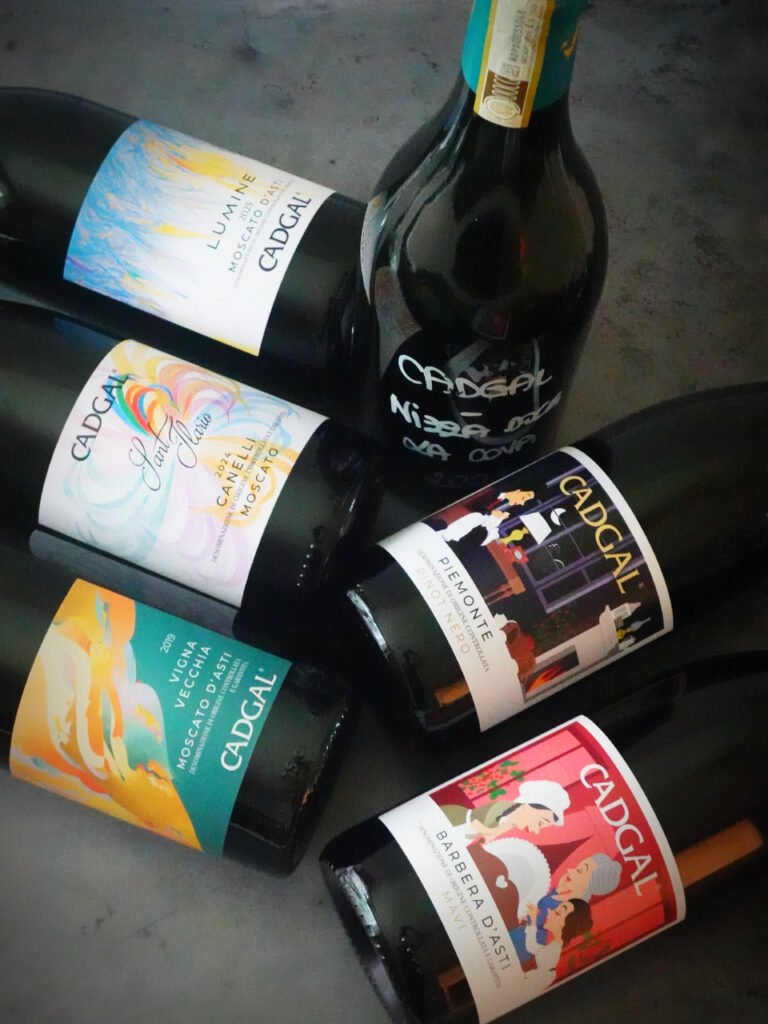
A virtual tasting has its own quiet intimacy. The bottles arrive ahead of time and wait in a row on the kitchen table. Then, on the chosen evening, a winemaker half a world away opens a window onto his hills, his vines, and his family’s stories, and the glass in your hand connects two distant places. Last month, Studio Cru gathered us for an evening with Alessandro Varagnolo of Cadgal in Piedmont. The invitation promised a lesson in Moscato d’Asti. By the end of the night, I realized this grape had been quietly outpacing my expectations for years. Valdivilla and the Sunlit Slopes Cadgal sits in Valdivilla, a hamlet of Santo Stefano Belbo in the province of Cuneo. This is the beating heart of Moscato country, where families have coaxed the grape from steep hillsides for generations. As Alessandro described the land, I could almost feel the hills rising beneath my feet. Once a seabed, the soil here is laced with marine sediment: crumbly, varied, and richer in limestone on the south-facing slopes known as sorì. These sunlit inclines give Cadgal’s Moscato its backbone, a gentle spine that anchors all that fragrance. These hills have inspired more than winemakers. Santo Stefano Belbo is the birthplace of novelist Cesare Pavese, who wrote of these vine-striped ridges with an ache of longing that still seems to hang in the air. Today, the vineyard landscapes of Langhe-Roero and Monferrato are a UNESCO World Heritage Site, and it’s easy to see why. Rows of vines trace every contour, on slopes so steep that much of the work is still done by hand. The grape is Moscato Bianco, known elsewhere as Muscat à Petits Grains and one of the world’s oldest varieties. Here it grows on home turf, near the town of Canelli, whose name has long been shorthand for Italy’s finest Moscato. Tradition, Reimagined Cadgal’s story weaves family tradition together with a spirit of renewal. For decades under Alessandro Boido, the estate quietly championed Moscato with the depth and poise to age. In 2023, Alessandro Varagnolo stepped in with a vision: to give Moscato d’Asti a new identity, to let the variety speak in its highest register, and to reveal the soul of a truly great sweet white. The philosophy is hands-on and patient. The vines are tended without chemical weedkillers, the soil is cared for with attention rather than haste, and the cellar favors a gentle touch. The estate now unites two properties: the Moscato vineyards in Valdivilla and Tenuta La Cova in Calamandrana, home to the reds. The true treasure is the old vines. In the Vigna Vecchia parcel grows an ancient clone of Moscato Bianco di Canelli, nearly fifty years old, its roots reaching deep into marine sediment and drawing out a concentration only time can give. The wine from this parcel rests sixty months in sand before release, a quiet testament to the grape’s gift for aging. Inside Alessandro’s Vision The event felt less like a formal tasting and more like a seat at Alessandro’s kitchen table. The group was small and the conversation easy, drifting from soil and clones to family and memory. His passion begins with a memory. At a family celebration when he was a boy, his grandfather poured him a glass of Moscato and told him to remember the flavor, because it tasted of home. He never forgot it. When the chance came in 2023 to guide Cadgal’s future, it felt less like a purchase than a return to that first invitation. For Alessandro, wine is woven from stories and emotion, and Moscato tastes of his own heritage. He isn’t trying to reinvent it. He wants it seen in its fullness, perhaps for the first time. His vision balances reverence with ambition. Moscato, he believes, has too often been poured as an afterthought and judged by its simplest expressions. He wants the world to know what locals always have: on the right slopes, given patience, this grape stands among Italy’s great whites. Each wine in the range has its own voice, from the joyful Lumine to the contemplative Vigna Vecchia. He champions the Canelli designation, which even allows for a Riserva, and above all he is determined to prove, one bottle at a time, that Moscato can age. He speaks of the land as something held in trust. The UNESCO-listed hills, the hand-tended rows, the warmth that greets visitors are all threads of a single story, and he hopes Cadgal will tell it with care. By the end, I felt I had met not just a producer but an ambassador for this corner of Piedmont, and that Cadgal’s story is only beginning to be told. The Wines Six wines filled the evening, three reds and three Moscatos, building from brightness and freshness toward the estate’s old-vine centerpiece. Each glass revealed a new facet of these hills. Looking for naturally lower-alcohol wines? Moscato makes a delightful alternative, clocking in at around 5% ABV. Piemonte DOC Pinot Nero 2023An unexpected opener in Barbera and Moscato country, and a charming one. Pale, translucent ruby, with wild strawberry, sour cherry, and a hint of rose petal. Silky and light, finishing with a cool mineral edge. Pinot Nero with a Piedmontese accent: pure, graceful, quietly assured. Barbera d’Asti DOCG Mavi 2023Barbera is the everyday red of these hills, and Mavi wears that role with pride. Deep purple and brimming with bright red cherry, ripe plum, and a touch of spice, soft tannins with juicy, vibrant acidity that keeps it lively. This is the bottle to open midweek with a bowl of pasta, and always a good decision. Nizza DOCG La Cova 2023Nizza is Barbera in evening attire, and La Cova, from Calamandrana, carries real presence. Dark and brooding, with blackberry, morello cherry, cocoa, and a trace of violet. Fuller and more layered than Mavi, with polished tannins and that hallmark Barbera freshness carrying into a long, savory finish. Serious, generous, and built to age. Moscato d’Asti DOCG Lumine 2025The signature Moscato
Thirty-Four Countries, One Table.
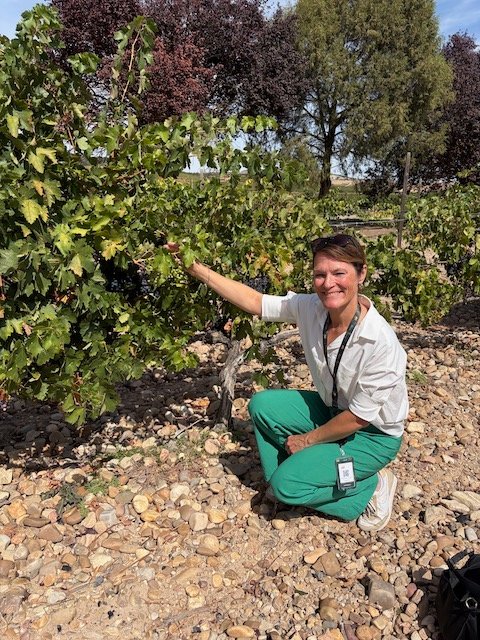
Valladolid, and the Table That Kept Growing from the VinoInfluencers World Awards 2026 This was my first time at the VinoInfluencers World Awards, and I arrived in Valladolid not quite knowing what to expect — only that the week had promised to be magical. It kept that promise before I’d even unpacked. The wine train pulled in and the week began the way the best wine weeks always do: not with trophies, but with people. A bus met us at the station and carried us to the International School of Cooking, where we shared a welcome breakfast, collected our credentials, and listened to a few words from the Head of Tourism for Castilla y León. Then came the first small secret of the week: we’d be sent into the vineyards with our destinations unannounced, so the land could introduce itself before anyone told us its name. Two of those afternoons have already made their way onto the page — the gates swinging open onto Dehesa de los Canónigos on Ribera del Duero’s Golden Mile, and the color and clarete of Cigales at Bodegas Sinforiano. But what stays with me most isn’t any single stop. It’s the shape of the days around them — the way Castilla y León gathered a room full of the world for three days and nights, and how, somewhere in the middle of it, a nomination quietly found its place. Never at the center. Always among friends. An Evening of Roses and Choreography The welcome evening at Villa Augusta Spa & Garden in Arroyo de la Encomienda brought roses, chandeliers, and the gentle choreography of an event determined to make you feel beautiful while still getting you on the bus by nine. VWA Connect brought wineries and communicators together from around the globe, conversation flowing easily across tables not yet set for ceremony. We made a few new discoveries that night, chief among them Bodegas Marqués de Cáceres’ Los Altares Gran Reserva Blanco de Guarda 2016 — creamy, yet lifted by a refreshing thread of acidity, finishing long, poised, and wonderfully complex. There was also an impromptu Sherry tasting with Ruth Amaya of Vinos de Jerez, the kind of unplanned moment that so often turns out to be the best one of the night. Wine Routes, and the Scent of Harvest Friday sent us out again along the Wine Routes, each group following its own thread of adventure, the scent of harvest still hanging in the air. By seven we were back; by 8:15, another bus carried us into Valladolid, to the Tourist Office and Exhibition Hall of San Benito, for the pre-awards gala. There were speeches, meet-and-greets, and that particular hush of anticipation that settles in before a big night. One of my personal highlights, every time, is seeing Laura Catena — one of my favorite women in wine, and a woman with a rare gift for making everyone in the room feel welcome, her smile as infectious as her energy. That evening was also when the room cast its vote for Nos Impulsa Castilla y León — not a jury prize, but a peer prize honoring charisma, professionalism, commitment, and camaraderie. The winners would be revealed at the gala, and by the time we left, the anticipation for the next day was electric. Stepping outside for a breath of fresh air brought its own discovery: Javier Abrego’s Re-Cordis, a “fever dream” Malbec, juicy and vibrant, bursting with blackberry, ripe plum, violet, and a whisper of spice — plush on the palate, beautifully balanced, utterly moreish. It was the kind of wine that makes you pause mid-conversation and quietly go back for another glass. The label tells its own story too: a romantic scene of Javier’s family universe, from his father down to his daughter, Catalina. Beautiful, in every sense. A Sea of White, and a Few Surprise Pours Saturday opened with the Prelude Awards at Sotoverde, sunlight catching in the glass before anyone had changed for the evening. The crowd moved in a sea of white between tapas, MasterChef Carlos Alba’s oyster creations, laughter, and wine samplings gathered from across Spain — with a few surprises tucked in along the way. Luis XIV was expressive, ripe dark fruit meeting gentle spice and a polished finish. The Fondillón offered dried fig, raisin, and toasted nuts against a balanced sweetness, while the Fondillón Gran Solera 1980 was utterly captivating — layers of date, caramel, walnut, and orange peel unfolding one after another. These were wines built for sipping slowly, between conversations, while the afternoon gathered itself around us. A welcome change of pace arrived from Bolivia: high-altitude wines from Tarija showing freshness, concentration, and elegance. My personal star among them was the Campos de Solana Esther Ortiz Petit Verdot — blackberry, black plum, violet, and spice, with fine tannins, lively acidity, and a long, polished finish. Pure high-altitude elegance, the kind of wine that seems to say, quietly, look at me, and wonder. The Gala The grand finale was the VinoInfluencers Gala itself, and it unfolded exactly as galas do: a green-carpet arrival, photographs among nominees and invitees, and the unmistakable sense that it was finally, actually time. Music and entertainment carried the evening forward, building toward ten gold cups celebrating ten different ways of telling the story of wine — style, travel, marketing, communication, consulting, events, education, sommellerie, gastronomy, and the prize chosen by the room itself. My name was among the nominees for Wine Educator Innovation. The award went elsewhere. But winning, I’ve learned, was never really the point. What stayed with me instead was a quieter kind of recognition — for the journey itself: the long hours, the leap from project management into wine, a young family waiting at home, and the courage it took to start from scratch in a place not exactly known for vines. This calling still draws me forward. I suspect it always will. As the hall emptied, the foyer filled. The Wine Experience began — tables from participating
Cigales in Color: A Day at Bodegas Sinforiano
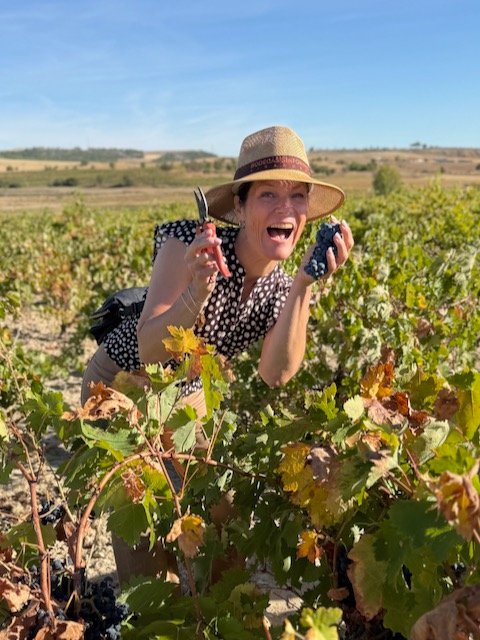
Some winery visits are about tasting. This one felt like stepping into the heart of what Cigales has always meant. Cigales is one of those rare Spanish regions where rosado is not a seasonal afterthought, but the very soul of the place. For generations, clarete was the tradition here: red and white grapes grown side by side, harvested and fermented together. The DO now produces reds and other styles, but the heartbeat remains pink. That sense of identity greets you as soon as you arrive. At Bodegas Sinforiano, tradition and innovation move together. The family cares for bush vines that have seen more than a century of seasons, spread across three valleys. About 100 hectares are farmed organically, with a portion certified, and the modern cellar—first filled in 2004—sits above the old underground cave where earlier generations worked. The winery runs with care for the land, from energy use to water treatment. Beneath the easy smiles and laughter, there is a steady, practiced hand guiding it all. Then came that joyful kind of chaos that only harvest can bring, the sort that calls for celebration. We climbed into jeeps and bumped along sunbaked roads toward the oldest vineyards—bush vines that have seen 105 harvests. This is where the rosado story starts, slow and steady. Josan, our colorful host for the day, welcomed us with a knowing smile and hinted at surprises. Most grapes had already been picked, but a few clusters remained, almost as if they were waiting for us. We were invited to harvest, taste, and enjoy the fruits of our work over a traditional lunch among the vines, with another surprise waiting back at the winery. With pruning shears ready, we paired up and grabbed our buckets. Before we started, Josan paused to explain why this place and its rosado are so important. Eight grape varieties, both white and red, are picked together from these old bush vines and co-fermented to create a clarete rosé that could only come from Cigales. This is not a pale, delicate rosé, but a wine with vivid color, bright fruit, and a sense of history in every glass. The harvest is timed for freshness, and when you open a bottle, it offers pleasure and energy that linger long after the first sip. After picking, we gathered for lunch right there among the vines. Plates of local cheese, spicy chorizo, and slices of pan candeal—the dense, white Castilian bread with its tight crumb—were passed around, perfect for catching every bit of flavor. Glasses of Sinfo clarete, with its orange label, shone bright and cool in the heat of the Castilian sun. Sinfo Rosado This is the wine that defines the house. Its deep strawberry-pink color catches the eye. Ripe red fruit leads the way, with a touch of fennel and peach, and a lively acidity that keeps it all in balance. It is a picnic wine with backbone. Once opened, the bottle empties quickly, and at our table, no one wanted it to end. After the harvest, we returned to the winery for a tasting of four rosado wines. The formal lineup, La versatilidad del rosado, was led by Josan Solano Ávila, whose warmth and humor made each wine feel like a new discovery rather than a lesson. Liala Espumoso Rosé Brut Nature This is the first sparkling rosado from DO Cigales. The bubbles are fine, the palate dry and crisp. Pink fruit and a touch of chalk lead to a clean, refreshing finish. Rosado with bubbles, and it shines. Quelías Rosé 2025 This wine is all about elegance. Five months on lees give it subtlety and depth. Pale in color, precise on the palate, with notes of citrus blossom and stone. It is the quiet wine that lingers longest in the glass. Sinfo Rosado Fermentado en Barrica 2023 This is rosado with the soul of a red. Oak fermentation and aging bring grip and spice, but the fruit remains at the center. It is a serious, structured pink—made for the table. Liala Clarete 2020 This wine honors their beginnings. An old-vine field blend, aged in Spanish oak, it shows a deeper color and flavors of dried strawberry, earth, and gentle maturity. Here is that joyful madness, bottled. Josan invited us outside for the next surprise. Since we had picked the grapes, we were handed the chance to stomp them as well, and taste the juice we pressed. We laughed, feet in a wooden bucket, tasting juice still warm from the sun. This was my first harvest, my first grape stomp, and it was harder than I imagined. You need a partner to steady you, the fruit is cold beneath your feet, and that first rush of juice is something you never forget. Josan and the family toasted our visit and handed out glass charms as keepsakes. Every detail felt thoughtful. The grill sent up the scent of lamb and blood sausage, and soon we were back in the winery for lunch, music, and dancing. It was the kind of afternoon that explains why families keep returning to this work, even when the easier path would be to stop. At Sinforiano, rosado is more than a specialty—it is a way of life. The family tends their old mixed vineyards with care, harvests for the style they believe in, and welcomes visitors to share in the process. Here, heritage and celebration are woven together, with tradition and innovation moving side by side. In a country celebrated for Tempranillo reds, Cigales has held fast to its rosado roots. Clarete remains a living memory, and freshness is something you taste, not just a word on a label. Pink finale I arrived as a visitor and left with grape juice on my feet and a clearer sense of why this region endures. In Cigales, rosado is not an afterthought. It is rooted in family, tradition, and a future that can sparkle, age, or remain in the old mixed vineyards. Sinforiano keeps this spirit alive, always remembering the table—the pan
A Montefalco 2026: The Quiet Poetry of Place
Montefalco arrives like a promise: a ribbon of sun-drenched hills stitched with olive groves and vines, where the light turns grape skins to jewels and the afternoon hush feels like the land exhaling centuries of stories. Three immersive days threading through the gentle slopes between Montefalco, Gualdo Cattaneo, Giano dell’Umbria, Castel Ritaldi, and beyond revealed the region’s living heartbeat — Sagrantino’s powerful, age-worthy structure rooted in thick-skinned intensity and polyphenolic richness; the crystalline, vertical lift of Trebbiano Spoletino with its uncommon acidity and aromatic freshness; and a hospitality that turns every tasting into shared conversation. Here, place and patience continue to ferment wine into memory. Day 1: Hilltops, Family Stories, and First Impressions The journey opened in the Gualdo Cattaneo area with Cesarini-Sartori — gritty, tenacious, rooted — an intimate, family-minded estate led by sisters Chiara and Alice Cesarini Sartori. Their wines speak eloquently of hill soils and old-vine heritage, delivering Sagrantino-driven structure layered with a clear sense of place and energetic Montefalco Rosso blends that balance deep tannins with vibrant freshness — a refined introduction to the territory’s duality of power and approachability. Terre de la Custodia — commanding, earthy, relentless — part of the historic Farchioni family (with Giampaolo Farchioni and winemaker Marco Minciarelli at the helm), followed with a vineyard-forward philosophy deeply rooted in local varieties and the area’s clay-calcareous terroir. Their well-shaped Sagrantino and Montefalco Rosso impressed with earthy aromatics, savory finishes, and harmonious structure — wines that exemplify how the rolling hills translate into glass with both generosity and precision. In Giano dell’Umbria, Moretti Omero — nimble, salty, defiant — a small-scale family operation, offered meticulous attention to detail where traditional viticulture meets thoughtful modern cellar choices. Their approachable Trebbiano Spoletino shone with freshness and salt-sapidity, while the nimble reds highlighted drinkability and pairing versatility — honest expressions that feel intimately tied to the land. Terre di San Felice — warm-edged, familial, fierce — in the Castel Ritaldi/Montefalco area (Società Agricola San Felice) wrapped the day with warm hospitality and wines that favor drinkability without sacrificing pedigree. Lively Montefalco Bianco and Grechetto examples danced alongside Montefalco Rosso featuring ripe fruit and soft tannic edges — terroir-driven voices that felt familial and inviting. The evening dinner at Tenuta di Saragano provided a convivial close: regional Umbrian cooking paired seamlessly with structured Sagrantino and local wines, underscoring how Montefalco’s earthiness and cuisine make every bottle sing. Day 2: Consorzio Wisdom, Village Cellars, and Shared Craft A highlight was the Consorzio Tutela Vini Montefalco visit and masterclass “Montefalco Today” led by Cristina Mercuri MW at Chiostro S. Agostino. She crystallized the region’s story: a compact production area with ancient vines, mandatory aging for Sagrantino DOCG (37 months total, including wood and bottle), and the distinctive characters of its grapes. Sagrantino’s world-class polyphenols and tenacity meet Trebbiano Spoletino’s vertical acidity and aromatic precursors, all shaped by varied microclimates across calcareous-clay soils and four pedologic subzones. The “A Montefalco” ethos — Assertive, Authentic, Ageable — came alive through vintage insights and terroir maps. Le Cimate — precise, mineral-sharp, unyielding — impressed with terroir-focused parcel work and elegant cellar decisions under the estate’s dedicated team. Their refined Sagrantino and well-structured Montefalco Rosso emphasized length, minerality, and balanced oak — poised expressions of the central hills. Romanelli — concentrated, savage, persistent — at San Clemente (with Devis Romanelli involved in the family legacy) brought an old-vine sensibility and strong sense of place. Concentrated red fruit, savory herbs, and persistent tannins defined their Sagrantino — wines that reward slow sipping and reveal layers with time. Ninni — citrus-blade, vertical, audacious — grounded us in Spoleto DOC tradition with expressive Trebbiano Spoletino showcasing the grape’s signature citrus-mineral profile and impressive aging potential, alongside friendly, food-ready whites made in a living way that highlight its versatility and daring nature at Ninni. The Consorzio soirée — a “Visita mestieri” with light dinner — celebrated craft and conviviality. Winemakers, members, and artisans gathered over small plates matched to local whites and vibrant reds, reminding us that Montefalco’s terroir is as much cultural as geological. Day 3: Comparative Tastings and Enduring Classics A focused morning in the central Sala Degustazione allowed side-by-side comparisons, sharpening impressions across producers. Valdangius — saline-striking, bright, rebellious — stood out as a newer voice with clear vineyard intentions. Fresh Montefalco Bianco and Grechetto offered bright aromatics and a saline thread — lively whites that bring energy to the lineup. Scacciadiavoli — historic fury, potent, timeless — the Pambuffetti family flagship (founded 1884) delivered classic Sagrantino depth and Montefalco Rosso blending elegance with potency. These are wines that demonstrate the DOCG’s serious aging ambition and the estate’s living museum of tradition. Goretti — Fattoria Le Mura Saracene — tactile-intense, cinematic, savory-rebel — in the Pietrauta area (led by the Goretti family, including Sara and Giuli Goretti) conveyed a powerful sense of place through old-vine sites. Cinematic Trebbiano Spoletino and expressive Sangiovese-led blends featured tactile minerality and savory finishes that lingered beautifully. The trip culminated in an evening soirée at Tenute Lunelli — Carapace, a polished setting for wide-ranging comparisons and producer conversations. From bright Spoletino and Grechetto whites to powerful Sagrantino bottlings, the diversity shone — philosophies ranging from restraint to robust extraction, all united by profound respect for terroir and the land’s potential. Why Montefalco Matters Sagrantino remains the backbone — thick-skinned, polyphenolic powerhouse built for longevity, with a fascinating falcon-derived history and unique tannin profile that offers tenacity, finesse, and evolution. Yet the region’s beauty is its mosaic: Trebbiano Spoletino’s vertical freshness and aromatic complexity; Grechetto’s structure; Sangiovese-driven Montefalco Rosso for approachable elegance. Across compact hills (220–472m altitude) with clay-calcareous soils, pebble veins, and varied exposures, microclimates craft remarkable diversity. The Consorzio’s sustainable vision — organic growth, biodiversity, and green practices — alongside the “A Montefalco” manifesto, ensures this green heart of Italy stays authentic and forward-looking. 2021 Vintage Snapshot: The Montefalco Sagrantino DOCG earned a strong 4-star Excellent rating (94/100). A harsh winter and spring frost gave way to a
Casale del Giglio-Ancient Grapes & the Wines That Rewrote a Region
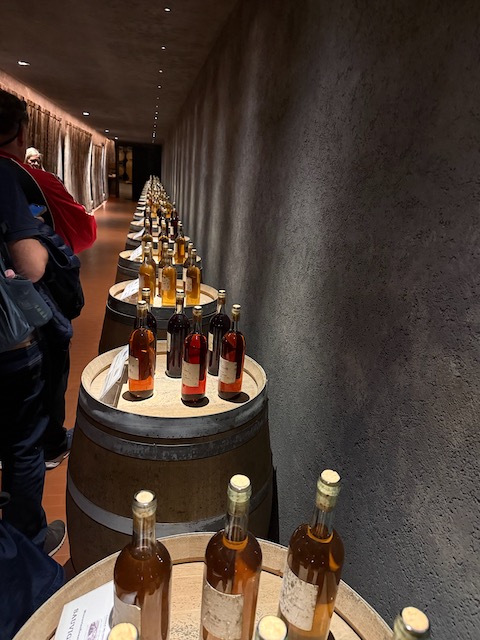
After days immersed in the volcanic soul of Campania, the road shifted north toward Lazio. And suddenly, the story changed again. The landscape softened. The air carried more Mediterranean warmth. The wines became broader, saltier, sunlit in a different way. But what I did not expect was just how revolutionary Casale del Giglio would feel. Because this is not simply a winery. It is one of the estates that fundamentally changed the conversation around modern Lazio wine. Lazio Beyond Rome For decades, Lazio lived quietly in the shadow of Italy’s more celebrated wine regions. People thought of Rome. Not fine wine. Yet south of the city, in the Agro Pontino near Latina, the Santarelli family saw something entirely different: untouched potential. When Antonio Santarelli’s father began seriously exploring the territory, the region had very little established viticultural identity compared to the rest of Italy. Rather than following tradition blindly, the family approached the land almost like a scientific experiment — studying which grape varieties truly belonged in this warm coastal microclimate, 65 to be exact. Dozens of varieties were planted and observed over years of trial, adjustment and experimentation. It was not about copying Tuscany or Piedmont. It was about discovering what Lazio itself could become. That philosophy still defines Casale del Giglio today. And honestly, tasting through the wines felt like watching a region slowly uncover its own identity. The Wines of Agro Pontino: Sunlight & Salinity Our tasting opened with Elaine and Linda as our guides through a carefully selected lineup. The Agro Pontino differs dramatically from Campania. Here, the Mediterranean defines everything. Sea breezes preserve freshness. Sandy and calcareous soils create salinity. Warm days ripen the fruit generously without sacrificing acidity. The wines feel expansive yet lifted. There is brightness. Texture. Maritime energy. The Satrico 2025 — blending Chardonnay, Sauvignon Blanc and Trebbiano — carried aromatic ripeness balanced by mineral freshness. Ripe fruit without heaviness. Polished yet energetic. Then came the Viognier 2025. And this was not the oily, overblown Viognier many people expect. Instead: maritime salinity, freshness, yellow fruit ripeness, but remarkably restrained. The Petit Manseng 2025 followed with herbal lift and freshness, showing how naturally certain international varieties have adapted to this coastal environment. But then the tasting shifted toward Lazio’s indigenous soul. And this is where Casale del Giglio became truly fascinating. Bellone: The Ancient Grape of the Sea Bellone may be one of Italy’s most underrated white grapes. The Romans once referred to it as Uva Pantastica — a grape deeply connected to Lazio’s ancient agricultural history. At Casale del Giglio, Bellone becomes something entirely profound. The Anthium Bellone 2025 comes from old ungrafted vines planted in sandy soils near the Mediterranean coast, where constant sea breezes shape the grape’s naturally saline character. And you could feel the sea immediately. Green citrus. White florals. Delicate tropical fruit. Grapefruit tension. High acidity despite the warmth. At 14% alcohol, it somehow remained completely balanced and alive. Antonio explained that Bellone truly thrives when grown close to the coast. Honestly, after tasting it, I understood exactly what he meant. Then came Radix Bellone 2020. And suddenly Bellone transformed entirely. Creamy texture. Ripe yellow fruit. Mineral breadth. Almost Chardonnay-like complexity. Yet underneath it all remained unmistakable Lazio salinity. The wine spends years evolving through old wood and amphora before release, gaining remarkable texture and depth without losing freshness. The name Radix means “roots.” And that felt appropriate. Because this wine seemed connected not just to terroir, but to history itself. The Island Wines of Ponza Then came one of the day’s biggest surprises: Faro della Guardia Biancolella 2025. The grapes are grown on the island of Ponza, where steep vineyards cling dramatically to cliffs overlooking the Tyrrhenian Sea. And the wine tasted exactly like that landscape. Salty. Wind-swept. Raw. Yellow fruit and white flowers carried by smoky herbal minerality and intense maritime freshness. One sip felt like standing on a cliff above the Mediterranean. Cesanese: Lazio’s Quiet Red Soul Then the tasting turned toward red wines. And once again, Lazio revealed another personality entirely. Cesanese does not behave like Aglianico. Or Sangiovese. Or Nebbiolo. It feels softer. Earthier. More herbal. The Matidia Cesanese 2024 — sourced from volcanic limestone vineyards in the hills outside Rome — unfolded through graphite, dried herbs and savory earthiness wrapped around soft yet present tannins. There was restraint here. Subtlety. A wine whispering rather than shouting. Part of the grapes are lightly dried before fermentation, while aging in cherrywood tonneaux adds another layer of texture and spice. And honestly, it felt uniquely Lazio. The Bordeaux Varieties That Found a Home Casale del Giglio also proved something few expected decades ago: That Bordeaux varieties could thrive in Lazio. The 2019 Madreselva — named after the wild honeysuckle growing throughout the Agro Pontino countryside — blended Merlot, Cabernet Sauvignon and Petit Verdot into something vibrant and savory rather than heavy. Ripe red berries. Crushed herbs. Lifted spice. But the flagship Mater Matuta 2019 was another level entirely. Mainly Syrah with Petit Verdot, the wine unfolded through dark berry fruit, coffee, menthol, anise and deep spice carried by remarkable structure and freshness. Powerful, yes. But polished. The wine takes its name from an ancient Italic fertility goddess once worshipped in the area surrounding the estate — another reminder of how deeply history runs through this land. And somehow the wine felt worthy of that mythology. Lunch at the Villa Then came lunch. And once again, Italy reminded me that wine is never meant to stand alone. Inside the historic villa, mezze maniche alla gricia arrived alongside Anthium Bellone, followed by spaghetti all’Amatriciana and local pecorino cheeses. Simple dishes. Perfect pairings. Long conversation. And that is when the wines opened even further. The salinity sharpened. The textures broadened. Everything became more complete. Because wines like these are not built for isolated tasting notes. They are built for tables. For stories. For connection. Why Casale del Giglio Matters What stayed with me most after leaving Casale
Campania Stories: Giorno 3-Coastal Fire, Ancient Wines & the Soul of Falerno
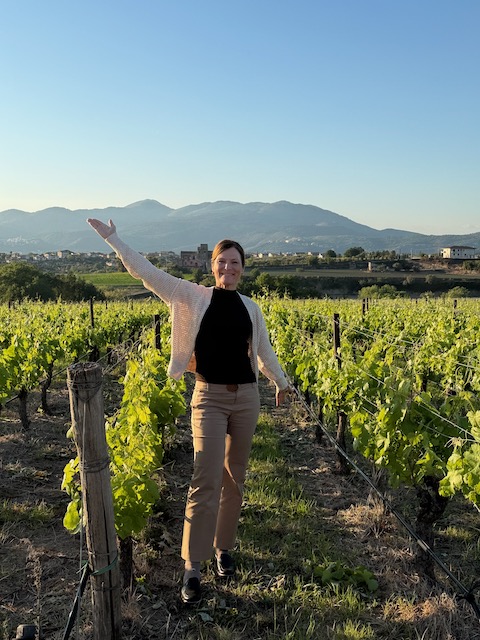
Giorno 3 — Caserta Villa Matilde Avallone • Fattoria Pagano By Day 3, Campania no longer felt like a region. It felt like a living conversation. Every subregion carried its own rhythm, its own accent, its own emotional temperature. After the mountain tension of Irpinia and the rustic soul of Sannio, the road led us toward Caserta — where volcanic soils meet sea air, where Falerno still echoes through history, and where hospitality arrives as naturally as wine at the table. The morning returned us to the pulse of Vega Palace for another day of focused tastings and exchange, this time centered around reds with a scattering of rosé. But it was the late afternoon that stayed with me most. Golden light. Warm air. Cellars beginning to quiet as evening approached. And producers leaning across the table to explain not just a wine, but a decision, a vintage, a piece of family history. Falerno del Massico: The Ancient Voice of Campania Long before Barolo, Brunello or Super Tuscans existed, there was Falerno. The legendary wine of ancient Rome. The wine of Caesar and Cleopatra. Produced along the volcanic slopes surrounding Monte Massico near the Tyrrhenian coast, Falerno del Massico remains one of Campania’s most historic appellations. But unlike the elevated freshness of Irpinia or the earthy rusticity of Sannio, the wines here carry something broader and warmer. Sun-warmed fruit. Salty minerality. Mediterranean herbs. Volcanic depth softened by sea breezes. The climate here changes everything. Warm coastal air ripens the fruit generously, while cold winds descending from the Apennines preserve freshness and tension. Combined with volcanic soils, the result is wines that feel simultaneously rich and lifted — structured yet deeply convivial. This was the world of Villa Matilde Avallone. Villa Matilde Avallone: Reviving the Wine of the Romans Villa Matilde is not simply a winery. It is an act of resurrection. Founded by Francesco Paolo Avallone, the estate spent over a decade researching and reviving the ancient terroir and varieties connected to Falerno del Massico. What began as a passion project eventually became one of Campania’s most important modern estates. Today the winery is guided by siblings Salvatore and Maria Avallone, continuing their father’s vision with deep emotional attachment to the land. And that emotion is impossible to miss. At one point during the tasting, Salvatore smiled and said: “We, the people from Campania, are completely crazy. We live our land. We want to communicate our passion through the wine.” And honestly, that sentence captured the entire visit. Emotion. People. Land. Everything here revolves around that connection. The tasting began with Falanghina. The 2024 carried fresh citrus, apple, pear and saline minerality — bright and coastal in feel. Then came the Mata 2015 Falanghina, and suddenly the conversation shifted entirely. Ten years old and completely alive. Ripe peach. Biscuit. Dough. Dried florals. A wine proving once again how beautifully Campanian whites evolve with time. Salvatore compared the grapes almost like iconic Italian women. The 2025 Fiano di Avellino? “Audrey Hepburn.” Elegant. Refined. Silky. The Greco? “Sophia Loren.” More character. More presence. A touch of rustic edge. And honestly, he was right. The Contrada 127 Greco 2022 — produced with amphora, as the estate has done since the 1960s — carried remarkable grip and minerality, like “a hand on your shoulder,” balancing freshness with texture and serious aging potential. Then came Carracci. And this is where Villa Matilde truly revealed its soul. The 2020 Carracci Falerno del Massico single vineyard unfolded through honeyed dried stone fruit, herbs, salinity and lemon curd wrapped around subtle tannic grip. The 2008 broadened even further into caramel, dried grapefruit and toasted nuts while still retaining freshness. These wines felt ancient somehow. Meditative. Completely tied to place. The reds carried the warmth of the coast but never lost their freshness. The 2025 Roccamonfina Piedirosso was pure glou-glou energy — crunchy red fruit, bright acidity and white pepper spice. The 2020 Falerno del Massico Rosso — 80% Aglianico, 20% Piedirosso — felt closest to Salvatore’s heart. He described it as the wine that “communicates the voice of the land.” And it did exactly that. Savory. Volcanic. Layered with spice and lifted fruit. The Taurasi wines brought more structure and smoke, while Cecubo 2018 — blending Primitivo, Aglianico and Piedirosso — moved into darker, richer territory without losing Campania’s signature freshness. What struck me most was how clearly Caserta differentiated itself from the previous days. The wines here carried sunlight inside them. Fattoria Pagano: Drink the Terroir As evening deepened, we continued toward Fattoria Pagano. And suddenly everything became even more intimate. Founded in 2001 by Antonio Pagano, the organic estate stretches across roughly 24 hectares, with vineyards both in Falerno del Massico and Irpinia. The philosophy here is simple: “Drink the terroir.” Nothing polished for international style. Nothing overworked. Just wines tied honestly to volcanic soils, hand harvesting and the rhythm of Campanian hospitality. Antonio and Angelo welcomed us alongside tables already filling with local dishes and buffalo mozzarella made by Antonio’s uncle — firmer in texture than most mozzarella di bufala, originating from nearby Casedici. And once again, the food and wines became inseparable. The evening began with a 120-day Charmat sparkling blend of Greco and Falanghina — biscuit notes, fine bubbles and remarkable freshness. The labels themselves carried stories too, decorated with musical instruments representing the musicians who once gathered here. Even the rosé held personal meaning, dedicated to Antonio’s mother Rosa: 40% Aglianico, 40% Piedirosso and 20% Merlot carrying bright fruit and unmistakable volcanic minerality. The whites leaned generous yet precise. The Falanghina 2025 shimmered with bright minerality, while the late-harvest Falanghina carried rounder floral concentration. The Greco 2025 moved beautifully from tropical softness into rising minerality, while the Fabula Falerno del Massico Bianca 2025 showed serious elegance and structure. Then came the reds. The Piedirosso 2023 carried smoky violets, savory earth and elegant ripeness. The Aglianico bottlings balanced fruit intensity with remarkably soft tannins. But the standout was Gaurasi Falerno del Massico
Campania Stories: Giorno 2 Rustic Soul, Mountain Power & the Wines of Sannio
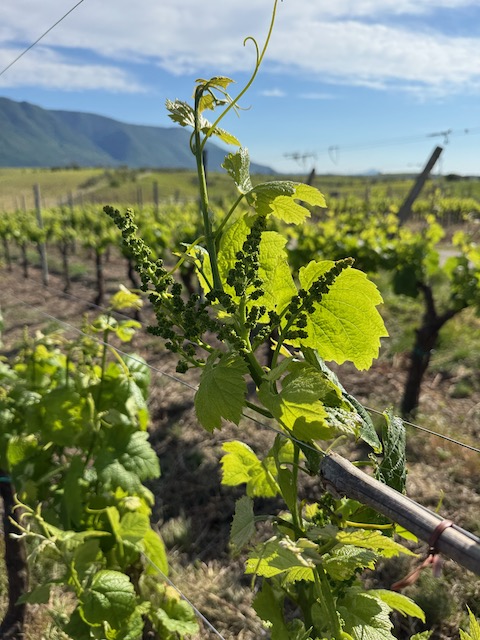
Giorno 2 — Benevento: Sannio & Aglianico del Taburno Terre Stregate • Fontevecchia By Day 2, Campania had already begun to reveal its rhythm. Not polished. Not predictable. But deeply alive. The morning began with Campania Stories tastings focused on sparkling wines and whites — glasses filled with Falanghina, Fiano and Greco carrying the tension of volcanic soils and mountain air. Yet as we moved deeper into Benevento and the hills surrounding Taburno, the mood shifted once again. Rustic charm replaced coastal energy. The wines became earthier. More grounded. More quietly powerful. This was Sannio. A vast inland area surrounding Benevento that has quietly become one of southern Italy’s most important wine-producing zones. Unlike the dramatic volcanic landscapes of Campi Flegrei or the elevated mountain tension of Irpinia, Sannio feels warmer, softer and more agricultural — rolling hills, olive groves, grain fields and vineyards woven together across the countryside. And the wines reflect that generosity. Falanghina from Sannio tends to be rounder and more approachable than the sharper, saline expressions from Campi Flegrei. The fruit becomes riper, the texture broader, while still maintaining freshness thanks to altitude and limestone-rich soils. Then there is Taburno. Centered around Mount Taburno itself, Aglianico del Taburno carries a different personality from Taurasi. While Taurasi often leans toward darker structure, tension and austere longevity, Taburno tends to show more immediate savory charm — earthy spice, softer tannins and a slightly more approachable elegance in youth while still retaining the ability to age beautifully. This was Sannio. A place where Falanghina feels less polished and more rooted. Where Aglianico trades sheer force for savory depth and drinkability. Where food, wine and history still feel inseparable from everyday life. Terre Stregate: The Land of Witches The name alone tells you this is not an ordinary place. Terre Stregate — “Land of the Witches” — sits at roughly 400 metres above sea level in the Benevento valley, surrounded by calcareous stone soils touched by volcanic influence drifting inland from Vesuvius. The symbol of the estate — moon, sun and eye — represents protection, an echo of the folklore and ancient legends woven throughout this part of Campania. Benevento has long been associated with stories of witches gathering beneath walnut trees, casting spells carried by the wind through the valley. And honestly, standing there among the vines, it does feel slightly enchanted. The estate is led by Filomena Iacobucci and her brother, fifth-generation custodians of a family deeply rooted in Sannio agriculture. Today they farm roughly 25 hectares of vines alongside four hectares of olive groves, using the olive leaves themselves as mulch to nourish the vineyard soils naturally. Everything here feels connected to the land. Filomena explained that Falanghina remains the beating heart of the estate, accounting for roughly 65% of production. Their goal is not simply to make Falanghina, but to tell the story of where Falanghina was born — through multiple styles and expressions. And the tasting revealed exactly that. The Caledonio Brut Falanghina DOC opened the morning with freshness and roundness, carrying vibrant citrus and soft orchard fruit wrapped in delicate mousse. Then came the Genius Loci Fiano Sannio DOP 2025 — fresh peach, light on its feet, yet quietly full of character and salinity. The Aurora Greco 2025 followed with round stone fruit and softness, its label inspired by the estate’s new cellar building rising from the hills. But the wines became increasingly compelling as depth and texture entered the conversation. The Svelato Falanghina del Sannio DOP, aged six months on lees, carried savory breadth and mineral tension, while the Caracara 2020 Late Harvest unfolded through caramel, stone fruit compote, lemon curd and toasted nuts. Rich. Layered. Yet still alive with freshness. The rosé, Attimo 2025, brought the mood back toward brightness — cherry, violet, raspberry leaf and mineral lift wrapped into something playful yet beautifully balanced. Then came Aglianico. The Idillio 2025 IGP Benevento carried bright cherry, tea leaf, earth and violets with soft tannins and spice, while the Manent 2023 — vinified partly in barrel and partly in stainless steel — balanced fresh cherry fruit with earthy structure, dark chocolate and fine acidity. Filomena explained the meaning behind the name: “Everything written stays forever.” And that sentiment lingered long after the glass was empty. The Arcano 2020 Riserva — “deep secret” — moved further into savory territory with leather, dried violets, clove and earthy spice wrapped around remarkably fine tannins. Then came Costa del Duca Late Harvest 2018, full of juicy cherry, leather and earthy depth, before the tasting closed with the Malaca Passito. Dried stone fruit. Toffee. Caramel. Christmas spice. A wine built for slow endings and long conversations. At Terre Stregate, wine feels inseparable from story. From folklore. From family. From land. And perhaps that is what made the visit so memorable. Nothing felt manufactured. Only deeply, proudly Campanian. Fontevecchia: Quiet Confidence Beneath Mount Taburno As evening approached, we continued deeper into Taburno toward Fontevecchia. If Terre Stregate felt folkloric and expressive, Fontevecchia carried a quieter kind of confidence. Rustic stone walls. Old cellars. A sense of time moving slowly. The estate, now over 150 years old, welcomed us with warmth from Libero, Lucio and the next generation already quietly stepping into the story. Here, the philosophy is simple: Pay attention to the soil, not the winemaking. And everything at Fontevecchia revolves around Mount Taburno itself. The vineyards surrounding the mountain produce Falanghina del Sannio and Aglianico del Taburno shaped by varied soils — clay and limestone, volcanic zones and tufaceous pockets — now carefully separated under oenologist Emiliano Falsini, who joined the estate in 2020. The wines are divided according to soil type: C for clay and limestone. F for tuff. B for volcanic soils. Precision without losing identity. Lucio explained how the Aglianico clones in Taburno naturally differ from Taurasi, producing smaller, less compact bunches better suited to the warmer conditions. Macerations are handled more gently here — more infusion than extraction — creating wines of elegance
Campania Stories: Initial Sips — Campi Flegrei & Irpinia
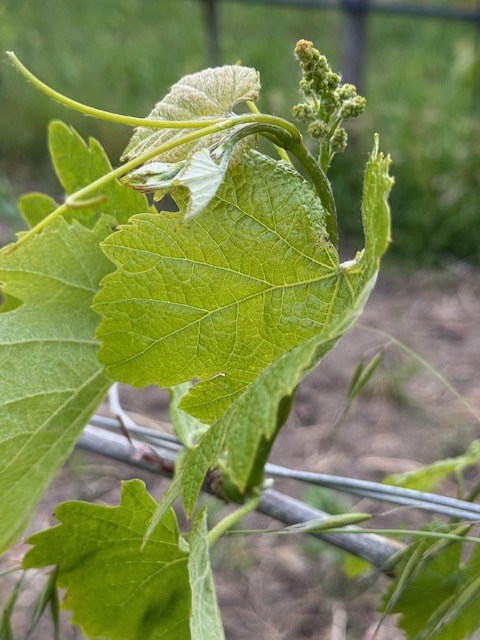
Campania Stories: Volcanic Soul, Mountain Tension & the Wines That Refuse to Be Forgotten Giorno 0 to 1— Campi Flegrei & Irpinia Salvatore Martusciello • Tenuta Cavalier Pepe • Donnachiara Campania does not ease you in gently. It grabs hold of your senses immediately — volcanic smoke in the air, salty Mediterranean breezes, mountain tension in the wines and conversations that stretch long past the final glass. This is not a region of quiet wines. Or quiet people. Campania Stories began the moment the plane touched down in Naples, where Salvatore and Gilda welcomed us not with formality, but with the warmth that instantly turns travel into something personal. Within moments, we were standing at the Solfatara crater in Campi Flegrei, surrounded by black volcanic earth and steam rising from the ground beneath our feet. And suddenly, everything made sense. This is where the wines begin. Not in the cellar. Not in the glass. But in the tension between volcano and sea. Salvatore Martusciello: Wines With Salt in Their Veins At the Salvatore Martusciello winery in Pozzuoli, the family’s role in shaping Campi Flegrei became immediately clear. Salvatore’s father helped establish the DOC in the 1990s, while his uncle Genaro identified Falanghina clones and created what remains one of the region’s defining viticultural references. The vineyards themselves feel wild and alive — ancient Alberata pergolas climbing skyward, wild chamomile lining the rows and some vines still untouched by phylloxera. And you can taste that energy in every glass. The wines moved between electric freshness and volcanic depth: Asprinio bursting with citrus and razor acidity; Falanghina layered with crushed stone, salinity and smoky aged complexity; Piedirosso vibrant with red fruit and coastal freshness. Then came OttoUvo Frizzante Gragnano — fizzy, joyful and unapologetically Neapolitan. “The most beloved iconic wine of the Neapolitan people,” Salvatore called it with a smile. At one point, I asked him what his favorite vintage was. “The next one.” That answer captured the spirit of Campania perfectly. No chasing trends. No imitation. Just wines deeply rooted in place and identity. Dinner among the tanks with Gilda’s homemade timbalo di Nerano, the buffalo mozzarella alongside the estate’s rustic cuisine, grounding the wines even further into place and tradition, the warm sfogliatella transformed the tasting into something even more personal. The wines opened further around the table, revealing Campania not simply as a wine region, but as a way of living. Into the Mountains: Tenuta Cavalier Pepe The following morning, the landscape shifted dramatically as we climbed into Irpinia. More altitude. More silence. More tension. Tenuta Cavalier Pepe unfolded across steep hillsides where cool nights preserve freshness and precision in every grape. Walking the vineyards with Milena Pepe, it became clear that everything here is built around stewardship — hand harvesting, massale selection and allowing the land itself to shape the wines. Milena structured the tasting vertically, revealing how beautifully Irpinia’s wines evolve with time. The Fiano di Avellino wines moved from fresh acacia and citrus into layers of roasted nuts, petrol, honey and salted depth with age. The older vintages carried remarkable energy and proved exactly why Fiano deserves to stand among Italy’s greatest white wines. The Greco di Tufo Riserva wines showed a sharper, more volcanic personality — smoky, savory and intensely mineral. Then came Taurasi. Young vintages carried vivid cherry and chalky tannins, while older bottles unfolded into leather, dried herbs, licorice and savory complexity. The 2011 La Loggia di Cavaliere Taurasi Riserva lingered long after the final sip — dried cherry, violets, leather and fine tannins stretched endlessly across the palate. Hauntingly beautiful. Throughout the tasting, one thing remained constant: Minerality and sapidity slicing through the wines, making you crave food immediately. These are wines built for long lunches, slow conversations and crowded tables. Turn the Page: Donnachiara Irpinia has a way of slowing you down. After the volcanic intensity of Campi Flegrei, arriving at Donnachiara in Montefalcione felt quieter, more introspective somehow. Perched at 400 metres above sea level, surrounded by chunky clay and fractured rock soils, Donnachiara has become one of the defining modern voices of Irpinia through organic farming, native varieties and wines rooted deeply in place. Named after Ilaria Petitto’s great-grandmother, the winery feels deeply personal from the moment you arrive. Ilaria describes her wines simply: “Elegant. Not banal. Wines that need time to show themselves.” That philosophy is everywhere here. Nothing is loud. Nothing is rushed. The wines unfold slowly and confidently, much like Irpinia itself. Alongside winemaker Marco Giulioli, Donnachiara vinifies entirely in stainless steel, allowing the purity of the terroir to remain untouched. The Fiano wines were mesmerizing — moving from fresh pear and white florals in youth into chamomile, honey, petrol, dried herbs and smoky complexity with age. The older Esoterica vintages carried extraordinary tension and depth, proving just how beautifully Fiano can evolve over time. The Greco wines leaned more volcanic and structured, layering smoke, spice, dried herbs and electric acidity into wines that demanded attention rather than easy charm. Then came Taurasi — elegant rather than overpowering, focused on finesse and purity of fruit rather than sheer weight. The older vintages unfolded into leather, balsamic herbs and lifted savory complexity, while the 2006 stood out for its remarkable elegance and freshness. What stayed with me most after this first day of Campania Stories was not simply the quality of the wines. It was the connection between landscape, people and glass. From the volcanic soul of Campi Flegrei to the mountain tension of Irpinia, every wine carried the unmistakable fingerprint of Campania itself. The afternoon shifted gears to the Reggia di Caserta: marble corridors, gardens unfolding like a map of the region, then the Sala Romanelli filling with voices at the opening conference. Over a light dinner curated by the Consorzio VITICA, introductions deepened into plans — collaborations forming as easily as smiles. And this was only Giorno 0-1! Day 2 would take us even deeper into the soul of southern Italy.
Ferrari Trento: Vertical Freshness & The Italian Art of Living
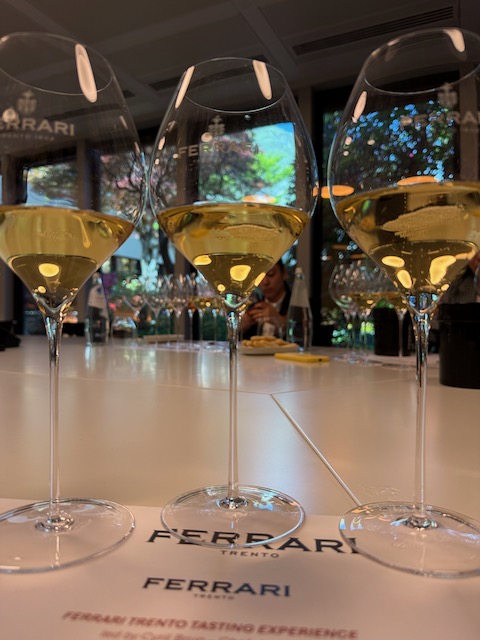
There are wineries you visit to taste wine—and then there are those that make you feel something deeper. At Ferrari Trento, it’s never just about what’s in the glass—it’s about how you experience it. From the moment I arrived, guided through the estate by Jacopo and Anna Chiara, I sensed it immediately. This was not a standard visit, but an invitation into a rhythm—one defined by elegance, harmony, and quiet intention. Nothing feels forced. Nothing feels overdone.Everything feels considered. And as the day unfolded, one truth became clear: every bottle here carries its own story. Where precision meets feeling Set in the mountains of Trentino, with vineyards reaching up to 750 meters, Ferrari’s identity begins with altitude. You feel it not just in the air, but eventually in the glass. Chardonnay is the foundation, representing the majority of production, while Pinot Noir adds depth and structure, particularly in rosé and Blanc de Noirs expressions. Everything begins with care. The harvest is entirely by hand, followed by immediate cooling to 12°C to preserve aromatic purity. From there, time becomes the defining element—not a constraint, but a tool. Aging is deliberate and varied, from a few years to over a decade, allowing each wine to develop its intended expression while maintaining a remarkable sense of lift. This balance—between energy and depth—is what Cyril Brun, cellar master later describes as: “Vertical freshness.” And underpinning it all is a philosophy of restraint: “The best correction is the one you never have to make.” Into the cellars: where time is shaped Before the tasting, we moved into the cellars—and the pace shifted. Cool, quiet, almost meditative, it’s a space that invites you to slow down. Rows of bottles rest in perfect order, each evolving at its own pace. Then the riddling. Three specialists, working entirely by hand, turn upwards of thirty-five thousand of bottles each day. The movement is rhythmic, precise, almost hypnotic. It’s a reminder that even at scale, Ferrari preserves the human touch where it matters most. And then—the family library. The bottles in the family library dating back to 1972 and beyond are not reserved for special occasions, but serve as a living reference for the winemaking team—an archive of decades of knowledge used to guide decisions and navigate both present and future challenges. Standing there, you begin to understand: Ferrari is not just producing wine for the present—it is thinking in decades. Villa Margon: where time stands still If the cellars reveal time in motion, Villa Margon reveals time preserved. Guided by Camilla Lunelli, the visit felt deeply personal—less a tour, more an invitation into the family’s history. The villa’s 16th-century frescoes remain entirely original. Not restored, not altered—preserved simply by its location, tucked away from the main paths of history. Over centuries, it was never disturbed. It simply remained. Walking through its rooms, there is a palpable stillness—a journey of continuity that is rare to experience. At one point, I asked quietly if it might be possible to see the private chapel. To my surprise, the answer was yes. Small, intimate, and still used for family mass, it offered a moment of quiet connection—something deeply human within the grandeur. A rare privilege, and one that stayed with me. A dream that reshaped Italian sparkling wine Ferrari’s story begins with Giulio Ferrari, a visionary who saw potential where others did not. After studying in Champagne, he recognized the unique conditions of Trentino—altitude, climate, and the ability to preserve acidity while achieving ripeness. He brought Chardonnay cuttings from Épernay and planted them here, convinced the region could produce wines of equal finesse. In 1902, Ferrari was born. “Everything can begin with a dream.” From just 700 bottles, the house quickly gained recognition, earning international awards within a few years. Remarkably, it remained untouched through World War II, preserving not only its structure but its vision. That vision was carried forward by Bruno Lunelli and continues today with the third generation of the Lunelli family—where tradition and evolution exist in balance. Meeting Cyril Brun: listening before leading When Cyril Brun joined Ferrari, his first instinct was not to change—but to understand. “For the first six months, I did nothing. I observed, I listened, I learned.” That approach speaks volumes. His role is not to redefine Ferrari, but to refine it—guided by a clear philosophy: “Verticality. Crystalline clarity. Purity… and Pleasure.” And it is within the tasting that these words come fully to life. The tasting: a progression in precision The tasting unfolds as a progression—each wine building on the last, moving from energy and brightness into depth and complexity. Chardonnay remains Ferrari’s central voice, but Pinot Noir is an increasingly important counterpoint. Brun described Ferrari’s identity as a duet between the two grapes. “That’s why you see black and white everywhere in Ferrari communication—it’s the duet between Chardonnay and Pinot Noir.” During our tasting, I asked Brun what he would be if he were not a winemaker. His answer came without hesitation: “I would be an orchestra conductor.” It is a perfect metaphor for the way he works. “Making wine is like conducting an orchestra. You have the small triangle, you have the big bass, and you have to deal with all those different voices.” That image lingers. It captures both his humility and his precision. A conductor does not impose sound from nothing. He shapes, balances, listens, and guides. That is exactly what Brun appears to be doing at Ferrari. What stayed with me What defines Ferrari is not what it tries to be—but what it chooses not to become. It does not chase power.It does not overstate itself. Instead, it focuses on precision, balance, and identity. Mountain freshness.Energy without excess.Complexity without weight. And through it all—a sense of ease. Final sip Ferrari Trento may have been inspired by Champagne—but it has become something entirely its own. A house shaped by altitude, defined by time, and guided by intention. And for me, this was more than a visit. It was an experience you feel—and one that stays with you. What Ferrari
Salentein’s Empanadas
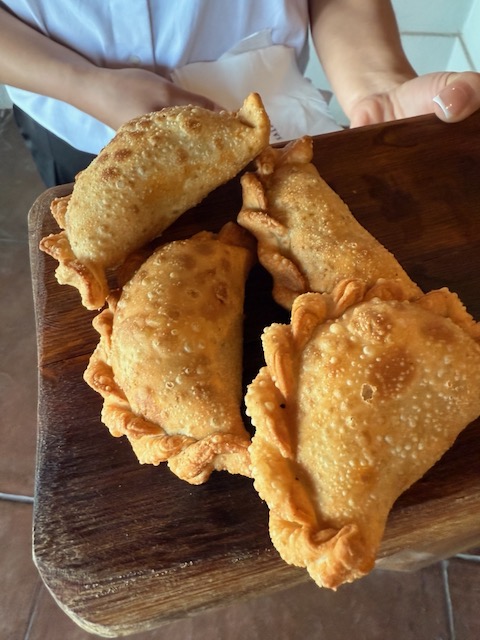
This is an excerpt from a cookbook that I compiled from our Wines of Argentina trip in September 2025 called Los Hermanas Cookbook. This recipe is from Bodega Salentein’s Empanada cooking class. Argentine Beef and Potato Empanadas Ingredients (Makes ~15–18 empanadas): Preparation: Notes: