
Maria Cristina De Simone Avallone: Freedom, Certainty & Roses
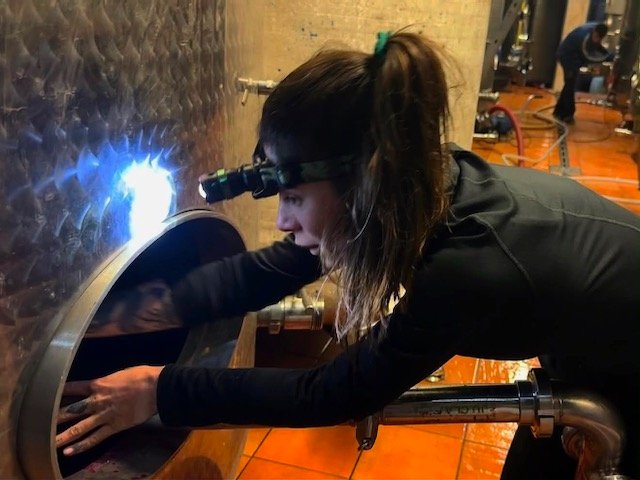
When I first walked the vineyards of Villa Matilde last April, the landscape felt like a kind of paradise: green, still, and precise. Only later, sitting down with Maria Cristina De Simone Avallone, did I understand how much of that stillness was earned. She grew up here, among the vines of the ancient Ager Falernus, surrounded by women who taught her that grapes are never just grapes. To meet her is to meet someone who knows both the pull of inheritance and the discipline of making it her own. The Winery Villa Matilde Avallone lies in Cellole, in the province of Caserta, held between the Tyrrhenian coast and the quiet slopes of the extinct Roccamonfina volcano. This is the heart of the Ager Falernus, home to Falerno, the wine Pliny, Virgil, and Horace once praised and the world later believed lost to phylloxera. In the 1960s, a Neapolitan lawyer named Francesco Paolo Avallone refused to accept that loss. From a handful of surviving biotypes of Falanghina, Aglianico, and Piedirosso, he rebuilt not just a wine, but a place. He named the estate for his wife, Matilde. Today the family tends three Campanian landscapes: Maria Cristina, daughter of Maria Ida Avallone, now leads as head winemaker and head of production. She is the third generation to shape that vision, and she brings to it her own sense of style and precision. For the wider landscape of my spring visit during Campania Stories, see my earlier piece: [link] A Calling Heard at Night Her story with the estate began almost at once. Maria Cristina arrived at Villa Matilde when she was ten days old. Her mother and grandparents carried her early into the cellar, the vineyard, and the restaurant. What stayed with her was never a lesson in grape varieties. It was her mother’s way of telling the story: not just Falanghina, but the people behind it. As a girl, she dreamed of becoming a veterinary surgeon. She was drawn to animals and to the idea of rescuing them in southern Italy. Then, somewhere between nineteen and twenty-one, she found herself torn between winemaking and law. Her mother sensed the hesitation. She did not argue. She simply invited her daughter to a night harvest at Sessa Aurunca. In the darkness among the vines, the answer became clear. The tenderness she once felt for animals never left her. It found another living subject. Wine, she told me, is like an animal. It changes. It asks to be understood over time. She describes Villa Matilde as an Italian love story. It belongs as much to her grandmother as to her grandfather, a man who understood the importance of the women around him. The Piano in the Cellar Nowhere is that love story more present than in the cellar itself. When I asked which object from her childhood still speaks to her, Maria Cristina did not hesitate. She named the piano that stands there among the barrels. It belonged to her grandmother, a professional pianist from Genoa who set aside her career to support the family and the winery. For Maria Cristina, the piano is a reminder of presence. It is also a quiet instruction to keep going and not look back. Her own days hold to a simple rhythm. She has coffee with her mother, who lives just across the way. She walks with her dog, Yuma. She reads, to step away from the pressure that builds as harvest nears. And at sunset over the vineyards, she feels grounded and grateful. It is the same view that struck me in April, and I understood then why it holds her. Freedom, Yellow, Rose When I asked her to describe her wines in three words, Maria Cristina did not reach for technical language. She answered with her life. Freedom. She had to fight to be taken seriously as a woman, and she believes everyone should be allowed to be themselves. Yellow. The happiness of sun on skin, the feeling she wants a glass to give. Rose. The women of her life: her mother, aunts, sister, cousins, grandmother. Beauty and strength together. Petals, and thorns. It struck me that she could have been describing herself. For her, wine is closer to jazz than to a fixed score. She comes from contemporary dance and knows how a melody can shift beneath you. Each person, she insists, will hear the bottle in their own way. That openness is not a weakness. It is the wine’s heart, and perhaps hers too. Her imagined dinner table carries the same spirit. She would invite three women: the painter Artemisia Gentileschi, Matilda, and her grandmother. She would ask them whether they would be proud of the freedom women have reached by 2026. For Gentileschi, she would pour an Aurunca wine alongside vegetable soup, for strength and personality in the glass. For her grandmother, a white Falerno with potatoes, the comfort of a traditional Neapolitan table. Still the Work to Be Done That question of freedom is not only a dinner-party thought. Campania has changed, and leadership is no longer out of reach for women. Yet the old reflex lingers. In her own cellar, Maria Cristina told me, male employees sometimes still turn to her male colleagues first. A generation earlier, her mother met the same skepticism selling wine at twenty. The industry is moving forward, but the work is not finished. What still needs to be won is true respect as a leader, not merely as a symbol. Her advice to women entering wine is practical and unsparing. Be proud of who you are. Study. Work with your hands. Smell. Taste widely. Keep an open mind, and keep talking to people. Isolation, she made clear, is not a strategy. What Harvest Asks Her eyes are already on what comes next. She wants to keep exploring Falanghina, a grape that changes its face from one Campanian hillside to the next. When we spoke, she was also weighing the closure. Traditional cork still holds a certain romance
Campania Stories: Initial Sips — Campi Flegrei & Irpinia
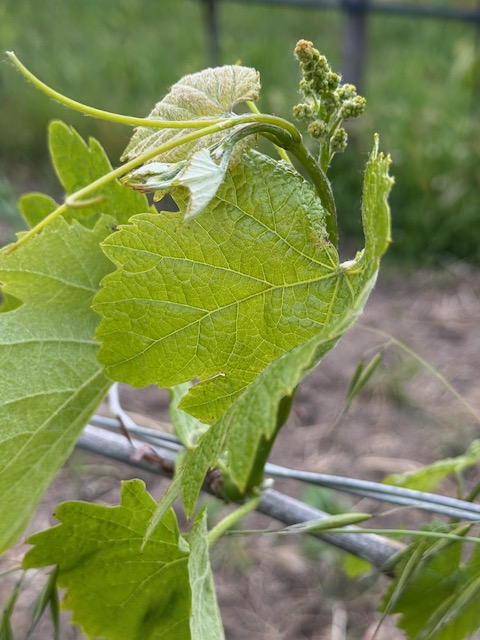
Campania Stories: Volcanic Soul, Mountain Tension & the Wines That Refuse to Be Forgotten Giorno 0 to 1— Campi Flegrei & Irpinia Salvatore Martusciello • Tenuta Cavalier Pepe • Donnachiara Campania does not ease you in gently. It grabs hold of your senses immediately — volcanic smoke in the air, salty Mediterranean breezes, mountain tension in the wines and conversations that stretch long past the final glass. This is not a region of quiet wines. Or quiet people. Campania Stories began the moment the plane touched down in Naples, where Salvatore and Gilda welcomed us not with formality, but with the warmth that instantly turns travel into something personal. Within moments, we were standing at the Solfatara crater in Campi Flegrei, surrounded by black volcanic earth and steam rising from the ground beneath our feet. And suddenly, everything made sense. This is where the wines begin. Not in the cellar. Not in the glass. But in the tension between volcano and sea. Salvatore Martusciello: Wines With Salt in Their Veins At the Salvatore Martusciello winery in Pozzuoli, the family’s role in shaping Campi Flegrei became immediately clear. Salvatore’s father helped establish the DOC in the 1990s, while his uncle Genaro identified Falanghina clones and created what remains one of the region’s defining viticultural references. The vineyards themselves feel wild and alive — ancient Alberata pergolas climbing skyward, wild chamomile lining the rows and some vines still untouched by phylloxera. And you can taste that energy in every glass. The wines moved between electric freshness and volcanic depth: Asprinio bursting with citrus and razor acidity; Falanghina layered with crushed stone, salinity and smoky aged complexity; Piedirosso vibrant with red fruit and coastal freshness. Then came OttoUvo Frizzante Gragnano — fizzy, joyful and unapologetically Neapolitan. “The most beloved iconic wine of the Neapolitan people,” Salvatore called it with a smile. At one point, I asked him what his favorite vintage was. “The next one.” That answer captured the spirit of Campania perfectly. No chasing trends. No imitation. Just wines deeply rooted in place and identity. Dinner among the tanks with Gilda’s homemade timbalo di Nerano, the buffalo mozzarella alongside the estate’s rustic cuisine, grounding the wines even further into place and tradition, the warm sfogliatella transformed the tasting into something even more personal. The wines opened further around the table, revealing Campania not simply as a wine region, but as a way of living. Into the Mountains: Tenuta Cavalier Pepe The following morning, the landscape shifted dramatically as we climbed into Irpinia. More altitude. More silence. More tension. Tenuta Cavalier Pepe unfolded across steep hillsides where cool nights preserve freshness and precision in every grape. Walking the vineyards with Milena Pepe, it became clear that everything here is built around stewardship — hand harvesting, massale selection and allowing the land itself to shape the wines. Milena structured the tasting vertically, revealing how beautifully Irpinia’s wines evolve with time. The Fiano di Avellino wines moved from fresh acacia and citrus into layers of roasted nuts, petrol, honey and salted depth with age. The older vintages carried remarkable energy and proved exactly why Fiano deserves to stand among Italy’s greatest white wines. The Greco di Tufo Riserva wines showed a sharper, more volcanic personality — smoky, savory and intensely mineral. Then came Taurasi. Young vintages carried vivid cherry and chalky tannins, while older bottles unfolded into leather, dried herbs, licorice and savory complexity. The 2011 La Loggia di Cavaliere Taurasi Riserva lingered long after the final sip — dried cherry, violets, leather and fine tannins stretched endlessly across the palate. Hauntingly beautiful. Throughout the tasting, one thing remained constant: Minerality and sapidity slicing through the wines, making you crave food immediately. These are wines built for long lunches, slow conversations and crowded tables. Turn the Page: Donnachiara Irpinia has a way of slowing you down. After the volcanic intensity of Campi Flegrei, arriving at Donnachiara in Montefalcione felt quieter, more introspective somehow. Perched at 400 metres above sea level, surrounded by chunky clay and fractured rock soils, Donnachiara has become one of the defining modern voices of Irpinia through organic farming, native varieties and wines rooted deeply in place. Named after Ilaria Petitto’s great-grandmother, the winery feels deeply personal from the moment you arrive. Ilaria describes her wines simply: “Elegant. Not banal. Wines that need time to show themselves.” That philosophy is everywhere here. Nothing is loud. Nothing is rushed. The wines unfold slowly and confidently, much like Irpinia itself. Alongside winemaker Marco Giulioli, Donnachiara vinifies entirely in stainless steel, allowing the purity of the terroir to remain untouched. The Fiano wines were mesmerizing — moving from fresh pear and white florals in youth into chamomile, honey, petrol, dried herbs and smoky complexity with age. The older Esoterica vintages carried extraordinary tension and depth, proving just how beautifully Fiano can evolve over time. The Greco wines leaned more volcanic and structured, layering smoke, spice, dried herbs and electric acidity into wines that demanded attention rather than easy charm. Then came Taurasi — elegant rather than overpowering, focused on finesse and purity of fruit rather than sheer weight. The older vintages unfolded into leather, balsamic herbs and lifted savory complexity, while the 2006 stood out for its remarkable elegance and freshness. What stayed with me most after this first day of Campania Stories was not simply the quality of the wines. It was the connection between landscape, people and glass. From the volcanic soul of Campi Flegrei to the mountain tension of Irpinia, every wine carried the unmistakable fingerprint of Campania itself. The afternoon shifted gears to the Reggia di Caserta: marble corridors, gardens unfolding like a map of the region, then the Sala Romanelli filling with voices at the opening conference. Over a light dinner curated by the Consorzio VITICA, introductions deepened into plans — collaborations forming as easily as smiles. And this was only Giorno 0-1! Day 2 would take us even deeper into the soul of southern Italy.