
Los Mujeres de la Montañas: Recipes & Memories from Our Wines of Argentina Adventure
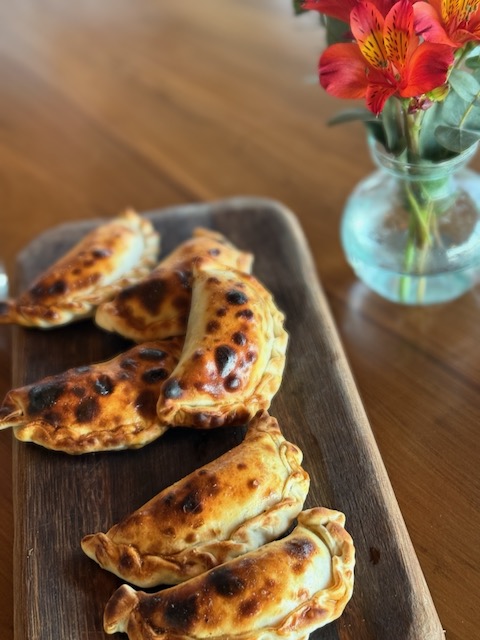
There are trips that fill your glass, and then there are trips that fill your heart with lifelong sisters. Some journeys stay with you forever—not just because of the breathtaking landscapes or the world-class wines, but because of the women you share them with. In September 2025, a group of us embarked on a Wines of Argentina tour that took us deep into the foothills of the Andes. We laughed until our sides hurt, hiked until our legs ached, and toasted countless glasses of Malbec as the sun dipped behind snow-capped peaks. We called ourselves Los Mujeres de la Montañas—the Women of the Mountains. Strong, spirited, and bonded by a love for wine, food, and discovery. Along the way, I collected recipes from the gracious winemakers, chefs, and local families we met. Back home, I gathered them into a little private cookbook I titled Los Hermanas Cookbook—a tribute to the sisterhood we formed amid the vines. Today, I’m sharing these recipes with you as living memories. Each one carries the scent of grilled meats, the earthiness of fresh herbs from high-altitude gardens, and the warmth of women cooking together after long days in the vineyards. Pair them with a bold Argentine red (or a crisp Torrontés if you prefer white), and let the mountains come alive in your kitchen. Empanadas from the Heart of the Andes Treasured Recipes Shared with Pride by Los Mujeres de la Montañas Empanadas were the thread that connected so many of our days—passed around at bodega tastings, packed for picnic hikes, and made together in cozy kitchens. The wonderful ladies and winemakers we met were each so proud of their own version, sharing them with us in confidence as a gesture of friendship. Here they are, exactly as given to us. Terrasaz’s Beef Empanadas Shared by the warm team at Terrasaz, this onion-rich beauty reflects the generous, juicy style they’re known for in the region. Ingredients (Makes ~20 empanadas): Preparation: Notes: The high onion-to-beef ratio (2:1) creates a juicy, flavorful filling typical of Argentine empanadas. Soaking raisins in wine adds a subtle sweetness and depth—use a bold red like Malbec for authenticity. We made these one golden afternoon at Terrasaz, the high onion content filling the kitchen with the most incredible aroma as we laughed and folded dough together. Salentein’s Argentine Beef and Potato Empanadas The Salentein team shared this comforting, potato-enriched version—perfect for the mountain energy we needed after hikes. Use the same assembly, sealing, and cooking instructions as Terrasaz’s Beef Empanadas above (bake at 200°C/400°F or fry at 180°C/350°F). Ingredients (Makes ~15–18 empanadas): Notes: The potatoes add a starchy, comforting texture while aji molido brings mild, fruity heat. These became our favorite “after-hike” empanadas—sturdy and satisfying. The stirred egg creates a richer texture, while poached eggs keep it more traditional. Adjust seasoning to taste. Alejandro Sejanovich’s Pork Empanadas Alejandro generously shared this elegant, hand-chopped pork version with us—one of the most flavorful and aromatic we encountered. Follow the detailed filling preparation in your original notes (sauté dill and corn with broth first, cook pork separately, soften onions, combine everything with blanched potatoes and optional gelatin, then chill). Use the same assembly, sealing, and cooking instructions as Terrasaz’s (bake at 250°C/482°F for 20–25 minutes or fry at 170–180°C/340–350°F). Add a pinch of green onion tops, half an olive, and a slice of egg to each before sealing. Pair with a light Torrontés. Alejandro’s Argentine Cheese Empanadas The same generous spirit brought us this gooey, onion-and-cheese delight—perfect for a lighter moment. Ingredients (Makes ~12–15 empanadas): Preparation: Melt butter and cook the thinly sliced white onions until translucent and soft (about 10–15 minutes). Season with oregano, black pepper, and salt. Let cool completely. Combine cooled onions with the cubed Gouda and mozzarella in a large bowl. Mix gently. Refrigerate for at least 1 hour. Assemble and Cook: Follow the assembly instructions from Terrasaz’s Beef Empanadas, adding a pinch of chopped green onion tops and half a green olive to each. Pierce each empanada three times on top with a fork to allow steam to escape. Refrigerate until ready to cook. Bake at 250°C (482°F) for 20–25 minutes until golden and the cheese is melted and bubbly (preferred method to prevent leakage), or fry carefully at 170–180°C (340–350°F). Serve: Serve hot with chimichurri or a mild tomato salsa. Add aji molido for a spicy kick if desired. We folded these with big smiles, the cheese promising melty joy with every bite. Notes: Tomatican is a versatile Argentine classic. Asado al Estilo de las Hermanas – Mountain-Style Grill No trip to Argentina is complete without asado. One evening at a family-run bodega, the women showed us how they prepare the grill with love and patience. It wasn’t just meat—it was ritual. The Essentials: Method:Build a slow fire with local hardwood. Season the meat simply with salt. Grill low and slow, turning as needed. The secret? Let the flames kiss it gently while you sip Malbec and tell stories. We stood around the grill in the crisp mountain air, passing plates and toasting to the “hermanas” who made us feel like family. Chimichurri de las Montañas This bright, herbaceous sauce elevated every bite. We learned to make it fresh from garden herbs. Ingredients: Instructions:Mix everything together. Let it sit for at least 30 minutes so the flavors marry. Spoon generously over grilled meats or use as a marinade. One of the women declared it “liquid sunshine”—and we all agreed. Humitas Mendocinas – Sweet Corn Tamales A vegetarian favorite we discovered higher in the mountains. Creamy, slightly sweet, and wrapped in corn husks like little gifts from the earth. Ingredients (makes 8–10): Instructions:Sauté onion in butter. Blend most of the corn with milk, then mix with whole kernels, cornmeal, and seasonings.Fill softened husks, fold, and steam for 45–60 minutes. We ate them warm, paired with a floral Torrontés, while watching condors soar overhead. Doña Paula’s Tomatican This versatile tomato-egg stew was shared as a perfect side or light main—bright,
Petit Caro – Mendoza’s Playful Powerhouse
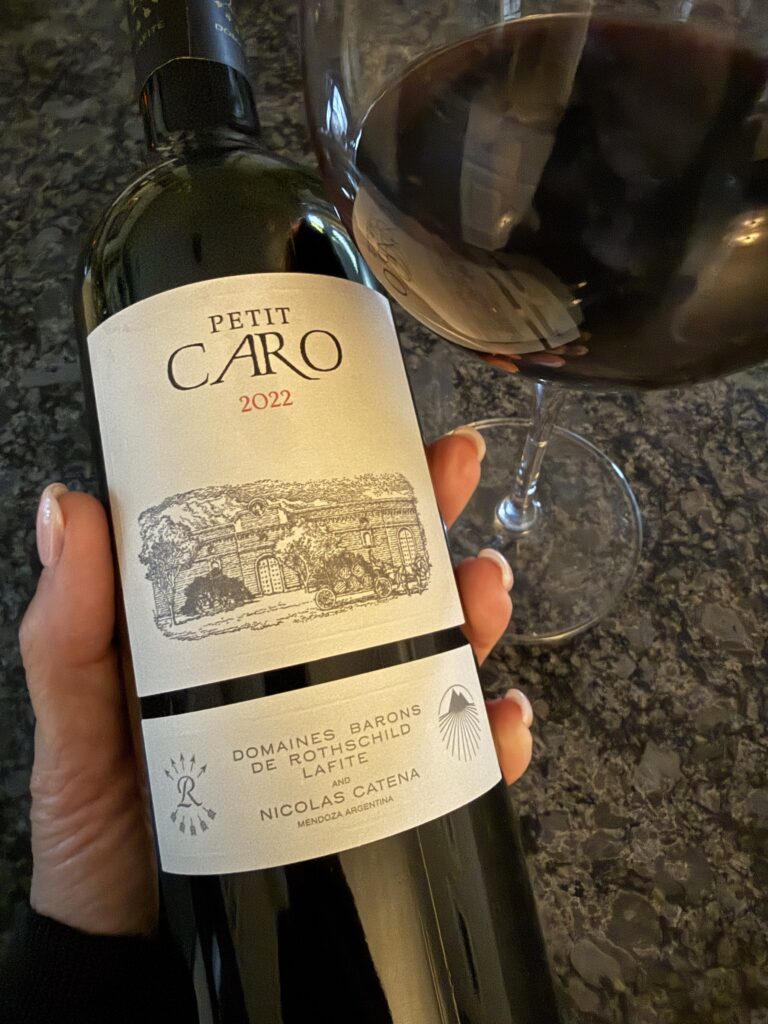
Petit Caro is a playful love letter to Franco‑Argentine winemaking: Bodegas CARO (founded 1999) is the joint venture where Domaines Barons de Rothschild (Lafite) meets the Catena family to marry Bordeaux Cabernet know‑how with Argentina’s high‑altitude Malbec magic. Housed in a lovingly restored 1884 winery in Mendoza, the project launched its flagship CARO in 2000 and introduced Petit Caro as the friendly, fruit‑forward sibling. The name says it all — Ca (Catena) + Ro (Rothschild) — a tidy little shout‑out to two storied families. Vine sourcing spans Mendoza’s marquee districts — Luján de Cuyo (Agrelo), Altamira, La Consulta and the Uco Valley (Tupungato, Gualtallary) — so you get concentrated, altitude‑driven fruit that Lafite’s blending discipline and Catena’s vineyard savvy shape into wines with Old‑World structure and New‑World exuberance. On a personal note, I visited the restored CARO bodega in September 2025 and left grinning. Touring the cellars, wandering through the photography exhibit, tasting with the winemaker and stepping into the 3D grapevine installation in the cellars was pure sensory fun. The month’s photography exhibit, “Terroir & Light,” used stark monochrome and warm color studies to dramatize sun, soil and human touch in the vineyards — evocative, thoughtful and unexpectedly moving. The 1884 building itself anchors the modern project in history while making the whole experience feel theatrical in the best way. A blend 62% Malbec, 35% Cabernet Sauvignon and 3% Cabernet Franc. The vintage was dry and easy‑going: early bud break in October, flowering in late November, and Uco Valley harvest between March 21 and April 7. Grapes are hand‑harvested and sorted; fermentation happens in stainless steel with gentle pumping‑over to coax color and ripe tannin without harshness. The wine spends 12 months aging — half in French oak barrels and half in concrete vats — an approach that gives texture and subtle oak spice while keeping fruit purity front and center. In the glass Petit Caro is a deep red with violet highlights that catch the light. The nose is generous and layered: ripe red cherry and plum up front, bright blackcurrant and a syrupy fig note, then a sweep of baking spice, crushed herbs and a graphite thread that keeps things lively. The palate is broadly appealing — round and plush at first, then brightened by lively acidity; soft, polished tannins lend structure without grabbing the tongue. Flavors echo the nose (red fruit, blackcurrant, fig) and build into a cocoa‑tinged, slightly savory finish with a whisper of cedar and warm spice. It’s immediately enjoyable but has enough backbone for short‑term cellaring and for pairing with food. And oh, the pairings — Petit Caro practically begs for empanadas. Beef empanadas flecked with smoked paprika, cumin and sautéed onion are a classic match: the wine’s dark fruit and savory thread mirror the meat while acidity cuts the fat and refreshes the palate. Chimichurri chicken empanadas are a bright, herbaceous partner — the wine’s lift and midpalate flesh complement the parsley, garlic and acid in the sauce. Cheese and caramelized‑onion empanadas are a cozy, indulgent match: the wine’s cocoa/ oak whisper and soft tannins play beautifully with sweet onion and melted cheese. For spicy fillings (think a hot pepper chimichurri or spicy beef), chill the bottle slightly (55–60°F) to soothe heat and let the fruit sing. Beyond empanadas, Petit Caro is charming with holiday ham — the wine’s gentle sweetness and savory backbone balance salty, glazed ham beautifully (I watched it elevate our Easter table). It also pairs well with grilled flank steak or chimichurri‑dressed roasted vegetables, and if you’re doing a tapas spread, try it alongside manchego, roasted peppers, olives and cured meats for a lively, convivial service. In short: Petit Caro 2022 is a cheerful, well‑made Mendoza red that mixes Malbec plushness and Cabernet structure with a touch of Franc lift. It’s approachable, food‑centric and just the sort of bottle you’ll reach for when you want something versatile, flavorful and sociable. Pop a cork, share a plate of empanadas (or ham), and enjoy the happy chemistry. Cheers from The Happy Vine.
Salentein’s Empanadas
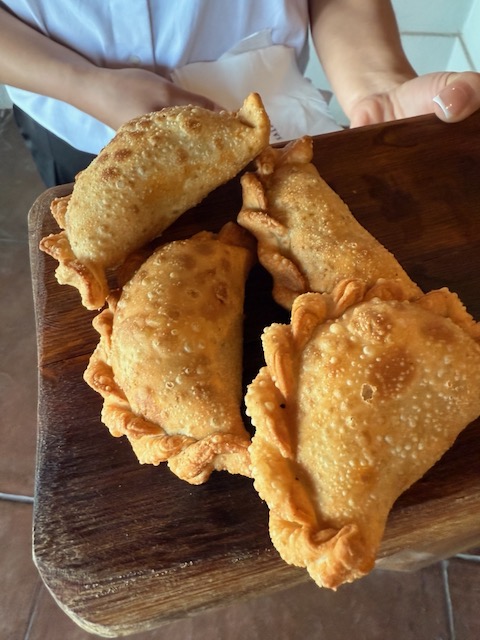
This is an excerpt from a cookbook that I compiled from our Wines of Argentina trip in September 2025 called Los Hermanas Cookbook. This recipe is from Bodega Salentein’s Empanada cooking class. Argentine Beef and Potato Empanadas Ingredients (Makes ~15–18 empanadas): Preparation: Notes:
Elegant Women’s Day Sips
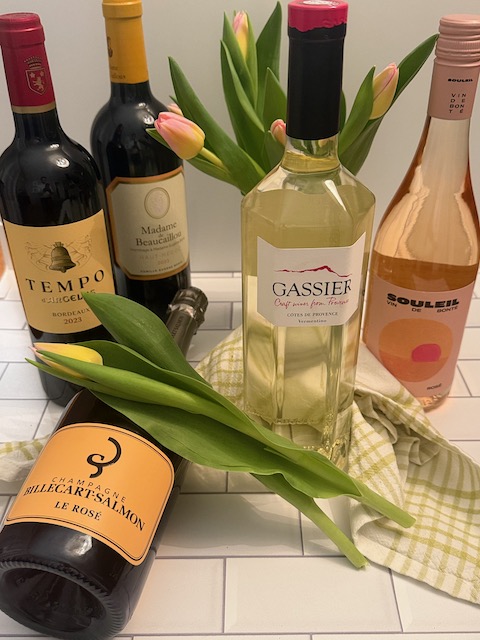
Fellow wine lovers, let’s raise our glasses to the extraordinary women who shape the world of wine with their passion, innovation, and grace. In honor of Women’s Day, I’ve curated a selection of exceptional bottles, each spotlighting a remarkable woman’s role in its creation. From founders to winemakers and historical pioneers, these wines embody their spirit—elegant, resilient, and full of life. Join me on this flavorful journey through France’s finest, where every sip tells a story of empowerment and artistry. Souleil Vin de Bonté Le Rosé 2024 Marianne Fabre-Lanvin: The Visionary Founder of Souleil Marianne Fabre-Lanvin, a French Southerner with deep family roots in vineyards, turned her lifelong passion for wine and the sea into a reality by co-founding Souleil Vin de Bonté. As a wine publicist and marketer splitting time between Paris and New York, she launched this brand as a passion project, blending organic grapes from independent growers while championing sustainability and ocean conservation. Her approachable, laid-back ethos makes every bottle feel like an invitation to share joy with friends. The Winery: Souleil Vin de Bonté Founder Marianne captures the sun-drenched essence of Southern France. This eco-conscious label sources organic grapes from seaside vineyards, emphasizing low-intervention practices and giving back to the ocean. It’s a brand that embodies endless summer vibes, producing approachable reds, whites, and rosés with a nostalgic, unapologetically French flair. The Wine: Sunset rays of vibrancy Crafted through organic, low-intervention winemaking, this rosé blends 34 % Grenache, 33% Syrah, 33% Cinsault, fermented in a Provençal style for bright lift and freshness. Hailing from Mediterranean-sighted parcels in Vin de France, it’s a delicate, dry rosé bursting with strawberries, raspberries, orange rind, and mineral notes—think tart red berries and juicy grapefruit on a vibrant, herbaceous palate. Pair it creatively with a sunset picnic of grilled octopus tacos or vegan berry sorbet for a refreshing, ocean-inspired twist. Madame de Beaucaillou, Haut-Médoc, Bordeaux, 2020 The Matriarch: Honoring Elegance and Warmth This wine pays tribute to the producer’s mother, a symbol of grace and hospitality whose elegance, warmth, and artful table-setting inspired its name. As the heart of the Borie family, she represents the nurturing spirit that infuses the estates legacy, reminding us how women create welcoming spaces that turn houses into homes. The Winery: Madame de Beaucaillou has been family-owned for generations under the Borie family. Spanning 75 hectares with vines averaging over 35 years old, it focuses on meticulous craftsmanship, blending tradition with modern precision to produce iconic Bordeaux wines known for their structure and longevity. The Wine: Poised and Powerful Hand-harvested and vinified with care, this Merlot-dominant blend (66% Merlot Noir, 24% Cabernet Sauvignon, 10% Petit Verdot) ages 12 months in Bordeaux barrels (20% new). From the Haut-Médoc region, it’s a savory, classic red with deep ruby hues, offering blackcurrant, iris petals, and orange blossom aromas. On the palate, juicy black fruits and polished tannins shine—pair it with a creative twist like duck confit empanadas or dark chocolate-dusted venison for an indulgent, welcoming feast. Gassier Blanc, Côtes de Provence, 2025 Léa Rouyet: The Artisan Oenologist Léa Rouyet, a talented winemaker from the Basque Country, joined Château Gassier in 2015 and has since elevated its wines with her passion for terroir-driven expressions. Balancing tradition and innovation, she crafts cuvées that highlight Provence’s unique character, proving rosé and whites deserve serious acclaim while inspiring a new generation of female vintners. The Winery: Château Gassier Nestled at the foot of Montagne Sainte-Victoire, Château Gassier is a six-generation artisanal estate committed to organic farming across 40 hectares. Under Georges Gassier and Léa Rouyet, it pioneers wood-aged Provence wines and sustainable practices, producing expressive rosés and whites that capture the region’s limestone-clay terroir in Côtes de Provence and Sainte-Victoire appellations. The Wine: Crisp Modernity Meets Mediterranean Magic This new cuvée is 100% Vermentino with cool stainless fermentation, offers a fresh, modern take on Provence white. Pale gold with a silvery-green shimmer, this vibrant white opens with fresh white peach, bright citrus, and delicate white flowers. On the palate, it’s crisp and refreshing, delivering zesty lemon and grapefruit notes layered with subtle minerality and a whisper of Mediterranean garrigue. Round yet lively, with a clean, saline finish that lingers invitingly. Savor its sunshine in a glass alongside creative pairings like citrus-glazed scallops over herb-infused quinoa or a summer salad with goat cheese and honeycomb. Tempo d’Angelus, Bordeaux 2023 Stéphanie de Boüard-Rivoal: The Eighth-Generation Leader As the first woman in eight generations to lead Château Angelus, Stéphanie de Boüard-Rivoal has steered the estate toward organic viticulture since 2012. Her visionary guidance created Tempo d’Angelus, demystifying grands crus while preserving family legacy—a testament to her determination, passion, and role as guardian of centuries-old traditions. The Winery: Tempo d’Angelus Born from the same exceptional terroirs and crafted with the Angelus team’s renowned savoir-faire, Tempo d’Angelus delivers the signature depth and complexity of its illustrious siblings—Château Angelus and Carillon d’Angelus—but in a more immediate, hedonistic style. No need to wait 15–20 years; this precise, well-structured wine is ready to be enjoyed at its peak much sooner. Sourced from magnificent clay-limestone slopes in Saint-Magne-de-Castillon, Castillon-La-Bataille, and Sainte-Colombe (acquired in 2017 specifically for this project), it is vinified in a dedicated, state-of-the-art cellar within Chai Carillon. Its elegant label features the iconic swinging Angelus bell, perfectly capturing the new rhythm and energy this wine brings to the family’s prestigious range. The Wine: Refined Grace in Every Sip Made from 90% Merlot and 10% Cabernet Franc, with vines from Castillon-la-Bataille parcels, this Bordeaux red undergoes precise vinification for streamlined elegance. From Bordeaux appellation, it’s poised and complex with red berries, plum, mocha, and subtle oak—richly extracted yet approachable young. A true expression of Bordeaux excellence—refined, accessible, and deeply satisfying. Elevate it with a creative pairing like lamb tagine with apricots or aged cheddar-stuffed mushrooms for a graceful, celebratory meal. Billecart-Salmon Le Rosé, Champagne Elisabeth Salmon: The Pioneering Co-Founder In 1818, Elisabeth Salmon co-founded Billecart-Salmon with her husband Nicolas-François, bringing her
Passports To Spring Wine Club
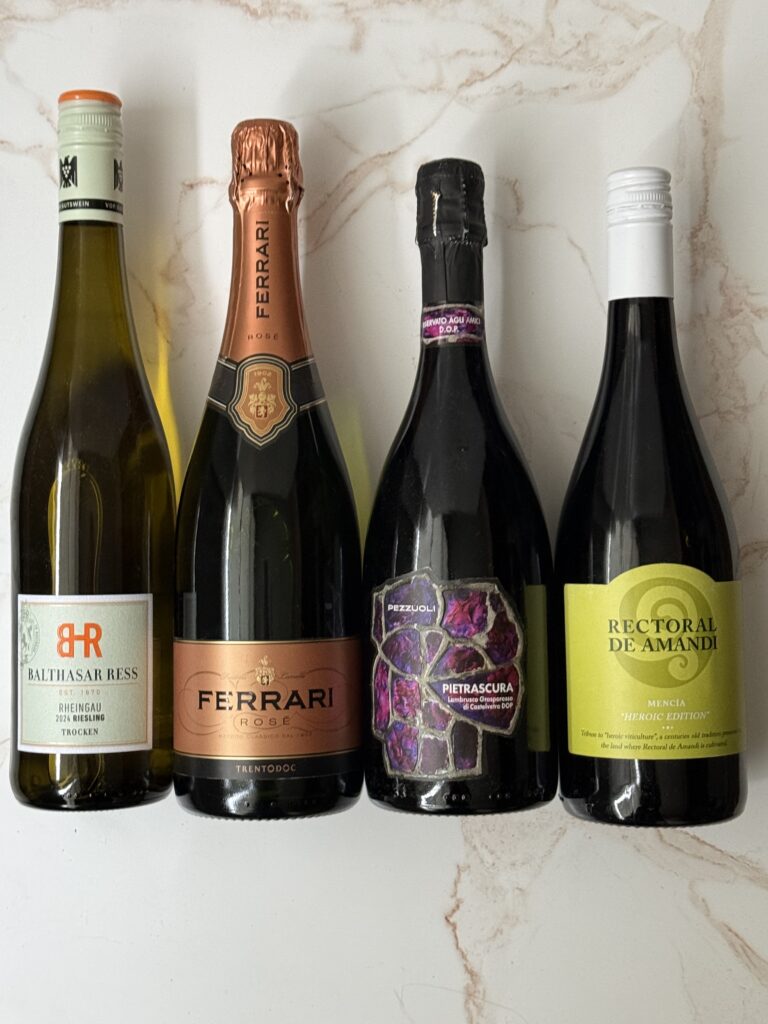
Spring has arrived, and with it comes that irresistible urge to shake off the cozy winter layers, open the windows, and let fresh air—and fresh wines—flood in. I’ve curated four standout bottles that feel like liquid sunshine: each one crisp, lively, and perfectly tuned to the season’s renewal. From a steely German white that wakes up your palate like morning dew on budding flowers, to an Alpine pink sparkler for breezy picnics, a fizzy Italian red to liven up grill sessions, and a soulful Spanish red for those golden-hour evenings under emerging leaves—these are my personal passports to spring awakening. Let’s dive in, one vibrant sip at a time. Spring has arrived, and with it comes that irresistible urge to shake off the cozy winter layers, open the windows, and let fresh air—and fresh wines—flood in. I’ve curated four standout bottles that feel like liquid sunshine: each one crisp, lively, and perfectly tuned to the season’s renewal. From a steely German white that wakes up your palate like morning dew on budding flowers, to an Alpine pink sparkler for breezy picnics, a fizzy Italian red to liven up grill sessions, and a soulful Spanish red for those golden-hour evenings under emerging leaves—these are my personal passports to spring awakening. Let’s dive in, one vibrant sip at a time. Balthasar Ress Rheingau Riesling Dry QbA: The Crisp Dawn Awakener Imagine steep slate slopes rising dramatically along the Rhine, ancient soils channeling pure minerality into every grape—that’s the enchanting world of Balthasar Ress, a storied family estate in the heart of Germany’s prestigious Rheingau. Here, Riesling reigns supreme (78% of plantings), protected by the Taunus Mountains and gently warmed by the river for slow, elegant ripening in this ultimate cool-climate haven. On a personal note I had the pleasure of visiting the estate this past January and let me tell you, it was swoon worthy! Read the full article. Hand-harvested from selected estate vineyards, the grapes undergo gentle whole-cluster pressing and cool stainless-steel fermentation—no oak—to preserve razor-sharp freshness and let the signature slate terroir shine unadorned in this bone-dry trocken QbA style. A delightful secret: Historic sites like Nussbrunnen lend old-vine depth and that classic “wet stone” or subtle petrol note even in young bottles, with many Ress Rieslings evolving gracefully for decades into profound layers. In the glass, pale straw with subtle green glints reveals an explosive bouquet: ripe pear, banana, peach, crunchy green apple, lime zest, gooseberry, delicate herbal spice, and layered wet stone minerality. The palate is invigorating and laser-focused—crisp tree fruits, a herbaceous basil lift, saline snap, vibrant acidity driving through, and a pristinely clean, mouthwatering finish that begs for another sip. It pairs beautifully with spring’s stars: asparagus risotto (its acidity cuts the creamy earthiness like sunlight through clouds), honey-drizzled goat cheese crostini, or grilled ramps and young greens—the wine amplifies every vegetal note like a fresh garden echo. Think of it as the unflappable calm in “The Great British Bake Off” tent during a tense technical challenge—pure, crisp composure amid the chaos, much like Paul Hollywood’s rare approving nod. Best savored at a sunny garden brunch: a long outdoor table strewn with tulips and daffodils, buttery scones or light veggie quiche, friends gathered as birds chirp and bees hum. Sip slowly in the morning light; the minerality mirrors rain-kissed earth, turning every conversation into pure seasonal renewal. Ferrari Rosé: Effortless Alpine Glamour in Pink Bubbles Spring’s soundtrack deserves bubbles, and Ferrari Rosé delivers with effortless elegance from Trento DOC in Italy’s breathtaking Dolomite Alps. Founded in 1902 by Giulio Ferrari (after his French training), this pioneering metodo classico house is now guided by the third generation Lunelli family, who have elevated Trentodoc sparkling wines to world-class status. On a personal note, I had the pleasure of meeting the third generation Lunelli family last year at Wine Paris and will be visiting their estate this April! High-altitude vineyards (300–700 meters+) bask in sunny days and crisp nights on glacial soils, yielding Champagne-like finesse infused with vibrant Italian Alpine soul. The metodo classico process shines: a harmonious blend of Pinot Nero (around 60% for structure and that lovely salmon hue via saignée maceration) and Chardonnay (40% for finesse), gentle pressing, bottle secondary fermentation, and extended lees aging (20–24+ months) for creamy texture and ultra-fine perlage. A fun nod to history: Ferrari helped establish Trento DOC in 1993 as Italy’s dedicated metodo classico zone—often hailed as “Italy’s Champagne,” with recent cuvées earning consistent 90+ praise for harmony and refinement. The wine glows delicate coppery salmon-pink with persistent fine bubbles; the nose is refined and inviting—wild strawberries, red currants, hawthorn blossoms, rose petals, and subtle yeasty brioche. On the dry palate: watermelon rind crispness, a touch of almond sweetness, lively acidity, elegant fruit persistence, and a clean, refreshing finish that feels sophisticated yet utterly approachable. It dances perfectly with prosciutto-wrapped melon skewers (sweet-salty-fruity interplay amplified by bubbles), mint-flecked spring pea risotto, or salmon sushi rolls—the effervescence lifts delicate flavors without overpowering. Channel “Emily in Paris” rooftop glamour: this chic pink fizz matches Emily’s aspirational style, ideal for fashion-week montages or glamorous soirées bursting with springtime joy. Unleash it on a breezy park or lakeside picnic—wicker basket packed with charcuterie, fresh baguette, seasonal strawberries, and soft blankets under blooming cherry trees or dogwoods. Let the bubbles fizz as sunlight filters through leaves and laughter flows; ordinary afternoons transform into spontaneous, feel-good celebrations of longer days. Pezzuoli Pietrascura Dry Lambrusco Grasparossa: The Fizzy Red Rebel Time to flip the script on Lambrusco stereotypes—this dry, savory beauty from Azienda Agricola Pezzuoli (a fourth-generation family treasure since 1932 in Emilia-Romagna’s Castelvetro hills) is complex, food-driven, and full of character. In the smallest, most structured subzone—Lambrusco Grasparossa di Castelvetro DOC—hilly terrain with warm days and cool nights builds intense color, fruit depth, and balanced tannins. 100% estate-grown Grasparossa grapes get cold maceration for gentle extraction, then Charmat tank fermentation for lively, frothy effervescence; short maceration keeps it vibrant, dry, and refreshingly low-intervention. The revelation:
The Adventurous Soul Behind Arsenio Winery and Olive Oil
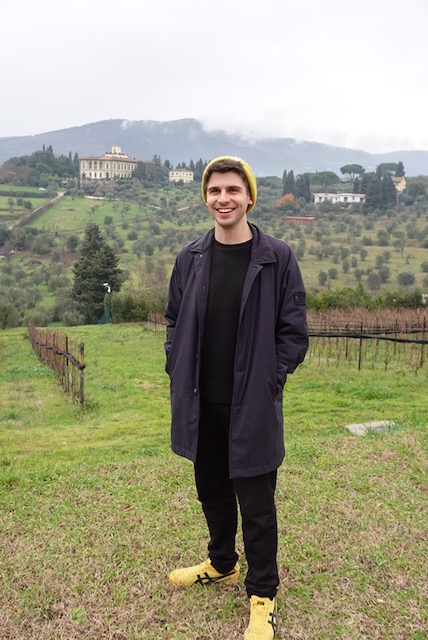
Fellow wine lovers, if you’ve ever dreamed of a bottle that whispers stories of far-off lands while rooting you firmly in the earth’s embrace, let me introduce you to Arsenio—a winery that’s not just producing wine, but crafting a multicultural legacy. From ancient Armenian roots to the sun-drenched hills of Tuscany, an adventurous, charming old soul with a mathematician’s precision chases dreams through olive groves. A confident deep thinker, he weaves heritage, philosophy, and mastery into every sip and every golden drop. Arsen, born in Málaga, Spain, in 2000, is Armenian by blood and a true citizen of the world. With a Bachelor’s in Pure Mathematics from New York University—specializing in differential equations and chaos theory—and a Master’s in Vineyard and Winery Management from Bordeaux Sciences Agro, plus his WSET Diploma earned in 2024, he’s the perfect blend of analytical mind and passionate artist. “I’m already 25,” he commented with a broad smile and spring in his step, sneakers firmly planted on the sandstone soils of his Florence vineyard. But as he explained, exceptional wine (and olive oil) takes time, and he’s in it for the long haul. I was lucky enough to be invited for a private, one-on-one visit with Arsen Khachaturyants, the visionary founder of Arsenio. It was just the two of us, getting to know each other over glasses of his emerging vintages and samples of his exquisite olive oil. My recent visit to Arsen’s estate was energizing and transformative—like an ice-cold morning plunge into a crisp Tuscan stream. I dove headfirst into his fascinating journey: blending Armenian heritage with Tuscan character, a confident visionary pursuing exciting new projects, channeling his culinary passion with mathematical precision, interwoven with soul-stirring music—all grounded in deep family values. His philosophy? Humans are an integral part of nature, reconciling progress with environmental respect. Arsenio’s 10 hectares span three distinct Tuscan areas: Florence, Olena in Chianti Classico, and near Volterra by the coast—all organically farmed. In Florence, where it all began in 2020, you’ll find Sangiovese, Mammolo, Colorino, Pugnitello, Canaiolo, Cabernet Franc, Cabernet Sauvignon, and a nod to his roots with Areni Noir. At 300 meters above sea level on sandstone, with breezes from the Apennines, it’s a hillside haven within the Renaissance city itself. The unofficial 2023 harvest hinted at greatness, which I concur it was “great” labeled Y23 and 2024’s official vintage is set for release in 2027. But it’s not just vines; Arsen’s passion extends to olive groves that dot these landscapes, producing oil that’s as golden and profound as his wines. Walking through those groves with him, he shared how the same borderless vision applies—one golden drop at a time, honoring the saline winds and sun-drenched hills. “Travel has taught me to respect diversity without altering it,” he said, as we tasted the peppery, vibrant olive oil straight from the press. It’s a partnership between human and nature, much like his winemaking. In Chianti Classico’s Olena estate, an eight-hectare gem with three planted to vines, dense forests create a micro-terroir of clay and silt, protecting against winds and amplifying day-night swings. Sangiovese dominates, joined by Cabernet Franc and Grenache for climate adaptability. An old farmhouse is being restored into a intimate cellar— “a place where nothing interrupts your connection with the wine,” as Arsen put it. And near Volterra, the coastal influence shines with Cabernet Franc, Cabernet Sauvignon, Syrah, and Sangiovese. The wines are poised to become future icons, each stemming from a deeply personal relationship with the land, expressing the full potential of its terroir through a pursuit of excellence and uncompromising freedom of interpretation. The flagship is an IGT Toscana, with only one wine produced under the Chianti Classico denomination: The labels, designed by Armenian artists, are small stories in themselves. Yeter shows Arsen in reflection, engaging with chaos; Anddem portrays him pushing forward against the wind; Screeching Soil captures Chianti’s rugged soils; Same Sky’s round shape underscores universality. “Searching for a new language means breaking rules,” Arsen told me, his eyes lighting up. These aren’t uniform—they’re soloists, each telling a tale. As we shared stories, music playing softly in the background—perhaps a nod to his soul-stirring influences—Arsen’s deep family values shone through. We bonded over our shared love for composers Hans Zimmer and Max Richter. I proudly introduced him to my cousin’s songs—a remarkably talented composer and artist who, coincidentally, studied under Hans Zimmer himself. Arsen was visibly moved by the music, and it added another layer of connection to an already profound afternoon. Supported by his loved ones, he’s laying foundations for a new wine chapter, one that speaks to curious souls like us. Huge thanks to Arsen for his warmth and this profound experience. Here’s to the chapters ahead—I’m thrilled to watch (and taste) what unfolds. If you crave innovation wrapped in tradition, keep your eyes on Arsenio. The vines—and olives—are only just beginning.
Scacciadiavoli Brut Rosé: The Devil-Chasing Sparkler
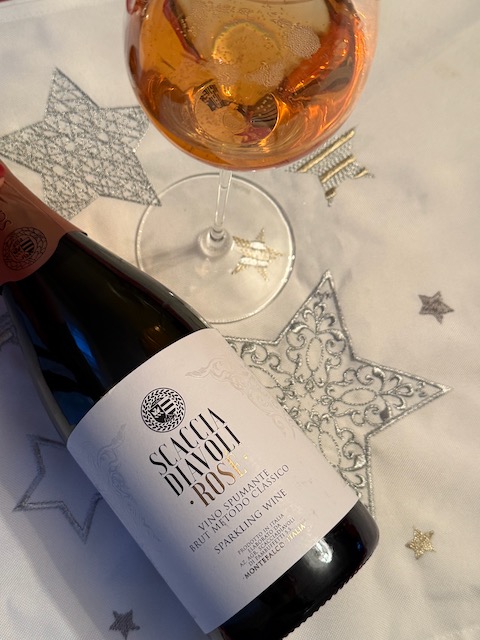
Oh, buckle up, bubbly lovers—this Scacciadiavoli Brut Rosé from the legendary Cantina Scacciadiavoli is like a cheeky Italian whisper saying, “Life’s too short for flat vibes!” Hailing from the sun-kissed hills of Montefalco in Umbria, Italy, this winery’s been crafting wines since the 1800s, with a name that literally means “devil-chaser” The region’s volcanic soils and gentle breezes give it that extra zing, turning humble grapes into liquid fireworks. Winemaking here is all about that classic Italian flair: hand-picked 100% Sagrantino grapes get the royal treatment with the Metodo Classico (think Champagne method, but with more Mediterranean soul), aged min 24 months sur lie fermenting in the bottle for that fine, celebratory fizz. It’s aged just right to keep things fresh without losing the fun—pure artisanal wizardry that lets the terroir shine through every bubble. Style-wise, this is your go-to sparkling rosé for when you want elegance with a wink: brut-dry for that crisp edge, but bursting with playful energy. It’s the rosé that dances on your tongue, light yet structured, like a summer fling that turns into your new bestie. Tasting notes? Get ready to swoon: a pale salmon glow in the glass, unleashing a floral explosion of wild strawberries, red apples, and a whisper of brioche crust—fresh as a morning jog through an orchard. On the palate, it’s a lively tango of cranberry zip, ginger spice, and white pepper kick, all wrapped in silky bubbles and zesty acidity that lingers like a flirty goodbye. One sip, and you’re hooked—elegant, savory, and oh-so-refreshing! For fun food pairings, pop this open with seafood towers , charcuterie boards loaded with prosciutto and fresh cheeses, or even a Sicilian Fish Stew. It’s the ultimate mood-lifter for rooftop toasts, beach picnics, or just because—evoking that carefree, sun-drenched euphoria where worries bubble away and every moment feels like a victory lap. Cheers to chasing devils with delight! Fun Fact: The winery’s name literally means “Devil-Chaser” because, back in the 19th century, the vineyard sat right next to a tiny village where an exorcist was once called in to banish a pesky demon. Locals swear the first bottles of sparkling Sagrantino were so good that even the devil fled in delight… and never came back!
Balthasar Ress Fine Wines, Finer Moments
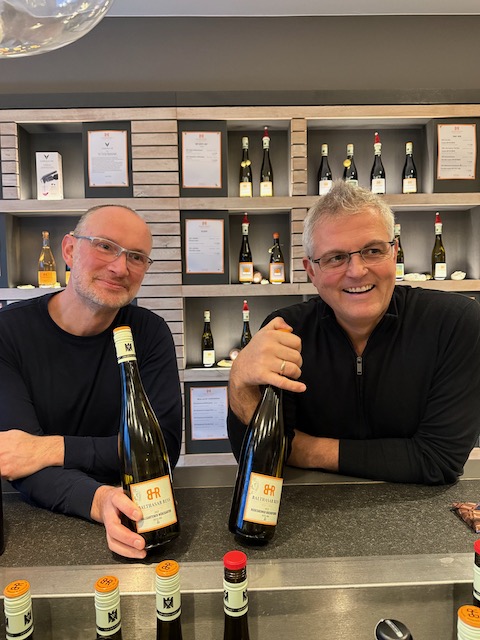
A recent visit to Balthasar Ress, one of the Rheingau’s premier VDP-certified organic wineries, turned into an unforgettable afternoon of wine, stories, and genuine connection. Nestled in the heart of Hattenheim, this family-run estate—founded in 1870 by the butcher-turned-host Balthasar Ress—has evolved into a beacon of fine Riesling and increasingly acclaimed Pinot Noir, all while embracing organic viticulture and a philosophy of “Fein Sei Der Wein” (And Fine Be The Wine). It was also a special pleasure to meet Christian Ress, the fifth generation passionate owner and managing director who carries forward the family legacy with vision and warmth, alongside his father Stefan Ress, whose experience and quiet presence added depth and history to the occasion. Their hospitality made the visit feel like stepping into a family home rather than just a winery tour. The highlight was a private tasting led by head winemaker Markus Roll and export manager Marc Pohl. Both brought infectious passion and candor to the table, turning what could have been a standard tasting into a lively conversation about life, dreams, and the soul of German wine. We dove straight into their wines—elegant, precise Rieslings from top sites like Rüdesheim Berg Rottland and Hattenheim Nussbrunnen, alongside promising Pinot Noirs that showcase the estate’s growing red focus. The pours revealed layers of minerality, freshness, and site-specific character, hallmarks of the Rheingau’s steep slopes and slate soils. To break the ice (and reveal personalities beyond the bottles), we asked each a series of fun, offbeat questions: Describe your identity with three non-wine-describing words? Markus chose Riesling, terroir, taste—a playful nod to what clearly defines him, even if he tried to avoid wine terms! Marc went with elegant, long-lasting, freshness—words that perfectly mirror the style he champions in export markets. If you could share one bottle of your wine with a person (dead or alive), who would it be and why? Markus picked his wife, sharing a bottle of Bischofsberg because it’s “elegant and easy to share, great price relationship.” A sweet, grounded choice from someone deeply rooted in the craft. Marc humorously selected George Clooney and Brad Pitt, pairing them with Würzgarten for their “fantastic characters”—a fun, star-studded fantasy that had everyone laughing. When you were a kid, what was your dream job? Markus dreamed of being a chef (but noted the lousy hours), pivoting at age 9 to winemaking—a precocious decision that’s clearly paid off. Marc wanted to be a locomotive driver, inspired by his grandpa’s love of trains—a charming glimpse into a childhood fascination with movement and journeys. If you weren’t working with wine, what would you do? Both leaned toward hospitality: Marc mentioned F&B Manager, fitting his background in hotels and service. The conversation turned reflective as they shared memorable moments: Markus recalled a profound tasting with Philipp Wittmann surrounded by great Burgundies (sparking new thoughts on oak influence), falling in love with Sauvignon Blanc during a trip to South Styria, and joyful Champagne sessions with friends. Marc spoke of starting in the army’s officers’ casino as a waiter, his hotel school education in Heidelberg that ignited his wine passion, and a pivotal role at Schloss Vollrads—where he fell for the Rheingau’s perfect blend of Mosel’s elegance and Rheinhessen’s opulent fruit and body. We tackled bigger questions too, like engaging Generation Z, often seen as shying away from wine. Marc’s response was refreshingly honest “Younger generations consume less as they use different things like marijuana and drink RTDs. My task is not to encourage others to drink wine—my task is to find people who wish to have a good bottle of wine.” He emphasized education—helping consumers learn how to enjoy wine to add pleasure—without ever pushing alcohol. On German Pinot Noir (Spätburgunder) gaining global recognition, Markus was optimistic as it’s getting better and better. He raved about recent tastings, blown away by the quality leap in producers like Huber over the last five years, and noted exciting improvements in German Chardonnay too. Dreaming bigger, Markus shared a wish to experiment with Southern Hemisphere reds—Bordeaux varieties like Cabernet Franc and Merlot, and their blends—on Balthasar Ress vineyards. His dream by 2030? Simply retirement, still fueled by his love to the wine. Advice for the next generation of winemakers came straight from the heart: Markus: “Try as many wines as you can, be loyal to your own style, and just do it.” Marc: “Be self-confident and pick your style.” Finally, what would surprise people about them? Markus laughed: “I’m an open book—I’m not as grumpy as I look.” (He doesn’t look grumpy at all—quite the opposite!) The tasting itself was a masterclass in the estate’s evolution. Markus introduced their exciting new concept launching in 2026, inspired by the multi-vintage approach of Dreissigacker’s Vintages series: four Erste Lage vineyards across four vintages (starting with 2019), blended to create wines that transcend individual vintage challenges. With shorter harvest windows and ripeness issues becoming less dominant in the blend, the goal is classic expression through three pillars—variety, region, and winery identity. The 2019 vintage also marked the estate’s official organic certification. Standout wines we tasted included: 2024 Goose Trail Souvignier Gris: PiWi trailblazer from the soggy riverbank spot. Explosive muscat vibes, almond edge, passionfruit kick. Smooth but a touch lean in the middle—crisp tart acid snaps it awake. Grab this funky pioneer now! 2024 Von unserem Riesling: Pure, no-nonsense Rheingau Riesling. Zesty citrus, green apple snap, steely minerality. Bone-dry, mouth-watering acidity drives it hard. Everyday hero that demands another glass—don’t wait! 2023 Rüdesheimer trocken: Steep-slope power. Fresh citrus blast, green apple crunch, subtle stone fruit and floral lift. Razor-sharp dryness, vibrant energy. Classic Rüdesheim punch—drink up fast! 2023 Hattenheimer Engelmannsberg: Erste Lage elegance. Yellow fruit rush, passionfruit exoticism, kiwi-lime zing, lemon balm whisper. Precise, juicy, mineral spine. Seductive yet serious—buy before it’s gone! 2023 Hallgartener Würzgarten: Erste Lage spice bomb. Ripe stone fruit, floral intensity, herbal edge, tight minerality. Focused, structured, long finish. Demands attention—stock up on this gem! 2023 Rüdesheimer Bischofsberg: Erste
Dreissigacker Uncorked: Rheinhessen Magic
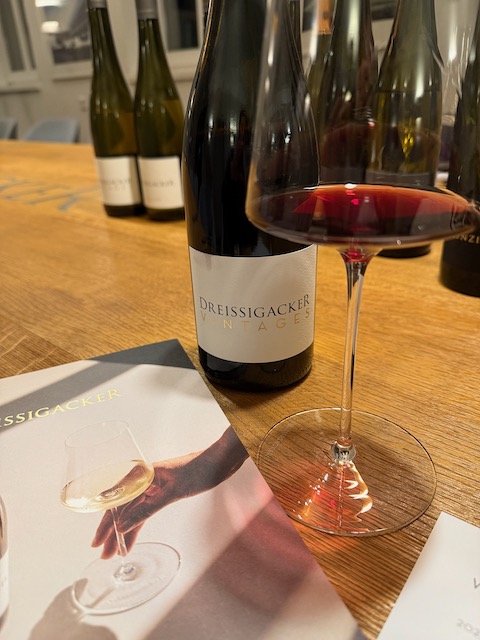
As the crisp autumn air swept through the rolling hills of Rheinhessen, I found myself embarking on an unforgettable winery tour at Weingut Dreissigacker. Accompanied by Samuel Kirr, the charismatic International Sales Manager whose passion for the estate’s wines is as infectious as the region’s vibrant Rieslings, we delved into the heart of this family-run operation. Nestled in the picturesque villages of Bechtheim and Westhofen, Dreissigacker isn’t just a winery—it’s a testament to centuries-old traditions blended with modern innovation. If you’re a wine enthusiast seeking purity, complexity, and a touch of exclusivity, this is a story you’ll savor. The Dreissigacker family’s winemaking legacy traces back to the 18th century, but the modern chapter began under Jochen Dreissigacker. He crafted his first wine in 2001 and fully took the reins in 2005, transforming the estate into a beacon of quality-driven production. In 2018, they unveiled a state-of-the-art winery designed with capacity for two full vintages, allowing for meticulous aging and blending without compromise. “Our new facility isn’t just about space—it’s about creating the perfect environment for our wines to evolve,” Samuel shared during our walk through the gleaming cellars. Spanning approximately 55 hectares of vineyards, the estate has been organic since 2007, with biodynamic practices introduced around 2020. Yields are deliberately “dropped” to concentrate flavors, ensuring every grape packs a punch of intensity. Dreissigacker channels their grapes into premium expressions, predominantly Riesling. Their philosophy is simple: control quality from vine to bottle. The varietal focus is laser-sharp: about 60% Riesling, complemented by Pinot Blanc, Pinot Gris, Chardonnay, and Pinot Noir. Rosés and reds make up less than 5% of production, keeping the spotlight on whites that capture Rheinhessen’s terroir. Competitive edges shine through old-vine crus like Aulerde, Kirchspiel, and Morstein—sites renowned for their mineral-driven soils—and an unwavering commitment to sustainability. Initiatives in the cellar, such as flexible tank setups and cooling systems, allow for precise temperature control, minimizing intervention while maximizing expression. At Dreissigacker, the mantra is clear: prioritize quality to build a lasting brand. Jochen, alongside Cellar Master Achim, as Jochen is closely involved in the blending process orchestrating their range of wines like a conductor of a symphony. During harvest, a team of 10 specialists handles everything from sugar measurements to pressing, while year-round, just three core staff maintain the cellar’s rhythm. Their product strategy is tiered for accessibility and depth. The entry-level Riesling serves as the “business card” of the winery—fruit-driven and versatile. Mid-tier offerings like the multi-vintage blend act as a bridge, while single-site gems target collectors. Innovation extends to NFT pre-sales for high-end releases, allowing customers to reserve future bottles at half price, with unsold stock aged five years and sold at a premium. The highlight of the tour was the tasting lineup, where Dreissigacker’s elegant, mineral-laced style shone through. Each wine told a story of terroir, craftsmanship, and patience. Here’s what stood out: Samuel’s quotes peppered our conversation, bringing the philosophy to life: “We’re not chasing volume; we’re crafting experiences. From dropping yields to biodynamic practices, every decision elevates the grape.” In a sea of producers, Weingut Dreissigacker is a winery that honors its Rheinhessen roots while eyeing global horizons. If you’re planning a visit to Bechtheim or Westhofen, make Dreissigacker a must—pair it with Samuel’s insights, and you’ll leave with more than bottles; you’ll carry a piece of their passion.
Carolin Spanier-Gillot: Staying True to Roots in a Changing Wine World
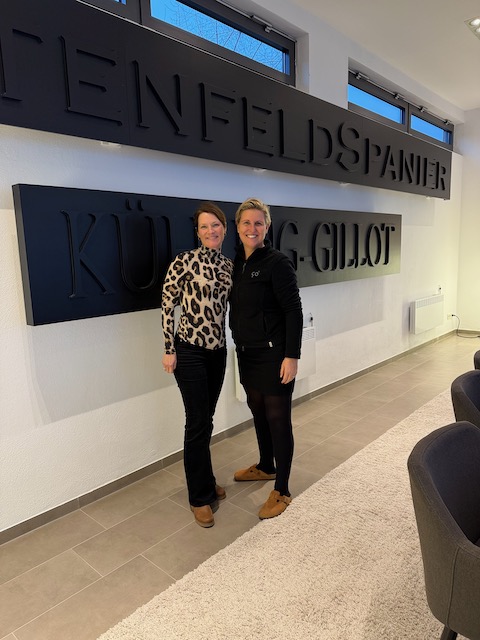
The day had already been long and deliciously intense. Our visit at the previous estate had—true to the unpredictable rhythm of wine trips—run far later than planned, with glasses multiplying and conversations stretching into the afternoon. By the time we arrived at Weingut Kühling-Gillot in Bodenheim, the light was fading over the Roter Hang. There was simply no time left for a proper tasting of Carolin Spanier-Gillot’s acclaimed biodynamic Rieslings and Pinot Noirs. Instead, we sat down for an unhurried chat in the warm glow of the estate over coffee and her special Christmas cake, and what was meant to be a quick visit turned into a memorable conversation with the most super positive, charming optimist in the world of wine (myself being a close second). Carolin Spanier-Gillot helms two esteemed VDP estates: Weingut Kühling-Gillot in Bodenheim and, alongside her husband H.O. Spanier, Battenfeld-Spanier. With a philosophy rooted in “Origin Excellence,” she crafts wines that speak unmistakably of their terroir. In our candid interview, Carolin shared pragmatic insights on market shifts, personal sacrifices, and why chasing trends is a fool’s game. Their focus on authenticity defines her estates’ niche. In a competitive landscape, Carolin warns against trend-hopping—like orange wines or non-alcoholic options, which she bluntly calls “juice.” “If it’s not fermented with alcohol, it’s not wine,” she asserts. “Invest energy in other fermented products like kombucha instead.” Her estates stick to a strict profile of core varieties, centered on Riesling, with no experimental clones. “Fifteen years ago, you could sell discount supermarket wine for €60; now, only brands with a clear profile survive.” By blending tradition with modernity, they thrive on storytelling and sustainability—hosting educational events in their wine cellar to teach food pairings, or positioning accessible premiums like their €28 “Age Riesling” as gateways to memorable experiences. Carolin’s path to winemaking was anything but planned. Growing up on the family’s modest 6-hectare estate, she dreamed of becoming a pilot or doctor. But at 16, when her mother fell ill, family duty called. She stepped in, starting with simple tasks like labeling bottles. Today, she juggles roles as manager, CFO, and “trouble fixer,” clocking 65-hour weeks while prioritizing her team’s well-being. “I put my own needs last,” she admits, a testament to her dedication. Carolin’s rise has been groundbreaking in Germany’s traditionally male-dominated wine industry. In 2015, she made history as the first woman to be named **Winemaker of the Year** by the prestigious Falstaff WeinGuide Deutschland—a major accolade that recognized her exceptional talent and the outstanding quality of her wines. This honor underscored her success in elevating the estates to new heights, proving that determination and vision could shatter glass ceilings in winemaking. Her admiration for strong, trailblazing women shines through in her inspirations. When asked who she would most like to share a bottle of wine with—dead or alive—Carolin didn’t hesitate: Tina Turner. “A great woman and a real epicurean,” she says with enthusiasm. Carolin also holds Gaia Gaja in high esteem for similar reasons of determination and balance, making her choices reflect a pattern of admiring iconic women who conquer challenges with grace. One persistent myth in the wine industry is that “younger generations are not drinking wine.” Carolin dismisses this outright. “It’s inaccurate,” she says firmly. She points to packed wine events buzzing with young attendees, drawn not by gimmicks but by authenticity—particularly organic and biodynamic practices that align with their values of sustainability. Looking ahead to 2030, succession is a priority. Her children—a 16-year-old son keen on winemaking (who’ll gain external experience first) and 21-year-old son potentially handling marketing—are poised to take over. Market-wise, she’s eyeing expansion: exploring Greek varieties like Assyrtiko from Santorini and pushing U.S. distribution beyond coasts into cities like Chicago, fueled by growing demand (a recent 7,000-bottle order). Yet diversification remains key—”We don’t live off the U.S. market.” Carolin also shapes Germany’s evolving wine laws through the VDP, pushing for classified vineyards and transparency. Her critique of dogmatic “natural wine” advocates—who brand critics as “enemies”—underscores her no-nonsense stance: preserve wine’s true identity. In an industry rife with fads, Carolin Spanier-Gillot’s message is clear and inspiring: “The best way to reach new generations is to be true to your story.” By championing quality, sustainability, and family legacy, she’s proving that small estates can not only survive but shine—pouring authenticity into every glass. And one day soon, I’ll be back to finally raise one of those glasses myself.