
Milena Pepe: Quiet Determination
Some people tell you who they are in the first five minutes. Milena Pepe of Tenuta Cavalier Pepe did it in her first few sentences. She spoke about the land and the work plainly and surely, the way someone does when she has already made her choices and is still glad she made them. Her story starts in Belgium, winds through the vineyards of France, and ends in the hills of Irpinia, where she arrived more than twenty years ago. Meeting her, I sensed someone who knew exactly what was expected of her and decided early on to go her own way. A Father’s Return Tenuta Cavalier Pepe sits in the middle of Irpinia, between Luogosano and Sant’Angelo all’Esca, in the green hills of Avellino. The name honors Milena’s father, Angelo Pepe. He left Italy as a young man and made his life in Belgium, where he promoted Italian food and culture and was named Cavaliere del Lavoro. He brought what he earned there back here. His family had always grown grapes and sold them to others. Angelo wanted to bottle his own. When Milena took over in 2005, the estate began making wine from all three of Irpinia’s DOCGs (Fiano di Avellino, Greco di Tufo, and Taurasi) along with other native grapes. Today, the estate also has a restaurant and a place to stay, so visitors can eat, drink, and sleep among the vines. (For more on the vineyards, the vertical tastings, and my visit during Campania Stories, see my earlier piece: Campania Stories: Initial Sips — Campi Flegrei & Irpinia.) From Brussels to Irpinia Her father’s story was about leaving and coming back. Milena’s was about arriving somewhere she had only heard about. She grew up in Brussels with an Italian father and a Belgian mother, switching languages at the dinner table and learning how a restaurant runs while she studied marketing and management. Her father talked about Irpinia constantly, about the vineyards he was bringing back to life, and little by little those stories pulled her south. She did not go unprepared. First came wine marketing in France, then viticulture and enology, then hands-on work with producers including Chapoutier in the Rhône. In 2005, at twenty-five, she moved to Irpinia to run the estate’s first harvest under its own label. Day and Night Those first years took everything she had. Milena worked day and night, learning every slope of the land while building a business from scratch. France had taught her two things she still swears by. One is discipline in the vineyard. The other is tasting the grapes together as a team and deciding together when they are ready. Every year as harvest nears, she still walks her crew through it. Bottling an estate’s own wine in a place used to selling grapes takes skill, and it takes years. It also meant facing pressures unrelated to the vines. Two Jobs at Once Milena is frank about what women in wine still carry. There is the work, and then there is everything expected of a woman at home, and the two do not divide neatly. On top of that, she was an outsider, a woman who had grown up in another country and arrived in a close-knit rural place. What has helped her most is other women in the business. She leans on networks where women share what they have been through, swap what they know, and feel less alone. We both agreed these groups are how women in wine get through the hard years and keep growing. Hills Worth the Trip She brings the same stubbornness to Irpinia itself. The altitude, the cool nights, and the soils give these wines their tension and their ability to age for years. But getting travelers to come here is hard work. The roads and services are still catching up, and the Amalfi Coast is only a couple of hours away, drawing the crowds. Milena is practical about it. She gives international guests the comfort they expect, but she won’t dress Irpinia up as something it isn’t. She also has strong feelings about how we farm. She says industrial agriculture has cost us flavor and knowledge. Small, local wine made from its own ground keeps that knowledge in use, so the next generation can learn it by doing. The 2011 Taurasi I tasted that idea in a glass. During my spring visit, one wine kept pulling me back: the 2011 Taurasi DOCG. It didn’t show off. It simply held my attention and wouldn’t let go. Dried cherry, violets, and leather moved through fine, long tannins, and each layer took its time to appear. The longer I sat with it, the more it gave. It reminded me of Milena: strong without raising its voice, and generous with anyone patient enough to listen. Coming Home Milena Pepe chose to come back to a place she had first known only through her father’s stories. She arrived trained and ready, and she has spent twenty years building something lasting in a region more used to supplying grapes than making a name for itself. Brussels restaurants, French vineyards, and Taurasi’s long patience all went into it. Now she is helping Irpinia imagine what it could become. I keep thinking of her alongside that 2011 Taurasi. Neither one needs to be loud to fill a room. In the cool hills of Irpinia, where good wine refuses to be rushed, Milena is building her own story. It honors her father, who had the courage to leave. And it honors her own decision, maybe the braver one, to come home.
Ilaria Petitto: Courage, Identity, and Quiet Strength
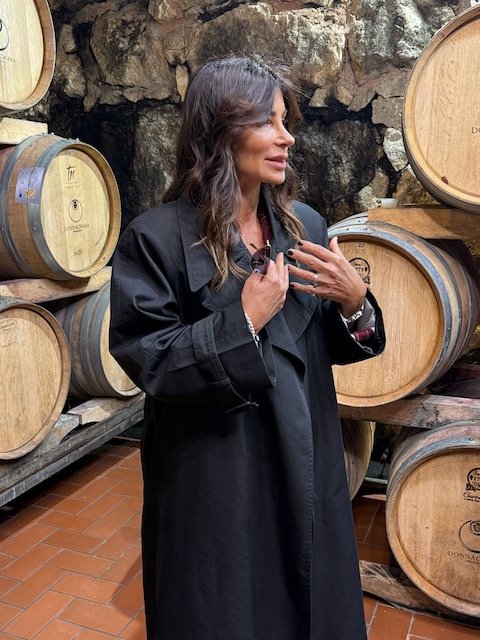
Every so often, a conversation opens a window into another person’s world. Meeting Ilaria Petitto of Donnachiara in early August, I was immediately struck by her clarity and the quiet strength guiding her choices. She traded a conventional career in law for the uncertainty of wine, embracing the courage needed to define her own identity in a world that too often clings to familiar expectations. For Ilaria, authenticity is not just an ideal—it’s a source of power. Our conversation felt less like an interview and more like a recognition of a shared commitment to authenticity. The Winery Donnachiara sits in Montefalcione, in the heart of Irpinia, at roughly 400 meters above sea level among clay and fractured rock soils. The modern winery was established in 2005 by the Petitto family and named in tribute to Ilaria’s great-grandmother, Donna Chiara Mazzarelli Petitto—a woman who cared for the family’s vineyards through both world wars with the same attention one might give a child. The family’s roots in the land stretch back generations; for many years they grew grapes that were sold to others. In 2005 that changed. The project became a full expression of place, focused on Irpinia’s three DOCGs—Fiano di Avellino, Greco di Tufo, and Taurasi—as well as Aglianico and Falanghina. Ilaria now leads the estate as CEO, working with a predominantly female team and the guidance of consulting oenologist Riccardo Cotarella. Together, they pursue a clear philosophy: elegant wines that are never banal and that need time to reveal themselves. For a fuller immersion in the tasting, the verticals, and the atmosphere of my visit during Campania Stories, see my earlier piece: https://thehappyvine.net/campania-stories-giorno-0-1-campi-flegrei-irpinia/ A Wine That Silenced Me During my visit to the estate, one wine in particular moved me into another realm of emotion: the 2007 Fiano di Avellino. It began with the fresh pear and white florals of youth, then opened slowly into chamomile, honey, petrol, dried herbs, and a smoky complexity that only time can give. The older Esoterica vintages carried extraordinary tension and depth, proving just how beautifully Fiano can evolve. That bottle did not simply impress me—it quieted me. In its layered evolution, I felt the patience and integrity that define Ilaria’s approach to the wines and the life she has chosen. A Journey from Law to the Land That patience was hard-earned. Ilaria did not plan to return to Avellino. She studied law and prepared for the notary exams, a path chosen in part to please her father. After years of study and a life oriented toward a different future, she realized it was not her dream. When her mother Chiara began the winery project, Ilaria eventually decided to leave the legal path behind and join the family endeavor. In the years that followed, she took the reins more fully, bringing both the clarity of legal training and a deep attachment to the land. The transition required courage. In a traditionally male-dominated industry, she learned quickly that assumptions about what a woman “understands” about the business can be persistent. Her advice to young women entering wine is straightforward and hard-won: remain courageous, prioritize your own identity, and do not allow yourself to be intimidated by external judgment. Authenticity, she insists, must come before the need to please or to fit existing expectations. This is where our shared experience became most evident: the decision to walk away from a carefully constructed professional path in favor of something more true, even when the outcome was uncertain. Landscape, Balance, and Daily Grounding For Ilaria, the Campania landscape—particularly Irpinia—is an authentic, still somewhat hidden treasure. It offers a deep emotional resonance and a sense of tranquility that feels increasingly rare in more commercialized wine regions. That connection is not abstract; it is the place that steadies her and grounds the work that follows. The demands of running a winery are constant. To stay grounded, Ilaria makes time for regular workouts and for nature. She spoke openly about how physical changes, including menopause, can heighten anxiety and stress, making those practices of movement and time outdoors essential rather than optional. Imagination and commitment must be protected; balance is part of the work itself. There is a quiet resilience in the way she describes these daily choices—an understanding that strength is not only about pushing forward but also about knowing how to restore oneself to continue. Defining the Winery—and a Wider Responsibility When asked to characterize Donnachiara, Ilaria returned to three themes: the power of a supportive, predominantly female team; the freedom to express herself and learn from mistakes; and the goal of creating a lasting legacy that transcends generations. That sense of responsibility extends beyond the estate. She is clear that promoting the entire region, rather than only one’s own winery, is essential for success in international markets. She has found consumers in places like the United States often more curious and open-minded than those at home. At the same time, she remains deeply committed to Irpinia’s reds—particularly Taurasi and Aglianico, which she refers to with affection and determination as “The Tori.” While white wines may currently be easier to sell and more aligned with trends, she is dedicated to earning lasting respect for the region’s red wines, which have long suffered from historical misconceptions. She is frank about the challenges of intense local competition. Producers, she believes, must learn to collaborate more effectively if the region is to present a coherent and compelling face to the outside world. Her hope rests with the next generation, which she believes may foster a more cooperative spirit. That belief in collective progress, rather than isolated success, felt especially resonant. The Women at the Table When I asked Ilaria which three women she would invite to a meal, her choices revealed a great deal about her values. She named her mother’s grandmother—the original Donna Chiara whose strength and care for the land still echo through the winery’s name. She chose the actor Sophia Loren, in part to discuss the regional inferiority
Campania Stories: Initial Sips — Campi Flegrei & Irpinia
Campania Stories: Volcanic Soul, Mountain Tension & the Wines That Refuse to Be Forgotten Giorno 0 to 1— Campi Flegrei & Irpinia Salvatore Martusciello • Tenuta Cavalier Pepe • Donnachiara Campania does not ease you in gently. It grabs hold of your senses immediately — volcanic smoke in the air, salty Mediterranean breezes, mountain tension in the wines and conversations that stretch long past the final glass. This is not a region of quiet wines. Or quiet people. Campania Stories began the moment the plane touched down in Naples, where Salvatore and Gilda welcomed us not with formality, but with the warmth that instantly turns travel into something personal. Within moments, we were standing at the Solfatara crater in Campi Flegrei, surrounded by black volcanic earth and steam rising from the ground beneath our feet. And suddenly, everything made sense. This is where the wines begin. Not in the cellar. Not in the glass. But in the tension between volcano and sea. Salvatore Martusciello: Wines With Salt in Their Veins At the Salvatore Martusciello winery in Pozzuoli, the family’s role in shaping Campi Flegrei became immediately clear. Salvatore’s father helped establish the DOC in the 1990s, while his uncle Genaro identified Falanghina clones and created what remains one of the region’s defining viticultural references. The vineyards themselves feel wild and alive — ancient Alberata pergolas climbing skyward, wild chamomile lining the rows and some vines still untouched by phylloxera. And you can taste that energy in every glass. The wines moved between electric freshness and volcanic depth: Asprinio bursting with citrus and razor acidity; Falanghina layered with crushed stone, salinity and smoky aged complexity; Piedirosso vibrant with red fruit and coastal freshness. Then came OttoUvo Frizzante Gragnano — fizzy, joyful and unapologetically Neapolitan. “The most beloved iconic wine of the Neapolitan people,” Salvatore called it with a smile. At one point, I asked him what his favorite vintage was. “The next one.” That answer captured the spirit of Campania perfectly. No chasing trends. No imitation. Just wines deeply rooted in place and identity. Dinner among the tanks with Gilda’s homemade timbalo di Nerano, the buffalo mozzarella alongside the estate’s rustic cuisine, grounding the wines even further into place and tradition, the warm sfogliatella transformed the tasting into something even more personal. The wines opened further around the table, revealing Campania not simply as a wine region, but as a way of living. Into the Mountains: Tenuta Cavalier Pepe The following morning, the landscape shifted dramatically as we climbed into Irpinia. More altitude. More silence. More tension. Tenuta Cavalier Pepe unfolded across steep hillsides where cool nights preserve freshness and precision in every grape. Walking the vineyards with Milena Pepe, it became clear that everything here is built around stewardship — hand harvesting, massale selection and allowing the land itself to shape the wines. Milena structured the tasting vertically, revealing how beautifully Irpinia’s wines evolve with time. The Fiano di Avellino wines moved from fresh acacia and citrus into layers of roasted nuts, petrol, honey and salted depth with age. The older vintages carried remarkable energy and proved exactly why Fiano deserves to stand among Italy’s greatest white wines. The Greco di Tufo Riserva wines showed a sharper, more volcanic personality — smoky, savory and intensely mineral. Then came Taurasi. Young vintages carried vivid cherry and chalky tannins, while older bottles unfolded into leather, dried herbs, licorice and savory complexity. The 2011 La Loggia di Cavaliere Taurasi Riserva lingered long after the final sip — dried cherry, violets, leather and fine tannins stretched endlessly across the palate. Hauntingly beautiful. Throughout the tasting, one thing remained constant: Minerality and sapidity slicing through the wines, making you crave food immediately. These are wines built for long lunches, slow conversations and crowded tables. Turn the Page: Donnachiara Irpinia has a way of slowing you down. After the volcanic intensity of Campi Flegrei, arriving at Donnachiara in Montefalcione felt quieter, more introspective somehow. Perched at 400 metres above sea level, surrounded by chunky clay and fractured rock soils, Donnachiara has become one of the defining modern voices of Irpinia through organic farming, native varieties and wines rooted deeply in place. Named after Ilaria Petitto’s great-grandmother, the winery feels deeply personal from the moment you arrive. Ilaria describes her wines simply: “Elegant. Not banal. Wines that need time to show themselves.” That philosophy is everywhere here. Nothing is loud. Nothing is rushed. The wines unfold slowly and confidently, much like Irpinia itself. Alongside winemaker Marco Giulioli, Donnachiara vinifies entirely in stainless steel, allowing the purity of the terroir to remain untouched. The Fiano wines were mesmerizing — moving from fresh pear and white florals in youth into chamomile, honey, petrol, dried herbs and smoky complexity with age. The older Esoterica vintages carried extraordinary tension and depth, proving just how beautifully Fiano can evolve over time. The Greco wines leaned more volcanic and structured, layering smoke, spice, dried herbs and electric acidity into wines that demanded attention rather than easy charm. Then came Taurasi — elegant rather than overpowering, focused on finesse and purity of fruit rather than sheer weight. The older vintages unfolded into leather, balsamic herbs and lifted savory complexity, while the 2006 stood out for its remarkable elegance and freshness. What stayed with me most after this first day of Campania Stories was not simply the quality of the wines. It was the connection between landscape, people and glass. From the volcanic soul of Campi Flegrei to the mountain tension of Irpinia, every wine carried the unmistakable fingerprint of Campania itself. The afternoon shifted gears to the Reggia di Caserta: marble corridors, gardens unfolding like a map of the region, then the Sala Romanelli filling with voices at the opening conference. Over a light dinner curated by the Consorzio VITICA, introductions deepened into plans — collaborations forming as easily as smiles. And this was only Giorno 0-1! Day 2 would take us even deeper into the soul of southern Italy.