
The Reason to Begin Again: Sabine Mollard of Domaine Marc Morey
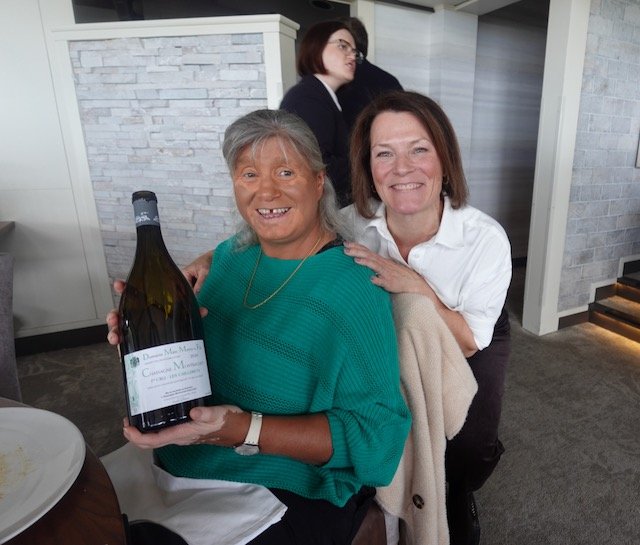
I hadn’t planned to interview Sabine Mollard. Seated next to her at the La Paulée lunch during the Boulder Burgundy Festival, I struck up a conversation in French. One thing led to another, and our exchange became an impromptu interview—a chance to hear the woman behind the wines of Domaine Marc Morey tell her story in her own words. Listening to Sabine, I recognized a familiar longing that surfaces at so many tables where wine is shared: the hope that what we do finds its way to someone who truly receives it. She was talking about a difficult year. About vines damaged by frost, the prospect of a painfully small harvest, and the question that can surface when you have given so much of yourself to something uncertain. “Why do I do this job?” I was struck by how plainly she could say it. Burgundy carries so much expectation: the names, the vineyards, the generations, the bottles people wait years to open. Listening to Sabine, I found myself thinking about the person who must get up each morning and care for all of it, even when her own sense of purpose needs tending. Her answer would come through a customer’s email. But to understand why that message mattered, it helps to go back to a life she once imagined taking somewhere else. A Family Written into Chassagne Domaine Marc Morey sits in the village of Chassagne-Montrachet, in Burgundy’s southern Côte de Beaune. Its address on Rue Charles Paquelin places it within the village whose name appears on so many of its labels. Here, the landscape is divided into small, named vineyards, each expressing its own slope, soil, and exposure. The family story began in 1919, when Morey’s first generation established the domaine in a former coaching inn. Marc Morey joined his father in 1944; in 1977, his daughter Marie-Josèphe and her husband, Bernard Mollard, joined the business. Their daughter Sabine represents the fourth generation. The estate records 2008 as the year she took the reins, with her parents remaining close enough to help. I like the physical evidence of that continuity—a cellar built in one generation, another added by the next. The domaine’s history includes a dining room for the harvesters alongside the vaulted cellars and working spaces. Something is grounding about that detail: people needed feeding while the wine was being made. Today, the estate is best known for white Burgundy: Chardonnay that favors freshness, finesse, and mineral definition. Its Chassagne-Montrachet premiers crus include Les Caillerets, Les Chenevottes, Les Vergers, Morgeot, and En Virondot; beyond the village, Sabine also makes Puligny-Montrachet Les Pucelles. Those names establish a place in Burgundy. They cannot, by themselves, explain how Sabine found hers. The Life She Had Planned Winemaking was not her original profession. Sabine trained as a geography teacher and began teaching when her younger brother, who had been expected to succeed her parents at the domaine, died. She described that turning point in an earlier published interview. Suddenly, the family faced a decision about the estate’s future, and she faced a decision about her own. She could try to carry it forward, or the property could eventually be sold when her parents retired. I hesitate over any version of this story that makes her return seem inevitable. A family legacy can offer belonging while also asking an enormous amount of the person who inherits it. In Sabine’s case, that question arrived with grief. She chose to learn. Wine school and practical experience gave her a way to explore the work before committing her life to it. Her training included time in the Ardèche and at Disznókő in Hungary’s Tokaj region, where she encountered a very different wine culture. She joined the family domaine for the 2003 harvest. What moves me is the room she initially allowed herself to decide. She didn’t have to know at the beginning that she would stay forever. She had to be willing to begin. The geography teacher in her interests me, too. I cannot claim to know how that earlier training shapes her winemaking, but I find a quiet connection between the two: both ask you to pay attention to a place and to understand why one patch of ground differs from another. In Chassagne, those differences become something you can taste. Learning When to Listen When Sabine spoke about her wines, time kept coming up. She enjoys the pronounced mineral character of young Chassagne premier cru. Yet En Virondot, for her, asks for a different kind of attention. She particularly likes it with at least five or six years behind it, when its character has had more time to emerge. She recalled tasting a 2019 Virondot with Ryan during their travels. It was showing beautifully. By comparison, the 2023 still felt young to her. “That’s how I like Virondot,” she said of the older wine. “Today, the 2023, I find it a little young.” I heard affection in that judgment. She knows the wine well enough to let it take its time. Her preferences are personal rather than a set of rules for everyone else’s cellar, and that makes them more revealing. This is someone who lives with the wines beyond the moment they leave the domaine. Then came Les Pucelles, the premier cru in neighboring Puligny-Montrachet. “I’m fortunate enough to produce Premier Cru Les Pucelles,” she said, calling it one of the very best premier crus. That sense of good fortune matters. After years of doing the work, she still recognizes the privilege of the ground entrusted to her. The pleasure comes with the responsibility. Les Caillerets 2020: A Glass to Stay With The wine I want to place at the heart of this story is the Chassagne-Montrachet Premier Cru Les Caillerets 2020, poured from a double magnum. There is generosity built into a bottle of that size. It invites a gathering. Looking back on our encounter, I find that especially fitting for a woman whose deepest explanation of her work would lead us
Beyond the Bottle: 15 Years of Burgundy, Curiosity, and Connection in Boulder
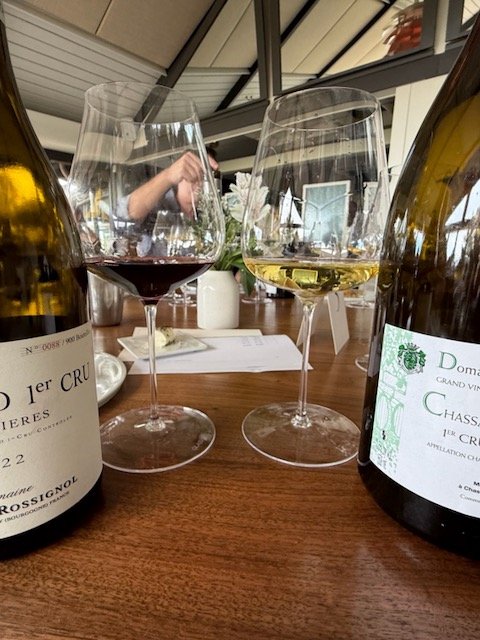
From rare Burgundy and an unforgettable Paulée lunch to a spontaneous interview, the Boulder Burgundy Festival reminded me that wine’s best stories often begin with the people we meet along the way. Burgundy’s reputation precedes it: meticulously mapped vineyards, extraordinary wines, and centuries of history. For some, that complexity is irresistible. For others, it can feel like a world reserved for insiders. But what if we approached Burgundy differently? Not through price or prestige, but through curiosity, conversation, and the pleasure of sharing a glass? That spirit defined the 15th Boulder Burgundy Festival, held in October 2026 in Boulder, Colorado. “For the love. For the curiosity. For the inclusivity of Burgundy.” Those words resonate deeply with me. Wine, at its best, brings people together. It should never create barriers. I traveled to Boulder representing Stölzle Lausitz, the Festival’s Official Glassware Sponsor, eager to experience the community that Brett Zimmermann, Master Sommelier, has spent fifteen years building around one of the world’s most celebrated wine regions. What I hadn’t anticipated was how personal the weekend would become. A spectacular Paulée lunch, an intimate masterclass with two Burgundian winemakers, and a Grand Tasting featuring more than eighty wines brought me back to what first drew me into wine: discovery, generosity, and the stories behind every bottle. And then there was an unexpected tête-à-tête with Sabine Mollard of Domaine Marc Morey. But more on that shortly. Fifteen Years of Making Burgundy Feel Like a Community Behind the Boulder Burgundy Festival is Brett Zimmermann, whose passion for Burgundy has helped create an event that celebrates exceptional wines without losing sight of the pleasure of drinking them. What impressed me most was the welcoming atmosphere Brett and his team have cultivated. Collectors exchanged impressions of vineyards and vintages, sommeliers shared their expertise, and curious enthusiasts discovered something new. Conversations moved effortlessly between technical details and personal experiences. Everyone had a place at the table. And that matters. Wine education can become so wrapped up in classifications and terminology that we forget what sparked our interest in the first place: the thrill of discovery, the fascination of terroir, and the pleasure of sharing those experiences. The festival celebrates Burgundy, but its greatest strength is the community it brings together. Burgundy Above Boulder: A Paulée to Remember Saturday’s celebration took us high above Boulder to Flagstaff House Restaurant, where sweeping views of the surrounding landscape provided a spectacular setting for a Burgundian tradition. The Paulée originated as a harvest celebration, when growers and their teams gathered to share food and wine. Today, that spirit lives on through convivial meals where exceptional bottles are opened and enjoyed together. At its heart, the Paulée isn’t about possessing great wine. It’s about sharing it. Our lunch brought together rare and mature Burgundies, a beautifully prepared multi-course menu, collectors, sommeliers, and two distinguished guests from the Côte de Beaune: Sabine Mollard of Domaine Marc Morey in Chassagne-Montrachet and Nicolas Rossignol of Volnay. There is something wonderful about a table where conversation drifts from vineyards and vintages to family histories and memories attached to a particular bottle. Older Burgundies were generously shared, each revealing the remarkable way these wines evolve with time. But what stayed with me was the openness of the afternoon. Strangers exchanged impressions, bottles sparked conversations, and a shared passion for Burgundy quickly dissolved any formality. And for me, it led to something entirely unexpected. The Conversation I Never Planned I happened to be seated beside Sabine Mollard. Sabine is the fourth generation of her family to guide Domaine Marc Morey, established in 1919 in Chassagne-Montrachet and renowned for its expressive white Burgundies. We began chatting, and because I speak French, our conversation naturally slipped into her native language. Speaking to someone in their own language changes the rhythm of an exchange. The conversation becomes more relaxed, thoughts flow freely, and stories emerge that might otherwise remain untold. One question led to another. We spoke about her family’s history, her journey into winemaking, the challenges of working with nature, and the deeply personal moments that remind her why she continues doing what she does. Before I knew it, an impromptu interview had begun. No carefully arranged appointment. Just two women seated beside one another, sharing a language, a curiosity about life, and a love of wine. Sabine spoke with warmth and sincerity about difficult vintages, moments of doubt, and an encounter that reminded her of wine’s extraordinary ability to connect generations. I won’t reveal the whole story here. It deserves its own space. But our conversation changed the way I experienced her wines the following day. I was no longer simply tasting Chassagne-Montrachet from a respected family domaine. I was tasting the work of a woman whose story I had begun to understand. Coming soon to The Happy Vine: my conversation with Sabine Mollard, exploring her family’s legacy, her personal journey, and the experiences that have shaped her life in wine. The Glass Is Part of the Experience Throughout the weekend, I had another reason to feel particularly connected to the festival. I was representing Stölzle Lausitz, the Official Glassware Sponsor for this special 15th-anniversary celebration. I’ve long believed that the glass we choose influences how we experience wine, from the way aromas are expressed to how texture and balance are perceived. Seeing the Stölzle Lausitz Revolution Burgundy glasses in the hands of people who truly appreciate Burgundy’s subtleties was especially rewarding. With their distinctive, generous bowls, these glasses are designed to allow expressive wines to reveal their aromatic complexity. When the difference between two wines can be as delicate as a fleeting floral note or a shift in texture, glassware becomes an important part of the experience. What I enjoyed most was watching people discover that for themselves. Conversations about glass shape, aroma, and sensory perception reminded me that even experienced wine professionals remain curious. Burgundy in Contrast: Two Villages, Two Grapes, Endless Nuance Sunday brought us to the Academy at Mapleton Hill for Burgundy in Contrast: Chassagne & Volnay, an intimate masterclass featuring Sabine Mollard and Nicolas Rossignol. If Saturday celebrated