
Blandy’s Sercial Madeira
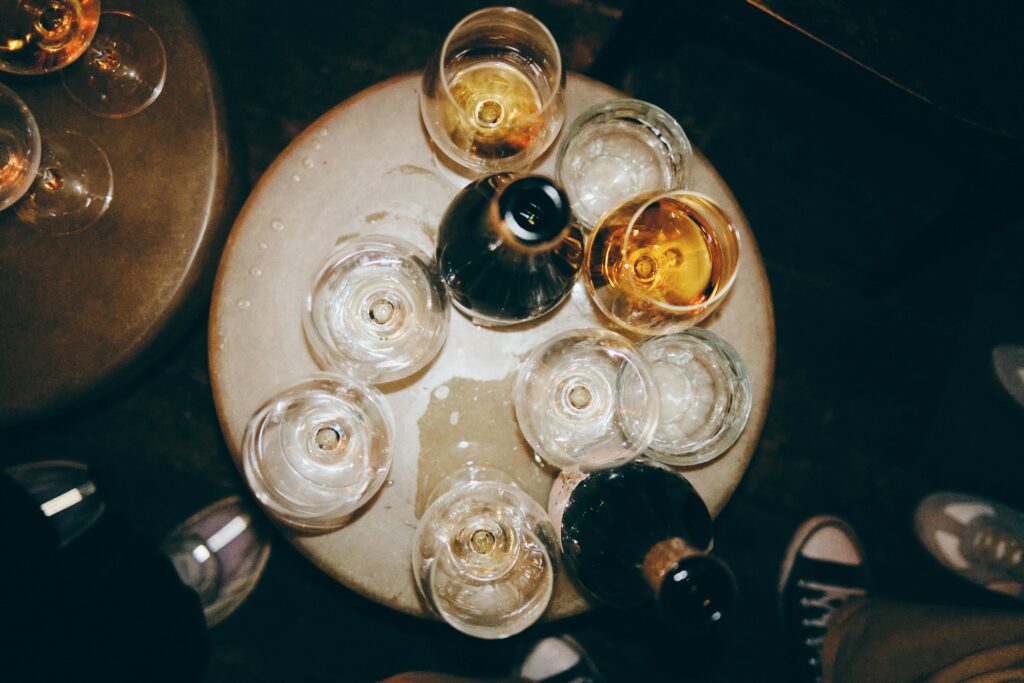
Madeira is a tough nut – in the sense that it’s hard to find and not easy to understand what the heck it is, besides for cooking Madeira Chicken. Madeira is a fortified wine in a range go sweetness, from dry to sweet styles. It gets its name from the island of Madeira, Portugal, located about 400 miles off the coast of Morocco. Madeira’s unique taste comes from heating the wine, cooling it, ageing and fractional blending. The heating creates a wine with rich tertiary flavors of roasted nuts, orange peel, stewed fruit, burnt caramel, and toffee. The super high acidity is the true identifier of this wine, which comes from it’s subtropical climate, uber steep slopes, volcanic soils and types of grapes used. There are 5 permitted noble grapes that can be used (and labeled) for Madeira – Tinta Negra, Sercial, Verdelho, Boal and Malvasia. This is the minimum amount of aging a wine labeled with one of the noble varieties is permitted. Varietal Madeira represents the highest quality Madeira wine, perfect for aperitifs or dessert wines. For more information on the process Madeira 101. Sercial is the brightest, crispiest style of Madeira. Sercial shows lemony, spicy, herbaceous notes and often displays a stony mineral character on the palate. These wines have a slight sweetness that is offset by their acidity, especially when served chilled. Blandy’s 10 year Sercial Madeira is a medium amber color. It has intense aromas of caramel, orange peel, burnt brown sugar, toasted walnut, wood, pine nuts, cloves, lemon peel. The palate is medium-dry, high acid, medium bodied, high alcohol and intense flavors of caramel, orange peel, burnt brown sugar, toasted walnut, wood, pine nuts, cloves, lemon peel. It is well balanced with good concentration and intensity. Pair with sheep’s milk cheeses, hard and crumbly cheeses such as Aged Cheddar, foie gras, chicken with cream sauce, chestnut soup, beef Wellington. The high acidity makes it such a great food pairing for any rich sauces, cheeses or high fat dishes – it cuts right through the richness.
Fortified Wines &Cheese

After a busy week and a day of studying, fortified wines, why not have a cheese pairing to go with it? From left to right the cheeses are a goat cheese, a cow’s milk hard cheese and a blue cheese. Each of these cheeses has certain characteristics that pair well with the below fortified wines ( this is not an exhaustive list by any means). Cheese pairs with many different types of wines. See my Wine and Cheese pairings 101 for more information. 🧀 Humbolt Fog cheese from Cypress Grovers in California is a soft ripened goat cheese with a line of ash down the center paired with a Blandy’s 10 year Sercial Madeira. The acidity of the wine cuts right through the richness of the cheese and makes your mouth sing. 🧀 Fineback from Mystic Cheese Co. in Connecticut is a cow’s milk hard cheese is crumbly yet creamy and paired beautifully with an Lustau Amontillado Sherry. The savory flavors of the Sherry were a lovely match with this cheese. 🧀 Bayley Blue cheese from Jasper Hill Farm in Vermont was an incredible match with a Taylor’s LBV 2015 Port. Port has the goods to hold up to a rich and unctuous cheese like blue.
Okanagan Valley Winter Red
Need a cool weather wine to warm you up? Give Mission Hill Five Vineyards Cabernet Merlot a try! Mission Hill Family Estate is located in the beautiful Okanagan Valley, British Columbia. Okanagan Valley AVA is one of 5 AVAs in British Columbia. The estate was established in 1981 when the region was largely unknown or undiscovered for winemaking. “The glacier-formed valley offered varying soil profiles, long, hot growing days, and diverse microclimates. These distinct subregions posed an opportunity to cultivate wine with unmistakable terroir. This potential inspired Mission Hill Family Estate’s vision for the future of Okanagan wine.” Through sustainable, organic farming practices combined with modern technology the varietals shine in the valley (technology meets traditional farming so to speak). The Mission Hill Five Vineyards Cabernet Merlot 2017 is the value wine of this vineyard and is a blend of Cabernet Sauvignon, Cabernet Franc and Merlot grapes. The wine has aromas of black plums, ripe blackberry, red currant, vanilla and sage. The wine is dry, medium bodied, medium tannins and acidity, with bright flavors of black plums, ripe blackberry, red currant, espresso, black pepper, vanilla and sage. Pair with roasted duck breast with plums, braised beef ribs, grilled burger, mushroom risotto, pasta with Bolognese sauce, Asiago cheese, or eggplant Parmesan.
Butternut Squash and Swiss Chard Lasagna

1 1/2lb. butternut squash, peeled, seeded and cut into 1/2-inch pieces, about 4 cups 1 lb. baby spinach 1 tbsp. olive oil 2 cloves garlic, minced 1 tsp. grated lemon zest 1/8 tsp grated fresh nutmeg 10 oz. whole milk cottage cheese 1 cup grated Parmesan cheese 1 tsp. dried sage 1 tsp. cornstarch 1 tsp. sea salt 1/2 tsp. ground pepper 6 no-boil lasagna noodles Preheat the oven to 425F. Mix cottage cheese, parmesan, cream, sage, cornstarch and 1/2 tsp. salt and 1/4 tsp. pepper together in a bowl. Combine squash, spinach, oil, garlic, lemon zest, nutmeg and remaining salt and pepper in a bowl, cover and microwave for 7 minutes or until the spinach is wilted and the squash is just tender. Transfer to collander and drain for 5 minutes. Spread 1 cup of the cheese mixture into a greased 9 inch square baking dish. Lay 2 noodles in the dish, they can overlap it’s fine, and top with half of the squash mixture and half the cheese mixture. Repeat layering. Lay 2 noodles on top, cover with remaining sauce and sprinkle with mozzarella. ( assembled lasagna can be refrigerated for up to 24hrs.) Cover dish tightly with greased aluminum foil and back for 30 minutes. Remove foil, rotating the dish and continue to bake till the top is golden and bubbly, 10-15 minutes. Let cool for 10-15 minutes before serving. Serves 4 Recipe courtesy of America’s Test Kitchen
Vaucluse GSM
Vaucluse IGT is a large region in the western border Southern Rhône to Provence. Vaucluse is spread across many of the revered southern Rhone wine AOCs and Crus – Chateauneuf-du-Pape, Gigondas, Vacqueyras, Cotes-du-Rhone AOC (and its accompanying Villages). FACT: There are less restrictions for Vins de Pays but that does not mean it’s a low quality wine….. oh contraire! It’s the complete opposite – what it means is that it can mix grapes from two different AOCs — Cotes-du-Rhone and Ventoux — which is not allowed at the AOC level. The typical soils are clay, limestone and stoney galets which brings warmth to ripen the grapes, rich ripened fruit, higher alcohol and minerality. The Southern Rhone makes red wine blends known as GSM, which stands for Grenache Syrah Mourvèdre. Depending on the AOC the blend could include 15 grape varieties, with Grenache being the dominant grape. The blend could also include other grapes such as Cinsault, Counoise, Carignan. These wines have character, a savoriness and rustic quality balanced with ripe fruit. The Brunier family are a 6 generation winemaking family. The original estate, Domaine du Vieux Télégraphe was established in 1891 in Chateauneuf-du-Pape. Domaine du Vieux Télégraphe, Domaine La Roquète, Domaine Les Pallières are their most prestigious vineyards, as well as produce Vins de Pays Vaucluse. Winemakers Frédérick & Daniel Brunier have a deep knowledge and love of the terroir. They continue the family tradition and expand their holdings, as far as Lebanon with Massaya in association with Sami and Ramzi Ghosn, planted mainly in the northeast Beqaa Valley. Vin de Pays de Vaucluse Rouge “Le Pigeoulet” 2016 Is a blend is from fruit from the Côtes-du-Rhône and Ventoux appellations. The vines are an average of 25 years old. The name Pigeoulet is from the foothills of the noble La Crau plateau. It is made up of 80% Grenache, 10% Syrah, 5% Carignan, 5% Cinsault. Aged in 18 months in 50% cement tanks, 50% old oak foudre. Full bodied at 14% abv (you wouldn’t know it as it’s so smooth). It has a lovely rustic, sweet berry & spice aromas of ripe plum, cranberry, blackberry, cinnamon, leather, tobacco, raspberry jam, garigue and vanilla. Palate is dry, medium acid, chalky & round medium tannins, medium+ body and high alcohol, flavors of black cherry, plum, blackberry, raspberry, leather , dust, wet stone, pepper, licorice, garigue, meat, savory, lavender, bramble, black currant and mint. It’s well balanced and deserves a roast to accompany it! Amazing quality to price point $16 Pair with Roast Bone-In Pork A La Herbes de Provence
Bone-In Roast Pork A La Herbes de Provence

4 chop (3-4 lbs) pork rib roast, fat on salt and pepper 3 tbsp. Herbes de Provence 3 tbsp. olive oil 1 onion, chopped 2 carrots, chopped 1 head of garlic, unpeeled and separated into cloves 2 sprigs fresh rosemary 4-5 sprigs of fresh thyme 3 bay leaves 1 cup Rosé wine (or dry white such as Sauvignon Blanc) 1 cup chicken stock The night before (or at least 3 hours before cooking the roast), generously salt the roast all over and place in the fridge uncovered. Don’t worry, the meat won’t go bad. What this does is tenderize the meat from the inside out (through osmosis). It will keep the meat juicy and the crust crispier. When you are ready to cook, heat the oven to 400F. Pat the roast dry, rub 1 tbsp. olive oil over the roast. Season with salt, pepper and herbes de Provence. Heat the oil in a large Dutch over at medium-high heat and brown the meat all over, about 4-5 minutes per side. Add the vegetables, herbs, stock and wine to the pot. Bring to a boil, cover the pot and place in the oven. After 20 minutes turn the heat down to 325F and bak for another 45 minutes – 1 hour or until the internal temperature of the meat reaches 160F. Transfer meat to a cutting board, cover with foil and let it rest for 10 minutes. Strain the juices in the bot and boil down a little to concentrate the flavors, about 5 minutes. Carve the roast and spoon over sauce. Pair with a savory Souther Rhone wine such as a Vaucluse GSM or a Grenache blend. Based on a recipe from Laura Calder Dinner Chez Moi
Cote de Rhone
Rhône blend a.k.a GSM- what is that exactly? GSM stands for Grenache Syrah Mourvèdre. Let’s start with the basics – where it got it’s claim to fame, the Cote de Rhône. The Cote de Rhône region is located in southeast France, just north of Languedoc Roussillon region. The region is divided into 2 subregions – the Northern and Southern. They may as well be separate regions because they are polar opposites as can be – from climate, soils and grape varietals to name a few. The Northern region has a moderate continental climate, steep slopes and terraced vineyards . The many valleys protect the Rhône from the strong Mistral winds. Syrah is the only permitted red variety along with white varietals Viognier, Marsanne, Rousanne. This region is further subdivided into 8 Crus – you may have heard of Saint Joseph, Crozes Hermitage and Hermitage. The Southern has a Mediterranean climate with flatter areas & stony soils (galets). The area produces Rosé, White, Red and Fortified. The vines are either bush vines or trellis trained due to the Mistral winds, heat and dryness. The red blend ( GSM) can include up 18 varieties such GSM plus Cinsault, Counoise , Carignan. There are 9 crus in this region such as Gigondas or Chateauneuf du Pape (the first AOC in 🇫🇷 France). Here are a few tips when buying a Cote de Rhône: The quality levels start at Cote de Rhône, Cote de Rhône Villages (has to be at least 50% Grenache , 95 districts) and then the Crus as mentioned above. Northern vs Southern has completely different styles of wines Don’t be afraid to ask your local specialty wine shop for a recommendation This wine is a lovely Cote de Rhône from Vignerons Ardechois. The grapes are carefully “selected for the quality of its terroir, its sun exposure, the age of the vines, and watched year-round with a serious pruning, limited yields, a soil work to express the quintessence of their Ardèche land.” Organically grown, parcel segmented and thoughtfully crafted. They create forgoes quality/value wines. If you have never tried a Cote de Rhône start with a reputable, affordable Cote de Rhône and move your way up the quality ladder. This particular blend could also include other grapes such as Cinsault, Counoise , Carignan Full bodied, complex wines that are savory & rustic with medium/medium+ tannins and acid, sweet berry, spice – ripe plum, cranberry, blackberry, cinnamon, leather, tobacco, raspberry jam, garigue, vanilla and black olive. Perfect with Herbes de Provence Cedar Plank Grilled Salmon and Spiced Carrots as I have made or grilled pork roast. It’s a wonderful fall wine that warms the soul with its complexity.
Classic Moët & Chandon Champagne
Moët & Chandon is the Champagne of success and glamour since 1743. Renowned for its achievements and legendary pioneering spirit, Moët & Chandon is synonymous with both cherished traditions and modern pleasures and has helped celebrate life’s most triumphant moments for more than 270 years.. Moët Impérial is the House’s iconic champagne. Created in 1869, it embodies Moët & Chandon’s unique style, a style distinguished by its bright fruitiness, its seductive palate and its elegant maturity. Every glass overflows with the House’s hallmark values of history, generosity, savoir-faire, success, boldness and elegance—values still at the heart of its global appeal. Toward the end of the 18th century, Jean-Remy Moët, grandson of founder Claude Moët, became famous as the man who introduced champagne to the world. The important figures of the era, from the Marquise de Pompadour to Talleyrand to Napoleon quickly fell in love with the House’s effervescent wine. Moët & Chandon was soon the icon of success and elegance that it remains to this day. Created from more than 100 different wines, of which 20% to 30% are reserve wines specially selected to enhance its maturity, complexity and constancy, the assemblage reflects the diversity and complementarity of the three grapes varietals : The wine is a blend of Pinot Noir, Meunier and Chardonnay. Pale lemon color with tiny, lively bubbles. Medium+ intensity brioche toast vanilla golden apple fig strawberry lemon pastry. Palate is dry high acid medium body medium+ intensity of brioche toast vanilla golden apple fig strawberry lemon pastry cream pear and long hazelnut finish just delicious Pair with Cheese – Fresh & Soft, Cheese – Hard Aged, Cheese – Nutty & Semi-Firm, Cured Meats, Fish – White, Shellfish
Wine and Cheese 101
Cheese and wine is a very popular food pairing and wine paring topic. Pretty much everyone loves cheese. It’s a quick and easy appetizer when you have company, a flavor contributor to a dish or just plain delicious! The holidays cheese plates are a great way to start a meal. Here are some basic wine and cheese pairings to elevate your next dinner party, holiday meal, girls night, treat yourself night or stay at home date night. Cheese Types: Soft cheeses such Brie de Meaux, Camembert and Goat cheese are rich yet light. These cheeses are creamy and it’s almost like eating butter. Incredibly moorish. A soft cheese needs a wine with higher acid that will cut through the richness of the cheese and also cleanse the palate. It would clash terribly with a full bodied red such as Cabernet Sauvignon because of the high tannins. Hard cheeses such as Cheddar, Gouda, Parmesan or Manchego are salty and have texture. Pairs well with a medium to full bodied reds because of the higher salt and higher tannins work well together or a rich fortified wine can stand up to a richer texture and saltier cheese. Blue cheeses such as Roquefort, Gorgonzola, Stilton are very rich in flavor, creamy texture and salty. These types of cheeses need a wine that is powerful and can stand up to the rich, strong flavors of Blue Cheese. Soft Cheese Pair soft ripened cheeses such as Brie, Camembert, Goat cheese or Brillat Savarin with a white such as a Sauvignon Blanc or Chenin Blanc, a crisp Rosé or a sparkling wine such as Champagne or Crémant. A fortified wine option would be Amontillado Sherry A red option would be a light and fruity red such as Gamay or Pinot Noir work well because they are all higher in acid. Hard Cheese Try a dry Sherry such as an Oloroso or Paolo Cortado. A sweeetened PX Sherry or a Tawny Port (10 or 20 years) with hard cheeses gives a nice sweet to salty contrast and has the goods to hold up to hard aged cheeses. An oaky Chardonnay goes very well with strong cheddar. For red wine drinkers, why not try a Cabernet Sauvignon or Malbec with your next extra Aged Sharp Cheddar, Garnacha with Manchego or Sangiovese with Parmesan. Blue Cheese These types of cheeses pair well with a sweet wine such as Late Bottle Vintage (LBV) Port, PX Sherry, Icewine or Sauternes. The savory Stilton or Cabrales begs to be paired with the unctuous, sweet notes of these rich wines.
Creamy Broccoli Soup

2 tablespoons unsalted butter 2 pounds broccoli, florets roughly chopped into 1-inch pieces, stems trimmed, peeled, and cut into 1/4-inch-thick slices 1 medium onion, roughly chopped 2 medium garlic cloves, minced or pressed through garlic press 1 1/2 tsp. dry mustard powder Pinch cayenne pepper Table salt 2-3 cups water 1/4 teaspoon baking soda 2 cups vegetable broth 2 ounces baby spinach (2 loosely packed cups) 1 cup shredded sharp cheddar cheese Freshly ground black pepper Heat butter in large Dutch oven over medium-high heat and add broccoli, onion, garlic, dry mustard, cayenne, and 1 teaspoon sea salt. Cook, stirring frequently, until fragrant, about 6 minutes. Add 1 cup water and baking soda. Bring to simmer, cover, and cook until broccoli is very soft, about 20 minutes, stirring once during cooking. Add broth and 1 cup water and increase heat to medium-high. When mixture begins to simmer, stir in spinach and cook until wilted, about 1 minute. Transfer half of soup to blender, add cheddar and Parmesan, and process until smooth, about 1 minute. Transfer soup to medium bowl and repeat with remaining soup. Return soup to Dutch oven, place over medium heat and bring to simmer. Adjust consistency of soup with up to 1 cup water. Season to taste with salt and pepper. Top with homemade croutons. Serves 4. Recipe based on America’s Test Kitchen