
Holiday Travels
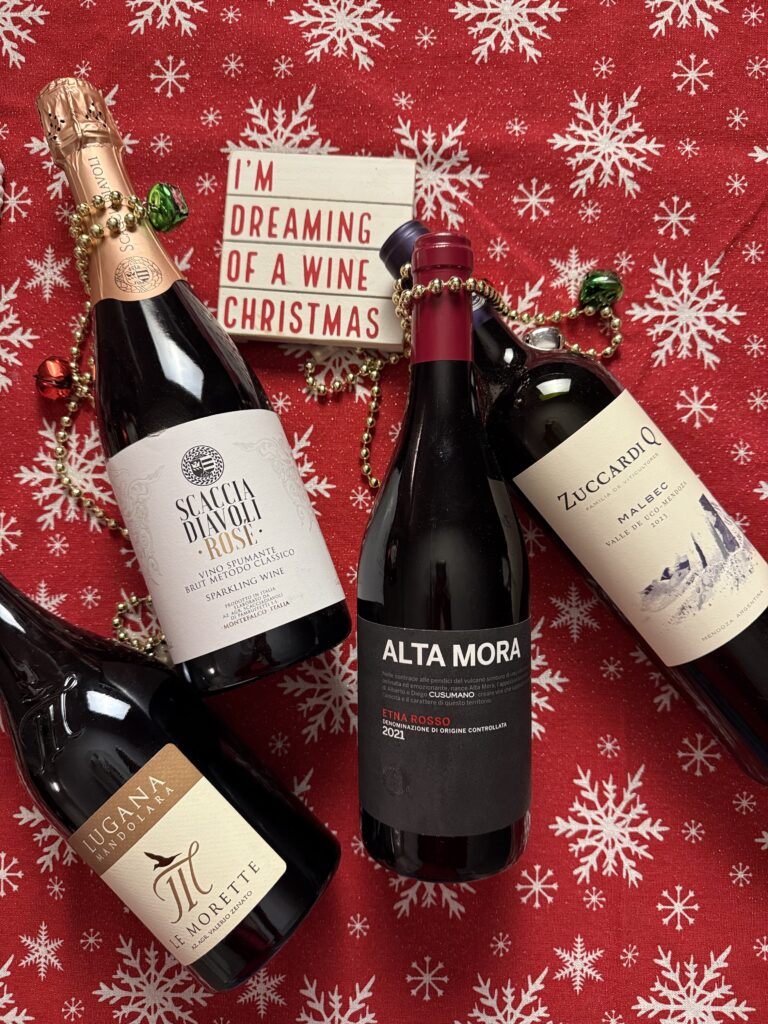
These four bottles aren’t just wines – they’re postcards from the roads I traveled in 2025, little liquid souvenirs I brought home from places that stole my heart. From volcanic slopes to glacier-cooled lakeshores, from devil-chasing hilltops to sky-high Andean vineyards, each one carries the soul of where it was born. And as the holiday lights start twinkling, they transform into the perfect companions for the season: sparkle to kick off the night, spice to match the feast, brightness to cut through the richness, and velvet depth for those long, fireside conversations. Here they are – four passports to joy, ready to make your holiday season unforgettable! Scacciadiavoli Brut Rosé: The Devil-Chasing Sparkler That’s Pure Party Magic! Oh, buckle up, bubbly lovers—this Scacciadiavoli Brut Rosé from the legendary Cantina Scacciadiavoli is like a cheeky Italian whisper saying, “Life’s too short for flat vibes!” Hailing from the sun-kissed hills of Montefalco in Umbria, Italy, this winery’s been crafting wines since the 1800s, with a name that literally means “devil-chaser” The region’s volcanic soils and gentle breezes give it that extra zing, turning humble grapes into liquid fireworks. Winemaking here is all about that classic Italian flair: hand-picked 100% Sagrantino grapes get the royal treatment with the Metodo Classico (think Champagne method, but with more Mediterranean soul), aged min 24 months sur lie fermenting in the bottle for that fine, celebratory fizz. It’s aged just right to keep things fresh without losing the fun—pure artisanal wizardry that lets the terroir shine through every bubble. Style-wise, this is your go-to sparkling rosé for when you want elegance with a wink: brut-dry for that crisp edge, but bursting with playful energy. It’s the rosé that dances on your tongue, light yet structured, like a summer fling that turns into your new bestie. Tasting notes? Get ready to swoon: a pale salmon glow in the glass, unleashing a floral explosion of wild strawberries, red apples, and a whisper of brioche crust—fresh as a morning jog through an orchard. On the palate, it’s a lively tango of cranberry zip, ginger spice, and white pepper kick, all wrapped in silky bubbles and zesty acidity that lingers like a flirty goodbye. One sip, and you’re hooked—elegant, savory, and oh-so-refreshing! For fun food pairings, pop this open with seafood towers , charcuterie boards loaded with prosciutto and fresh cheeses, or even a zesty white-meat grill-out. It’s the ultimate mood-lifter for rooftop toasts, beach picnics, or just because—evoking that carefree, sun-drenched euphoria where worries bubble away and every moment feels like a victory lap. Cheers to chasing devils with delight! Fun Fact: The winery’s name literally means “Devil-Chaser” because, back in the 19th century, the vineyard sat right next to a tiny village where an exorcist was once called in to banish a pesky demon. Locals swear the first bottles of sparkling Sagrantino were so good that even the devil fled in delight… and never came back! Le Morette Mandolara 2024: Lake Garda’s Zesty Sunshine in a Bottle! Dive into the sparkling waters of joy with Le Morette’s Mandolara 2024—because nothing says “let’s make memories” like a white wine that’s as breezy as a Venetian gondola ride! Crafted by the Zenato family at Le Morette winery, these folks have been tending vines in Peschiera del Garda since the 1960s, blending old-school passion with zero-chemical purity for wines that taste like pure, unfiltered happiness. Nestled in the Lugana DOC region of Veneto, Italy—just a stone’s throw south of Lake Garda’s shimmering shores—this spot’s mineral-rich clays and lake-cooled nights crank up the freshness dial to eleven, making every vintage a love letter to the land. Winemaking is a family affair done right: 100% Turbiana grapes (that’s Verdicchio’s sexy Italian alias) from the hallowed Mandolara vineyard get a gentle stainless-steel hug to preserve their zippy soul—no oak, no fuss, just pure expression fermented cool and crisp for that vibrant pop. It’s sustainable magic that lets the grapes strut their stuff. This bad boy rocks a flinty-green white wine style—light-bodied, zingy, and endlessly quaffable, like the cool cousin at the family reunion who always brings the best stories. Perfect for those “aha!” moments when you need refreshment without the weight. Pour it out, and bam—your nose is hit with a citrus symphony of grapefruit zest, green apple crunch, white flowers, and a sneaky apricot tease, all wrapped in that flinty, mineral kiss from the Garda stones. The palate? A fruity fiesta of peach whispers and apple brightness, finishing with bitter almond elegance and a mouthwatering acidity that begs for another sip. It’s fresh, balanced, and downright addictive—like biting into summer itself! Pair it up with Taco Tuesday fish tacos, delicate seafood pastas, or veggie-packed risottos for a match made in heaven—light, lively, and laugh-out-loud delicious. The mood? Effortlessly upbeat, evoking lazy afternoons by the water, spontaneous brunches, or that giddy “yes!” to new adventures—pure, feel-good elixir for souls craving a splash of serenity and sparkle! Fun Fact: The Mandolara vineyard is home to a colony of wild ducks (called “morette” in local dialect) that waddle through the rows every spring. The Zenato family refuses to scare them away, so every vintage is officially “duck-approved” and probably blessed with extra good luck! Alta Mora Etna Rosso 2022: Sicily’s Volcanic Vixen Ignite your senses with Alta Mora Etna Rosso 2022, where the fiery spirit of Mount Etna meets winemaking wizardry for a red that’s as explosively fun as a Sicilian festa! Born from the Cusumano family’s Alta Mora project—a high-elevation love child of passion and precision since 2007—this crew’s all about honoring Etna’s wild side with sustainable swagger and indigenous soul. Perched on the volcanic flanks of Etna in Sicily, Italy—blending grapes from star vineyards like Verzella, Solicchiata, Feudo di Mezzo, and Guardiola at 650–900 meters up—these lava-kissed black sands and ancient soils brew a mineral magic that’s equal parts rugged and refined, capturing the island’s untamed heartbeat. Winemaking channels that volcanic energy: 100% Nerello Mascalese gets a cool ferment to lock in freshness, then
Wine Of Austria-Portal to Irresistible Addictive
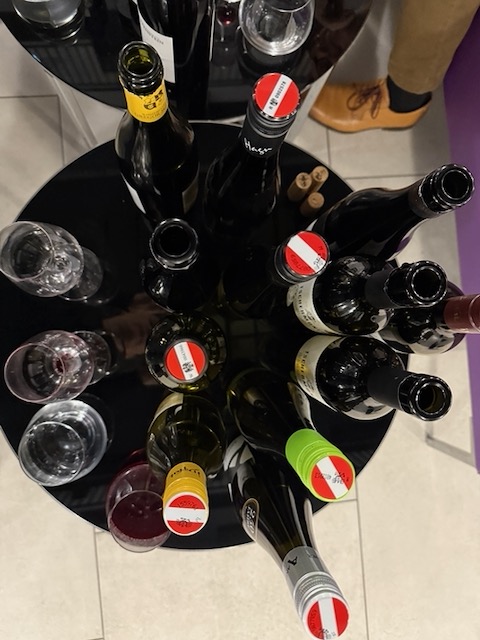
Last week in Budapest, I had the privilege of sitting down with Markus Stieger, founder of Wine of Austria, for a late afternoon that felt less like a formal tasting and more like a conversation among friends who happen to be obsessed with great wine. We took over a quiet corner of the hotel lobby—no tasting sheets, no rush, just open bottles, honest reactions, and a growing realization that Austrian wine is in the middle of something extraordinary. Later that evening we carried our shortlist across the city to Tom George Osteria, where the sommelier tasted alongside us and, bottle by bottle, saw his own preconceptions quietly dismantled. What follows are my unfiltered notes from one of the most exciting line-ups I’ve experienced this year. Tasting the 16 wines in Markus’s portfolio was awakening curiosity with razor-sharp precision, family soul, and frankly insane QPR that makes you question everything you thought you knew about “value.” Austria is quietly making the most electric, soulful, drink-now-or-cry-later wines on earth. My impressions on the wineries and wines tasted: Weingut Aigner “Tradition” Riesling 2024: Lime-zest rocket fuel with wet-stone electricity. Kremstal Riesling that tastes like it was raised on AC/DC and alpine air. Stupidly precise for pocket change. 13 generations of family growers with focus. Screaming wet-stone tension, green apple snap, and a salty finish that punches way above its price. Weingut Aigner Grüner Veltliner Ried Obere Sandgrube 2021: The serious older sibling. Deeper, smokier, layered with yellow apple, crushed rocks, and a salty kiss that lingers like a dirty promise. Single-vineyard GV royalty. Ettl Chardonnay Reserve 2023 (Wagram): Two organic brothers having fun. Youthful, playful, honeyed ripeness yet pure as mountain air. Whole-bunch magic that screams “drink me now.” Ettl “Prädium” Chardonnay 2024: The aromatic big brother – spiced honey, silky texture, built for the American palate that loves a little opulence without losing class. Weingut Hagn “Ried Hundschupfen” Grüner Veltliner 2024 (Weinviertel): White-pepper grenade, gooseberry, and a flinty backbone that makes your tongue buzz. Classic Weinviertel snap – the wine equivalent of a cold slap from a beautiful stranger. Weingut Martin Pasler Blaufränkisch Ried Buschenberg 2019 (Mittelburgenland): Brooding dark cherry, black pepper, and iron-rich soil vibes. Five years in bottle have turned it sleek, spicy, and dangerously velvety. The red that makes you forget Pinot ever existed. PMC Münzenrieder “Tschernosem & Salz” Blaufränkisch-Cabernet Franc 2021: Black-soil power meets lake-breeze freshness. Cassis, graphite, roasted bell pepper, and a saline lick on the finish. Bordeaux varieties grown by someone who actually understands. Weingut Nastl Ried Käferberg Grüner Veltliner 2023 (Kamptal Reserve level): From one of the coolest sites in Langenlois. Explosive green pineapple, wild herbs, and a mineral tension that feels like chewing on a glacier. Nastl’s masterpiece – quiet, intense, unforgettable. Weingut Tschermonegg Ried Lubkogel Sauvignon Blanc 2023 (Südsteiermark): Classic Styrian insanity: passion-fruit bomb, cut grass, elderflower, tomato leaf, pink grapefruit, and a salty whip-crack finish. SB that grabs you by the collar and demands attention. Weingut Tschermonegg Ried Oberglanzberg Sauvignon Blanc 2022: Even more feral – blackcurrant bud, kiwi skin, mango, gunflint, and wet slate. One year extra gives it smoky depth without losing the electric high notes. A total knockout. Winzerfamilie Gregor Schup Rotgipfler Gumpoldskirchen 2023 (Thermenregion): The cult grape whispers seduction: peach melba, almond blossom, nutmeg, and a creamy yet razor-fresh texture. If Chardonnay and Pinot Blanc had a spicy Austrian love child. Ettl “Römerstein” Zweigelt Reserve 2022: Classic jammy dark fruit, black pepper, moreish tannin. Old-school Austrian red that reminds you why Zweigelt rules the countryside.Ftraminer Winzerfamilie Gregor Schup Zweigelt Gumpoldskirchen 2023: Crunchy sour cherry, violet pastilles, and white pepper pop. Zero heaviness, all joy – the red you drain with roast pork or straight from the fridge on a summer night. Winzerfamilie Gregor Schup “Eichkogel” Pinot Noir 2016 (Thermenregion): A nine-year-old Austrian Pinot that costs less than a cocktail in Manhattan. Silky wild strawberry, forest floor, dried rose, black tea and sweet-spice oak. Pure elegance that makes Burgundy hunters weep into their wallets. Hofkellerei Liechtenstein Blaufränkisch 2020: Modern, fresh, peppery elegance personified. Crunchy blue fruit and a finish that keeps whispering “drink another glass.” Münzenrieder Muskat Auslese 2023: Dried stone fruit, piercing acidity, and a salty thread that keeps it gorgeously fresh. Botrytis sweetness done with Styrian precision – not cloying, just addictive. These bottles aren’t waiting for permission. They’re here, they’re brilliant, and they’re priced like someone made a glorious mistake. Austria has never needed hype; it simply makes wines that speak for themselves. After this trip, I’m convinced they’re speaking louder and more eloquently than ever. If you’ve been waiting for the right moment to dive deeper into Austrian wine, consider this your invitation. The bottles are ready. I know I’ll be drinking them for a very long time.
Celebrating 100’s With Champagne Lombard
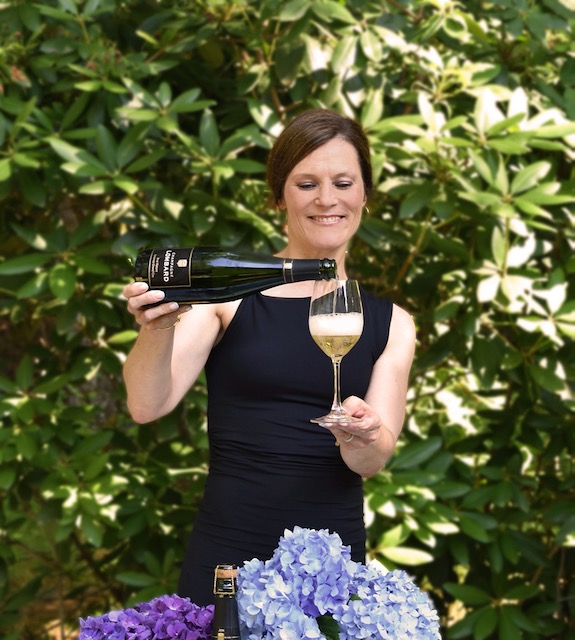
What a joyous double milestone! Today, we’re toasting Champagne Lombard’s 100th anniversary alongside The Happy Vine reaching 100,000 followers. These duo “100s” perfectly capture the essence of champagne: timeless craftsmanship from vine to bottle, and the vibrant global community that makes every sip a shared celebration. At Champagne Lombard, a family-owned house founded in 1925 in Épernay, four generations have poured passion into every bottle. Now led by Thomas Lombard, the maison blends négociant expertise with a grower’s terroir-focused philosophy. Sustainably farmed Premier and Grand Cru vineyards yield grapes that are hand-harvested, gently pressed, and aged patiently in historic chalk cellars—creating elegant, minimal-dosage champagnes brimming with freshness and minerality. Meanwhile, The Happy Vine’s community of over 100,000 bubbly lovers has grown through your stories, virtual tastings, pairings, and celebrations. From discovering hidden gems to toasting life’s big (and small) moments, you’ve made our global embrace sparkle brighter than ever. Together, we honor the journey from tender vineyard care to the joyful clink of glasses—the dedication of the Champagne Lombard family and the warmth of our Happy Vine connections. These milestones remind us that the true magic of champagne lies in the moments it brings together. Here’s to 100 years of effervescent legacy, 100,000 hearts united in joy, and countless more bubbles ahead!
Uncork the Magic of Bruñal
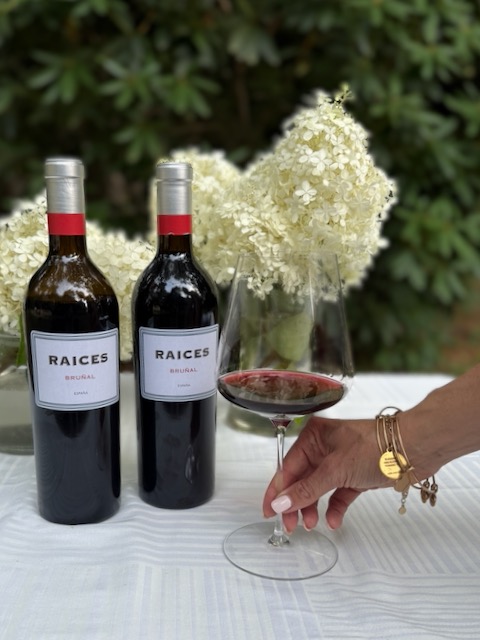
Embark on a thrilling wine journey to Spain’s Arribes del Duero, where the rare and enchanting Bruñal grape—also known as Alfrocheiro—casts a spell with its bold flavors, storied heritage, and untamed terroir! This Iberian treasure, flourishing in the sun-soaked, rocky terraces of northwest Spain, is a must-explore for wine enthusiasts and travel adventurers. With its intense fruit aromas, robust tannins, and remarkable culinary versatility, Bruñal is your passport to an unforgettable tasting experience. Let’s dive deep into the vibrant story of this spirited red, from its ancient origins to its dazzling flavor profile and perfect food pairings! I’m truly honored to partner with the Raíces Ibéricas Advent Calendar 2025. This wine is proudly featured on Day 8. A Storied Past: The Heritage of Bruñal Nestled in the mist-kissed canyons of Arribes del Duero, Bruñal’s tale is woven into the rugged tapestry of this region, straddling southwestern Zamora and northwestern Salamanca. Native to Castille y Leon, thee centuries-old winemaking traditions thrive among steep, terraced vineyards carved into windswept cliffs. Bruñal, synonymous with Alfrocheiro Preto from Portugal’s Dão region, is a rare, indigenous red grape, often found in small, century-old plots alongside local varieties like Juan García, Rufete, and Tempranillo. Once teetering on the edge of extinction, this dark-skinned gem is now captivating wine lovers, thanks to passionate producers like Raíces Ibéricas, who champion its revival. DNA studies reveal Bruñal’s deep Iberian roots, born from natural crosses between Alfrocheiro and Cayetana Blanca, a white-berried variety widespread in southern Iberia. Its siblings include Portuguese varieties like Cornifesto, Malvasia Preta, Camarate, and Castelão, as well as Spain’s Juan García (also known as Gorda or Tinta Gorda in Portugal). Bruñal shares a genetic kinship with France’s Trousseau, often called Bastardo Negro, which explains why the two are sometimes confused. Its synonym Tinta Francesa in Portugal’s Viseu region hints at a possible French origin, though no historical records confirm this. Bruñal is also genetically linked to Prieto Picudo from Tierra de León and Carrasquín from Asturias, underscoring its deep ties to Spain’s northern terroirs. Despite its youth—likely introduced during post-phylloxera replanting in the early 20th century—Bruñal’s limited morphological diversity and rich lineage make it a captivating piece of Iberian wine history. This rich heritage sets the stage for Bruñal’s journey from vine to bottle, where the rugged terroir of Arribes shapes its unique character. Viticulture: Where Terroir Meets Tenacity From history to the land itself, Bruñal thrives in a landscape of towering cliffs, granite-strewn soils, and the meandering Duero River carving through dramatic canyons. This offering is planted at a lofty 700 meters in Arribes’ sandy, granite-rich soils studded with quartz pebbles, these vines develop deep root systems, drawing resilience and character from the challenging terrain. Raíces Ibéricas partners with local viticulturists, fostering the region’s social ecosystem while embracing organic, minimal-intervention farming. Bruñal’s fertile, productive vines are early budding and early ripening, producing small, compact bunches of tiny, black berries. Though susceptible to powdery mildew and botrytis bunch rot, meticulous vineyard practices, including hand-harvesting and low yields, ensure only the finest grapes are selected. This careful stewardship captures the unfiltered essence of Arribes, a protected nature reserve where every vine tells a story of tenacity and terroir. With the grapes carefully nurtured, the artistry of winemaking transforms Bruñal into a wine that sings of its origins. Winemaking: Artistry in Every Sip From the vineyard to the cellar, Raíces Ibéricas entrusts Bruñal to the skilled hands of winemaker Rubén Magallanes, celebrated as “La Voz de la Garnacha” for his mastery of expressive, terroir-driven wines. His approach blends tradition with innovation, beginning with fermentation in small, stainless-steel vats at carefully controlled temperatures to preserve the grape’s vibrant fruit and delicate aromatics. A gentle 15 day fermentation process extracts deep color and nuanced tertiary aromas without overpowering the grape’s natural elegance. Aging in 225L barrels for twelve months softens the robust tannins, allowing Bruñal’s fruit-forward soul to shine. With only three barrels produced per vintage, Bruñal is an exclusive star in Raíces’ iconic RAICES 1 blend (vintages 2021–2024, with 2023/2024 still in barrel) and a highlight of their 2024 advent calendar. This limited production underscores the wine’s rarity, making each bottle a precious expression of Arribes’ timeless spirit. This meticulous craftsmanship is deeply rooted in the unique character of the Arribes region, a land that shapes both grape and wine. The Arribes Region: A Winemaker’s Paradise Flowing seamlessly from the cellar to the land, Arribes del Duero, a Denominación de Origen (DO) since 2007, is a region of breathtaking contrasts—high plateaus, plunging riverbanks, and steep, terraced slopes hugging the Duero and Tormes rivers. Derived from the Latin ad ripam (“on the banks”), this young, dynamic region is a haven for adventurous wine lovers. Its sandy, shallow soils, rich with granite and quartz, paired with a Mediterranean climate of chilly winters and short, scorching summers, create ideal conditions for bold grapes like Bruñal. The dramatic day-to-night temperature swings enhance the grape’s acidity and flavor concentration, making Arribes a winemaker’s paradise where nature’s raw beauty shapes every bottle. At the heart of this rugged terroir lies Bruñal, a grape that embodies the region’s wild spirit. Bruñal: The Grape That Steals the Show From the land to the grape itself, Bruñal—known as Alfrocheiro Preto in Portugal’s Dão and Alentejo regions, Baboso Negro in the Islas Canarias, and Albarín Negro in Asturias—is the beating heart of Arribes. This versatile grape thrives in cool climates or regions with significant diurnal temperature swings, budding mid-early and ripening quickly. Its low yields keep it exclusive, but its flavor is bold and unforgettable—bursting with ripe cherries, blackberries, and strawberries, accented by a mineral edge that echoes its rocky roots. In Arribes’ continental climate, Bruñal crafts full-bodied, structured reds with fine-grained tannins; in Atlantic regions like Dão, it’s fresher, wilder, and more delicate. Often blended with local varieties like Tempranillo, Touriga Nacional, or Juan García, Bruñal also shines in varietal wines, as seen in the Islas Canarias with producers like Frontos, Tananjara, and Viñátigo. Its intense fruit
Budapest’s Kispiac Bisztró-Welcome
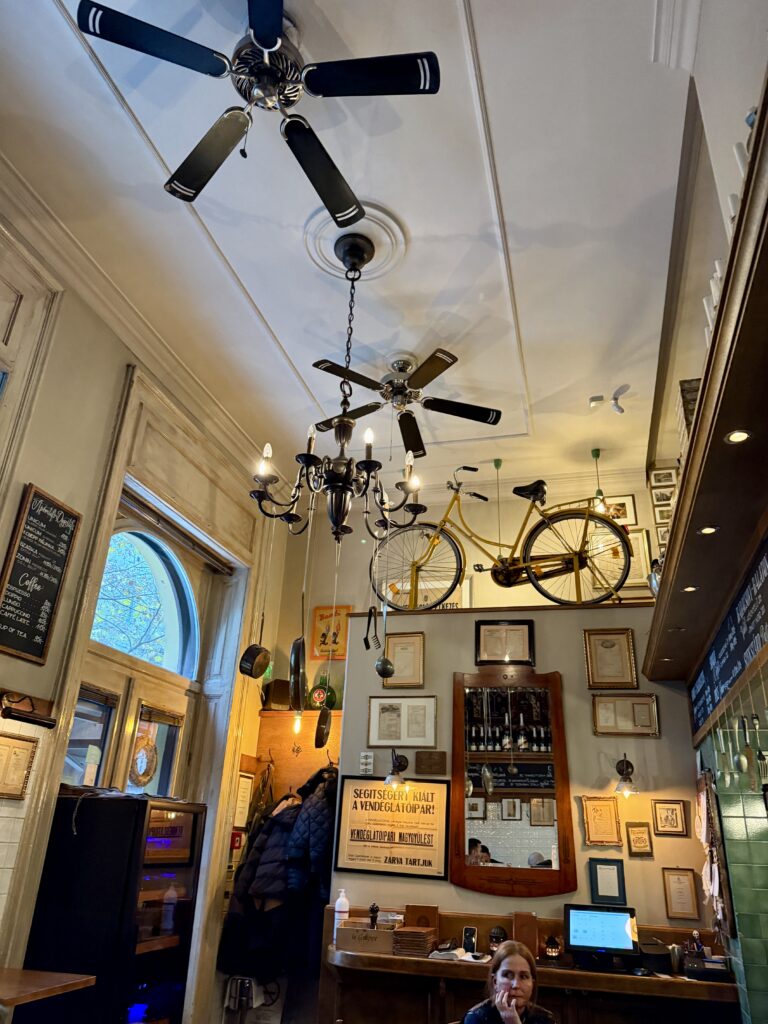
KISPIAC Bisztró is the rare Budapest address that serious eaters and drinkers whisper about with the urgency usually reserved for grand cellars and three-star tables. Hidden in plain sight at Hold utca in the 5th district, it is the personal fiefdom of Csaba Szalanszki, a restaurateur who’s energy hosts, and pours with the conviction of someone who has nothing left to prove and everything left to share. Walk in and the room wraps around you like a well-worn leather armchair: low amber light, shelves of bottles and eclectic kitchen decor, the faint crackle of the open-air kitchen, and a gentle hum of conversation. There is no pretense here, only the quiet confidence of a place that knows exactly what it is. Csaba’s wine list is a masterclass in Hungarian terroir, heavy on small growers and idiosyncratic sites, with a by-the-glass selection that rivals many dedicated bars. Depth in Somló, Juhfark, Furmint, Hárslevelű; a small but deadly arsenal of Kékfrankos from Villány, Sopron, and the overlooked Vas region; and enough skin-contact oddities to keep even the most jaded orange-wine hunter happy. Two glasses that stopped me in my wine tracks: The food is built around fire and time. Csaba’s venison Wellington has achieved minor cult status for good reason: loin from wild red deer, seared, coated in forest-mushroom duxelles, wrapped in feather-light pastry and baked to a lacquered rose. Cut the dome and the juices run like a Bordelaise reduction having an identity crisis (in the best way). The spare ribs, smoked low and slow over fruitwood, then finished in the oven until the meat threatens structural failure, are glazed with a lacquer that balances sweet, smoke, and gentle heat. They collapse at the suggestion of a fork. The half duck is the dish we will still be dreaming about in ten years: confit legs pressed and re-crisped, breast roasted on the crown until the skin shatters like stained glass and the flesh remains obscenely juicy. Served with duck-fat potatoes and braised red cabbage sharpened with aged szamorodni vinegar. The Kófejtő from Somló cuts through the richness like a stiletto. We ate here on a Wednesday night. We returned for lunch the next day. Same corner table, same grin from Csaba, same involuntary moan when the Wellington arrived. That is not hyperbole; it is simply what happens when obsession meets execution. KISPIAC is not chasing trends or stars. It is the living room of a man who loves feeding people beautiful, soulful food and pouring them wines most of the country still hasn’t discovered. For anyone who measures a trip by the quality of its tables, this tiny bistrot is obligatory. Twice in 24 hours felt perfectly rational. Three times would have been restraint.
Life in Villany Wine Country
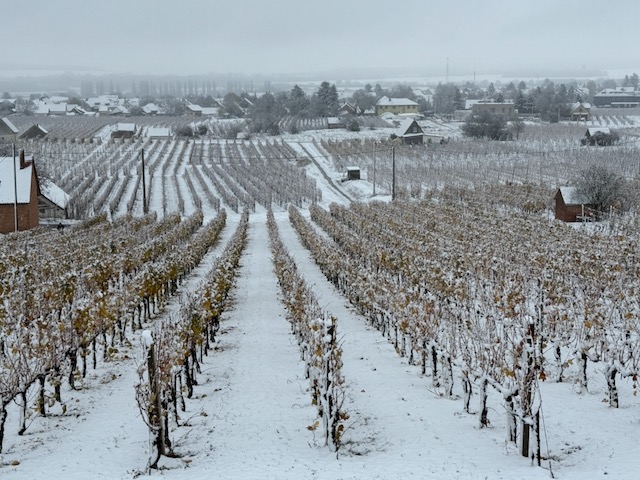
Hidden in Hungary’s deep south lies a tiny village of just 2,000 souls that’s quietly rewriting the rules of world-class wine: V I L L Á N Y. This is where Cabernet Franc reaches utter perfection (many say it’s one of the planet’s greatest terroirs for the grape). Where Bordeaux-style blends are exploding onto the global stage. Where ancient cellars meet concrete eggs, photocatalytic oxygenation, and 30-year-old vintages that taste like liquid history. Few wine regions in Europe deliver the combination of heritage, innovation, and sheer personality that Villány does. During the exclusive VIP tour curated by Villány Borvidék, we were granted rare access to four benchmark producers, each offering a distinct lens on why this small southern Hungarian appellation is producing some of the world’s most compelling Cabernet Francs—and far more. We woke up to a once-in-a-decade winter fairytale — snow blanketing the vineyards — and spent the day spellbound on our tour. Tradition and cutting-edge innovation aren’t clashing here… they’re dancing. My heart was stolen by: ✨ Vylyan – Bold, fruit-driven beauties in a jaw-dropping contemporary winery. Second-gen winemaker Sándor is pure fire and curiosity ✨ Bock – The legendary godfather whose storytelling leaves you utterly charmed. Classic, powerful, soulful reds that demand respect ✨ Csányi – Big but polished to perfection. Elegance in every glass ✨ Gere Attila – The grand patriarch whose stories wrap around you like velvet and won’t let go. Refined, sophisticated, endlessly innovative ✨ Günzer Tamás – Family passion on overdrive & impossible not to love Vylyan Terasz Perched atop the Fekete-hegy with panoramic views across the vineyard quilt, Vylyan is a story of generational evolution. Founded in the early 1990s by a visionary father, the estate is now led by second-generation economist Flóra and her mother, guided since 2017 by winemaker Sándor Montecucco. Creative friction between tradition and modernity is palpable—and highly productive. Vylyan has always treated wine as a form of art and the label as its canvas. From the very beginning, the winery collaborated with prominent contemporary Hungarian artists (especially István ef Zámbó, Oszkár Papp, and others from the neo-avant-garde circle), turning every bottle into a small, collectible piece of art. They are a manifesto of the winery’s values—biodiversity, feminine energy, lunar rhythm, playful duality of devil and angel, and the fusion of fine wine with contemporary Hungarian art. Signature tasting notes: The marriage of contemporary art (textured, braille-like labels) and cutting-edge winemaking makes Vylyan a must-visit for anyone seeking the new face of Villány. Bock Winery There are cellars, and then there is Bock’s underground cathedral. József Bock senior carved these tunnels out of the limestone with his own hands in the 1970s, and the oldest sections have remained untouched since the early 1990s. Black mold carpets every surface like velvet; the air is thick, cool, and sacred. Bottles from the very first private vintages lie quietly under decades of noble rot—no temperature control, no interference, just time. Standing there in candlelight among those silent rows is the closest most of us will ever come to a wine pilgrimage. We were privileged to taste two museum treasures pulled straight from that living archive: Then came the magic above ground. We gathered around a long wooden communal table that felt like it had hosted a thousand family feasts. On a crisp, chilly winter day, József junior welcomed us like long-lost cousins. Sparkling wines flowed: the creamy Chardonnay Blanc de Blancs 2020, the razor-sharp Bock Marcell Cuvée Brut Nature 2021, and a brand-new Sauvignon Blanc fizz that cut beautifully through velvety roasted-pumpkin soup. The soul-warming main course—slow-roasted pork paired with the majestic Capella 2012 (deep, harmonious, still climbing)—had everyone groaning with happiness. Between courses, József told stories: tales of playing in the vineyards as a child, of digging those cellars alongside his father and the wines that his wife loves. His eyes sparkled with pride, yet his voice stayed gentle and humble. You couldn’t help but fall a little in love with the man and the place. Csányi Winery (Teleki Cellars) One of Hungary’s largest and most forward-thinking private producers, Csányi has quietly transformed the historic Teleki estate into a powerhouse of precision and varietal expression. While most estates lean on tradition, Csányi straps satellites to the sky to spy on every vine, plants with computer-guided precision, and throws daring curveballs like Malbec, Grüner Veltliner, and a wickedly fresh Syrah rosé into the heart of red-wine country to deep inside the wine cellar, photocatalytic oxidation (PCO) works like invisible magic: powerful UV light strikes a titanium-dioxide catalyst, instantly transforming mold spores, bacteria, unwanted odor to clean air, zero chemicals, perfect peace for sleeping barrels. Fresh from a multimillion-forint glow-up, their gleaming new winery hums with cutting-edge gear, yet the soul still traces back to 19th-century legend Zsigmond Teleki. László Romsics, CEO, along with head winemaker guided us through the tasting and philosophy of the winery. The tasting was electric: Csányi proves that scale and soul can coexist beautifully. Gere Attila If Villány has a spiritual home of elegance, it is here, in the low-lit barrel hall of Gere Attila, where time seems to slow the moment you step inside. Attila Gere doesn’t just pour wine; he tells its life story. With a voice like aged velvet and eyes that spark every time a barrel is tapped, he pulls samples of 2023 and 2024 Cabernet Franc that are still raw, electric, and singing with red-berry precision. Then comes the 2025 Merlot–Franc blend still fermenting, wild and silk-promised. He speaks of each one as if introducing his children: “This one will be bold, this one quiet, but all of them must speak with their own fruit first.” Oak, he insists with a gentle smile, is only the frame; the picture has to be the vineyard. Between barrels he drifts into tales: the first vines he planted with his father, the 1991 harvest that almost broke them, the night in 2008 he set aside a single barrel of
Why Villány Is a Home for Cabernet Franc
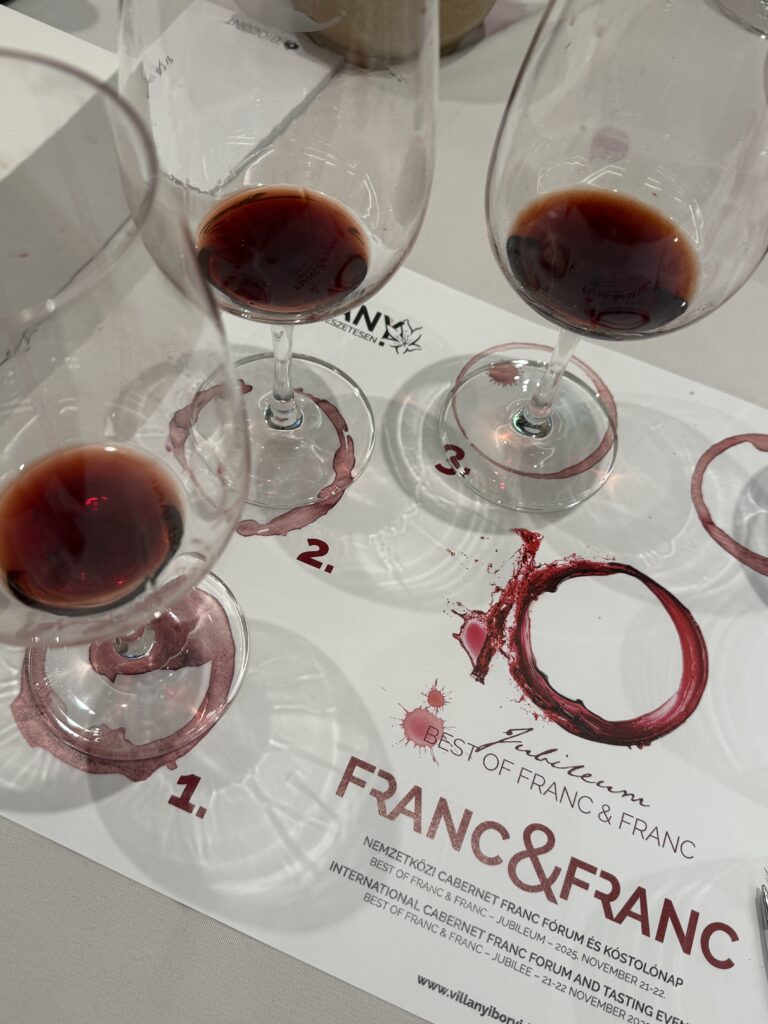
Cabernet Franc didn’t just stumble into Villány and strike gold—it found a terroir that feels tailor-made for its finest qualities. Hungary’s southernmost wine region sits at the same latitude as northern Bordeaux, yet enjoys a warmer, more continental climate. With 2,100–2,200 hours of sunshine a year (among the highest in the country) and long, dry autumns, Villány reliably delivers full physiological ripeness without sacrificing acidity. In cooler climates, Cabernet Franc can turn lean, herbal, and aggressively pyrazinic. Here, it unfurls dense blue and black fruit—cassis, blueberry, black cherry—along with pronounced violet notes and that signature cracked-pepper and tobacco-leaf spice, all wrapped in vibrant freshness. The soils are the clincher. The finest sites, particularly the Siklós and Fekete-hegy slopes, rest on thick Eocene limestone capped with loess and red clay. The active calcium in the limestone promotes refined, polymerised tannins and superb drainage, forcing vines to root deeply (often 6–10 metres) in search of water. Yields stay naturally low—rarely exceeding 35–45 hl/ha in top parcels—and the small berries deliver intense colour, firm yet silky tannic structure, and explosive aromatics. A pronounced diurnal shift locks in the magic: September days can climb to 28–30 °C, while nights drop to 10–14 °C, preserving malic acid and perfume. The surrounding hills shield vines from cold northern winds, and morning fog rolling in from the Drava River valley gently extends hang-time. Hungarian growers didn’t leave it to chance. From the early 1990s, pioneers such as Attila Gere and József Bock planted top-quality Loire and Bordeaux clones on devigorating rootstocks. Meticulous canopy management—vertical shoot positioning, aggressive morning-side leaf thinning, and green harvesting—has become standard at the best estates, pushing concentration while keeping alcohols in an elegant 13–14 % range. Furthermore, to cement its reputation, Villány implemented one of Europe’s most stringent protected-origin systems and established the Villányi Franc designation—a category reserved exclusively for varietal Cabernet Franc and Cabernet Franc-based blends that meet exacting production criteria. Within this framework, two upper tiers were created: These designations are far more than marketing labels; they represent a deliberate shift toward a refined, terroir-expressive style. To qualify, yields are strictly limited, only the region’s top vineyard sites are eligible, and the wines must exhibit balanced alcohol levels (typically 13–14 %), bright natural acidity, finely polymerised tannins, and a clear imprint of Villány’s limestone-driven minerality. Heavy extraction, excessive oak influence, and overripeness are effectively excluded by regulation. The objective to move beyond the powerful, internationally influenced reds that characterized the post-communist era and to establish a distinctive, elegant, and age-worthy Villány signature—one capable of standing alongside the finest examples from the Loire Valley and Bordeaux’s Right Bank. The Franc & Franc Jubilee Conference: A Decade of Leadership The Franc & Franc Jubilee Conference opened in Villány with electric energy, marking ten years of the region’s rise as a global beacon for Cabernet Franc. Before the official conference kicked off, international guests were treated to an exclusive, intimate preview tasting that felt like sneaking into the cellar after hours. This wasn’t just a polite welcome pour—it was a full-on seduction showcasing Villány’s broader brilliance beyond its beloved Cabernet Franc. We dove into a dazzling line-up: The opening tasting set the tone: a curated flight of twelve benchmark Hungarian wines—two Classics, six Premium, and four Super Premium selections—showcasing the extraordinary depth, precision, and consistency Villány has achieved with the variety. Day one began with heartfelt words from the pioneers themselves, József Bock and Attila Gere. What moved me most was the turnout: fully 80 % of Villány’s producers were present—an extraordinary show of unity and regional passion. In an industry often defined by fierce individualism, this near-total community mobilisation revealed a rare spirit of collaboration and shared ambition. The symposium sessions were every bit as compelling as the wines. “Unity in Diversity” explored how Villány’s mosaic of terroirs produces strikingly different yet unmistakably related expressions. A deep dive into the impact of skin-contact duration illuminated its profound influence on flavour, colour, and structure. We then travelled the globe—from the Loire to Tuscany (presented by Pasi Ketolainen MW, South Africa (presented by South African winemaker Reino Thiart), Argentina, Chile, and the United States (presented by Peter McCombie MW) —marvelling at Cabernet Franc’s astonishing versatility. A special tasting of Villány through the decades as we journeyed from 2015, 2009 and 2006. Each one had its own identity, freshness and expressed the true refinement of Cab Franc. Villány is not just part of the Cabernet Franc conversation – it is helping define its future. Ten years on, Franc & Franc has evolved from a regional celebration into the world’s premier annual gathering for serious Cabernet Franc lovers and professionals. This community isn’t just riding the wave; they’re steering it. My heartfelt thank you to Andras Horkay & the organizers for this unforgettable journey through unity in diversity and to the new connections made The next decade promises to be exhilarating. If you love Cabernet Franc, book your ticket to Villány now. You won’t just taste great wine—you’ll witness a revolution in the making. Welcome Dinner – Sauska 48 Hungary’s only Michelin-starred restaurant outside Budapest, tucked inside the breathtaking Sauska estate overlooking the moonlit vineyards. Sleek architecture, warm lighting, and an open style kitchen that treats local ingredients like royalty. The evening was a dazzling collaboration between two of the country’s most visionary producers: Sauska and Heumann. Sauska is the restless perfectionist who decided Hungary’s two greatest wine regions deserved the same uncompromising vision. Christian Sauska began in 1999 by resurrecting forgotten volcanic slopes in Tokaj, turning them into benchmarks for crystalline dry Furmint and legendary Aszú. In 2007 he crossed the country to Villány, built a gravity-flow masterpiece on limestone ridges, and started crafting reds that instantly stood shoulder-to-shoulder with the region’s icons. Today he farms 120 hectares split evenly between Tokaj’s electric whites and Villány’s dark, spicy reds—obsessively low yields, zero compromise, pure terroir in every bottle. Whether it’s a Furmint that crackles with minerality, a velvet Villány Cabernet Franc, or a 20-year-old Aszú
Lugana’s Lingering Sips
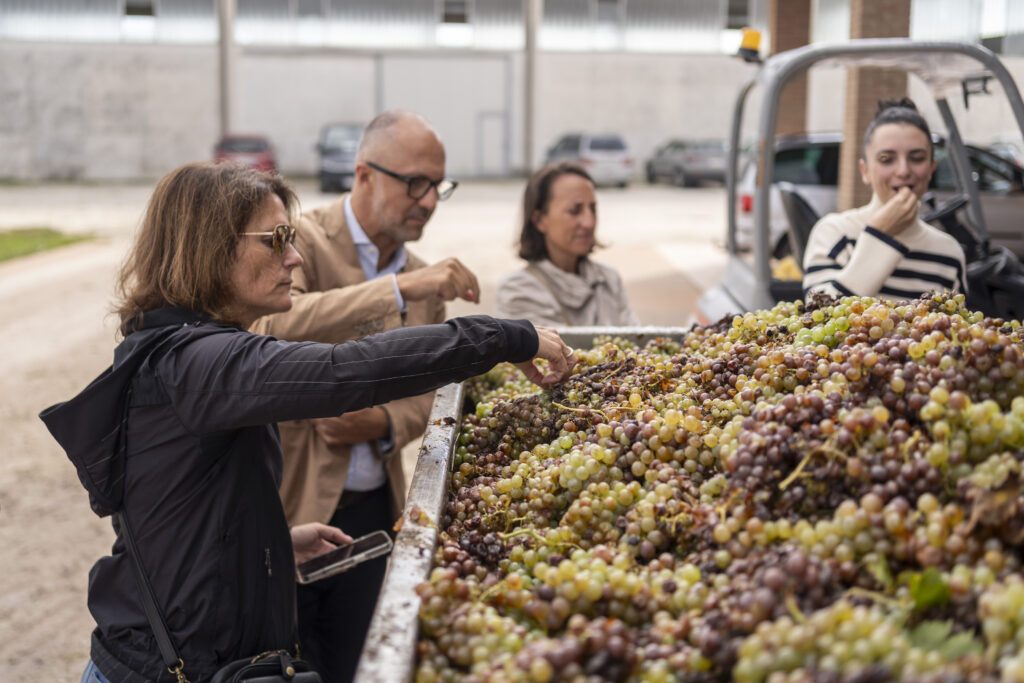
The final morning climbed poetic heights at the Tower of San Martino, a 74-meter Neo-Gothic spire erected in 1878 atop the hill where the 1859 Battle of Solferino raged – a bloody pivot in Italy’s Risorgimento that inspired the Red Cross. Ascending its spiraling ramp, frescoed panels by Venetian masters like Vittorio Bressanin unfolded tales of valor, the ossuary below a somber nod to 2,000 fallen souls. From the summit, Lugana’s patchwork vineyards unfurled like a green quilt, Lake Garda a sapphire thread binding it all. It’s a site that stirs the soul, reminding us wine’s roots tangle with history’s thorns. We descended to Corte Sermana for lunch, a boutique “Clos” vineyard since 2009, named for the stream marking Veneto-Lombardy lines. Brothers Nicolò and Filippo (third-gen growers) shared their 5-hectare plot’s secrets: white clays laced with calcium carbonate, yielding Turbiana of “remarkable finesse and mineral energy.” Corte Sermana sits right in the heart of the Lugana DOC, on the southern shore of Lake Garda in northern Italy. Tucked into a breathtaking corner just 15 metres from the water’s edge, the estate is cradled between the lake itself and the Sermana stream – the natural boundary between Veneto and Lombardy. This extraordinary position gifts the vines cool, breezy summer nights and ancient, mineral-rich glacial soils dominated by white clay and calcium carbonate – the ideal playground for the native Turbiana grape that gives Lugana its unmistakable soul. Filippo Bottacini greets us at the cellar door with the easy smile of someone who has just come in from the vines. At barely thirty-something, he already carries the calm authority of a man who trusts time more than trends. “People always ask me why we harvest so early for the sparkling base,” he says, pouring a crystal-clear 2025 vintage that won’t see bottle until next spring. “Simple. I want the wine to taste like the lake in September – cool, electric, alive.” The glass explodes with white flowers, sea breeze, and that unmistakable flinty mineral streak that only seems to appear when vineyards sit a few hundred meters from water. At 11.4% alcohol and a racy 7.6 g/L acidity, it feels like drinking a cold wave. Filippo swirls and smiles: “This is the freshness we fight for. Everything else – the yeast, the lees stirring, the three years we’ll give it – is just to protect that first electric impression.” We move to the tank room, where the full-harvest still wines rest. The difference is immediate. Where the sparkling base is all nerve and brightness, these lots (harvested just a week or two later) have already begun their slow transformation into something richer, rounder, almost velvety. “Same vineyard, same Turbiana grapes, six days apart,” Filippo shrugs, as if the miracle is the most natural thing in the world. He’s divided the estate into six blocks – some running north-south, others east-west – to capture every possible nuance of ripeness. “Machine harvesting used to be a dirty word around here,” he admits. “But we proved that with the right heads and soft pressing, you actually get cleaner aromatics. The skins break gently, the vegetable notes never appear, and suddenly the white flowers and exotic fruit arrive like they’ve been waiting for permission.” What strikes me most is the patience. While most Lugana producers rush wines to market, Corte Sermana refuses to bottle anything young. The sparkling wines get a full year on lees before even the second fermentation begins. The flagship white – a kaleidoscopic creature Filippo calls Kromago (chrom + lago = colors of the lake) – spends eight months in bottle before release and, he insists, only starts showing its true self after three or four years. “This is why we don’t put the year on the sparkling,” Filippo says. “I want people to taste the wine, not the label. In ten years these bottles will taste completely different again – that’s the point.” Lunch is served! There are bowls of bright salads, platters of house-cured lonza, coppa, and pancetta rolled so thin you can almost see Garda through it. An array of local cheeses and warm focaccia just out of the oven. And, because this is Corte Sermana, nine bottles standing like soldiers, waiting to be opened in ceremony. Filippo pours. We begin. We ended the meal with their Grappa di Lugana is gentle, almost creamy, with a clean almond finish paired with the authentic torcetti del Lago – the proper Lugana “cookie” for grappa. Eventually Filippo says quietly: “This is what the vineyard tastes like when it’s happy.” I believe him. And somewhere in my luggage, wrapped in two sweaters and a prayer, a bottle of 2015 Cromalgo is already dreaming of the next decade. Nestled on the southern shore of Lake Garda, in the heart of the Lugana DOC, stands Cà LoJera – “House of the Wolf” in local dialect. This small, fiercely independent estate is now in its third generation and feels more like a secret than a winery. The story begins in the early 1970s when Amalia and Pietro Tiraboschi planted the first vines. Today their son Franco and his wife Marta run every inch of the 16 hectares with their own hands and a stubborn refusal to compromise. No barrique, no selected yeasts, no rush – just old-vine Turbiana and that magical white clay soil that looks like you scooped it straight from the lake bed. Franco Tiraboschi is the winemaker, the philosopher, and the quiet guardian of all this magic. When you taste his wines – especially the immortal Riserva del Lupo – you’re tasting purity, patience, and absolute respect for Turbiana and that white clay. The name itself is pure legend. Centuries ago this farmhouse hid lake smugglers – the lupi (wolves) who moved contraband under moonlight. The ancient name of the land? Loyate – “House of the World”. Combine the two and you get Cà LoJera: the wolf’s den that opens its doors to the world. You’ll see the old house, the
Lugana Dreaming – Parte 2
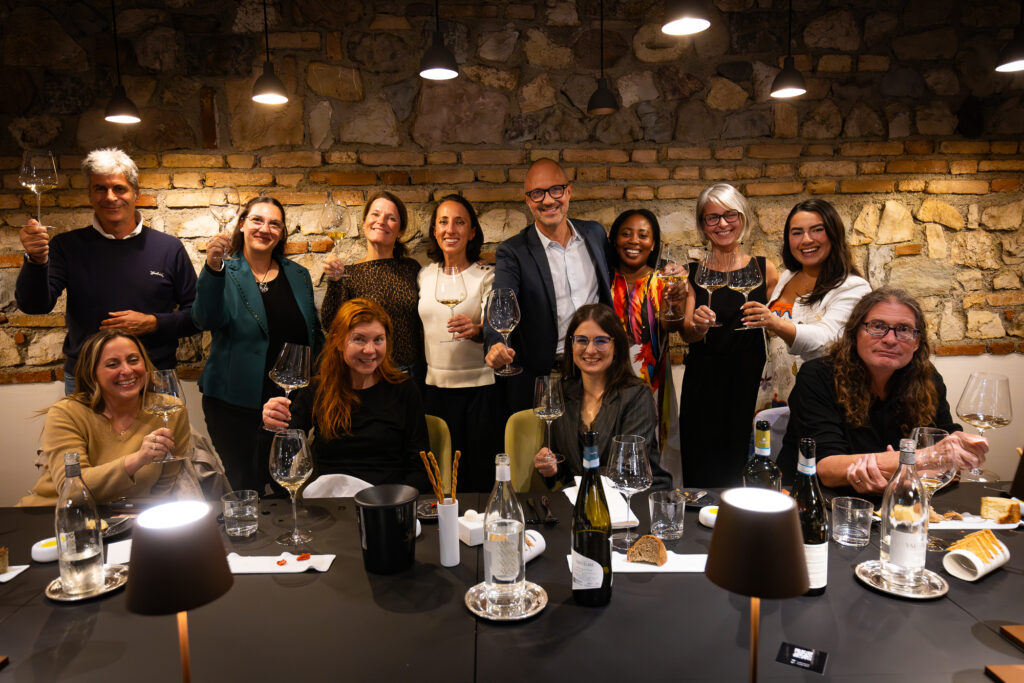
The day began the way every perfect Italian evening should: with a boat. We met at Desenzano del Garda’s graceful port as the sun was beginning its slow descent, turning the water into liquid gold. A restored wooden riva – sleek, varnished mahogany glowing in the light – waited for us. The moment the lines were cast off, the world softened. We cruised north along the southern shore of Italy’s largest lake, past quiet bays and pastel villages, the breeze carrying the faint scent of fig trees and distant grills. Twenty magical minutes later, the fairy-tale silhouette of Sirmione rose from the water: the 13th-century Scaligero Castle, moat aglow, drawbridge silhouetted against the sky. The captain eased us straight through the castle’s watery entrance – an approach that still feels like slipping into another century – and tied up inside the historic center. From there it was a short, cypress-lined walk to the Grotte di Catullo. Perched at the very tip of the peninsula, these sprawling ruins of a 1st-century BC Roman villa are among northern Italy’s most evocative archaeological sites. Olive trees now shade fallen columns, wild caper bushes cling to ancient walls, and the views stretch across the endless lake to the Alps. Legend (though not history) links the villa to the poet Catullus, who called Sirmione “the pearl of all peninsulas.” Standing on the sun-warmed stones as the light faded, it was impossible not to feel the same enchantment two thousand years later. By the time we wandered back through the lantern-lit lanes, twilight had settled and anticipation was high. La Rucola 2.0 – the intimate, one-Michelin-starred jewel hidden just steps from the castle – opened its doors to our small group like an old friend. Inside, the stage was set for something extraordinary: a seven-course tasting menu created by chef Stefano Dall’Ospedale, our seven course meal including a fish from the region ineach dish expressly designed to converse with the Lugana wines of Sirmione’s finest producers. Nestled on the southern shore of Lake Garda, the tiny sub-region of Sirmione within the Lugana DOC stands out for its strikingly compact size and distinctive terroir. Home to just nine wineries, this narrow peninsula benefits from dense, heavy clay soils—often white or grayish in color—that retain water and impart remarkable structure and minerality to the wines. These calcium-rich clays, formed from ancient morainic deposits, give Sirmione’s Turbiana grapes a fuller body and pronounced savory character compared to the sandier, more perfumed expressions found further north in the appellation, making its limited-production Luganas some of the most powerful and age-worthy in the entire zone. Around the long table sat the people who make the magic happen: Chiara Perego (oenologue of Azienda Agricola Sgreva), Sara Salgaro of Tenuta Frontelago, Nunzio Ghiraldi himself, and Eliza Zordan from Cascina Maddalena, who moderated the evening with warmth and precision. Every time a new bottle was opened, the maker told the story behind the wine, and guided us through the glass while the perfectly timed course arrived. With every course, the room grew livelier. Stories of grandfathers planting the first vines, of siblings sketching labels at the kitchen table, of horses galloping between rows, of brain waves translated into art – each tale deepened the flavour in the glass. When we finally stepped back into the cool night air, the castle lights shimmering on the water and the lake lapping gently at the ancient walls, no one spoke for a long time. Some evenings feed the body. This one fed the soul. Sirmione, with its Roman ghosts, thermal springs, white-clay vineyards, and nine fiercely proud winemaking families, had worked its quiet spell once again.
Lugana Dreaming – Parte I:
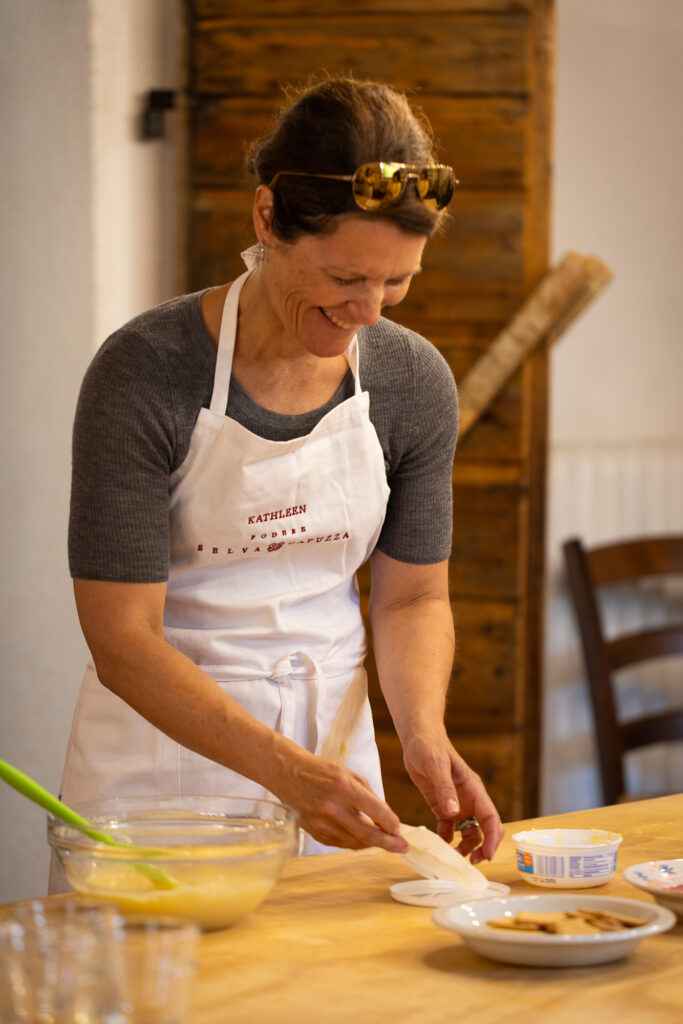
From the Arches of Tenuta Roveglia to the Circle of Time at Selva Capuzza After a night wrapped in the soft hush of Desenzano del Garda, the morning light pulled us south along quiet country roads to Pozzolengo and Tenuta Roveglia – 120 hectares of vines, stories, and famously stubborn clay that have been making wine since the early 1400s. The estate was reborn in the early 1900s by Swiss immigrant Federico Zweifel, but today it is the three Azzone sisters – Sara, Vanessa, and the irrepressible Babettli – who are writing the most vibrant chapter yet. From the moment Babettli greets you with that knowing smile, you feel like you’ve been let in on a wonderful secret. Within minutes she quotes her father’s lifelong creed: “We need to promote the dream – Lugana – and not the winery.” He used to pedal from trattoria to trattoria with sample bottles strapped to his bicycle until the world finally sat up and listened. That same generous, collaborative spirit still pulses through every corner of Roveglia. It’s impossible to miss. Step into the foyer and you’re immediately enveloped by the “family wall” – a sprawling, joyful collage not just of the three sisters, but of every facet of the team – the office, the tractor driver, the seasonal picker, every cellar hand who has ever worked a harvest here. “They are Roveglia,” Babettli says, tapping a faded photo of a man who started at fourteen. “We don’t separate blood from chosen family.” Babettli herself is a whirlwind of passions. Trained as an HR specialist, she’s also a self-taught architect and an obsessive collector of antique telephones. Her office feels like a tiny museum of Bakelite rotaries and candy-apple-red Ericofons. “Each one has its own voice,” she murmurs, cradling a 1930s Siemens like a baby bird, “exactly like old vines.” That love of distinctive voices brought us straight out to the vineyard. She scoops up a fistful of the heavy white clay. “Wet, it’s glue. Dry, it’s stone.” Fifty-five-year-old roots barely reach five metres deep, spreading instead in a desperate spiderweb just to survive. “Survival mode,” she grins, “makes the wine more interesting.” All that character needed a worthy home, so Babettli designed one. To reach the new tasting room you descend a stone staircase behind a monumental door of reclaimed wood and iron – every plank salvaged from centuries-old barns and presses. “Nothing here is wasted,” she whispers, pushing it open like a secret. What waits below is pure, breath-stealing magic: a six-metre-deep golden cathedral of hand-built brick arches, no two alike, each curve sketched by Babettli herself and shaped by eye to carry the exact weight above. Hidden lights make the rosy terracotta glow, and the cool air is thick with the scent of earth and sleeping wine. Yet the true soul of the estate lives upstairs in the 16th-century Cascina Roveglia farmhouse. Thick limestone-and-clay walls – the very same moraine that gives Lugana its mineral snap – keep it cool in summer and cosy in winter. Ancient chestnut beams that once held grain now frame intimate tastings; pink Veronese rose marble floors shimmer beneath humble arches originally built for oxen, not ostentation. The former stable has become the coziest tasting room imaginable: a scarred oak table, a fireplace blackened by five centuries of smoke, family photos watching over us, and the low hum of sleek steel tanks just next door. At one point Babettli disappears for a moment and returns cradling their very first commercial vintage – 1989 – one of only twelve bottles left in the world. And then, beneath those glowing arches, the wines spoke for themselves. – Lugana Spumante Brut: A silver river of pinpoint bubbles carrying crisp green apple, spring flowers, and warm brioche. Dry, electric, celebratory. – Limne Lugana DOC: So pale it flashes green at the rim. Lime blossom, white peach fuzz, wet river stones – pure Garda breeze in a glass. – Vigne di Filiberto Lugana DOC: Ripe yellow plum, roasted almond, a twist of lemon confit, and a saline snap that makes your mouth water again and again. – Riserva Vigne di Catullo Lugana DOC 2012 – Cork vs Screwcap: Deep, luminous gold. The nose explodes: candied orange, acacia honey, toasted hazelnut, smoky minerals. Velvety, almost chewy, then a blade of acidity lifts ginger biscuit and sea salt into an endless, resonant finish. The cork bottle was tired and mushroomy; the screw-cap version still singing with lemon peel and almond blossom. “Dad made the switch in 2007,” she laughs. “Everyone thought he was crazy. Sales tripled the next year.” – Bonus: 2021 Late-Harvest VT : Golden like November sun, swirling with candied ginger, toasted walnut, and river-stone freshness. 14 g/L of honeyed sweetness balanced by acidity so bright your jaw tingles. “A me-wine,” Babettli declares, a wine that can last an hour. We left Roveglia with hearts full and Babettli’s parting words ringing in our ears: “Now go taste the other side of the dream.” So we pointed the car just a few kilometres east, toward the hills of San Martino della Battaglia and Podere Selva Capuzza – another family, another century-old cascina, another unforgettable chapter of Lugana waiting to be uncorked. We left Roveglia with hearts full, and Babettli’s parting words ringing in our ears: “Now go taste the other side of the dream.” So we pointed the car just a few kilometres east, toward the hills of San Martino della Battaglia and Podere Selva Capuzza – another family, another century-old cascina, another unforgettable chapter of Lugana waiting to be uncorked. We didn’t taste in a cellar or a sleek tasting room – we tasted right where the magic happens, among the vines of the San Biagio vineyard at Podere Selva Capuzza, in the heart of the Lugana DOC on the gentle morainic hills of San Martino del Garda, just a few kilometres south of magnificent Lake Garda itself. Glasses balanced on an old wooden table facing the rows, late-afternoon