
How a simple wine glass opened the door to discovery, connection, and new possibilities at Johnson & Wales University.
Some of the most rewarding moments in my wine journey have little to do with rare vintages or extraordinary bottles.
Instead, they come from the people we meet, the stories we exchange, and those unexpected moments when curiosity opens the door to something new.
My recent visit to Johnson & Wales University was one of those moments.
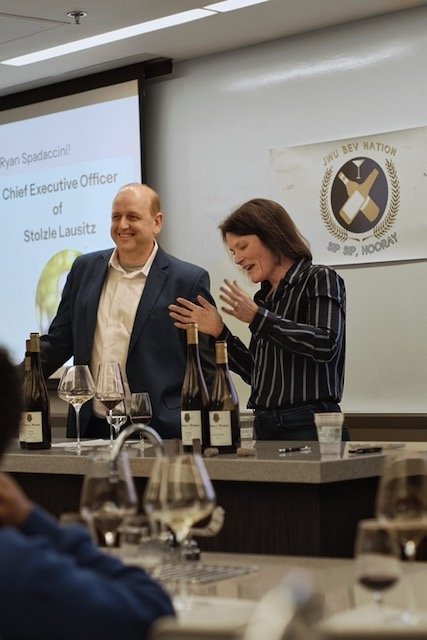
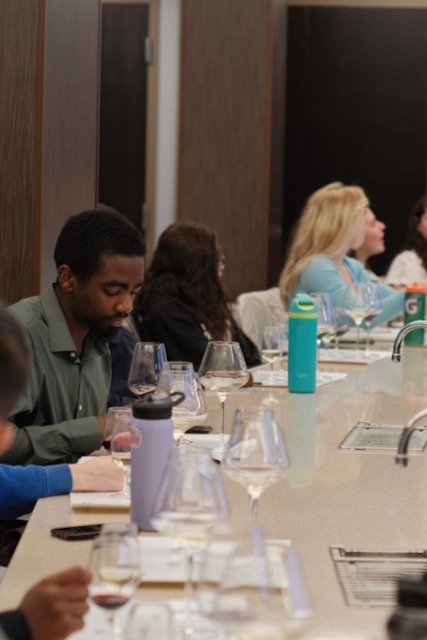
Alongside Ryan Spadaccini, CEO of Stölzle Lausitz USA, I had the pleasure of sharing our knowledge and experiences with the next generation of hospitality professionals. What began as an exploration of glassware became something far more meaningful: a conversation about sensory discovery, the power of curiosity, and the possibilities that await those entering the world of wine and hospitality.
After years of traveling through vineyards, meeting winemakers, and sharing their stories through The Happy Vine, bringing those experiences into a classroom felt especially rewarding.
And it all began with one deceptively simple question.
Why does the glass matter?
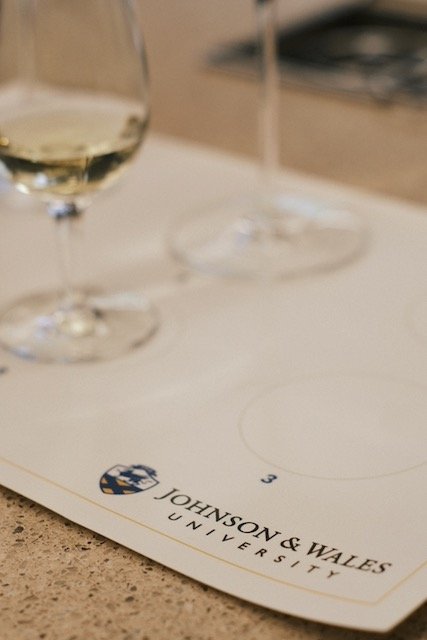
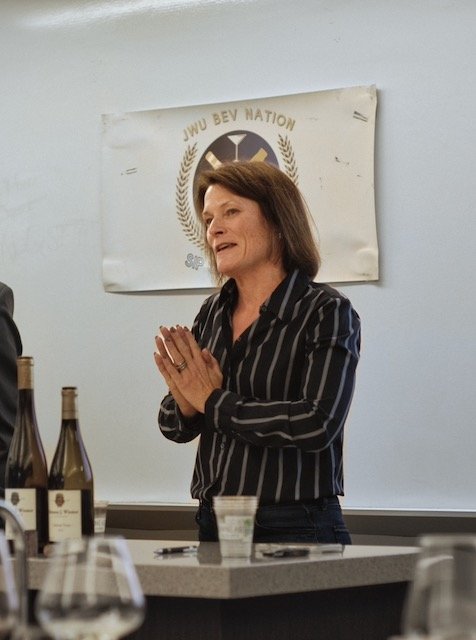
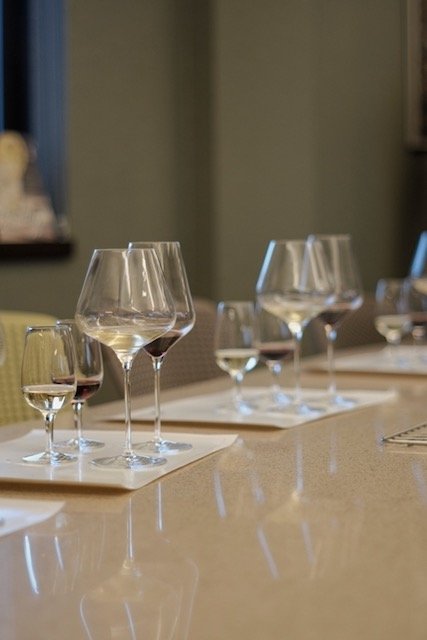
Why the Glass Matters: The Beauty Is in the Details
I often begin my glassware presentations with a confession.
I’m a creature of habit.
Like many of us, I have a favorite coffee mug. The one that feels just right in my hand, with a familiar weight and shape that somehow makes that first sip of morning coffee taste better.
We rarely question why. We simply know the experience feels different.
Wine is much the same.
As wine professionals, we spend countless hours discussing grape varieties, terroir, vintages, and winemaking techniques. Yet one of the final decisions before a wine reaches our lips is often overlooked.
The glass.
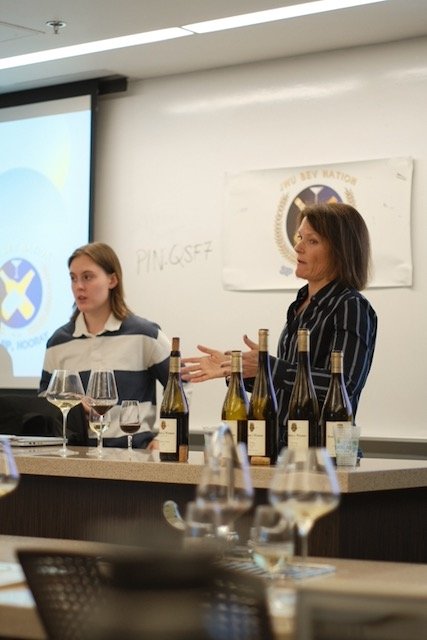
Far more than an aesthetic choice, its shape and design can influence how we experience a wine. During our presentations, Ryan and I explored with the Beverage Appreciation classes the five essential elements: aroma concentration, aeration, temperature, visual evaluation, and mouthfeel.
The bowl influences how aromas collect and reach our nose, while its width affects the wine’s exposure to air. The stem helps preserve serving temperature, and the clarity of the glass reveals color and brilliance. Even the rim can influence our perception of texture, acidity, and tannins.
Small details? Perhaps. But hospitality is built on small details.
Rather than simply explaining these principles, we wanted the students to experience them firsthand.
Because the glass doesn’t change the wine. It reveals more of its story.
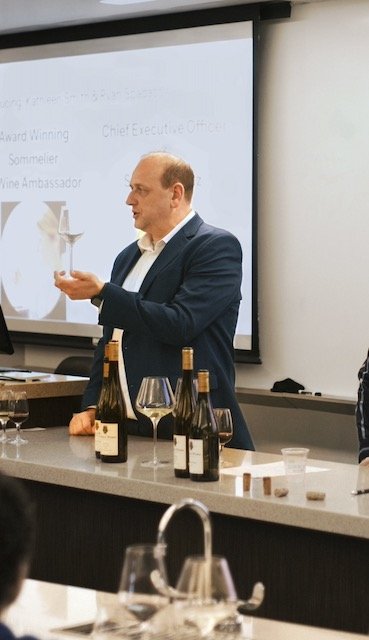
Terroir Through the Glass: One Wine, Two Perspectives
To bring these principles to life, for the BevNation group at JWU, we turned to New York’s Finger Lakes and the wines of Hermann J. Wiemer Vineyard.
Overlooking Seneca Lake, this pioneering estate has helped shape the reputation of cool-climate winemaking in the northeastern United States.
Its founder, Hermann Wiemer, arrived from Germany’s Mosel region in the 1970s with a conviction that European grape varieties could thrive in the Finger Lakes, even when others remained skeptical.
I’ve always loved stories like his. Stories of people who see possibility where others see limitations.
Today, Fred Merwarth and Oskar Bynke continue that legacy, producing wines that reflect the character of their vineyards and the influence of Seneca Lake.
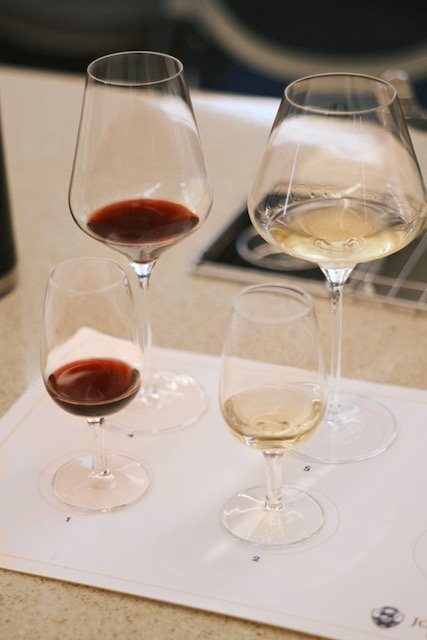
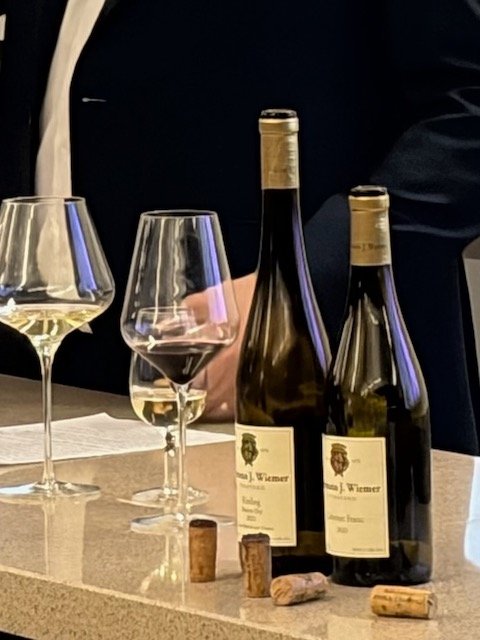
For our interactive tasting, we selected two expressions of the estate: Cabernet Franc 2023 and Reserve Dry Riesling 2023.
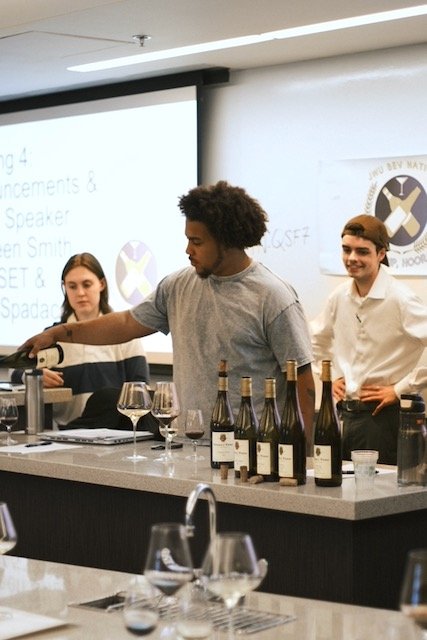
Each wine was poured into two different glasses: a standard ISO tasting glass and a larger Stölzle Lausitz Quatrophil glass.
Same wine. Same bottle. Same pour.
Only the glass changed.
We invited the students to explore without searching for a correct answer. Would the aromas become more expressive? Would the acidity feel sharper or rounder? Could the texture change?
More importantly, what might they discover that they hadn’t noticed before?
That’s when wine education becomes exciting. When curiosity replaces expectation, and we begin trusting our own senses.
Cabernet Franc: Where Fruit Meets Earth
I’ve always appreciated Cabernet Franc for its balance of vibrant fruit, savory complexity, and sense of place.
The Hermann J. Wiemer Cabernet Franc 2023 delivered bright red cherry, raspberry, and subtle herbal notes, with a touch of cracked pepper, lively acidity, and fine tannins.
Moving from the standard ISO glass to the Stölzle Lausitz Quatrophil Red Wine Glass, we explored how its generous bowl might reveal more expressive fruit, soften the perception of tannins, and bring savory nuances into focus.
The beauty of the exercise? There were no right or wrong answers. Just the confidence to trust our senses and discover something new.
Riesling in a Burgundy Glass? Why Not!
Our second wine challenged convention: Hermann J. Wiemer Reserve Dry Riesling 2023, served in a Stölzle Lausitz Quatrophil Burgundy Glass.
Riesling in a Burgundy glass? Absolutely!
With its inviting notes of lemon zest, ripe white peach, and delicate florals, the wine offered a silky texture balanced by vibrant acidity and a lingering mineral finish.
The Burgundy glass’s generous bowl encouraged us to explore another dimension of this rich warm vintag wine, potentially revealing greater aromatic depth and a rounder expression of its texture.
It was a reminder that a wine’s personality matters as much as its grape variety.
Sometimes, the most interesting discoveries happen when we challenge convention.
Beyond the Tasting: The Stories We Pass Forward
While the sensory experience was at the heart of our presentations, what stayed with me most was the opportunity to share a broader perspective on the world of wine and hospitality.
My own journey has taken me through vineyards, wineries, international wine events, journalism, education, and storytelling. And if there’s one thing I’ve learned, it’s that a career in wine rarely follows a straight line.
Wine is agriculture and science, geography and history, culture and craftsmanship. But it’s also communication, entrepreneurship, creativity, and, above all, human connection.
Ryan offered another perspective, sharing his experiences in glassware manufacturing, business leadership, and the many opportunities that exist beyond traditional hospitality roles.
Together, we hoped to encourage the students to imagine possibilities they might not yet have considered.
If even one student left our presentation thinking, I hadn’t considered that possibility before, then our time together meant far more than the wines we poured.
That spirit of sharing extended beyond the classroom through Stölzle Lausitz’s donation of glassware to the university’s student-operated bistro, giving students the opportunity to apply what they’d learned in a real hospitality setting.
Because understanding the influence of glassware shouldn’t end with a presentation. It becomes meaningful through experience: choosing a glass, presenting a wine, and discovering how the smallest details can elevate someone’s enjoyment.
Throughout my journey, I’ve come to appreciate the generosity that exists within the wine world. Sometimes it’s a winemaker opening a special bottle, an invitation to explore a vineyard, or an afternoon spent asking questions in a cellar.
And sometimes it’s simply taking the time to share what you’ve learned with someone just beginning their own journey.
I began this story with a favorite coffee mug, an everyday object that makes a familiar ritual feel a little more special.
A wine glass can do something similar. It can reveal an aroma we might otherwise have missed, a subtle texture, or an unexpected expression of place.
But what I’ll remember most from Johnson & Wales isn’t a particular aroma or tasting note.
It’s the thought of those students carrying what they’ve learned into their own futures, discovering their own paths, and perhaps one day sharing their knowledge with someone else.
The glass may help reveal a wine’s story. But it’s the people who give that story a future.
And that, to me, is what matters most.