Cabernet Franc didn’t just stumble into Villány and strike gold—it found a terroir that feels tailor-made for its finest qualities.
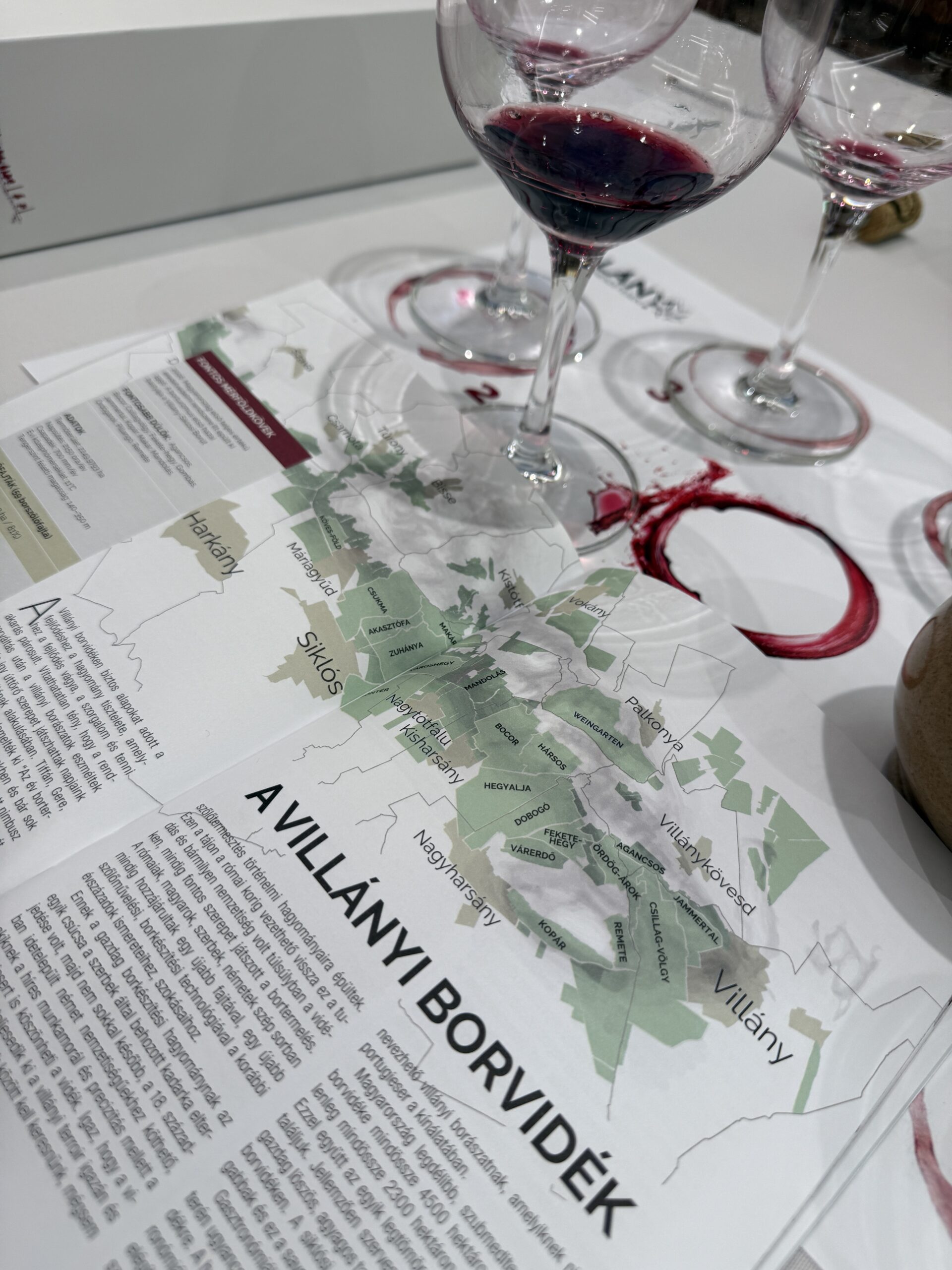
Hungary’s southernmost wine region sits at the same latitude as northern Bordeaux, yet enjoys a warmer, more continental climate. With 2,100–2,200 hours of sunshine a year (among the highest in the country) and long, dry autumns, Villány reliably delivers full physiological ripeness without sacrificing acidity. In cooler climates, Cabernet Franc can turn lean, herbal, and aggressively pyrazinic. Here, it unfurls dense blue and black fruit—cassis, blueberry, black cherry—along with pronounced violet notes and that signature cracked-pepper and tobacco-leaf spice, all wrapped in vibrant freshness.
The soils are the clincher. The finest sites, particularly the Siklós and Fekete-hegy slopes, rest on thick Eocene limestone capped with loess and red clay. The active calcium in the limestone promotes refined, polymerised tannins and superb drainage, forcing vines to root deeply (often 6–10 metres) in search of water. Yields stay naturally low—rarely exceeding 35–45 hl/ha in top parcels—and the small berries deliver intense colour, firm yet silky tannic structure, and explosive aromatics.
A pronounced diurnal shift locks in the magic: September days can climb to 28–30 °C, while nights drop to 10–14 °C, preserving malic acid and perfume. The surrounding hills shield vines from cold northern winds, and morning fog rolling in from the Drava River valley gently extends hang-time.
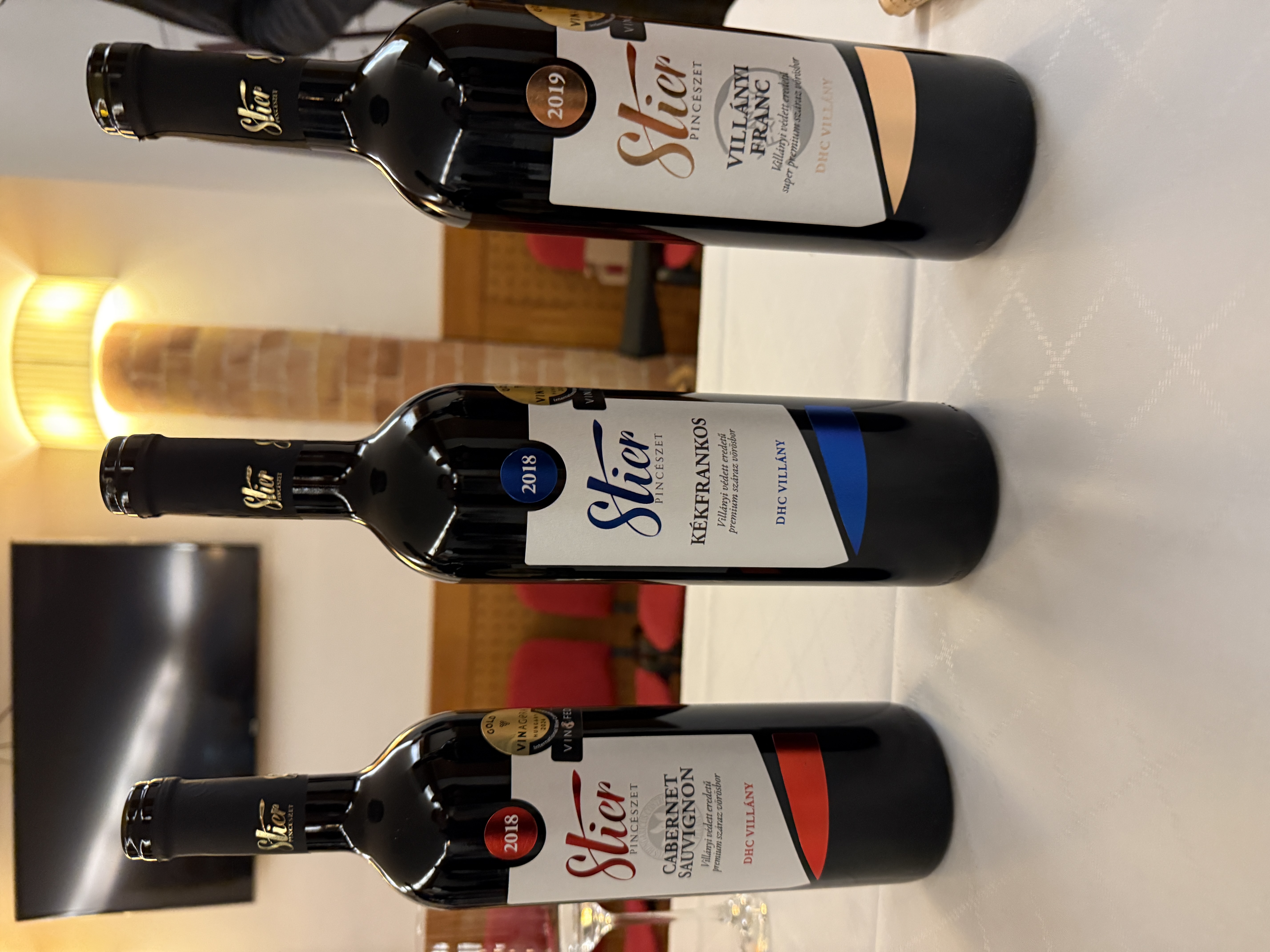
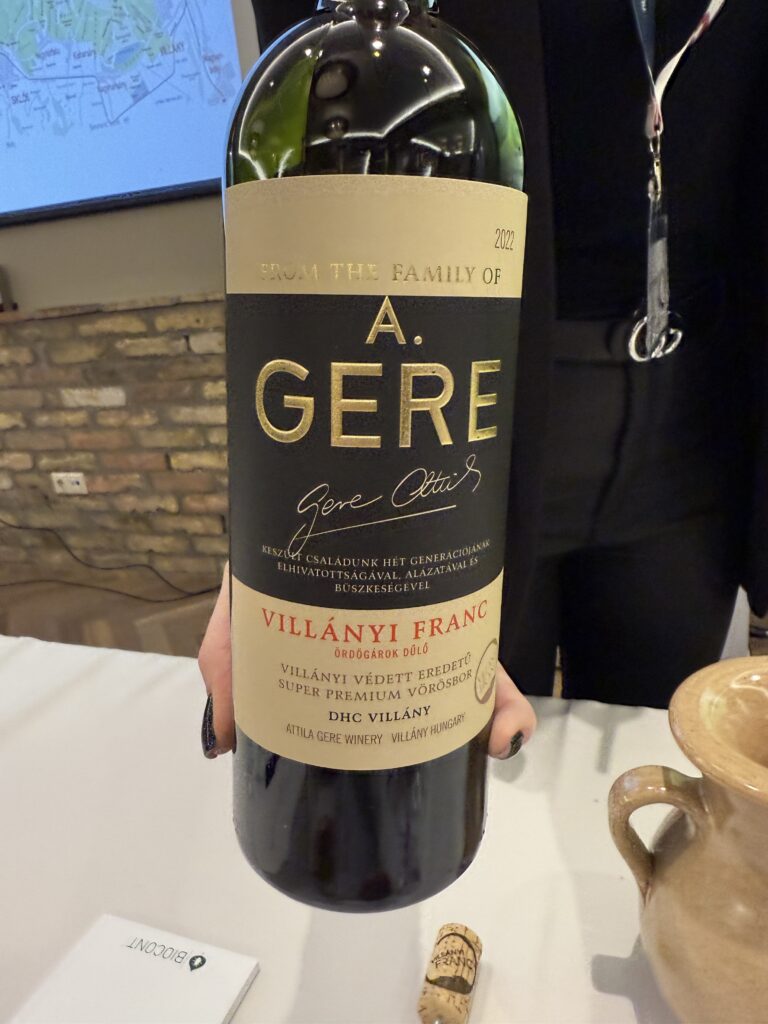
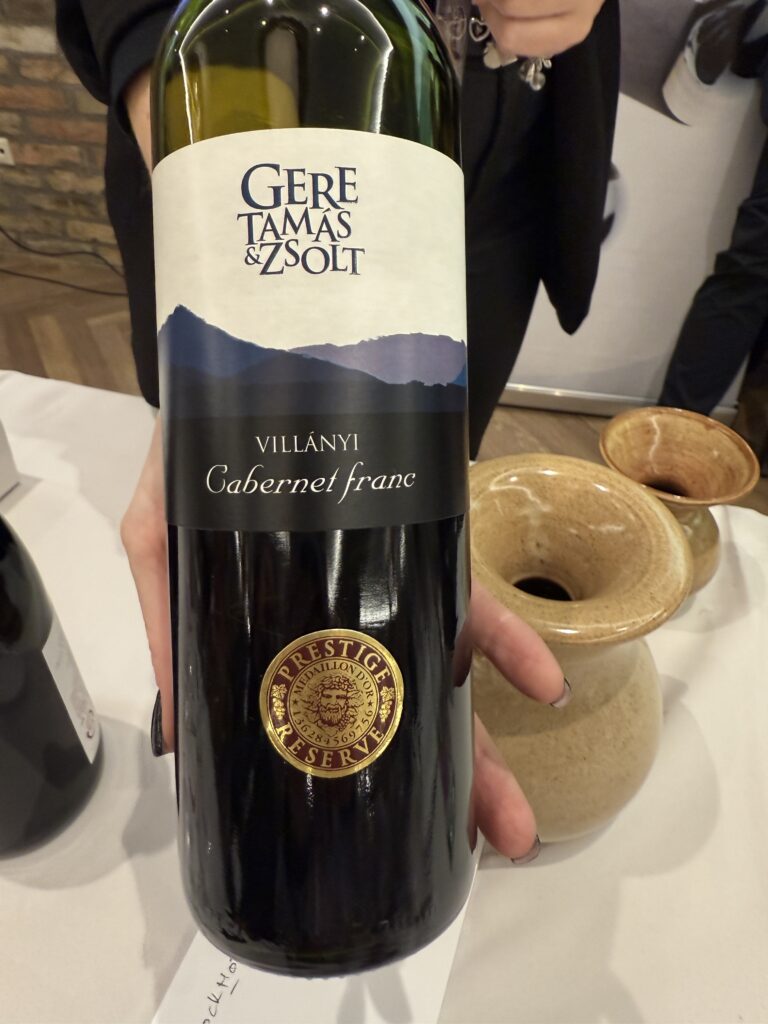
Hungarian growers didn’t leave it to chance. From the early 1990s, pioneers such as Attila Gere and József Bock planted top-quality Loire and Bordeaux clones on devigorating rootstocks. Meticulous canopy management—vertical shoot positioning, aggressive morning-side leaf thinning, and green harvesting—has become standard at the best estates, pushing concentration while keeping alcohols in an elegant 13–14 % range. Furthermore, to cement its reputation, Villány implemented one of Europe’s most stringent protected-origin systems and established the Villányi Franc designation—a category reserved exclusively for varietal Cabernet Franc and Cabernet Franc-based blends that meet exacting production criteria.
Within this framework, two upper tiers were created:
- Villányi Franc Premium
- Villányi Franc Super Premium
These designations are far more than marketing labels; they represent a deliberate shift toward a refined, terroir-expressive style. To qualify, yields are strictly limited, only the region’s top vineyard sites are eligible, and the wines must exhibit balanced alcohol levels (typically 13–14 %), bright natural acidity, finely polymerised tannins, and a clear imprint of Villány’s limestone-driven minerality. Heavy extraction, excessive oak influence, and overripeness are effectively excluded by regulation.
The objective to move beyond the powerful, internationally influenced reds that characterized the post-communist era and to establish a distinctive, elegant, and age-worthy Villány signature—one capable of standing alongside the finest examples from the Loire Valley and Bordeaux’s Right Bank.
The Franc & Franc Jubilee Conference: A Decade of Leadership
The Franc & Franc Jubilee Conference opened in Villány with electric energy, marking ten years of the region’s rise as a global beacon for Cabernet Franc.
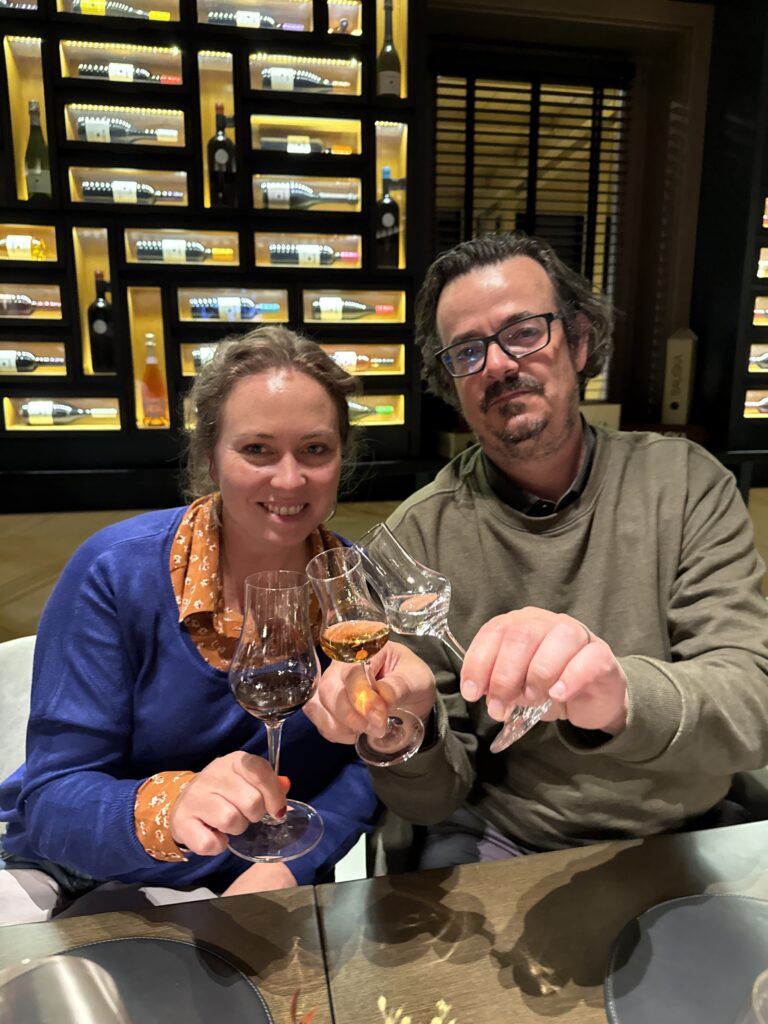
Before the official conference kicked off, international guests were treated to an exclusive, intimate preview tasting that felt like sneaking into the cellar after hours. This wasn’t just a polite welcome pour—it was a full-on seduction showcasing Villány’s broader brilliance beyond its beloved Cabernet Franc.
We dove into a dazzling line-up:
- A thrillingly fresh, cherry-pop carbonic Portugieser from Ruppert that danced on the palate like summer in a glass.
- A leave-you-breathless Syrah from Jackfall that whispered smoke and black pepper and begged for another sip.
- An elegant Blanc de Noirs made from Kékfrankos by Heumann—pale coral in colour, yet packed with wild strawberry and river-stone minerality.
- And then, just to remind everyone the region has serious history, a majestically aged Attila Gere Solus Merlot 2009 that we savored over dinner at the Gere Estate along with the Kopar 2011, Cabernet Franc Selection 2008 and the near extinct Fekete Járdovány 2023—pure swoon material.
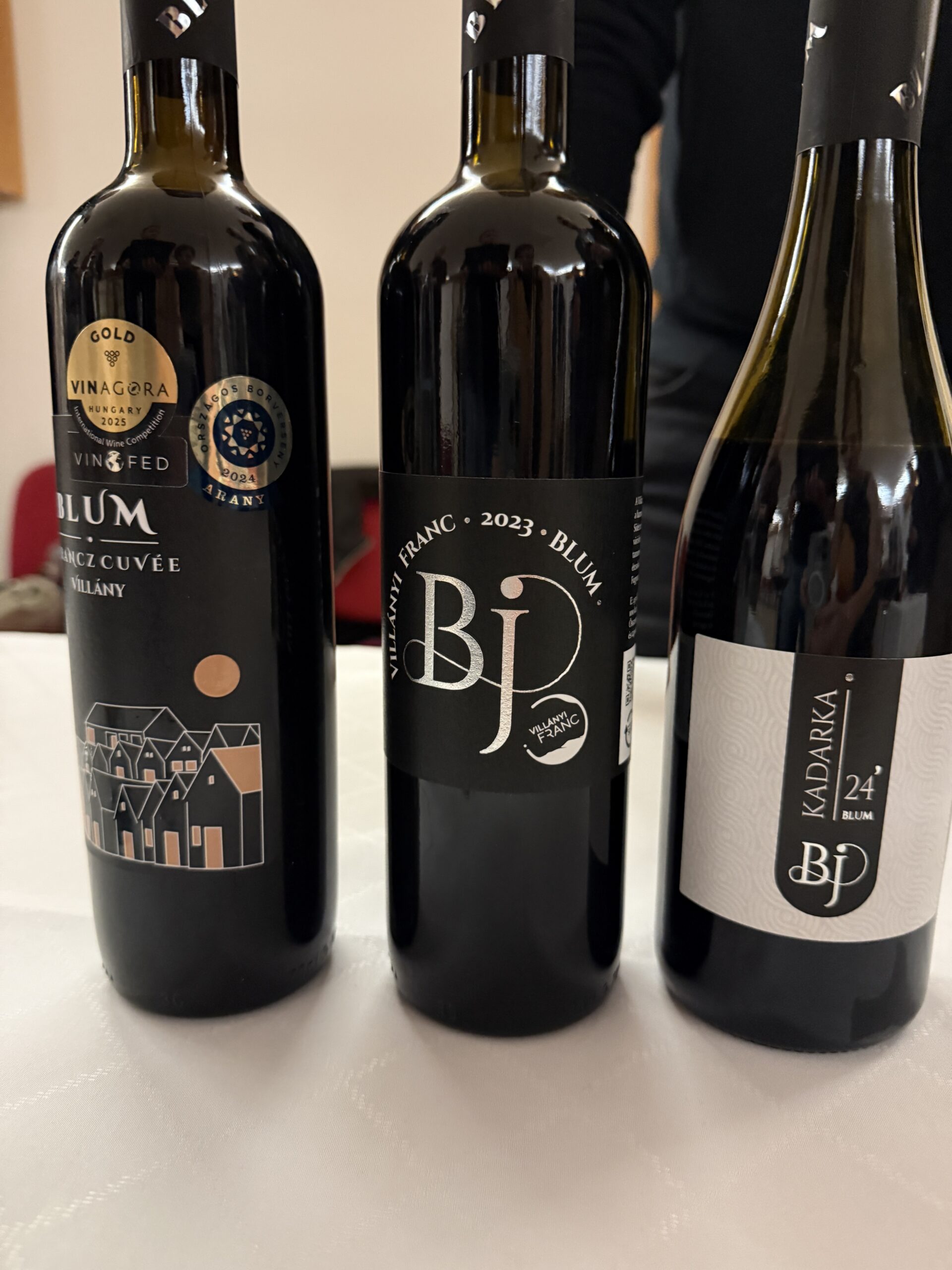
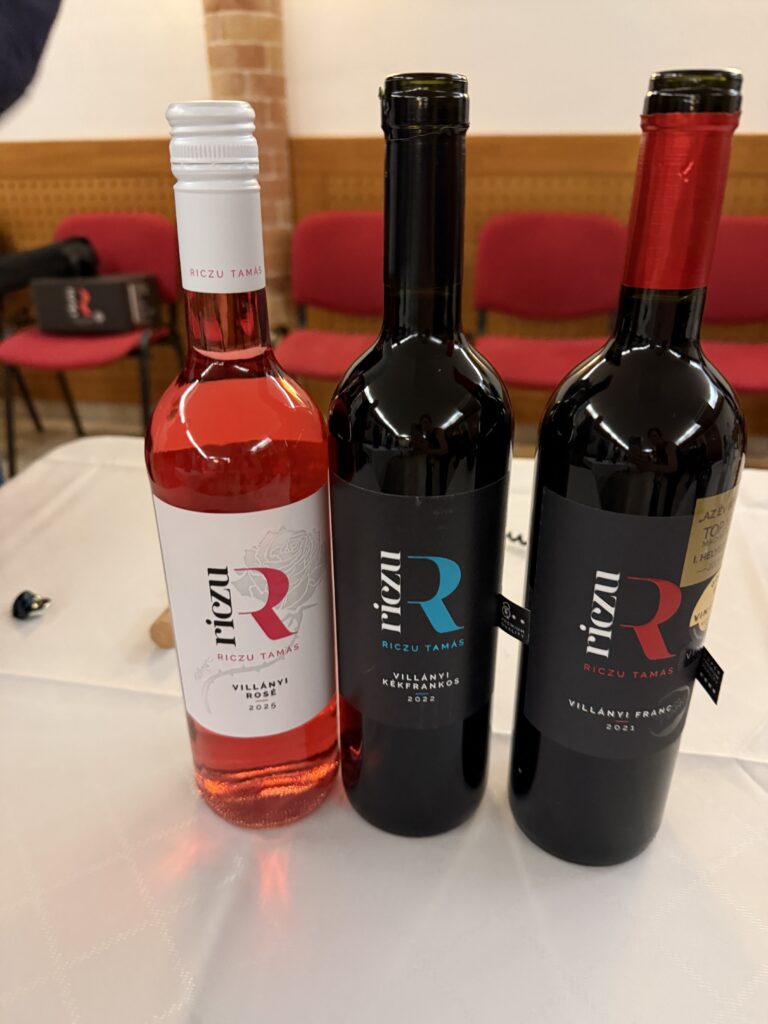
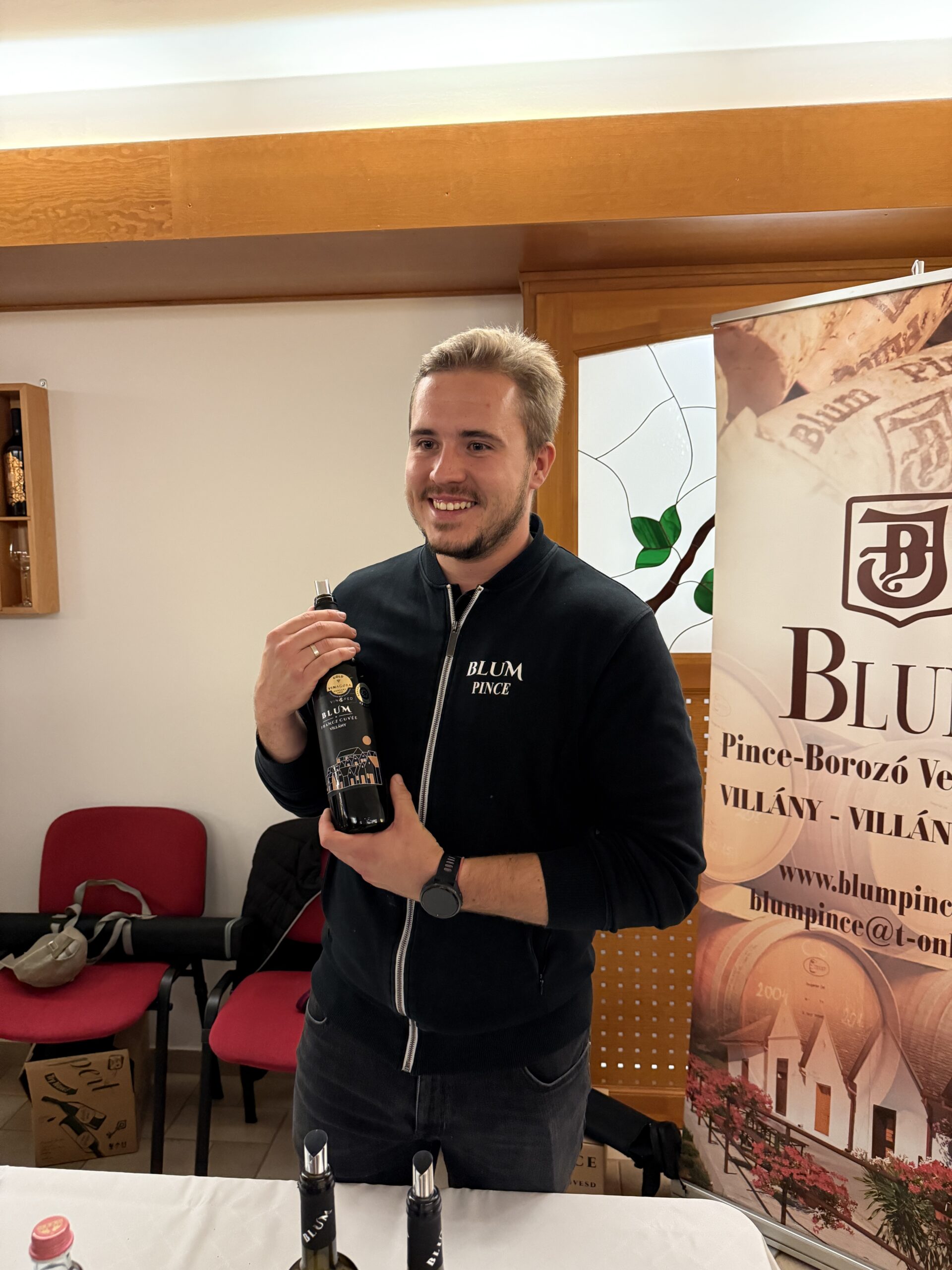
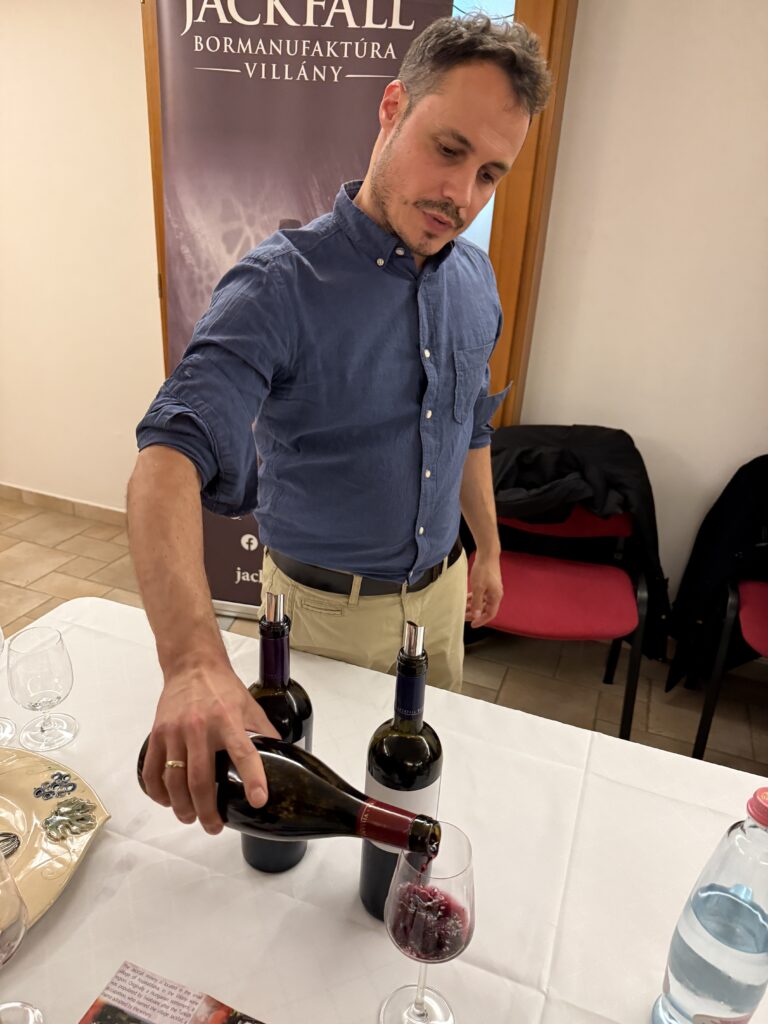
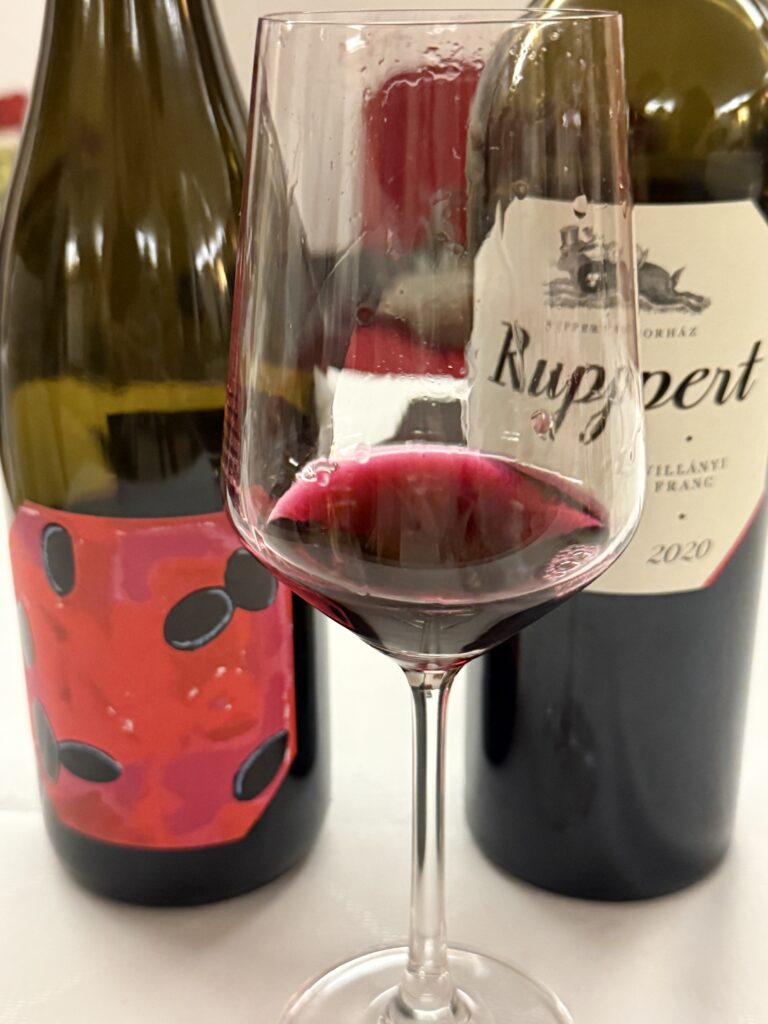
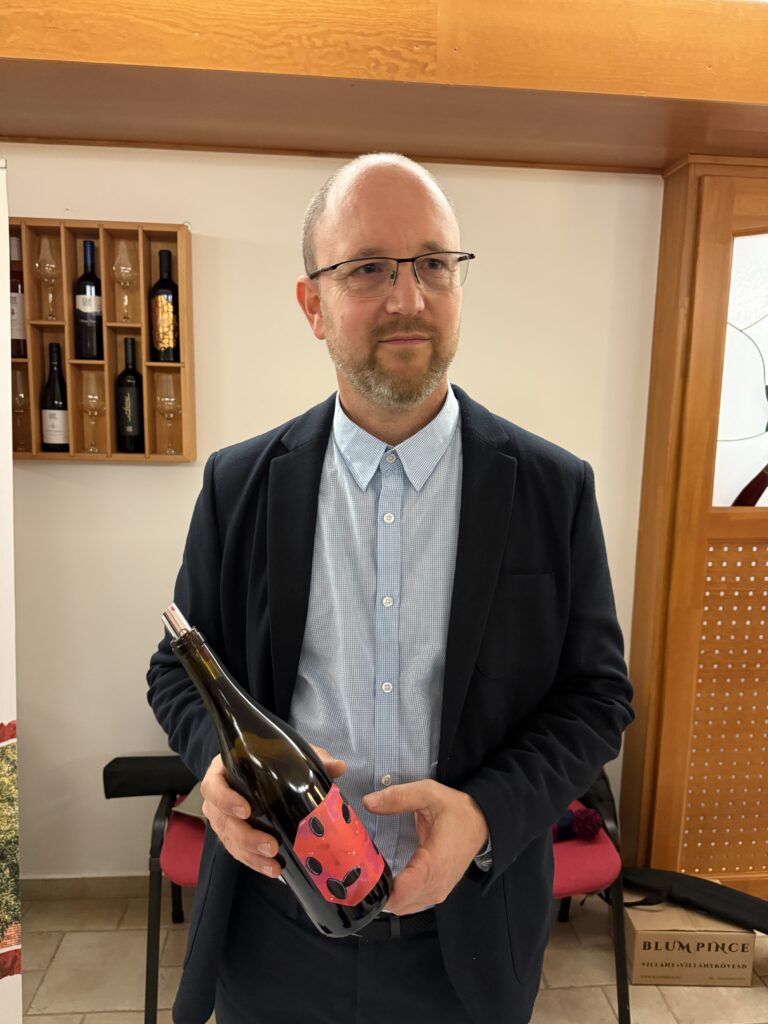
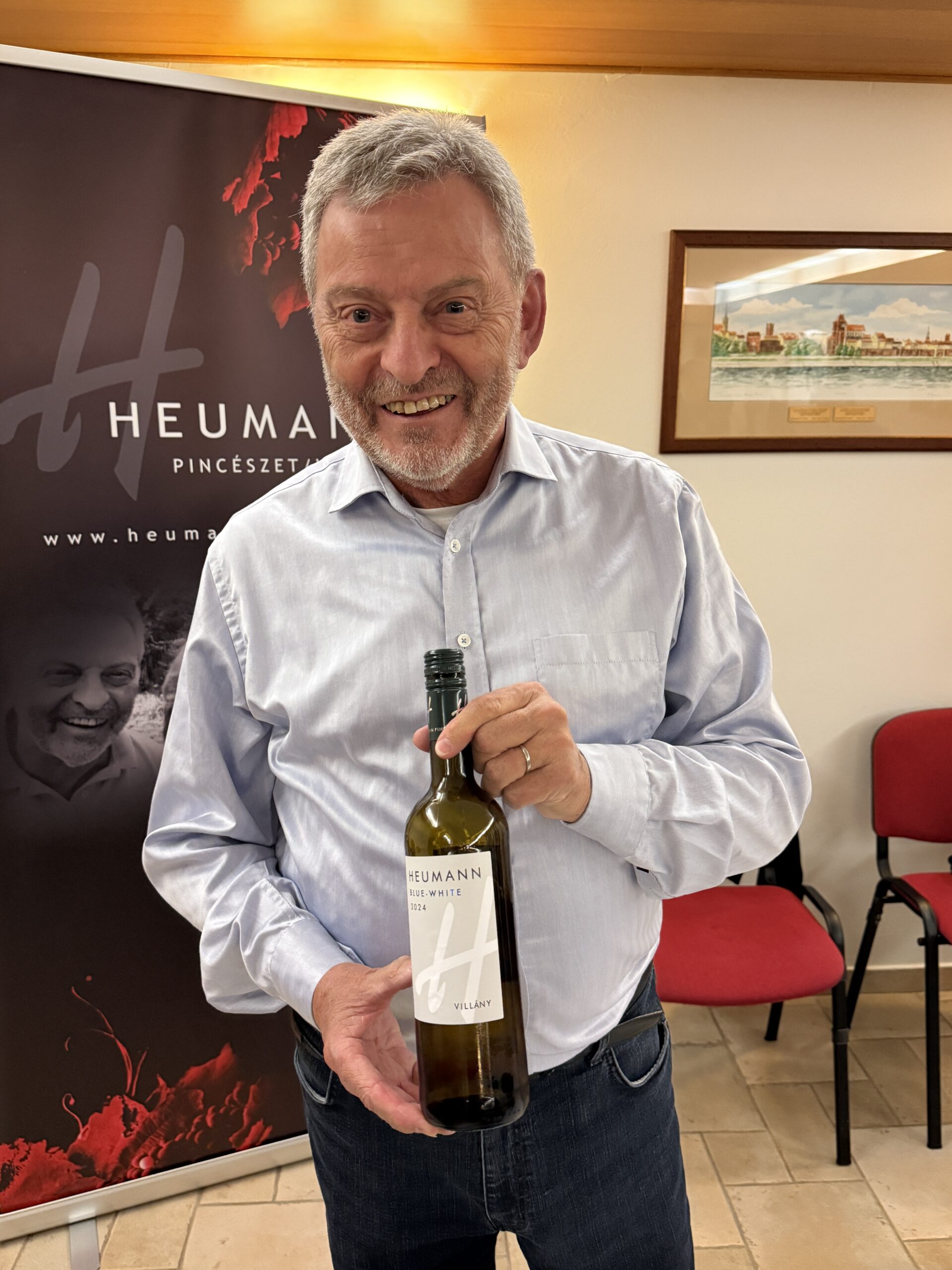
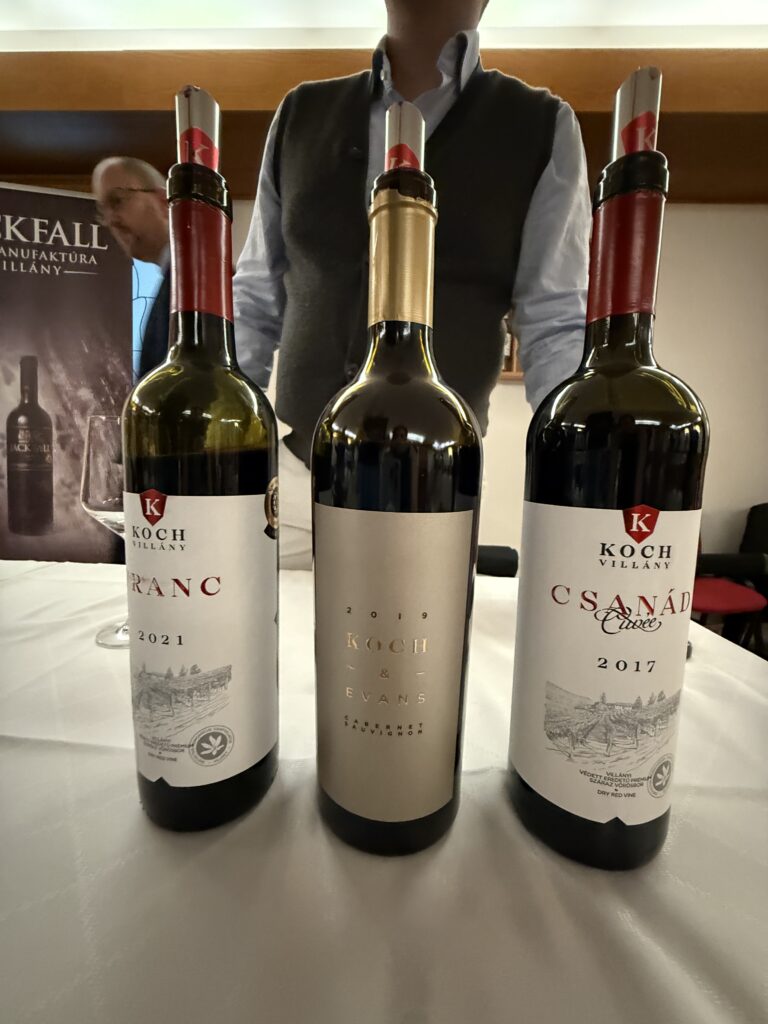
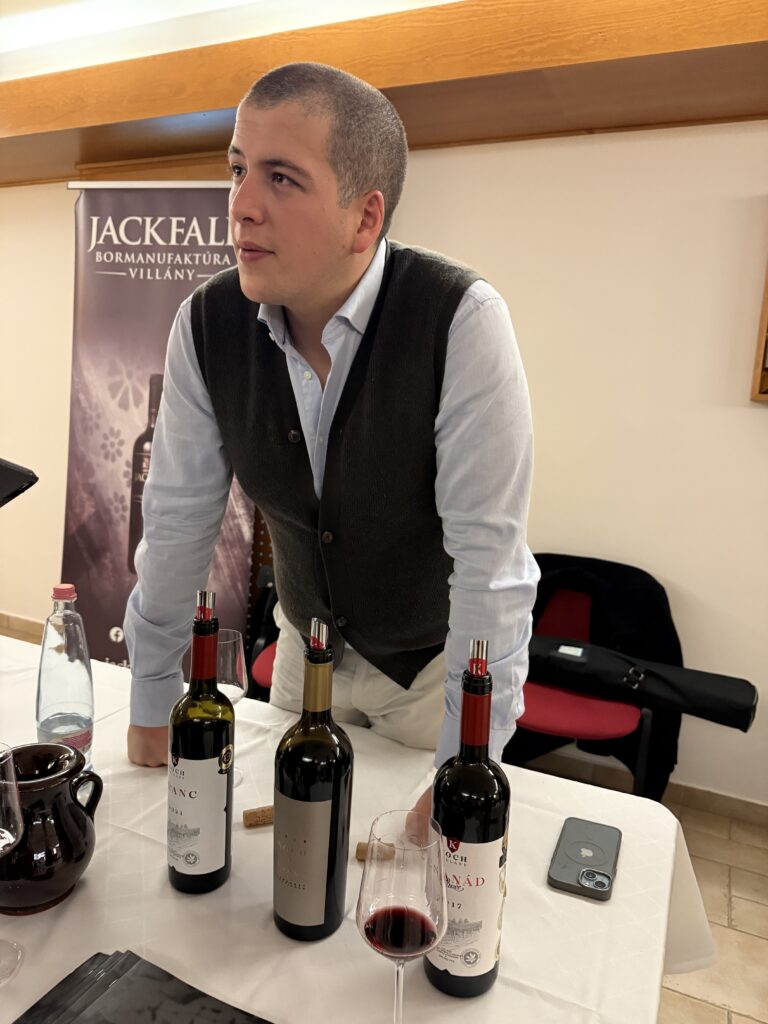
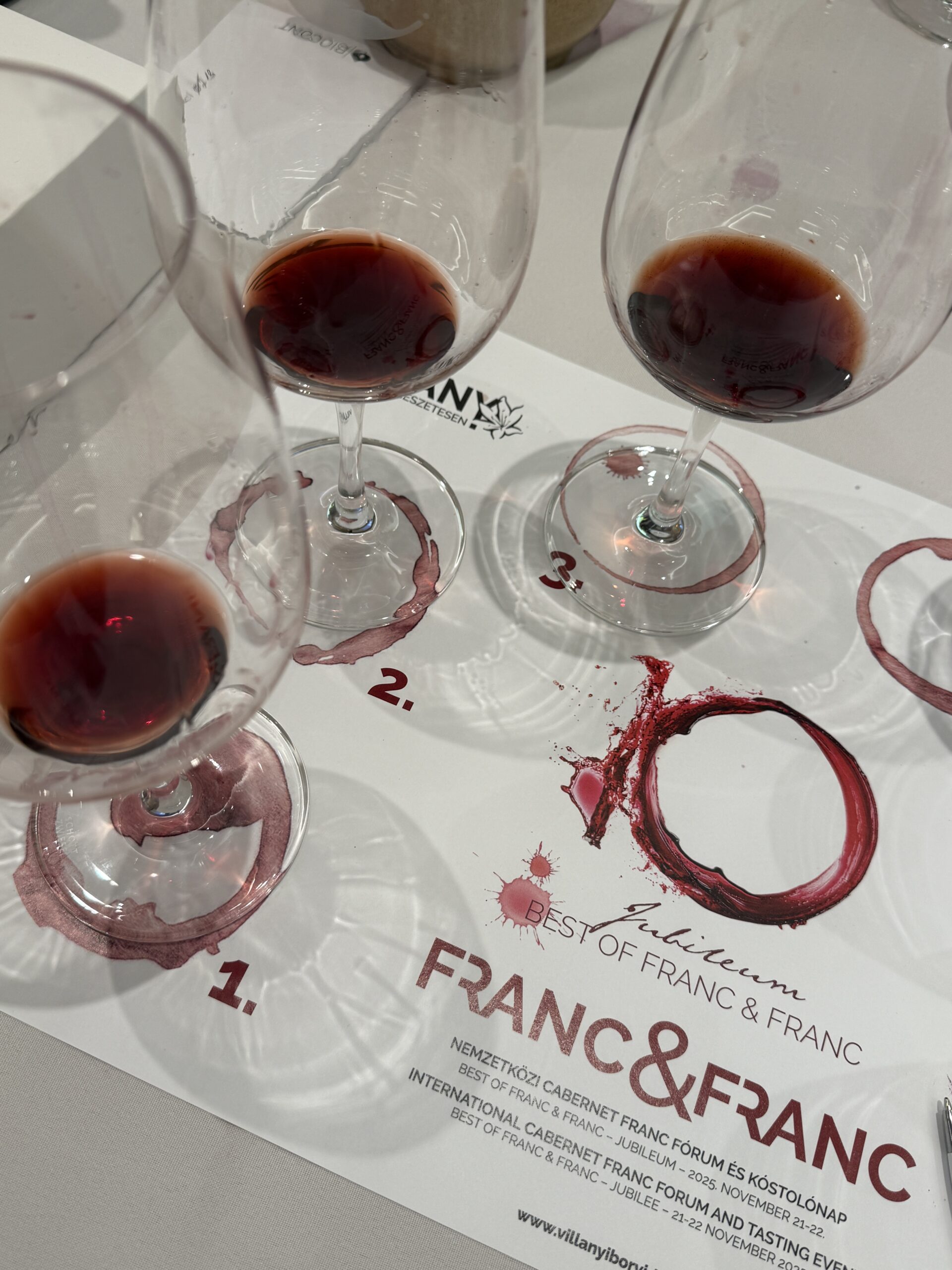
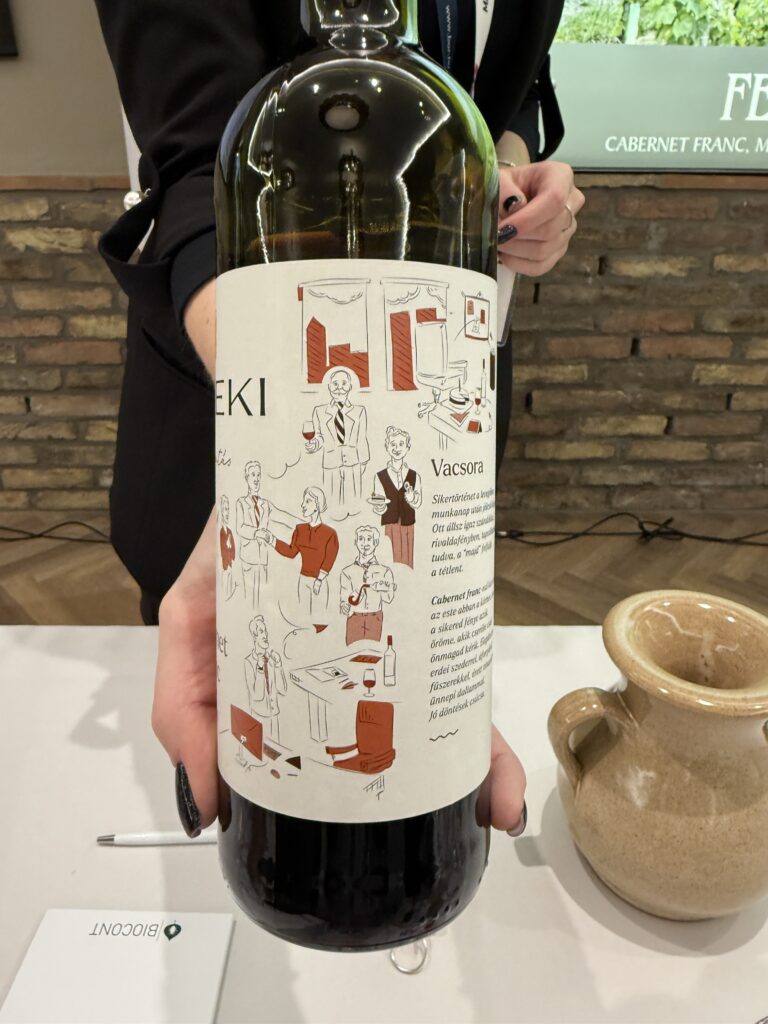
The opening tasting set the tone: a curated flight of twelve benchmark Hungarian wines—two Classics, six Premium, and four Super Premium selections—showcasing the extraordinary depth, precision, and consistency Villány has achieved with the variety.
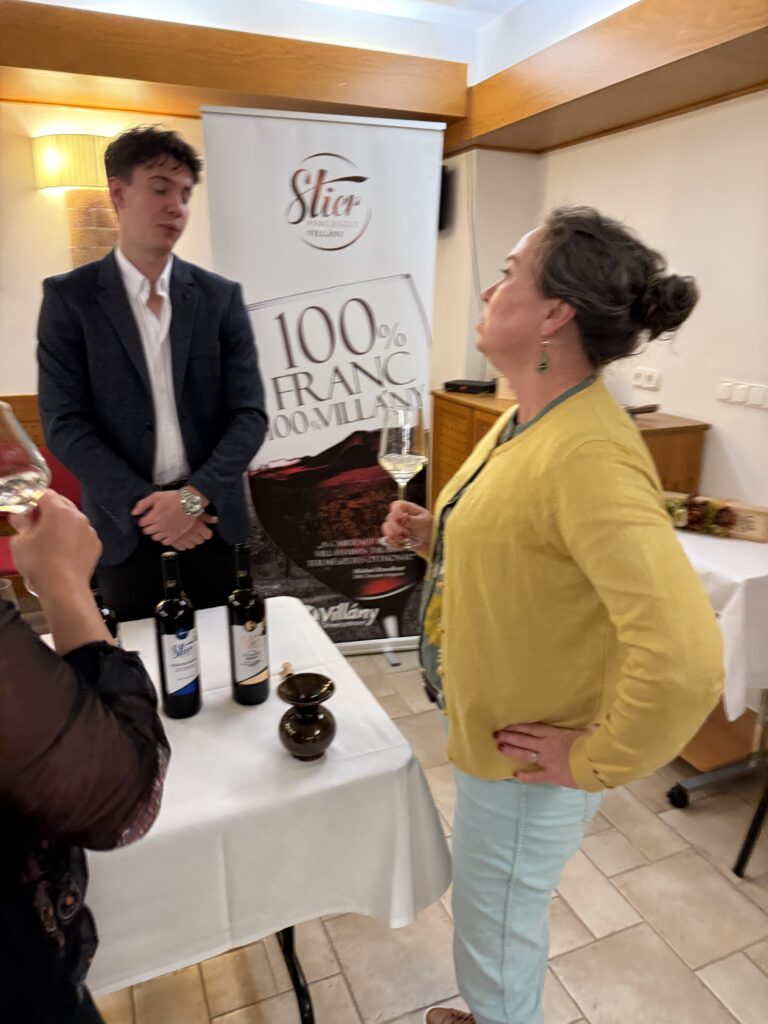
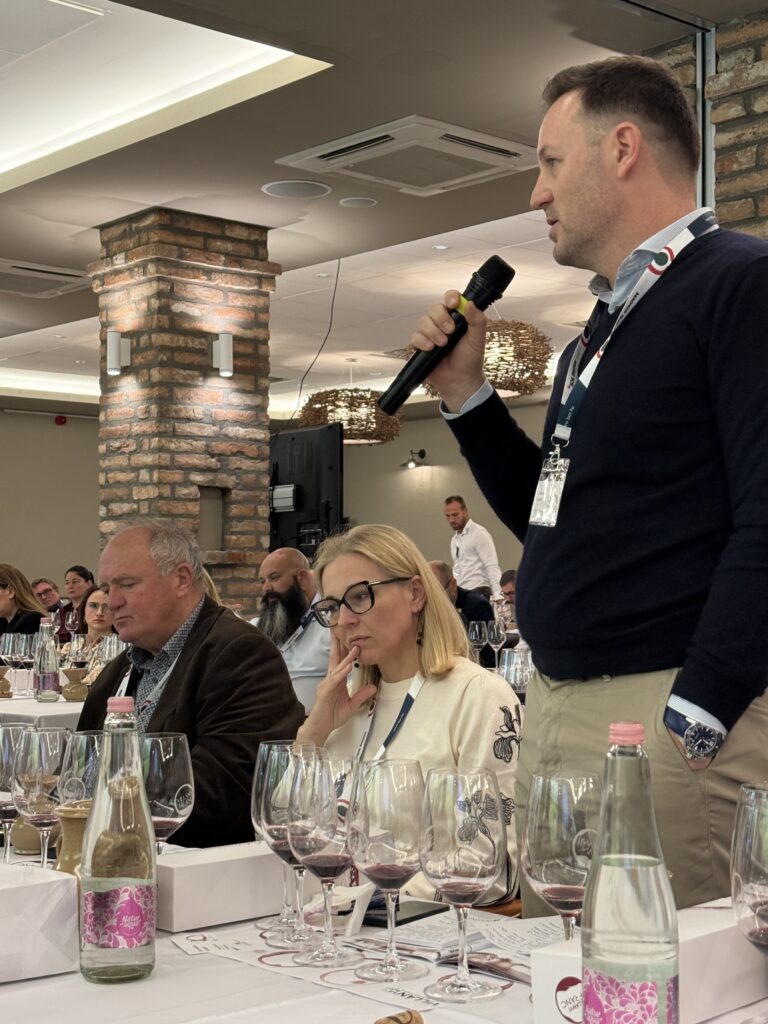
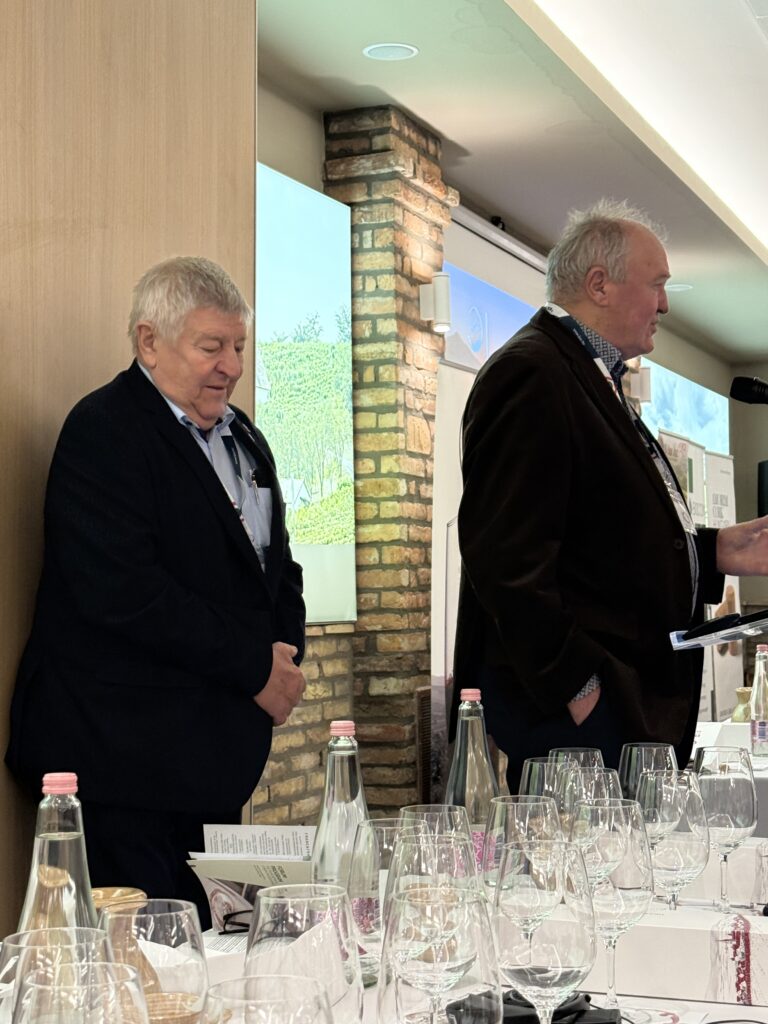
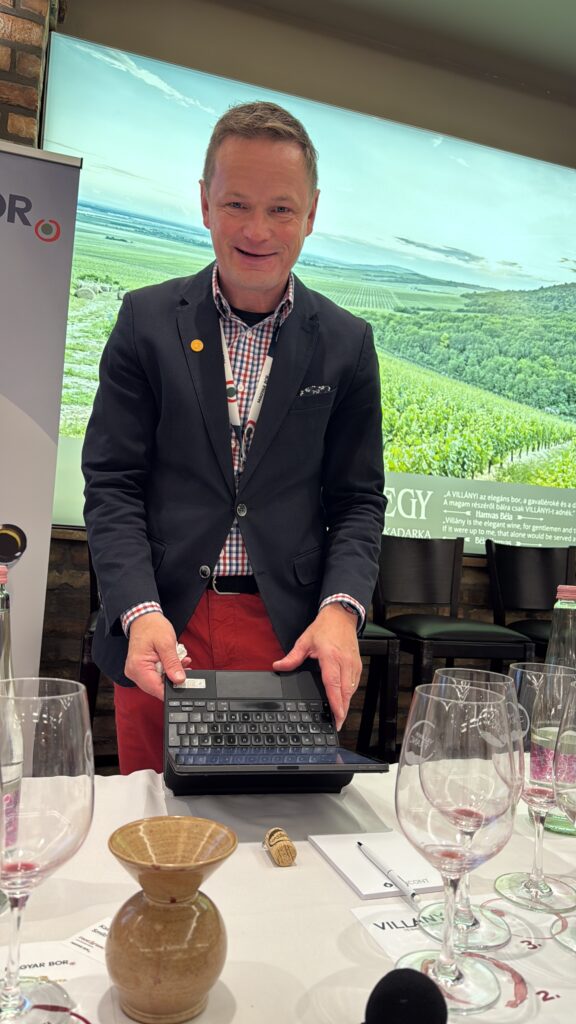
Day one began with heartfelt words from the pioneers themselves, József Bock and Attila Gere. What moved me most was the turnout: fully 80 % of Villány’s producers were present—an extraordinary show of unity and regional passion. In an industry often defined by fierce individualism, this near-total community mobilisation revealed a rare spirit of collaboration and shared ambition.
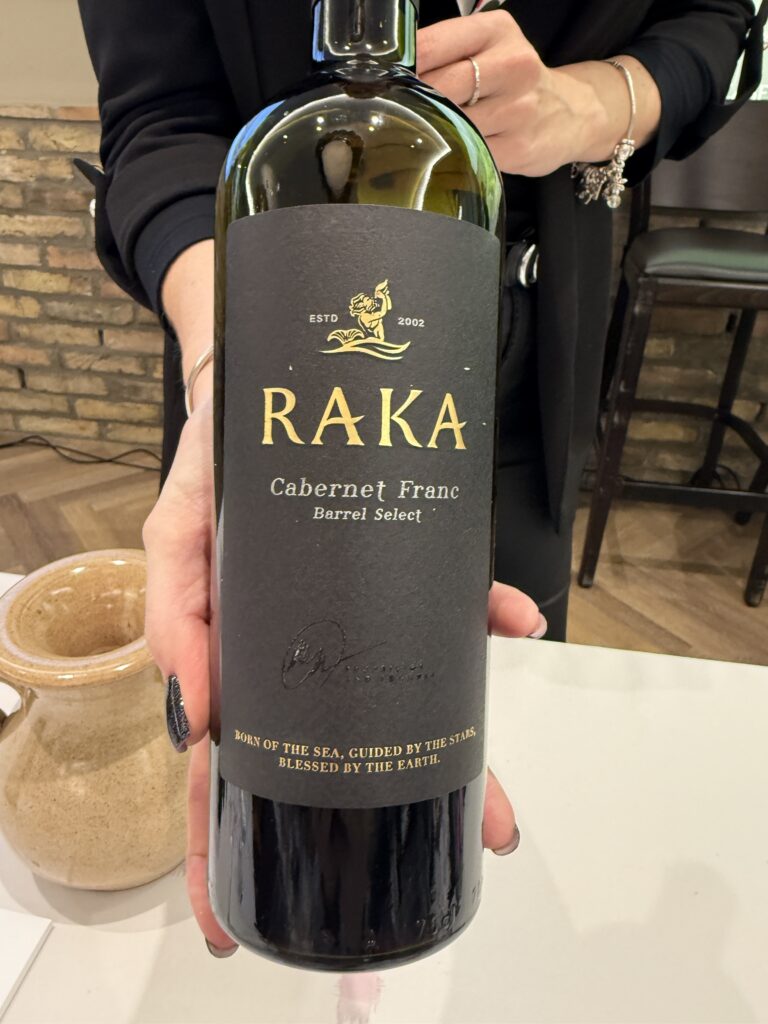
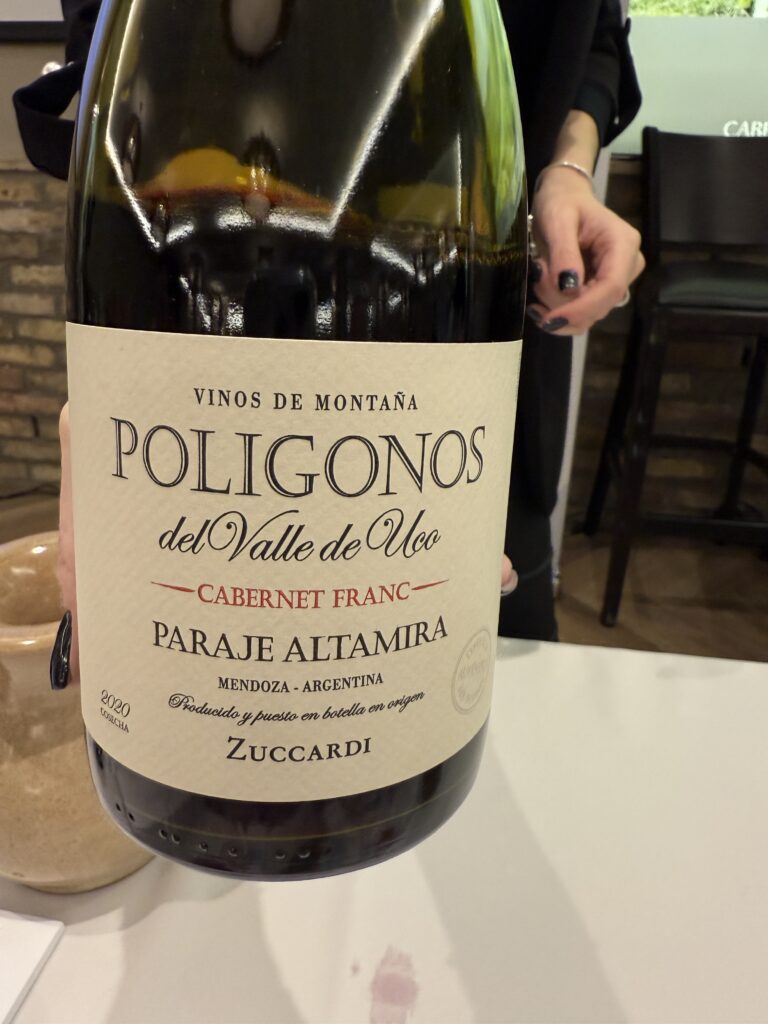
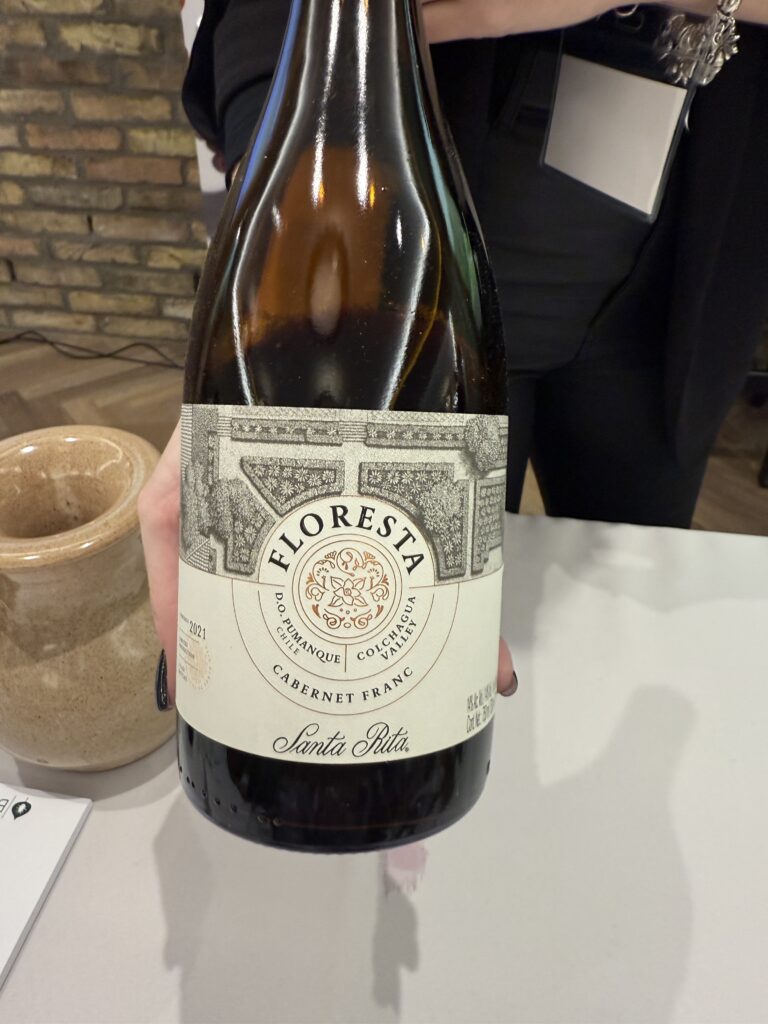
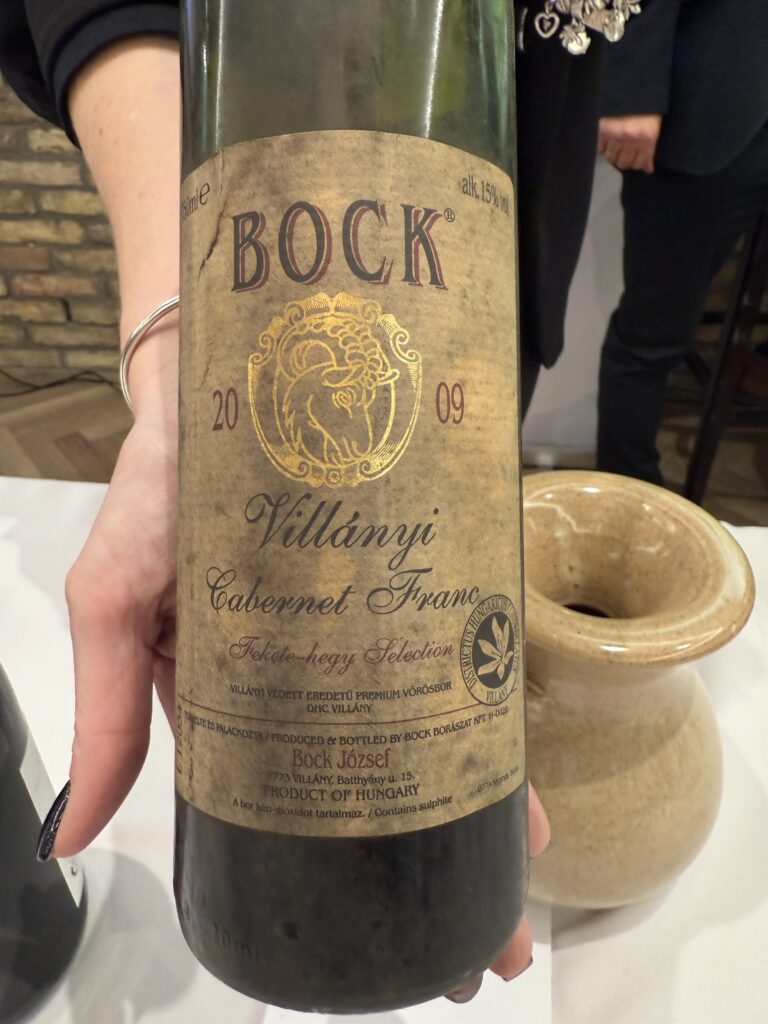
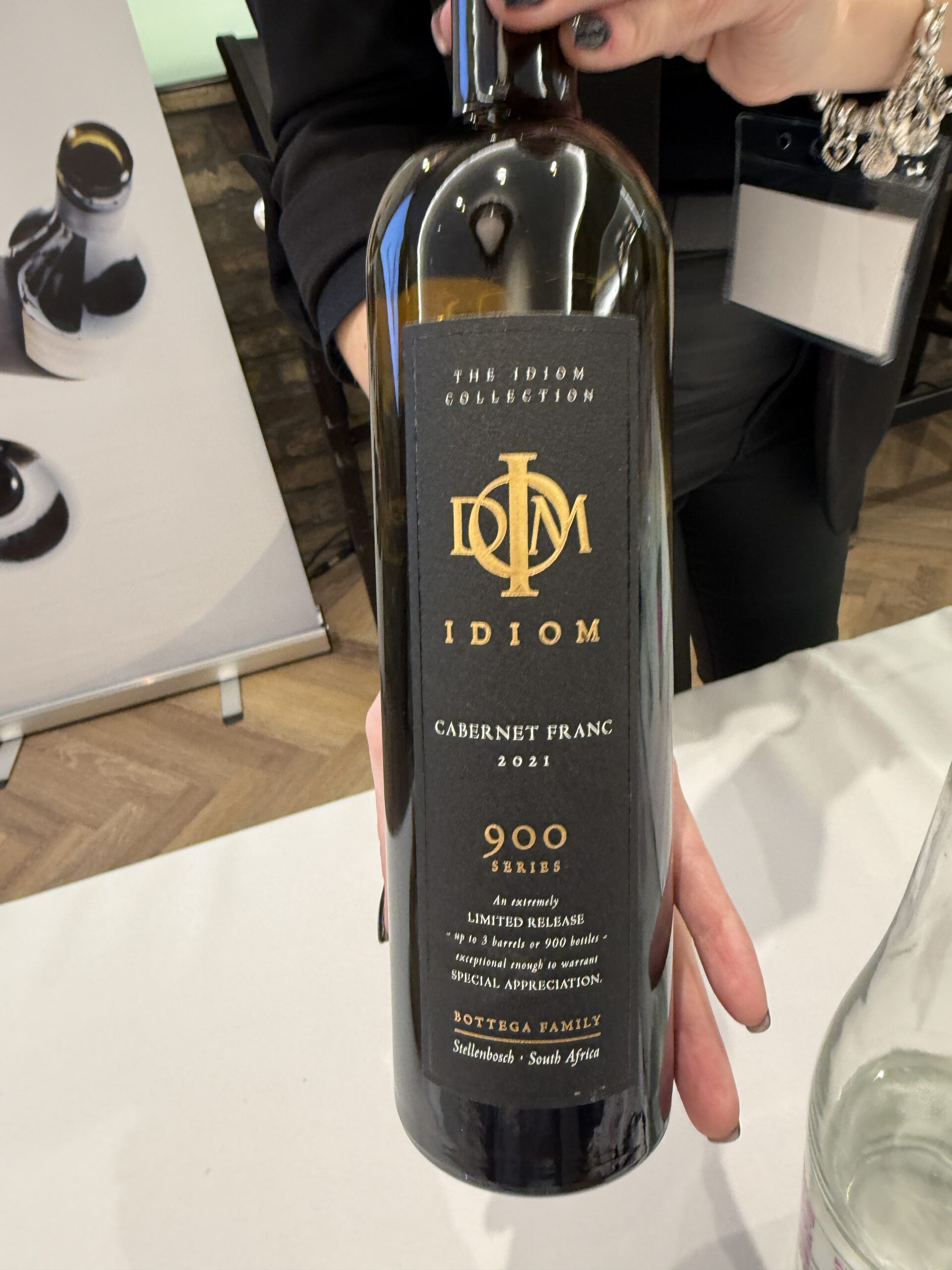
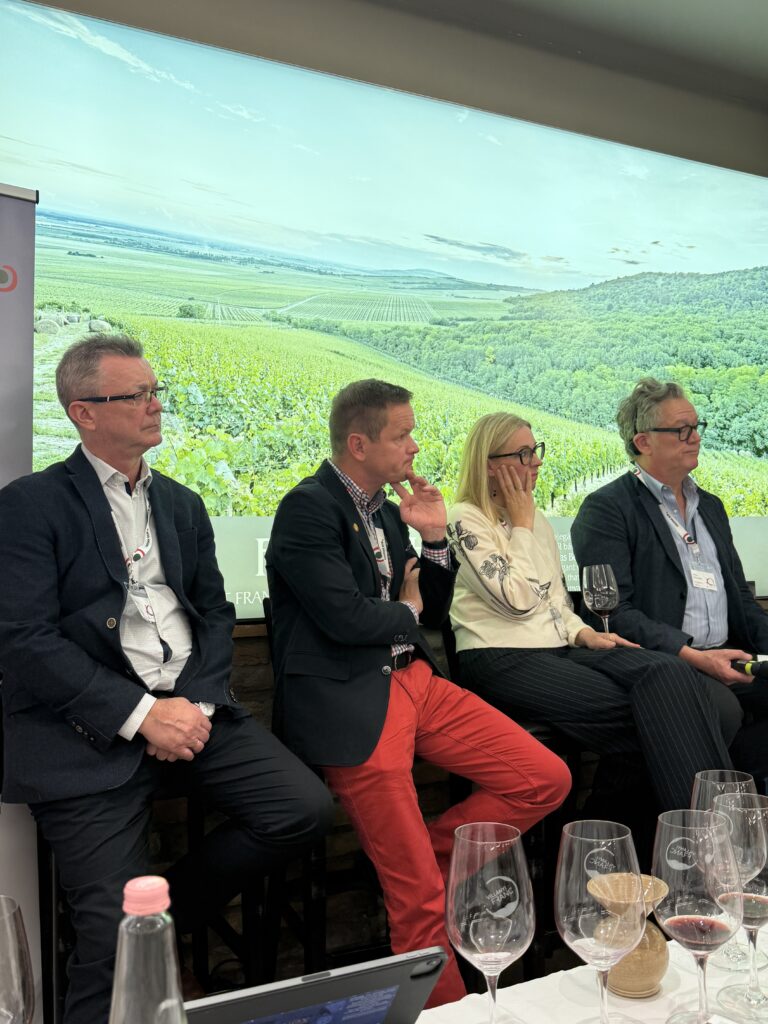
The symposium sessions were every bit as compelling as the wines. “Unity in Diversity” explored how Villány’s mosaic of terroirs produces strikingly different yet unmistakably related expressions. A deep dive into the impact of skin-contact duration illuminated its profound influence on flavour, colour, and structure. We then travelled the globe—from the Loire to Tuscany (presented by Pasi Ketolainen MW, South Africa (presented by South African winemaker Reino Thiart), Argentina, Chile, and the United States (presented by Peter McCombie MW) —marvelling at Cabernet Franc’s astonishing versatility. A special tasting of Villány through the decades as we journeyed from 2015, 2009 and 2006. Each one had its own identity, freshness and expressed the true refinement of Cab Franc. Villány is not just part of the Cabernet Franc conversation – it is helping define its future.
Ten years on, Franc & Franc has evolved from a regional celebration into the world’s premier annual gathering for serious Cabernet Franc lovers and professionals. This community isn’t just riding the wave; they’re steering it. My heartfelt thank you to Andras Horkay & the organizers for this unforgettable journey through unity in diversity and to the new connections made
The next decade promises to be exhilarating. If you love Cabernet Franc, book your ticket to Villány now. You won’t just taste great wine—you’ll witness a revolution in the making.
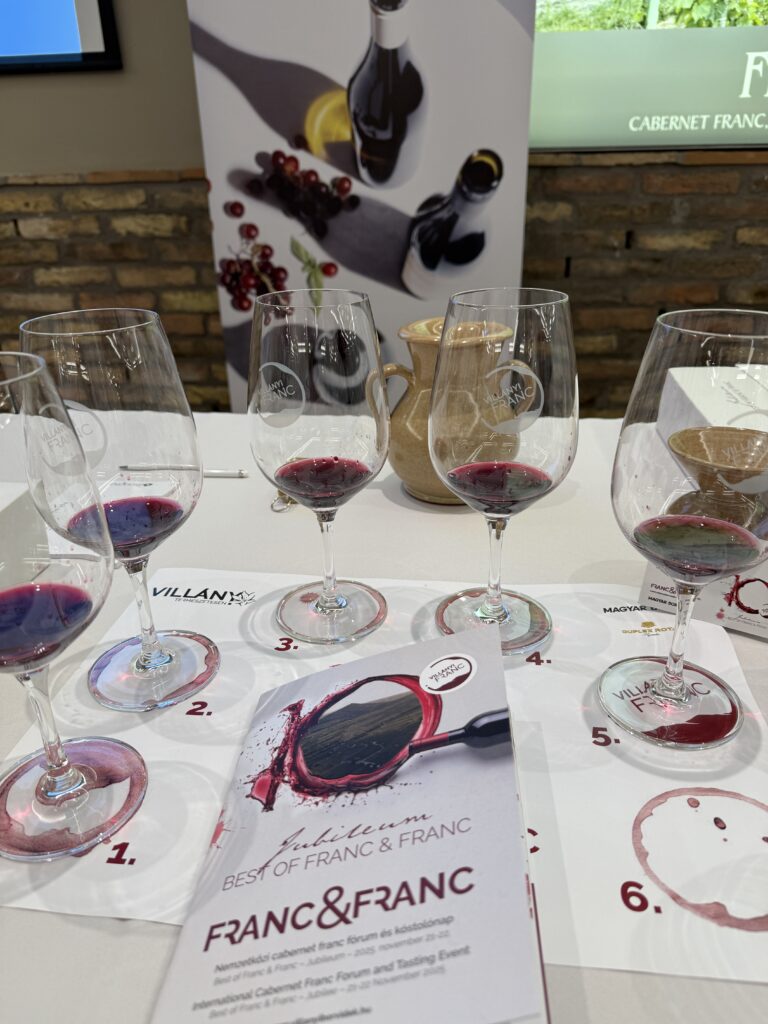
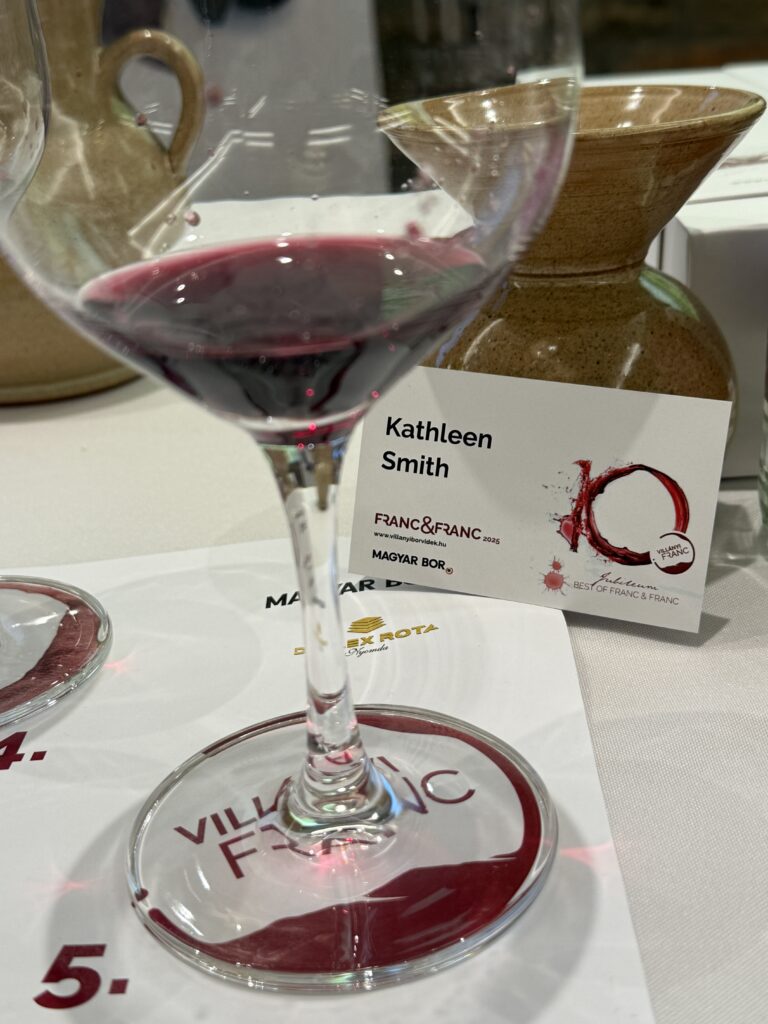
Welcome Dinner – Sauska 48
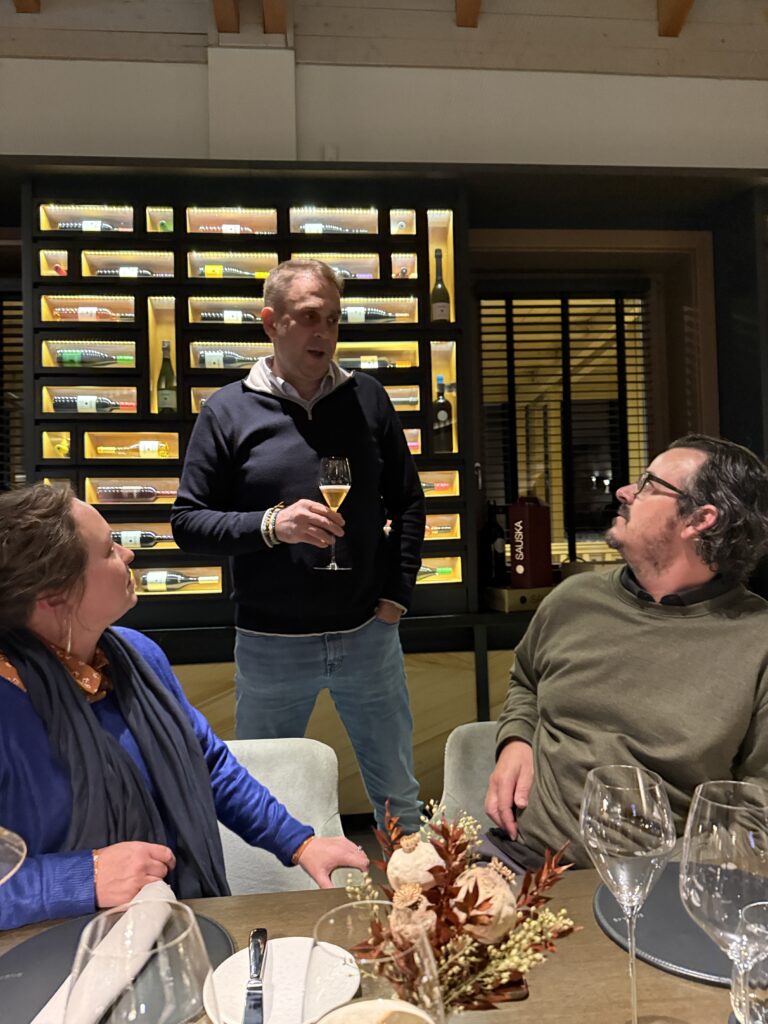
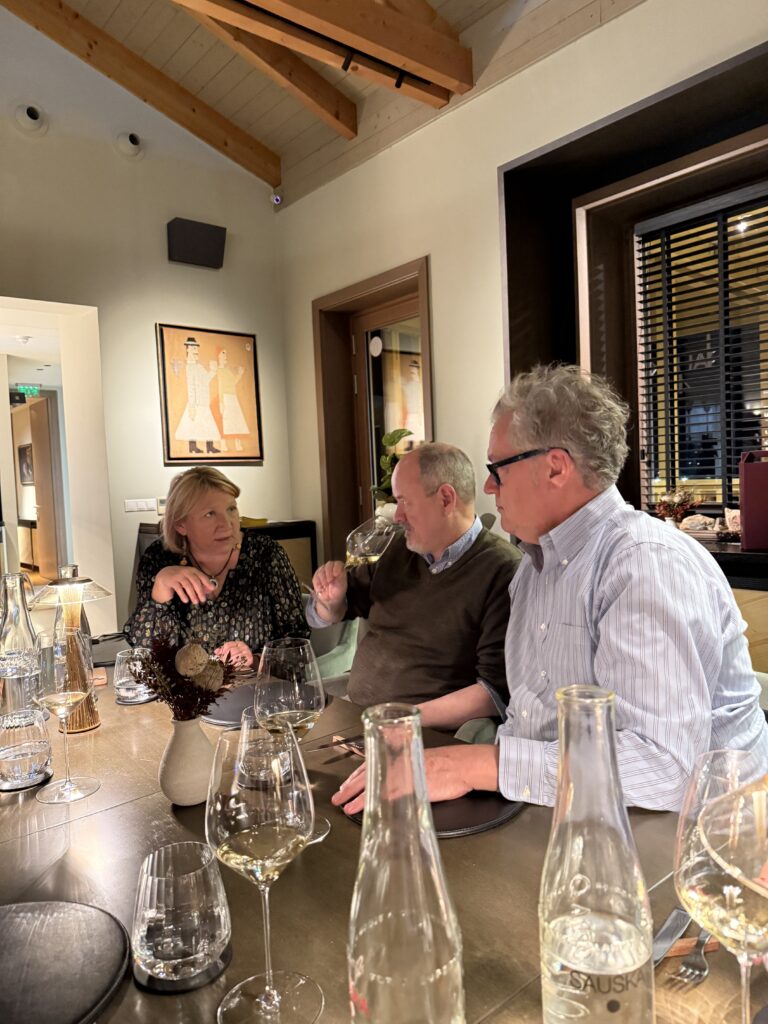
Hungary’s only Michelin-starred restaurant outside Budapest, tucked inside the breathtaking Sauska estate overlooking the moonlit vineyards. Sleek architecture, warm lighting, and an open style kitchen that treats local ingredients like royalty. The evening was a dazzling collaboration between two of the country’s most visionary producers: Sauska and Heumann.
Sauska is the restless perfectionist who decided Hungary’s two greatest wine regions deserved the same uncompromising vision. Christian Sauska began in 1999 by resurrecting forgotten volcanic slopes in Tokaj, turning them into benchmarks for crystalline dry Furmint and legendary Aszú. In 2007 he crossed the country to Villány, built a gravity-flow masterpiece on limestone ridges, and started crafting reds that instantly stood shoulder-to-shoulder with the region’s icons. Today he farms 120 hectares split evenly between Tokaj’s electric whites and Villány’s dark, spicy reds—obsessively low yields, zero compromise, pure terroir in every bottle. Whether it’s a Furmint that crackles with minerality, a velvet Villány Cabernet Franc, or a 20-year-old Aszú that silences rooms, Sauska are visionary sparkle, borderless ambition, pure seduction.
Heumann is a project born by the Swiss-German couple, Evelyne and Erhard Heumann, who make some of Villány’s most soulful, terroir-transparent reds). They began by leasing a 40-year-old vineyard in Villány-Siklós, Hungary, and have since expanded to 15 hectares focused on premium reds like Cabernet Franc and Kékfrankos, blending Swiss precision with the region’s limestone terroir. They are precision rebels, Villány’s velvet revolutionaries
The chef’s menu was paired exclusively with their wines, and every plate felt like it was born to marry the glass beside it.
Stand-out moments that still haunt me in the best way:
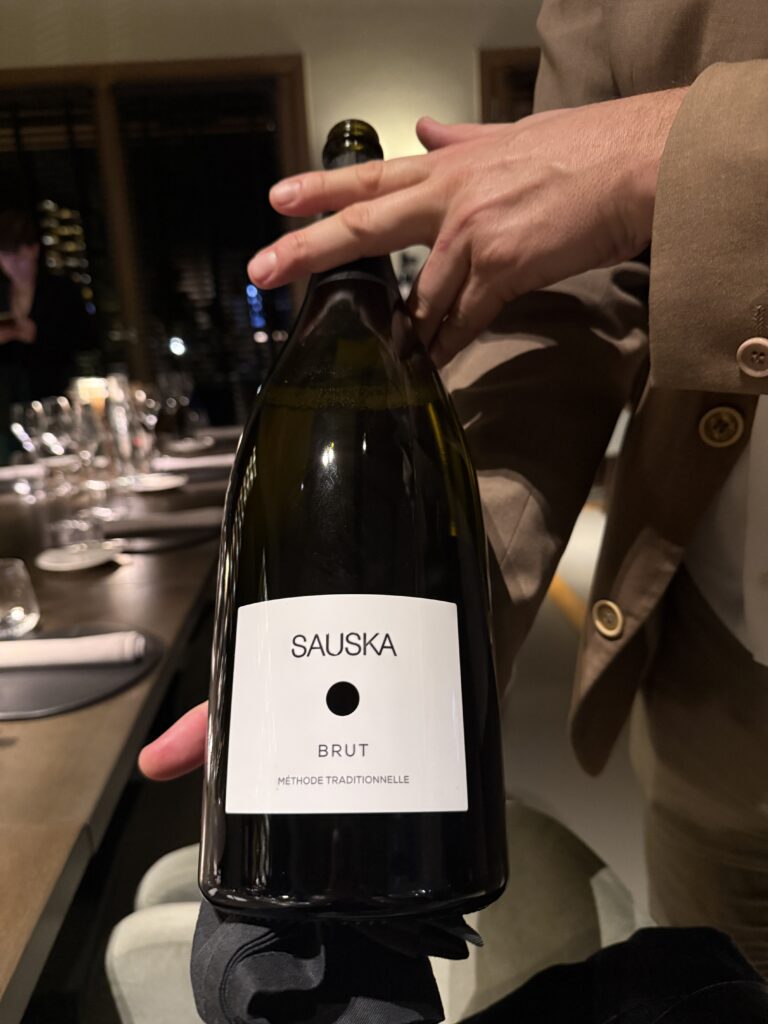
- Sauska Traditional Method Brut Magnum (100 % Furmint, Tokaj) Disgorged for the occasion. Explosive bead, toasted hazelnut, ripe Golden Delicious apple, sea-spray minerality, and a creamy finish that went on for days. Champagne wishes on a Furmint budget—pure electricity.
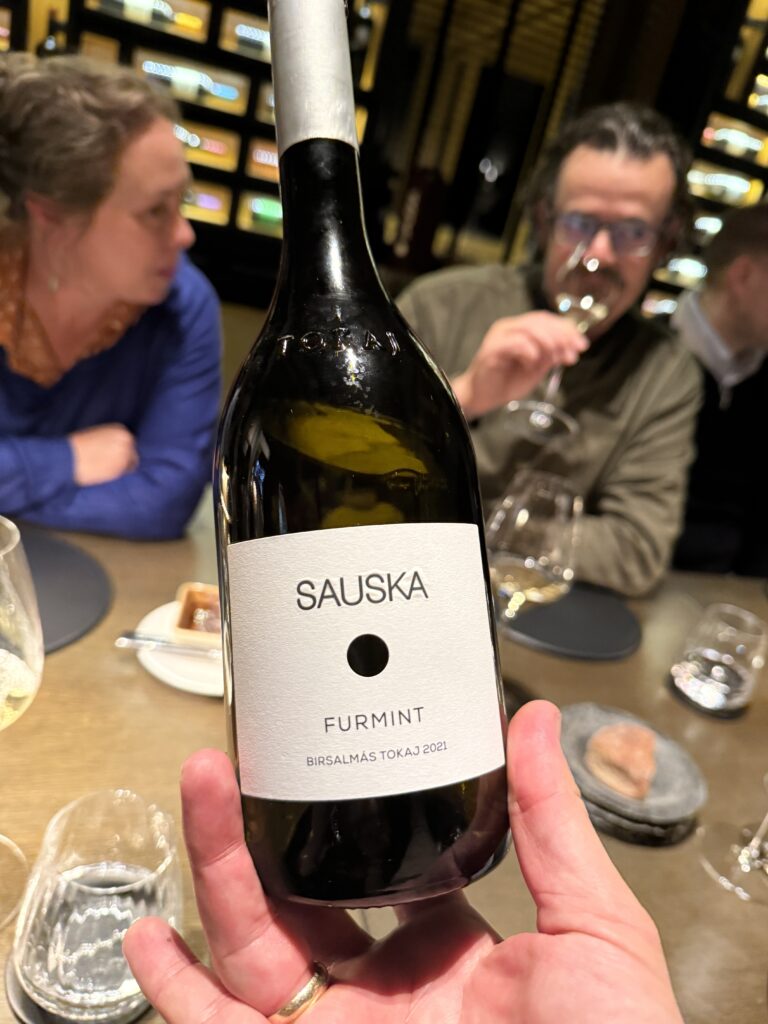
- Sauska “Birsalmás” Furmint 2021, Tokaj From a single steep vineyard of quince trees (birsalmás = quince orchard). Laser-cut acidity, quince paste, wet stone, white peach, and a smoky whisper from old Hungarian oak. Bone-dry, endlessly complex, and one of the most exciting white wines I have ever tasted.
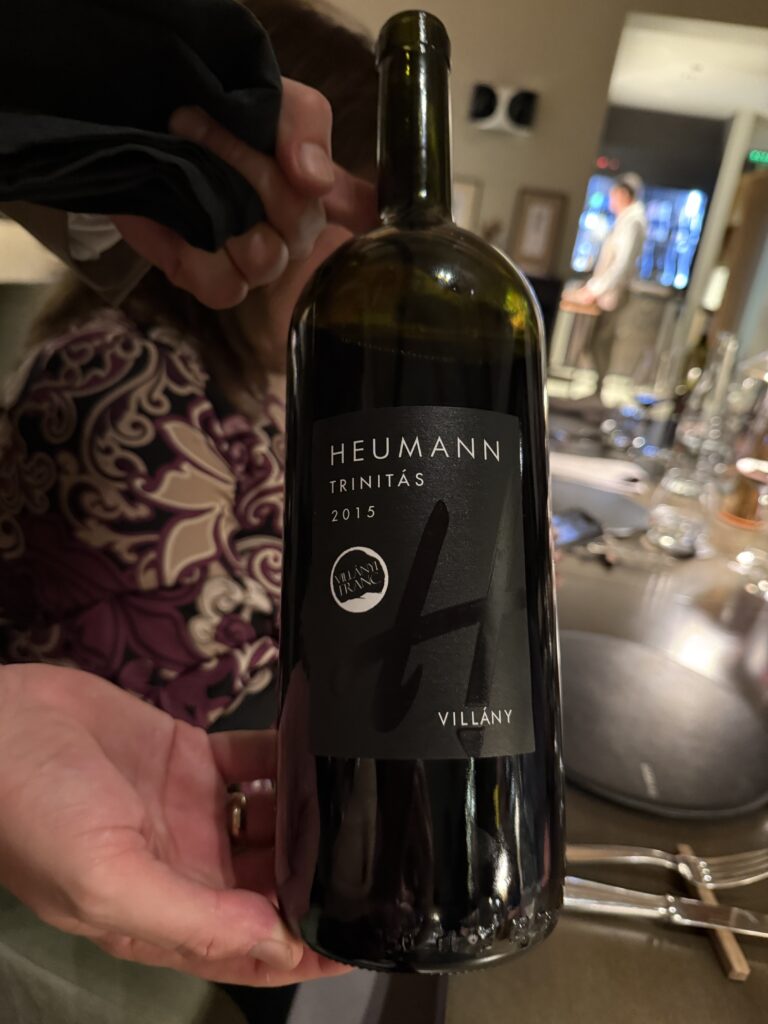
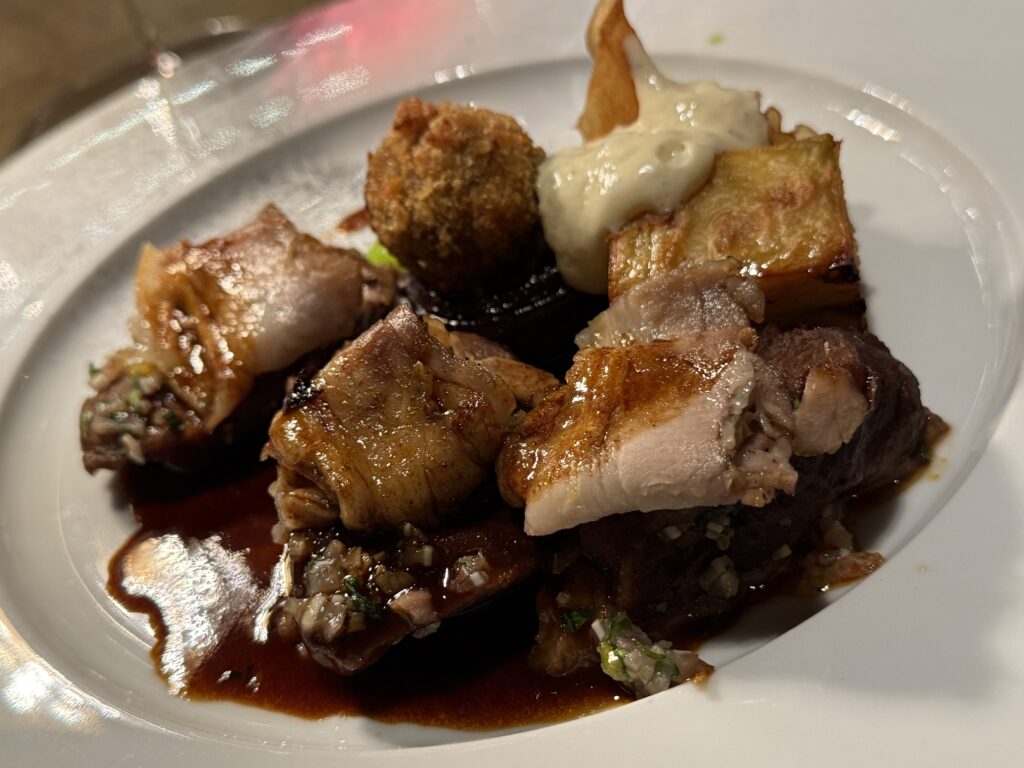
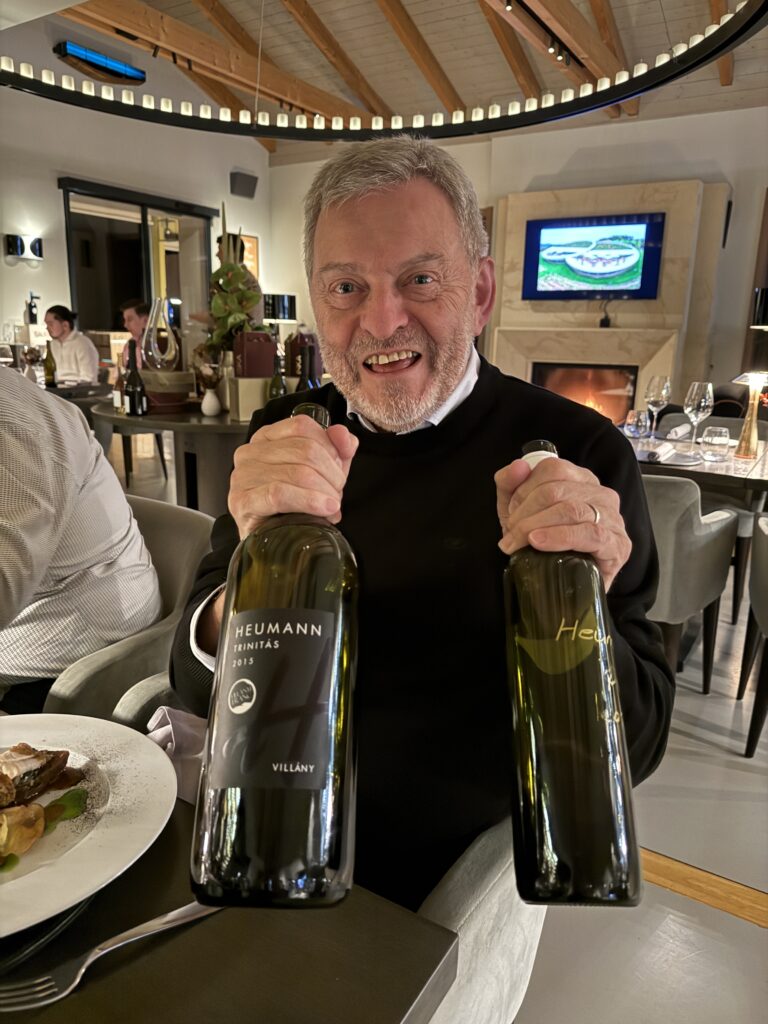
- Heumann “Trinitás” 2015, Villány The holy trinity of Cabernet Franc, Merlot, and Cabernet Sauvignon from the couple’s best parcels. Black cherry reduction, sweet pipe tobacco, graphite, and a velvety texture that glided across the tongue. Ten years old and just entering its prime—elegant power personified. Paired beautifully with grilled beef tenderloin.
- Heumann Petit Verdot 2021 Heumann Petit Verdot 2021 – unreleased, straight from Erhard’s cellars as he said, “This one is a sleeping beauty.” Violet perfume, blackberry liqueur, graphite, and a wild twist of crushed lavender and Szechuan pepper that made everyone at the table lean in at once. Polished tannins, waves of dark plum and bitter chocolate, and a finish that rolls on like thunder across the Villány hills. There’s a freshness (almost electric acidity) that refuses to let all that power feel heavy. I am very excited for this darling to shine.
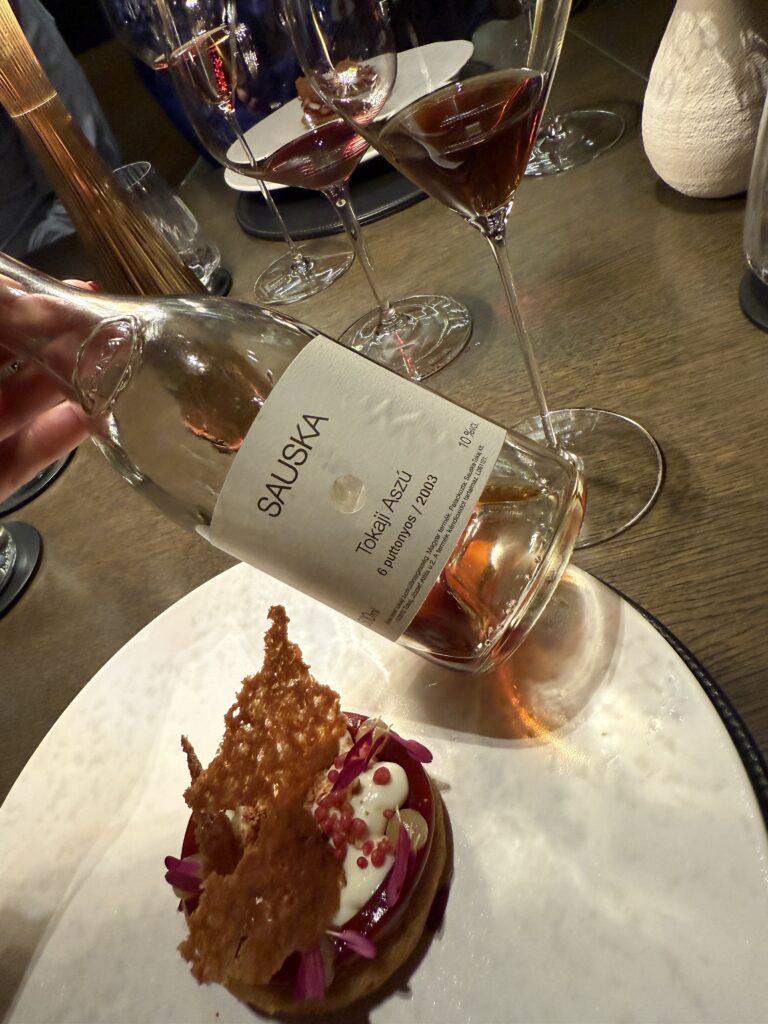
- Sauska Tokaji Aszú 6 puttonyos 2003 (library release, served from 500 ml) The grand finale. Liquid gold. Apricot compote, orange blossom honey, saffron, toasted almond, and a river of acidity that somehow keeps this nectar vibrant after 22 years. The table fell completely silent for a full minute. Some wines don’t just taste incredible—they change you. This was one of them.
That dinner alone would have been worth the flight to Hungary. What followed over the next days only got better.