
Eternal Sips at Graham’s: A Cherished Port

Nestled on the south bank of the Douro River in Vila Nova de Gaia, just across from the vibrant city of Porto, Graham’s Lodge stands as a beacon of Portugal’s rich Port wine heritage. As part of the esteemed Symington Family Estates—one of the world’s leading Port producers—I recently had the privilege of touring this historic site. What unfolded was not just a visit to a winery, but an immersive dive into centuries of tradition, innovation, and the alchemy of aging wine. Guiding me through this captivating experience was our gracious host, Nuno R. Silva, whose passion and expertise brought the story of Graham’s to life. The Brand: Symington and Graham’s—A Legacy of Excellence Symington Family Estates is a powerhouse in the Port world, owning iconic houses like Graham’s, Dow’s, Warre’s, and Cockburn’s. Founded by the Symington family, who trace their roots back to the 19th century, the company is now in its fifth generation of family ownership. They are the largest vineyard owners in the Douro Valley, with over 1,000 hectares spread across 26 Lodges (estates), producing everything from vintage Ports to innovative blends. Graham’s, acquired by Symington in 1970, is celebrated for its opulent, fruit-forward Ports that embody romance and exuberance. As Nuno explained during our tour, Graham’s stands out for its colorful, approachable style—think sweeter, more vibrant expressions compared to the drier, more restrained profiles of sister brands like Dow’s. The brand’s motto, “Ne Oublie” (Never Forget), honors its Scottish founder, Andrew James Symington, who arrived in Porto in 1882. Today, Symington’s isn’t just about Port; it’s a multifaceted empire encompassing table wines from regions like Douro, Vinho Verde and Alentejo, plus a thriving wine tourism arm that includes three visitor centers, restaurants, and even a cocktail bar in Porto’s city center. What sets Symington apart is their commitment to sustainability—they were the first in the Port industry to achieve B Corp certification, emphasizing environmental, social, and financial responsibility. From sponsoring firefighters in the Douro to reducing water usage in their cellars, their ethos resonates with modern wine lovers who seek quality with a conscience. The History: From River Barrels to Global Icon Stepping into Graham’s Lodge feels like entering a living museum. The cellars, dating back to the 19th century, house an astonishing diversity of wines aging in casks and bottles—from 1882 vintages to the latest 2024 harvests. Nuno painted a vivid picture of Port’s history: born from the synergy between the rugged Douro Valley vineyards and Porto’s urban trade hubs, Port wine evolved as a fortified style to withstand long sea voyages to Britain, thanks to the world’s oldest alliance between Portugal and the UK (dating back 650 years).We wandered through rows of “small” casks (holding thousands of liters each) and massive pipes, where wines from over 140 years mingle in a symphony of blends. Nuno highlighted how the Douro’s schist soils—acting like solar panels to retain heat—contribute to the slow, concentrated maturation of grapes. He shared tales of the region’s challenges: climate change pushing vineyards to higher altitudes for freshness, and historical hurdles like phylloxera in the late 1800s that decimated vines but spurred innovation. A highlight was the “Very Old Tawny” section, where hidden gems like the 1882 Ne Oublie—a wine over 140 years old—evoke indestructibility. Nuno recounted how Andrew James Symington received barrels as his first payment upon arriving in Porto, some of which have survived wars, floods, and time itself. This isn’t just wine; it’s a generational handoff, with Symington producing Ports today that won’t peak until 2040 or beyond. We also touched on evolution: from foot-treading in lagares (traditional granite tanks) to modern robotic systems that mimic human pressure for precision. Blending, Nuno emphasized, is the true art—combining varieties, plots, and even years to create harmony. It’s alchemy, as he put it, blending patience, experience, and a touch of magic. The Tasting Experience: A Symphony of Flavors No visit to Graham’s is complete without tasting, and under Nuno’s expert guidance, we sampled a curated lineup that showcased the brand’s versatility and the Symington portfolio’s depth. Starting in the cool, dimly lit bottle maturation cellar—home to vintages from the 1860s—we moved to a private tasting room overlooking the river. Each Port told a story, with Nuno weaving in tales of harvests, vintages, and the Douro’s soul. Throughout the tour, Nuno R. Silva shone as the perfect ambassador. With over a decade in the industry—including stints in wine tourism and sales for Symington—Nuno’s enthusiasm is infectious. Hailing from Porto, he weaves personal anecdotes (like his father’s initial skepticism toward Port cocktails) with deep knowledge of viticulture, climate impacts, and blending artistry.What struck me most was Nuno’s ability to demystify the nuances of Port without diminishing its magic. Whether explaining single-Lodge vintages or sustainability initiatives, he made complex topics accessible and engaging. His pride in Graham’s—calling it “colorful and romantic”—mirrors his warm, approachable style. By the end, it felt like chatting with an old friend over exceptional wine. The day concluded with a memorable lunch at Vinum, Graham’s elegant restaurant perched with a stunning view of the Douro River and Porto’s skyline. We savored a grilled whole John Dory, its flaky flesh complemented by vibrant heirloom tomatoes and a trio of croquettes—crisp outside, creamy within. Paired with a 2022 Loureiro from Ameál, this crisp white wine revealed zesty lime, peach blossom, and a mineral edge, harmonizing beautifully with the seafood and enhancing the panoramic vista. The experience was sensory and emotional: the cool cellar air, the scent of aged oak, and wines that transported us through time. If you’re a wine enthusiast planning a trip to Porto, book a tour at Graham’s Lodge (part of Symington’s portfolio) and request Nuno as your guide. It’s not just a visit; it’s a portal to Portugal’s soulful wine world.
A Sip of Tradition: Visiting Velho Alambique Cachaçaria in Brazil
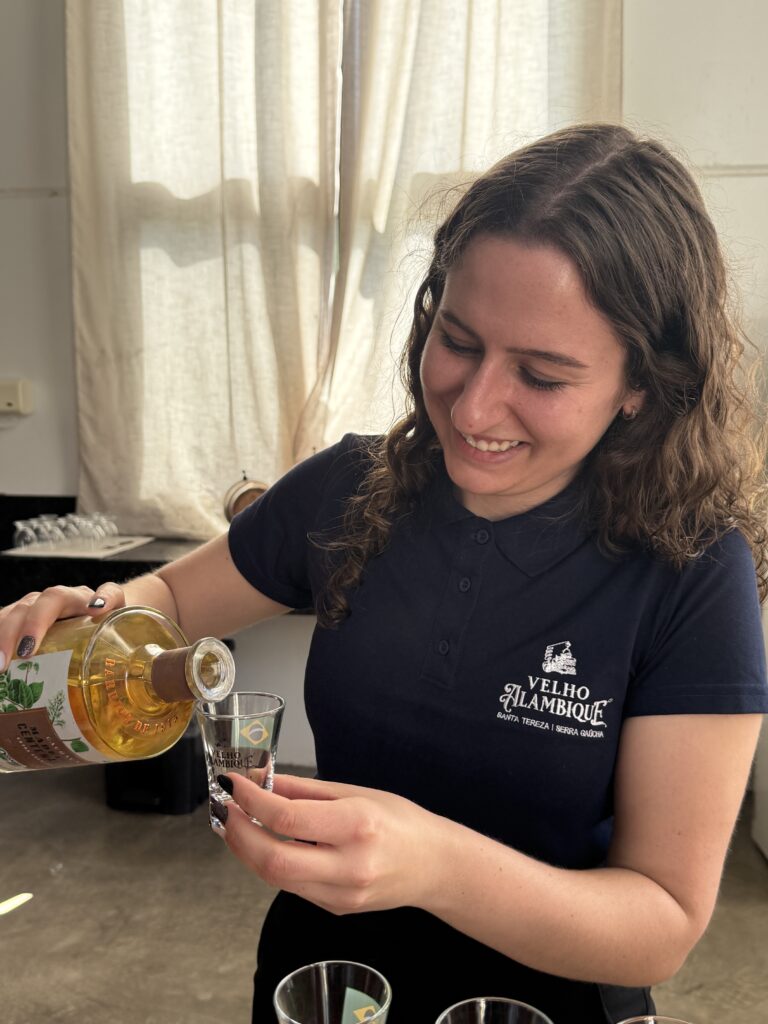
Welcome, wine lovers and spirit enthusiasts, to another adventure with The Happy Vine! Today, we’re stepping away from the vineyard and diving into the vibrant world of cachaça, Brazil’s beloved spirit, with a visit to the charming Velho Alambique Cachaçaria. Nestled in the heart of Brazil’s sugarcane country, this small, family-owned distillery is a treasure trove of tradition, passion, and some seriously sippable cachaça. So, grab a shot glass and let’s explore! Nestled in the rolling hills of Santa Tereza, Rio Grande do Sul, Velho Alambique is a family-run gem producing organic, artisanal cachaças from their own sugarcane fields. With a nod to tradition and a flair for wood-aged innovation, their lineup showcases the distillery’s mastery of blends and native Brazilian hardwoods. The distillery sits on a modest 10-12 hectares of sugarcane fields, a plot that’s been lovingly tended by the family for generations. The current owners, João and Maria, have passed down their passion to the next generation, their daughter Laura and son Gustavo, who are now steering the distillery into the future with pride and innovation. Velho Alambique churns out an impressive 40,000 liters of cachaça each year, all from a single harvest in June when the sugarcane is at its peak. That’s right—one harvest, one chance to capture the essence of the land in liquid form. The process is as much art as it is science, with every step infused with the family’s dedication to quality. From the moment the cane is cut to the final bottling, you can feel the care that João, Maria, Laura, and Gustavo pour into every drop. What makes Velho Alambique truly special is their experimentation with 35 types of wood for aging their cachaça. Yes, you read that right—35! They use exotic woods like balsam, each imparting its own unique character to the spirit. Laura shared that the level of toasting on the barrels plays a fascinating role in the final product: less toasted wood gives the cachaça a deeper, richer color, while more heavily toasted barrels result in a lighter hue but bolder, smokier flavors. It’s like a painter’s palette, with each barrel adding its own stroke of genius. According to Brazil’s cachaça regulations (set by the Ministry of Agriculture, Livestock and Supply), there’s no cap on the types of wood you can use to age this spirited gem. The only rule? Aging happens in “suitable wooden barrels” (think classic oak or vibrant Brazilian hardwoods) up to 700 liters, for at least one year to earn that coveted envelhecida (aged) cachaça title. But here’s the exciting part: the guidelines throw the doors wide open for creativity, letting distillers play with a dazzling array of native woods to craft bold, unique flavor profiles that make every sip a journey! As we toured the distillery, Laura explained the concept of the “angel’s share”—the 3-5% of cachaça that evaporates during aging, a little gift to the heavens (or maybe just the Brazilian humidity). It’s a reminder of the patience required to craft something extraordinary. The cachaça here is made with respect for tradition but also a playful curiosity, as Laura and Gustavo experiment with new woods and techniques to honor their parents’ legacy while keeping things fresh and exciting. We enjoyed churrasco—Brazilian barbecue—and sampled their range of cachaça, from unaged white varieties to those aged in various woods, revealing deep amber hues. I was genuinely impressed by the breadth of flavors and distinct spirit profiles.My personal favorite was the amburana-aged cachaça: exceptionally smooth, with warm, spicy notes reminiscent of cinnamon. Sipping their cachaça was, of course, the highlight. Each glass told a story—of the land, the family, and the craftsmanship of João, Maria, Laura, and Gustavo. Whether it was a smooth, golden cachaça aged in lightly toasted balsam or a crisp, unaged version bursting with fresh sugarcane notes, every taste was a celebration of Brazil’s spirit (pun intended). Velho Alambique proudly upholds the denominação de origem (DO) status, a mark of quality and authenticity for cachaça. Brazil currently recognizes seven DO regions for cachaça, each with its own distinct terroir and production methods, and Velho Alambique’s offerings shine as a testament to their region’s unique character. As I left Velho Alambique, the sun was setting over the sugarcane fields, casting a golden glow that felt like a nod to the liquid gold in their barrels. This little distillery is a testament to the beauty of small-scale, family-run operations—where João and Maria’s vision lives on through Laura and Gustavo’s passion, tradition, and innovation come together in every bottle. If you ever find yourself in Brazil, make the trek to Velho Alambique. And if you can’t, track down a bottle of their cachaça and let it transport you to those sun-drenched fields. Until our next adventure, keep sipping, exploring, and finding joy in every glass. Link to the Instagram Reel: Vamos! Velho Alambique
Beyond the Bottle: Sebastián Labbé’s Quest for Authenticity, Elegance, and a Touch of the Ocean
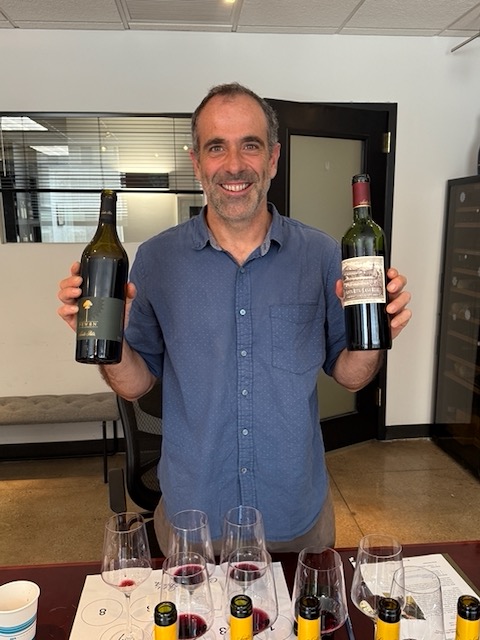
Imagine winemaking as a captivating dance with nature, a never-ending quest shaped by climate, tradition, and an unwavering passion for capturing the purest expression of the land. This is the vibrant reality for Sebastián Labbé, a globe-trotting enologist whose diverse experiences have converged to forge his distinctive vision for the future of Chilean wine. His journey is a compelling tale of exploration, innovation, and profound dedication. Recently, I had the immense pleasure of sitting down with Sebastián for a one-on-one discussion about his journey, his philosophy, and his hopes for the future, all while savoring the exquisite Premium Wines portfolio of Viña Santa Rita. Sebastián’s path began with a solid foundation in agricultural engineering and enology from the Pontifical Catholic University of Chile, but his true education unfolded far beyond his home country. His journey to becoming a champion of Chilean terroir started in some of the world’s most renowned wine regions. Training in New Zealand instilled in him a deep appreciation for meticulous viticulture and a laser focus on sustainability. He was captivated by how a relatively small island nation could make such a profound global impact with its distinctive Sauvignon Blanc. “They’re very good with a strength in sustainability and biodiversity,” he reflects. Australia offered a different kind of education, broadening his understanding of winemaking on a grander scale. He immersed himself in larger-scale operations and a wider range of varietals, honing his craft with Semillon and Shiraz. Bringing his unique global insights back to Chile, Sebastián joined Viña Carmen as Chief Winemaker, part of the esteemed Santa Rita Group in 2005 and later in 2017 spearheading the Ultra-Premium portfolio of Sant Rita. Here, he embarked on a mission to produce exceptional wines that truly capture the essence of Chile’s diverse terroirs. He’s not just a pioneer in flavor, but also in sustainable practices, ensuring the wines are as kind to the earth as they are to your palate. Santa Rita Winery, one of Chile’s most iconic wine producers, boasts a rich history intertwined with the country’s cultural and political landscape. Founded in 1880 by Domingo Fernández Concha in the renowned Maipo Valley, Santa Rita quickly gained a reputation for quality by introducing French grape varieties and modern winemaking techniques. This progressive approach was groundbreaking at a time when Chilean wine was largely rustic. The winery also holds a piece of Chilean history; during the War of Independence, it provided refuge to 120 soldiers—an event commemorated by their popular “120” wine. Today, Santa Rita continues to expand and modernize, maintaining an unwavering commitment to sustainability, quality, and tradition, producing everything from accessible labels to premium wines that highlight Chile’s rich terroir. “I think there’s more and more focusing on farming in general,” Sebastián emphasizes, setting the tone for a conversation centered on the vital connection between the vine and its environment. For him, it’s not just about growing grapes; it’s about cultivating a holistic ecosystem. He spoke passionately about compost preparations, meticulous soil work, and the intentional integration of animals into the vineyard, all fostering a thriving, biodiverse environment. While organic certification isn’t always the sole objective, the philosophy of sustainability is paramount. It’s a deliberate move “back to before the industrial ages, where natural wines, you’re seeing a lot more to the farming and going back to the terroir, as opposed to the conventional methods.” He points to a global shift, even among Burgundy winemakers once reliant on herbicides, now embracing organic practices—a testament to this mindful approach to viticulture. Tasting the Vision As Sebastián guided me through his journey, we sampled the latest releases from Santa Rita’s ultra-premium collection, including the minimal-intervention Floresta wines, the iconic Pewën Carmenere, their Bordeaux-inspired blend Triple C, and the winery’s flagship Casa Real. The Floresta range truly embodies Sebastián’s passion, showcasing his vision for wines that are fresh, vibrant, and deeply expressive of their origins. The wines are terroir specific with minimal intervention as “we wanted to make wines that were more of that style, fresher and with less use of oak,” he explains. Tasting these wines is akin to taking a guided tour of Chile’s diverse viticultural landscapes. Sebastián’s vision for Chilean wine extends beyond crafting exceptional wines; he seeks to challenge preconceived notions and pave the way for future generations of winemakers. “I was tired about this stereotype of Carmenere being big, rich, flat, slightly herbal, ripe with a ton of oak,” he admits, expressing his desire to showcase the true potential of this iconic Chilean variety. He advocates for earlier harvesting, fermentation in concrete tanks, and a judicious use of oak to allow the purity of the fruit to shine through. “There is a big difference, and I still find between herbal characteristics and vegetated characteristics. I think this one is freshness, and the other is under-ripeness.” His continuous challenge is to fine-tune the wines without compromising the house style, especially when dealing with eight subdivided blocks—a challenge he consistently meets head-on. He vividly recounts Chile’s geological history, explaining how the formation of the Andes Mountains and the presence of calcium carbonate deposits in the Limarí Valley contribute to the wines’ unique character. “So that might have that kind of a beautiful tension, but they got a little bit more checks at the same time.” This deep understanding of terroir isn’t merely academic; it informs every decision he makes in the vineyard and the winery. As for advice to future oenologists, he implores them to travel and immerse themselves in the diverse realities of the wine world. Experiencing winemaking firsthand in different regions is crucial for gaining wisdom and unlocking future potential. In a personal choice that speaks volumes about his values, Sebastián recently moved back to the ocean. “After a pandemic, I said, I wanted to return to my roots, closer to the ocean,” he shares. For him, the ocean is more than just a scenic backdrop; it’s a source of tranquility and inspiration, a constant reminder of the natural forces that shape his wines.