
Balthasar Ress Fine Wines, Finer Moments
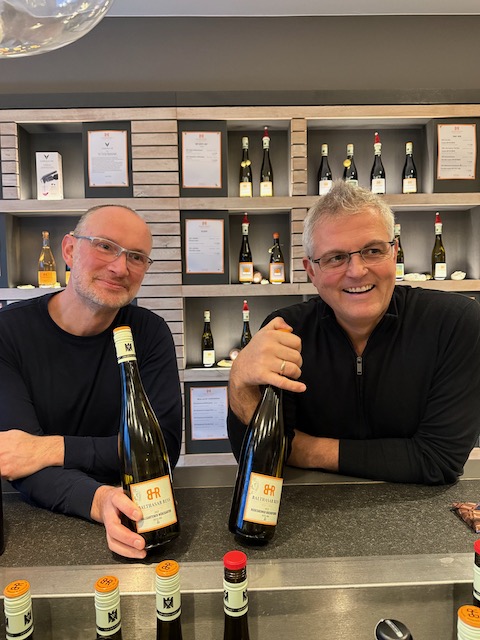
A recent visit to Balthasar Ress, one of the Rheingau’s premier VDP-certified organic wineries, turned into an unforgettable afternoon of wine, stories, and genuine connection. Nestled in the heart of Hattenheim, this family-run estate—founded in 1870 by the butcher-turned-host Balthasar Ress—has evolved into a beacon of fine Riesling and increasingly acclaimed Pinot Noir, all while embracing organic viticulture and a philosophy of “Fein Sei Der Wein” (And Fine Be The Wine). It was also a special pleasure to meet Christian Ress, the passionate managing director who carries forward the family legacy with vision and warmth, alongside his father Stefan Ress, whose experience and quiet presence added depth and history to the occasion. Their hospitality made the visit feel like stepping into a family home rather than just a winery tour. The highlight was a private tasting led by head winemaker Markus Roll and export manager Marc Pohl. Both brought infectious passion and candor to the table, turning what could have been a standard tasting into a lively conversation about life, dreams, and the soul of German wine. We dove straight into their wines—elegant, precise Rieslings from top sites like Rüdesheim Berg Rottland and Hattenheim Nussbrunnen, alongside promising Pinot Noirs that showcase the estate’s growing red focus. The pours revealed layers of minerality, freshness, and site-specific character, hallmarks of the Rheingau’s steep slopes and slate soils. To break the ice (and reveal personalities beyond the bottles), we asked each a series of fun, offbeat questions: Describe your identity with three non-wine-describing words? Markus chose Riesling, terroir, taste—a playful nod to what clearly defines him, even if he tried to avoid wine terms! Marc went with elegant, long-lasting, freshness—words that perfectly mirror the style he champions in export markets. If you could share one bottle of your wine with a person (dead or alive), who would it be and why? Markus picked his wife, sharing a bottle of Bischofsberg because it’s “elegant and easy to share, great price relationship.” A sweet, grounded choice from someone deeply rooted in the craft. Marc humorously selected George Clooney and Brad Pitt, pairing them with Würzgarten for their “fantastic characters”—a fun, star-studded fantasy that had everyone laughing. When you were a kid, what was your dream job? Markus dreamed of being a chef (but noted the lousy hours), pivoting at age 9 to winemaking—a precocious decision that’s clearly paid off. Marc wanted to be a locomotive driver, inspired by his grandpa’s love of trains—a charming glimpse into a childhood fascination with movement and journeys. If you weren’t working with wine, what would you do? Both leaned toward hospitality: Marc mentioned F&B Manager, fitting his background in hotels and service. The conversation turned reflective as they shared memorable moments: Markus recalled a profound tasting with Philipp Wittmann surrounded by great Burgundies (sparking new thoughts on oak influence), falling in love with Sauvignon Blanc during a trip to South Styria, and joyful Champagne sessions with friends. Marc spoke of starting in the army’s officers’ casino as a waiter, his hotel school education in Heidelberg that ignited his wine passion, and a pivotal role at Schloss Vollrads—where he fell for the Rheingau’s perfect blend of Mosel’s elegance and Rheinhessen’s opulent fruit and body. We tackled bigger questions too, like engaging Generation Z, often seen as shying away from wine. Marc’s response was refreshingly honest “Younger generations consume less as they use different things like marijuana and drink RTDs. My task is not to encourage others to drink wine—my task is to find people who wish to have a good bottle of wine.” He emphasized education—helping consumers learn how to enjoy wine to add pleasure—without ever pushing alcohol. On German Pinot Noir (Spätburgunder) gaining global recognition, Markus was optimistic as it’s getting better and better. He raved about recent tastings, blown away by the quality leap in producers like Huber over the last five years, and noted exciting improvements in German Chardonnay too. Dreaming bigger, Markus shared a wish to experiment with Southern Hemisphere reds—Bordeaux varieties like Cabernet Franc and Merlot, and their blends—on Balthasar Ress vineyards. His dream by 2030? Simply retirement, still fueled by his love to the wine. Advice for the next generation of winemakers came straight from the heart: Markus: “Try as many wines as you can, be loyal to your own style, and just do it.” Marc: “Be self-confident and pick your style.” Finally, what would surprise people about them? Markus laughed: “I’m an open book—I’m not as grumpy as I look.” (He doesn’t look grumpy at all—quite the opposite!) The tasting itself was a masterclass in the estate’s evolution. Markus introduced their exciting new concept launching in 2026, inspired by the multi-vintage approach of Dreissigacker’s Vintages series: four Erste Lage vineyards across four vintages (starting with 2019), blended to create wines that transcend individual vintage challenges. With shorter harvest windows and ripeness issues becoming less dominant in the blend, the goal is classic expression through three pillars—variety, region, and winery identity. The 2019 vintage also marked the estate’s official organic certification. Standout wines we tasted included: 2024 Goose Trail Souvignier Gris: PiWi trailblazer from the soggy riverbank spot. Explosive muscat vibes, almond edge, passionfruit kick. Smooth but a touch lean in the middle—crisp tart acid snaps it awake. Grab this funky pioneer now! 2024 Von unserem Riesling: Pure, no-nonsense Rheingau Riesling. Zesty citrus, green apple snap, steely minerality. Bone-dry, mouth-watering acidity drives it hard. Everyday hero that demands another glass—don’t wait! 2023 Rüdesheimer trocken: Steep-slope power. Fresh citrus blast, green apple crunch, subtle stone fruit and floral lift. Razor-sharp dryness, vibrant energy. Classic Rüdesheim punch—drink up fast! 2023 Hattenheimer Engelmannsberg: Erste Lage elegance. Yellow fruit rush, passionfruit exoticism, kiwi-lime zing, lemon balm whisper. Precise, juicy, mineral spine. Seductive yet serious—buy before it’s gone! 2023 Hallgartener Würzgarten: Erste Lage spice bomb. Ripe stone fruit, floral intensity, herbal edge, tight minerality. Focused, structured, long finish. Demands attention—stock up on this gem! 2023 Rüdesheimer Bischofsberg: Erste Lage benchmark. Peach-yellow apple
Carolin Spanier-Gillot: Staying True to Roots in a Changing Wine World
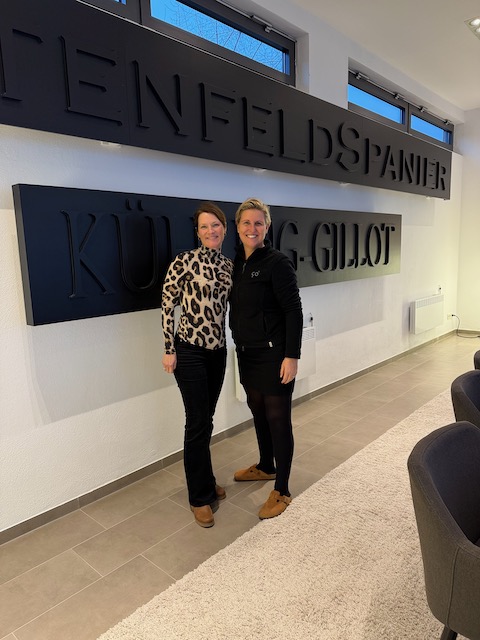
The day had already been long and deliciously intense. Our visit at the previous estate had—true to the unpredictable rhythm of wine trips—run far later than planned, with glasses multiplying and conversations stretching into the afternoon. By the time we arrived at Weingut Kühling-Gillot in Bodenheim, the light was fading over the Roter Hang. There was simply no time left for a proper tasting of Carolin Spanier-Gillot’s acclaimed biodynamic Rieslings and Pinot Noirs. Instead, we sat down for an unhurried chat in the warm glow of the estate over coffee and her special Christmas cake, and what was meant to be a quick visit turned into a memorable conversation with the most super positive, charming optimist in the world of wine (myself being a close second). Carolin Spanier-Gillot helms two esteemed VDP estates: Weingut Kühling-Gillot in Bodenheim and, alongside her husband H.O. Spanier, Battenfeld-Spanier. With a philosophy rooted in “Origin Excellence,” she crafts wines that speak unmistakably of their terroir. In our candid interview, Carolin shared pragmatic insights on market shifts, personal sacrifices, and why chasing trends is a fool’s game. Their focus on authenticity defines her estates’ niche. In a competitive landscape, Carolin warns against trend-hopping—like orange wines or non-alcoholic options, which she bluntly calls “juice.” “If it’s not fermented with alcohol, it’s not wine,” she asserts. “Invest energy in other fermented products like kombucha instead.” Her estates stick to a strict profile of core varieties, centered on Riesling, with no experimental clones. “Fifteen years ago, you could sell discount supermarket wine for €60; now, only brands with a clear profile survive.” By blending tradition with modernity, they thrive on storytelling and sustainability—hosting educational events in their wine cellar to teach food pairings, or positioning accessible premiums like their €28 “Age Riesling” as gateways to memorable experiences. Carolin’s path to winemaking was anything but planned. Growing up on the family’s modest 6-hectare estate, she dreamed of becoming a pilot or doctor. But at 16, when her mother fell ill, family duty called. She stepped in, starting with simple tasks like labeling bottles. Today, she juggles roles as manager, CFO, and “trouble fixer,” clocking 65-hour weeks while prioritizing her team’s well-being. “I put my own needs last,” she admits, a testament to her dedication. Carolin’s rise has been groundbreaking in Germany’s traditionally male-dominated wine industry. In 2015, she made history as the first woman to be named **Winemaker of the Year** by the prestigious Falstaff WeinGuide Deutschland—a major accolade that recognized her exceptional talent and the outstanding quality of her wines. This honor underscored her success in elevating the estates to new heights, proving that determination and vision could shatter glass ceilings in winemaking. Her admiration for strong, trailblazing women shines through in her inspirations. When asked who she would most like to share a bottle of wine with—dead or alive—Carolin didn’t hesitate: Tina Turner. “A great woman and a real epicurean,” she says with enthusiasm. Carolin also holds Gaia Gaja in high esteem for similar reasons of determination and balance, making her choices reflect a pattern of admiring iconic women who conquer challenges with grace. One persistent myth in the wine industry is that “younger generations are not drinking wine.” Carolin dismisses this outright. “It’s inaccurate,” she says firmly. She points to packed wine events buzzing with young attendees, drawn not by gimmicks but by authenticity—particularly organic and biodynamic practices that align with their values of sustainability. Looking ahead to 2030, succession is a priority. Her children—a 16-year-old son keen on winemaking (who’ll gain external experience first) and 21-year-old son potentially handling marketing—are poised to take over. Market-wise, she’s eyeing expansion: exploring Greek varieties like Assyrtiko from Santorini and pushing U.S. distribution beyond coasts into cities like Chicago, fueled by growing demand (a recent 7,000-bottle order). Yet diversification remains key—”We don’t live off the U.S. market.” Carolin also shapes Germany’s evolving wine laws through the VDP, pushing for classified vineyards and transparency. Her critique of dogmatic “natural wine” advocates—who brand critics as “enemies”—underscores her no-nonsense stance: preserve wine’s true identity. In an industry rife with fads, Carolin Spanier-Gillot’s message is clear and inspiring: “The best way to reach new generations is to be true to your story.” By championing quality, sustainability, and family legacy, she’s proving that small estates can not only survive but shine—pouring authenticity into every glass. And one day soon, I’ll be back to finally raise one of those glasses myself.
Visiting Weingut Wegeler with the Larger-Than-Life Richard Grosche
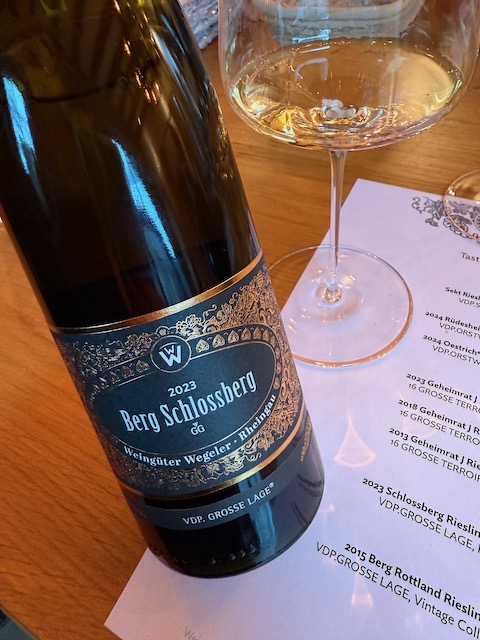
There’s something magical about the winding rivers and steep slate slopes of Germany’s wine regions, where history, terroir, and passion converge in every glass. My recent visit to Weingut Wegeler, nestled in the heart of the Rheingau and Mosel, was nothing short of enchanting. Guiding me through this vinous wonderland was Richard Grosche, the winery’s charismatic Managing Director—a true force of nature with an infectious enthusiasm for wine that makes every conversation feel like a celebration. Larger than life, with a booming laugh and stories that span continents, Richard is not only a passionate advocate for Riesling but also a market-savvy visionary: forward-thinking, creative, and deeply attuned to global trends. With over 20 years in the industry—including stints at top estates like Reichsrat von Buhl and Karthäuserhof—he has driven brand modernization, internationalization, and innovative projects that elevate traditional winemaking into the modern era. Interestingly, as a child Richard dreamed of becoming a teacher, and in many ways he has fulfilled that calling—sharing his encyclopedic knowledge of wine with infectious joy, turning every tasting into an inspiring lesson. Richard embodies the spirit of Wegeler: timeless quality infused with forward-thinking flair. As we strolled through the vineyards and tasted from the cellars, he shared insights that brought the estate’s legacy to vivid life. Founded in 1882 by Julius Wegeler—a visionary from the Deinhard family seeking independence and excellence—the estate remains family-run across four generations. “To make great wine, Wegeler needed not only capital, but also foresight,” Richard echoed the founder’s words. Today, under his dynamic leadership as Managing Director, the family blends deep tradition with passionate innovation: “We have to pursue viticulture, winemaking, and wine sales with foresight and passion!” Weingut Wegeler spans Oestrich-Winkel in the Rheingau (headquarters) and Bernkastel in the Mosel, with 42 hectares in Rheingau and 15 in Mosel. These include iconic grand cru sites, notably the largest holding in legendary Bernkasteler Doctor. Rheingau’s varied soils deliver structured Rieslings; Mosel’s steep slate slopes yield ethereal, mineral expressions. The portfolio also features the 4-hectare Krone estate in Assmannshausen, a VDP site dedicated entirely to elegant Spätburgunder (Pinot Noir). A dedicated team ensures terroir-driven precision: In Rheingau, Michael Burgdorf (Product Manager and Cellar Master) and Andreas Holderrieth oversee operations; in Mosel, Norbert Breit crafts the slate-influenced Rieslings. Hand-harvesting, gentle processing, sustainable practices, and extended lees aging define their approach. As Richard puts it: “Our team ensures every wine reflects its origin—aged until optimally ripe.” Primarily a Riesling specialist, Wegeler produces everything from bone-dry Grosses Gewächs (like flagship Geheimrat J, blended from premier sites and lees-matured) to classic Prädikat levels showcasing vintage character. “Riesling is so versatile, shaped by origin, vintage, and the winemaker’s skill,” Richard noted, dismissing myths: “Riesling is sweet? Bah! Our dry styles prove it’s versatile and age-worthy.” Krone adds silky Pinot Noirs, with small sparkling volumes completing the range. Extended lees contact creates layered, long-lived wines. Under Richard’s creative direction, innovations like switching the Riesling Extra Brut Sekt to traditional bottle fermentation (from Charmat since 2021), earlier picking for fresher profiles, and ambitious production growth reflect his forward-thinking approach to elevating quality and appeal. When I asked Richard to distill the essence of Weingut Wegeler, he leaned in with that signature enthusiasm: “For us, it’s all about Tradition – Place – Prestige – Artisanal.” He elaborated passionately: “We stand on the shoulders of generations of winemaking tradition, rooted deeply in our unique places—the exceptional terroirs of Rheingau and Mosel. We build on this heritage with prestige that comes from uncompromising quality and iconic sites like Bernkasteler Doctor and our grand crus. And everything is done artisanal—hand-harvested, with meticulous care, respect for nature, and the patience to let the wines mature on the lees until they tell their full story. Quality is our philosophy, as Julius Wegeler said in 1882, and nothing has changed.” The pinnacle of the visit was an intimate tasting session with Richard, where we explored current releases, emerging projects, and a vertical of the iconic Geheimrat J. Richard emphasized the wines’ longevity, noting: “Our wines need to age at least 10 years to truly shine because they often go through a ‘dumb phase’ around year 5—that’s why tasting a vertical like this reveals their full potential.” – Riesling Extra Brut Sekt (30 months on lees, base likely 2022; switched from Charmat to traditional method in 2021): Earlier picking for fresher grapes yields a vibrant sparkler with just 3 g/L residual sugar. Current production around 12,000 liters, with ambitious growth planned (20,000 in year 2, 25,000 in year 3—the next release not yet disgorged). Elegant and lively, with fine bubbles, crisp citrus, and mineral drive—a refreshing aperitif bursting with potential. – 2024 Rüdesheim barrel samples (from Berg Rottland, Berg Schlossberg, Kirchenpfad; quartzite and slate soils): Fruitier and chalkier on the nose and palate, evoking a Rheinhessen-like generosity—vibrant yellow fruit, subtle chalk minerality, and approachable charm even in youth. – 2024 Oestrich barrel samples (from Doosberg and Lenchen GG sites; clayish marl soils): More restrained and profound—mineral-driven with lime zest, spicy notes, subtle vegetal undertones, and a mysterious depth that hints at great aging potential. – 2023 Geheimrat J: Fruity and opulent yet flirty and fascinating; broad-shouldered with enticing pomelo and passion fruit aromas. Richard called it potentially one of the best vintages—vibrant, layered, and irresistibly charming. – 2018 Geheimrat J: Emerging from its dumb phase; mineral core with exotic fruits, spicier and more herbal complexity—evolving beautifully with added depth and intrigue. – 2013 Geheimrat J (cool, rainy late September with botrytis influence): Exotic fruits and honeysuckle on the nose, enlivened by vibrant acidity and saline, sea-shore minerality—a balanced, evolving masterpiece. – 2023 Berg Schlossberg GG (Richard’s longtime favorite; shifted from stainless steel to super-old oak, now 2nd- and 5th-use barrels): Intensive and broad, yet socially pleasant—powerful slate-driven minerality, concentrated fruit, and harmonious structure that invites lingering sips. – 2015 Berg Rottland Spätlese (just released; only 3,000 bottles sold, 10,000 remaining): Amazing ripeness shines through with intense passion fruit notes, balanced by beautiful freshness—lush yet precise,
Bubbles Magic: My Enchanting Visit to Weingut Barth in the Rheingau
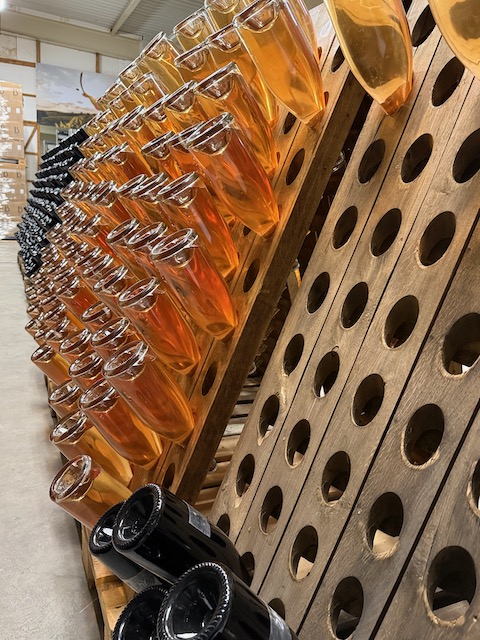
Nestled in the heart of the Rheingau, in the charming village of Hattenheim near Oestrich-Winkel, lies Weingut Barth – a family-run estate that beautifully bridges tradition and innovation in German winemaking. My recent visit, guided by the passionate Marketing Manager Janna, offered an intimate glimpse into this VDP member winery, renowned for its exceptional sparkling wines (Sekt) crafted using the traditional method. Weingut Barth’s story is one of postwar resilience and sparkling ambition. Founded in the 1940s by Hans Barth, the estate truly ignited its fizz under Norbert – Christine Barth’s father – who pioneered traditional-method Sekt production in the Rheingau. Today, Mark Barth, a Geisenheim-trained visionary and self-styled “Riesling Master,” being their core focus, helms the winemaking alongside his wife Christine. Their philosophy is to craft Sekts that radiate “inner peace” through patient, natural vinification, capturing the soul of historic vineyards with refreshing innovation. Germans may have reduced wine consumption dramatically but the sparkling wine consumption remains strong. Spanning around 20 hectares of organically farmed slopes – including crown jewels like the VDP.Grosse Lage Hattenheimer Hassel and VDP.Erste Lage Schützenhaus – the estate is a Riesling stronghold (over 80% of plantings), complemented by Spätburgunder (Pinot Noir), Weißburgunder (Pinot Blanc), and bold experiments like Cabernet Sauvignon. Biodiversity thrives here: wild herbs and flowers dance between rows, hand-harvesting ensures perfection, and vegan practices honor the land for generations to come. What sets Barth apart is their devotion to Sekt as art. “Sparkling, Family Tradition – Open Minded,” Janna, our host and hospitality representative beamed, encapsulating their ethos. All Sekts are vintage-dated, born from traditional bottle fermentation with extended sur lie aging – the longest now stretching to five years for upcoming Wisselbrunnen Grosse Gewächs releases from 2023. Producing about 60,000 bottles annually, they currently disgorge by hand, riddling on pupitres (some whimsically hand-painted with Picasso-inspired motifs). Next year brings automation to scale their magic without compromise. All sparklings are vintage, but only declared with the single vineyards, much easier from the processing point of view for Barth and their clients. A delightful detour: the collaborative “Riegel” spirit (echoing partnerships in the region), where growers pool premium grapes for communal bases, each imprinting their unique label – a testament to Rheingau’s shared pursuit of excellence. The pinnacle was the tasting in their award-winning vinotheque, where Barth’s style unfolded like a masterpiece: mineral-laced freshness, creamy depth from lees, and gastronomic allure that dances on the palate. Standouts from their vast range: The prestige lineup? Transcendent. From vibrant entry-level sparks to prestige profundity, Barth’s Sekts aren’t mere drinks – they’re terroir-kissed elixirs that rival the world’s finest, blending tradition with fearless innovation. As Janna reflected, eyes sparkling: “We’re a family pouring heart into every bubble.” If your soul craves bubbles that captivate, evoke, and elevate, seek out Weingut Barth. One sip, and you’ll be enchanted forever.
Discover the WineBANK: A Paradise for Passionate Oenophiles
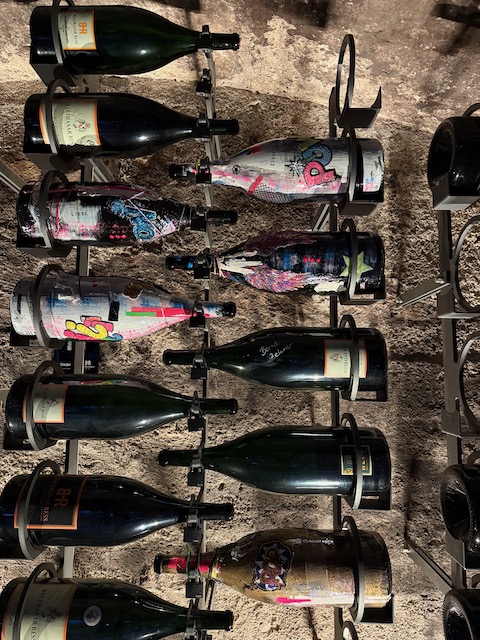
Imagine a place where your finest bottles are stored in perfect, climate-controlled vaults, where you can pop in at midnight for a spontaneous tasting, and where fellow wine lovers gather to share stories over exquisite pours. I recently stepped through its doors into a magical world for oenophiles—a true « wine bank » where your precious bottles are safeguarded like treasures in a vault, secure, insured, and aging gracefully while you hold the key. That’s the magic of wineBANK, a revolutionary private members’ club that’s redefining how we experience wine. Born from the vision of one innovative winemaker—it’s a lifestyle, a community, and a gateway to the world of vinous delights. If you’re a wine enthusiast, buckle up as we dive into the story of wineBANK, its charismatic founder, and why it’s becoming the ultimate destination for those who live and breathe wine. At the heart of wineBANK is Christian Ress, a name synonymous with innovation in the German wine scene. As the co-owner and managing director of the historic Weingut Balthasar Ress—a VDP estate established in 1870—Ress dreamed up the concept back in 2003. He wanted a space where wine aficionados could securely store their collections, enjoy tastings on demand, and connect with like-minded souls. By 2008, that dream materialized into the first wineBANK in his hometown of Hattenheim, Rheingau, Germany. Ress, with his deep roots in winemaking, saw an opportunity to blend tradition with modern convenience, creating a franchise model that’s now spanned continents. His passion for wine is more than a business, it’s personal, fueling a network that celebrates the joy of discovery and sharing. wineBANK isn’t your average wine cellar; it’s a sophisticated members-only club designed for those who treat wine as a passion project. The core idea? Personal lockers in climate-controlled environments (think 10-16°C and 65% humidity) where your bottles age gracefully, safely and ready for enjoyment. But here’s what truly elevates it: seamless 24/7 access in most locations, paired with intelligent motion sensors that instantly sense your arrival and cue the perfect music mood the moment you step through the door—transforming every entrance into an effortless, welcoming experience that feels almost magical, “By the Glass” dispensers for sampling chilled wines at the push of a button, and an honesty bar for casual sips. The franchiser and cellar master have sole discretion over the selection of enomatic bottles and availability tasting bottles from other cellar members. With over 19 locations across four countries—including Germany, Austria, Switzerland, and even the USA—members use a single card to unlock doors worldwide, fostering a global vinophile community of more than 3,000 enthusiasts. It’s all about that shared passion: “One club, one community, one passion—wine.” Let’s zoom in on where it all began with our guides Julia Deissroth (Marketing & Events) and Sophia Königseder (Sales & Expansion) as they guided us through our tour of the wineBANK Rheingau location. This inaugural spot, opened in 2008, transformed two historic vaulted cellars from the 17th and 20th centuries into a stylish haven. Renovated with sustainability in mind—using local slate from Bacharach, quartzite from the Taunus mountains, and UV-free LEDs—the space exudes old-world charm meets modern elegance. It boasts nine vaults, 223 lockers, and capacity for a staggering 33,118 bottles, plus dedicated storage for magnums and larger formats. Three private cellars offer ultimate seclusion for those special collections. A highlight for collectors in the wineBANK Rheingau is the dedicated storage for large-format bottles from Weingut Balthasar Ress, home to one of the region’s most impressive collections of these majestic vessels. These oversized bottles—ranging from magnums to impressive Nebuchadnezzars and beyond—not only age wines more gracefully due to their lower oxygen exposure but often feature stunning artistic elements that elevate them to true collector’s items. Inspired by icons like Château Mouton Rothschild, the Ress family launched an artist label series in the late 1970s, commissioning renowned artists to design unique labels for limited-edition wines. Starting with Heinz te Laake in 1978 and continuing through 15 editions until 1997 (featuring artists like Heinrich Richter, Jörn Kausch, and Ottmar Alt), these bottles blend exceptional Rieslings with original artworks—some signed, numbered, and even accompanied by framed prints. Though the annual series ended, the tradition lives on for special occasions, creating rare, emotionally charged pieces that marry fine wine with fine art. Storing these grand, art-adorned formats in the wineBANK’s historic vaults adds an extra layer of prestige, making them perfect centerpieces for events or long-term aging of wine art. What sets wineBANK apart are the perks that turn wine storage into a full-fledged lifestyle. Beyond the lockers, enjoy moderated tastings, vineyard tours, and exclusive events like the wineBANKer’s Table—Seasonal gatherings, after-work drinks, and extravagant soirées keep the calendar buzzing. In Rheingau, members get special pricing on Balthasar Ress wines delivered straight to their lockers, plus discounts on tastings and even overnight stays in the estate’s suite. Partnerships with local spots like Adlerwirtschaft or Zum Krug let you bring your own bottles for corkage-free dining, weaving wineBANK seamlessly into your everyday adventures. For lifestyle enthusiasts, it’s a sanctuary to explore, share, and savor—networking with winemakers and attending global events. On the business side, the franchise model attracts entrepreneurs, hoteliers, and real estate pros who transform underused spaces into thriving hubs. It supports wine sales, partnerships, and tourism, making it a vinous ecosystem where producers and consumers connect. “Wine & passion” isn’t just a phrase; it’s the ethos, highlighted in the club’s journal featuring stories from sommeliers, members, and partners who live for that perfect pour. In a world where wine is more than a drink—it’s an art, a story, a connection—wineBANK stands as the ultimate vault of possibilities. If this sparks your curiosity, why not explore membership? Your next great bottle (and friendship) might be waiting in those historic cellars. Cheers! Check out their website for more information: https://www.winebank.de/en/home
Creative, Happy Place of Gesine Roll
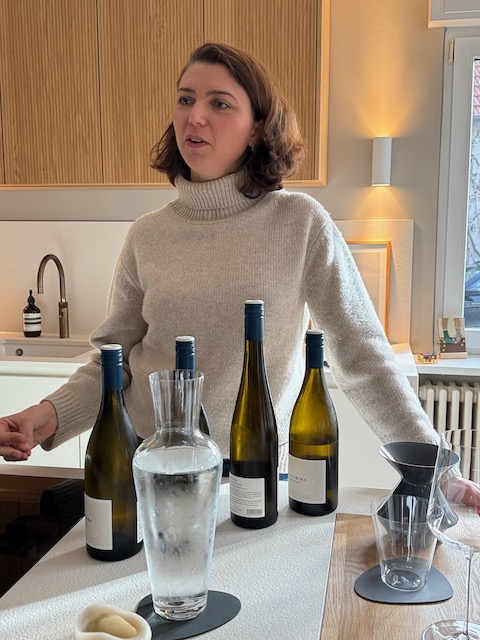
Imagine this: wine so vibrant and precise that one sip pulls you straight into the rolling, limestone-rich hills of Rheinhessen – Germany’s most dynamic wine region. At the forefront of this renaissance are two extraordinary young winemakers whose deep personal drive, infectious joy, and fearless creativity are reshaping what German wine can be. This two part article dives into the worlds of winemakers Gesine Roll and Tobias Kramer. You are standing on a high plateau in Rheinhessen, the wind whispering through vines heavy with promise, overlooking legendary sites like Morstein and Kirchspiel in nearby Westhofen. This is Weingut Weedenborn in Monzernheim – a place where tradition meets bold vision, Sauvignon Blanc reigns supreme, and the soils are rich in limestone and basalt. Here, a moderate cooling climate and the coolest sites guarantee perfect ripeness, creating wines that burst with energy and precision. What drives Gesine? A profound belief in patience, humility, and letting exceptional terroir speak for itself. Her winery is her self-described happy place – a space of determined creativity and genuine warmth that shines through in every bottle and every heartfelt homemade lunch she shares with visitors. Gesine isn’t chasing approval; she’s building a legacy rooted in authenticity and joy. What started as a historic family farm – grandparents raising animals, parents diversifying into other crops – transformed into a pure viticultural gem when Gesine Roll took over in 2005. With ~20 hectares of family-owned vineyards, Gesine has turned heads (and palates) by putting Sauvignon Blanc front and center: a whopping 13 hectares, about 50-65% of the plantings. Rounded out by Chardonnay (some vines dating back to 1992, Germany’s first legal year), Weissburgunder, Riesling, and Pinot Noir, her focus is laser-sharp. From a young age, she was deeply drawn to architecture &exploring design, envisioning environments shaped by form and function. However, at the age of 15, she made the deliberate decision to continue the family tradition, transitioning from architectural pursuits to the heritage and responsibilities of winemaking. She said “had I not followed this path, I would likely have pursued a career in fine woodworking—crafting bespoke pieces from carefully selected timbers, where precision joinery, thoughtful design, and the natural beauty of wood converge to create enduring, handcrafted objects of both utility and artistry.” And the accolades? In 2024, Gesine was crowned Falstaff Female Winemaker of the Year among many other awards– a huge nod to her vibrant, juicy, expressive whites that are rewriting Rheinhessen’s story beyond Riesling. ONE CORRECTION FOUND: Also several other awards Gault & Millau wine personality of the year -23, Vinum -25 & -24 Best Sauvignon Blanc of the year. Meeting Gesine is like chatting with a force of nature – humble yet fiercely passionate. Her philosophy? Patience, humility, consequence, passion, and focus. “We want to make passionate, quality wine without complexity,” she says with a smile, shunning trends like non-alcoholic wines or fleeting fads like Pet-Nat. Instead, she lets the terroir speak: those unique limestone soils, high altitudes (200-265m) for cooler temps, slow ripening, and that perfect balance of acidity and aroma – no “green” notes here! Her style is all about energy and precision: spontaneous fermentation, reductive winemaking, and generous aging. Notably, her Sauvignon Blanc and Chardonnay follow the same winemaking approach. Top cuvées like “Terra Rossa” (from red limestone sites rich in iron oxide) spend 18-20 months in 500L French oak (60-65% new), plus time on lees and in bottle. The result? Wines that explode with freshness, minerality, and layered complexity – elegant, pure, and utterly drinkable. Gesine said “ to create a great wine, it needs silence.” We tasted a stunning vertical of Sauvignon Blanc Terra Rossa, Reserve Sauvignon Blanc, Chardonnay Reserve, and the pinnacle Grande Réserve – here are the brief notes that captured the moment: Sauvignon Blanc Terra Rossa Reserve Sauvignon Blanc (often called Fumé for its smoky oak influence) Chardonnay Reserve Grande Réserve (more Chardonnay than Sauvignon Blanc in the blend)Gesine notes that this needs more silence and time – “Sauvignon Blanc is a louder grape.” It wasn’t always smooth sailing. It took time for Gesine to find her Sauvignon Blanc style. It wasn’t till 2016 that she truly felt confident. Early skeptics asked, “Why Sauvignon Blanc instead of Riesling?” in a region long underrated for premium wines. But Gesine bet on exceptional sites, long aging, and collaboration. As a founder of the “Message in a Bottle” group in 2002 – 25 ambitious young winemakers united to champion Rheinhessen’s chalky terroir – she helped shift perceptions and elevate the entire area. Her signature is long post-fermentation lees aging, and since 2011 she’s been crafting Reserve wines in large 500L. Today, Weedenborn is celebrated for world-class quality (VDP-recognized, though independent), mentoring the next generation, and proving you can go all-in on one variety and still reflect pure terroir. As if the wines weren’t generous enough, Gesine surprised us by preparing a beautiful lunch herself – a warm, heartfelt touch that made the visit feel like being welcomed into a friend’s home. The highlight was her signature quiche, golden and fluffy, packed with seasonal vegetables and just the right creamy richness. Paired with a crisp glass of Sauvignon Blanc, it was the perfect savory counterpoint to the afternoon’s vibrant tasting – grounding, comforting, and utterly delicious. It truly felt like the ideal close to a day filled with inspiration, flavor, and genuine hospitality. Spending time with Gesine Roll at Weedenborn feels electric – a tale of quiet defiance, deep roots, and soaring ambition. Gesine Roll isn’t just crafting wines; she’s building a legacy, one thrilling, mineral-kissed sip (and bite) at a time. If you’re exploring Rheinhessen, put this on your must-visit list. Trust me, you’ll leave inspired… and thirsty for more! 🍷 Next stop, an evening with Tobias Kramer of Weingut Krämer.
An Evening with Tobias Krämer: Straight Talk
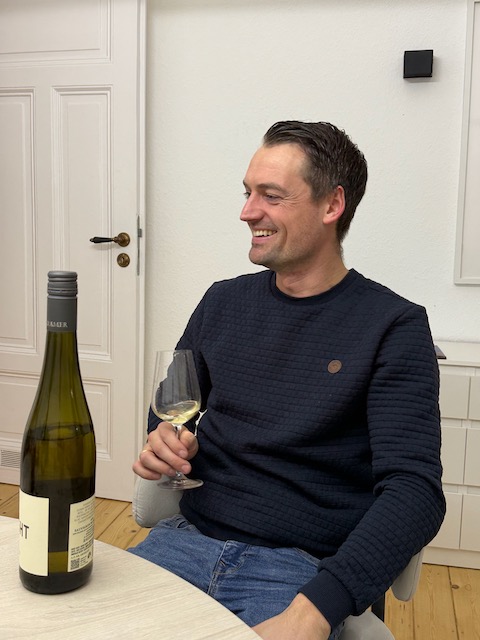
It was one of those cozy winter evenings in Wiesbaden, the kind where the air carries a crisp chill and the promise of good conversation over glasses of wine. We sat down with Tobias Krämer, the young winemaker behind Weingut Krämer for an intimate interview and tasting. At just 31, Tobias exudes a quiet confidence, the sort earned from growing up among vines and now steering his family’s eighth generation winery into a new era. Gau-Weinheim, a charming wine village nestled in the heart of Rheinhessen—Germany’s largest wine region, often called the “land of a thousand hills.” Rheinhessen is renowned for its diverse grape varieties, innovative young winemakers, and a remarkable renaissance in quality dry Rieslings and other whites, shedding its old association with mass-produced sweet blends to emerge as a hotspot for fresh, terroir-driven, and exciting wines. But there is one special estate, a hidden jewel amongst gems, WKrämer. What fuels Tobias? An unbreakable connection to his family’s eighth generation roots combined with an urgent desire to prove Rheinhessen’s world-class potential. His wines are straight, creative & innovative. The Krämer estate is compact and personal—around 13 hectares of vineyards dotted across limestone-rich slopes like the impressive Gau-Weinheim—but it’s deeply rooted. “My vineyards come from both sides of the family,” Tobias explained as he poured the first glass. “Part from my father’s side, part from my mother’s, just a few kilometers apart. That gives us these wonderful microclimates to play with.” He smiled, recalling how his father was the first in the family to shift from bulk agriculture to bottling and selling wine directly to customers. “Before that, it was mostly farming with a bit of wine on the side. Now, we’re all in.” As Tobias said with a smile, three words that describe my wines are Straight, Creative & Innovative. As we swirled and sipped his flagship Straight Riesling 2024—the wine he calls his “business card” and the heart of the winery’s identity—the conversation flowed naturally. This young vintage burst with vibrant freshness: juicy yellow peach, zesty citrus, and subtle herbal notes, all underpinned by a crisp, mineral backbone that makes it athletic and invigorating, just as Tobias describes his style. This Riesling is everything Tobias stands for: mineral-driven, fresh, clear, and what he describes as “athletic” in structure. “It’s not overly round or ripe,” he said, gesturing animatedly. “We want that balance, that freshness from our cool climate and limestone soils. Riesling is our identity here—it’s what we do best.” We moved on to the Straight Sauvignon Blanc 2024, sourced purely from the Gau-Weinheim sites. It jumped from the glass with exotic energy—lime zest, gooseberry, papaya, and a cheeky streak of passionfruit, backed by lively acidity and a mouthwatering mineral snap. “Fein, frech und fruity,” as one might say: bold, fun, and unmistakably Rheinhessen. Next came the Straight Chardonnay 2024, a clear, powerful expression with exotic hints of quince and ripe pear, wrapped in a smoky finesse that speaks of careful craftsmanship—elegant yet approachable, with great length. Tobias’s journey into winemaking feels almost predestined. “From childhood, I knew I wanted to make wine,” he shared with a chuckle. “I’d be out on the tractor in the vineyards as a kid, loving every minute.” But it wasn’t without challenges. After his apprenticeship in 2009 at several estates, where he learned everything from solo cellar management in small operations to teamwork in larger ones, he returned home ready to innovate. One anecdote stands out: pushing to plant new blocks on steep hills. “My father was traditional, a bit hesitant at first,” Tobias admitted. “But he supported me. We’ve blended old knowledge with new ideas.” The single-vineyard gems stole the show later in the evening. The Kaisergarten Gau-Weinheimer 2022 (likely a Chardonnay from this prized site) delivered exceptional density and minerality, with complex smoky notes, quince, and pear—straff, structured, and lingering beautifully. Then the La Roche Riesling 2020, from the red slate soils shared with legends like Niersteiner Rotenhang: intensely mineral and saftig, loaded with citrus, ripe stone fruit, and a firm, structured grip that promises even more with age. We finished with the maiden vintage, La Roche 2016—Tobias’s first solo statement from this site. Even after years in bottle, it showed youthful vitality layered with deeper complexity: concentrated fruit, pronounced minerality from the Rotliegend, and that elegant, juicy tension that marks great terroir-driven Riesling. We’d tasted blind a few wines, comparing to pricier benchmarks like Herman J Wiemer Riesling “People pay $35 for that,” he laughed. “But blind? Our quality holds up, and at €10-12 a bottle in Germany, it’s about making great wine accessible—a big table where everyone is welcome.” I encouraged Tobias to take the remainder of the bottle home to share with his wife Laura even running her own label, “Aura.” They have a harmonious collaboration that mirrors inspiring industry duos, where each partner pursues their vision while supporting the other, fostering innovation rather than competition. Marketing is where Tobias’s modern side really sparkles. He’s part of a young generation elevating Rheinhessen’s reputation, once overshadowed but now buzzing with quality-driven peers. Social media plays a big role, along with partnerships. A high-profile collaboration providing wines for VIP events tied to German football. “It’s a fantastic opportunity,” Tobias said, eyes lighting up. “Getting our Riesling in front of thousands, demystifying German wine—moving past those old stereotypes of sweet stuff in blue bottles from the ’70s and ’80s.” Climate challenges came up too—droughts, hotter summers atypical for their cool sites. “But our spread of vineyards helps,” he noted. “Some have better water access; we blend for consistency.” As the evening wound down, glasses empty and stories shared, it was clear: Tobias is honoring his roots while pushing forward, one straight, mineral-kissed sip at a time. He is driven by a mission to demolish old stereotypes and invite everyone to the table with wines that are honest, exciting, and unmistakably Rheinhessen.
Riesling Revolution: Martin Tesch’s Nahe Magic
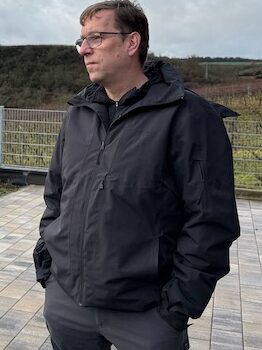
My recent trip to Germany had a twofold purpose: first, to demystify the often misunderstood world of German wine, peeling back layers of complexity beyond labels and classifications; and second, to dive deeper into the nuances of its signature grape, Riesling, in hopes of converting me—a devoted Chenin Blanc lover—into an even greater Riesling devotee. What better place to start than in the Nahe region, where I spent an enlightening day with the visionary winemaker Martin Tesch. Meeting Martin was like chatting with a philosopher who just happens to make exceptional wine. Charismatic and deeply thoughtful, he’s the driving force behind Weingut Tesch’s evolution. As he put it quite simply, I describe my wines as New Old School, Innovative & Rebellious. Nestled in the picturesque Nahe valley in the village of Langenlonsheim—one of the region’s largest winegrowing municipalities with around 187 hectares of vineyards—Weingut Tesch is more than just a winery—it’s a living testament to Germany’s rich viticultural heritage. Born into a family with centuries of winemaking tradition, Martin’s path to becoming a winemaker was both scientific and serendipitous. He studied microbiology, where he discovered his enthusiasm for fermentation processes of all kinds. This academic background led him back to the family estate, which he has run since 1997. In 2001, he embarked on a transformative journey, reinventing the winery by focusing primarily on dry Rieslings produced with minimal intervention, reducing the family’s portfolio from plus 50 to 6 wines. Often seen as a trailblazer who “follows the science,” even if it means bucking traditions that some peers view as unconventional, Martin’s journey reflects a blend of heritage and innovation. Martin’s independence is the key to his success. From an early age, Martin was fascinated by punk music. He befriended the famous German punk band Die Toten Hosen at their second concert outside Düsseldorf and later created several private-label wines with them. He left the VdP (Germany’s prestigious wine association which his grandfather founded in 1901) to forge his own path, emphasizing individuality over conformity. “The road to success is not a group travel. You need to be individual,” he told me, and it’s paid off. His customer base now includes young, educated wine lovers who crave authenticity and stories over fleeting trends. But wait, Martin said, to have a better understanding of my wines, you need to see where they come from. Immediately, Martin Tesch took us up to his vineyard, wanting us to really feel the story behind his wines before we started tasting. From a stunning viewpoint high above the steep, terraced slopes of the Nahe Valley, he introduced us to his pride and joy: the legendary St. Remigiusberg vineyard. First planted by Benedictine monks centuries ago and long considered one of the Nahe’s greatest sites, this parcel was split apart during the turmoil of the 16th-century Reformation. After hundreds of years divided, it’s only recently been brought back together through the passion and perseverance of Martin’s family and six families from the Netherlands. Now whole again at 4 hectares, the reunification is so much more than just gaining land. It’s a powerful, deeply symbolic “major step” in protecting a viticultural heritage that stretches back generations. Martin said it best, with real emotion in his voice: “You have a step every 300–400 years, and this was only three steps… you got to live one of the major steps.” Standing there among vines planted in ancient volcanic soil, you can’t help but feel the weight of history—and the quiet thrill of being part of its next chapter. Driving through the Nahe, Martin explained the empty plots—a stark sign of ongoing production reduction in the region as growers adapt to changing markets and climates. But the magic of Nahe isn’t lost. At the core of Weingut Tesch is Martin’s “new old school” philosophy—a brilliant blend of tradition and innovation. It’s about honoring the past while adapting to the present, ensuring the wines remain timeless yet relevant. Riesling, of course, takes center stage here, but Martin’s dry styles are a revelation. Sustainability is woven into every practice, though Martin shuns certifications. “People want to understand deeper than just a stamp… ‘organic’ isn’t a guarantee of taste,” he explained. Instead, it’s about handwork, minimal copper use, and a genuine respect for the land. This approach yields wines that are pure expressions of Nahe’s terroir—crisp, mineral-driven, and endlessly fascinating. Tasting them side by side, I felt the “new” in modern techniques like screw caps harmonizing with the “old school” essence of ancient vines and historical insights. His wines are crafted from 60-year-old vines, aged on lees for added complexity, and bottled under screw caps—a bold move Martin adopted in 2005 despite initial controversy. He also minimizes sulfites (down to 25 ppm post-bottling) and focuses on spicy, intricate profiles, like the “Unplugged” Riesling, which boasts lower sugar but heightened depth. Martin shared amusing anecdotes about label designs: an angel on one bottle raised eyebrows in the US for not being “fully clothed” enough, while Sweden questioned its age-appropriateness. His bold, modern labels—featuring vibrant color-coding inspired by the London Underground map, unique artwork for each vineyard (often with playful motifs like a king frog), and a consistent portrait of his great-grandfather—earned a prestigious Red Dot Design Award. These stories underscore the cultural tightrope of exporting authentic German wine, maintaining both traditional and modern art influences on each label. His son, set to carry the torch, plans to “stay small” and keep the “fun in winemaking” alive, rejecting mass-market temptations like “2 million bottles of alcohol-free wine.” In Martin’s words, “History means nothing… you can lose it in every generation. It’s just a starting point.” This mindset ensures Weingut Tesch isn’t resting on its laurels but building a future rooted in values: individuality, sustainability, and that unbreakable bond between people, place, and wine. How to promote Riesling, the issue with success of Riesling -Martin said Give Riesling a role – that doesn’t work- perfect for food pairings acid with fat and richness no matter
Holiday Travels
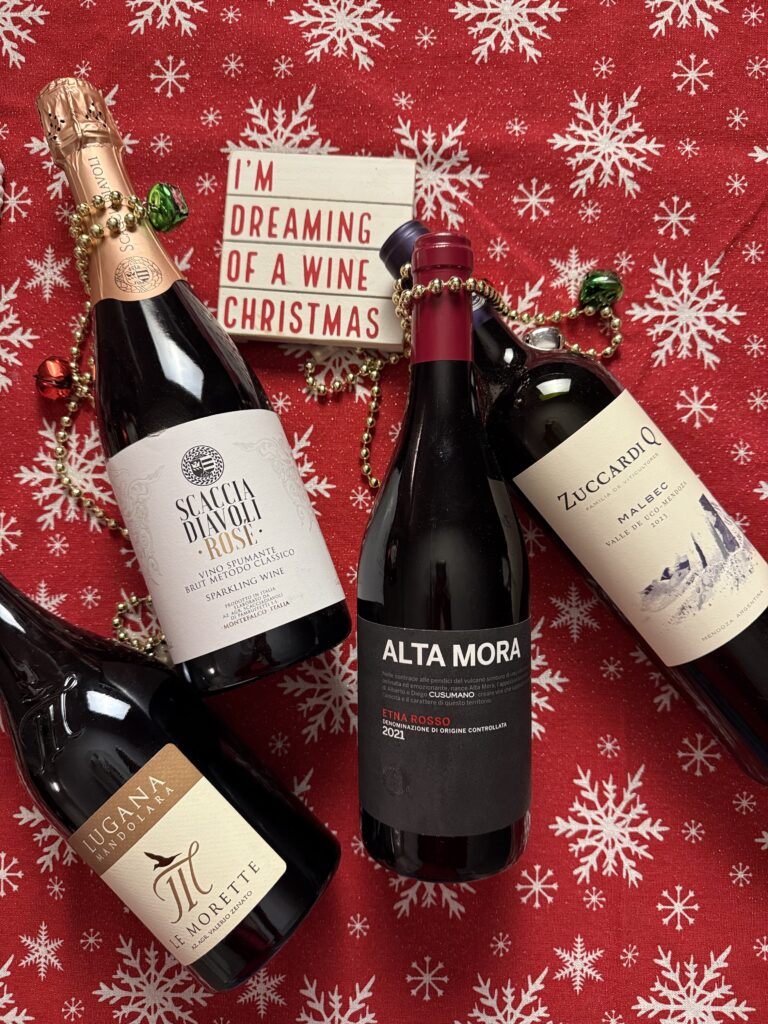
These four bottles aren’t just wines – they’re postcards from the roads I traveled in 2025, little liquid souvenirs I brought home from places that stole my heart. From volcanic slopes to glacier-cooled lakeshores, from devil-chasing hilltops to sky-high Andean vineyards, each one carries the soul of where it was born. And as the holiday lights start twinkling, they transform into the perfect companions for the season: sparkle to kick off the night, spice to match the feast, brightness to cut through the richness, and velvet depth for those long, fireside conversations. Here they are – four passports to joy, ready to make your holiday season unforgettable! Scacciadiavoli Brut Rosé: The Devil-Chasing Sparkler That’s Pure Party Magic! Oh, buckle up, bubbly lovers—this Scacciadiavoli Brut Rosé from the legendary Cantina Scacciadiavoli is like a cheeky Italian whisper saying, “Life’s too short for flat vibes!” Hailing from the sun-kissed hills of Montefalco in Umbria, Italy, this winery’s been crafting wines since the 1800s, with a name that literally means “devil-chaser” The region’s volcanic soils and gentle breezes give it that extra zing, turning humble grapes into liquid fireworks. Winemaking here is all about that classic Italian flair: hand-picked 100% Sagrantino grapes get the royal treatment with the Metodo Classico (think Champagne method, but with more Mediterranean soul), aged min 24 months sur lie fermenting in the bottle for that fine, celebratory fizz. It’s aged just right to keep things fresh without losing the fun—pure artisanal wizardry that lets the terroir shine through every bubble. Style-wise, this is your go-to sparkling rosé for when you want elegance with a wink: brut-dry for that crisp edge, but bursting with playful energy. It’s the rosé that dances on your tongue, light yet structured, like a summer fling that turns into your new bestie. Tasting notes? Get ready to swoon: a pale salmon glow in the glass, unleashing a floral explosion of wild strawberries, red apples, and a whisper of brioche crust—fresh as a morning jog through an orchard. On the palate, it’s a lively tango of cranberry zip, ginger spice, and white pepper kick, all wrapped in silky bubbles and zesty acidity that lingers like a flirty goodbye. One sip, and you’re hooked—elegant, savory, and oh-so-refreshing! For fun food pairings, pop this open with seafood towers , charcuterie boards loaded with prosciutto and fresh cheeses, or even a zesty white-meat grill-out. It’s the ultimate mood-lifter for rooftop toasts, beach picnics, or just because—evoking that carefree, sun-drenched euphoria where worries bubble away and every moment feels like a victory lap. Cheers to chasing devils with delight! Fun Fact: The winery’s name literally means “Devil-Chaser” because, back in the 19th century, the vineyard sat right next to a tiny village where an exorcist was once called in to banish a pesky demon. Locals swear the first bottles of sparkling Sagrantino were so good that even the devil fled in delight… and never came back! Le Morette Mandolara 2024: Lake Garda’s Zesty Sunshine in a Bottle! Dive into the sparkling waters of joy with Le Morette’s Mandolara 2024—because nothing says “let’s make memories” like a white wine that’s as breezy as a Venetian gondola ride! Crafted by the Zenato family at Le Morette winery, these folks have been tending vines in Peschiera del Garda since the 1960s, blending old-school passion with zero-chemical purity for wines that taste like pure, unfiltered happiness. Nestled in the Lugana DOC region of Veneto, Italy—just a stone’s throw south of Lake Garda’s shimmering shores—this spot’s mineral-rich clays and lake-cooled nights crank up the freshness dial to eleven, making every vintage a love letter to the land. Winemaking is a family affair done right: 100% Turbiana grapes (that’s Verdicchio’s sexy Italian alias) from the hallowed Mandolara vineyard get a gentle stainless-steel hug to preserve their zippy soul—no oak, no fuss, just pure expression fermented cool and crisp for that vibrant pop. It’s sustainable magic that lets the grapes strut their stuff. This bad boy rocks a flinty-green white wine style—light-bodied, zingy, and endlessly quaffable, like the cool cousin at the family reunion who always brings the best stories. Perfect for those “aha!” moments when you need refreshment without the weight. Pour it out, and bam—your nose is hit with a citrus symphony of grapefruit zest, green apple crunch, white flowers, and a sneaky apricot tease, all wrapped in that flinty, mineral kiss from the Garda stones. The palate? A fruity fiesta of peach whispers and apple brightness, finishing with bitter almond elegance and a mouthwatering acidity that begs for another sip. It’s fresh, balanced, and downright addictive—like biting into summer itself! Pair it up with Taco Tuesday fish tacos, delicate seafood pastas, or veggie-packed risottos for a match made in heaven—light, lively, and laugh-out-loud delicious. The mood? Effortlessly upbeat, evoking lazy afternoons by the water, spontaneous brunches, or that giddy “yes!” to new adventures—pure, feel-good elixir for souls craving a splash of serenity and sparkle! Fun Fact: The Mandolara vineyard is home to a colony of wild ducks (called “morette” in local dialect) that waddle through the rows every spring. The Zenato family refuses to scare them away, so every vintage is officially “duck-approved” and probably blessed with extra good luck! Alta Mora Etna Rosso 2022: Sicily’s Volcanic Vixen Ignite your senses with Alta Mora Etna Rosso 2022, where the fiery spirit of Mount Etna meets winemaking wizardry for a red that’s as explosively fun as a Sicilian festa! Born from the Cusumano family’s Alta Mora project—a high-elevation love child of passion and precision since 2007—this crew’s all about honoring Etna’s wild side with sustainable swagger and indigenous soul. Perched on the volcanic flanks of Etna in Sicily, Italy—blending grapes from star vineyards like Verzella, Solicchiata, Feudo di Mezzo, and Guardiola at 650–900 meters up—these lava-kissed black sands and ancient soils brew a mineral magic that’s equal parts rugged and refined, capturing the island’s untamed heartbeat. Winemaking channels that volcanic energy: 100% Nerello Mascalese gets a cool ferment to lock in freshness, then
Life in Villany Wine Country
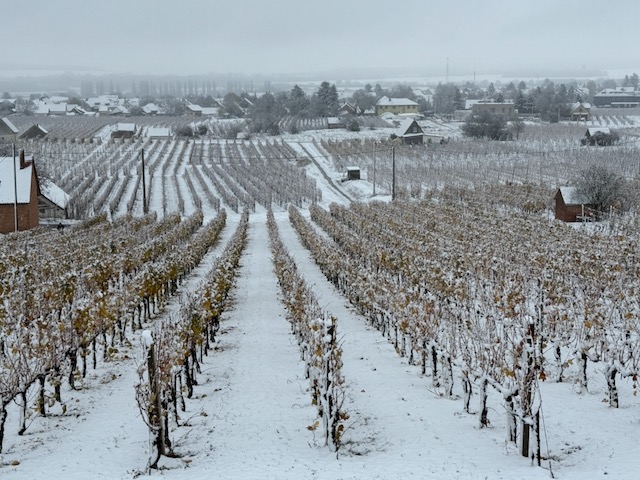
Hidden in Hungary’s deep south lies a tiny village of just 2,000 souls that’s quietly rewriting the rules of world-class wine: V I L L Á N Y. This is where Cabernet Franc reaches utter perfection (many say it’s one of the planet’s greatest terroirs for the grape). Where Bordeaux-style blends are exploding onto the global stage. Where ancient cellars meet concrete eggs, photocatalytic oxygenation, and 30-year-old vintages that taste like liquid history. Few wine regions in Europe deliver the combination of heritage, innovation, and sheer personality that Villány does. During the exclusive VIP tour curated by Villány Borvidék, we were granted rare access to four benchmark producers, each offering a distinct lens on why this small southern Hungarian appellation is producing some of the world’s most compelling Cabernet Francs—and far more. We woke up to a once-in-a-decade winter fairytale — snow blanketing the vineyards — and spent the day spellbound on our tour. Tradition and cutting-edge innovation aren’t clashing here… they’re dancing. My heart was stolen by: ✨ Vylyan – Bold, fruit-driven beauties in a jaw-dropping contemporary winery. Second-gen winemaker Sándor is pure fire and curiosity ✨ Bock – The legendary godfather whose storytelling leaves you utterly charmed. Classic, powerful, soulful reds that demand respect ✨ Csányi – Big but polished to perfection. Elegance in every glass ✨ Gere Attila – The grand patriarch whose stories wrap around you like velvet and won’t let go. Refined, sophisticated, endlessly innovative ✨ Günzer Tamás – Family passion on overdrive & impossible not to love Vylyan Terasz Perched atop the Fekete-hegy with panoramic views across the vineyard quilt, Vylyan is a story of generational evolution. Founded in the early 1990s by a visionary father, the estate is now led by second-generation economist Flóra and her mother, guided since 2017 by winemaker Sándor Montecucco. Creative friction between tradition and modernity is palpable—and highly productive. Vylyan has always treated wine as a form of art and the label as its canvas. From the very beginning, the winery collaborated with prominent contemporary Hungarian artists (especially István ef Zámbó, Oszkár Papp, and others from the neo-avant-garde circle), turning every bottle into a small, collectible piece of art. They are a manifesto of the winery’s values—biodiversity, feminine energy, lunar rhythm, playful duality of devil and angel, and the fusion of fine wine with contemporary Hungarian art. Signature tasting notes: The marriage of contemporary art (textured, braille-like labels) and cutting-edge winemaking makes Vylyan a must-visit for anyone seeking the new face of Villány. Bock Winery There are cellars, and then there is Bock’s underground cathedral. József Bock senior carved these tunnels out of the limestone with his own hands in the 1970s, and the oldest sections have remained untouched since the early 1990s. Black mold carpets every surface like velvet; the air is thick, cool, and sacred. Bottles from the very first private vintages lie quietly under decades of noble rot—no temperature control, no interference, just time. Standing there in candlelight among those silent rows is the closest most of us will ever come to a wine pilgrimage. We were privileged to taste two museum treasures pulled straight from that living archive: Then came the magic above ground. We gathered around a long wooden communal table that felt like it had hosted a thousand family feasts. On a crisp, chilly winter day, József junior welcomed us like long-lost cousins. Sparkling wines flowed: the creamy Chardonnay Blanc de Blancs 2020, the razor-sharp Bock Marcell Cuvée Brut Nature 2021, and a brand-new Sauvignon Blanc fizz that cut beautifully through velvety roasted-pumpkin soup. The soul-warming main course—slow-roasted pork paired with the majestic Capella 2012 (deep, harmonious, still climbing)—had everyone groaning with happiness. Between courses, József told stories: tales of playing in the vineyards as a child, of digging those cellars alongside his father and the wines that his wife loves. His eyes sparkled with pride, yet his voice stayed gentle and humble. You couldn’t help but fall a little in love with the man and the place. Csányi Winery (Teleki Cellars) One of Hungary’s largest and most forward-thinking private producers, Csányi has quietly transformed the historic Teleki estate into a powerhouse of precision and varietal expression. While most estates lean on tradition, Csányi straps satellites to the sky to spy on every vine, plants with computer-guided precision, and throws daring curveballs like Malbec, Grüner Veltliner, and a wickedly fresh Syrah rosé into the heart of red-wine country to deep inside the wine cellar, photocatalytic oxidation (PCO) works like invisible magic: powerful UV light strikes a titanium-dioxide catalyst, instantly transforming mold spores, bacteria, unwanted odor to clean air, zero chemicals, perfect peace for sleeping barrels. Fresh from a multimillion-forint glow-up, their gleaming new winery hums with cutting-edge gear, yet the soul still traces back to 19th-century legend Zsigmond Teleki. László Romsics, CEO, along with head winemaker guided us through the tasting and philosophy of the winery. The tasting was electric: Csányi proves that scale and soul can coexist beautifully. Gere Attila If Villány has a spiritual home of elegance, it is here, in the low-lit barrel hall of Gere Attila, where time seems to slow the moment you step inside. Attila Gere doesn’t just pour wine; he tells its life story. With a voice like aged velvet and eyes that spark every time a barrel is tapped, he pulls samples of 2023 and 2024 Cabernet Franc that are still raw, electric, and singing with red-berry precision. Then comes the 2025 Merlot–Franc blend still fermenting, wild and silk-promised. He speaks of each one as if introducing his children: “This one will be bold, this one quiet, but all of them must speak with their own fruit first.” Oak, he insists with a gentle smile, is only the frame; the picture has to be the vineyard. Between barrels he drifts into tales: the first vines he planted with his father, the 1991 harvest that almost broke them, the night in 2008 he set aside a single barrel of