
Lugana Dreaming – Parte I:
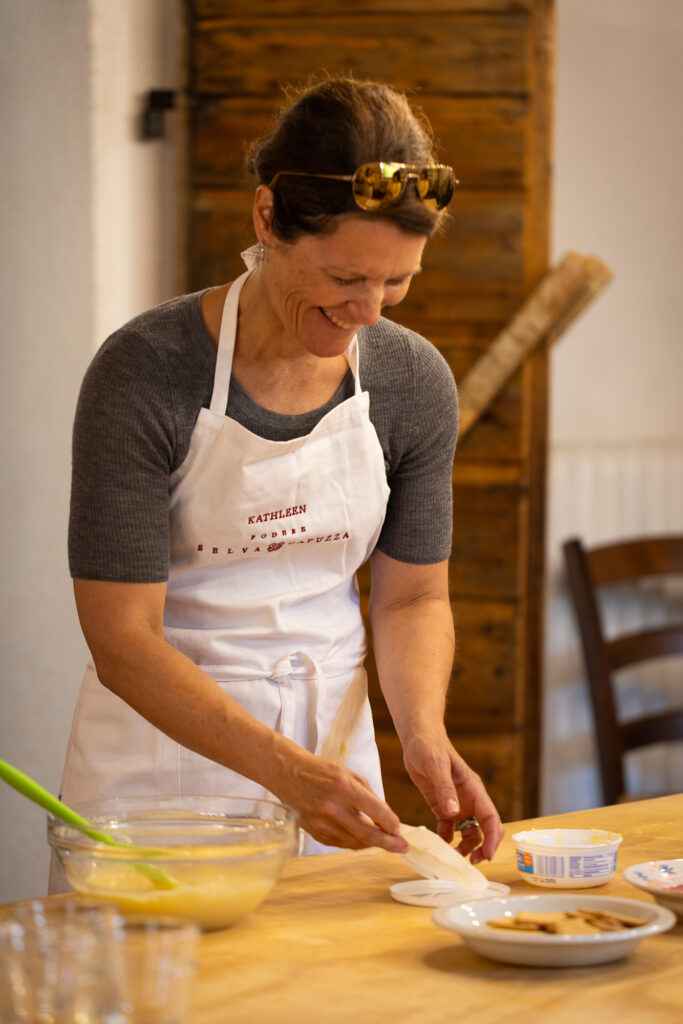
From the Arches of Tenuta Roveglia to the Circle of Time at Selva Capuzza After a night wrapped in the soft hush of Desenzano del Garda, the morning light pulled us south along quiet country roads to Pozzolengo and Tenuta Roveglia – 120 hectares of vines, stories, and famously stubborn clay that have been making wine since the early 1400s. The estate was reborn in the early 1900s by Swiss immigrant Federico Zweifel, but today it is the three Azzone sisters – Sara, Vanessa, and the irrepressible Babettli – who are writing the most vibrant chapter yet. From the moment Babettli greets you with that knowing smile, you feel like you’ve been let in on a wonderful secret. Within minutes she quotes her father’s lifelong creed: “We need to promote the dream – Lugana – and not the winery.” He used to pedal from trattoria to trattoria with sample bottles strapped to his bicycle until the world finally sat up and listened. That same generous, collaborative spirit still pulses through every corner of Roveglia. It’s impossible to miss. Step into the foyer and you’re immediately enveloped by the “family wall” – a sprawling, joyful collage not just of the three sisters, but of every facet of the team – the office, the tractor driver, the seasonal picker, every cellar hand who has ever worked a harvest here. “They are Roveglia,” Babettli says, tapping a faded photo of a man who started at fourteen. “We don’t separate blood from chosen family.” Babettli herself is a whirlwind of passions. Trained as an HR specialist, she’s also a self-taught architect and an obsessive collector of antique telephones. Her office feels like a tiny museum of Bakelite rotaries and candy-apple-red Ericofons. “Each one has its own voice,” she murmurs, cradling a 1930s Siemens like a baby bird, “exactly like old vines.” That love of distinctive voices brought us straight out to the vineyard. She scoops up a fistful of the heavy white clay. “Wet, it’s glue. Dry, it’s stone.” Fifty-five-year-old roots barely reach five metres deep, spreading instead in a desperate spiderweb just to survive. “Survival mode,” she grins, “makes the wine more interesting.” All that character needed a worthy home, so Babettli designed one. To reach the new tasting room you descend a stone staircase behind a monumental door of reclaimed wood and iron – every plank salvaged from centuries-old barns and presses. “Nothing here is wasted,” she whispers, pushing it open like a secret. What waits below is pure, breath-stealing magic: a six-metre-deep golden cathedral of hand-built brick arches, no two alike, each curve sketched by Babettli herself and shaped by eye to carry the exact weight above. Hidden lights make the rosy terracotta glow, and the cool air is thick with the scent of earth and sleeping wine. Yet the true soul of the estate lives upstairs in the 16th-century Cascina Roveglia farmhouse. Thick limestone-and-clay walls – the very same moraine that gives Lugana its mineral snap – keep it cool in summer and cosy in winter. Ancient chestnut beams that once held grain now frame intimate tastings; pink Veronese rose marble floors shimmer beneath humble arches originally built for oxen, not ostentation. The former stable has become the coziest tasting room imaginable: a scarred oak table, a fireplace blackened by five centuries of smoke, family photos watching over us, and the low hum of sleek steel tanks just next door. At one point Babettli disappears for a moment and returns cradling their very first commercial vintage – 1989 – one of only twelve bottles left in the world. And then, beneath those glowing arches, the wines spoke for themselves. – Lugana Spumante Brut: A silver river of pinpoint bubbles carrying crisp green apple, spring flowers, and warm brioche. Dry, electric, celebratory. – Limne Lugana DOC: So pale it flashes green at the rim. Lime blossom, white peach fuzz, wet river stones – pure Garda breeze in a glass. – Vigne di Filiberto Lugana DOC: Ripe yellow plum, roasted almond, a twist of lemon confit, and a saline snap that makes your mouth water again and again. – Riserva Vigne di Catullo Lugana DOC 2012 – Cork vs Screwcap: Deep, luminous gold. The nose explodes: candied orange, acacia honey, toasted hazelnut, smoky minerals. Velvety, almost chewy, then a blade of acidity lifts ginger biscuit and sea salt into an endless, resonant finish. The cork bottle was tired and mushroomy; the screw-cap version still singing with lemon peel and almond blossom. “Dad made the switch in 2007,” she laughs. “Everyone thought he was crazy. Sales tripled the next year.” – Bonus: 2021 Late-Harvest VT : Golden like November sun, swirling with candied ginger, toasted walnut, and river-stone freshness. 14 g/L of honeyed sweetness balanced by acidity so bright your jaw tingles. “A me-wine,” Babettli declares, a wine that can last an hour. We left Roveglia with hearts full and Babettli’s parting words ringing in our ears: “Now go taste the other side of the dream.” So we pointed the car just a few kilometres east, toward the hills of San Martino della Battaglia and Podere Selva Capuzza – another family, another century-old cascina, another unforgettable chapter of Lugana waiting to be uncorked. We left Roveglia with hearts full, and Babettli’s parting words ringing in our ears: “Now go taste the other side of the dream.” So we pointed the car just a few kilometres east, toward the hills of San Martino della Battaglia and Podere Selva Capuzza – another family, another century-old cascina, another unforgettable chapter of Lugana waiting to be uncorked. We didn’t taste in a cellar or a sleek tasting room – we tasted right where the magic happens, among the vines of the San Biagio vineyard at Podere Selva Capuzza, in the heart of the Lugana DOC on the gentle morainic hills of San Martino del Garda, just a few kilometres south of magnificent Lake Garda itself. Glasses balanced on an old wooden table facing the rows, late-afternoon
Pour, Adore, Repeat in Lugana- White Wine Elegance
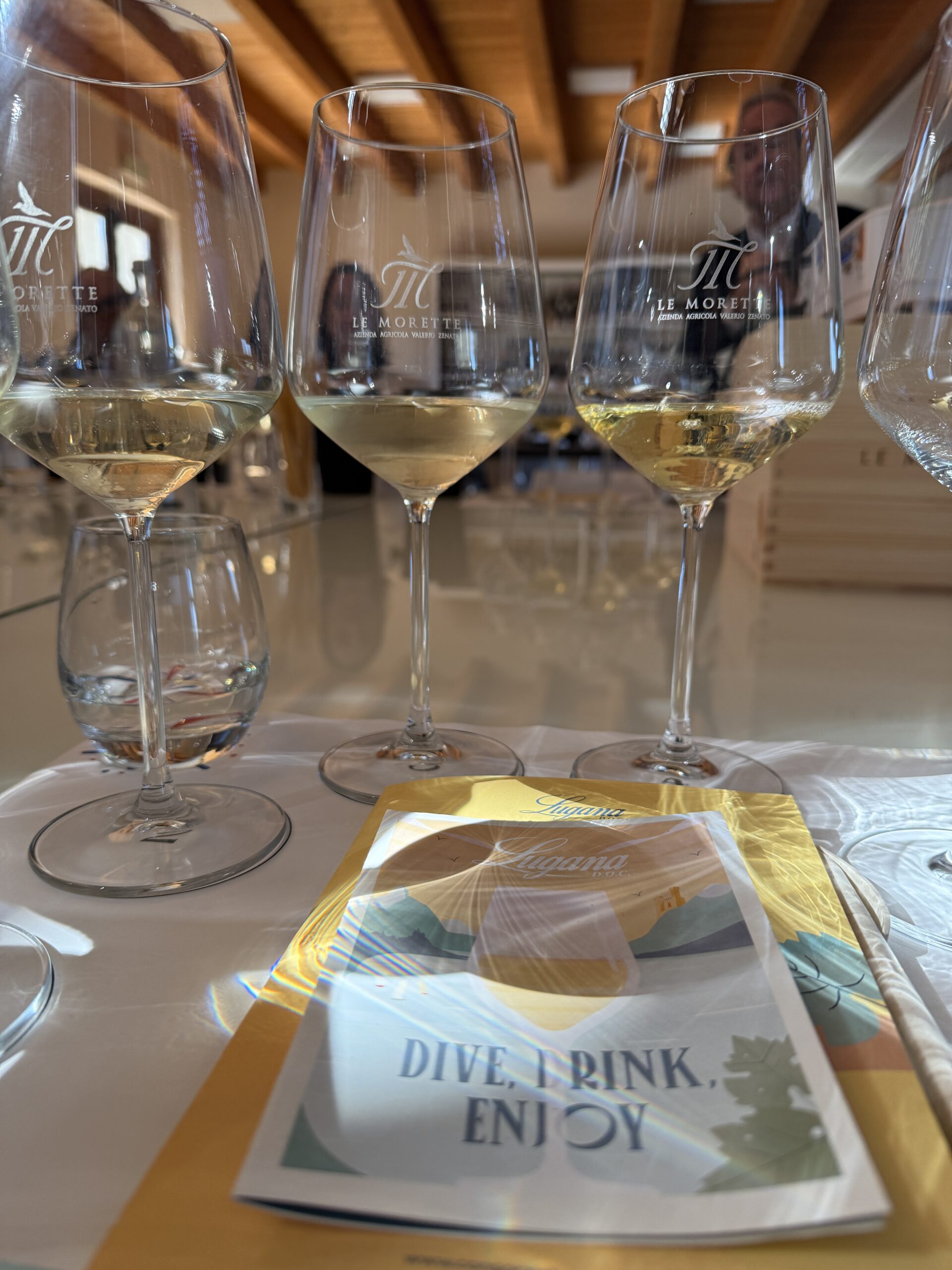
Nestled along the southern shores of Lake Garda, Lugana DOC stands as Italy’s most refined lakeside white wine appellation. Spanning the border between Lombardy and Veneto in northern Italy, this designated area forms a narrow, crescent-shaped corridor encompassing five key communes: Sirmione, Desenzano del Garda, Pozzolengo, Lonato del Garda, and Peschiera del Garda. Framed by morainic hills shaped by ancient glaciers, Lugana’s distinctive white-clay and limestone soils impart remarkable minerality and aging potential to its signature grape, Turbiana (locally known as Trebbiano di Lugana). In essence: a sophisticated white wine region, just 20 minutes from Lake Garda’s crystalline waters. Having explored vintages from Umbria’s robust Sagrantino vineyards to the sunlit hills of Chianti in Tuscany, I arrived in Lugana last autumn with keen anticipation. Hosted by the Consorzio Tutela Lugana and Nonni Marketing, this press trip transcended routine tastings and tours. It offered an immersive tribute to Turbiana—the resilient grape that defines Lugana’s elegant, mineral-driven whites. Over three radiant days, I toured historic cellars, enjoyed locally sourced cuisine, and embraced the serene cadence of the lake. For wine enthusiasts and discerning travelers alike, allow me to guide you through this captivating journey. Arrival at Le Morette: A Memorable Introduction Our journey commenced immediately upon arrival at Le Morette. Before alighting from the vehicle, third-generation proprietor Fabio Zenato presented a chilled flute of the estate’s Metodo Classico Brut—a sparkling Turbiana alive with green apple, brioche, and a precise saline finish. The effervescence evoked sunlight dancing across Lake Garda, setting an inviting tone. Fabio’s dedication mirrors the depth of the estate’s 40 hectares, situated between Garda’s southern shores and the UNESCO-protected Frassino Lake—a habitat for wild ducks (the name Le Morette, meaning “little brunettes,” pays homage to these birds). An introductory masterclass, conducted by JC Viens of Grande Passione, transformed technical terroir discussion into an engaging narrative. With experience spanning Hong Kong’s wine scene to Italian ambassadorships, JC illuminated Lugana’s inter-regional character, its glacial clay-rich soils, and the grape’s Verdicchio lineage. Confirmed by DNA analysis as a distinct variety, Turbiana thrives under the lake’s microclimate: warming Ora winds by day and cooling Pelèr breezes by night, yielding wines of vibrant acidity and refined texture. “Duality in a bottle,” he noted—suitable for casual aperitifs yet capable of graceful evolution. Notable selections included: Fabio then led a comprehensive tour of the 60-hectare certified organic estate. We traversed sunlit vineyards and descended into cool underground cellars featuring stainless steel and sustainable innovations. Originating as a vine nursery in the 1950s, the family grafts Turbiana onto phylloxera-resistant American rootstocks—a process Fabio demonstrated with precision, underscoring the blend of tradition and science that sustains the region. The modern winery integrates geothermal systems within a restored 19th-century farmhouse, employing gravity-fed presses and subtle oak influence. Lunch, hosted by Fabio, featured seafood saffron risotto with lake perch and shrimp, paired seamlessly with Le Morette’s portfolio. He recounted the family’s postwar legacy and Turbiana’s central role in Lugana’s identity. Evening Elegance at Hotel Piccola Vela We settled at Hotel Piccola Vela in Desenzano del Garda—a contemporary lakeside retreat offering minimalist accommodations, private beach access, an infinity pool blending with the horizon, and a spa featuring vinotherapy. It provided an ideal respite. As dusk approached, we gathered on the rooftop with Cà Lojera’s Belle Metodo Classico Brut Zero 2018—a zero-dosage sparkler from 50-year-old vines, aged 36 months on lees. Its focused citrus, mineral precision, and fine mousse harmonized with the sunset. The evening culminated in a welcome Apericena hosted by the Lugana Board of Directors. Amid convivial exchange, we sampled offerings from Tenuta Corbari, Pasini San Giovanni, Montonale, Fraccaroli, Citari, Ca’ dei Frati, Sansonina, Cantina Coarse, and Zenato—ranging from delicate sparklers to structured reserves. Key tasting notes: Lugana DOC represents more than a wine region—it embodies a harmonious balance of tradition, innovation, and natural beauty. From the meticulous grafting at Le Morette to the panoramic tastings at Hotel Piccola Vela, Turbiana reveals remarkable versatility: crisp enough for casual enjoyment, yet profound in its capacity to evolve. With 60–70% of production exported to discerning markets in Germany and the United States, Lugana maintains an aura of understated excellence. For wine professionals and collectors, these bottlings offer intellectual depth and exceptional value. For travelers, the communes along Lake Garda promise cultural richness, culinary authenticity, and restorative landscapes. This press trip reaffirmed Lugana’s quiet authority in Italy’s viticultural canon—an invitation to savor elegance in its purest form. Whether planning a vineyard pilgrimage or seeking the perfect white for your table, let Lugana be your next discovery. Day two next!