
Riesling Revolution: Martin Tesch’s Nahe Magic

My recent trip to Germany had a twofold purpose: first, to demystify the often misunderstood world of German wine, peeling back layers of complexity beyond labels and classifications; and second, to dive deeper into the nuances of its signature grape, Riesling, in hopes of converting me—a devoted Chenin Blanc lover—into an even greater Riesling devotee. What better place to start than in the Nahe region, where I spent an enlightening day with the visionary winemaker Martin Tesch. Meeting Martin was like chatting with a philosopher who just happens to make exceptional wine. Charismatic and deeply thoughtful, he’s the driving force behind Weingut Tesch’s evolution. As he put it quite simply, I describe my wines as New Old School, Innovative & Rebellious. Nestled in the picturesque Nahe valley in the village of Langenlonsheim—one of the region’s largest winegrowing municipalities with around 187 hectares of vineyards—Weingut Tesch is more than just a winery—it’s a living testament to Germany’s rich viticultural heritage. Born into a family with centuries of winemaking tradition, Martin’s path to becoming a winemaker was both scientific and serendipitous. He studied microbiology, where he discovered his enthusiasm for fermentation processes of all kinds. This academic background led him back to the family estate, which he has run since 1997. In 2001, he embarked on a transformative journey, reinventing the winery by focusing primarily on dry Rieslings produced with minimal intervention, reducing the family’s portfolio from plus 50 to 6 wines. Often seen as a trailblazer who “follows the science,” even if it means bucking traditions that some peers view as unconventional, Martin’s journey reflects a blend of heritage and innovation. Martin’s independence is the key to his success. From an early age, Martin was fascinated by punk music. He befriended the famous German punk band Die Toten Hosen at their second concert outside Düsseldorf and later created several private-label wines with them. He left the VdP (Germany’s prestigious wine association which his grandfather founded in 1901) to forge his own path, emphasizing individuality over conformity. “The road to success is not a group travel. You need to be individual,” he told me, and it’s paid off. His customer base now includes young, educated wine lovers who crave authenticity and stories over fleeting trends. But wait, Martin said, to have a better understanding of my wines, you need to see where they come from. Immediately, Martin Tesch took us up to his vineyard, wanting us to really feel the story behind his wines before we started tasting. From a stunning viewpoint high above the steep, terraced slopes of the Nahe Valley, he introduced us to his pride and joy: the legendary St. Remigiusberg vineyard. First planted by Benedictine monks centuries ago and long considered one of the Nahe’s greatest sites, this parcel was split apart during the turmoil of the 16th-century Reformation. After hundreds of years divided, it’s only recently been brought back together through the passion and perseverance of Martin’s family and six families from the Netherlands. Now whole again at 4 hectares, the reunification is so much more than just gaining land. It’s a powerful, deeply symbolic “major step” in protecting a viticultural heritage that stretches back generations. Martin said it best, with real emotion in his voice: “You have a step every 300–400 years, and this was only three steps… you got to live one of the major steps.” Standing there among vines planted in ancient volcanic soil, you can’t help but feel the weight of history—and the quiet thrill of being part of its next chapter. Driving through the Nahe, Martin explained the empty plots—a stark sign of ongoing production reduction in the region as growers adapt to changing markets and climates. But the magic of Nahe isn’t lost. At the core of Weingut Tesch is Martin’s “new old school” philosophy—a brilliant blend of tradition and innovation. It’s about honoring the past while adapting to the present, ensuring the wines remain timeless yet relevant. Riesling, of course, takes center stage here, but Martin’s dry styles are a revelation. Sustainability is woven into every practice, though Martin shuns certifications. “People want to understand deeper than just a stamp… ‘organic’ isn’t a guarantee of taste,” he explained. Instead, it’s about handwork, minimal copper use, and a genuine respect for the land. This approach yields wines that are pure expressions of Nahe’s terroir—crisp, mineral-driven, and endlessly fascinating. Tasting them side by side, I felt the “new” in modern techniques like screw caps harmonizing with the “old school” essence of ancient vines and historical insights. His wines are crafted from 60-year-old vines, aged on lees for added complexity, and bottled under screw caps—a bold move Martin adopted in 2005 despite initial controversy. He also minimizes sulfites (down to 25 ppm post-bottling) and focuses on spicy, intricate profiles, like the “Unplugged” Riesling, which boasts lower sugar but heightened depth. Martin shared amusing anecdotes about label designs: an angel on one bottle raised eyebrows in the US for not being “fully clothed” enough, while Sweden questioned its age-appropriateness. His bold, modern labels—featuring vibrant color-coding inspired by the London Underground map, unique artwork for each vineyard (often with playful motifs like a king frog), and a consistent portrait of his great-grandfather—earned a prestigious Red Dot Design Award. These stories underscore the cultural tightrope of exporting authentic German wine, maintaining both traditional and modern art influences on each label. His son, set to carry the torch, plans to “stay small” and keep the “fun in winemaking” alive, rejecting mass-market temptations like “2 million bottles of alcohol-free wine.” In Martin’s words, “History means nothing… you can lose it in every generation. It’s just a starting point.” This mindset ensures Weingut Tesch isn’t resting on its laurels but building a future rooted in values: individuality, sustainability, and that unbreakable bond between people, place, and wine. How to promote Riesling, the issue with success of Riesling -Martin said Give Riesling a role – that doesn’t work- perfect for food pairings acid with fat and richness no matter
Budapest’s Kispiac Bisztró-Welcome
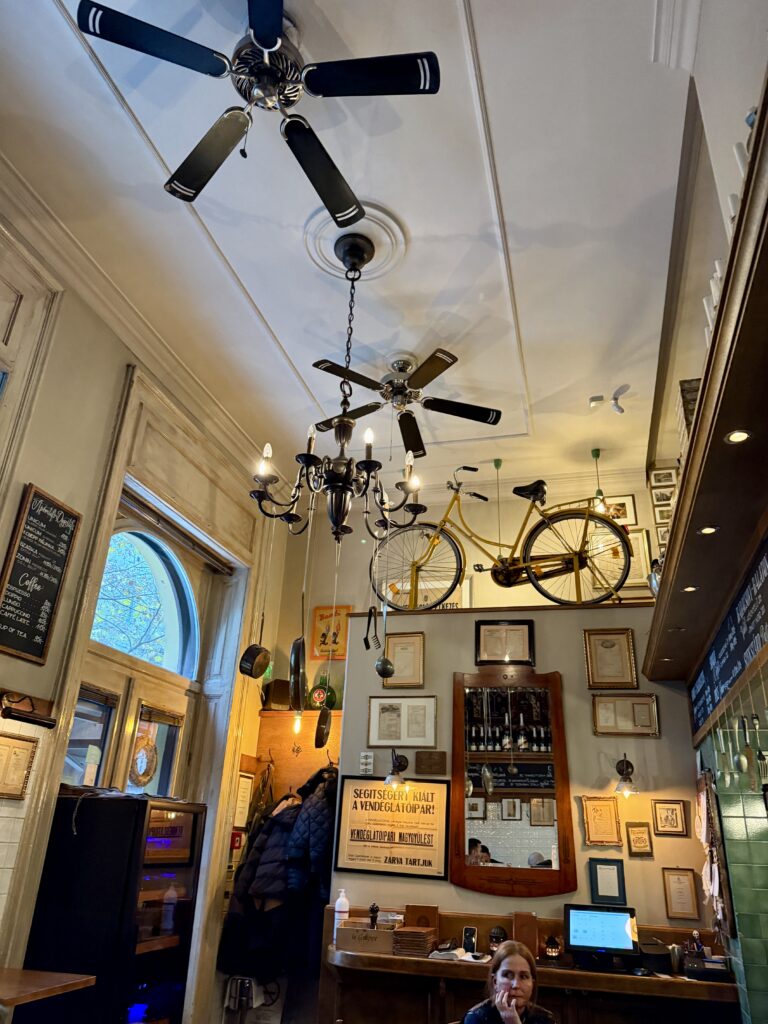
KISPIAC Bisztró is the rare Budapest address that serious eaters and drinkers whisper about with the urgency usually reserved for grand cellars and three-star tables. Hidden in plain sight at Hold utca in the 5th district, it is the personal fiefdom of Csaba Szalanszki, a restaurateur who’s energy hosts, and pours with the conviction of someone who has nothing left to prove and everything left to share. Walk in and the room wraps around you like a well-worn leather armchair: low amber light, shelves of bottles and eclectic kitchen decor, the faint crackle of the open-air kitchen, and a gentle hum of conversation. There is no pretense here, only the quiet confidence of a place that knows exactly what it is. Csaba’s wine list is a masterclass in Hungarian terroir, heavy on small growers and idiosyncratic sites, with a by-the-glass selection that rivals many dedicated bars. Depth in Somló, Juhfark, Furmint, Hárslevelű; a small but deadly arsenal of Kékfrankos from Villány, Sopron, and the overlooked Vas region; and enough skin-contact oddities to keep even the most jaded orange-wine hunter happy. Two glasses that stopped me in my wine tracks: The food is built around fire and time. Csaba’s venison Wellington has achieved minor cult status for good reason: loin from wild red deer, seared, coated in forest-mushroom duxelles, wrapped in feather-light pastry and baked to a lacquered rose. Cut the dome and the juices run like a Bordelaise reduction having an identity crisis (in the best way). The spare ribs, smoked low and slow over fruitwood, then finished in the oven until the meat threatens structural failure, are glazed with a lacquer that balances sweet, smoke, and gentle heat. They collapse at the suggestion of a fork. The half duck is the dish we will still be dreaming about in ten years: confit legs pressed and re-crisped, breast roasted on the crown until the skin shatters like stained glass and the flesh remains obscenely juicy. Served with duck-fat potatoes and braised red cabbage sharpened with aged szamorodni vinegar. The Kófejtő from Somló cuts through the richness like a stiletto. We ate here on a Wednesday night. We returned for lunch the next day. Same corner table, same grin from Csaba, same involuntary moan when the Wellington arrived. That is not hyperbole; it is simply what happens when obsession meets execution. KISPIAC is not chasing trends or stars. It is the living room of a man who loves feeding people beautiful, soulful food and pouring them wines most of the country still hasn’t discovered. For anyone who measures a trip by the quality of its tables, this tiny bistrot is obligatory. Twice in 24 hours felt perfectly rational. Three times would have been restraint.
Why Villány Is a Home for Cabernet Franc
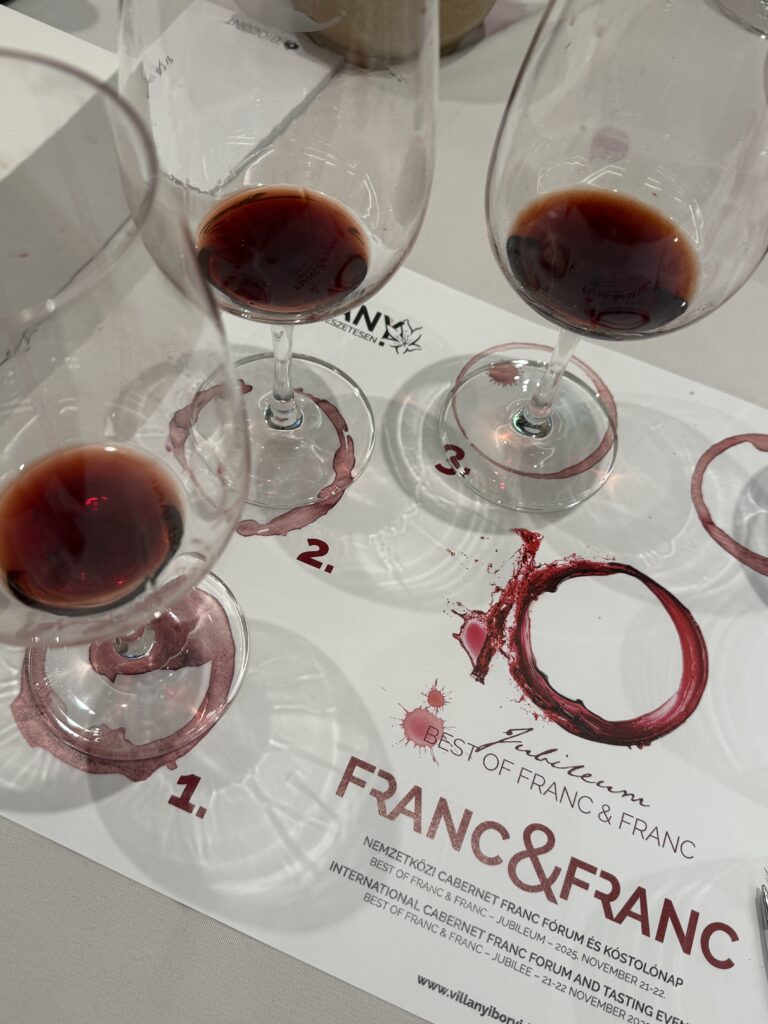
Cabernet Franc didn’t just stumble into Villány and strike gold—it found a terroir that feels tailor-made for its finest qualities. Hungary’s southernmost wine region sits at the same latitude as northern Bordeaux, yet enjoys a warmer, more continental climate. With 2,100–2,200 hours of sunshine a year (among the highest in the country) and long, dry autumns, Villány reliably delivers full physiological ripeness without sacrificing acidity. In cooler climates, Cabernet Franc can turn lean, herbal, and aggressively pyrazinic. Here, it unfurls dense blue and black fruit—cassis, blueberry, black cherry—along with pronounced violet notes and that signature cracked-pepper and tobacco-leaf spice, all wrapped in vibrant freshness. The soils are the clincher. The finest sites, particularly the Siklós and Fekete-hegy slopes, rest on thick Eocene limestone capped with loess and red clay. The active calcium in the limestone promotes refined, polymerised tannins and superb drainage, forcing vines to root deeply (often 6–10 metres) in search of water. Yields stay naturally low—rarely exceeding 35–45 hl/ha in top parcels—and the small berries deliver intense colour, firm yet silky tannic structure, and explosive aromatics. A pronounced diurnal shift locks in the magic: September days can climb to 28–30 °C, while nights drop to 10–14 °C, preserving malic acid and perfume. The surrounding hills shield vines from cold northern winds, and morning fog rolling in from the Drava River valley gently extends hang-time. Hungarian growers didn’t leave it to chance. From the early 1990s, pioneers such as Attila Gere and József Bock planted top-quality Loire and Bordeaux clones on devigorating rootstocks. Meticulous canopy management—vertical shoot positioning, aggressive morning-side leaf thinning, and green harvesting—has become standard at the best estates, pushing concentration while keeping alcohols in an elegant 13–14 % range. Furthermore, to cement its reputation, Villány implemented one of Europe’s most stringent protected-origin systems and established the Villányi Franc designation—a category reserved exclusively for varietal Cabernet Franc and Cabernet Franc-based blends that meet exacting production criteria. Within this framework, two upper tiers were created: These designations are far more than marketing labels; they represent a deliberate shift toward a refined, terroir-expressive style. To qualify, yields are strictly limited, only the region’s top vineyard sites are eligible, and the wines must exhibit balanced alcohol levels (typically 13–14 %), bright natural acidity, finely polymerised tannins, and a clear imprint of Villány’s limestone-driven minerality. Heavy extraction, excessive oak influence, and overripeness are effectively excluded by regulation. The objective to move beyond the powerful, internationally influenced reds that characterized the post-communist era and to establish a distinctive, elegant, and age-worthy Villány signature—one capable of standing alongside the finest examples from the Loire Valley and Bordeaux’s Right Bank. The Franc & Franc Jubilee Conference: A Decade of Leadership The Franc & Franc Jubilee Conference opened in Villány with electric energy, marking ten years of the region’s rise as a global beacon for Cabernet Franc. Before the official conference kicked off, international guests were treated to an exclusive, intimate preview tasting that felt like sneaking into the cellar after hours. This wasn’t just a polite welcome pour—it was a full-on seduction showcasing Villány’s broader brilliance beyond its beloved Cabernet Franc. We dove into a dazzling line-up: The opening tasting set the tone: a curated flight of twelve benchmark Hungarian wines—two Classics, six Premium, and four Super Premium selections—showcasing the extraordinary depth, precision, and consistency Villány has achieved with the variety. Day one began with heartfelt words from the pioneers themselves, József Bock and Attila Gere. What moved me most was the turnout: fully 80 % of Villány’s producers were present—an extraordinary show of unity and regional passion. In an industry often defined by fierce individualism, this near-total community mobilisation revealed a rare spirit of collaboration and shared ambition. The symposium sessions were every bit as compelling as the wines. “Unity in Diversity” explored how Villány’s mosaic of terroirs produces strikingly different yet unmistakably related expressions. A deep dive into the impact of skin-contact duration illuminated its profound influence on flavour, colour, and structure. We then travelled the globe—from the Loire to Tuscany (presented by Pasi Ketolainen MW, South Africa (presented by South African winemaker Reino Thiart), Argentina, Chile, and the United States (presented by Peter McCombie MW) —marvelling at Cabernet Franc’s astonishing versatility. A special tasting of Villány through the decades as we journeyed from 2015, 2009 and 2006. Each one had its own identity, freshness and expressed the true refinement of Cab Franc. Villány is not just part of the Cabernet Franc conversation – it is helping define its future. Ten years on, Franc & Franc has evolved from a regional celebration into the world’s premier annual gathering for serious Cabernet Franc lovers and professionals. This community isn’t just riding the wave; they’re steering it. My heartfelt thank you to Andras Horkay & the organizers for this unforgettable journey through unity in diversity and to the new connections made The next decade promises to be exhilarating. If you love Cabernet Franc, book your ticket to Villány now. You won’t just taste great wine—you’ll witness a revolution in the making. Welcome Dinner – Sauska 48 Hungary’s only Michelin-starred restaurant outside Budapest, tucked inside the breathtaking Sauska estate overlooking the moonlit vineyards. Sleek architecture, warm lighting, and an open style kitchen that treats local ingredients like royalty. The evening was a dazzling collaboration between two of the country’s most visionary producers: Sauska and Heumann. Sauska is the restless perfectionist who decided Hungary’s two greatest wine regions deserved the same uncompromising vision. Christian Sauska began in 1999 by resurrecting forgotten volcanic slopes in Tokaj, turning them into benchmarks for crystalline dry Furmint and legendary Aszú. In 2007 he crossed the country to Villány, built a gravity-flow masterpiece on limestone ridges, and started crafting reds that instantly stood shoulder-to-shoulder with the region’s icons. Today he farms 120 hectares split evenly between Tokaj’s electric whites and Villány’s dark, spicy reds—obsessively low yields, zero compromise, pure terroir in every bottle. Whether it’s a Furmint that crackles with minerality, a velvet Villány Cabernet Franc, or a 20-year-old Aszú
Lugana’s Lingering Sips
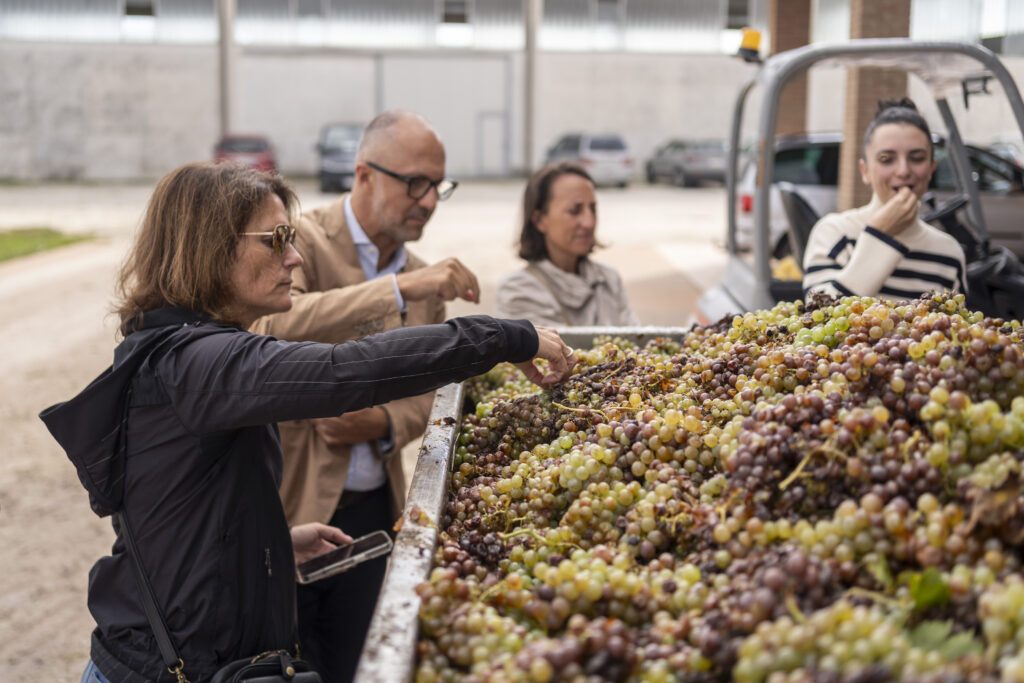
The final morning climbed poetic heights at the Tower of San Martino, a 74-meter Neo-Gothic spire erected in 1878 atop the hill where the 1859 Battle of Solferino raged – a bloody pivot in Italy’s Risorgimento that inspired the Red Cross. Ascending its spiraling ramp, frescoed panels by Venetian masters like Vittorio Bressanin unfolded tales of valor, the ossuary below a somber nod to 2,000 fallen souls. From the summit, Lugana’s patchwork vineyards unfurled like a green quilt, Lake Garda a sapphire thread binding it all. It’s a site that stirs the soul, reminding us wine’s roots tangle with history’s thorns. We descended to Corte Sermana for lunch, a boutique “Clos” vineyard since 2009, named for the stream marking Veneto-Lombardy lines. Brothers Nicolò and Filippo (third-gen growers) shared their 5-hectare plot’s secrets: white clays laced with calcium carbonate, yielding Turbiana of “remarkable finesse and mineral energy.” Corte Sermana sits right in the heart of the Lugana DOC, on the southern shore of Lake Garda in northern Italy. Tucked into a breathtaking corner just 15 metres from the water’s edge, the estate is cradled between the lake itself and the Sermana stream – the natural boundary between Veneto and Lombardy. This extraordinary position gifts the vines cool, breezy summer nights and ancient, mineral-rich glacial soils dominated by white clay and calcium carbonate – the ideal playground for the native Turbiana grape that gives Lugana its unmistakable soul. Filippo Bottacini greets us at the cellar door with the easy smile of someone who has just come in from the vines. At barely thirty-something, he already carries the calm authority of a man who trusts time more than trends. “People always ask me why we harvest so early for the sparkling base,” he says, pouring a crystal-clear 2025 vintage that won’t see bottle until next spring. “Simple. I want the wine to taste like the lake in September – cool, electric, alive.” The glass explodes with white flowers, sea breeze, and that unmistakable flinty mineral streak that only seems to appear when vineyards sit a few hundred meters from water. At 11.4% alcohol and a racy 7.6 g/L acidity, it feels like drinking a cold wave. Filippo swirls and smiles: “This is the freshness we fight for. Everything else – the yeast, the lees stirring, the three years we’ll give it – is just to protect that first electric impression.” We move to the tank room, where the full-harvest still wines rest. The difference is immediate. Where the sparkling base is all nerve and brightness, these lots (harvested just a week or two later) have already begun their slow transformation into something richer, rounder, almost velvety. “Same vineyard, same Turbiana grapes, six days apart,” Filippo shrugs, as if the miracle is the most natural thing in the world. He’s divided the estate into six blocks – some running north-south, others east-west – to capture every possible nuance of ripeness. “Machine harvesting used to be a dirty word around here,” he admits. “But we proved that with the right heads and soft pressing, you actually get cleaner aromatics. The skins break gently, the vegetable notes never appear, and suddenly the white flowers and exotic fruit arrive like they’ve been waiting for permission.” What strikes me most is the patience. While most Lugana producers rush wines to market, Corte Sermana refuses to bottle anything young. The sparkling wines get a full year on lees before even the second fermentation begins. The flagship white – a kaleidoscopic creature Filippo calls Kromago (chrom + lago = colors of the lake) – spends eight months in bottle before release and, he insists, only starts showing its true self after three or four years. “This is why we don’t put the year on the sparkling,” Filippo says. “I want people to taste the wine, not the label. In ten years these bottles will taste completely different again – that’s the point.” Lunch is served! There are bowls of bright salads, platters of house-cured lonza, coppa, and pancetta rolled so thin you can almost see Garda through it. An array of local cheeses and warm focaccia just out of the oven. And, because this is Corte Sermana, nine bottles standing like soldiers, waiting to be opened in ceremony. Filippo pours. We begin. We ended the meal with their Grappa di Lugana is gentle, almost creamy, with a clean almond finish paired with the authentic torcetti del Lago – the proper Lugana “cookie” for grappa. Eventually Filippo says quietly: “This is what the vineyard tastes like when it’s happy.” I believe him. And somewhere in my luggage, wrapped in two sweaters and a prayer, a bottle of 2015 Cromalgo is already dreaming of the next decade. Nestled on the southern shore of Lake Garda, in the heart of the Lugana DOC, stands Cà LoJera – “House of the Wolf” in local dialect. This small, fiercely independent estate is now in its third generation and feels more like a secret than a winery. The story begins in the early 1970s when Amalia and Pietro Tiraboschi planted the first vines. Today their son Franco and his wife Marta run every inch of the 16 hectares with their own hands and a stubborn refusal to compromise. No barrique, no selected yeasts, no rush – just old-vine Turbiana and that magical white clay soil that looks like you scooped it straight from the lake bed. Franco Tiraboschi is the winemaker, the philosopher, and the quiet guardian of all this magic. When you taste his wines – especially the immortal Riserva del Lupo – you’re tasting purity, patience, and absolute respect for Turbiana and that white clay. The name itself is pure legend. Centuries ago this farmhouse hid lake smugglers – the lupi (wolves) who moved contraband under moonlight. The ancient name of the land? Loyate – “House of the World”. Combine the two and you get Cà LoJera: the wolf’s den that opens its doors to the world. You’ll see the old house, the
Lugana Dreaming – Parte 2
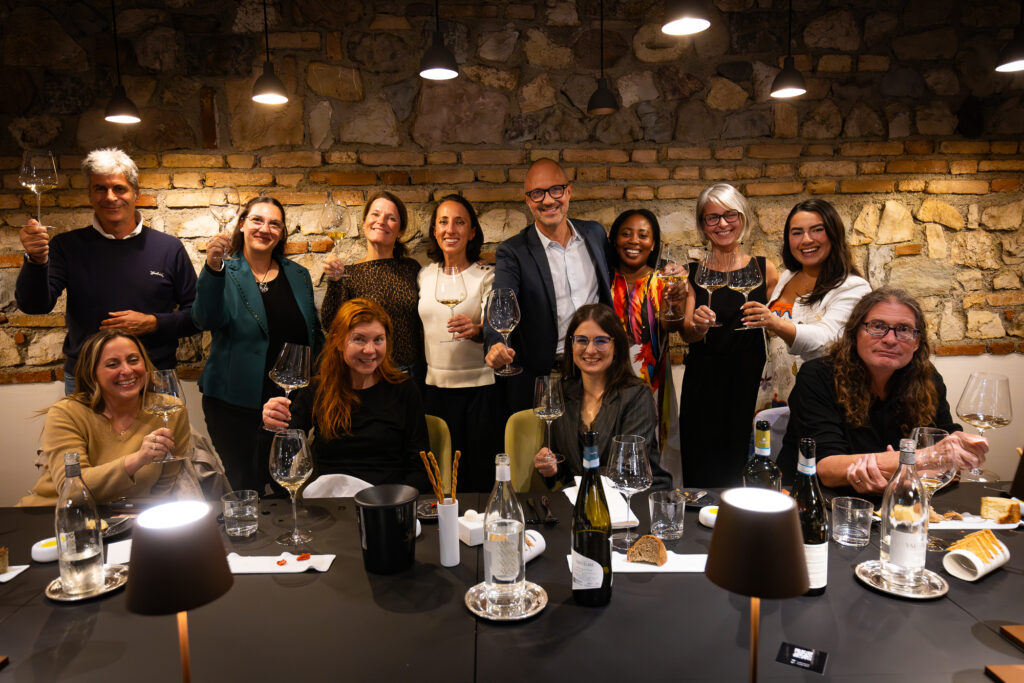
The day began the way every perfect Italian evening should: with a boat. We met at Desenzano del Garda’s graceful port as the sun was beginning its slow descent, turning the water into liquid gold. A restored wooden riva – sleek, varnished mahogany glowing in the light – waited for us. The moment the lines were cast off, the world softened. We cruised north along the southern shore of Italy’s largest lake, past quiet bays and pastel villages, the breeze carrying the faint scent of fig trees and distant grills. Twenty magical minutes later, the fairy-tale silhouette of Sirmione rose from the water: the 13th-century Scaligero Castle, moat aglow, drawbridge silhouetted against the sky. The captain eased us straight through the castle’s watery entrance – an approach that still feels like slipping into another century – and tied up inside the historic center. From there it was a short, cypress-lined walk to the Grotte di Catullo. Perched at the very tip of the peninsula, these sprawling ruins of a 1st-century BC Roman villa are among northern Italy’s most evocative archaeological sites. Olive trees now shade fallen columns, wild caper bushes cling to ancient walls, and the views stretch across the endless lake to the Alps. Legend (though not history) links the villa to the poet Catullus, who called Sirmione “the pearl of all peninsulas.” Standing on the sun-warmed stones as the light faded, it was impossible not to feel the same enchantment two thousand years later. By the time we wandered back through the lantern-lit lanes, twilight had settled and anticipation was high. La Rucola 2.0 – the intimate, one-Michelin-starred jewel hidden just steps from the castle – opened its doors to our small group like an old friend. Inside, the stage was set for something extraordinary: a seven-course tasting menu created by chef Stefano Dall’Ospedale, our seven course meal including a fish from the region ineach dish expressly designed to converse with the Lugana wines of Sirmione’s finest producers. Nestled on the southern shore of Lake Garda, the tiny sub-region of Sirmione within the Lugana DOC stands out for its strikingly compact size and distinctive terroir. Home to just nine wineries, this narrow peninsula benefits from dense, heavy clay soils—often white or grayish in color—that retain water and impart remarkable structure and minerality to the wines. These calcium-rich clays, formed from ancient morainic deposits, give Sirmione’s Turbiana grapes a fuller body and pronounced savory character compared to the sandier, more perfumed expressions found further north in the appellation, making its limited-production Luganas some of the most powerful and age-worthy in the entire zone. Around the long table sat the people who make the magic happen: Chiara Perego (oenologue of Azienda Agricola Sgreva), Sara Salgaro of Tenuta Frontelago, Nunzio Ghiraldi himself, and Eliza Zordan from Cascina Maddalena, who moderated the evening with warmth and precision. Every time a new bottle was opened, the maker told the story behind the wine, and guided us through the glass while the perfectly timed course arrived. With every course, the room grew livelier. Stories of grandfathers planting the first vines, of siblings sketching labels at the kitchen table, of horses galloping between rows, of brain waves translated into art – each tale deepened the flavour in the glass. When we finally stepped back into the cool night air, the castle lights shimmering on the water and the lake lapping gently at the ancient walls, no one spoke for a long time. Some evenings feed the body. This one fed the soul. Sirmione, with its Roman ghosts, thermal springs, white-clay vineyards, and nine fiercely proud winemaking families, had worked its quiet spell once again.
Lugana Dreaming – Parte I:
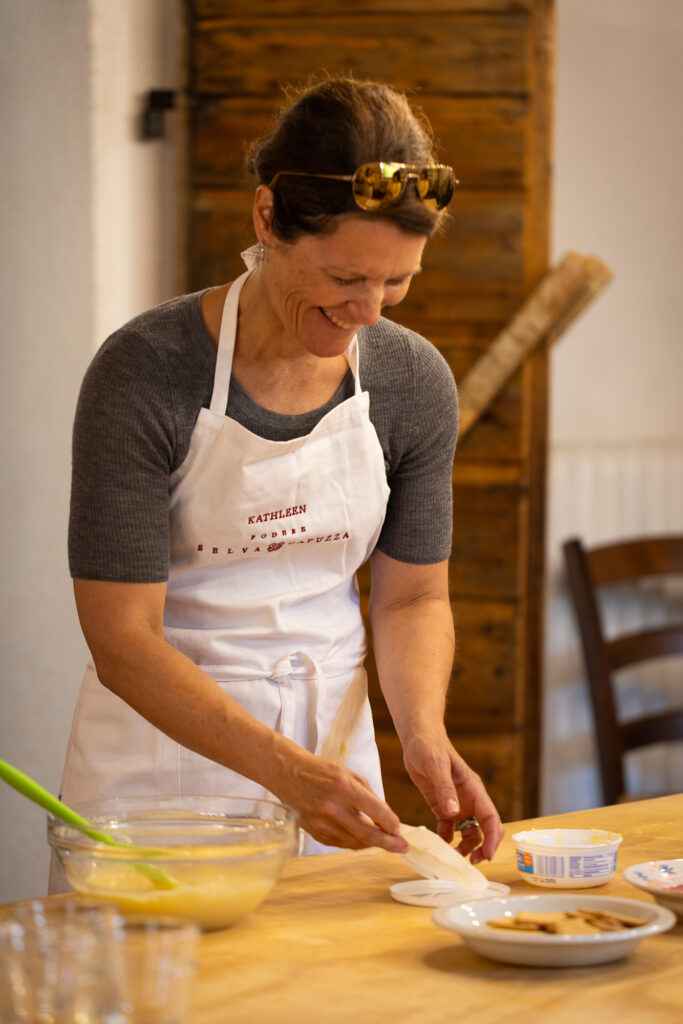
From the Arches of Tenuta Roveglia to the Circle of Time at Selva Capuzza After a night wrapped in the soft hush of Desenzano del Garda, the morning light pulled us south along quiet country roads to Pozzolengo and Tenuta Roveglia – 120 hectares of vines, stories, and famously stubborn clay that have been making wine since the early 1400s. The estate was reborn in the early 1900s by Swiss immigrant Federico Zweifel, but today it is the three Azzone sisters – Sara, Vanessa, and the irrepressible Babettli – who are writing the most vibrant chapter yet. From the moment Babettli greets you with that knowing smile, you feel like you’ve been let in on a wonderful secret. Within minutes she quotes her father’s lifelong creed: “We need to promote the dream – Lugana – and not the winery.” He used to pedal from trattoria to trattoria with sample bottles strapped to his bicycle until the world finally sat up and listened. That same generous, collaborative spirit still pulses through every corner of Roveglia. It’s impossible to miss. Step into the foyer and you’re immediately enveloped by the “family wall” – a sprawling, joyful collage not just of the three sisters, but of every facet of the team – the office, the tractor driver, the seasonal picker, every cellar hand who has ever worked a harvest here. “They are Roveglia,” Babettli says, tapping a faded photo of a man who started at fourteen. “We don’t separate blood from chosen family.” Babettli herself is a whirlwind of passions. Trained as an HR specialist, she’s also a self-taught architect and an obsessive collector of antique telephones. Her office feels like a tiny museum of Bakelite rotaries and candy-apple-red Ericofons. “Each one has its own voice,” she murmurs, cradling a 1930s Siemens like a baby bird, “exactly like old vines.” That love of distinctive voices brought us straight out to the vineyard. She scoops up a fistful of the heavy white clay. “Wet, it’s glue. Dry, it’s stone.” Fifty-five-year-old roots barely reach five metres deep, spreading instead in a desperate spiderweb just to survive. “Survival mode,” she grins, “makes the wine more interesting.” All that character needed a worthy home, so Babettli designed one. To reach the new tasting room you descend a stone staircase behind a monumental door of reclaimed wood and iron – every plank salvaged from centuries-old barns and presses. “Nothing here is wasted,” she whispers, pushing it open like a secret. What waits below is pure, breath-stealing magic: a six-metre-deep golden cathedral of hand-built brick arches, no two alike, each curve sketched by Babettli herself and shaped by eye to carry the exact weight above. Hidden lights make the rosy terracotta glow, and the cool air is thick with the scent of earth and sleeping wine. Yet the true soul of the estate lives upstairs in the 16th-century Cascina Roveglia farmhouse. Thick limestone-and-clay walls – the very same moraine that gives Lugana its mineral snap – keep it cool in summer and cosy in winter. Ancient chestnut beams that once held grain now frame intimate tastings; pink Veronese rose marble floors shimmer beneath humble arches originally built for oxen, not ostentation. The former stable has become the coziest tasting room imaginable: a scarred oak table, a fireplace blackened by five centuries of smoke, family photos watching over us, and the low hum of sleek steel tanks just next door. At one point Babettli disappears for a moment and returns cradling their very first commercial vintage – 1989 – one of only twelve bottles left in the world. And then, beneath those glowing arches, the wines spoke for themselves. – Lugana Spumante Brut: A silver river of pinpoint bubbles carrying crisp green apple, spring flowers, and warm brioche. Dry, electric, celebratory. – Limne Lugana DOC: So pale it flashes green at the rim. Lime blossom, white peach fuzz, wet river stones – pure Garda breeze in a glass. – Vigne di Filiberto Lugana DOC: Ripe yellow plum, roasted almond, a twist of lemon confit, and a saline snap that makes your mouth water again and again. – Riserva Vigne di Catullo Lugana DOC 2012 – Cork vs Screwcap: Deep, luminous gold. The nose explodes: candied orange, acacia honey, toasted hazelnut, smoky minerals. Velvety, almost chewy, then a blade of acidity lifts ginger biscuit and sea salt into an endless, resonant finish. The cork bottle was tired and mushroomy; the screw-cap version still singing with lemon peel and almond blossom. “Dad made the switch in 2007,” she laughs. “Everyone thought he was crazy. Sales tripled the next year.” – Bonus: 2021 Late-Harvest VT : Golden like November sun, swirling with candied ginger, toasted walnut, and river-stone freshness. 14 g/L of honeyed sweetness balanced by acidity so bright your jaw tingles. “A me-wine,” Babettli declares, a wine that can last an hour. We left Roveglia with hearts full and Babettli’s parting words ringing in our ears: “Now go taste the other side of the dream.” So we pointed the car just a few kilometres east, toward the hills of San Martino della Battaglia and Podere Selva Capuzza – another family, another century-old cascina, another unforgettable chapter of Lugana waiting to be uncorked. We left Roveglia with hearts full, and Babettli’s parting words ringing in our ears: “Now go taste the other side of the dream.” So we pointed the car just a few kilometres east, toward the hills of San Martino della Battaglia and Podere Selva Capuzza – another family, another century-old cascina, another unforgettable chapter of Lugana waiting to be uncorked. We didn’t taste in a cellar or a sleek tasting room – we tasted right where the magic happens, among the vines of the San Biagio vineyard at Podere Selva Capuzza, in the heart of the Lugana DOC on the gentle morainic hills of San Martino del Garda, just a few kilometres south of magnificent Lake Garda itself. Glasses balanced on an old wooden table facing the rows, late-afternoon
Pour, Adore, Repeat in Lugana- White Wine Elegance
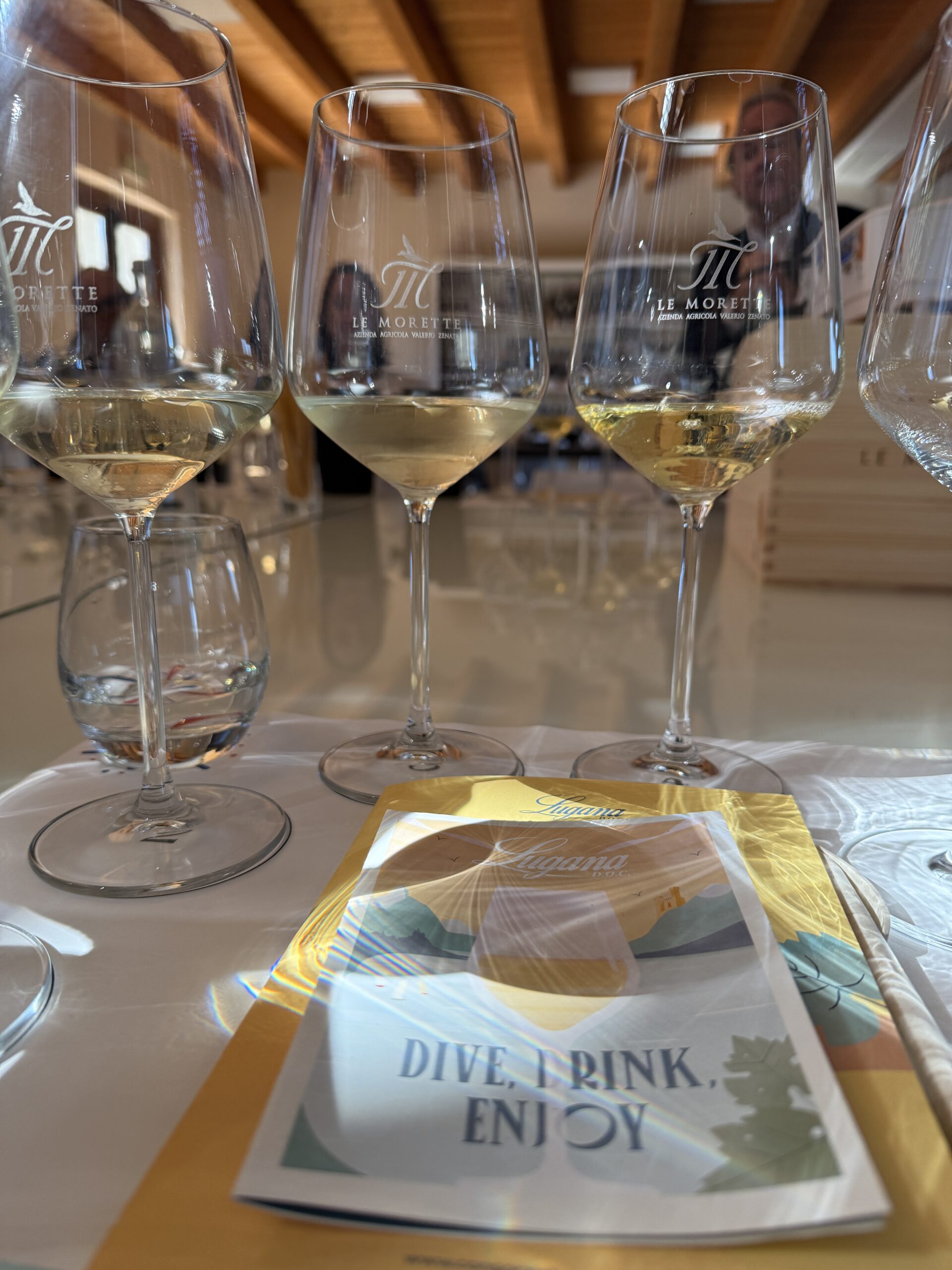
Nestled along the southern shores of Lake Garda, Lugana DOC stands as Italy’s most refined lakeside white wine appellation. Spanning the border between Lombardy and Veneto in northern Italy, this designated area forms a narrow, crescent-shaped corridor encompassing five key communes: Sirmione, Desenzano del Garda, Pozzolengo, Lonato del Garda, and Peschiera del Garda. Framed by morainic hills shaped by ancient glaciers, Lugana’s distinctive white-clay and limestone soils impart remarkable minerality and aging potential to its signature grape, Turbiana (locally known as Trebbiano di Lugana). In essence: a sophisticated white wine region, just 20 minutes from Lake Garda’s crystalline waters. Having explored vintages from Umbria’s robust Sagrantino vineyards to the sunlit hills of Chianti in Tuscany, I arrived in Lugana last autumn with keen anticipation. Hosted by the Consorzio Tutela Lugana and Nonni Marketing, this press trip transcended routine tastings and tours. It offered an immersive tribute to Turbiana—the resilient grape that defines Lugana’s elegant, mineral-driven whites. Over three radiant days, I toured historic cellars, enjoyed locally sourced cuisine, and embraced the serene cadence of the lake. For wine enthusiasts and discerning travelers alike, allow me to guide you through this captivating journey. Arrival at Le Morette: A Memorable Introduction Our journey commenced immediately upon arrival at Le Morette. Before alighting from the vehicle, third-generation proprietor Fabio Zenato presented a chilled flute of the estate’s Metodo Classico Brut—a sparkling Turbiana alive with green apple, brioche, and a precise saline finish. The effervescence evoked sunlight dancing across Lake Garda, setting an inviting tone. Fabio’s dedication mirrors the depth of the estate’s 40 hectares, situated between Garda’s southern shores and the UNESCO-protected Frassino Lake—a habitat for wild ducks (the name Le Morette, meaning “little brunettes,” pays homage to these birds). An introductory masterclass, conducted by JC Viens of Grande Passione, transformed technical terroir discussion into an engaging narrative. With experience spanning Hong Kong’s wine scene to Italian ambassadorships, JC illuminated Lugana’s inter-regional character, its glacial clay-rich soils, and the grape’s Verdicchio lineage. Confirmed by DNA analysis as a distinct variety, Turbiana thrives under the lake’s microclimate: warming Ora winds by day and cooling Pelèr breezes by night, yielding wines of vibrant acidity and refined texture. “Duality in a bottle,” he noted—suitable for casual aperitifs yet capable of graceful evolution. Notable selections included: Fabio then led a comprehensive tour of the 60-hectare certified organic estate. We traversed sunlit vineyards and descended into cool underground cellars featuring stainless steel and sustainable innovations. Originating as a vine nursery in the 1950s, the family grafts Turbiana onto phylloxera-resistant American rootstocks—a process Fabio demonstrated with precision, underscoring the blend of tradition and science that sustains the region. The modern winery integrates geothermal systems within a restored 19th-century farmhouse, employing gravity-fed presses and subtle oak influence. Lunch, hosted by Fabio, featured seafood saffron risotto with lake perch and shrimp, paired seamlessly with Le Morette’s portfolio. He recounted the family’s postwar legacy and Turbiana’s central role in Lugana’s identity. Evening Elegance at Hotel Piccola Vela We settled at Hotel Piccola Vela in Desenzano del Garda—a contemporary lakeside retreat offering minimalist accommodations, private beach access, an infinity pool blending with the horizon, and a spa featuring vinotherapy. It provided an ideal respite. As dusk approached, we gathered on the rooftop with Cà Lojera’s Belle Metodo Classico Brut Zero 2018—a zero-dosage sparkler from 50-year-old vines, aged 36 months on lees. Its focused citrus, mineral precision, and fine mousse harmonized with the sunset. The evening culminated in a welcome Apericena hosted by the Lugana Board of Directors. Amid convivial exchange, we sampled offerings from Tenuta Corbari, Pasini San Giovanni, Montonale, Fraccaroli, Citari, Ca’ dei Frati, Sansonina, Cantina Coarse, and Zenato—ranging from delicate sparklers to structured reserves. Key tasting notes: Lugana DOC represents more than a wine region—it embodies a harmonious balance of tradition, innovation, and natural beauty. From the meticulous grafting at Le Morette to the panoramic tastings at Hotel Piccola Vela, Turbiana reveals remarkable versatility: crisp enough for casual enjoyment, yet profound in its capacity to evolve. With 60–70% of production exported to discerning markets in Germany and the United States, Lugana maintains an aura of understated excellence. For wine professionals and collectors, these bottlings offer intellectual depth and exceptional value. For travelers, the communes along Lake Garda promise cultural richness, culinary authenticity, and restorative landscapes. This press trip reaffirmed Lugana’s quiet authority in Italy’s viticultural canon—an invitation to savor elegance in its purest form. Whether planning a vineyard pilgrimage or seeking the perfect white for your table, let Lugana be your next discovery. Day two next!
La Carbona: Sherry & Michelin Stars in Jerez
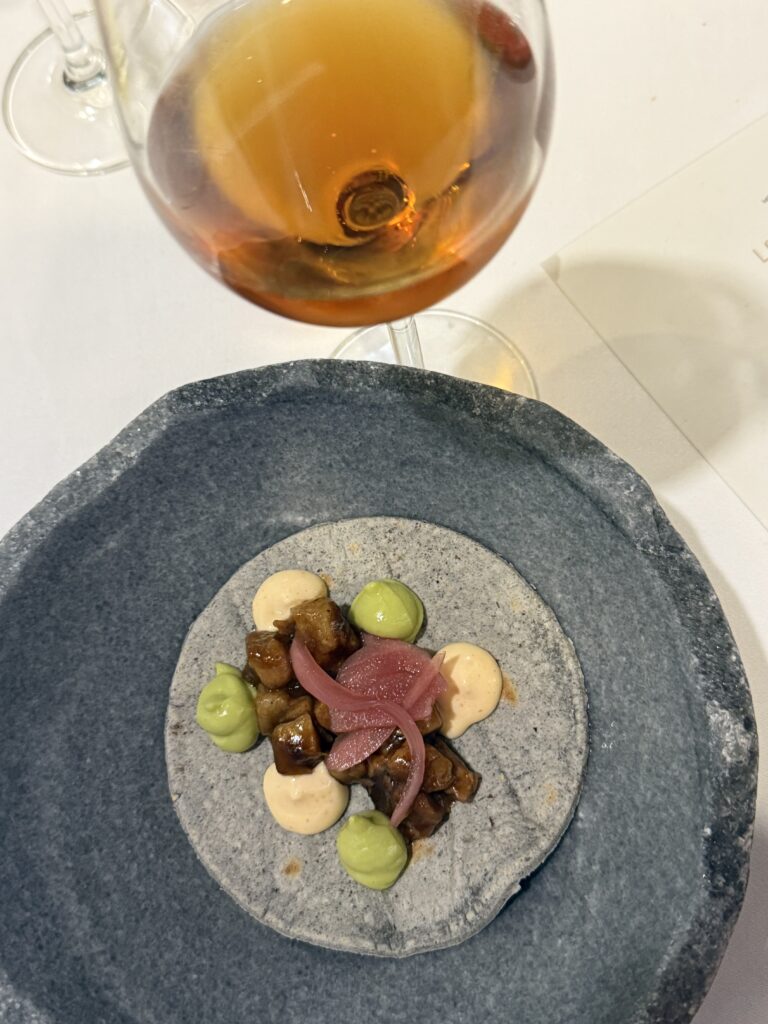
Nestled in the sun-drenched heart of Jerez de la Frontera, Andalusia’s sherry capital, La Carbona occupies a space that’s equal parts history lesson and love letter to the region’s viticultural soul. Housed within the restored 19th-century Bodegas González Byass – the legendary cellars where Fundador Brandy has been aging for over two centuries – the restaurant feels like stepping into a time capsule. Exposed brick walls, vaulted stone ceilings, and towering oak barrels (some dating back to the 1800s) create an intimate, almost subterranean cocoon, where the air hums with the faint, nutty aroma of oxidative sherries fermenting nearby. It’s not your typical white-tablecloth affair; instead, it’s a rustic-elegant haven that blends industrial heritage with modern refinement. Outside, the cobbled streets of Jerez whisper of flamenco rhythms and equestrian parades, but inside, time slows to the deliberate pour of a fino from a criadera. We opted for the crown jewel of the menu: the 7-course tasting extravaganza, meticulously paired with an exclusive selection from González Byass’s sherry portfolio and a digestif flourish from Fundador Brandy. At €150 per person (a steal for this caliber), it promised – and delivered – a narrative arc of flavors that danced between the bracing salinity of coastal Jerez and the opulent depth of its solera-aged treasures. Chef Israel Rodríguez, La Carbona’s visionary, channels Andalusian tradition through a contemporary lens, drawing from the bodega’s own larder of seasonal bounty. Each course arrived like a chapter in an unpublished novella, with the sherries acting as both chorus and counterpoint. Service, led by sommelier extraordinaire Ana Morales, was poetic: unobtrusive yet profoundly knowledgeable, with pairings explained in hushed tones that felt like sharing secrets over a late-night copita. The overture opened with Sardinas Ahumadas – lightly smoked sardines atop a confit of onions and piquillo peppers, their briny punch tempered by a velvety Tío Pepe Fino (González Byass’s crisp, almond-flecked icon). The sherry’s marine edge cut through the fish’s richness like a Moorish blade, evoking Jerez’s Atlantic proximity. Next, a playful Gazpacho de Tomate y Pimiento followed, chilled to perfection with a swirl of basil oil and fermented garlic. Paired with a rare La Guita Manzanilla (nutty and saline, with chamomile whispers), it was summer in a bowl – refreshing yet intellectually layered, the sherry’s flor notes mirroring the soup’s subtle umami. Transitioning to heartier terrain, the Pollo Asado con Confited Garlic arrived as a golden, herb-crusted half-bird, its skin crackling under the fork, juices mingling with roasted carrots and a jus laced with bay leaf. Here, the Equipo Navazos Amontillado (dry, oxidative, with hazelnut and orange zest) stepped in like a mischievous storyteller, its oxidative bite amplifying the poultry’s savoriness without overwhelming. Midway, a palate-cleansing interlude of Molletes de Aceite – fluffy olive oil bread bites with anchovy butter – bridged to the main act: Costillas de Ternera Glaseadas, slow-braised short ribs that melted into oblivion, glazed with a reduction of Pedro Ximénez and wild thyme. The bold, raisiny PX Sherry (a González Byass classic) was pure decadence, its caramel depth wrapping the beef in a sweet-savory embrace that lingered like a flamenco echo. Vegetarian diversions shone too, with Pimientos del Padrón and Ensalada de Tomate providing bright, peppery interludes, their pairings a zippy Viña AB (young, fruity) that popped with citrus acidity. The crescendo built to Queso de Cabra con Membrillo, a creamy goat cheese from the Sierra de Grazalema, offset by quince paste and toasted Marcona almonds – elevated by the Oloroso Royal, a nutty, spicy sherry that evoked leather-bound libraries and forgotten cellars. The finale? A whisper of elegance in Helado de Turrón, almond nougat ice cream drizzled with honey and pistachios, before the brandy encore: a velvety sip of Fundador Supremo, its vanilla-oak warmth cutting through the dessert’s sweetness like aged wisdom. At 40% ABV, it was the perfect denouement – contemplative, not cloying. The atmosphere – dimly lit, with live guitar strums on weekends and the occasional sherry tasting in adjacent rooms – fosters romance and reverie, ideal for anniversaries or solo reflections. At one Michelin star since 2022, it earns every accolade for innovation rooted in reverence. Reflecting on this journey, it’s clear that Spanish sherry and brandy are more than beverages—they are cultural treasures that embody centuries of heritage, craftsmanship, and innovation. Whether savored in historic cellars or paired with culinary excellence, these spirits continue to inspire and enchant enthusiasts around the world, carrying forward a legacy as vibrant and enduring as Andalusia itself. If you’re in Andalusia, detour here; it’s not just a meal, but a memory etched in sherry’s amber glow.
Vale dos Vinhedos: Your Next Wine Pilgrimage at Ales Victoria & Spa do Vinho
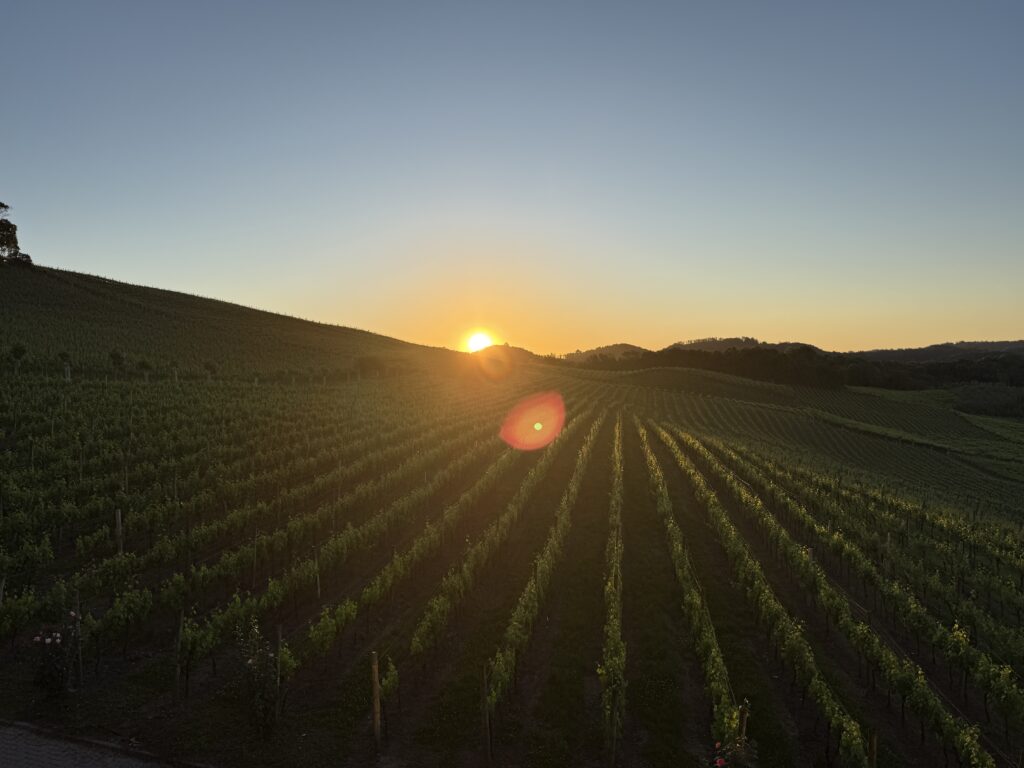
Imagine this: basalt cliffs crumbling into iron-rich dust beneath century-old vines, golden sunlight painting the hills of Brazil’s only DO region, and a glass of Merlot so vivid it tastes like freedom on horseback. This isn’t Tuscany. This isn’t Napa. This is Vale dos Vinhedos, and at its beating heart are Ales Victoria—a boutique winery rewriting Brazil’s fine wine story—and Spa do Vinho, where vinotherapy meets pure indulgence. I went as a wine professional. I left converted. Here’s why you—wine lover, wanderluster, seeker of the next great terroir—need to go. They are developing Brazil as a wine destination. Ales Victoria: Where Brazil’s Soul Meets the Glass Deborah and Aldemir Dadalt translate their twenty-two hectares of lands, satellite-mapped with surgical precision, sit in the cradle of Brazil’s GI movement. Every vine is a declaration: This is us. This is now. Walk the rows and history breathes. 150-year-old Isabella Labrusca vines—brought by Italian settlers—still fruit under the latada pergola, a living cathedral of green arches you duck beneath. The oldest Merlot? A defiant 25-year-old, roots clawing through basalt so hard it rings like iron, then powdery layers of calcium and iron, semi-precious stones, sand, clay, humus. This isn’t soil. It’s geology in a glass. Sustainability isn’t a buzzword here—it’s survival turned visionary. Water purified by plant roots. Original Atlantic forest preserved. And the future? PIWI varieties—disease-resistant hybrids—being trialed in rested parcels. Brazil’s climate armor. The Dadalts aren’t waiting for change. They’re building it. Twenty years ago, Michel Rolland walked these slopes and designed the front vineyard’s four sacred parcels. The proof is in the bottle. The Tasting: Four Wines That Demand Your Attention Spa do Vinho: Where Wellness Becomes Wine Ritual After the vines, surrender to Spa do Vinho—Brazil’s vinotherapy cathedral, and the crown jewel of a 5-star Autograph Collection hotel perched atop a hill amid 18 hectares of their own vineyards. This isn’t just recovery; it’s a full-body immersion in the valley’s magic, blending French-inspired Caudalie protocols with local terroir twists. Potable mineral water, drawn from the estate and warmed to a soothing 36.5°C (body temperature), powers the hydrotherapy circuits that simulate gentle river streams—think cascading jets, underwater massages, and effervescent grape baths that leave your skin humming. The Vino Spa’s arsenal is a vinophile’s dream: Signature vinotherapy treatments using polyphenolic grape extracts for anti-aging facials, detox body wraps, and restorative massages that melt away jet lag (or post-tasting haze). Indulge in a classic grape-seed scrub or a red-wine bath ritual, then ease into the therapeutic heated pool for zero-gravity floats with vineyard views. Follow with a steam session in the wet sauna, a barefoot trek along the invigorating stone path for reflexology perks, or a sun-soaked lounge in the solarium—panoramic glass walls framing endless rows of Merlot and Tannat. It’s wellness with a 700-label cellar soundtrack. And the Codallie? That ethereal perfume distilled from Chardonnay blossoms—harvested in one fleeting, fragrant week—now feels like the spa’s secret handshake. Spritz it post-treatment, and you’re wearing the vineyard. The hotel itself elevates the stay into a seamless wine-country escape. Check in with a welcome glass of sparkling méthode traditionnelle, then settle into one of 128 air-conditioned rooms—many with private balconies overlooking the vines, stone fireplaces for chilly evenings, pillowtop beds draped in crisp linens, and minibars stocked with local sparklers. Marble bathrooms stock Vino.Spa exclusives: think lavender-infused robes, hair dryers, and rainfall showers big enough for two. Dining? A terroir feast across five venues: Leopoldina Restaurant for elegant Brazilian tasting menus paired with rare vintages; Bistrô Culinária de Terroir’s à la carte farm-fresh plates; sunset parrillas at Esplanada Gaúcha with valley panoramas; casual bites at the Gastrobar; or intimate enoteca sessions at Vino.Libris. Free breakfast is a spread of regional cheeses, house-made jams, fresh pastries, and—yes—complimentary espumante to toast the morning. Sip at the rooftop bar as dusk falls, or unwind poolside with craft cocktails. Active souls, rejoice: A 24-hour fitness center keeps you sharp, while outdoor pursuits include tennis courts for a friendly rally, an outdoor infinity pool blending into the horizon, a bubbling spa tub, and even hot-air balloon rides over the DO for aerial terroir scouting. Families or groups? Kid-friendly pools and event spaces (up to 5,400 sq ft for weddings or wine seminars) seal the deal. Free WiFi blankets the property, complimentary valet parking eases arrivals, and a concierge can orchestrate winery tours or cooking classes. It’s 15 minutes from Bento Gonçalves’ center, yet worlds away—a bucolic bubble where service feels familial, not fussy. The cellar? Brazil’s largest: 700 labels, 40,000 bottles, every wine available by the glass via Coravin. Winemakers from Rio Grande to São Paulo gather here. This isn’t a tasting room. It’s a think tank with stemware. Vale dos Vinhedos isn’t “up and coming.” It’s arriving. Ales Victoria proves Brazil can craft age-worthy, site-specific reds and whites that rival the world’s best. Spa do Vinho turns recovery into ritual—and the hotel wraps it in Tuscan elegance amid endless vines. Book the flight. Pack light. Bring hunger—for flavor, for story, for the next great wine frontier. Because the dark horse is running. And it’s headed straight for your glass. Who’s coming with me?
Unveiling Secrets at Tío Pepe with Silvia Flores
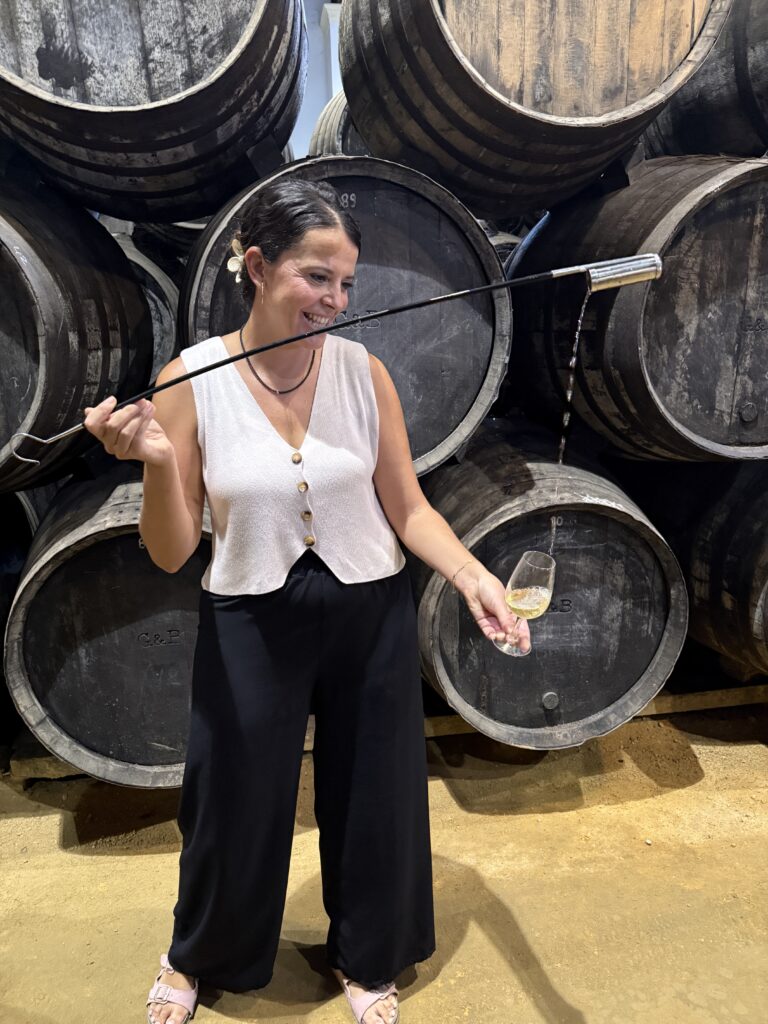
My recent trip to the Sherry heartland was nothing short of enchanting, a whirlwind of family legacies, velvety tastings, and unexpected adventures. At the epicenter? The iconic Tío Pepe bodega at González Byass, where I had the profound privilege of touring with Silvia Flores Cintado, the spirited third-generation steward who’s breathing fresh life into this storied house. We arrived under a golden autumn sky, checking into the Hotel Bodega Tío Pepe, a boutique gem tucked into the bodega’s historic core. Housed in 19th-century cottages once used by winery workers, the hotel feels like a love letter to sherry’s past – exposed stone walls, wrought-iron accents, and rooms that whisper of old-world romance. Our suite overlooked the sprawling courtyard, where chalk-dusted barrels slumbered like ancient guardians. Mornings began with a lavish breakfast in the garden- a spread of Iberian hams, fresh churros, and, of course, pours of crisp fino to cut through the sweetness. The rooftop pool offered lazy afternoons gazing at the cathedral’s spires, but honestly, who needs a dip when the real immersion is just steps away? It’s the kind of stay that doesn’t just host you; it seduces you into the rhythm of Jerez life. The highlight, without question, was our private tour with Silvia. And Sylvain. Eight years into her role at González Byass (she joined in 2017), this dynamic winemaker and innovator is the epitome of women taking the reins in a traditionally male-dominated world. As the daughter of Antonio Flores, the bodega’s legendary winemaker and master blender – a man whose blends have defined Tío Pepe for decades – Silvia is carrying forward a torch lit by her grandfather, Miguel Flores, who served as technical director for over 50 years. “I’m the third generation,” she shared with a warm laugh, her passion as effervescent as the flor yeast she reveres. “My grandfather, my father, and now it’s my turn to learn all the secrets.” We descended into the bodega’s oldest wing, a 19th-century labyrinth of cool, dimly lit vaults that house part of the solera system – a staggering 20,000 casks strong. The air was thick with humidity (around 70% down here, she noted, versus a drier 33% higher up), the perfect cradle for biological aging. The floor? A mosaic of crushed glass, swept daily to fend off unwanted moisture while coaxing the magic from above. Silvia led us to the “Solera Baja,” the lowest tier where the youngest wines rest, explaining the art of blending across levels. “It’s a blending system,” she said, her eyes lighting up. “We move the wine from role to role, checking every cask monthly to ensure the flor – that living veil of yeast – thrives.” And thrive it does. Peering into an American oak butt, we watched as micro-particles of flor rose to the surface, fueled by the wine’s oxygen space. This “la flor,” as she called it, is the alchemist’s key: it transforms the Palomino Fino grape into the saline, nutty elixir of fino sherry. No added sugars, just pure, probiotic brilliance – “less than one gram per liter,” Silvia assured. With a flourish, she unfurled the venencia – that elegant, long-handled instrument with a slender silver cup, a tool as much art as utility. In one fluid motion, she plunged it deep into the cask, drawing up Tío Pepe’s flagship Fino and pouring it in a golden arc from over her shoulder into our copitas. The sherry sang as it fell, aerating into a pale, crystalline stream. On the palate: razor-sharp green apple, toasted almonds, and a briny Atlantic kiss. Then came the Amontillado, extracted with the same balletic precision – deeper amber, with layers of toasted hazelnut, dried apricot, and a whisper of sea salt caramel. Silvia is the undisputed master of the venencia; her pours are poetry, each drop a testament to generations of skill. Our wanderings took us along Calle Ciegos, the UNESCO-protected street that threads through the bodega’s heart like a living museum. Flanked by whitewashed walls and towering palms, this narrow artery is part of Jerez’s historic sherry district, recognized by UNESCO in 2014 for its cultural landscape of bodegas, vineyards, and traditions. The vines themselves – sprawling across the albariza soils of the Marco de Jerez – are a protected denomination, ensuring that only grapes from this sacred triangle (Jerez, Sanlúcar, El Puerto) can bear the sherry name. Standing there, beneath the bodega’s iconic Tío Pepe weather vane, you feel the weight of centuries: a place where time is measured not in years, but in soleras. Then came the moment that stopped time: Silvia reached for a venencia once more, dipping it into a dusty, museum-like cask marked with faded chalk. Out came Dulce Esteve 1986, a rare, naturally sweet Palomino Fino from an exceptional vintage – one of the bodega’s hidden treasures, untouched by fortification. She poured it straight from the barrel into our copitas, the liquid glowing like liquid topaz. On the nose: toasted fig, candied orange peel, and a whisper of old leather-bound books. The palate unfolded in waves – velvety caramelized dates, rancio nuttiness, and a bright, saline finish that lingered like a sunset over the Guadalquivir. Nearly 40 years old, yet vibrant, complex, and utterly alive. “This is what patience tastes like,” she said softly. We stood in reverent silence, glasses trembling slightly in our hands. But Tío Pepe isn’t just about sherry anymore. Silvia, ever the innovator, walked us through their expanding spirits lineup, where women are very much at the helm. Their Mom Premium Gin, distilled with sherry wines and Andalusian botanicals like oroblanco and fennel, embodies this forward-thinking vibe – crisp, juniper-forward, yet hauntingly floral. “It’s about blending heritage with what’s next,” she said, mixing us G&Ts that paired seamlessly with the bodega’s tapas. Under her guidance, González Byass is reimagining Tío Pepe not as a relic, but as a vibrant force in modern mixology. Hunger struck as the sun climbed, leading us to Restaurante Pedro Nolasco, the bodega’s elegant on-site