
Bacchus 2026: Unforgettable Tastings & Connections
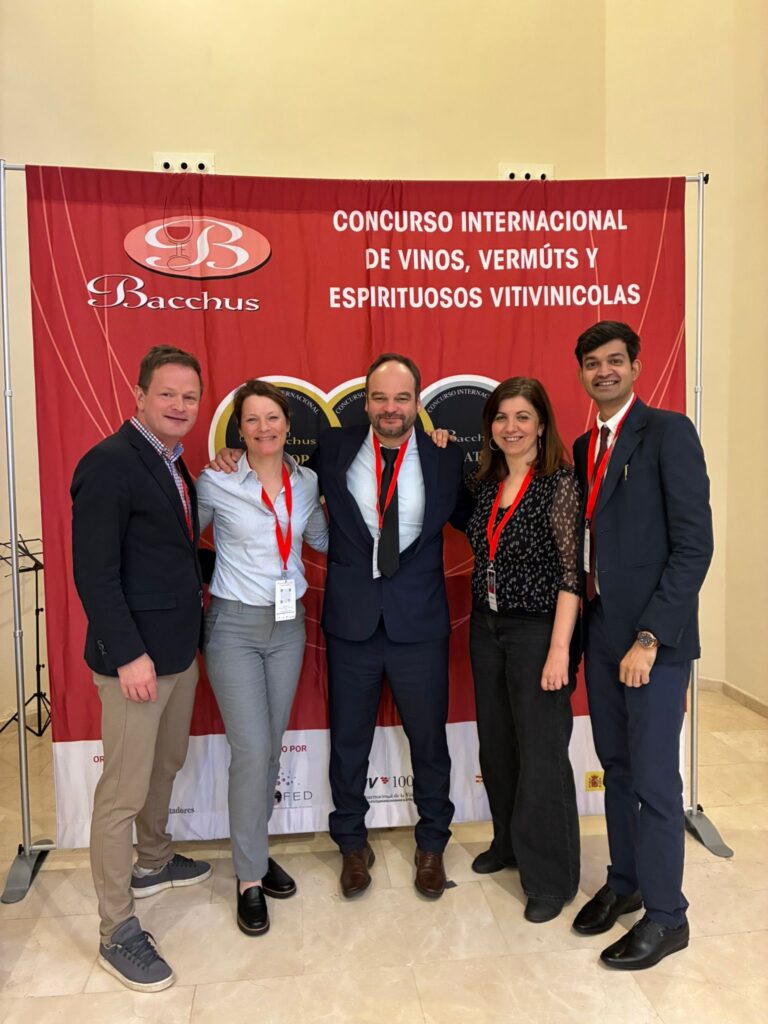
Awaken your senses to the refined warmth of Spanish hospitality, timeless flair, and electrifying energy of Concurso Internacional Bacchus. The Bacchus International Wine Competition (Concurso Internacional Bacchus) remains Spain’s premier annual tasting for wine, vermouth, and spirits. Organized since 1996 by the Unión Española de Catadores in Madrid, Bacchus is recognized by the OIV and respected within the VINOFED network — a benchmark for technical rigor, international visibility, and industry credibility. Bacchus XXIV (Bacchus 2026), held in Madrid from 23–26 March, welcomed a diverse field: 1,462 wines, 28 vermouths, and 35 spirits from 14 countries. Ninety-two judges from 27 nationalities — critics, sommeliers, winemakers, educators, and importers — came together for strict blind tastings. Spanish entries were especially strong, covering 51 geographical indications and 42 designations of origin. Medals across Gran Bacchus de Oro, Bacchus de Oro, and Bacchus de Plata were awarded, with Mexico leading the international medal count. The competition’s logistics run like a well-tuned cellar: flights randomized, controlled tasting conditions, and multiple judges per sample to reduce bias. A calibration session at the start aligned scoring criteria and reference styles, helping ensure coherence across a widely varied panel. Beyond medals, detailed tasting notes offered producers and trade professionals practical feedback on market readiness and stylistic direction. Bacchus balances rigorous assessment with cultural and commercial programming. Over three full days, core blind panels were paired with masterclasses, producer showcases, trade tastings, and evening events — a mix that highlights both established appellations and fresh, experimental projects. The opening Ambassadors of Diversity Wine Salon set the tone, showcasing identity-driven wines and signaling that Bacchus values both tradition and innovation. Several wines stood out. Bodegas Serdio’s 50 VORS sherries revealed oxidative mastery: an Oloroso with nutty-caramel depth, an Amontillado layered with dried apricot and savory nuance, and a Palo Cortado of toasted-walnut precision and saline lift. Paco & Lola’s 2018 Albariño impressed with citrus lift and saline minerality; Granvazan Limousin Albariño offered creamy texture and toasted-almond nuance; Altos de Corona Caíño popped with green apple, wild herbs, and mineral energy; and Pago de los Capellanes Parcela El Picon 2021 showed concentrated dark fruit, warm spice, and silky, refined tannins. As a first time attendee, it was a genuine honor to participate in this esteemed competition. The event’s perfect scale created such wonderful camaraderie among wine professionals from around the globe, giving us the ideal setting to connect and build meaningful relationships with colleagues from every corner of the industry. Adding to the magic of the event were the exceptional lunches, masterclasses, and dinners that followed each day of tasting. All lunches and the core blind tasting sessions took place at the historic MOM Culinary Institute El Pardo — housed in a beautifully repurposed 19th-century convent in Madrid’s El Pardo district. That atmospheric setting, with its timeless architecture and warm, professional vibe, added an extra layer of charm and history to every moment. Culinary pairings and masterclasses were integral to the Bacchus experience, each designed to reveal new facets of the wines: – Lan & Sogrape hosted a standout lunch where grilled octopus and succulent Iberian pork cheek were paired deftly with elegant, balanced wines. Following this, a Raventós Codorníu masterclass showcased Cava’s traditional-method precision — crisp, fine bubbles and focused acidity that demonstrated the region’s world-class sparkling craftsmanship. – An asador dinner at Asador Gonzaba Madrid, sponsored by Marqués de Riscal, provided a quintessential Spanish grilling experience: jamón ibérico de bellota; jamón-and-cheese croquetas; grilled Galician scallops; and a magnificent chuletón de ternera, each course enlivened by generous pours of iconic Rioja and other classic Spanish labels. – Torres hosted a refined luncheon that highlighted varietal finesse and cellar craft, while a Zamora Company masterclass later in the day put a spotlight on exceptional Godello from Finca Lobeira and Godeval alongside a vibrant Ramón Bilbao Albariño — tastings that illustrated how soil, exposure, and vine age influence aromatic lift, texture, and aging potential. – Restaurante Zen Velázquez delivered an elegant Asian-fusion dinner paired with Bodegas NOC, where the Selección de Familia Ribera del Duero 2023 revealed plush dark cherry, violet florals, and polished tannins. Guests were also treated to one of the first public tastings of Bodegas NOC’s inaugural traditional-method sparkling rosé from Tempranillo — a milestone release that speaks to the region’s innovation. The closing day’s lunch at MOM tied the week together with elevated comfort fare — empanada de atún y Manchego, tuna encebollado, Iberian pork tenderloin, and a salted chocolate tart — alongside a strong lineup of standout wines. Noteworthy pours included Familia Navascues Mas de Mancuso Cariñena 2023 (sensual blackberry and pepper wrapped in silky tannins), Arrayan El Bufón Albillo Real 2023 (explosive pineapple and peach with electric acidity), Arrayan La Suerte 2021 (rich dark fruit and tobacco with a long polished finish), and Bodegas Pascual Fernández Siete Peldaños 1857 Selección de Viñas Viejas 2020 (deep cherry, leather, earth, and velvety texture). Sharing these wines with their producers, Jorge Navascues and Maite Sanchez Marquez, underscored the dialogue between bottle and maker that makes Bacchus so meaningful. The evening ended on a high note with a farewell dinner at Sua by Triiclea — a fresh, vibrant Rías Baixas celebration hosted by the Consejo Regulador. They poured 27 impressive Albariños; standouts included Lusco Albariño 2025 (zesty lemon, sea-breeze freshness), Pazo Señorans 2024 (peach and white-flower elegance, bright acidity), Albariño de Fefiñanes 2024 (crisp green apple, saline minerality), Pazo de Rubianes 2024 (creamy texture with tropical fruit) and Granbazán Don Álvaro de Bazán 2022 (honeyed apricot, toasted almond, long refined finish). The menu was exceptional (toast with smoked butter and anchovies were swoon worthy) & framed the wines beautifully and sent the week off in style. From a professional standpoint, Bacchus 2026 balanced technical rigor with access and storytelling. The scoring and medal outcomes continue to offer a reliable external validation that producers can leverage for market entry, trade attention, and consumer trust. For importers and distributors, the competition’s results and the relationships forged here provide a practical roadmap
Marcelo’s Alba Gems: Brazil’s Aguardentes
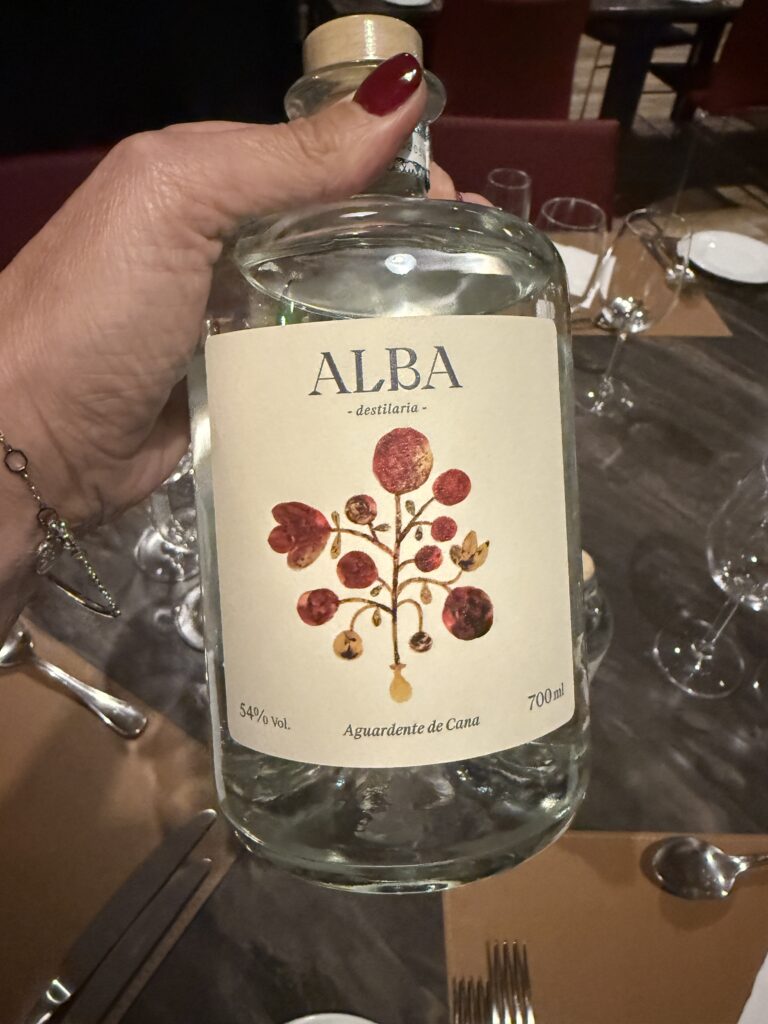
I’m thrilled to introduce our fellow judge, the incredible bartender and cachaça sommelier Marcelo Pereira! His infectious passion for Brazilian spirits and culture lights up the room, and today he’s treating us international judges to two absolute gems from Alba Distillaria. Let me share the magic he’s poured for us — and dive into the heart of aguardente, how it’s crafted, and the story behind this remarkable distillery. The Soul of Aguardente in Brazil In Brazil, aguardente de cana — better known as cachaça — is pure national pride in liquid form. Born in the 16th century with Portuguese distillation know-how, it’s the heartbeat of celebrations, the soul of the caipirinha, and a symbol of resilience and joy. From powering samba nights to once serving as currency in colonial times, cachaça is Brazil’s most beloved spirit, with over 40,000 producers and countless regional styles. It’s not just a drink — it’s heritage, rhythm, and rebellion in every sip. How Aguardente de Cana is Made It all starts with fresh, juicy sugarcane, crushed to release its sweet nectar. That juice ferments naturally (often with wild yeasts) for days, building bold, vibrant flavors. Then comes the artistry: double distillation in traditional copper pot stills using the bain-marie method — gentle heat that preserves purity and character. The result? A crystal-clear spirit between 38–54% ABV, either enjoyed young and fresh or aged in native Brazilian woods like amburana (think vanilla and spice) or jequitibá (subtle, honeyed warmth). Every bottle carries the land, the hands, and the heart of its maker. Alba Distillaria: A New Chapter in Brazilian Spirits Tucked into the wine-soaked hills of Serra Gaúcha in Monte Belo do Sul, Alba Destilaria was born in late 2021 from the bold vision of Pedro Paiva (a former psychologist) and Rosana Cavaleri. After two years of planning, they launched a micro-distillery dedicated to spontaneous fermentation, wild yeasts, and living ingredients only — no shortcuts, no additives. Using local grapes and sugarcane year-round, they craft high-ester, terroir-driven spirits in copper alembics, blending tradition with fearless innovation. Since their first 2022 harvest, Alba has been redefining Brazilian rum and eaux-de-vie, putting the untapped soul of Rio Grande do Sul on the world stage. Aguardente de Uva LorenaFrom the stunning Monte Belo do Sul/RS, this Eau de Vie is crafted from the rare Uva Lorena grape. Distilled in a copper alembic with the bain-marie method, it’s a refined 45% ABV with smooth, fruity elegance, delicate floral hints, and a crisp, lingering finish. Pure sophistication in a glass — like sipping sunlight from the vineyard. Aguardente de Cana VermelhaHailing from Presidente Lucena/RS, this powerhouse is made from Cana Vermelha, fermented for 30 days and distilled in copper. At a fiery 54% ABV, it delivers sweet cane freshness, deep earthy richness, and a crisp, joyful finish that explodes with personality. Brazil in a bottle — bold, alive, and unforgettable. Marcelo, your passion is contagious — and these spirits? They’re proof that Brazil’s liquid legacy is only getting brighter. Cheers to Alba, to tradition, and to the next revolution in every glass! Link to the Instagram Reel – Marcelo & Alba Spirits
A Sip of Tradition: Visiting Velho Alambique Cachaçaria in Brazil
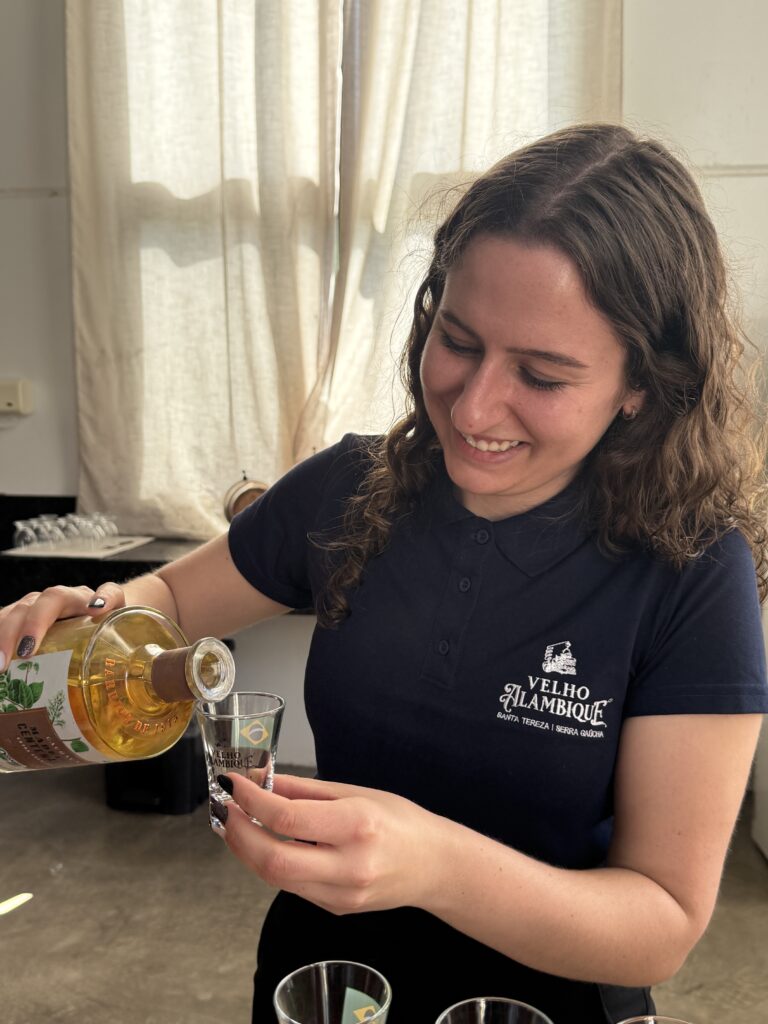
Welcome, wine lovers and spirit enthusiasts, to another adventure with The Happy Vine! Today, we’re stepping away from the vineyard and diving into the vibrant world of cachaça, Brazil’s beloved spirit, with a visit to the charming Velho Alambique Cachaçaria. Nestled in the heart of Brazil’s sugarcane country, this small, family-owned distillery is a treasure trove of tradition, passion, and some seriously sippable cachaça. So, grab a shot glass and let’s explore! Nestled in the rolling hills of Santa Tereza, Rio Grande do Sul, Velho Alambique is a family-run gem producing organic, artisanal cachaças from their own sugarcane fields. With a nod to tradition and a flair for wood-aged innovation, their lineup showcases the distillery’s mastery of blends and native Brazilian hardwoods. The distillery sits on a modest 10-12 hectares of sugarcane fields, a plot that’s been lovingly tended by the family for generations. The current owners, João and Maria, have passed down their passion to the next generation, their daughter Laura and son Gustavo, who are now steering the distillery into the future with pride and innovation. Velho Alambique churns out an impressive 40,000 liters of cachaça each year, all from a single harvest in June when the sugarcane is at its peak. That’s right—one harvest, one chance to capture the essence of the land in liquid form. The process is as much art as it is science, with every step infused with the family’s dedication to quality. From the moment the cane is cut to the final bottling, you can feel the care that João, Maria, Laura, and Gustavo pour into every drop. What makes Velho Alambique truly special is their experimentation with 35 types of wood for aging their cachaça. Yes, you read that right—35! They use exotic woods like balsam, each imparting its own unique character to the spirit. Laura shared that the level of toasting on the barrels plays a fascinating role in the final product: less toasted wood gives the cachaça a deeper, richer color, while more heavily toasted barrels result in a lighter hue but bolder, smokier flavors. It’s like a painter’s palette, with each barrel adding its own stroke of genius. According to Brazil’s cachaça regulations (set by the Ministry of Agriculture, Livestock and Supply), there’s no cap on the types of wood you can use to age this spirited gem. The only rule? Aging happens in “suitable wooden barrels” (think classic oak or vibrant Brazilian hardwoods) up to 700 liters, for at least one year to earn that coveted envelhecida (aged) cachaça title. But here’s the exciting part: the guidelines throw the doors wide open for creativity, letting distillers play with a dazzling array of native woods to craft bold, unique flavor profiles that make every sip a journey! As we toured the distillery, Laura explained the concept of the “angel’s share”—the 3-5% of cachaça that evaporates during aging, a little gift to the heavens (or maybe just the Brazilian humidity). It’s a reminder of the patience required to craft something extraordinary. The cachaça here is made with respect for tradition but also a playful curiosity, as Laura and Gustavo experiment with new woods and techniques to honor their parents’ legacy while keeping things fresh and exciting. We enjoyed churrasco—Brazilian barbecue—and sampled their range of cachaça, from unaged white varieties to those aged in various woods, revealing deep amber hues. I was genuinely impressed by the breadth of flavors and distinct spirit profiles.My personal favorite was the amburana-aged cachaça: exceptionally smooth, with warm, spicy notes reminiscent of cinnamon. Sipping their cachaça was, of course, the highlight. Each glass told a story—of the land, the family, and the craftsmanship of João, Maria, Laura, and Gustavo. Whether it was a smooth, golden cachaça aged in lightly toasted balsam or a crisp, unaged version bursting with fresh sugarcane notes, every taste was a celebration of Brazil’s spirit (pun intended). Velho Alambique proudly upholds the denominação de origem (DO) status, a mark of quality and authenticity for cachaça. Brazil currently recognizes seven DO regions for cachaça, each with its own distinct terroir and production methods, and Velho Alambique’s offerings shine as a testament to their region’s unique character. As I left Velho Alambique, the sun was setting over the sugarcane fields, casting a golden glow that felt like a nod to the liquid gold in their barrels. This little distillery is a testament to the beauty of small-scale, family-run operations—where João and Maria’s vision lives on through Laura and Gustavo’s passion, tradition, and innovation come together in every bottle. If you ever find yourself in Brazil, make the trek to Velho Alambique. And if you can’t, track down a bottle of their cachaça and let it transport you to those sun-drenched fields. Until our next adventure, keep sipping, exploring, and finding joy in every glass. Link to the Instagram Reel: Vamos! Velho Alambique