
La Carbona: Sherry & Michelin Stars in Jerez
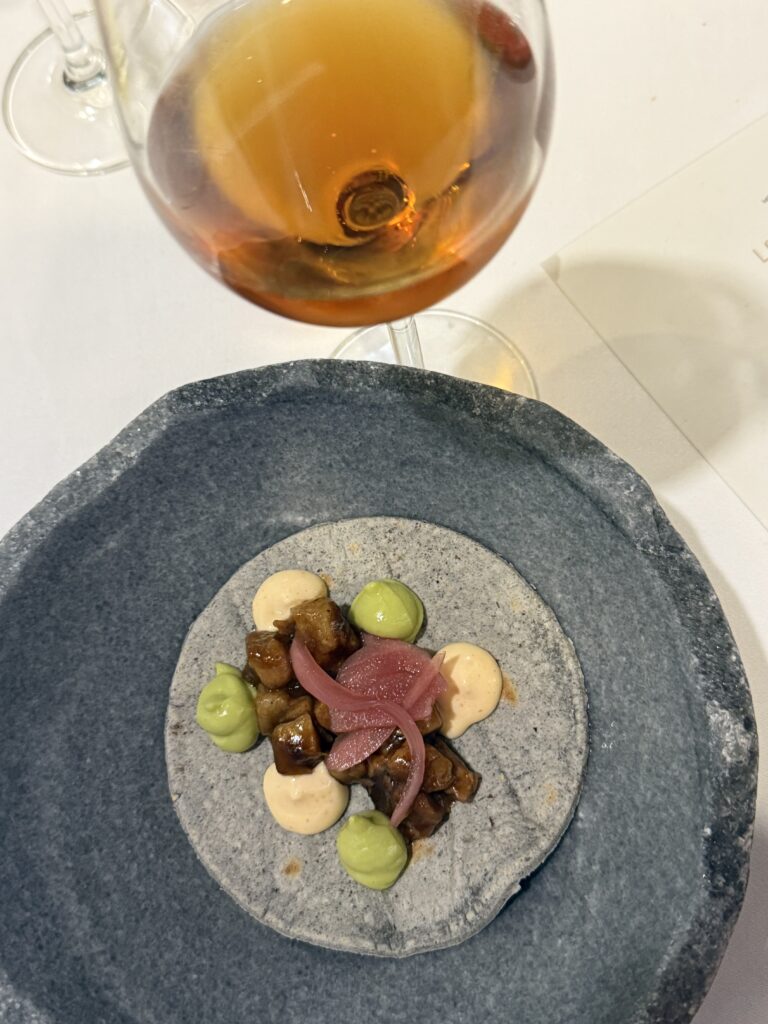
Nestled in the sun-drenched heart of Jerez de la Frontera, Andalusia’s sherry capital, La Carbona occupies a space that’s equal parts history lesson and love letter to the region’s viticultural soul. Housed within the restored 19th-century Bodegas González Byass – the legendary cellars where Fundador Brandy has been aging for over two centuries – the restaurant feels like stepping into a time capsule. Exposed brick walls, vaulted stone ceilings, and towering oak barrels (some dating back to the 1800s) create an intimate, almost subterranean cocoon, where the air hums with the faint, nutty aroma of oxidative sherries fermenting nearby. It’s not your typical white-tablecloth affair; instead, it’s a rustic-elegant haven that blends industrial heritage with modern refinement. Outside, the cobbled streets of Jerez whisper of flamenco rhythms and equestrian parades, but inside, time slows to the deliberate pour of a fino from a criadera. We opted for the crown jewel of the menu: the 7-course tasting extravaganza, meticulously paired with an exclusive selection from González Byass’s sherry portfolio and a digestif flourish from Fundador Brandy. At €150 per person (a steal for this caliber), it promised – and delivered – a narrative arc of flavors that danced between the bracing salinity of coastal Jerez and the opulent depth of its solera-aged treasures. Chef Israel Rodríguez, La Carbona’s visionary, channels Andalusian tradition through a contemporary lens, drawing from the bodega’s own larder of seasonal bounty. Each course arrived like a chapter in an unpublished novella, with the sherries acting as both chorus and counterpoint. Service, led by sommelier extraordinaire Ana Morales, was poetic: unobtrusive yet profoundly knowledgeable, with pairings explained in hushed tones that felt like sharing secrets over a late-night copita. The overture opened with Sardinas Ahumadas – lightly smoked sardines atop a confit of onions and piquillo peppers, their briny punch tempered by a velvety Tío Pepe Fino (González Byass’s crisp, almond-flecked icon). The sherry’s marine edge cut through the fish’s richness like a Moorish blade, evoking Jerez’s Atlantic proximity. Next, a playful Gazpacho de Tomate y Pimiento followed, chilled to perfection with a swirl of basil oil and fermented garlic. Paired with a rare La Guita Manzanilla (nutty and saline, with chamomile whispers), it was summer in a bowl – refreshing yet intellectually layered, the sherry’s flor notes mirroring the soup’s subtle umami. Transitioning to heartier terrain, the Pollo Asado con Confited Garlic arrived as a golden, herb-crusted half-bird, its skin crackling under the fork, juices mingling with roasted carrots and a jus laced with bay leaf. Here, the Equipo Navazos Amontillado (dry, oxidative, with hazelnut and orange zest) stepped in like a mischievous storyteller, its oxidative bite amplifying the poultry’s savoriness without overwhelming. Midway, a palate-cleansing interlude of Molletes de Aceite – fluffy olive oil bread bites with anchovy butter – bridged to the main act: Costillas de Ternera Glaseadas, slow-braised short ribs that melted into oblivion, glazed with a reduction of Pedro Ximénez and wild thyme. The bold, raisiny PX Sherry (a González Byass classic) was pure decadence, its caramel depth wrapping the beef in a sweet-savory embrace that lingered like a flamenco echo. Vegetarian diversions shone too, with Pimientos del Padrón and Ensalada de Tomate providing bright, peppery interludes, their pairings a zippy Viña AB (young, fruity) that popped with citrus acidity. The crescendo built to Queso de Cabra con Membrillo, a creamy goat cheese from the Sierra de Grazalema, offset by quince paste and toasted Marcona almonds – elevated by the Oloroso Royal, a nutty, spicy sherry that evoked leather-bound libraries and forgotten cellars. The finale? A whisper of elegance in Helado de Turrón, almond nougat ice cream drizzled with honey and pistachios, before the brandy encore: a velvety sip of Fundador Supremo, its vanilla-oak warmth cutting through the dessert’s sweetness like aged wisdom. At 40% ABV, it was the perfect denouement – contemplative, not cloying. The atmosphere – dimly lit, with live guitar strums on weekends and the occasional sherry tasting in adjacent rooms – fosters romance and reverie, ideal for anniversaries or solo reflections. At one Michelin star since 2022, it earns every accolade for innovation rooted in reverence. Reflecting on this journey, it’s clear that Spanish sherry and brandy are more than beverages—they are cultural treasures that embody centuries of heritage, craftsmanship, and innovation. Whether savored in historic cellars or paired with culinary excellence, these spirits continue to inspire and enchant enthusiasts around the world, carrying forward a legacy as vibrant and enduring as Andalusia itself. If you’re in Andalusia, detour here; it’s not just a meal, but a memory etched in sherry’s amber glow.
Unveiling Secrets at Tío Pepe with Silvia Flores
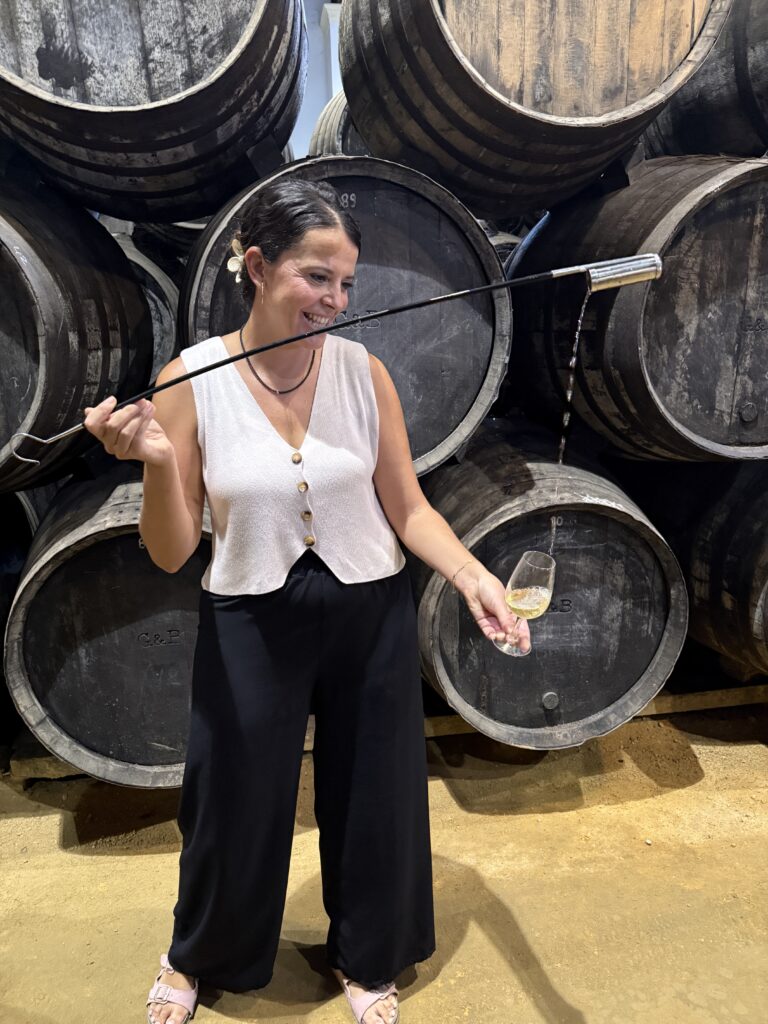
My recent trip to the Sherry heartland was nothing short of enchanting, a whirlwind of family legacies, velvety tastings, and unexpected adventures. At the epicenter? The iconic Tío Pepe bodega at González Byass, where I had the profound privilege of touring with Silvia Flores Cintado, the spirited third-generation steward who’s breathing fresh life into this storied house. We arrived under a golden autumn sky, checking into the Hotel Bodega Tío Pepe, a boutique gem tucked into the bodega’s historic core. Housed in 19th-century cottages once used by winery workers, the hotel feels like a love letter to sherry’s past – exposed stone walls, wrought-iron accents, and rooms that whisper of old-world romance. Our suite overlooked the sprawling courtyard, where chalk-dusted barrels slumbered like ancient guardians. Mornings began with a lavish breakfast in the garden- a spread of Iberian hams, fresh churros, and, of course, pours of crisp fino to cut through the sweetness. The rooftop pool offered lazy afternoons gazing at the cathedral’s spires, but honestly, who needs a dip when the real immersion is just steps away? It’s the kind of stay that doesn’t just host you; it seduces you into the rhythm of Jerez life. The highlight, without question, was our private tour with Silvia. And Sylvain. Eight years into her role at González Byass (she joined in 2017), this dynamic winemaker and innovator is the epitome of women taking the reins in a traditionally male-dominated world. As the daughter of Antonio Flores, the bodega’s legendary winemaker and master blender – a man whose blends have defined Tío Pepe for decades – Silvia is carrying forward a torch lit by her grandfather, Miguel Flores, who served as technical director for over 50 years. “I’m the third generation,” she shared with a warm laugh, her passion as effervescent as the flor yeast she reveres. “My grandfather, my father, and now it’s my turn to learn all the secrets.” We descended into the bodega’s oldest wing, a 19th-century labyrinth of cool, dimly lit vaults that house part of the solera system – a staggering 20,000 casks strong. The air was thick with humidity (around 70% down here, she noted, versus a drier 33% higher up), the perfect cradle for biological aging. The floor? A mosaic of crushed glass, swept daily to fend off unwanted moisture while coaxing the magic from above. Silvia led us to the “Solera Baja,” the lowest tier where the youngest wines rest, explaining the art of blending across levels. “It’s a blending system,” she said, her eyes lighting up. “We move the wine from role to role, checking every cask monthly to ensure the flor – that living veil of yeast – thrives.” And thrive it does. Peering into an American oak butt, we watched as micro-particles of flor rose to the surface, fueled by the wine’s oxygen space. This “la flor,” as she called it, is the alchemist’s key: it transforms the Palomino Fino grape into the saline, nutty elixir of fino sherry. No added sugars, just pure, probiotic brilliance – “less than one gram per liter,” Silvia assured. With a flourish, she unfurled the venencia – that elegant, long-handled instrument with a slender silver cup, a tool as much art as utility. In one fluid motion, she plunged it deep into the cask, drawing up Tío Pepe’s flagship Fino and pouring it in a golden arc from over her shoulder into our copitas. The sherry sang as it fell, aerating into a pale, crystalline stream. On the palate: razor-sharp green apple, toasted almonds, and a briny Atlantic kiss. Then came the Amontillado, extracted with the same balletic precision – deeper amber, with layers of toasted hazelnut, dried apricot, and a whisper of sea salt caramel. Silvia is the undisputed master of the venencia; her pours are poetry, each drop a testament to generations of skill. Our wanderings took us along Calle Ciegos, the UNESCO-protected street that threads through the bodega’s heart like a living museum. Flanked by whitewashed walls and towering palms, this narrow artery is part of Jerez’s historic sherry district, recognized by UNESCO in 2014 for its cultural landscape of bodegas, vineyards, and traditions. The vines themselves – sprawling across the albariza soils of the Marco de Jerez – are a protected denomination, ensuring that only grapes from this sacred triangle (Jerez, Sanlúcar, El Puerto) can bear the sherry name. Standing there, beneath the bodega’s iconic Tío Pepe weather vane, you feel the weight of centuries: a place where time is measured not in years, but in soleras. Then came the moment that stopped time: Silvia reached for a venencia once more, dipping it into a dusty, museum-like cask marked with faded chalk. Out came Dulce Esteve 1986, a rare, naturally sweet Palomino Fino from an exceptional vintage – one of the bodega’s hidden treasures, untouched by fortification. She poured it straight from the barrel into our copitas, the liquid glowing like liquid topaz. On the nose: toasted fig, candied orange peel, and a whisper of old leather-bound books. The palate unfolded in waves – velvety caramelized dates, rancio nuttiness, and a bright, saline finish that lingered like a sunset over the Guadalquivir. Nearly 40 years old, yet vibrant, complex, and utterly alive. “This is what patience tastes like,” she said softly. We stood in reverent silence, glasses trembling slightly in our hands. But Tío Pepe isn’t just about sherry anymore. Silvia, ever the innovator, walked us through their expanding spirits lineup, where women are very much at the helm. Their Mom Premium Gin, distilled with sherry wines and Andalusian botanicals like oroblanco and fennel, embodies this forward-thinking vibe – crisp, juniper-forward, yet hauntingly floral. “It’s about blending heritage with what’s next,” she said, mixing us G&Ts that paired seamlessly with the bodega’s tapas. Under her guidance, González Byass is reimagining Tío Pepe not as a relic, but as a vibrant force in modern mixology. Hunger struck as the sun climbed, leading us to Restaurante Pedro Nolasco, the bodega’s elegant on-site
Breaking Barrels and Barriers with Gonzalez Byass-LePanto & Nomad Outlaw
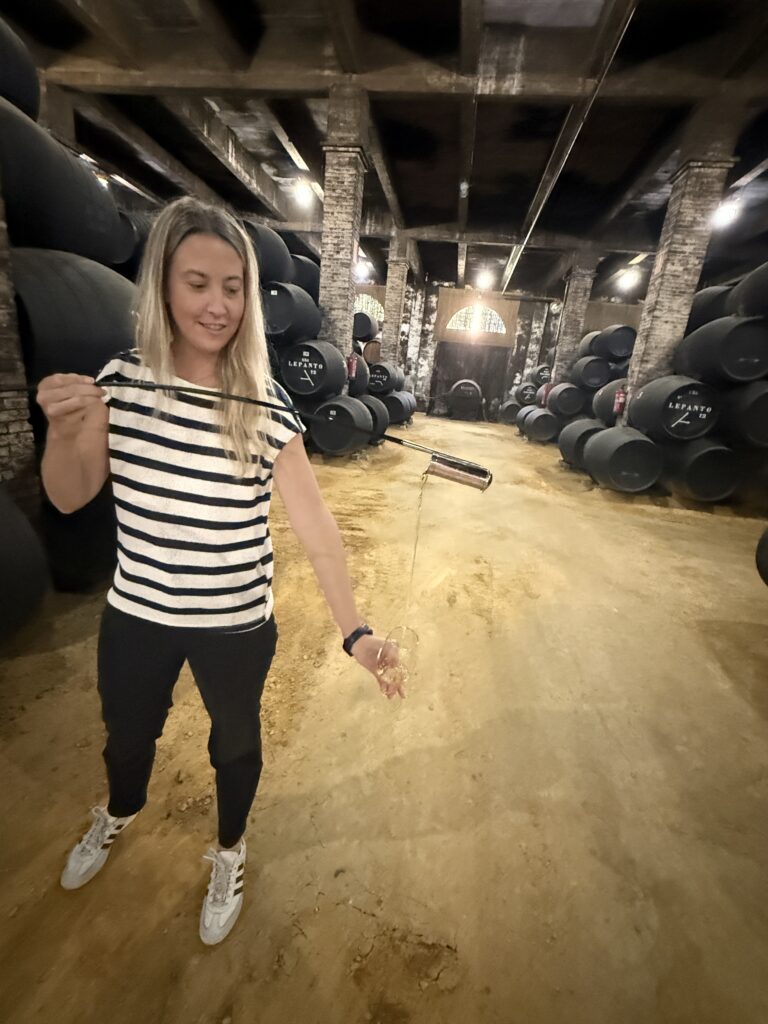
Imagine stepping into a sun-drenched cellar in Jerez de la Frontera, Spain, where the air is thick with the intoxicating aroma of aged oak and caramelized spirits. A legendary, family-owned empire, Gonzalez Byass, who’s been crafting world-class sherries, brandies, and more since 1835. On a recent visit, I found myself immersed in the heart of their operations, uncovering the secrets behind LePanto, a brandy that’s as rare as it is remarkable as well as Nomad Outlaw whiskey and Gonzalez Byass sherry. What unfolded was a captivating blend of history, craftsmanship, and sheer passion, led by the brilliant young master distiller, Rocio Trillo—the youngest female distiller in Jerez. What happens when you step into a world where spirits aren’t just drinks, but stories aged in oak and whispered through generations. This wasn’t a mere tasting; it was a brand immersion, tracing the alchemy of alcohol from its raw beginnings to its refined masterpieces. If you’re a spirits enthusiast, this is the kind of experience that lingers on the palate long after the last sip. Our adventure began with a dive into the company’s storied past with Sylvain Vielle-Grosjean, International Visits Coordinator, as our guide. As we drove through the grounds on the Gonzalez Byass trolley, he told us tales of the ambitious 23-year-old Manuel Maria Gonzalez, founder of Gonzalez Byass, who swapped a dull banking job in Paris for the vibrant world of wine, Gonzalez Byass rose from humble beginnings. With no money and zero industry know-how, Gonzalez bootstrapped his way to success, starting with just ten casks of sherry. By 1855, a pivotal partnership with London-based Robert Blake catapulted the brand into the UK market, where it thrived for over a century. Fast-forward to 1988: The British side of the family fades out, and Gonzalez Byass becomes 100% Spanish-owned, now widespread portfolio across wines and spirits. Family members still helm key roles— president, sustainability director, and beyond. As Sylvain quipped with a grin, “At the end, his family is very happy.” It’s this enduring family spirit that infuses every bottle, making Gonzalez Byass feel less like a corporation and more like a living legacy. Our day kicked off with her spirited energy of Rocio Trillo, the vibrant force behind LePanto Brandy and Nomad Whiskey. A trailblazer who’s redefining the distilling scene in Jerez. As the youngest woman to helm a distillery here, Rocio brings a fresh, innovative spirit to an industry steeped in tradition. At just a glance, she’s a revelation: young, female, and utterly commanding. “My dad was the master distiller here for almost 40 years,” she shared, her eyes sparkling. “I learned from him, but I’ve traveled—California, Australia—gathering experiences.” Taking over just a few years ago, Rocio isn’t just preserving history; she’s innovating it. Her passion for brandy isn’t just professional—it’s personal, rooted in the sun-drenched vineyards of Andalusia. Over steaming copitas and lively conversation, she walked us through the soul of her craft, emphasizing sustainability and bold experimentation. “Brandy is poetry in a bottle,” she quipped, and by the end of our tour, we couldn’t agree more. Her ongoing PhD research explores how soil and parcels influence brandy quality, dreaming of single-parcel expressions akin to terroir-driven Cognacs. “I want to know if there’s a parcel that’s better for brandy,” she explained, her enthusiasm infectious. LePanto’s magic starts in the vineyards. Spanning about 300 hectares, these Palomino plots are the same ones used for Gonzalez Byass’s famed sherries. But for brandy, timing is everything: Grapes are harvested early, in July or August, to amp up acidity and skip sulfur additions that could harm the copper stills. Sourced from iconic regions like Carrascal, Macharnudo, and Cala, the fruit yields a fragrant base wine at around 12% ABV. Winemaking is minimalist—gravity pressing (known locally as “Gemma”) extracts the purest first-press juice, preserving those vital aromatics. No heavy interventions here; it’s all about letting the grape shine. Then comes the distillation, revived in 2005 after a 30-year hiatus. In massive 2,500-liter copper pot stills, the wine undergoes double distillation. The first yields a 33% ABV spirit; the second separates it into heads (1%, volatile and unbalanced), heart (90%, the prized “Orlando” for aging), and tails (9%, fatty and heavy). Rocio demonstrated this with samples straight from the process: The heads burned with intensity at 80% ABV, while the Orlando at 65-70% was a revelation—clean, fruity, alive. “You need experience and a good nose,” she said, emphasizing the human touch in cutting fractions. It’s this precision that keeps LePanto fresh and elegant. Under Rocio’s watch, LePanto stands out as the region—the only brandy made entirely in Jerez from 100% Palomino grapes, distilled in traditional pot stills. In a world of column-distilled, outsourced spirits, this is pure artistry. From there, we transitioned into the hallowed halls dedicated to LePanto Brandy, a crown jewel of Jerez’s solera system. This isn’t your everyday digestif; LePanto is a symphony of patience, where brandies from different vintages mingle in a fractional blending process that ensures consistency and depth. We started at the source—tasting the pure, fiery alcohol straight from the still, a stark, unyielding spirit that demanded respect. Aging seals the deal, using the iconic solera system—stacked casks where younger spirits mingle with older ones for consistency. American oak sherry butts (600 liters, medium-toast) impart softness, unlike Cognac’s smaller French oak barrels. LePanto spends its first nine years in Fino sherry casks for vibrancy, then three in rare, 30-year-old Matusalem (a sweet Oloroso-PX blend) for depth. Categories range from Solera (1+ year) to Reserva (3-10 years) and Gran Reserva (10+, often 12-15, including opulent XO expressions). Dilution is gradual—from 60% to 40%, then 36% ABV for the U.S. market—to safeguard those delicate aromas. Humidity control? Purely natural—water added at night to maintain 65-70%, balancing evaporation. With around 2,000 barrels in cellars named after family members (like “San Manuel” for the founder), it’s a symphony of tradition. The real thrill? Tasting straight from the cask. What elevated this visit from memorable to transformative was the progressive tasting.
24 Hours In Madrid: Foodie’s Whirlwind Feast
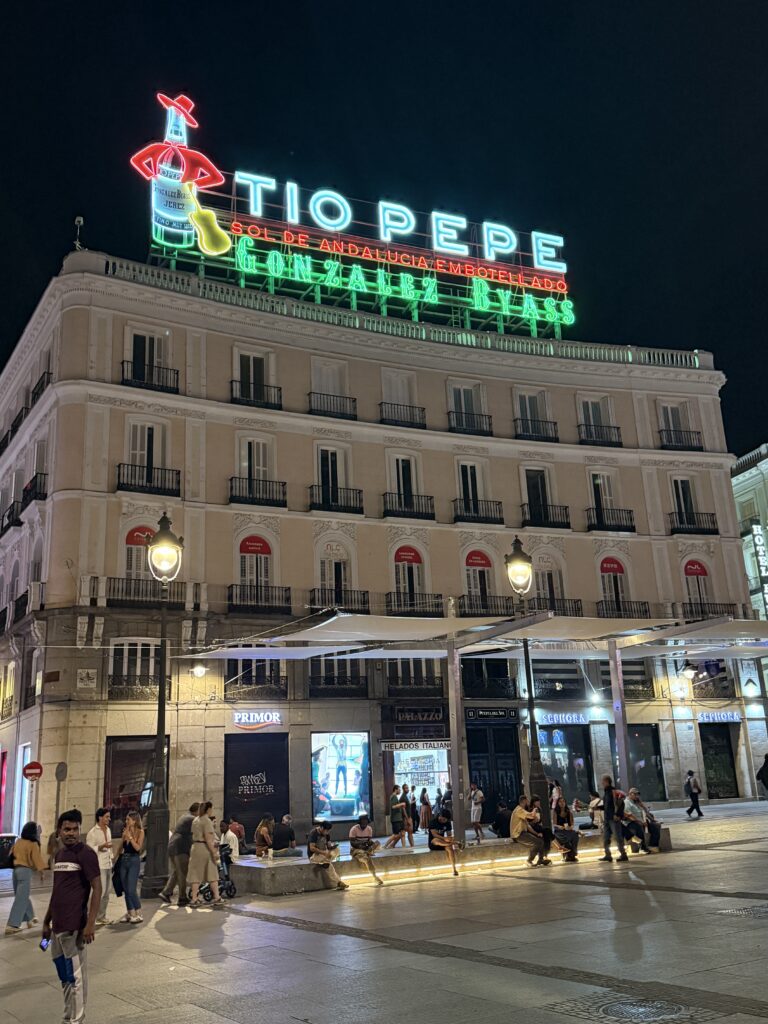
We’re embarking on the González Byass Press Trip, curated by The Tourism Lab—24 immersive hours in Madrid, priming our palates before diving into the sherry and brandy heritage of González Byass, Harvey’s, and Fundador. Touch down with just one day to savor the city’s vibrant soul through exceptional cuisine. This isn’t a typical tour—it’s our exhilarating gastronomic journey across seven standout destinations: the timeless Chocolatería San Ginés for churros, a lively stop at Plaza Mayor beneath the iconic Tío Pepe sign, tapas delights at Mercado de San Miguel, an elevated lunch at Élkar on the 33rd floor, classic cocktails at Viva Madrid, and a refreshing close at Kala Greek Frozen Yogurt, with optional evening views from on high. Perfectly positioned in the historic center and business district (near Puerta del Sol, Gran Vía, and Paseo de la Castellana), these spots connect seamlessly via walks, metros, or quick taxis for an energizing, flavor-filled 24 hours. Get ready, food enthusiasts—Madrid’s culinary heights are calling us! Morning Kickoff: Sweet Start at Chocolatería San Ginés (9 AM – 11 AM) Kick off your adventure (or wrap up a late night—it’s open almost round-the-clock!) at this beloved 1894 gem hidden in Pasadizo de San Ginés, steps from Puerta del Sol. Indulge in crisp churros (or hearty porras) dunked in rich, pudding-like hot chocolate—a true Madrid essential. With marble tables and tiled charm, it’s a favorite for locals and visitors alike. Pro tip: The classic combo costs under €5 and provides the perfect fuel. Stroll 5 minutes west to Plaza Mayor next. Late Morning Highlight: Plaza Mayor Magic (11 AM – 11:30 AM) Pause in Madrid’s historic core at Plaza Mayor, a 17th-century masterpiece of arcades, frescoes, and energy. Capture the glowing Tío Pepe neon sign (a sherry icon since 1935) alongside the King Philip III statue. Enjoy street performers and a quick café con leche from a terrace—it’s free, fabulous for photos, and appetite-building. Head north 15 minutes on foot (or by metro/taxi) for more. Mid-Morning Grazing: Mercado de San Miguel (11:45 AM – 12:45 PM) Step into the elegant iron-and-glass haven of Mercado de San Miguel, a 1916 landmark turned premier food hall. Explore 30+ stalls brimming with Spanish gems: paper-thin jamón ibérico, calamari, olives of every kind, fresh oysters, regional cheeses, paella nibbles, and vermouth pours. Keep it light with calamares bocata or croquetas (€15-25). Vibrant yet top-quality—stand and savor. Then, taxi 10 minutes north along Gran Vía to soar upward. Sky-High Lunch: Élkar Excellence (1 PM – 3:30 PM) Ascend to the 33rd floor of Torre Emperador Castellana (over 160m up—Spain’s highest restaurant!) for Élkar’s “Gastronomía de Altura.” Panoramic windows reveal stunning 360° vistas of the Sierra, Bernabéu, and cityscape. Chef Fran Vicente’s Mediterranean menu dazzles: Parmesan mousse with pesto, premium bellota ham, pistachio ajo blanco with tuna and Jerez pearls, sea bass with beurre blanc and caviar, Ibérico presa with demi-glace and kumquat, or the exquisite Tarta Ópera. Enhance with Fundador infusions or cellar wines. Choose the executive menu or à la carte; book ahead. Sophisticated and inspiring—taxi 15 minutes south afterward. Early Afternoon Aperitivo: Viva Madrid (4 PM – 7 PM) Dive into Barrio de las Letras at Viva Madrid, a 1856 tavern reborn with flair by mixologist Diego Cabrera. Vintage tiles meet ‘20s tango ambiance as jazz hums in the background. Sip gin classics or try the standout Honey Moon cocktail—Pisco 1615 blended with spiced liquor, elderflower, lemon juice, and a whisper of smoked orange tree honey that adds a delightful, aromatic sweetness. Pair with upscale tapas such as truffle croquetas or vermouth olives. It’s the ideal relaxed aperitivo spot to unwind. Evening Finale: Kala Greek Frozen Yogurt (7 PM Onward) End on a fresh note at Kala on Calle de las Huertas: authentic Greek yogurt in creamy pistachio or fruit bases, topped with compote, berries, or crunch. Probiotic and portion-packed—perfect for strolling or bench-sitting. For night owls: Revisit San Ginés or taxi to Élkar’s bar for starry views and cocktails. In just 24 hours, experience Madrid’s core: timeless treats, plaza charm, market buzz, elevated feasts with Fundador elegance, spirited tapas, and cool refreshment. Arrive eager, depart delighted—¡Buen provecho! These gems glow anytime in this vibrant city, day or night.