
Filomena Iacobucci: Powerful, Magic and Dream
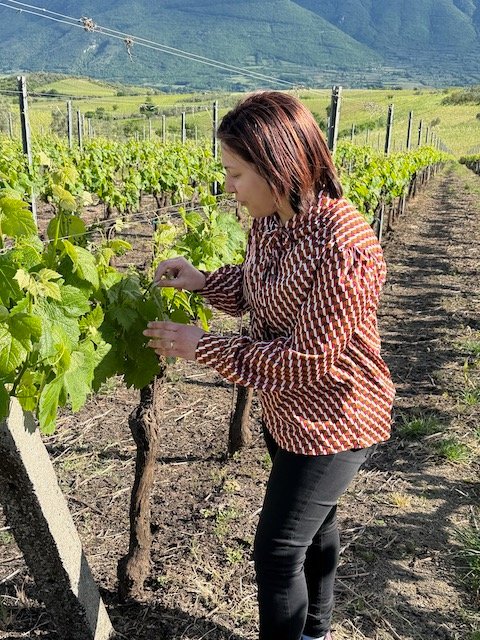
The hills of Guardia Sanframondi hold a particular kind of quiet — the scent of earth mixed with a spark of possibility. When I met Filomena Iacobucci at Terre Stregate, I noticed immediately how she leads with both the patience of nature and a quietly determined imagination. In the hills of Guardia Sanframondi, at the heart of Sannio Beneventano, she moves with ease between the vineyard’s daily rhythms and a broader vision shaped by her time away. Her voice carries both roots and reach, steady and quietly powerful. The Winery and the Land of the Bewitched Terre Stregate, meaning ‘bewitched lands,’ rests among the gentle hills of Guardia Sanframondi, with views stretching over the Telesina Valley and the Calore River. The Matese massif stands quietly in the distance. The name calls up old stories of witches gathering beneath walnut trees, legends that still seem to linger in the air. The Iacobucci family has tended this land since 1898, beginning with Filippo Iacobucci. For a time, wine gave way to the olive mill, but in the late 1990s and early 2000s, Armando Iacobucci brought the winery back to life. Now, Filomena and her brother Carlo guide the estate. About 25 hectares are under vine, with Falanghina at the heart, joined by Greco, Fiano, and Aglianico, all rooted in clay-limestone soils at 400 to 450 meters. Just a short walk away, the olive mill lets visitors taste the land’s full spectrum, from grape to oil. Under Filomena and Carlo, the cellar, gardens, and tasting spaces reflect a place where tradition and thoughtful modernity meet. A Wine of Bright Positivity Here, with Filomena, I tasted the Svelato Falanghina del Sannio DOP 2024 for the second time this year, the first being at VinItaly this past April. The wine was as always bright and precise, alive with energy. Its freshness seemed to echo the clarity and confidence Filomena brings to her work. There is a kind of openness in both the wine and the woman behind it—a way of meeting complexity with light rather than weight. A Journey of Distance and Return That brightness, I realized, did not come easily. Filomena once dreamed of studying international relations, drawn to the ways farmers connect with the wider world. She left for university in Rome, hesitant at first to step away from the family winery. Distance changed her perspective. Seeing the estate from afar, she began to imagine new possibilities for Falanghina and for honoring tradition while building something modern and outward-looking. When she returned, she brought a deeper respect for the land’s timing and a quiet determination to help the project grow without losing its soul. Nature became her guide. The vineyard, unlike the city, asks for patience and the willingness to wait and respond. That blend of vision and daily patience shapes her leadership. Respect for Time and the Act of Pruning If there is one object that captures Filomena’s approach, it is the pruning shears. For her, pruning is the most important time of year—a practice that honors time, patience, and the careful decisions that shape the vineyard’s future. It is both practical and thoughtful: looking ahead while staying close to what the vines need right now. She speaks of a modern management style built on study and sensitivity. In her view, an entrepreneur is someone who sees what others might miss. Respect for nature is essential, but control is never absolute. That balance of vision and humility is at the heart of her leadership, a quiet strength that need not be declared. Sensory Memory and Daily Grounding For Filomena, happiness is woven into the sensory life of the land and its traditions: the scent of fresh bread from the bakery, the first taste of seasonal fruit, the olive harvest that arrives each November. Living in step with these rhythms, she believes, is at the heart of a good life. The oil mill’s closeness to the winery lets visitors experience that connection for themselves. When challenges come, she turns to music and the simple act of letting go. Together, softness and energy help her recover and return to her work with an open mind. In this way, resilience is not just an idea but a daily practice: feeling fully, releasing what needs to be released, and coming back to the work without losing either gentleness or strength. Imagination for the Next Generation She pays close attention to the pressures facing young people, especially her own daughters. For her, protecting dreams and imagination is essential, especially in a world that often feels rushed or demanding. Leadership, she believes, begins with the freedom to think for oneself. In summer, her children’s days are filled with outdoor play, rest, and the gift of unscheduled time. She sees this freedom as a way to help them grow into their own leadership. Her advice to the next generation is simple: be determined, trust your vision, and do not simply follow the crowd. Independent thinking and holding onto your own personality matter. She finds inspiration in Campania’s historical women, like the physician Trotula and the writer Matilde Serao, who connect past strength with future possibility. Their stories remind her that women have always shaped the life of this region, and that resilience is part of that legacy. Labels, Symbols, and the Essence of the the labels at Terre Stregate are meant to spark imagination. Symbols like the eye and the moon appear—the moon guiding through the night, the eye inviting us to see our place in nature, connecting what came before with what is still to come. When I asked Filomena to describe her work in three words, she chose ‘powerful,’ ‘magic,’ and ‘dream.’ The words fit. They hold both the strength needed to lead and the sense of wonder that keeps the work alive, shaping how she shares her vision, her leadership. Legacy Without Obligation Looking to the future, she hopes to share the winery’s story and passion with her children, but never to force them onto
Campania Stories: Giorno 2 Rustic Soul, Mountain Power & the Wines of Sannio
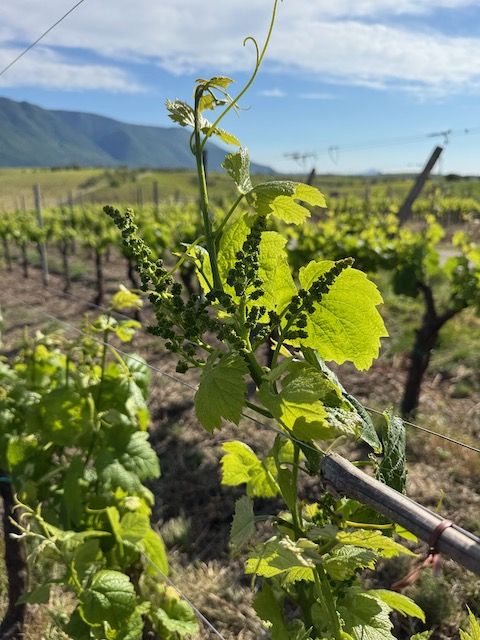
Giorno 2 — Benevento: Sannio & Aglianico del Taburno Terre Stregate • Fontevecchia By Day 2, Campania had already begun to reveal its rhythm. Not polished. Not predictable. But deeply alive. The morning began with Campania Stories tastings focused on sparkling wines and whites — glasses filled with Falanghina, Fiano and Greco carrying the tension of volcanic soils and mountain air. Yet as we moved deeper into Benevento and the hills surrounding Taburno, the mood shifted once again. Rustic charm replaced coastal energy. The wines became earthier. More grounded. More quietly powerful. This was Sannio. A vast inland area surrounding Benevento that has quietly become one of southern Italy’s most important wine-producing zones. Unlike the dramatic volcanic landscapes of Campi Flegrei or the elevated mountain tension of Irpinia, Sannio feels warmer, softer and more agricultural — rolling hills, olive groves, grain fields and vineyards woven together across the countryside. And the wines reflect that generosity. Falanghina from Sannio tends to be rounder and more approachable than the sharper, saline expressions from Campi Flegrei. The fruit becomes riper, the texture broader, while still maintaining freshness thanks to altitude and limestone-rich soils. Then there is Taburno. Centered around Mount Taburno itself, Aglianico del Taburno carries a different personality from Taurasi. While Taurasi often leans toward darker structure, tension and austere longevity, Taburno tends to show more immediate savory charm — earthy spice, softer tannins and a slightly more approachable elegance in youth while still retaining the ability to age beautifully. This was Sannio. A place where Falanghina feels less polished and more rooted. Where Aglianico trades sheer force for savory depth and drinkability. Where food, wine and history still feel inseparable from everyday life. Terre Stregate: The Land of Witches The name alone tells you this is not an ordinary place. Terre Stregate — “Land of the Witches” — sits at roughly 400 metres above sea level in the Benevento valley, surrounded by calcareous stone soils touched by volcanic influence drifting inland from Vesuvius. The symbol of the estate — moon, sun and eye — represents protection, an echo of the folklore and ancient legends woven throughout this part of Campania. Benevento has long been associated with stories of witches gathering beneath walnut trees, casting spells carried by the wind through the valley. And honestly, standing there among the vines, it does feel slightly enchanted. The estate is led by Filomena Iacobucci and her brother, fifth-generation custodians of a family deeply rooted in Sannio agriculture. Today they farm roughly 25 hectares of vines alongside four hectares of olive groves, using the olive leaves themselves as mulch to nourish the vineyard soils naturally. Everything here feels connected to the land. Filomena explained that Falanghina remains the beating heart of the estate, accounting for roughly 65% of production. Their goal is not simply to make Falanghina, but to tell the story of where Falanghina was born — through multiple styles and expressions. And the tasting revealed exactly that. The Caledonio Brut Falanghina DOC opened the morning with freshness and roundness, carrying vibrant citrus and soft orchard fruit wrapped in delicate mousse. Then came the Genius Loci Fiano Sannio DOP 2025 — fresh peach, light on its feet, yet quietly full of character and salinity. The Aurora Greco 2025 followed with round stone fruit and softness, its label inspired by the estate’s new cellar building rising from the hills. But the wines became increasingly compelling as depth and texture entered the conversation. The Svelato Falanghina del Sannio DOP, aged six months on lees, carried savory breadth and mineral tension, while the Caracara 2020 Late Harvest unfolded through caramel, stone fruit compote, lemon curd and toasted nuts. Rich. Layered. Yet still alive with freshness. The rosé, Attimo 2025, brought the mood back toward brightness — cherry, violet, raspberry leaf and mineral lift wrapped into something playful yet beautifully balanced. Then came Aglianico. The Idillio 2025 IGP Benevento carried bright cherry, tea leaf, earth and violets with soft tannins and spice, while the Manent 2023 — vinified partly in barrel and partly in stainless steel — balanced fresh cherry fruit with earthy structure, dark chocolate and fine acidity. Filomena explained the meaning behind the name: “Everything written stays forever.” And that sentiment lingered long after the glass was empty. The Arcano 2020 Riserva — “deep secret” — moved further into savory territory with leather, dried violets, clove and earthy spice wrapped around remarkably fine tannins. Then came Costa del Duca Late Harvest 2018, full of juicy cherry, leather and earthy depth, before the tasting closed with the Malaca Passito. Dried stone fruit. Toffee. Caramel. Christmas spice. A wine built for slow endings and long conversations. At Terre Stregate, wine feels inseparable from story. From folklore. From family. From land. And perhaps that is what made the visit so memorable. Nothing felt manufactured. Only deeply, proudly Campanian. Fontevecchia: Quiet Confidence Beneath Mount Taburno As evening approached, we continued deeper into Taburno toward Fontevecchia. If Terre Stregate felt folkloric and expressive, Fontevecchia carried a quieter kind of confidence. Rustic stone walls. Old cellars. A sense of time moving slowly. The estate, now over 150 years old, welcomed us with warmth from Libero, Lucio and the next generation already quietly stepping into the story. Here, the philosophy is simple: Pay attention to the soil, not the winemaking. And everything at Fontevecchia revolves around Mount Taburno itself. The vineyards surrounding the mountain produce Falanghina del Sannio and Aglianico del Taburno shaped by varied soils — clay and limestone, volcanic zones and tufaceous pockets — now carefully separated under oenologist Emiliano Falsini, who joined the estate in 2020. The wines are divided according to soil type: C for clay and limestone. F for tuff. B for volcanic soils. Precision without losing identity. Lucio explained how the Aglianico clones in Taburno naturally differ from Taurasi, producing smaller, less compact bunches better suited to the warmer conditions. Macerations are handled more gently here — more infusion than extraction — creating wines of elegance