
Breaking Barrels and Barriers with Gonzalez Byass-LePanto & Nomad Outlaw
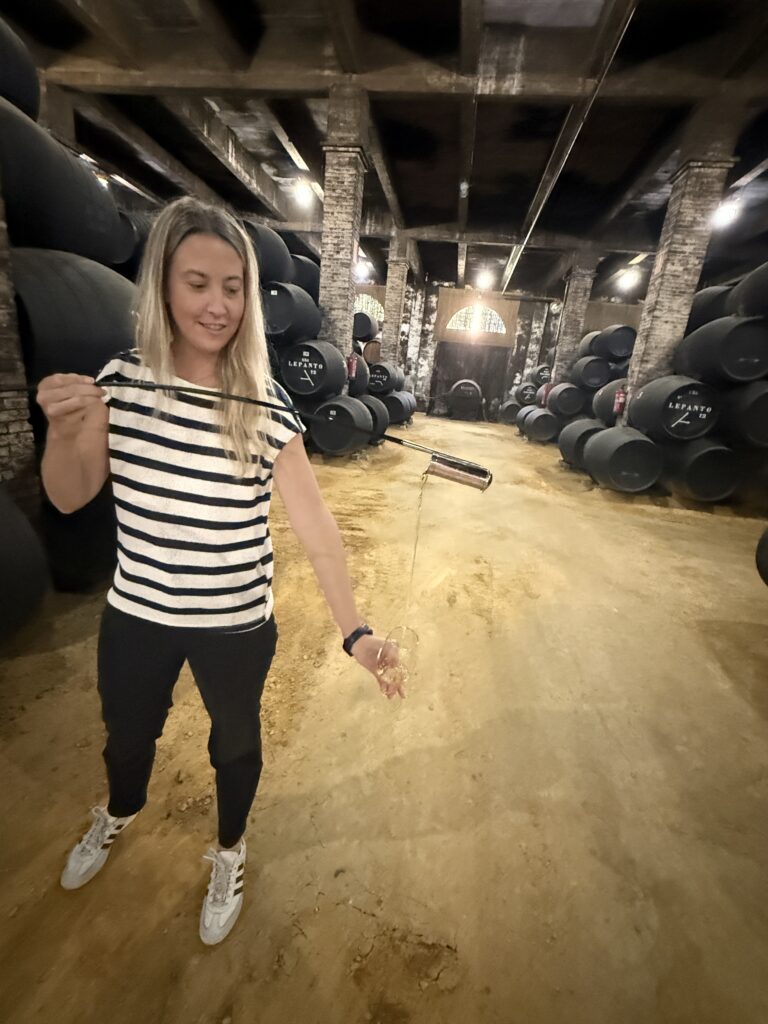
Imagine stepping into a sun-drenched cellar in Jerez de la Frontera, Spain, where the air is thick with the intoxicating aroma of aged oak and caramelized spirits. A legendary, family-owned empire, Gonzalez Byass, who’s been crafting world-class sherries, brandies, and more since 1835. On a recent visit, I found myself immersed in the heart of their operations, uncovering the secrets behind LePanto, a brandy that’s as rare as it is remarkable as well as Nomad Outlaw whiskey and Gonzalez Byass sherry. What unfolded was a captivating blend of history, craftsmanship, and sheer passion, led by the brilliant young master distiller, Rocio Trillo—the youngest female distiller in Jerez. What happens when you step into a world where spirits aren’t just drinks, but stories aged in oak and whispered through generations. This wasn’t a mere tasting; it was a brand immersion, tracing the alchemy of alcohol from its raw beginnings to its refined masterpieces. If you’re a spirits enthusiast, this is the kind of experience that lingers on the palate long after the last sip. Our adventure began with a dive into the company’s storied past with Sylvain Vielle-Grosjean, International Visits Coordinator, as our guide. As we drove through the grounds on the Gonzalez Byass trolley, he told us tales of the ambitious 23-year-old Manuel Maria Gonzalez, founder of Gonzalez Byass, who swapped a dull banking job in Paris for the vibrant world of wine, Gonzalez Byass rose from humble beginnings. With no money and zero industry know-how, Gonzalez bootstrapped his way to success, starting with just ten casks of sherry. By 1855, a pivotal partnership with London-based Robert Blake catapulted the brand into the UK market, where it thrived for over a century. Fast-forward to 1988: The British side of the family fades out, and Gonzalez Byass becomes 100% Spanish-owned, now widespread portfolio across wines and spirits. Family members still helm key roles— president, sustainability director, and beyond. As Sylvain quipped with a grin, “At the end, his family is very happy.” It’s this enduring family spirit that infuses every bottle, making Gonzalez Byass feel less like a corporation and more like a living legacy. Our day kicked off with her spirited energy of Rocio Trillo, the vibrant force behind LePanto Brandy and Nomad Whiskey. A trailblazer who’s redefining the distilling scene in Jerez. As the youngest woman to helm a distillery here, Rocio brings a fresh, innovative spirit to an industry steeped in tradition. At just a glance, she’s a revelation: young, female, and utterly commanding. “My dad was the master distiller here for almost 40 years,” she shared, her eyes sparkling. “I learned from him, but I’ve traveled—California, Australia—gathering experiences.” Taking over just a few years ago, Rocio isn’t just preserving history; she’s innovating it. Her passion for brandy isn’t just professional—it’s personal, rooted in the sun-drenched vineyards of Andalusia. Over steaming copitas and lively conversation, she walked us through the soul of her craft, emphasizing sustainability and bold experimentation. “Brandy is poetry in a bottle,” she quipped, and by the end of our tour, we couldn’t agree more. Her ongoing PhD research explores how soil and parcels influence brandy quality, dreaming of single-parcel expressions akin to terroir-driven Cognacs. “I want to know if there’s a parcel that’s better for brandy,” she explained, her enthusiasm infectious. LePanto’s magic starts in the vineyards. Spanning about 300 hectares, these Palomino plots are the same ones used for Gonzalez Byass’s famed sherries. But for brandy, timing is everything: Grapes are harvested early, in July or August, to amp up acidity and skip sulfur additions that could harm the copper stills. Sourced from iconic regions like Carrascal, Macharnudo, and Cala, the fruit yields a fragrant base wine at around 12% ABV. Winemaking is minimalist—gravity pressing (known locally as “Gemma”) extracts the purest first-press juice, preserving those vital aromatics. No heavy interventions here; it’s all about letting the grape shine. Then comes the distillation, revived in 2005 after a 30-year hiatus. In massive 2,500-liter copper pot stills, the wine undergoes double distillation. The first yields a 33% ABV spirit; the second separates it into heads (1%, volatile and unbalanced), heart (90%, the prized “Orlando” for aging), and tails (9%, fatty and heavy). Rocio demonstrated this with samples straight from the process: The heads burned with intensity at 80% ABV, while the Orlando at 65-70% was a revelation—clean, fruity, alive. “You need experience and a good nose,” she said, emphasizing the human touch in cutting fractions. It’s this precision that keeps LePanto fresh and elegant. Under Rocio’s watch, LePanto stands out as the region—the only brandy made entirely in Jerez from 100% Palomino grapes, distilled in traditional pot stills. In a world of column-distilled, outsourced spirits, this is pure artistry. From there, we transitioned into the hallowed halls dedicated to LePanto Brandy, a crown jewel of Jerez’s solera system. This isn’t your everyday digestif; LePanto is a symphony of patience, where brandies from different vintages mingle in a fractional blending process that ensures consistency and depth. We started at the source—tasting the pure, fiery alcohol straight from the still, a stark, unyielding spirit that demanded respect. Aging seals the deal, using the iconic solera system—stacked casks where younger spirits mingle with older ones for consistency. American oak sherry butts (600 liters, medium-toast) impart softness, unlike Cognac’s smaller French oak barrels. LePanto spends its first nine years in Fino sherry casks for vibrancy, then three in rare, 30-year-old Matusalem (a sweet Oloroso-PX blend) for depth. Categories range from Solera (1+ year) to Reserva (3-10 years) and Gran Reserva (10+, often 12-15, including opulent XO expressions). Dilution is gradual—from 60% to 40%, then 36% ABV for the U.S. market—to safeguard those delicate aromas. Humidity control? Purely natural—water added at night to maintain 65-70%, balancing evaporation. With around 2,000 barrels in cellars named after family members (like “San Manuel” for the founder), it’s a symphony of tradition. The real thrill? Tasting straight from the cask. What elevated this visit from memorable to transformative was the progressive tasting.