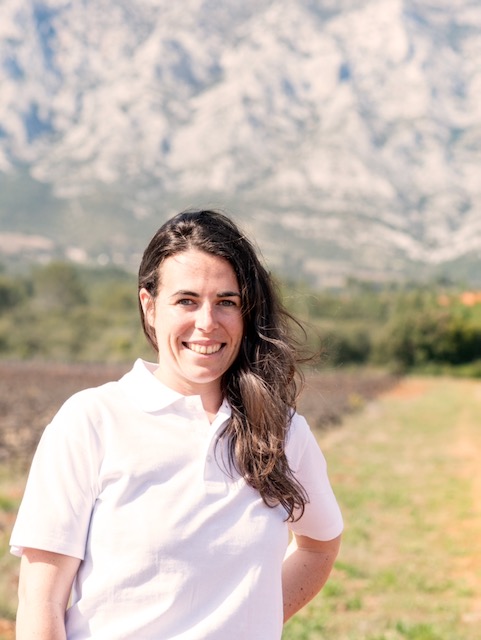
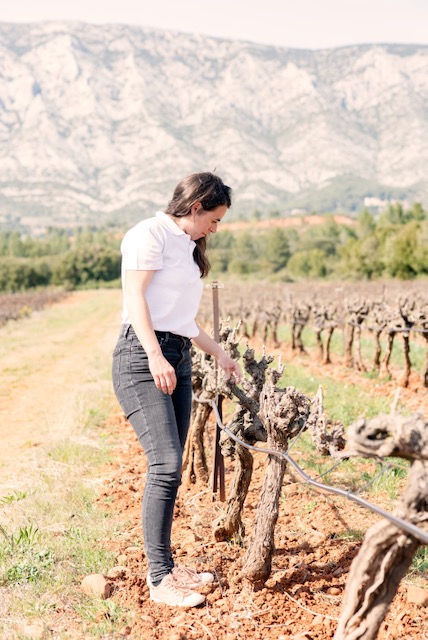
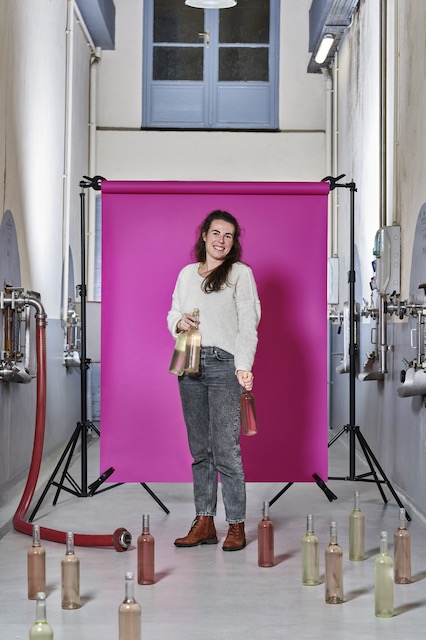
This Women’s Month, I had the genuine pleasure of sitting down—virtually—for an unhurried, heartfelt conversation with Léa Rouyet, the talented winemaker at Château Gassier in the sun-drenched heart of Provençe. Our connection actually began over a lively dinner in Paris last year with friends from MFL&Co. and Gassier, where her quiet confidence and obvious passion for both wine and place left a lasting impression. I knew then she would be the perfect voice for this series celebrating women in wine and gastronomy. So I sent my list of questions ahead of time—some deliberately offbeat and introspective—to give her time to think. When we finally spoke, she admitted with a laugh, “There were a few where I told myself I was going to play the joker.” That candid admission, and the thoughtful way she answered anyway, made this one of the most rewarding and human interviews I’ve ever conducted.
Château Gassier sits at the foot of the iconic Mont Sainte-Victoire, the limestone massif that has inspired painters, poets, and now winemakers for generations. The wines themselves feel like an extension of that landscape—elegant, joyful, and deeply rooted in place. Léa’s own journey into this world didn’t begin in a vineyard or a cellar, but around crowded Sunday lunch tables in a tiny village in southwest France (population: 500 souls). “What gave me the desire to work in the world of wine is the conviviality around it,” she explained. Those childhood meals—her grandmother presiding, adults sharing glasses of local red and animated stories—quietly planted the seed. She watched, fascinated, wondering why she wasn’t allowed to taste “this little beverage that looks so good.” That curiosity eventually led her to agronomy studies, where she discovered she loved the entire arc of the process: “From the little plant you put in the ground for a very long time… to seeing it grow, produce grapes, and then the complete transformation into the bottle. It’s so global and so interesting.”
Advice for Women Entering (or Staying in) the Wine World
The wine industry remains heavily masculine, and Léa encountered that reality head-on early in her career. She still remembers the moment an 80-year-old vigneron, handing over his vineyard and cellar, looked at the young woman standing in front of him and said bluntly: “But you’re the one who’s going to take care of the vines? You’re young, you’re a woman… how will you manage?” She smiled recounting it—because six months later she was invited to this gentleman’s Sunday family lunch with his relatives and everything was fine. She had earned his respect the old-fashioned way: through quiet competence and persistence.
Her advice to other women—whether just starting out or already navigating the industry—is both empowering and refreshingly down-to-earth:
“You have to believe that you are legitimate in doing this job and that as women we bring so many beautiful things to this still very masculine world.”
And since becoming a mother, she’s added a second, equally vital lesson: “You have to accept that everything can’t be perfect. We have the right to make mistakes and not be everywhere at the same time.”
As the mother of two daughters, I felt that line land right in my chest. The illusion that we can tie every loose end with a perfect bow vanishes the moment real life—with its tantrums, spilled juice, and endless questions—arrives. Léa’s permission to be imperfect felt like a small gift.
Balancing Vines, Children, and a Full Life
Maintaining equilibrium between a demanding winemaking career and motherhood is, in her words, “a work in progress.” She’s still learning, still adjusting. Her guiding principle is radical presence: “When I arrive home, I’m at home. When I’m at work, I’m at work. I try not to mix all the subjects at once.” Easier said than done, of course, but the intention matters.
She also gives generous credit to her partner—“a really important point”—whose support allows both of them space to thrive professionally and personally. We shared a knowing smile over the old saying “it takes a village to raise a child”. With both of us living far from extended family—hers in southwest France, mine scattered across Canada and the U.S.—building that village through partners, friends, trusted caregivers, or neighbors becomes essential. And what works beautifully one month might need to be completely rethought the next.
The Quiet Revolution of Motherhood
When I asked which experience outside of work had most transformed her worldview, Léa didn’t hesitate: becoming a mother. “It makes you think much more long-term… Our priorities are no longer the same. It gives us a lot of height on the world and our little passage in humanity.”
That long view has sharpened her environmental convictions and deepened her sense of responsibility toward the vineyard’s future. She’s no longer thinking only about today’s vintage—she’s thinking about the vintages her child will inherit.
A Bottle Shared with Grandfather
One of the tenderest moments came when I asked who—living or gone—she would most want to share a bottle with. Her answer was soft and immediate: her grandfather, the wine lover whose presence at those childhood Sunday tables quietly shaped her path. The wine she would have chosen for him? Le Pas du Moine—“because it has elegance and complexity but is also a wine of pleasure, warmth, and conviviality.” The meal? A classic Sunday roast chicken, slow-cooked until the house filled with that unmistakable, comforting aroma.
I loved the image so much that I immediately promised her: I will make my family’s “lazy chicken” (the easy one-pot version with hunks of bread underneath soaking up garlic, herbs, wine, and chicken juices) paired with Le Pas du Moine. I’ll send her the recipe and a photo of my girls raising a (juice) glass in toast. Some stories deserve to keep traveling—over tables, across oceans, from one kitchen to another.
Who Léa Really Is (Beyond the Cellar)
A fact that surprises people who meet her? This reserved, thoughtful winemaker loves to sing. If she had to describe herself in wine-related terms, she landed on two words: conviviality (“Wine is made to be shared”) and sunny (“ensoleillé”), capturing both the joy the drink brings and her deep Provençal roots. For the identity of Château Gassier’s wines, she offered three pillars: gastronomy, the ever-present inspiration of Sainte-Victoire, and rosé—particularly the gastronomic style she proudly champions, moving it decisively away from the old “poolside rosé” stereotype toward serious, food-friendly tables.
Looking Ahead: Resilience Over Rules
If French appellation regulations vanished tomorrow, Léa’s first instinct would be experimentation driven by climate resilience rather than novelty for novelty’s sake. She’d explore grape varieties and viticultural techniques—pruning styles, canopy management ideas borrowed from hotter regions like parts of Spain or Australia—“that adapt easily to our region but aren’t allowed by the appellations today… with the goal of ensuring the longevity of the vineyard.” Old vines still fill her with admiration for their proof of thoughtful planting and adaptation over decades, though she’s quick to add that for rosé—where tension, vibrancy, and freshness are the goal—great age isn’t a prerequisite for greatness.
Right Where She Belongs
At the close of our conversation, Léa spoke with quiet certainty: “I think I’m in the right place.” At Château Gassier she has found room for creativity in the cuvées, pure pleasure in the wines themselves, and environmental values that have only grown more important since motherhood entered her life. (She did add, with a smile, that the on-site cheese-making project is still on the future to-do list.)
I’ve never set foot in Provençe—a gap on my travel map that feels more glaring every time I speak with someone who lives and works there. One day soon I hope to walk those Sainte-Victoire slopes, taste the wines in the place they’re born, and meet Léa in person.
Until then, I’ll be raising a glass of Gassier Le Pas du Moin du Moine rosé to women like her—strong, reflective, full of sunshine, and quietly building something enduring.