
Grapes & Gourmet – A Local Slice of Heaven
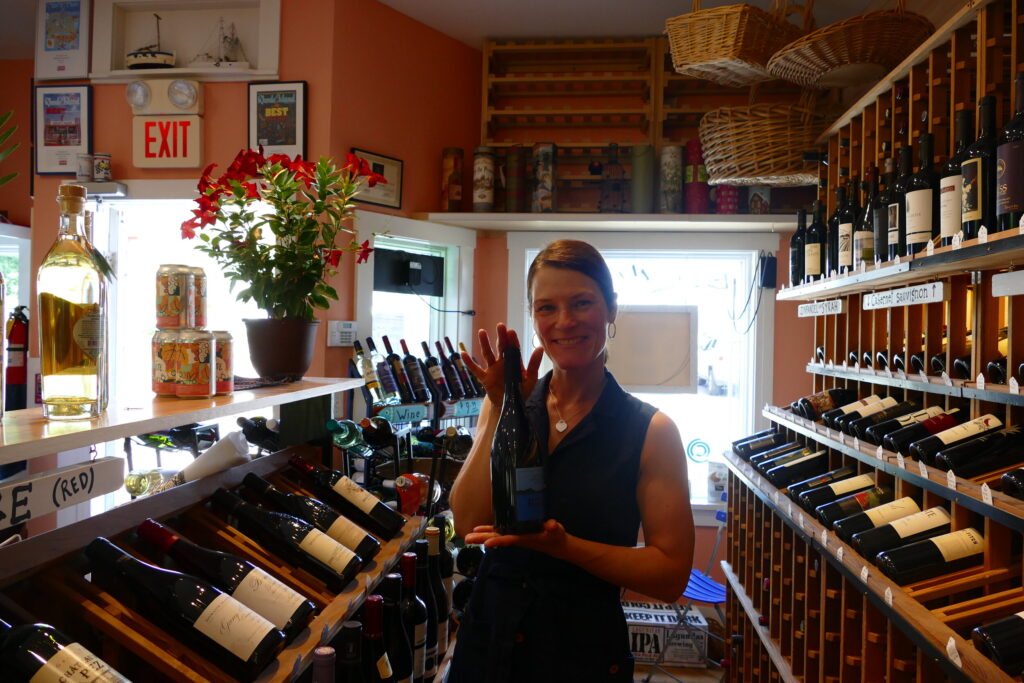
Yesterday I visited a local slice of heaven. A wine and gourmet foods shop called Grapes & Gourmet in Jamestown, RI. Situated right on the Jamestown harbor and with a backdrop of the Pell/Newport Bridge, the overall experience is just serene. Jamestown was founded in 1678 as part of the Massachusetts Bay Colony and transferred to Rhode Island in 1746. Visitors today enjoy a quaint setting with historic farms, stunning parks, award winning restaurants and locally owned shops and art galleries. One of these locally owned boutiques is award winning, Grapes and Gourmet. While the store has been in existence much longer, I found out that the brother and sister duo acquired the store in 2013. Yesterday I had the privilege of meeting Ameila, co-owner. My first impression was a very welcoming and warm environment. Amelia’s engaging personality and knowledge of both wine and cheese was on full display and we quickly engaged in an in-depth discussion about our mutual passions. It is not a large footprint; however, it is extremely well organized and thought out and was simple to target exactly what I was looking for. This is extremely important when square footage is at a premium. The store is a boutique style carrying wine, spirits, craft beer and gourmet items such as cheese, charcuterie and accompaniments. The unique touch is catering to local consumers and getting to know exactly what each of their clients want as well as their habits and proactively ensuring that inventory exists. Jamestown has a population of just under 30,000 people with increased numbers during the summer tourist season, so there isn’t a huge population to draw from; however, the Wilson’s use this as a means of providing a unique customer service model rich with personal touch and detail where most of the clientele is known and addressed by their first names. The unique model is also drawing in customers in from Newport, Jamestown’s larger neighbor. They inventory is approximately 500 different wines where 70% of their selection is red, 25% is white and 5% is rosé and sparkling wine. The product mix is quite unique as well. Most of the major brands are well represented but it was evident that there was a flair for smaller, less known producers which offer customers the ability to broaden their horizons and learn about different producers that produce equal are better wines at sometimes a more affordable price. The Wilson’s ties to the wine industry also ensures that if the inventory does not exist, they can order at a moment’s notice. Often getting spur of the moment requests from sailors coming in from the open ocean and docking in the Jamestown port, they know that speed, execution and commitment is the name of the game. Their cheese and charcuterie selection and display are simply mouth watering. They also offer made to order cheese + charcuterie boards and wine pairings, catering services for events, virtual wine tastings and in store wine tastings open to the public every Friday from 5-7pm (currently on hold due to Covid). While this boutique store is well known to the locals, I would highly recommend that anyone in the area take a trip to visit. Make a day trip of it as I did yesterday with my family…. Jamestown has so much to offer. You won’t be disappointed.
Rias Baixas Albariño
The Albarino grape is native to Galicia on the North Atlantic coast of Spain and is a key grape variety in the Rías Baixas DO region. It is also grown in north west Portugal, called Alvarinho, Uruguay and California. The climate of the area is an Atlantic climate with continental influences. The soils are a mix of granitic, clay and sand. The grapes are grown using pergolas. This is a vine training system whereby the vines grow vertically by twining around supports, gripping with tendrils that raises the vines up and over to hang down the pergola. This is beneficial in hot, humid areas to increase airflow in the canopy, reduce the risk of fungal diseases and provides protection from the hot Galician sun. The soils and climate contribute to the bright, fresh, minerality of this type of wine. The wines are typically citrus forward, peach, saline and mineral characters with a lip smacking acidity. It can be either a light or full bodied wine depending on winemaking techniques – use of oak or lees ageing to add texture and richness. Bodega Gallegas was founded 50 years ago by Manuel Vazquez. It is now being run by the second generation of the winemaking family. The name “Viñabade” means “Abbot’s Vineyard” in the Galician language. This is a reference to the Cluny monks who are believed to have brought Albariño to the area from Burgundy in the 12th or 13th century. The vines are 30+ years old. This grapes are grown sustainably in the Val do Salnes area, vine trained on 70% pergolas and 30% trrellised. The grapes are hand harvested, pressed immediately in an inert tank to protect the aromas and flavors from oxidation. The wine is then fermented in small stainless steel tanks at low temperature. It is then lees aged for approximately 4 months. There is no oak aging. The wine is a yellow color with a slight green tinge, which is common for the Albariño grape. Medium-high, aromas of lychee, lemon, minerals and green apple. Flavors of lemon, grapefruit, wet stone, minerals, saline, lychee, white blossom, peach and pear all held together in a brisk, crisp acidity. Perfect with shellfish, oysters, sushi, grilled lobster tails with butter, scampi with beurre blanc sauce or halibut with browned butter, lobster roll, grilled lemon shrimp, crab cakes, mussels, scallop ceviche, fried calamari, semi hard cheese – manchego, gouda or feta cheese.
Traditional Tomato Gazpacho
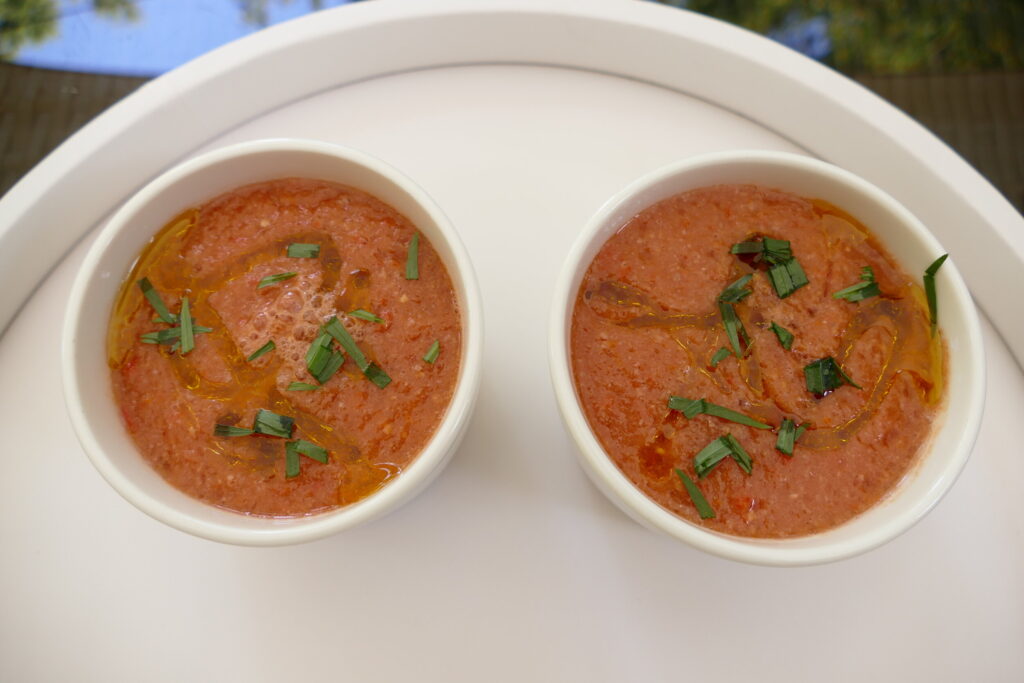
4-5 ripe tomatoes, diced 2 small cucumbers, peeled and diced 1 red or green pepper, seeded and diced 2 green onions, chopped till dark green part 1 clove of garlic, peeled 2-3 tbsp. sherry vinegar 1 chunk of stale bread 2 tbsp extra virgin olive oil plus more to serve 1/2 tsp. kosher salt 1/4 tsp pepper Place all of the ingredients in a blender and purée till smooth-ish, you want some consistency and texture in the soup. Pour into bowls or cups, drizzle with olive oil and garnish with chopped chives. Pair with a rosé either from the Provence Rosé or Spanish Rosado. Serves 4
Tomato Basil Mussels with Spicy Kale Salad
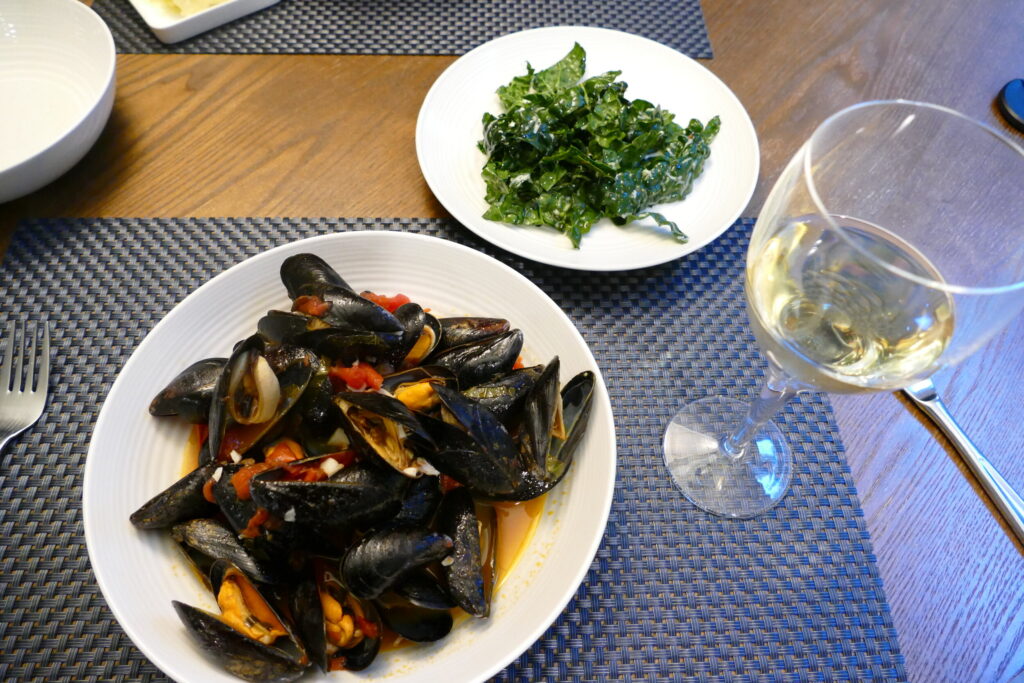
Mussels: 2 lbs mussels, cleaned 1/4 cup olive oil 5 cloves garlic, minced 3 rip summer tomatoes, diced 1 cup sliced basil 1/2 cup white or rosé wine 1/2 tsp. each salt and pepper Kale Salad: 1 bunch lacinto/Tuscan Kale cleaned, dried, ribs removed and sliced 1/2 lemon 1/4 cup extra virgin olive oil 1/4 tsp. chili flakes 1/2 tsp. each salt and pepper 1/2 cup finely grated pecorino romano cheese Salad: Add the kale to a large salad bowl. Add the olive oil and massage it into the kale. It will slightly soften the kale. Add the lemon juice, salt, pepper and chili flakes. Toss and set aside till ready to eat. Mussels: Heat oil in a dutch oven on medium heat. Add the garlic and cook for 5 minutes or till golden. Add the tomatoes, salt and pepper. Heat till softened, about 5 minutes. Turn the heat up to medium-high. Add the mussels and wine. Cover and steam for 3-5 minutes or until all the mussels have opened up. While the mussels are cooking, give the pot a few shakes to move around the mussels. You want to keep the steam inside. Once ready, add the basil. Serve in bowls with French bread. Pair with a crisp Rias Baixas Albariño or Menetou-Salon Sauvignon Blanc. Serves 2
Provence’s signature wine – Rosé
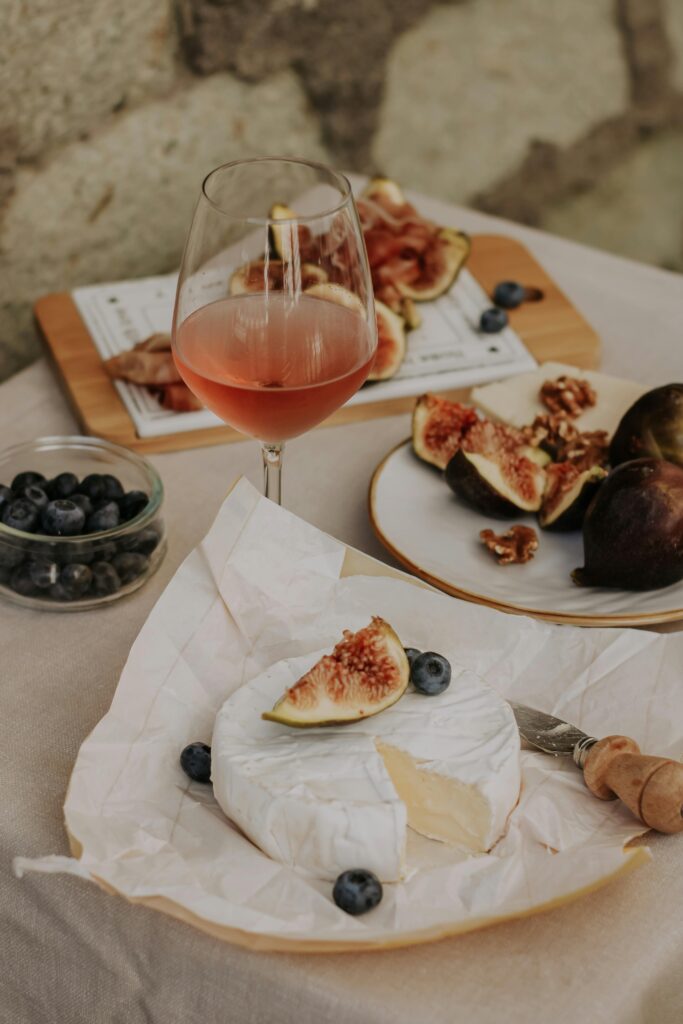
The Provence region, which is located in the south of France, East of Languedoc region. Provence is renowned worldwide for it’s light pink colored, refreshing and delicate rosé wines. The AOP of Coteaux Varois en Provence has a continental climate with cooling influences from altitude and the Mediterranean Sea. Domaine La Colombe is located in the village of Saint-Maximin-la-Sainte-Baume. The vineyard area is approximatelly 30 hectares. The altitude of the vineyards varies between 900 and 1300 feet in elevation. Lying along the St. Victoire mountain, the vineyards south east exposure and clay/ limestone are ideal for growing such wines of finesse qualities. There are also sand and iron soil in the valleys. Domaine La Colombe is a part of AOP Coteaux Varois en Provence wines, the newest of the Provence appellation. This particular wine is a blend of Grenache 50%, Syrah 30%, Cabernet Sauvignon 20%. The grapes are pressed and blended using the Saignée method which is “bleeding” the juice from the must that is fermented under controlled temperatures of 18°-20° in order to extract the maximum aroma. The wine is a pale salmon pink color. Nose medium intensity of strawberry, lavender , minerals, lemon. Palate is bone dry, strawberry, sour cherry, pink grapefruit minerals, watermelon, lemon, lavender and pomegranate . The wine is medium alcohol and body, high acid. It’s crsip and lively with a creamy texture. A great Provence wine! Pair this wine with roasted salmon, pan seared tuna, grilled shrimp, or chicken.
Bryn Mawr Knows How To Make Pinot Noir
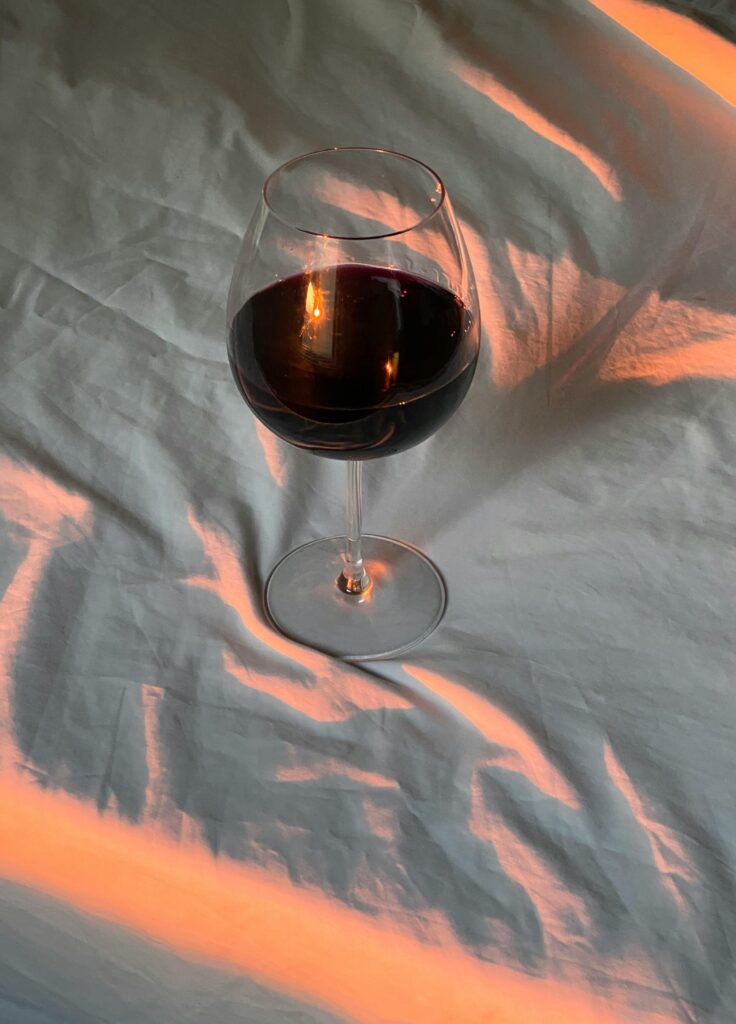
Willamette Valley in Oregon has an esteemed reputation for making some of the finest wines in the United States or in the world for that matter. They are renowned for their Pinot Noirs and Riesling. Many natural factors influence this greatness. Grown on volcanic soil striations which snake through the region imparts a smokiness and minerality. The steep, hilly terrain and altitude all play a part in the sun exposure to aid in warming the soils and ripening the grapes. Incredibly strong maritime winds roaring through the Van Duzer Corridor add cooling influence in hot summer Bryn Mawr, which loosely translates to “high hill” in Welsh, is a 26 acre estate, located 650-890 feet high up a hill in the the western Eola-Amity Hills. Owners Jon and Kathy Lauer, formerly lawyers in San Diego. Jon started growing grapes in their garden in San Diego. Through family California winery vacations, food and wine dinners with their circle of friends, their passion and love grew, as did their dream to make wine. In 2010 They decided to follow their dream, packed up their family and headed to Oregon to make wine in which they took over Bryn Mawr Winery. Even though Jon had studied winemaking at UC Davis, he realized they needed greater expertise to grow the difficult Pinot Noir and Chardonnay grapes in this area. A twist of fate brought them together with Rachel Rose as head winemaker and vineyard manager. Their children, now adults are also involved in the family business. The winery is made up of many small block vineyards, imparting a variety of diversity and character in the wines. They have pretty much every clone of Pinot Noir known growing in their vineyards. Sustainable farming is their viticulture practice. Their goal is to produce smaller yields that reflect the true character of the varietal and care of the land. This particular wine is a gorgeous medium ruby colored wine. Upon opening the aromas of cherry pie jumped out at me. I thought – did someone just bake a pie? Nope! It’s the wine! This wine is packed with cranberry, cherry, strawberry, blackberry, baking spices of cloves & cinnamon, smoke, earthy and savory. It’s a rustic yet finesse of a Pinot Noir. It packs a punch and is delicious slightly chilled on a hot day or with an equally flavorful meal. This wine begs to be paired with roasted portobello mushrooms, grilled chicken or spiced salmon.
Sancerre’s next door neighbor, Menetou-Salon
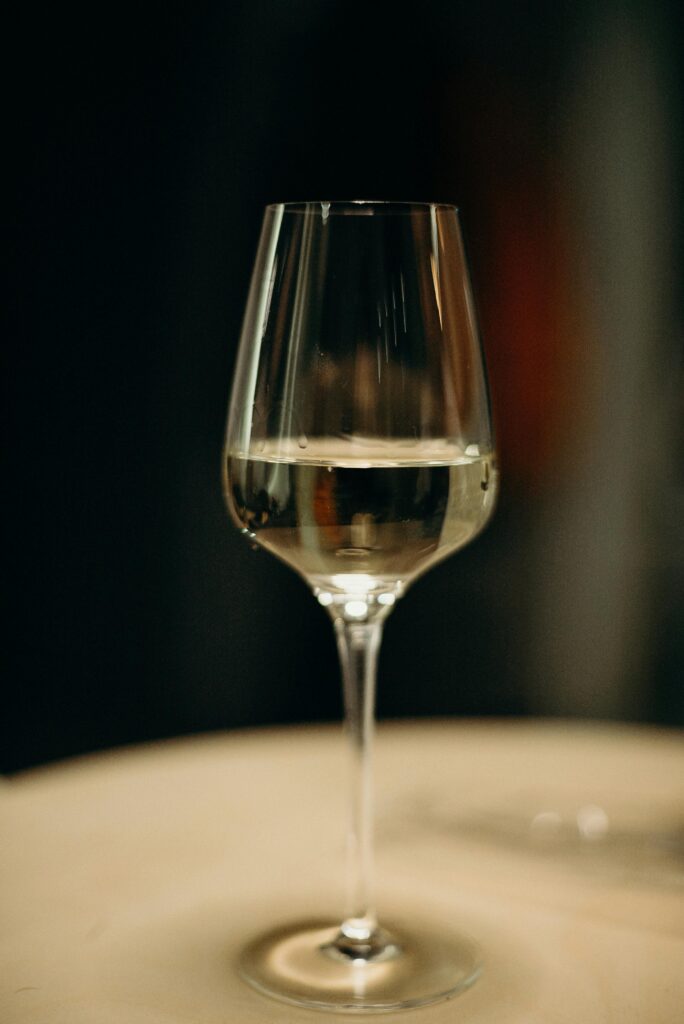
If you like Sauvignon Blanc from Sancerre or Pouilly Fumé in the Loire Valley of France, this next door neighbor Menetou-Salon is your ticket (and less expensive)!! Sauvignon Blanc, one of the most planted white grapes in the world. Depending on the climate and where it’s grown, smells like fresh cut grass mixed with vibrant flavors anywhere from bell pepper to gooseberry to passion fruit. The cool climates such as New Zealand makes zingy passion fruit forward Sauvignon Blanc. Loire Valley makes citrus forward, mineral driven wines due to the flinty, limestone soils that are in this region. Chile’s coastal region makes the best valued Sauvignon Blanc, leaning more towards herbaceous, saline wines. South Africa’s millions of years old minerally soils and hot, sunny cllimate produces a more stone fruit driven wine, as does California which are rich in peach, nectarine, grass and lemon. This particular wine has flavors of crisp green apple, chalk, slate, white pepper pear, melon, grass, lemon, peach, yellow plum, honeysuckle. It has a creamy texture, lively acidity and very refreshing. Pair with grilled cod with lemon chive butter, shrimp tarragon risotto, chicken stuffed with aubergine and smoked bacon, or roast pork with apples and caramel.
Gérard Bertrand Gris Blanc 2019
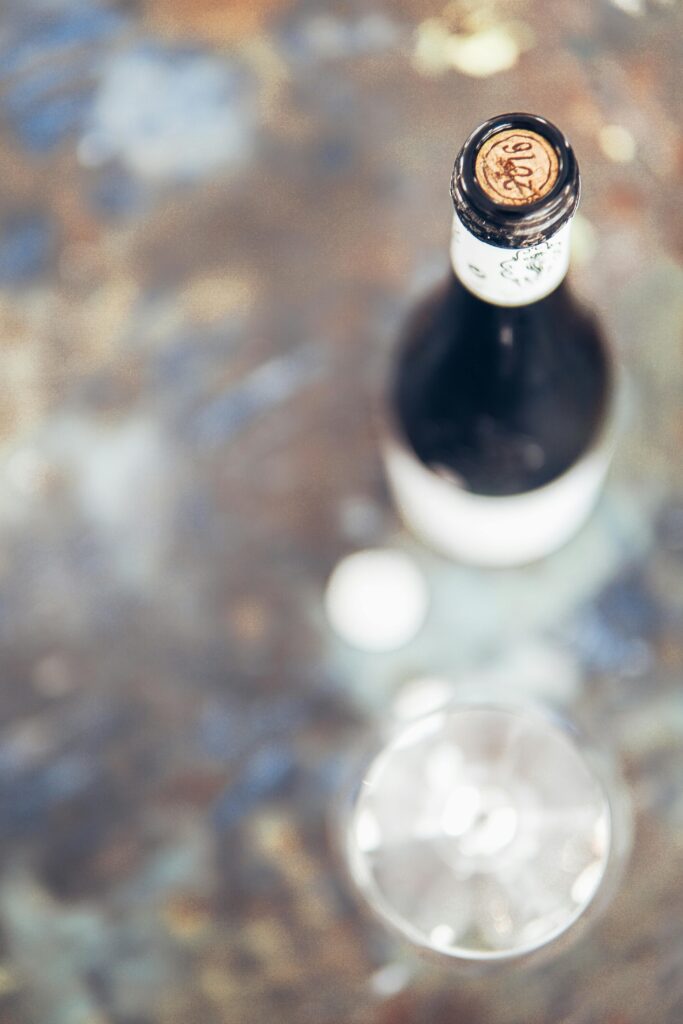
For those who aren’t aware, Gérard Bertrand is known as the “King of Languedoc” wines. Why? Because he not only grew up amongst the vineyards of Languedoc, he creates wines that have their own unique identity to each vineyard. His motto is for each wine to be a true representation of the terroir, grape and vineyard. This particular wine is grown in the Tautavel region of Languedoc. The area is hot and sunny in the summer, with close proximity to the Mediterranean Sea and the Pyranees mountains, which is ideal for grape ripening and acidity retention. This wine is made from Grenache Gris, a grape that is a mutation of the Grenache grape. The grapes are hand harvested and undergo a short maceration on the skins, protected from oxidation, to create this lovely light pink grey color full of red fruit aromas and flavors. The wine has aromas of red berries, minerals and freshness. The wine has a creamy texture with a light sparkle, medium high acidity, flavors of strawberry, melon, lemon peel, minerals, ripe cherry, strawberry, melon, minerals, black pepper. Perfect with goat cheese, melon & prosciutto, olives and hummus, grilled shrimp, smoked salmon with scallion cream, sushi, grilled chicken burgers, summer pasta salad, quiches, tuna tacos. My video review is available on Instagram at Gerard Bertrand Gris Blanc
Watermelon Gazpacho
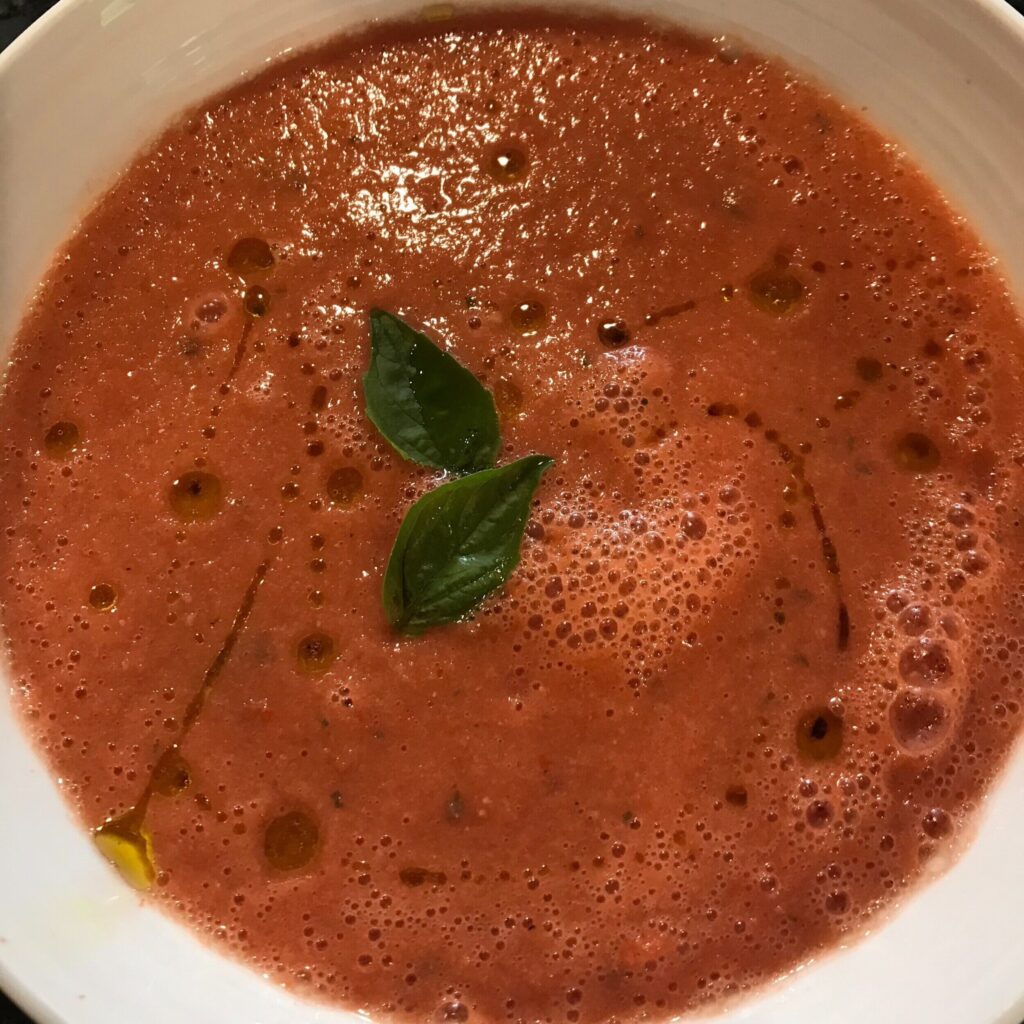
5 cups diced seedless watermelon 2 ripe tomatoes, diced 1 cucumber, peeled, seeded and diced 1 small red onion, peeled and diced 1 red pepper, seeded and diced 1 small garlic clove 1/2 green chili pepper, seeded and minced 1 small chunk of stale country bread 1/2 cup water 3 tbsp. white balsamic vinegar 1 tbsp. red wine vinegar 2 tbsp. extra virgin olive oil 5 large basil leaves, chopped plus extra for garnish 1/2 tsp. kosher salt 1/4 tsp. pepper pinch of sugar Add all of the ingredients to a blender. Puree till relatively smooth. If you prefer a chunkier soup by all means process the soup less. Taste and adjust salt and pepper to taste. Pour in bowls and garnish with a chopped basil. Serves 4 Serve with a refreshing rosé such as Honore Vera Rosado 2019
Honoro Vera Rosado 2019
Brilliant Rosé from Bodega Juan Gil is located in Jumilla, a small region on the Mediterranean coast in the southeastern Spain. The region is known for big, oak aged, Monastrell grape full bodied wines. The dry arid climate, mineral rich water retaining soils, low rainfall and the elevated central plateau make the region ideal for viticulture. This particular wine, Honoro Vera Rosado 2019, is made from Syrah and Tempranillo grapes. It is made using a combination of direct pressing and the saignée method, then fermented in stainless steel tanks. The juice is then allowed to ferment alone at a low temperature (18-20°C/65-68°F) to preserve the acidity and fruit aromas and valors. The wine has crisp acidity and medium alcohol. It has a light creamy texture and rich flavors of watermelon, cherry, strawberry, rose petals, melon, lemon and peppery finish. It paired very nicely with watermelon basil gazpacho. Spanish double hitter on a hot day.