
Franciacorta – Italy’s Answer to Champagne
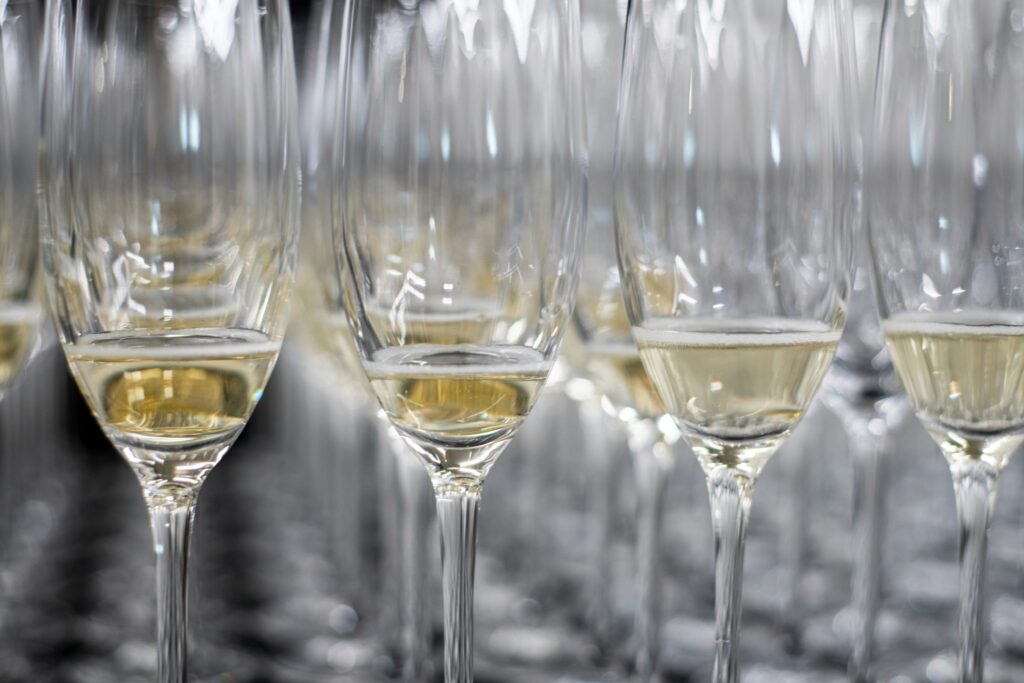
Italy has not one but 2 distinct wine regions that produce equally luxurious, elegant, crisp traditional method Champagne style sparkling wines. The most prestigious sparkling wine in Italy is Franciacorta DOCG, located in Lombardy, Italy. The other is Trentino-Alto Adige region. The wines are austere, elegant with a fine, creamy mousse of bubbles. The soils in the region are mineral-rich soils, granular-sized, calcareous gravel and sandy glacial soils that cover a limestone bedrock. Situated at the extreme northern edge of the Po Valley, south of Lake Iseo and alpine valleys all help mitigating effect on temperatures in both summer and winter. The wines are made from similar grapes as Champagne – Chardonnay, Pinot Noir (locally called Pinot Nero), and Pinot Blanc (locally called called Pinot Blanco). They are labeled “method traditional or metodo Classico” synonymous for traditional method distinguishes them from the Spumante sparklers that are made in the tank method, i.e. Asti Spumante. The wines are made in both non vintage and vintage dated. Rosé Franciacorta is also made. Like Champagne, the wines have to spend at least 18 months on lees for non-vintage, at least 30 months for Franciacorta Millesimato (Vintage dated) and at least 60 months for vintage Franciacorta Riserva. The wines range from zero dosage (0-3g/l) to Demi-Sec (32-50g/l) Sparkling wines are meant to be very well chilled to 38–45°F / 3-7°C Mirabella’s priority is to produce wine that is tied to the land that created it. Through their area of viticulture practices, sustainability and use of the most modern technologies excels them as top quality sparkling wines. This Edea wine is made of Chardonnay 80%, Pinot Bianco 20%. Hand harvested, gentle pressing, fermentation with selected yeasts at a controlled temperature of 16-18° C in cement vats and minimum 24 months on the lees in bottle. The wine is a pale yellow color, brut style with golden apple, lemon, pear, grapefruit, hazelnut, peach, yeast, brioche, banana and floral aromas and flavors. It has a light body, low alcohol and high acidity. Similar to Champagne, Franciacorta pairs well with many foods or enjoyed at any time during a meal – soft ripened cheeses (like brie), dried fruits, roasted salted nuts, charcuterie to spring risotto, chicken Milanese, pork cutlets with lemon thyme sauce or stuffed chicken breasts with prosciutto, basil and mozzarella.
What To Do When Your Favorite Wine Isn’t On the Menu…
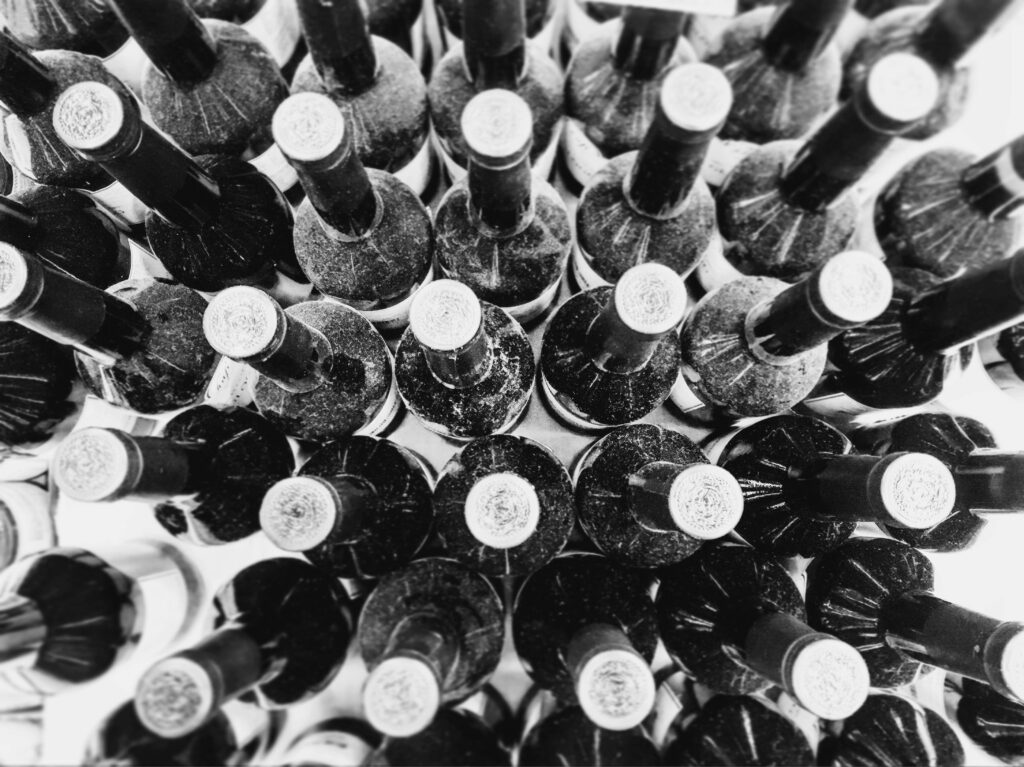
What do you do when your favorite wine isn’t on the “by the glass” or bottle menu at a restaurant? Do you panic and run out of the restaurant? No, you sit there calmly and read the other selections. Here are a few tips to help you can use to ensure that your night out isn’t a wasted. Is the wine red, white or rosé? Know where your wine comes from – What is the producer name, region and/or country? i.e. a Kendall Jackson Chardonnay from California Know 2-3 adjectives that best describe the wine that you like i.e. a California Chardonnay is buttery, oaky, vanilla, tropical fruit and full bodied. Know your backup wine name – see steps 1 through 3 Do you want food and wine pairing or to simply enjoy your selected wine? Don’t be afraid to ask for guidance from a wine specilaitst/sommelier if they have one on staff at the restaurant. Ask to for a sample of the selected wine(s) to make sure you like it. The restaurant wants to make you happy and for you as a customer to buy more wine. Use a wine app to help find a wine alternative. I personally like Vivino and Wine Searcher If you have any additional questions please do not hesitate to contact me either via email or social media.
Herbes de Provence Cedar Plank Salmon
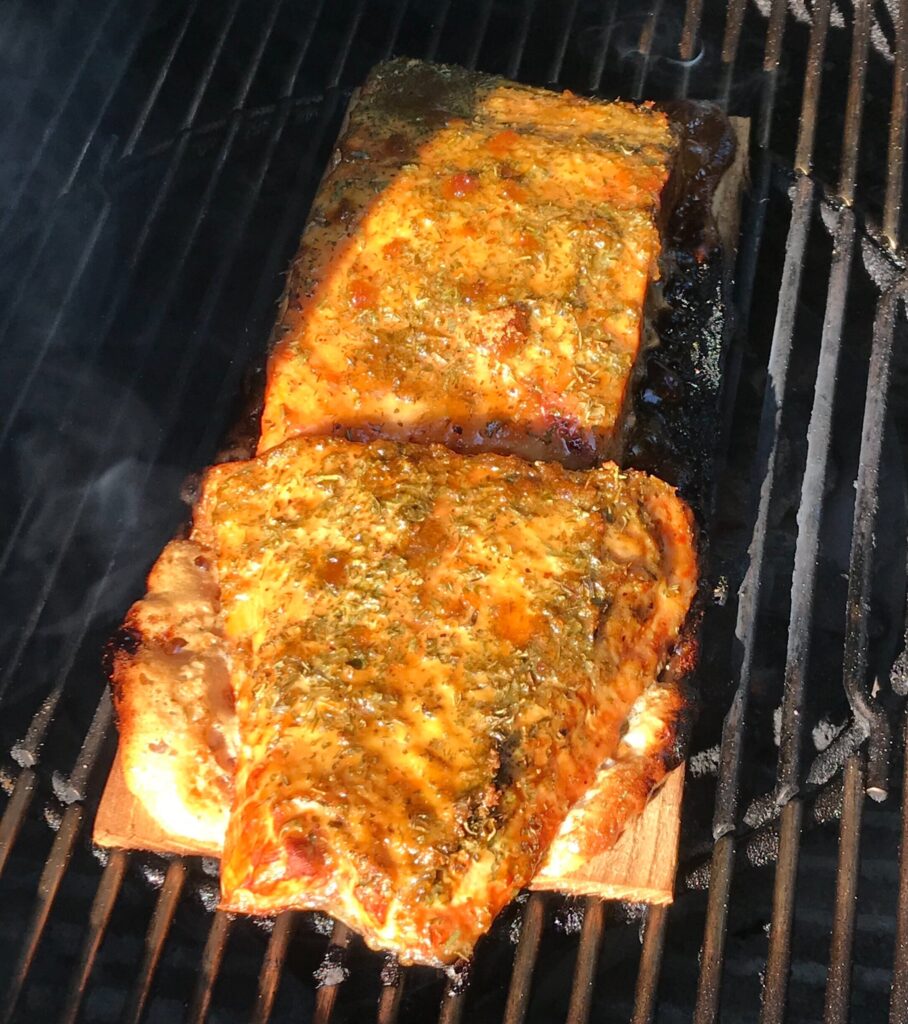
2 lbs. center cut salmon filet 2 tbsp. Dijon mustard 2 tbsp. brown sugar 1 tsp. Herbes de Provence salt and pepper 1-2 cedar planks – depending on how large the salmon filets are Soak the cedar planks in water for at least 2 hours. When ready to cook, heat the grill (we use a charcoal grill which adds extra smokiness to the salmonl) to medium heat 350F. Once hot, place the cedar plank on the grill. When it starts to smoke prepare the salmon. Place the salmon skin side down on a plate. Top with Dijon mustard, Herbes de Provence, salt and pepper and brown sugar last. The sugar will dissolve into the other ingredients. Cook the salmon till done, about 10-15 minutes. Serves 4 Pair with a nicely chilled Albariño from either Rias Baixas, Spain; Uruguay or Portugal.
Summer Red Series- Zweigelt
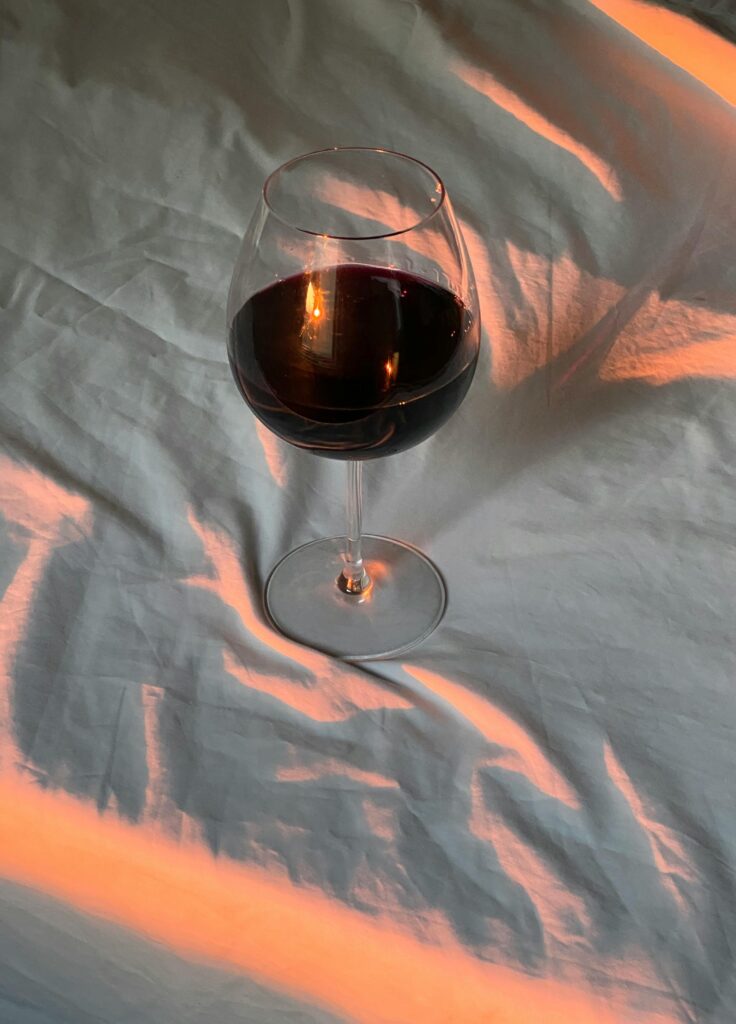
Most people have not heard of the Zweigelt grape, where it comes from , what it taste like or where it gets it’s name, which I find fun to say. Zweigelt was discovered in 1922 by a well known Austrian entomologist and phytologist named Friedrich Zweigelt. He crossed the Blaufränkisch variety and St. Laurent variety to create the Austrian hybrid Zweigelt. The grape is also known as Rotburger, Zweigeltrebe, and Blauer Zweigelt. Austria is the leader principal group, followed by the Czech Republic and Slovenia. In recent years it is having great success in Ontario’s Niagara Peninsula and in British Columbia and starting to appear in the USA such as Washington State and New York. It is an easy to grow grape, very fertile therefore to produce quality wines it requires intensive leaf work and yield management. The grape does very well in cool climates. Advantages are that it’s late budding and ripens early, avoiding any weather hazards in both spring frost and autumn rainfall. It is also robust, highly resistant to dryness and various vine diseases. It’s a cool climate viticulturist dream! Zum Supp Martin Zweigelt 2014 made by Martinshof Winery in Weinviertel, Austria, is named after a famous wine tavern in Vienna, owned and operated by Michael Martin’s ( the winemaker) family for generations. Michael Martin is known as an innovator, a risk taker. The packaging alone tells you something – it’s bottled in a retro style 1 liter bottle, sealed with a crown cap closure instead of a cork or screw cap. A crown cap is generally used for “method ancestral” champagne, cider or beer. The wine is a bright light ruby color, light in body, low in tannin, medium alcohol, crisp acidity. It’s bright, tart fruit forward red berry appeal, typical of Zweigelt, perfumed and spicy makes it a perfect picnic or cookout wine. Flavors of sour red cherry, raspberry, black pepper, licorice, cinnamon, hint of chocolate and violet are just lovely. It’s crips, clean and thirst quenching. In general the wines are meant to be enjoyed relatively young however it can also stand up to some barrel aging maturation. It has to be well chilled, at least an hour before opening. Pair this wine with grilled sausages, fried chicken, burgers, grilled white fish or chicken, macaroni or potato salad or chilled on it’s own. It’s a crowd pleasing quaffer – you won’t be disappointed.
Happy Albarino Day
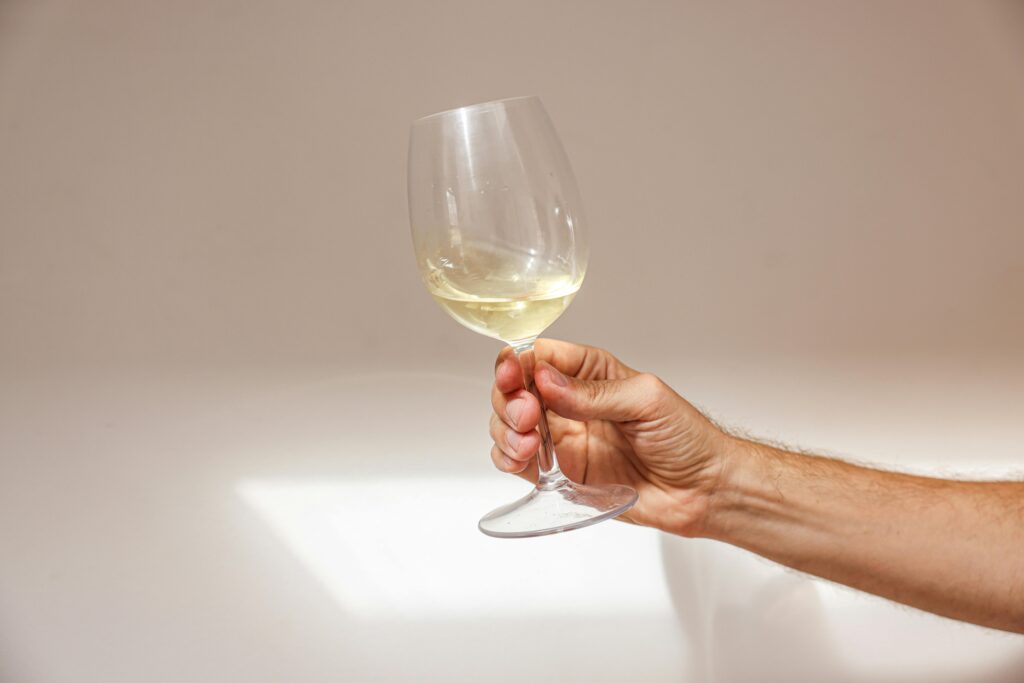
The Albarino grape is native to Galicia on the North Atlantic coast of Spain and is a key grape variety in the Rías Baixas DO region. The grape is also grown in north west Portugal, called Alvarinho, Uruguay and California. The wines are typically citrus forward, peach, saline and mineral characters with a lip smacking acidity. It can be either a light or full bodied wine depending on winemaking techniques – use of oak or lees ageing to add texture and richness. This particular wine is from an exciting, innovative winery named Bodega Garzòn in Maldonado, Uruguay. It is located on the Atlantic coast which provides a lovely cooling influence over the vineyard. It’s geological makeup dates back over 2,500 million years ago called the Crystalline Basement. Over time the soils broke down and changed into what is called ballast soils. The soils are moderately deep, moderately well drained soils that are formed from calcareous shale and limestone making the wines complex, mineral rich and energetic. Bodega Garzón’s many vineyard plots each have their own microclimate, different orientations, varied levels of humidity, sun exposure and soil characteristics. Grapes are hand-picked at optimum ripeness. Hand selecting bunches guarantees that the grapes will be fermented to tip top quality. The wine is fermented as follows – 20% 3 to 6 months on the lees in French oak barrels and 80% in cement tanks. The vinification process minimizes winemaking intervention for maximum representation of the terroir and grape. Their winning combination of organic practices and sustainable facility (The 19,050 m² building has a capacity of 2.2 million liters and is the first sustainable, LEED certified (Leadership in Energy & Environmental Design) winery outside North America), strong tradition and famed winemaking team of winemaker Alberto Antonini, enologist Germane Bruzzone, agronomist Eduardo Félix explains why their wines have won so many awards & are a winemaking leader. This particular Albariño wine is a fresh yellow green color with aromas of grapefruit, peach, lemon, apple, and minerals. The palate is slightly off dry with flavors of grapefruit, peach, lemon, apple, white pepper, cream, melon, cloves, pineapple and minerals. It’s creamy texture, crisp acidity and fruity profile makes it a delicious summer wine and great food pairing option. Pair with fish, shellfish, light meats – scallop ceviche, grilled scampi, Asian cuisine, lemon roasted halibut or ahi tuna salad.
A 7th Generation Champagne Family – Philippe Gonet
Champagne Philippe Gonet was founded in 1830 and is located in the heart of Le Mesnil-sur-Oger. Mesnil-sur-Oger is one of the Grand Crus in the Cote des Blanc sub region of Champagne. Cote des Blancs translates to the hillside of whites Chardonnay, which is the principle grape of the region, is also the main grape of the Gonet Family estate. Champagne is located 90 miles northeast of Paris. The area is one of the coolest wine producing regions in the world. Cool climates and northernly latitude (50 degrees in Champagne) are ideal for growing grapes to make sparkling wine because the grapes struggle to ripen and have high levels of acidity. Often times temperatures often barely high enough to encourage photosynthesis. Cool climates present certain risks to the vine and growth of the grape. In the spring frost and hail risk to growth of bud development. In late summer and autumn risk of high rainfall cause risks of rot, waterlogged grapes or grapes attacked by the mold botrytis cinerea. In the winter it can be extremely cold which could damage or potentially kills the dormant vines. Grapes have a hard time ripening evenly thereby planting the vines eastward to maximize sunlight as well as proper vine training the grapes low to the group to allow absorption of worth that may be reflected off the limestone/chalk white soil. Grapes grown in this region for sparkling wine are picked days to weeks early in order to retain the high acidity, lower sugar levels and also avoids any harvest time risks such as fungal diseases, high rainfall in autumn. Mesnil-sur-Oger has the purest form of limestone chalk soil in the Champagne region. The chalk is soft and porous, allowing for very good drainage as well as encourage the roots to dig down deep in search of water. In very dry summer months the roots can access the water reservoir deep within the chalk soils providing necessary water back to the vine. Chardonnay thrives in this type of soil and is an early ripener making the location ideal for grape growing. It creates high acid grapes, provides finesse, purity and minerality of flavor to the wine. These wines have great finesse, freshness, intensity. The Pinot Noir and Meunier are from the Vallée de la Marne region.The region is famous for producing ripe, full, found Pinot Noir and Meunier grapes. The slopes are south facing to maximize the sun exposure and warmth for ripening. The soils are a mix of clay, marl and sand. The soils allow for growth of richness and fruitiness in both varietals. They also provide a good environment for early ripening grapes which are prone to frost. Meunier in particular does well in heavier soils such as clay. Therefore without this ideal climate, latitude, aspect and soil types Champagne would not be able to produce what it does. A historical vineyard is run today by the seventh generation of the Gonet family, brother and sister : Pierre Gonet, the winemaker and Chantal Gonet, the clever business woman. The land is made up of 20 hectares (49 acres) of family vineyards found within 8 villages with 35 different parcels on legendary limestone subsoils, rich in sea fossils, up to 130 feet deep. The Gonet family continues to strive for improvement in both the vineyards and in the winery with a focus towards sustainability. They are a part of a new group of certified producers under the HVE (High Environmental Value certification), focusing on biodiversity in the vineyard. This practice is applied to the new line of their ‘TER’ cuvées champagnes. The grapes are hand picked and hand sorted. The grapes are vertically pressed gently, utilizing small tanks in whole bunches in order to extract the purest form of juice with as little solids as possible. Making the cuvée (first press) is what distinguishes Champagne houses from one another. The choice of reserve wine is crucial and what differentiates one champagne house from the next. The Gonet wines stand out with a minimum of 3 years on the lees, well beyond the aging requirement of 15 months for Champagne. The average age of the family estate vines is between 30 and 40 years which further enhances the concentration of the flavors in the wine . The extended lees aging, high quality levels, old vines and blending sets the Gonet family apart from other champagne producers. The family’s vision is to be the reference point of what a Champagne from Mesnil-sur-Oger should taste like. They are known worldwide for its exceptional quality wines that expresses the richness and minerality of the terroir. This particular Brut Reserve costs approximately $50 US. The wine is a blend of 30% Chardonnay, 60% Pinot Noir, 10% Pinot Meunier. This wine has been becoming increasingly popular over the past year. Two competitive producers are Salon and Krug. Salon is a highly regarded small producer of renowned for their blanc de blancs style. It joined the Laurent-Perrier group in 1989. It is regarded as one of the greatest Champagnes on the market. Krug is another example of an exemplary Champagne house who is owned by the multinational conglomerate LVMH Moët Hennessy – Louis Vuitton S.E. The family produces 8 other Champagnes which makes them a strong competitor on the champagne market. This particular champagne that I’ve chosen is the entry level wine. The wine is priced competitively compared to the larger houses. More and more growers are making and selling their own wine rather than selling to the large houses. Trends towards smaller Champagne quality producers, family-owned estates and wines made with true terroir expression showcase how they differ from the large homogenous brands. This particular wine is more affordable than many Champagne Brut wines. The price has been stable over the past year. The family produces 250 000 bottles every year and exports 50% of the production in 24 countries. This is the one of the most popular Champagne Brut wines. They have a strong presence in
Sparkling wine Supernova Rosé
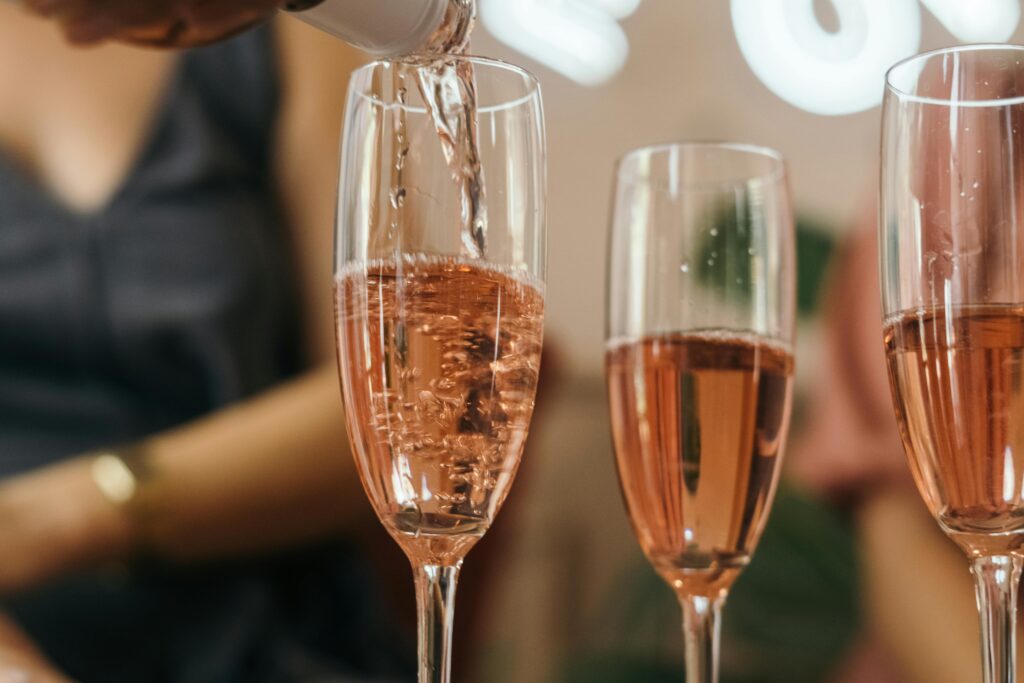
This gorgeous dry, medium pink colored sparkler from Supernova is a fun summer sparkling wine full of zesty fruit (strawberry, raspberry, lemon, blood orange) red apple, orange blossom, a hint toast and vanilla. This wine is made in a tank method – similar to Prosecco. It is a spumante type of medium fizz, medium acidity and body. It’s 50/50 Pinot Noir and Chardonnay and low alcohol at 11% abv making it a perfect summer sipper or as an apératif. It’s has zippy acidity, creamy texture to handle Smoked Trout with Chive Lemon Cream, Cobb salad, grilled scallops or chicken kebabs or enjoyed poolside. This is an excellent find.
Smoked Trout With Chive Lemon Cream
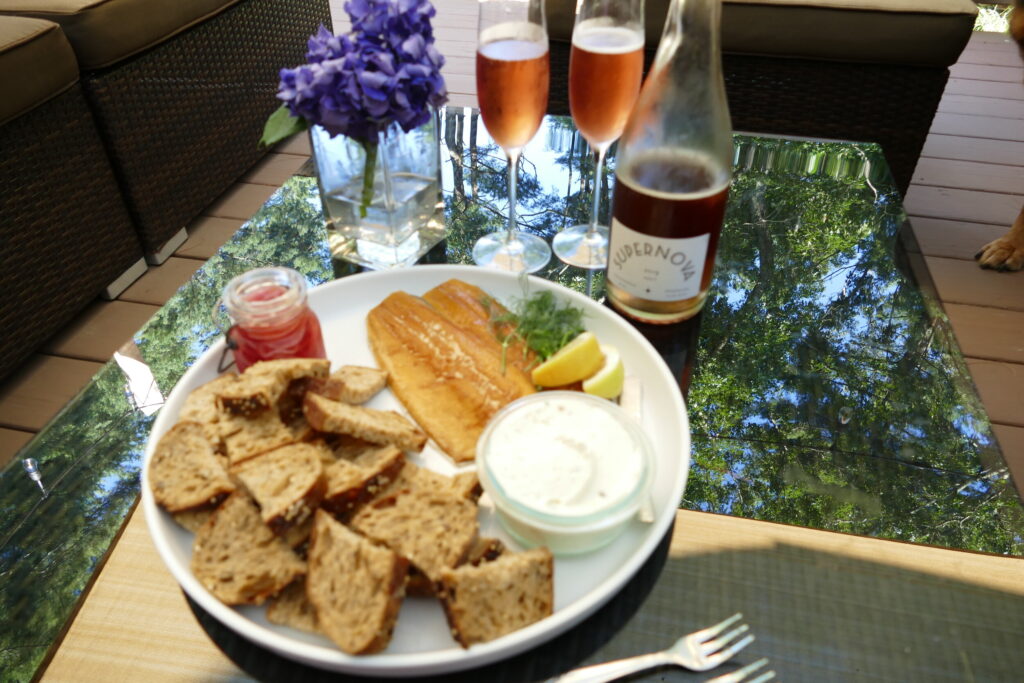
Summer is officially here ladies and gentlemen. You are entertaining, at social distance of course, and you want to serve something quick, delicious and decadent. What to do?!? I have the answer ….. Smoked Trout with Chive Lemon Cream. It requires little preparation with great results. Feel free to substitute smoked salmon or mackerel for the trout. This recipe is courtesy of my friend Deana Simmons – thanks for the idea! 2 filets of smoked trout 1 pkg cream cheese, brought to room temperature 3 tbsp plain greek yogurt 1 tbsp chopped capers, drained and rinsed 1 tbsp fresh chives, minced 1 tsp grated lemon zest salt and pepper to taste 1 loaf multi grain bread, sliced and cut into serving pieces 1 lemon, cut into wedges Mix the cream cheese cheese and greek yogurt together in a bowl. Add the capers, lemon zest, chives, salt and pepper. Mix together and adjust seasonings to taste. Place the cream in a small serving bowl. Serve on a platter with the trout, bread and chive lemon cream. Serve with a sparkling wine, such as Supernova Rosé Sparkler as seen in the picture.
Coravin – The Wine Enthusiasts Beloved Tool
Coravin Model 3
Award winning 5th generation winemakers – Elena Walch Vineyards
Alto Adige DOC is in the northern most winemaking region in Italy. Bordering Austria, the cultural influences in Alto Adige are both German and Italian, making it a very cultural diverse region. Climate and location influences bring fruity freshness to Alto Adige wines – the vineyards are grafted on to the Dolomite foothills, the warm air from the Adige River, the sunny summer days and cool nights, warm soils and sufficient precipitation are all contributing factors. Elena Walch Vineyards stands for innovation, quality and environmental responsibility. Elena Walch, along with her daughters, Julia & Karoline, run the family estate. Their philosophy is of terroir – each wine is an expression of the soil, climate, grape variety and vineyard. Each vineyard is like an individual with its own unique characteristics. The family leads the charge for sustainable winemaking and viticulture in the region. Through a number of ways such as recycling water for use within the vineyard, leaf pulling for proper air flow in the vineyards, creating their own compost to nourish the vineyard, mulching, close monitoring of water usage, alternative pest management for grapevine moths – the list goes on. Their focus is to preserve the vineyard and environment for the next generation. This particular wine is made from the native Schiava grape, which in Italian means “little slave.” The wine was fermented in stainless steel tanks with 6 days of skin contact. The wine was then matured in large oak casks. Both the fermentation and maturation produced a wine of pure character and elegance. The wine is a lovely bright ruby color. It’s flavors of fresh strawberry, cherry, raspberry, rose, bitter almond, spice and slight smokiness are beyond captivating. The wine has a light body, low tannins, medium acidity and long finish. The wine could easily age another 2 to 4 years. For those who are seeing a sustainably made wine this is your best bet. It is affordable, of the highest quality, the perfect summer red wine, served slightly chilled. Video review available at Instagram: Elena Walch Schiava Pair this wine with roasted eggplant, stuffed mushrooms, antipasti, shrimp skewers or Southeast Asian cuisine with basil and ginger. The wine is light, refreshing and thirst quenching.