
Podere Il Salicete Albone Lambrusco di Modena 2018
The small estate of Podere il Salicete is located on the outskirts of Modena DOC in the Emilia-Romagna region of northern Italy, in the tiny village of Campogalliano. Modena is famous for Balsamic vinegar and famous sports cars such as Ferrari and Lamborghini. Gian Paolo Isabella, former Muay Thai champion, joined forces with his brother in law Marcello to follow their passion to become viticulturists and winemakers. As producers of Lambrusco they work with classic local grape varieties such as Lambrusco di Sorbara and Salamino but they also work with the uncommon Malbo Gentile variety. All of the agriculture is done organically, natural vinification and re-fermentations take place in bottle to make their lambruscos. This particular wine, Podere Il Salicete Albone Lambrusco di Modena 2018, is 100% Lambrusco Salamino. Natural fermentation takes place in stainless steel tanks to maintain the fruity flavors of the wine. The carbonation is achieved through Tank or Charmat Method. Minimal sulfur additions and no filtering or fining. The winemakers make the wine as naturally as possible with as little intervention as possible. The wine is a gorgeous deep purple color. The sparkling wine is dry style, a creamy frizzante (lightly sparkling), low in alcohol, medium/low tannins and acidity. It’s a light, creamy sparkler that can easily be enjoyed with or without food. The flavors are rich blackberry, black cherry, blueberry, violets, earth and chocolate. Pair with salami, grilled warm-spiced chicken, pizza or fried mozzarella. Chill the wine well as you would a sparkling wine.
Lambrusco – Italy’s Red Sparkling Wine
Lambrusco is Italy’s answer to a red sparkling wine. It is also the name of a family of grapes which means “wild grape” in Italian, native to Italy’s Emilia-Romagna DOC region in Central Italy. The indigenous Italian Lambrusco varieties are as follows – look for these terms on the label to know which style you are purchasing: Lambrusco Salamino: deep ruby color, floral and fragrant, full body and high acid. Lambrusco Grasparossa: deep purple color, full body/creamy and medium to high tannins. Lambrusco di Sorbara: pale pink color, lighter body, high acid. Lambrusco di Modena: this wine is made from Lambrusco varieties in the Modena province, mainly full bodied, deep purple color. In addition, the Labeling of sweetness levels is as follows: Secco (dry wines), Semisecco/Abbocato (off dry) & Dolce (sweet style, meant for dessert pairing such as milk chocolate). The wines are macerated on the skins for 1-2 days depending on the variety in order to extract color, red fruits and tannins. The first fermentation is in stainless steel tank at cool temperatures of 18-20°C. The second fermentation also in a stainless steel tank at 12-15°C for 2weeks for a Frizzante style (lower carbonation sparkling wine) or 1 month for Spumante (fully carbonated sparkling wine) . The wines are produced in higher volume, affordable/inexpensive and quick to market sale and consumption. These wines aren’t ageable like Champagne. The wine can range from dry to sweet. The color can vary from pale pink to a deep ruby color. The flavors range from strawberry, watermelon, cherry, black currant, blueberry, cocoa powder, violet, hibiscus, rhubarb, orange, oregano. The high acidity which makes it such a good food pairing wine. The quality levels are good with some very good examples. This is a generally affordable wine. The wine is best served well chilled 45-55°F. Pairs with many foods from Parmagiano-Reggiano cheese, Prosciutto di Parma, wood fired pizza or grilled beef burger. Australia also produces a red sparkling wine made from Shiraz grapes. These wines are made similarly to Champagne and are of a higher quality. Try a Podere Il Salicete Albone Lambrusco di Modena 2018 Photo: Courtesy of Wine Folly
Sauternes – a decadent desert wine
What is Sauternes and where does it come from? Sauternes is a decadent, sweet desert wine that comes from the southeast Graves regions of Bordeaux. The sub appellations are Sauternes, Barsac, Cérons, Premieres Cotes de Bordeaux, Bordeaux Haut-Benauge, Cadillac, Loupiac and Saint-Croix-Du-Mont. Sauternes and Barsac are the most renowned regions which create the decadent, unctuous, high quality desert wines. Sémillon has thin-skins which makes it the perfect candidate for noble rot (see more information below). Sauvignon Blanc contributes the bright acidity with a bit of bright acidity . Muscadelle is allowed but rarely added, which would contribute a floral character. The best vineyards in Graves are located on chalky, gravelly soils with influences from the Garonne River and the Ciron tributary. The two rivers provide a unique microclimate with the fluctuations of the misty mornings, sunny warm days and foggy, damp nights are ideal conditions to make this particular rot thrive. What happens is that the fungus pierces the thin skins of the grapes, the grapes begin to loose water, shrivel and become almost raisin like. The grapes are left on the vine well into the harvest season, after still wine grapes are picked, called Late Harvest to allow for further concentration and raisining of the grapes. The flavors are so concentrated as are the sugars and maintains it’s high acidity level. The soils and climate influences make exceptional dessert wines that age well in oak for several decades. Typical flavors are apricots, peaches, lemon peel, marmalade, honey, caramel and roasted almond. Desert wines are best chilled to 42-50F (6-10C). These wines have major ageability 5-40 years depending on the vintage. These wines are full bodied, high acid, very sweet wines (120–220 g/L of sugar). If you like Sauternes, try Hungary’s equivalent called Tokaji wine. Another more economical option is from Monbazillac AOC in the south of France. Sauternes are best with wash-rind soft cheeses – classic pairing is Roquefort cheese. Let’s not forget foie gras, paté or terrines.
Susana Balbo – Leading Winemaker and Innovator
Susana Balbo is a leader in many ways – as a female winemaker, as an innovator and advocate for the environment. She began her career in winemaking in 1981 when she graduated with a degree in oenology and became the first female winemaker in Argentina. Her career led her to Salta at Michel Torino winery and then toMartins and Catena Zapata. She went open to consult at various wineries throughout the world, again as the first Argentinian female winemaker. In 1999 her dream of making her own wine and winery came true – Susana Balbo Wines was founded in Luján de Cuyo, Mendoza. In 2012, she was recognized as one of the “Most influental women wine-makers” & 2015 “Woman of the year” and 2018 “The 10 most influential women in the wine world” by The Drink Business magazine. Over the years her wines have won numerous awards, grown steadily in the marketplace and expanded into a family business with her son José, a winemaker in his own right, and her daughter Ana on the business side. Susana Balbo is a winemaker inspired by the land. She is a pioneer in the Argentinian winemaking. Her wines are a true expression of the terroir. Through efforts in the vineyard and winery such as sustainability, no chemicals or pesticides, water management with drip irrigation, recycling water, reducing packaging weight … she truly respects the land wants to preserve the environment for future generations. The grapes are from Finca La Delfina, Altamira, Uco Valley in Mendoza region, which is at the foothills of the Andes. The vineyards altitude is 1,050m. Snow and ice melts and provides natural water supply for the wines, as well as wind protection from the east, fertile rich lands and a diverse microclimate. Susana Balbo Signature Malbec is a favorite of mine. It is a blend of 95% Malbec and 5% Petit Verdot. The grapes are hand harvested, destemmed & lightly crushed. Pumping over and delestage 3 times a day. Max. Temp. 28°C. Extended maceration 35 days. The wine aging is 13 months in 30% new French oak barrels and 70% second use French oak barrels. This wine is a beautiful purple color. It has aromas of raspberry, cherry, blueberry, plum and spice. The palate is dry and is chock full of ripe plums, raspberry, cherry, vanilla, mint, cinnamon, red pepper and savory olives, cocoa. The ripe fruit, elegantly well integrated oak and tannins are just lovely. This wine is a true expression of Susana Balbo and the land that she loves. Pair with perfect for a grill/cookout; pair with grilled beef kebabs, pork chops or, peppered game meats. My video review on this wine: Susana Balbo Signature Malbec 2016
What is Fumé Blanc?
What is Fumé Blanc? It is a synonym for Sauvignon Blanc made in Chile, USA. Sauvignon Blanc claim to fame is thanks to winemakers in Bordeaux, Sancerre and Pouilly Fumé (Loire Valley), France. Pouilly Fumé wines are mineral driven, often with a slightly smoky nose hence the Fumé name. Sauvignon Blanc grape is know for it’s green and herbaceous flavors. Sauvignon Blanc is one of the most planted white grapes and can be made in various styles depending on where it’s grown. This particular wine is from Viña Errazuriz. Don Maximiano Errázuriz founded Viña Errázuriz in 1870. With his great vision for the future and his innovative, pioneering spirit, he planted the first French grape varieties in the Aconcagua Valley. Through many generations his wines and winemaking have become world renowned and synonymous with quality. This wine is grown in the Aconcagua Valley. The grapes are selected vineyards that grow on hillsides near the Pacific Ocean’s coast at an altitude of 100 to 300 meters above sea level. Gentle Pacific breezes and morning fog make these vineyards ideal for producing refreshing Sauvignon Blanc. This wine is 100% Fumé Blanc (Sauvignon Blanc). The wine a pale yellow color. It is a vibrant and fresh wine with aromas of lemon, lime, tangerine, minerals & grass. The wine is dry, medium body, high acidity with flavors of lemon, melon, tangerine, grass, passionfruit, guava and smoke. This wine is around $15, excellent value for the price. Pairs beautifully with goat cheese, white fish such as cod, tilapia, halibut, red snapper with green herbs such as parsley, Basil, Mint, Tarragon; white meat such as chicken, turkey or pork and vegetarian meals such as asparagus quiche and cucumber dill yogurt salad,
S’mores and Sauternes?
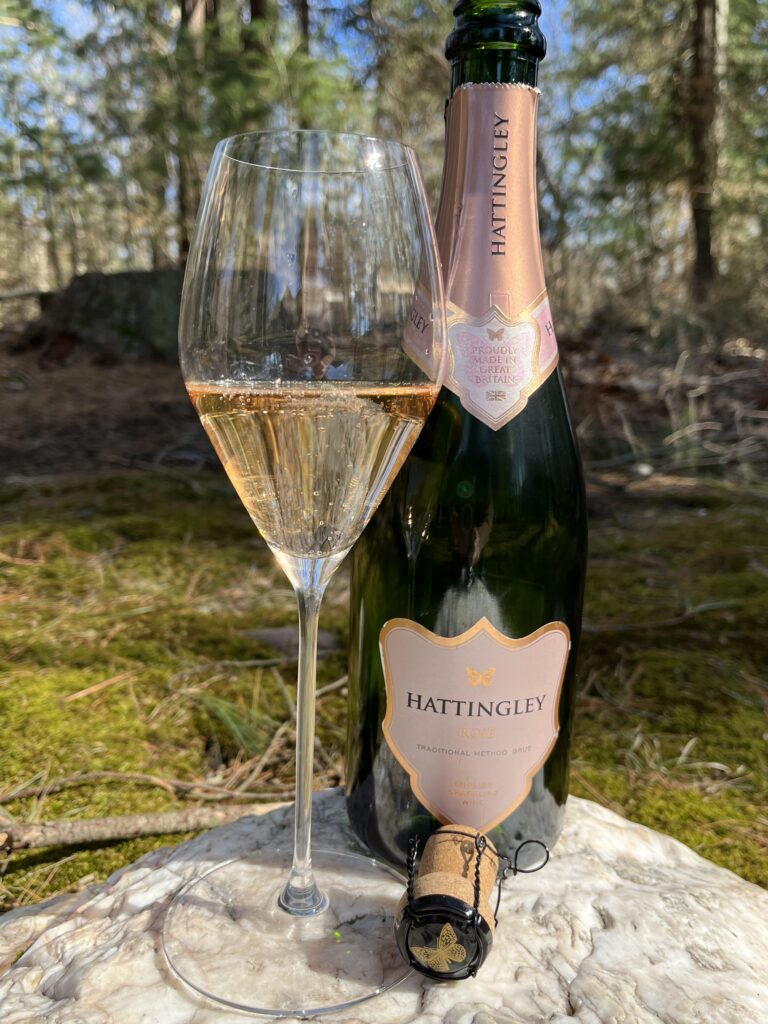
What is Sauternes and where does it come from? Sauternes is a decadent, sweet desert wine that comes from the Graves region of Bordeaux. Both red and whites are produced in this region. In the subregions are Sauternes and Barsac which create the decadent, unctuous desert wines. Sémillon has thin-skins which makes it the perfect candidate for noble rot, Sauvignon Blanc contributes the bright acidity with a bit of bright acidity . Muscadelle is allowed but rarely added, which would contribute a floral character. The best vineyards in Graves are located on chalky, gravelly soils with influences from the Garonne River and the Ciron tributary. The two rivers provide a unique microclimate with cool morning fog and sunny, warm afternoons which allows the noble rot to flourish. The soils and climate influences make exceptional dessert wines that age well in oak for several decades. Sauternes has flavors of honeyed apricot, butterscotch, caramel, coconut, mango, ginger, marmalade, and citrus themes, tropical fruit, honeysuckle, and toasted baking spices As mentioned above Sauternes pairs beautifully with cheesecakes, lemon meringue pie, almond tart, vanilla pot de crème – basically not chocolate deserts. A Banyuls desert wine is the key to chocolate. Sauternes also pairs well with the classic foie gras and apricot conserve, duck or pork terrines, rich, pungent, salty cheeses such as Roquefort or Stilton, heavy cream sauces or spicy Asian dishes. Sweet wines go well with salty, spicy or sweet foods. The residual sugar (syrupy sweetness) tames any spicy heat.
Warm-Spiced Grilled Chicken
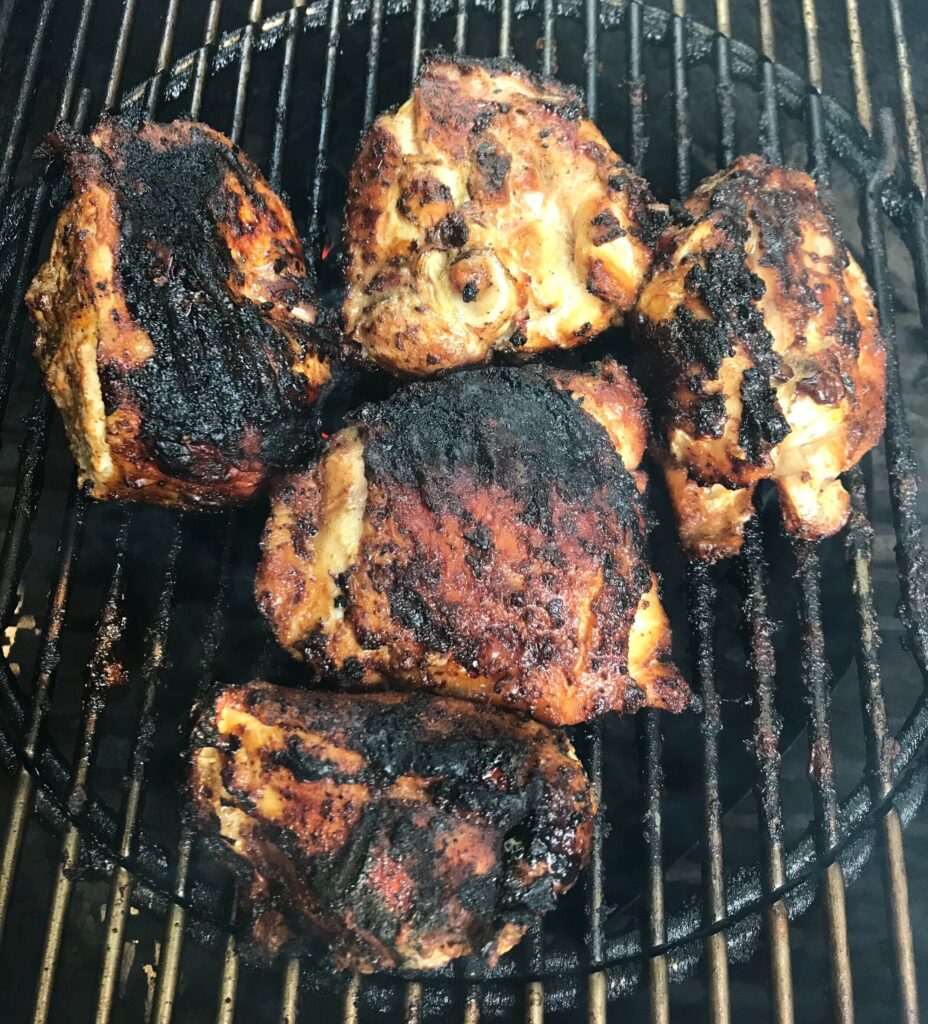
4 lbs chicken pieces, thighs and breast bone-in 1-2 tbsp. kosher salt 1 tsp each chili powder & ground cumin 1/2 tsp ground coriander 1/4 tsp cayenne pepper 1 tsp. brown sugar 1 tsp each salt and pepper Pat all chicken pieces dry and sprinkle all over with kosher salt 24 hours before cooking. Through osmosis the meat will tenderize from the inside out, preserve moisture when cooking and retain a crispy skin. An hour before grilling, mix all remaining rub ingredients together in a small bowl. Pat the chicken dry and rub the spice mixture into the chicken. Allow to sit at room temperature for 30-45 minutes before grilling. Heat the grill to medium heat, about 375F. Once ready, grill the chicken on direct heat for 15-20 minutes until the bread meat reads 160F and the thigh meat reads 170F. Remove from heat, place on a platter and cover with aluminum foil for 10-15 minutes to allow for further cooking and for the meat to retain it’s juices. Serve with Herbed Potato Salad. Pairs well with a light and fruity summer red, such as an Martinshof Zweigelt or an Elena Walch Schiava.
Bruno Paillard – Elegance and Timeless Rosé Champagne
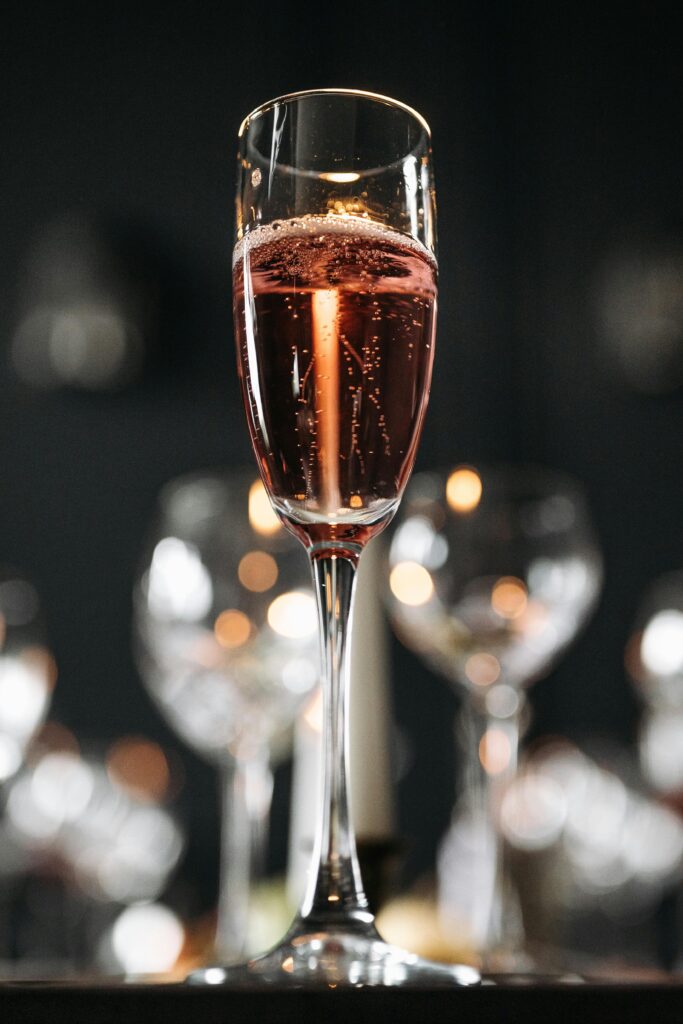
Maison Bruno Paillard is a relatively young champagne house when you look at the institutions that have been around for hundreds of years. Bruno Began comes from a long line of wine merchants and brokers dating back to 1704. He followed in his family’s footsteps but it wasn’t his dream. He longed to create something special, a different type of champagne that broke from tradition. He began by renting cellar space and purchased grapes from independent growers. Less than a decade later he purchased his first 3 grand cru hectares in Oger in the Côte des Blancs. Currently Maison Bruno Paillard owns vineyards cover 32 hectares of land over the best Crus of Champagne: Le Mesnil sur Oger, Oger, Cumières or Verzenay. The family still works with the founding independent grape growers that gave them their start, as well seeks out different parcels to allow the personal expression of the champagne to represent their vision of craftsmanship. Bruno Paillard became the 1st champagne producer to print the disgorgement date on every single bottle for all of his cuvées. Another example of his individuality is his high expectations to sustainability – no herbicides or pesticides are used; ploughing; partial grassing, regular analysis of soils, organic fertilizers and promotion of biodiversity. All of these examples tell the consumer how much detail is put into Maison Bruno Paillard viticulture and winemaking. This particular wine Premier Cuvée Rosé Extra Brut is mainly Pinot Noir with a touch of Chardonnay for texture and complexity. Hand harvested grapes that are gently pressed and is named after the first press (Premier Cuvée) of the grapes which produces wines of great finesse, long aging potential, pure delicate flavors and high acidity. The Pinot Noir juice has a short maceration on the skins to give it the beautiful rose gold color. It has been aged on the lees for 3 years and another minimum 5 months after disgorgement. Making Champagne requires great skill. It is an art form to obtain such a fine balance among many vintages and grape varieties. This particular wine is from a blend of 25 vintages going back to 1985! This bottle was disgorged April 2019 as seen on the back of the label. It is a gorgeous pale copper color, light yet complex; an Extra Brut wine which means it’s dry with less than 6g sugar/L. The aromas are delicate strawberry, red currant, violets, brioche, lemon zest, hazelnut. The flavors of red fruits (strawberry, cranberry, raspberry), citrus fruits (lemon peel, grapefruit), violets, vanilla, brioche, pastry, cream, earth, mushrooms and dried fig. The bubbles are delicately fine, the palate has a silky texture. It’s an elegantly balanced example of Bruno Paillard’s craftsmanship. My video review is available on Instagram: Champagne Bruno Paillard Premiere Cuvée Rose Pairs well deviled eggs with watercress, smoked salmon and chive cream, New England lobster roll on a brioche bun, shrimp mousse, duck confit, sushi, charcuterie, roasted chicken with cherry tomatoes and thyme, creamy pea risotto or a red fruit salad.
Terlato Pinot Grigio
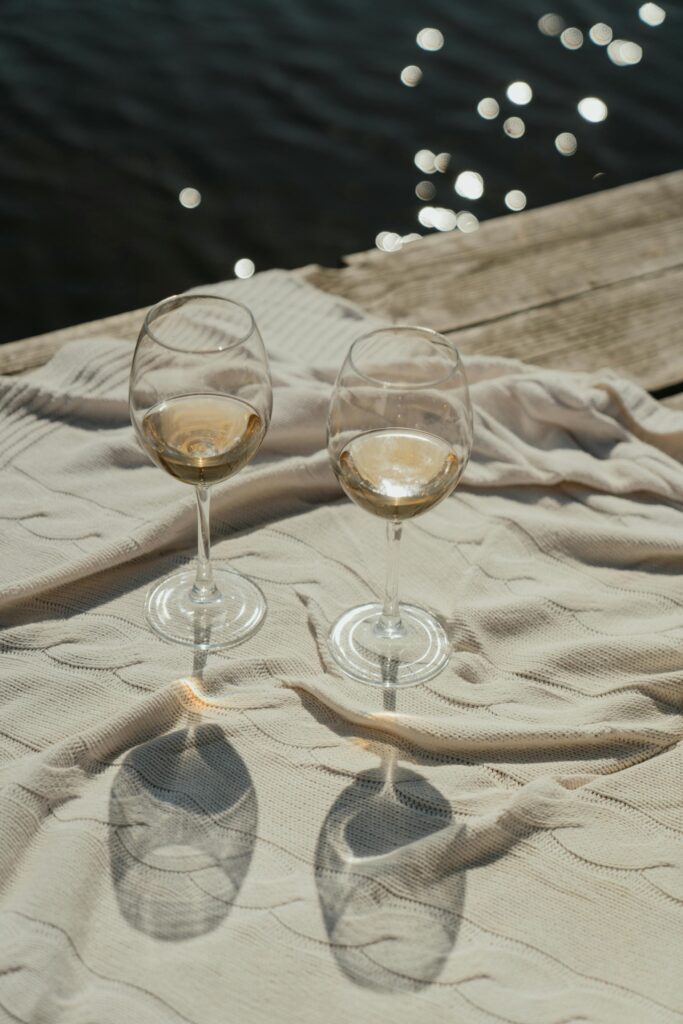
Have you ever felt like having a cool glass of white wine on a hot summers day that has a zingy freshness to it? YES! Ergo why I had a glass of Terlato Pinot Grigio from Friuli Colli Orientali DOC, Italy. This varietal shines in this region. It’s full of peach, lemon, crisp green apple, lime, minerals and honeysuckle. It’s light, refreshing and balanced. Enjoy the warm days while they are still around! Paired with grilled lemon garlic shrimp.
New world style Albarino
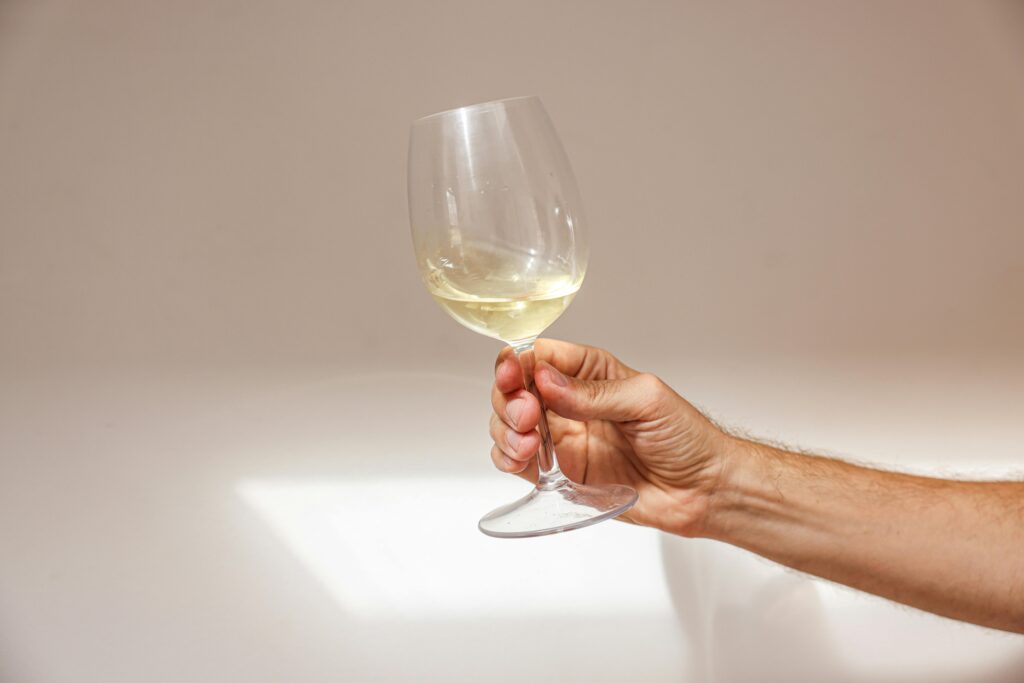
Andrus Island Vineyard from Sacramento-San Joaquin River Delta, California, has produced their version of the traditional northern Spain rockstar, Dropout Albarino Andrus Island 2017. Winemaker Jon Keyes dropped out of college and left chemistry studies behind to pursue a career in winemaking which took him to Two Hands Winery in Barossa Valley, Australia and then back again to California as Cellar Master at Napa Valley’s Outpost Wines, under the guidance of winemaker Thomas Brown. Now he makes wine for the aptly named winery Dropout for winemaking pioneer Mark Herold Flavors of lemon peel, almonds, pineapple, lim, saline, tangerine and pear all held together in a brisk, crisp acidity. It’s a summer sipper or paired very well with the below shellfish and fish dishes. Pair with oysters, oysters and more oysters – Oysters Rockefeller, fried oysters, oysters with Champagne mignotte, smoked oysters, grilled lobster tails with butter, scampi with beurre blanc sauce or halibut with browned butter.