
Garden Tuna & Basil Salad
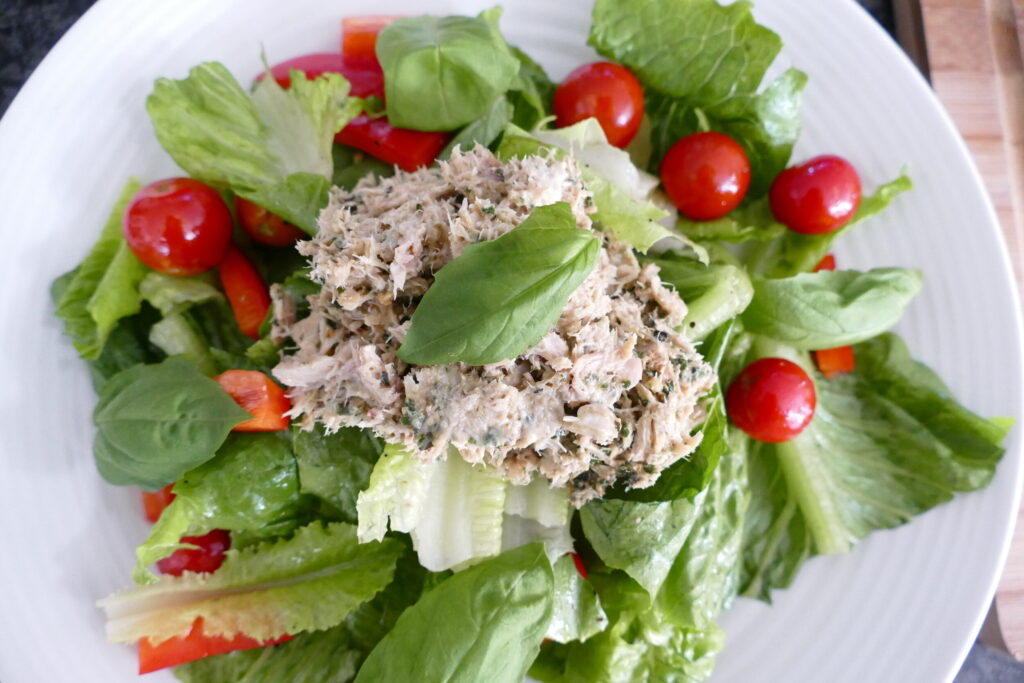
1 head of Romaine lettuce, cleaned 1 cup basil leaves, 1/2 chopped and the 1/2 left whole 2 cans solid chunk tuna in water, drained 1 tbsp dijon mustard 1 tsp mayonnaise salt and pepper 1 stick of celery, chopped fine 1 pint of cherry tomatoes 1 red pepper, seeded and dice 2 tbsp. olive oil 2 tbsp. white balsamic vinegar Tear up the lettuce and place on 2 plates. Meanwhile, mix the tuna, chopped basil celery, mayonnaise, dijon, salt and pepper to taste in a bowl. Top with cherry tomatoes, peppers, tuna. Drizzle with olive oil and vinegar. Serves 2
Roasted Beer Lime Cauliflower &; Turkey Chorizo Tacos
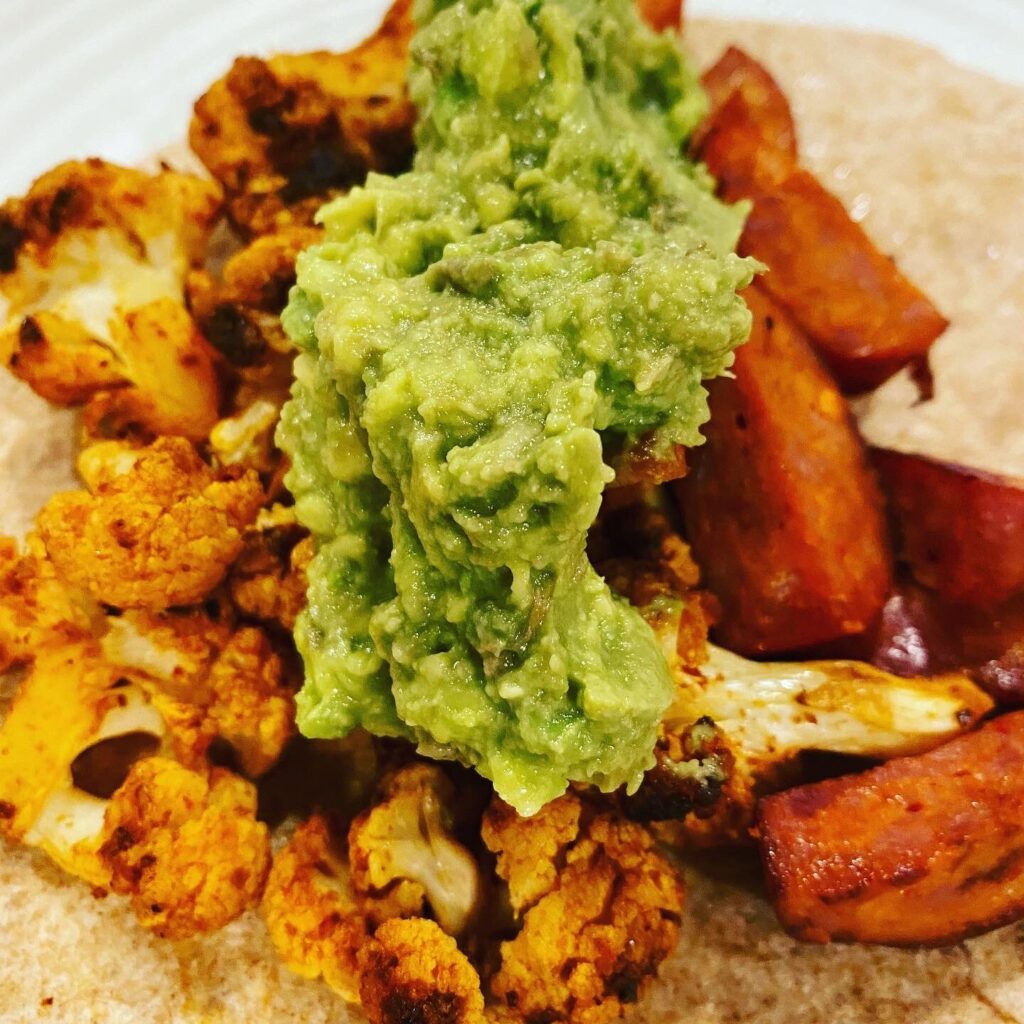
This recipe can be made vegetarian by omitting the chorizo. The cauliflower recipe is based on a recipe from Thug’s Kitchen cookbook. Cauliflower: 3/4 beer (I used a wheat beer) 1/4 cup chicken or vegetable broth 1 tbsp lime juice 1 1/2 tsp soy sauce 1 1/2 tbsp hot sauce 1 clove garlic, sliced 1 1/2 tsp. chili powder 1 tsp. smoked paprika 1/4 tsp each ground cumin and garlic powder pinch of salt ================== 1 lb Turkey Chorizo, halved and sliced 2 avocado, peeled and halved 1 lime, juiced whole wheat flour tortillas Cauliflower: Heat the oven to 400F. Chop cauliflower into small forest (size of a quarter). In a saucepan war, the broth, beer, lime juice, soy sauce hot sauce and garlic over medium heat. Add the cauliflower and simmer for 5 minutes. Drain. Prepare a baking sheet with either cooking spray or a sheet of parchment paper. Toss spies, salt and olive oil together in a bowl. Add the cauliflower and mix well. Pour the cauliflower onto the backing sheet and bake for 20 minutes, stir once halfway through. Heat the turkey chorizo in a skillet over medium heat till browned. In a small bowl, add the avocado and mash with a fork. Add salt and lime juice. Assemble the tacos and enjoy! Serves 4
Mediterranean Hummus Dip
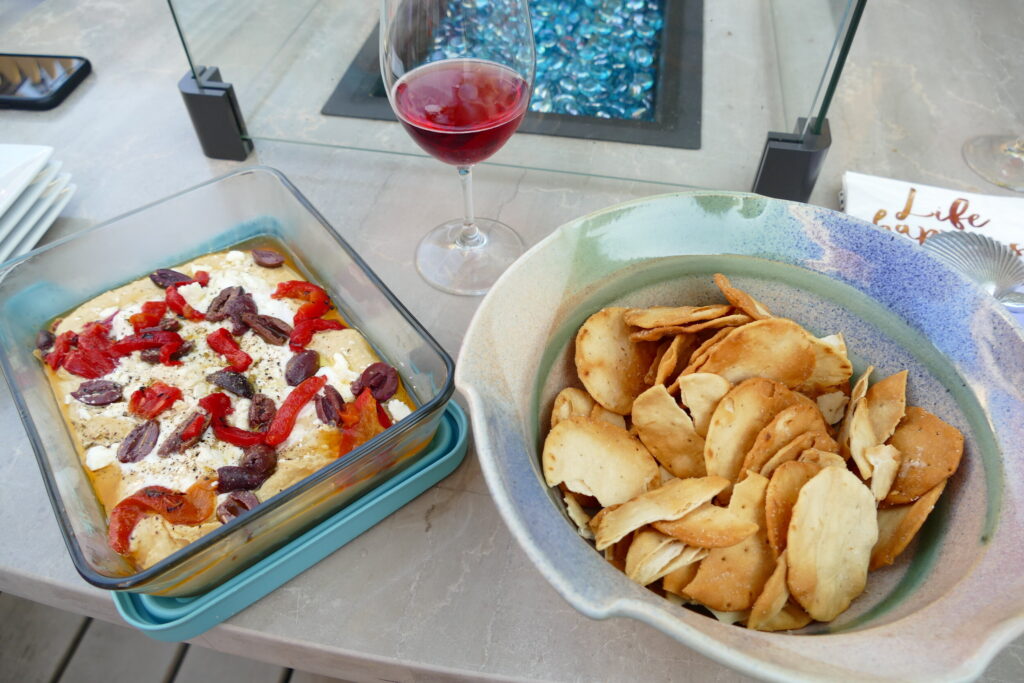
1 container of classic Hummus 1/2 cup pitted Kalmata olives, halved 1 jar roasted red peppers, sliced 1/2 cup plain greek yogurt 2-3 tbsp. extra virgin olive oil pita crackers Arrange the hummus in a serving dish. Sprinkle evenly with olives and red peppers. Drizzle with olive oil. Pair with a chilled Spanish Rosado or a Bugey Méthode Traditionelle .
Beach Board Dinner
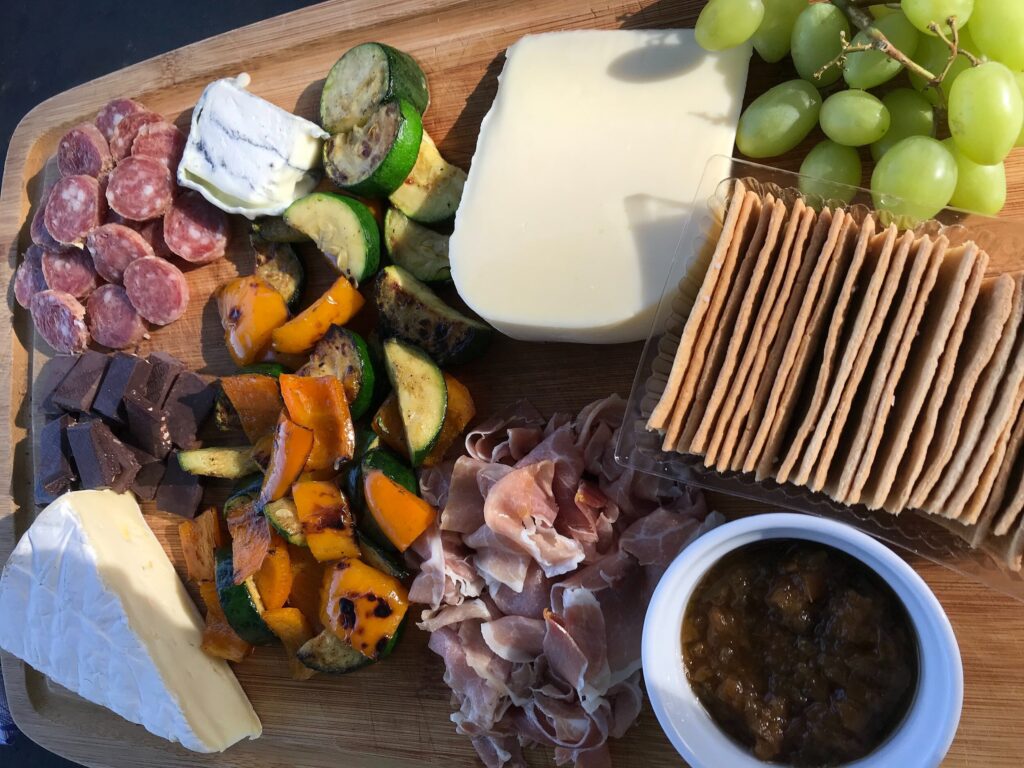
1 each zucchini, orange pepper and red pepper, grilled and chopped 2 charcuterie – I used 1 stick French wine saucisson & 250g sliced prosciutto 3 various cheeses – I used goat cheese, gouda and aged cheddar 1 bar dark chocolate 1 bunch of green grapes crackers peach jalapeno jelly Arrange all of the ingredients on a cutting board and enjoy. Pairs well with a Rosé Txakolina, a Cote de Rose or Cava. Serves 4
Badenhorst Secateurs Chenin Blanc
Chenin Blanc was made famous in the Loire Valley of France in the sub regions of Vouvray and Savennières. The grape is ridiculously versatile – it can be made into beautiful dry, sweet or sparkling wines. The varietal is also called Pineau de la Loire and Pineau d’Anjou. Chenin Blanc is an expressive white French varietal that makes beautiful dry, sweet and sparkling wines. What’s amazing is Chenin Blanc’s ability to age due to the grape’s naturally high acidity. South Africa’s plantings are 50% of total viineyard plantings and is the most planted white varietal. It is also known as Steen in South Africa and is sometimes blended with Semillon, Viognier, and Marsanne to make a richer-styled wine similar to an oaked Chardonnay.The wines from South Africa will be full bodied, creamy texture, high acidity and dominant flavors of guava, melon and passion fruit. AA Badenhorst Family Wines are grown, made and matured on Kalmoesfontein farm in the Swartland, South Africa. Swartland is a large wine-producing area 65 kilometers (40 miles) north of Cape Town in the Western Cape region of South Africa. The goal of cousins Hein and Adi Badenhorst is to make natural wines in the traditional manner. The bush vines are grown on granite soils in the Paardeberg Mountains. The grapes were whole bunch pressed. Interestingly, the grapes were harvested over the course of 12 days and adding each day’s fruit to the already-fermenting musts. The wine has spent 7 months on the lees in concrete tanks and old casks, which gives incredible texture and plate weight to the wine. Badenhorst has 2 lines of wines – those bottled under AA Badenhorst and a single vineyard range. The wine is a lovely medium yellow color. The aromas are flinty with guava, honey, orange blossom, wet stone and peach. It is dry with deep and rich flavors yellow apple, guava, mango,honey, orange blossom and tangerine. It’s high acidity lingers one the palate as do the flavors. Pairs beautifully with Cheddar, Gruyère, roast chicken with tarragon, pulled pork tacos, pork chops with roasted apples, smoked salmon, Southeast Asian Cusine,
Kanonkop Pinotage
If you have never tried the incredible wines this country produces, stop what you are doing and go buy some. Chenin Blanc, Pinotage, Pinot Noir, the list goes on for quality wines. Pinotage is a cross between Pinot Noir and Cinsault. It is South Africa’s signature varietal and has made it’s on the map. Kanonkop Estate, located in Stellenbosch, South Africa, was founded is 1973. The name Kanonkop is derived from a hillock (kop) on the Simonsberg mountain above the estate from where, during the 17th and 18th centuries, a cannon (kanon) was fired to announce the arrival of sailing ships entering Table Bay. The estate is currently being run by the 4th generation of the Krige family. The grapes were grown at the foothills of Simonsberg mountain. The area does not get a lot of rain so False Bay breezes provide cooling and moderating factors to slow down ripening and maximizes quality. Pinotage is the estate benchmark wine. They also produce high quality Cabernet Sauvignon, Merlot and Cabernet Franc. The wines are elegant and reflect Stellenbosch terroir. 60 year old bush vines are hand harvested with smaller yields resulting in high quality, concentrated flavors. The soils broken down granite rover time, clay and sand. Kanonkop Pinotage 2017 is a deep ruby color. The nose is pronounced intensity with aromas of prunes, blackberry, forest floor, cocoa, bramble and spice. The palate is dry, full bodied and soft silky tannins. The flavors are pronounced-dark cherry mocha earth blackberry, tea, licorice, oak, green pepper with a long finish. This wine could easily age 5 years or more. Pinotage is a heavy hitter and it begs to be enjoyed with grilled meat. #wineducator#winelearning #winestagram#girlswineclub @girlswineclub#instawine #vintagewine#winelover
Boschendal Estates Chardonnay
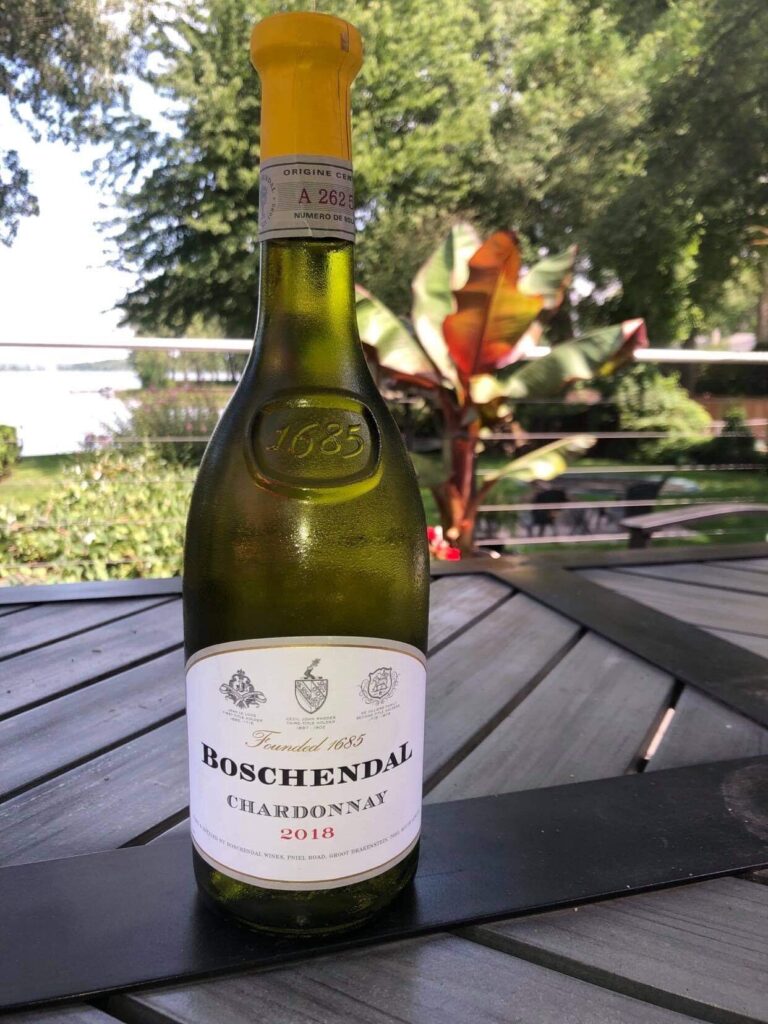
For those fans out there of buttery oakey California Chardonnays, how about exploring a new wine region? South Africa has similar climate and growing conditions to California. They make very flavorful, full-bodied, oak (depending on the producer), tropical fruit wines. This producer Boschendal Estates was founded in 1685. This Boschendal Chardonnay 2018 is dry, full bodied, medium acid, flavors of butter, caramel, Golden Apple, vanilla, pineapple, banana, cloves and ripe pear. Served chilled with grilled chicken, roasted pork loin or potatoes with fresh herbs. It’s economical and delicious
Mulderbosch Stellenbosch Sauvignon Blanc
Stellenbosch is located in the Wester Cape wine region of South Africa. The Western Cape is has the majority of wineries in this region. The two most well known regions are Stellenbosch and Paarl. Stellenbosch is 25 miles east of Cape Town. The region is very mountainous creating shelter for the hilly vineyard areas as well as many microclimates. The region is hot and dry but has a cooling influence from the surrounding oceans and bays. The soils are mainly granite and sandstone combined with a high clay content means that while they are free draining they have excellent water-retention properties. The above all create an ideal grape growing environment. Mulderbosch is located in Stellenbosch, in the Coastal Region, Western Cape of South Africa. Mulderbosch Vineyards was founded in 1989 by Larry Jacobs. He had a vision to turn the “dirty little farm” as local called it into an award winning winery. He succeeded tenfold because since it’s inception it has been winning awards ever since. As an innovator, Mulderbosch was the first producer in the country to successfully create a barrel-fermented style of Chenin Blanc. They focus on producing quality wines that respect and preserve age-old winemaking traditions while balancing modernization in the winery. They produce a dry and off-dry Sauvignon Blanc, a barrel-fermented Chenin Blanc, a Rosé Cabernet Franc, Faithful Hound Bordeaux Blend, Chardonnay as well as both a rosé and white sparkling wines. The wine is a lovely pale yellow color. The aromas have medium intensity of bright lemon, lime, asparagus, straw, peach, saline, flint, gooseberry, guava and pepper. The palate is dry, medium body, medium+ intensity and finish. The flavors of guava, pineapple, green fig, pepper, straw, bright lemon, lime, asparagus, straw, peach, saline, flint, gooseberry have such a crisp yet creamy mouthfeel. Pair with goat cheese, feta cheese and fig salad, oysters or a grilled chicken and spinach salad.
Columbia Crest H3 Cabernet Sauvignon

Columbia Crest Vineyards is located in Columbia Valley, Washington State. The winery was established in 1983. The winery is dedicated to creating high quality wines that are a true reflection of the varietal, terroir while making them approachable and food friendly. Columbia Crest’s 2,500 acres of estate vineyards are some of the best in Washington. With only six to eight inches of annual rainfall, water is supplied by drip irrigation. The grapes are fermented for 6 to 10 days on skins. The wines are aged as follows – 90% for 12 months in new and older French and American oak barrels and the remaining 10% aged in stainless steel tanks. This wine is a blend of 85% Cabernet, 14 % Merlot and 1% Other Red Varietals. The wine is a deep ruby color with aromas of black cherry, blackberries, currants, vanilla, mint and cocoa. The wine is full bodied with medium acidity and tannins. It has flavors black cherry, blackberries, currants, vanilla, earth, cedar, bramble, mint, cocoa, minerals, thyme, barnyard and cloves. Perfect with Rib eye steak, beef stew, grilled swordfish, pasta with béarnaise sauce, bison burger, chocolate truffles.
Offshoot Modra Frankinja
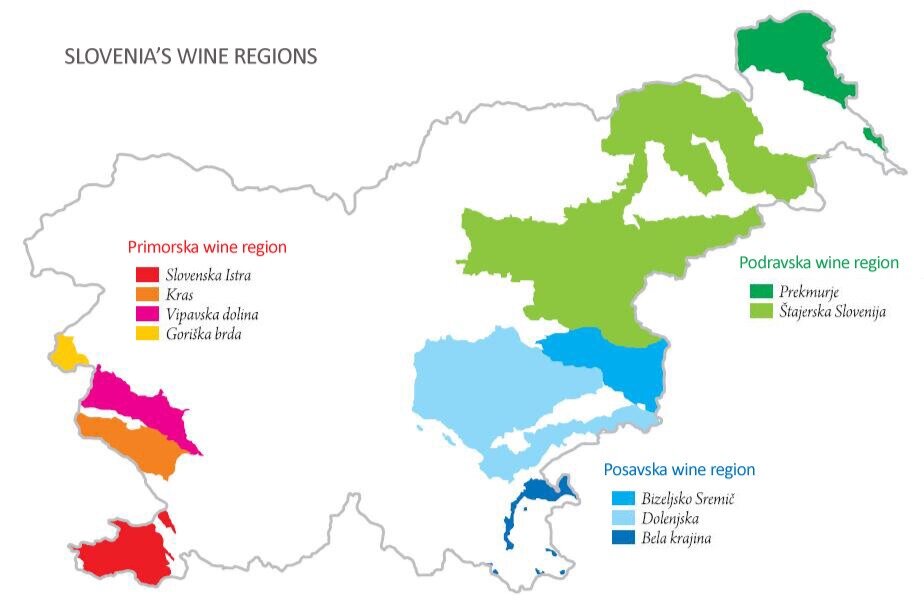
Slovenia winemaking dates back to before Roman times, before vines were planted in Western Europe (France, Spain and Germany) by the Celts and Illyrian tribes. This particular wine is from the Štajerska, Podravska region located in the northern most part of Slovenia, eastern borders of Croatia and Hungary. There are 3 main wine regions in Slovenia: Podravska, Posavska and Primorska. Podravska is the largest of the 3 regions and is known for high quality, elegant wines. This region produces approximately 97% dry white wines. It is also known for producing world class ice wines and sparkling wines. This region is broken down into 2 subregions, Prekmurje and Štajerska which are then further broken down into 7 smaller districts. The Podravska varietals have a strong German influence, predominantly growing Riesling (a.k.a. aški rizling and Renski rizling), Traminec (Gewurztraminer), Sauvignon and Šipon. The region is very steep and hilly (manual hand harvesting a necessity) and opoka soil create a rich minerality in the wines. Over the last few decades wineries and winemakers have been investing in modernization of winemaking facilities, renovated tasting facilities and traded quantity for high quality wines. Heaps Good Wine Company is all about respecting the land, sustainability and making lower yields that reflect the varietal, to create beautifully crafted, quality wines. HGW Company makes Pinot Noir (Modra Pinot), Blaufränkisch (Modra Frankinja), Chardonnay, Pinot Gris (Sivi Pinot), This particular wine, Offshoot Modra Frankinja is a Pétillant Naturel, made in the Méthode Ancestrale, which is an unfiltered, natural sparkling wine. The grape Blaufränkisch is a cross of Gouais Blanc and Blue Zimmertraube. This wine has aromas of blackberry, black cherry, bread dough and yeast. The palate is dry, medium acid and alcohol, low tannins and flavors of blackberry, black cherry, currant, bramble, allspice, yeast, bread dough, and pepper. This wine pairs beautifully with grilled lamb chops, grilled sausages, potato dumplings, beef goulash with buttered noodles and chicken paprika. My video review is available on Instagram: Offshoot Modra Frankinja Image Courtesy of Think Slovenia