
Ktima Malagousia
𝕍𝕚𝕤𝕚𝕠𝕟 𝕚𝕤 𝕒 𝕡𝕚𝕔𝕥𝕦𝕣𝕖 𝕠𝕗 𝕥𝕙𝕖 𝕗𝕦𝕥𝕦𝕣𝕖 𝕥𝕙𝕒𝕥 𝕡𝕣𝕠𝕕𝕦𝕔𝕖𝕤 𝕡𝕒𝕤𝕤𝕚𝕠𝕟 – 𝔹𝕚𝕝𝕝 ℍ𝕪𝕓𝕣𝕝𝕤 Thanks to the inventiveness and creativity of Vangelis Gerovassiliou of Ktima Gerovassiliou winery, he revived the nearly extinct Malagousia by planting vines on the slopes of Epanomi, Greece in 1981. He continues to study, research and experiment with both indigenous Greek and international varieties, always delivering consistently high quality wines of traditional and distinct characteristics of the terroir. This single vineyard 20 year old vines are surrounded on three sides by the sea with soils rich in sand rich in sea deposits, clay and calcareous rocks. After a short maceration on the skins to extract aromas and flavors, followed by vilification is done mostly in stainless steel tanks with 20% in French oak barrels. The wine undergoes 2 months of lees ageing with regular bâtonnage to add texture and body. 𝕂𝕥𝕚𝕞𝕒 𝔾𝕖𝕣𝕠𝕧𝕒𝕤𝕤𝕚𝕝𝕚𝕠𝕦 𝕄𝕒𝕝𝕒𝕘𝕠𝕦𝕤𝕚𝕒 𝟚𝟘𝟚𝟙 Pours in the glass a bright golden color. An aromatic swirl gives way to exotic ripe mango, guava, pear and citrus fruits along with anise, wild herbs and juniper berries. Bone-dry beauty with prominent lemon peel, spicy guava, chalky minerality, honeysuckle and a vibrantly fresh acidity. This medium bodied wine has so much energy, verve and wildness – if you love Chardonnay I suggest you give Malagousia a try. You’re welcome. Paired with a classic Greek dish “kotopoulo skorthat” which translates to garlic lemon roasted chicken. I took it to another level and tray baked it all with potatoes which all developed a nice caramelization, added kalamata olives and capers at the end. 💥
Pago Casa Gran Casa Benasal Elegant
Our motto is: “Work with Nature, not against her“. The wine’s name is a big giveaway on what to expect from this GSM Rhone style from Valencia, Spain – Gorgeous Sexy Moorish. This wine, a line called Casa Benasal from Pago Casa Gran, is named after the cellar on the estate which dates back 300 years. Manuela Galbis, the founder’s mother, reinitiated wine production at Pago Casa Gran during the 1960’s. They follow the Delicate system, which ensures latest organic practices within a sustainable ecosystem and rejects any practice that will take away from their biodiversity. have created a sustainable ecosystem throughout their 110 acres in order to be conscientious of the environment, provide balance while producing quality wines. Fermented in equal parts of concrete and oak, a blend of Syrah, Monastrell and Garnacha tintorera. Each variety is fermented separatedly with indigenous yeasts and macerated for different periods. Aged partially in 225L French oak barrels for 12 months and the other in concrete. Pago Casa Gran Casa Benasal Elegant 2016 Note: The butterfly on the label pays tribute to this insect and is a reminder that its the first insect to disappear with the use of pesticides. A very fresh, perfumed nose red berried forward nose with touch of caramel, mentol and chocolate. The palate has polished tannins that carry the flavors of fresh red plum, black cherry and raspberry, vanilla, leather, toasted licorice and toffee. Well integrated oak and bright acidity. A compelling medium bodied wine that deserves attention.
Kup Besibir Yerde
From a multi generational family winery, Küp Şarap produces a variety of wines from indigenous and international varieties. Located in the subregion of Bekilli, Denizli province in the inner Aegean region of Turkey. This blend of Cabernet Sauvignon, Boğazkere, Öküzgözü, Merlot and Shiraz. Kup Besibir Yerde 2017 For those who have never tasted Turkish varietals, Öküzgözü is equivalent to Merlot from an international grape perspective – medium bodied, bright red fruit, warm spice. Boğazkere is Turkey’s indigenous version of Cabernet Sauvignon. You will often find these varietals blended together but also as a single varietal. Deep ruby color with very dominant red fruit, wild herbs, hints of violet, vanilla, cedar and damp earth. The mouth is full of juicy cherry, pomegranate, raspberry, black plum, blackberry, clove, cardamom, mint, cocoa and thyme framed by the vibrant acidity and soft plush tannins. This is a great medium bodied wine to enjoy Al fresco or with Aleppo pepper spiced grilled chicken.
Candialle Tuscan Delight
I am going to let you in on a secret. When it comes to IGT wines of Italy, there are absolutely fabulous gems to be found. IGT, in Tuscany’s case, provides the freedom of experimentation to passionate winemakers to create something unique and beautiful. The romance of Chianti travels from the landscape, to the people, to the wine and the food that accompanies it. Candialle is a passion project of husband and wine Josephin and Jarkko who’s hearts were captured in 2002 in the picturesque town of Panzano. 11.5 hectares of their 35 hectare property is decated to viticulture. The altitudes range from 300-360 meters facing south-west. Inspired by the Burgundian approach, they vinify wines “microvinification “- by parcel. This Cabernet France is from a teeny tiny plot, about a QUARTER of a hectare. Vinified in stainless steel tanks followed by 15 months in barriques. 900 Bottles produced Candialle Cabernet Franc Toscana IGT 2014 Glistening rich ruby with a slight violet hue at the rim. Perfumed aromas of fruit on the nose from cherry, blackberry, raspberry combined with earthy vegetal, smoke, leather, spice and violet. The mouthfeel is full and harmonious. Velvety smooth tannins, creamy mouthfeel with rich berried fruits, minerals, smokey tobacco and tomato leaf finishes on mint the a hum of red chili flakes which I adore in Cabernet Franc. It has great structure and length that is sweet, savory, delicious. Beef cheeks braised in red wines and mushrooms or a classic favorite of mine, Chicken Cacciatore (Hunter’s style chicken) with creamy polenta.
Dr Konstantin Franck Cabernet Franc
Konstantin Frank began his wine journey in Ukraine where he graduated with a Ph.D. in Viticulture in Odessa, Ukraine, whereby he becasme a expert in Eastern Europe. He decided to pursue a new adventure in the Finger Lakes, New York where he was the first to plant vinifera vines in Eastern USA back in the 1957, known as the Vinifera Revolution as it changed winemaking in New York and area forever. He proved that vinifera vines could be grown successfully, sustainably. His estate has 11 varieties planted on Keuka Lake on 70 acres, oldest being Riesling, Pinot Noir and Chardonnay. Cool temps, lake effect, soils with high levels of shale, silt loam provide the high acidity and elegance to the wines. Elevations range from 950 ft to 1200 ft (Keuka Lake is at 710 ft above sea level). These vines were planted in 1974, aged for 16 months in French oak barrels. Dr. Konstantin Frank Cabernet Franc 2019 This dark ruby colored Cabernet Franc opens with an earthy, red plum and red currant bouquet with a hint of red raspberry, bell pepper, cedar and dried herbs. The palate is juicy and generous, lifted by red currant, chocolate, wild fennel and subtle violet, prune, roasted red pepper, clove and licorice with notes of gentle oak and mild graphite. The firm tannins are polished and balanced with the vibrant acidity. Serve with grilled warm spice pork chops, pan seared duck breast with a cranberry compote or roasted eggplant and tomato pie.
Angela Vineyards Pinot Noir
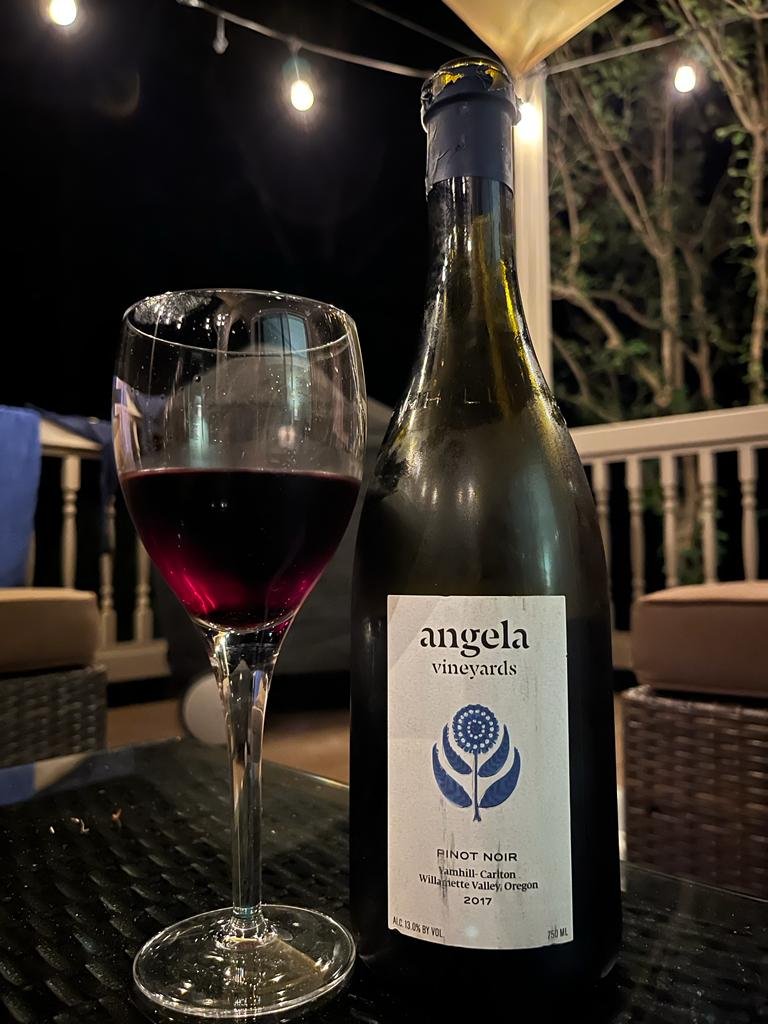
Doesn’t every good story, especially when it comes to wine, start with good friends and good wine???? Similar to the winemakers from Burgundy in the early 70s, they saw the potential and similarities to their beloved Burgundy. 𝒜𝓃𝑔𝑒𝓁𝒶 𝒱𝒾𝓃𝑒𝓎𝒶𝓇𝒹𝓈 𝒫𝒾𝓃𝑜𝓉 𝒩𝑜𝒾𝓇 𝒴𝒶𝓂𝒽𝒾𝓁𝓁-𝒞𝒶𝓇𝓁𝓉𝑜𝓃 𝒲𝒾𝓁𝓁𝒶𝓂𝑒𝓉𝓉𝑒 𝒱𝒶𝓁𝓁𝑒𝓎 𝟤𝟢𝟣𝟩 Friends Antony Beck (of South Africa’s famed family) and Ken Wright were sitting around chatting one night fifteen years ago, came up with the idea to establish an estate in Oregon. Named in honor of Antony’s wife they wanted to create a warm, welcoming environment for friends and family to gather and enjoy beautiful wines of Willamette Valley. They create an experience, memories and communal conversations. Organically and sustainability in the vineyard and winery is part of that communal responsability. Their winemaker, Alan Debeaulieu was born and raised in Loire valley, worked for in both Burgundy and Oregon (Domaine Drouhain) makes a stylistic lovely Pinot Noir. The grapes are harvested from 2 vineyards in Yamhill-Carlton AVA and aged for 12 months, 30% in new French oak barrels. Crisp red berries, warm cocoa and chai spice. Super yummy, super fresh, long lip smacking acidity goodness. It’s ultra fresh, pure and lip smacking delicious. A beautifully balanced, fruit-forward, and bright Pinot Noir that lets the vintage speak for itself.
Fabre Montmayou Gran Reserva 2018
To understand Malbec, you need to discover Argentina. That is exactly what Hervé Joyaux Fabre experienced when he first arrived in Argentina in the 1990s. From a long line of Bordeaux negotiants, he wanted to explore new territory and opportunities. When he saw the abandoned high elevation, old vine vineyards that needed love, care and revitalizing, he jumped at the chance to make his own style of wine. Bordeaux inspired Argentinian wine. From small beginnings of 37 acres grew to 217 in Mendoza and 122 in Patagonia over the next few decades. The wines are all estate grown, old vine, farmed traditionally without any chemicals or herbicides, fermented with indigenous yeasts. This Gran Reserva is from Vistalba, one of the highest altitude areas of Lujan de Cuyo at 1,050 meters. These vines were planted over 60 years ago by European settles who saw the potential of its altitude and silty soils. Aged for 12 months in 60% French oak. Fabre Montmayou Gran Reserva Malbec 2018 Deep ruby color with violet undertones. Ripe fruit aromas of black currant, blackberry, blueberry jam, black cherry, vanilla, clove, chocolate, graphite, savory coconut, fresh tobacco leaves and smoke. Generous on the palate with fresh acidity and rich ripe black fruit flavors with hints of violet and spice. Firm tannins stand at attention are balanced with the generous ripe fruit flavors with a concentrated spice black fruit finish. A silky full bodied wine that’s poised, lovely. Bison burgers? Yes. Savory sage and thyme rubbed spatchcocked chicken? Yes. Aged cheddar and gouda.
Terrazzi Alti Riserva Valtellina
Enthusiasm is the foundation of everything. However, to this you have to add your mind. Many people see the mountains as a symbol of stability, a thing that stands still. For me, however, it is in constant movement, in a continuous search for balance. The terracing, when you think about it, is like that. Every staircase, every low wall has a reason, they are man’s journey with nature.” – Siro Buzzetti Terrazzo Alti is small, artisanal estate lovingly cared for by winemaker Siro Buzzetti tucked in the foothills of the Alps in Valtellina. These crazy steep terraced vineyards in the sub-zone of Sassella at 600 meters altitude. It takes a tenacious nature, desire and passion to make wines from this region. Siro represents nature and in that representation he makes small quantitties of wine, less than 1000 bottles. This 100% Chiavennasca (aka Nebbiolo) is fermented with indigenous yeasts, aged for about 36 months in wood casks and the remaining part in bottle. Terrazzi Alti Riserva Valtellina Superiore Sassella 2016 Bright garnet with a ruby core with feminine aromas of dried rose petal and violet, wild raspberry, balsamic cherries, blood orange zest, a touch of anise, smoke, wild herbs and leather. Just delightful and pure on the palate. The clear minerality is evident from the soil. The excitement in the first sip, so very elegant and fine with its silky tannins flirting your senses. The fresh fruit leaves its mark lingeringly, the proud Nebbiolo showing its true nature. This wine is so stylishly regal, harmonious balanced with the lively acidity. Paired with homemade pasta and pumpkin ragu. Wowza!
Champagne Cazals Power
I am not a myth — Marlene Dietrich A champion of change, a high-spirited visionary and passionate about Champagne. Its in her blood and spirit, Delphine Cazals runs Champagne Cazals and is also a member of LA TRANSMISSION Femmes en Champagne. They are connected by their passion for the terroir, the history, and above all, love of champagne. Delphine Cazals is the third generation member to lead Champagne Claude Cazals. Her house is attached to the winery and her mother lives in the château inside the Clos de Cazals. The estate was founded in 1897 by Ernest Cazals, a cooper from the south of France. He was Catalan, hence the name, same as the renowned cellist, Pablo Casals (pronounce the “s”). He moved to Champagne where he met his wife, and together they founded their maison in Le Mesnil-sur-Oger. Since then, three generations of wine-growers – including Delphine’s father Claude Cazals, who invented the gyropalette in 1969 – have followed each other at the head of the winery. Their 10 hectares of Chardonnay vineyards are in Côte des Blancs villages – Le Mesnil-Sur-Oger, Oger, Vertus and Villeneuve. This particular Clos was purchased in 1940s from the Nobel Peace Prize winner and politician Léon Bourgeois. Delphine noticed that Clos Cazals, a 3.7 hectare clos as well as the largest in Oger, was consistently creating their best champagne. She discovered that the Clos terroir was one degree higher than the other parcels. On her own, no family support, she petitioned the Comtie de Champagne to have their vineyard designated as a clos. In 1995 she was granted the right to name it a Clos, a very proud moment in her career. To put it into perspective, there are only 39 in all of Champagne. The Clos Cazals is divided in two parts – the oldest vines are in Clos Cazals and the younger 25 year old vines are in the parcels that surround the old chapel, hence the name Chapelle du Clos, hence the names of the two cuvées that this parcel produces. This Blanc de Blancs is mostly fermented in in thermo-regulated stainless steel vats with 10% oak barrels. The Brut dosage is 6g/liter and aged for 8 years before release (60 months sur lie). ℂ𝕙𝕒𝕞𝕡𝕒𝕘𝕟𝕖 ℂ𝕝𝕒𝕦𝕕𝕖 ℂ𝕒𝕫𝕒𝕝𝕤, “𝕃𝕒 ℂ𝕙𝕒𝕡𝕖𝕝𝕝𝕖 𝕕𝕦 ℂ𝕝𝕠𝕤” 𝔾𝕣𝕒𝕟𝕕 ℂ𝕣𝕦 𝕄𝕚𝕝𝕝é𝕤𝕚𝕞𝕖 𝟚𝟘𝟘𝟡 You are so golden in your beauty with DELICATE FINE Active bubbles twinkling like tiny stars in the glass. At first the elegant aromas were bright lemon marmalade, tangerine peel, vanilla crème de pâte, dried peach and bruised apple, but with some time in the glass it evolved to an explosion of savory aromatics – smokey mushrooms, crushed anise seeds, salted caramel, buttery brioche and dried white flowers. Lush is the best word I can think to describe this Blanc de Blancs. It has a central density yet is lively on its feet. The flavors evolve from yellow apple and yellow pear, saline minerality, crushed chalk, lemon curd, tangy marmalade, nougat to licorice, ginger and roasted hazelnuts. The palate is tight and compact, driven by these flavors and framed by a subtle salinity. The finish refreshing and tangy. The power is evident in this beauty – Marlena Dietrich comes to mind – her strength, her gumption and elegance – this lady is a power player. If you haven’t discovered this beauty I would highly recommend you do.
Bocanada Cabernet Franc
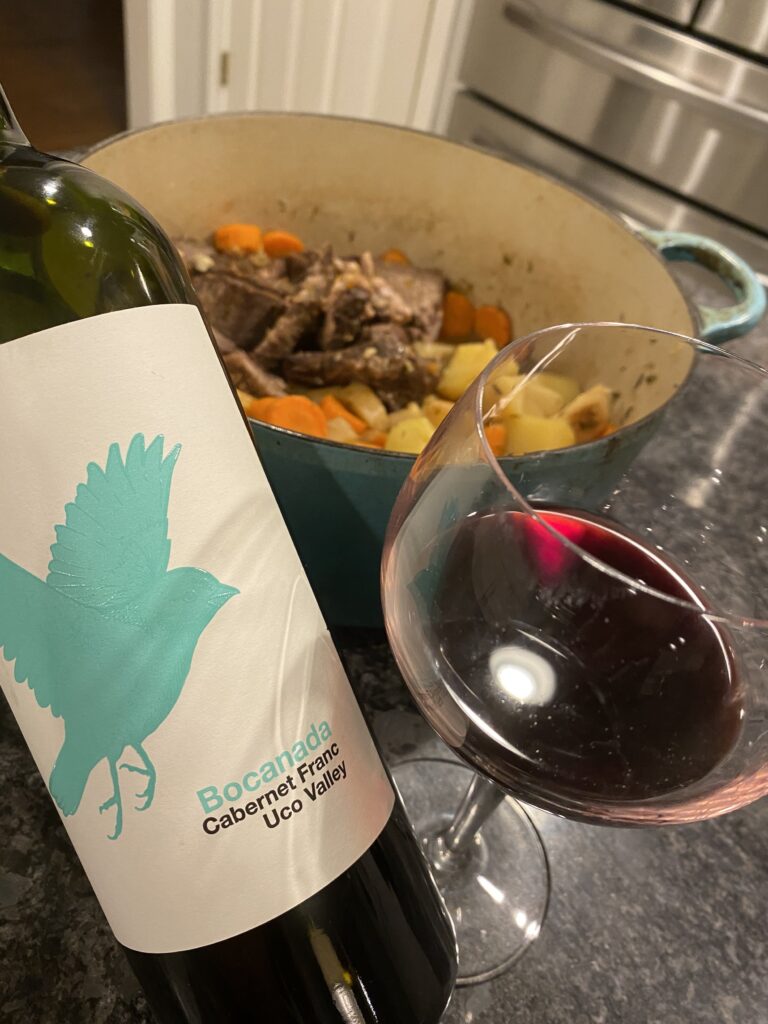
I fell in love with Cabernet Franc while spending time in the Loire Valley years ago. If you have tasted a Chinon or Saumur-Champigny, bright red fruit, savory herbs, leaner style comes to mind. This example from Argentina is the opposite of that – it’s richer, fuller bodied, higher alcohol and tannins due to its climatic and soil conditions as well as oak ageing. Freedom of expression, low intervention enology, ones that break the rules, terroir driven wines make my blood sing. Where can I find such a thing? At the foothills of the Andes Mountains you will find Bocanada Wines. “From an unexpected madness, we found a breath of inspiration.” Argentinian winemakers are knows as experimental, modern thinking and think outside the box. Leandro Boullaude from Uco Valley is a prime example. A 5th generation winemaker of the famed Citon family who are amongst the pioneers of Mendoza viticulture, was trained both home turf Mendoza and abroad in Spain. He is a garagiste of the truest form. His wines embody everything that he represents, his soul. High trellis vines rocky granite and calcareous soils at 1,300 meters altitude from Gualtallary within Tupungato of northern Uco Valley, Mendoza. These are steep slopes my friends at the foothills of the Andes Mountains. Gualtallary produces distinctive wines not only from Mendoza’s signature grape variety of Malbec, but also from Cabernet Franc, Pinot Noir, Chardonnay and Sauvignon Blanc.Hand harvest goes without saying for these wines. Cabernet Franc thrives in Argentina’s cooler high-altitude vineyards across the country, especially along the Andes. Fermented with indigenous yeasts in concrete vats followed by 12 months ageing in 1 year old French oak barrels. 𝐵𝑜𝒸𝒶𝓃𝒶𝒹𝒶 𝒞𝒶𝒷𝑒𝓇𝓃𝑒𝓉 𝐹𝓇𝒶𝓃𝒸 𝟤𝟢𝟣𝟪 Rich ruby color with bright aromas perfectly ripe red and black fruit, crushed gravel and delicate oak. A generous mouthfeel of velvet tannins balanced with bright acidity. The palate has the ultimate dusty red cherry, figs, blackberry, savory milk chocolate, baking spice and earthy minerality with an undertone of the signature herbal Cabernet Franc character with soft and exact elegance. Pair with a rich beef and root vegetable stew.