
Sparkling Wine Trends: Bubbly is Better
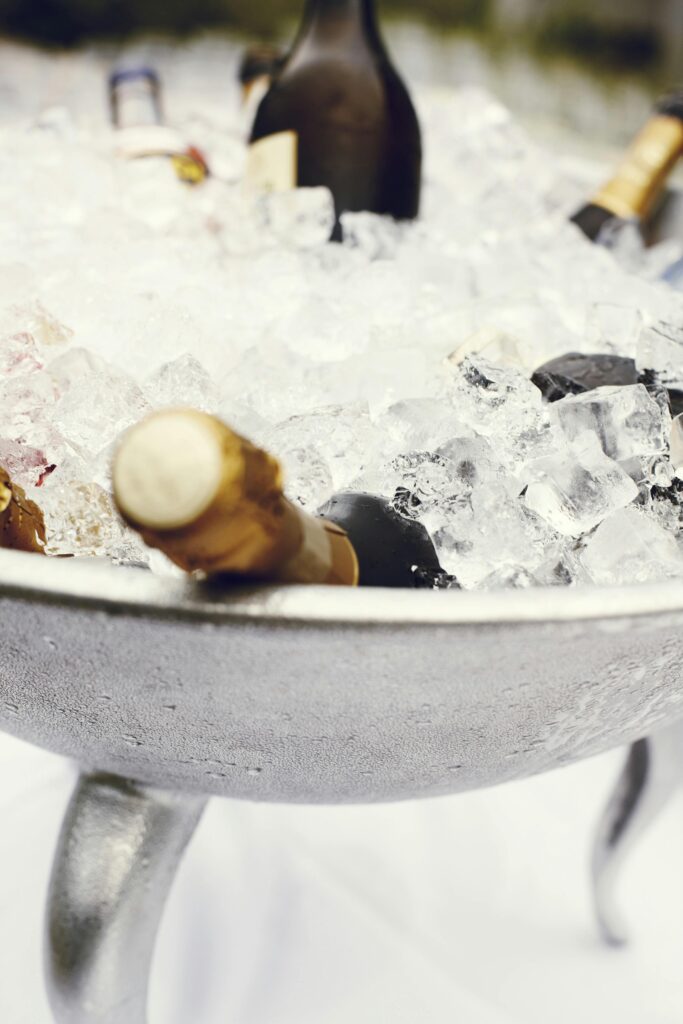
The world of sparkling wine is effervescent with excitement as this beloved beverage continues to gain popularity. With its refreshing flavors, versatility, and festive appeal, sparkling wine is becoming a staple in many households, gracing both special occasions and everyday moments. What’s Driving the Sparkling Wine Boom? Several key factors are contributing to the surge in sparkling wine popularity: Rise of Sparkling Rosé and Alternative Bubbles Sparkling rosé is leading the charge, captivating consumers with its delicate pink hues and enticing fruity aromas. In 2022, sales of sparkling rosé skyrocketed by 10%, solidifying its position as the fastest-growing sparkling wine category in the United States. Adventurous wine enthusiasts are also venturing beyond the familiar realms of Champagne and Prosecco, seeking out alternative sparkling wines that offer unique expressions and diverse flavor profiles. Cava, Lambrusco, and sparkling wines from the New World are gaining traction, showcasing the breadth and depth of the sparkling wine universe. Affordability and Culinary Versatility The sparkling wine scene is becoming increasingly accessible, with a wider range of affordable options available. Advances in winemaking technology and the expanding global production of sparkling wines have contributed to this trend, making bubbly more attainable for everyday enjoyment. Culinary pairings are also evolving, as sparkling wine sheds its traditional association with appetizers and desserts. Its versatility is being recognized, leading to pairings with seafood, poultry, pasta, and even pizza, demonstrating the harmonious balance between sparkling wine’s effervescence and a diverse array of cuisines. 2023 Highlights: A Sparkling Wine Extravaganza The sparkling wine landscape is brimming with exciting developments in 2023: Global Growth: The IWSR Drinks Market Analysis predicts a surge of over 15% in sparkling wine volume from 2021 to 2026, with the US leading the charge as the most valuable market. Increased Frequency: A Wine Intelligence study reveals a significant rise in monthly sparkling wine consumption in the US, from 56% in 2019 to 72% in 2022, indicating a transition from special occasion indulgence to everyday enjoyment. Alternative Bubble Boom: While Champagne remains the reigning monarch, alternative sparkling wines, such as Prosecco, Cava, English sparkling wine, and New York State sparkling wines, are gaining momentum, captivating consumers with their unique expressions and diverse flavor profiles. Sweet Bubbly Resurgence: Sweeter sparkling wines, such as Moscato d’Asti and Lambrusco, are finding favor, especially among younger consumers and those new to the sparkling wine world. Sparkling Wine Cocktails à la Mode: Mixologists are embracing sparkling wine in their creations, resulting in refreshing and festive libations like the Aperol Spritz and the Mimosa. Sustainability in Focus: Consumers are increasingly prioritizing environmentally conscious choices, leading to a demand for sparkling wines made from sustainable and organic grapes. Embracing the Sparkling Wine Trend Joining the sparkling wine revolution is simple: Kickstart your meal with a sparkling aperitif. A flute of bubbly sets the perfect tone for a delightful culinary adventure. Explore food pairings. Sparkling wine’s versatility allows for culinary creativity. Pair it with seafood, poultry, pasta, or even pizza to discover unexpected delights. Savor sparkling wine on its own. Let the flavors and aromas dance on your palate as you unwind with a glass of bubbly. A Sparkling Future The sparkling wine scene is effervescent with energy and poised for continued growth. Consumers are embracing its versatility, affordability, and culinary compatibility, making bubbly an integral part of their lifestyles. Raise a glass and celebrate the sparkling wine revolution!
Domaine de la Borde Canon
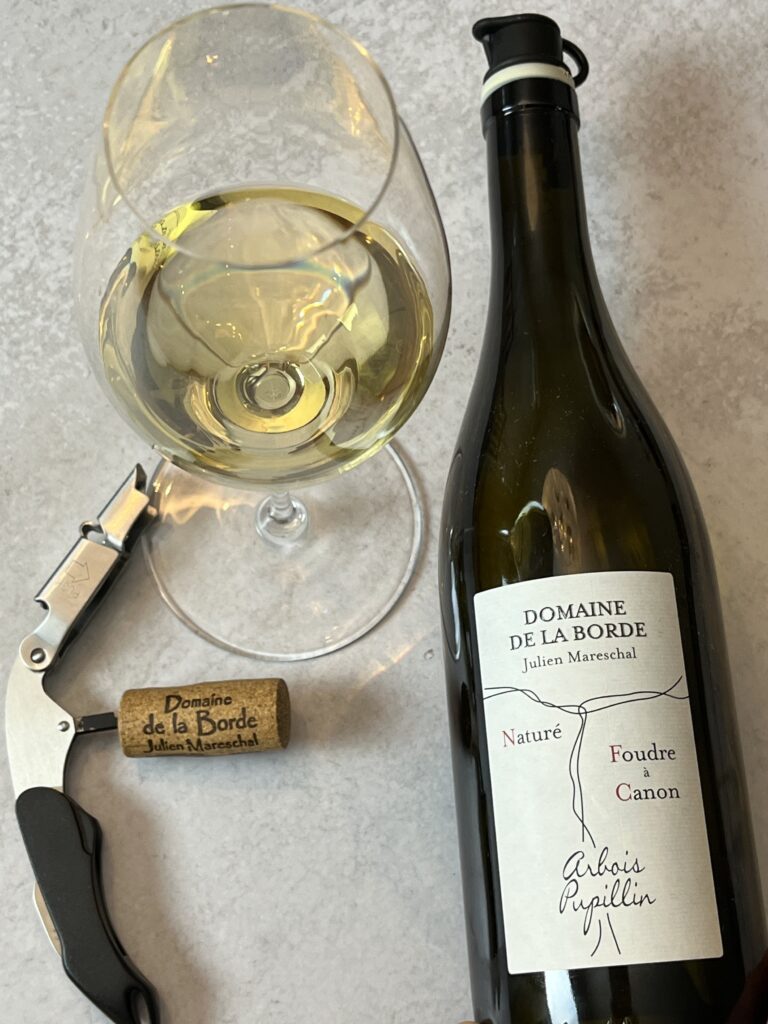
Un vrai canon de Jura – Domaine de la Borde Just Jura – why have the wines become so cultish? Indigenous grapes? Small production? Oxidative ouillé styles? Biodynamic and organic ? Yes to all of the above? Or perhaps it’s just so damn good 😊 Great quality to value being found here , it’s a stones throw easy of Burgundy, shares limestone soils, Julien Mareschal’s five hectares are located in Arbois-Pupillin, a sub appellation in southern Arbois, Jura. Native to the area and a uber passionate about Jura’s indigenous grapes. His vines range upwards to 77 years old. Crafted from 100% Savagnin grapes whispering tales of biodynamic sun-soaked grey and blue marl vineyards, this wine is a conversation starter in a glass. Partially destemmed (50%) and fermented with natural yeasts in foudre, then aged for 20 months on the lees. Domaine de la Borde Foudre à Canon 2019 Pouring reveals a sun-kissed golden delight. A swirl reveals a kaleidoscope of aromas. Citrus zings first – think grapefruit’s tartness and orange blossom playful sweetness. Earth emerges with damp forest floor and honey, sun dried apricot, jasmine, butter, melon and cheese notes intertwine, flinty smoke and gorgeous oxidative touch of walnuts, caramel and smoke. The initial sip surprises with its vibrant acidity, a razor-sharp cut through the expected richness. Savagnin’s grip is evident, a tannic whisper that begs for food but dances solo with grace. Yet, there’s undeniable generosity – a creamy texture washes over the tongue, carrying flavors of ripe citrus, honeyed apricot, apricot pith, buttery brioche, and nutty almond and beesewax. The mineralit and ginger lingers on the finish, a salty kiss urging another sip. Just an awakening of the senses, so alluring. Get lost in the magic of this captivating Savagnin with a glorious fondue, roast chicken as we did or a harmonious risotto.
Domaine Chantemerle Crémant de Loire C sur C Certain
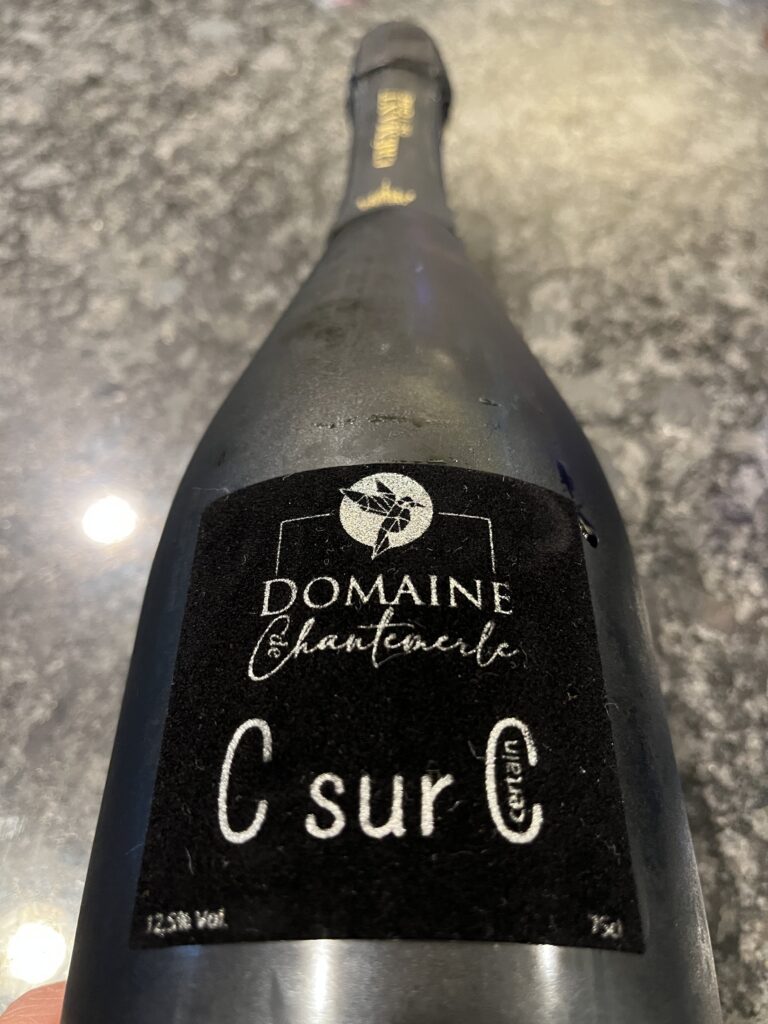
Domaine Chantemerle Crémant de Loire C sur C Certain A memento from my visit to Domaine Chantemerle in July’23, it was time to properly enjoy this lovely bottle… Made from the regional style for Crémant, a blend 60% Chenin Blanc & 40% Pinot Noir, aged in the traditional method aged for 36 months sur lie. Pours into the glass a glistening pale straw color with a fine, persistent mousse. Bright aromas of lemon, quince, tart green apple, white peach, cherry are complemented by notes of chamomile, toast, honey, and almond. The first sip is fresh and lively, with a creamy texture and a zippy acidity and mineraltiy showing its telltale Chenin character. The flavors of citrus and stone fruit are joined by hints of toast and spice. The finish is very delicate and gentle, long finish. A crowd pleasing wine for apéro paired with shrimp toasts, fried chicken bites with aioli or herbed cucumber salad. A delightful QPR that you will want in your cellar. Read all about my visit in the detailed article: Domaine De Chantemerle C sur C Notice the label, Edwidge designed it herself because it was her and her brother that revived Crémant de Loire and it needed the royal treatment. The sparkling sold out immediately and as a result they named it C sur C“c’est sur, c’est certain” that means that we continue to offer our customers. The queen of fine bubbles of the Loire deserved her velvet dress hence the labels texture and design..
Ochota Barrels From the North Mourvèdre
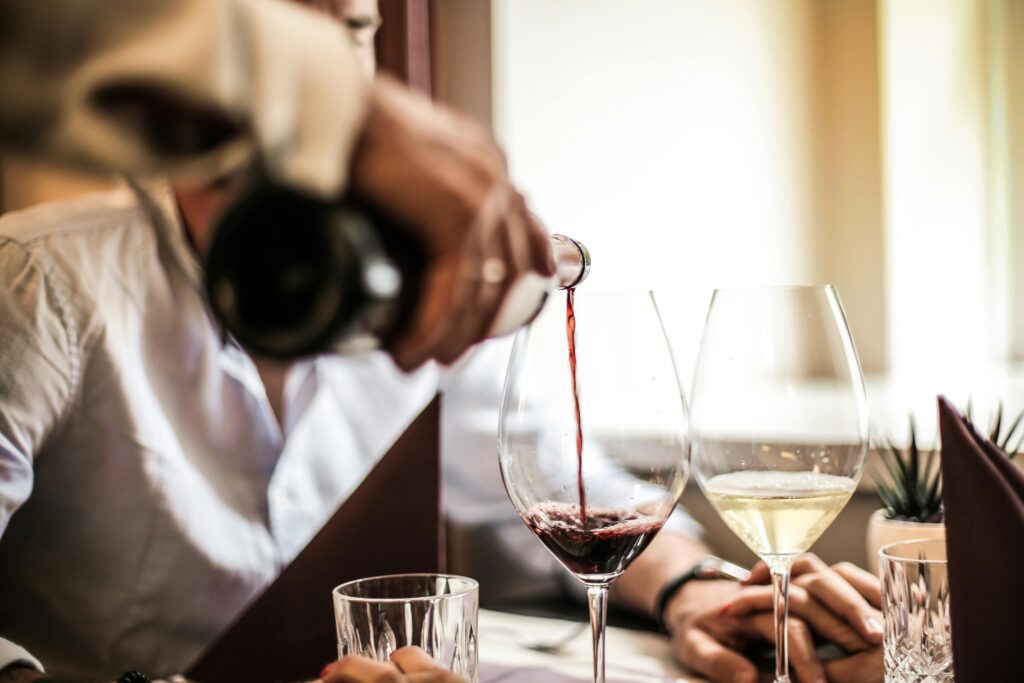
“There’s a rebel lying deep in my soul.- Clint Eastwood Taras Ochota was a punk rock musician long before becoming a winemaker. He named all his cuvées after inspirational punk songs/ references. His mantra was low intervention wines, go against the grain of big burly Barossa style wines and showcase the finest and vibrant fruit character of the grapes. “My idea is to embrace that natural acidity, which is basically from picking early. “ With that you get lower alcohol than your typical Australian wines. Wines that have energy. Taking a holistic approach to making wines that have an energy, that have a vibrancy. Wines that ‘pop’ when you put them in your mouth!” Unfortunately Taras passed away last October at the young age of 49 after battling an auto immune disease. He truly was a rockstar winemaker to the core. I was fortunate enough to have found bottle 1170 of 1282. This wine comes from vines recorded to be the second oldest in the world, planted in 1869, the grapes are hand-picked and fermented in whole clusters, giving it a much lighter profile in color, tannins and style, except the concentration is evident, as you can smell the aroma as well, pouring it in the glass. Ochota Barrels, “From the North” Mourvèdre – 2020 Barossa Valley, Southern Australia It has a wild side, it flexes it’s sexy muscles as you pour it into the glass. Iridescent amethyst ruby color with perfumed blueberry, black plum, black cherry, blackberry jelly, smoked meat, violet, vanilla and cinnamon. Silky tannins meet lively acidity that further brightens the fresh fruit, licorice, tobacco, leather into a hum of black pepper and clove finish. It’s fresh, savory yet tensely ready to grey you palate likes stallion out of the gate, ride along with this beauty and you’ll never look back. I raised a glass to Taras and the many beautiful souls that have touched our lives.
Kelley Fox Albarino
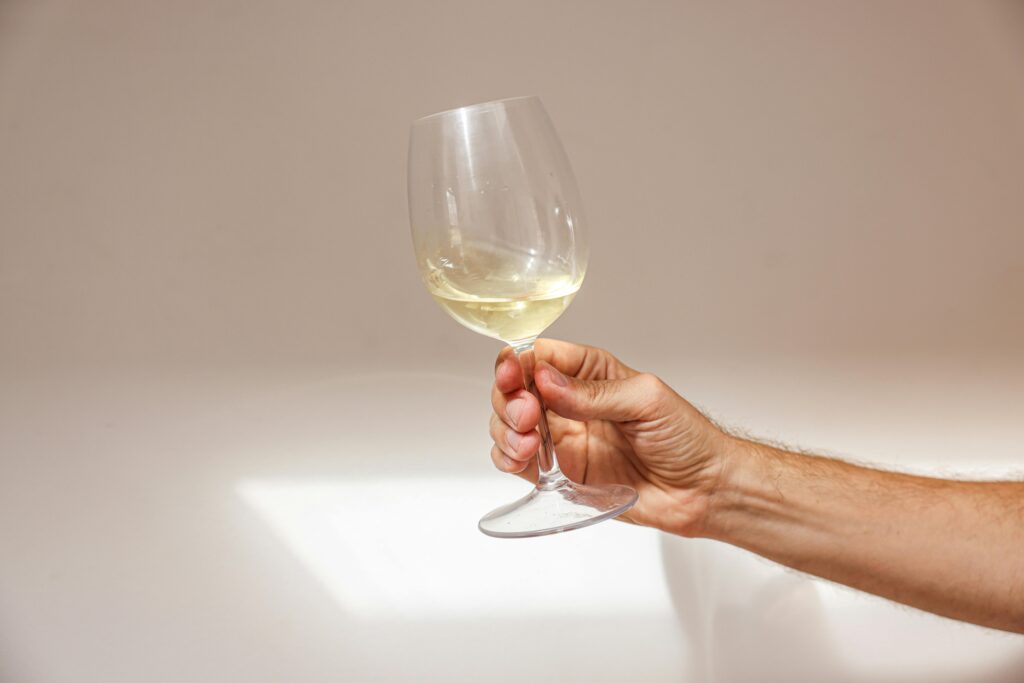
Come away with me and I will write you a song -Norah Jones Prepare to be carried away with an Oregan Albariño from artisanal winemaker Kelley Fox. Her wines always reflect equally the land, the grape, the vintage and everything that encompasses that bottle. She follows her instinct each and every year and flows with what’s given. Using partial whole bunch fermentation for her parcels for maximum fruit expression. . One of the very few plots of Albariño in Oregon Kelley lives to push the limits through her experimental winemaking and always succeeds tenfold. Kelley Fox Albarino 2022 Pours into the glass a light yellow hue. Fresh sea breeze, the ripest nectarine and peaches you can imagine, pink grapefruit and apple blossom, acid minerality, yeasty ripeness. The ripe tropical fruit greets you on the palate with a briny minerality, white peach and yellow plum with a slight plum skin grip at the end. An elegant lightness and so graceful.
Champagne Marguet Verzenay Grand Cru
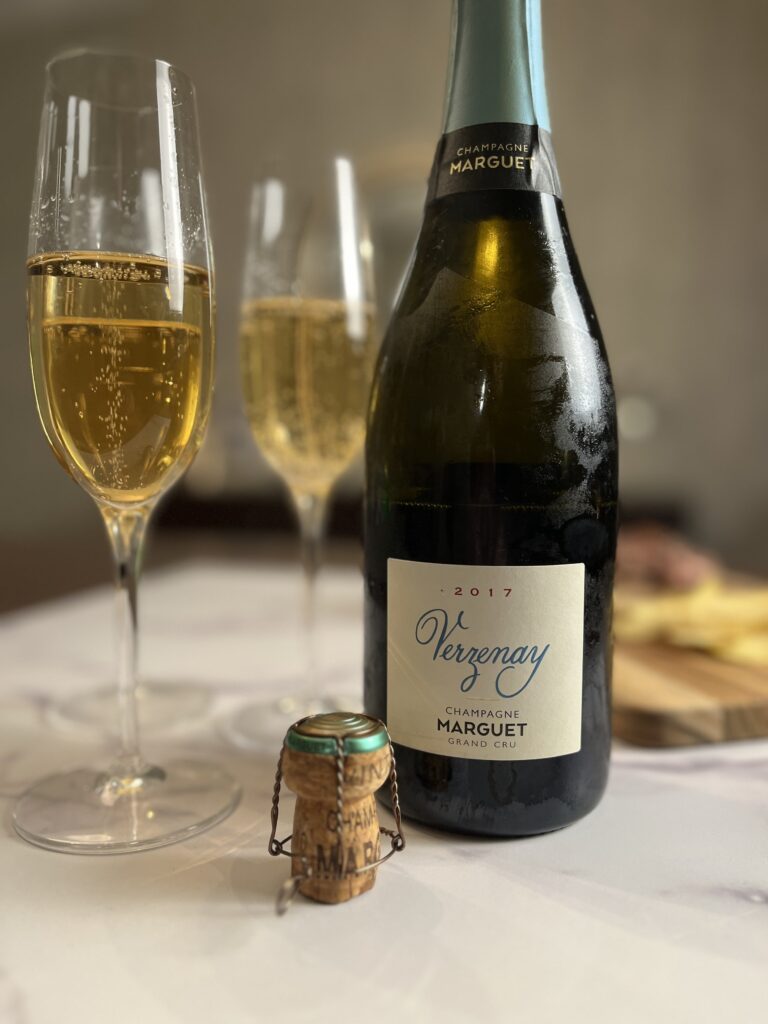
Sometimes, you just have to go in there and bowl people over with your sheer force of will – Jennifer Yuh Nelson 𝓒𝓱𝓪𝓶𝓹𝓪𝓰𝓷𝓮 𝓜𝓪𝓻𝓰𝓾𝓮𝓽 𝓥𝓮𝓻𝔃𝓮𝓷𝓪𝔂 𝓖𝓻𝓪𝓷𝓭 𝓒𝓻𝓾 2017 And bowl me over did this champagne from Benoit Marguet. Established in 1905, he is highly dedicated to biodynamic farming of his 40 years old vines – 7.30 hectares in Ambonnay and 0.70 hectares Bouzy utilizing Demeter principles (also certified), phototherapy and aromatherapy. This 100% Pinot Noir hails from the Verzenay Grand Cru. He favors minimal added sulfur, no dosage Brut Nature style. Tiny dancer golden bubbles lift the wafting notes of crisp orchard fruit, lime blossom, citrus zest, buttery pastry and minerality. The first sip you sit up and take notice at its energetic freshness and tangy acid. Brimming with mirabelle plum, peach, underripe strawberry, sweet pastry cream, marzipan, blood orange curd, dried mushrooms into a saline, grapefruit pith finish. This has a purity, an elegance, lighter than a typical Blanc de Noirs. It showcases the power of Pinot Noir with fruit beautifully. Paired with truffle butter potato chips, porcini mushroom saucisson and a wedge of Saint André
Fumey Chatelain Savagnin Ouillé
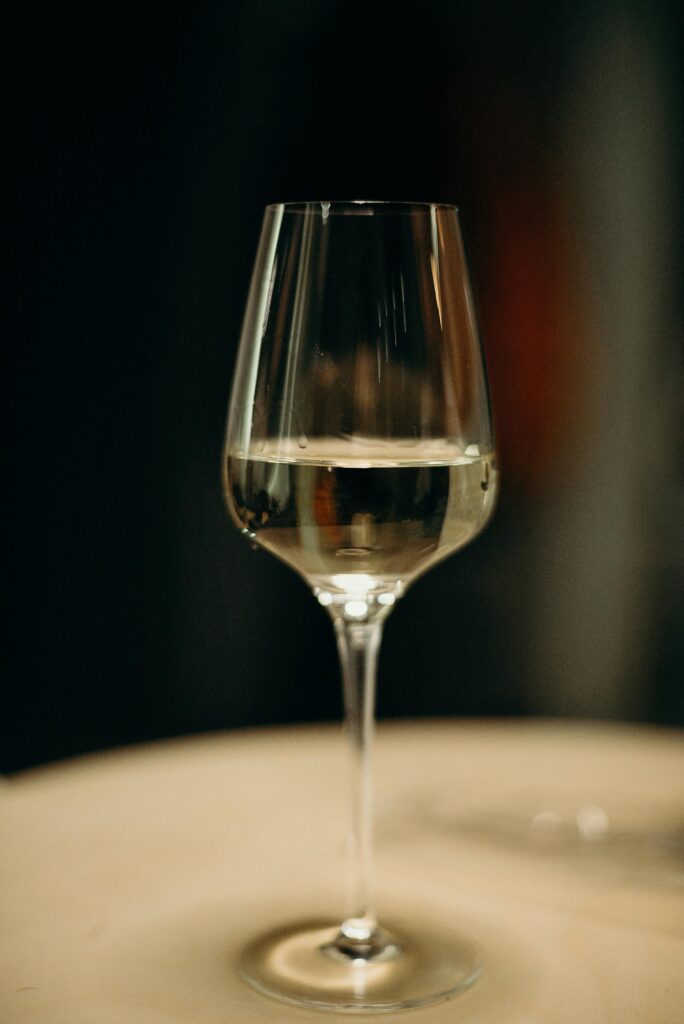
Domaine Fumey-Chatelain is a small family-owned winery in the Jura region of France. Made from 100% Savagnin grapes from 50 year old vines. The grapes are hand harvested made in a ouillé style, which means barrels are topped up with wine to prevent the oxidative character and flor yeast that is characteristic of old school classic. Hence this style allows for the grapes true character to shine. It’s fermented with ambient yeast followed by 19 months sur lie in large old barrels Raphael Fumey et Adeline Chatelain Savagnin Ouillé 2020 Pours into the glass, a deep, golden, shiny wine, preparing you for the full bodied the richness that will follow. Richly concentrated aromas of fresh pear, peach skin, oyster shells, quince paste, dried nuts, honey, white flowers and spice. Crisp on the attack, showing a salty tension that animates the quince and herbal flavors on the palate. There is high acidity, bringing bracing, zesty freshness on the attack but behind this are pleasing grapey, lightly spiced notes. It is the energy and sense of purpose. Long, lingering, lusciously seductive. I am so thankfully my dear friend in wine and life introduced me to this domaine. It was love at first sip.
New York Champagne Week The Fizz is Female Founder -Blaine Ashley
Good ideas are common – what’s uncommon are people who’ll work hard enough to bring them about– Ashleigh Brilliant Recently, I had the wonderful opportunity to interview Blaine Ashley about her wine journey from VIP Event Marketing to female owned New York Champagne Week and the Fizz Is Female. A self-made, hardworking woman, Ashley dictated her destiny the only way she knew how – by taking chances and surrounding herself with a strong female community. Life is a series of choices we make and the journey it takes us on. Dive into the deep end and swim vigorously. As a Honolulu,HI native where tourism is the main industry, it was natural that her career would be in hospitality. She advanced quickly in levels of event planning responsibility and her reputation as the “Hostess with the Mostest” flourished to head VIP Marketing Events at the W Hotel. Champagne was an integral part of the events. Working five to six days per week, she was extremely disciplined in her career advancement and remained focused on the ultimate objective, starting her own creative market to sell experience. She thrived in the organization, marketing, and logistical challenges of each and every event, seeing it come to fruition and ultimately bringing happiness to all guests. The nightlife, glitz, and partying didn’t interest her. She ate, slept and breathed marketing. Her focus was on success, taking risks and presenting her ideas without hesitation. She had achieved her goals in Hawaii, it was time move on to her next adventure. Her next leap of faith took her led her to New York City in 2010. She took control of her future with this daunting step, but she faced the challenge head on. She created liquor-esque online platform called citysips.com. In tandem, she began writing a monthly column for Tasting Panel and Destinations Travel, called Sipped’n Scene and Jet Set Sip respectively. Gaining a following and becoming known as the “city guide for sips.” During the era of Absolute Vodka and the like, it began as a column devoted to spirits which organically grew into wines and particularly champagne. Her passion was fueled by her followings interest in her unique ideas and the takeaway experience she brought to each client. Her champagne “AH-HA” moment came at Vin Expo Bordeaux one afternoon when a sommelier friend, who was opening a champagne bar in Sweden said, “We can only drink champagne for the next few days (the event takes place over 3 days in buildings the size of football fields!) .” She was amazed at the amount of unknown champagne houses and growers she met who were very eager to enter the US market. Her goal was clear, to bring together these producers with her US media and trade audience, restaurateurs and beverage directors. By doing so, champagne houses would have the opportunity to enter the ever growing American market. New York Champagne Week was born and launched in 2013. There were many challenges to be sure. At the time, the wine industry as a whole was very male dominated. She was often perceived as the assistant, not the marketing leader. She persevered and continued to build relationships. Yet every step forward she took, she took 3 steps back. One fateful day, she had a champagne and caviar event planned for a group of women. It was coincidentally the day after Donald Trump was elected president. The venue was a stones throw away from Trump Towers. No one was able to access the location or was in a very festive mood. No one came to the event, it was a complete failure. Chalk it up to dumb luck and bad timing, she felt that the cards were stacked against her. She was devastated, deflated. Doubt crept in, is this what she should be doing? Is it worth the effort, the frustrations? The following day she hosted a women in wine lunch and we wrote the future is female on the chalkboard. She paused and exclaimed ‘The FIZZ is Female’ and launched that platform the following year in 2018 (we’re celebrating 5 years this year) . New York Champagne Week took a pause that year due to the lack of support from brands predominantly led by men. She felt that women weren’t being given their voice, they lacked loyalty and respect from the industry. She decided to branch out her champagne lifestyle brand to focus on women, as inherently they are more receptive to new ideas and collaborations. The FIZZ Is Female’ shines a spotlight on leading ladies in the bubbly wine biz and celebrates sparkling wine made, owned and/or led by female powerhouses from around the world. In 2016, her focus on all things bubbly awarded her a nod in Wine Enthusiast magazine as a 40 under 40 Tastemaker where she was aptly dubbed ‘The Champagne Queen’. What do we have to expect from this year’s 10th anniversary of New York Champagne Week? With a twinkle in her eye she said, this year promises to be very special. Each and every year is unique to allow each brand or portfolio their moment to shine. She does her best to keep the events innovative and fresh for her customers with unique concepts. This year’s her focus has been on pop ups throughout the US, including Phoenix, Birmingham and LA in preparation for the 10th anniversary of New York Champagne week from November 6th to 11th. The upcoming four events will be equally impactful. Night One will be A Toast to 10th Anniversary VIP Night. Night Two Pig & Swig, a night grower champagne selections with co-host Kelly Mitchell of Skurnik Wines & Spirits whereby popping bubbly alongside a whole roasted pig and anti pasti selections. Night Three Bold Babes Bold Bubbles with co-host of Iola Wines, Marilee Bramhall exploring some of the most talented female vigneronnes sourced by Bramhall herself as she spotlights curated cuvées. Night Four Big Bottles Big Difference event in collaboration with BLACKBARN Restaurant’s Chef/Owner, John Doherty
Historical Women of Champagne
Champagne is a universal symbol of celebration par excellence, of love, happy moments and grand success. It was not until the 19th century that Champagne became what we know as the golden sparkling. Wine has been in existence for over 7,000 years! Thanks to the efforts of key women in wine, influencers transformed the status of a simple cloudy wine into a luxury elixir. To understand the role of women in Champagne, it is important to review how Champagne became ‘Champagne’. The stories surrounding the French Benedictine Abbey of Hautvillers, Dom Perignon, and English scientist, physician, and metallurgist Christopher Merret have often been credited with the invention of Champagne. However, the truth is that Champagne was a collaborative effort that involved many people over many years. Dom Perignon and Christopher Merret did play important roles in the development of Champagne. Dom Perignon was responsible for many of the early experiments with sparkling wine. He also developed many of the techniques that are still used today, such as blending different grape varieties and aging the wine in bottles. Christopher Merret published a book that described the process of making sparkling wine. Merret’s work helped to spread the popularity of Champagne throughout Europe. The turning point for Champagne occurred in the 17th century when still wines were deliberately made into sparkling fizz. The Champenois wine merchants and winemakers tirelessly pursued their efforts to create this new type of wine. They experimented with different grape varieties, fermentation methods, and bottle shapes. One of the most important discoveries was the use of better quality grapes. The Champenois realized that certain grape varieties, such as Pinot Noir and Chardonnay, were better suited for making sparkling wine than others. They also discovered that harvesting the grapes early helped to preserve the acidity, which is essential for sparkling wine. Another important discovery was the process of disgorgement. This is the process of removing the dead yeast cells from the bottle after the second fermentation. Disgorgement allows for a clearer and more sparkling wine. The Champenois also experimented with different bottle shapes. They realized that a stronger bottle was needed to withstand the pressure of the carbon dioxide gas. They also discovered that a thicker neck helped to keep the cork in place.The creation of Champagne was a long and arduous process, but it was ultimately successful. Champagne is now one of the most popular wines in the world, and it is enjoyed by people of all ages and backgrounds. The creation of Champagne was a collaborative effort that involved many people over many years. Dom Perignon and Christopher Merret played important roles, but they did not invent Champagne on their own. The Champenois wine merchants and winemakers were also essential to the development of this world-renowned wine. It wasn’t until the 18th century that Champagne gained popularity. Both the French King, Hugh Capet and the Duke of Orleans served Champagne at official dinners to the French elite and royalty. The domino effect led to a huge increase in demand for Champagne. The great Champagne houses were founded to meet the growing demand of this trendy fizzy drink. Gosset, established in 1584, is the oldest “house” still in production, originally producing a “still wine.” In 1729, Ruinart was first producer of sparkling wine to open its cellar doors with Taittinger (formerly Forrest Fourneaux) following in 1734. Moët opened soon after in 1743, Lanson then in 1760, Louis Roederer (formerly Dubois Père & Fils) in 1770, Veuve Clicquot in 1772 and Heidsieck in 1785. Over a 50-year period, the production of Champagne grew from 300,000 to 20 million bottles. There is a long history of revolutionary leading ladies of Champagne. These ladies paved the way for today’s chef de caves and Champagne house leaders. Some were visionaries, some were innovators, some were marketers and born leaders, but they all had one thing in common, their passion for elevating Champagne. Champagne houses, like any other business in France in the early 1800s, were traditionally passed down from father to. When the husband died (often at a young age in the many wars during the century) the widow (a.k.a. La Veuve) was often the next in line in unexpected circumstances. At that time, women who were either unmarried or married were dependent on their male family members (fathers, husbands, or brothers). They were not allowed to have bank accounts or ownership. The only way women could gain property was through inheritance as a widow. The strength, gumption and especially the fresh perspective of these newly independent Veuves led to a revolution in the way Champagne was made and the styles we drink. For several centuries Champagne has been a favorite of kings and sovereigns, the elixir of courtesans and a symbol of universal celebration. At the beginning of our Champagne history in the 18th century, many of the great ladies of history were also the great consumers of Champagne. Madame de Pompadour (Jeanne Antoinette Poisson) who was a favorite mistress of Louis XV was a grand hostess for the King’s parties at the palace. She and other ladies of court often enjoyed Champagne in the salons or their private rooms. Her favorite Champagne was from a wine merchant, Claude Moët. He shipped unlimited amounts of Champagne to Paris Court. She became the most prominent brand ambassador for Champagne Moët & Chandon. Another influential figure both politically and commercially, Catherine The Great of Russia employed a significant amount of bubbly wine to reinforce and enhance her lovers. However, it wasn’t until the 19th century that women took a leading business role in the Champagne industry. How, you ask? The most famous Grande Dame and widow of Champagne was Barbe-Nicole Ponsardin-Clicquot. Widowed at the age of 27 and a surprisingly savvy businesswoman, she quickly intervened and saved her husband’s wine business. She immediately saw an opportunity to enter the Russian market at the end of the Napoleonic wars, something other houses were slow to realize. She smuggled 10,550 bottles into Imperial Russia to be ready for the celebrations once the treaties were signed.
Luke Lambert Nebbiolo Passionate
ᴅᴏ ɪᴛ ʙɪɢ, ᴅᴏ ɪᴛ ʀɪɢʜᴛ, ᴀɴᴅ ᴅᴏ ɪᴛ ᴡɪᴛʜ ʏᴏᴜʀ ꜱᴛʏʟᴇ.” ꜰʀᴇᴅ ᴀꜱᴛᴀɪʀᴇ Luke Lambert had one goal, to make wine from his beloved northern Italian grape Nebbiolo in Australia. Extremely passionate about this grape, his initial plantings, all organic have grown from six to thirty six acres of Nebbiolo parcels on granite soils in the cool climate of Yarra Valley, Victoria. He has a less is more approach and favors traditional methods from ambient yeasts, hand plunging and food stomping in old French and Slovenian 20hL foudre for ageing. He uses the sounds of guitar and drums to gently and rhythmically shake up the lees. Aged for 20 months followed by bottling without fining or filtration. Bottle 2,082 of 3,538 𝕃𝕦𝕜𝕖 𝕃𝕒𝕞𝕓𝕖𝕣𝕥 ℕ𝕖𝕓𝕓𝕚𝕠𝕝𝕠 𝟚𝟘𝟙𝟟 – 𝕐𝕒𝕣𝕣𝕒 𝕍𝕒𝕝𝕝𝕖𝕪, 𝕍𝕚𝕔𝕥𝕠𝕣𝕚𝕒, 𝔸𝕦𝕤𝕥𝕣𝕒𝕝𝕚𝕒 Arresting aromas of floral and fruit – raspberry, cherry and rose petals followed by earthy minerals, tar, leather and warm spice. This is a modern style Nebbiolo. Luke has successfully tamed the tannins which are supple as suede wrapped with cool acidity. A light warm hug of sweet cherry and red currant, supple leather, rose petals, slight umami into a lengthy finish of warm anise and menthol, a slight bergamot and earthy minerals. It’s ethereal, a core shaker, just mesmerizing. One of the best Nebbiolo I have had outside of northern Italy, he’s an icon for good reason. Pair with sage and garlic rubbed beef tenderloin, slow cooked truffle chicken fricassee or roasted mushroom ragout over fried polenta.