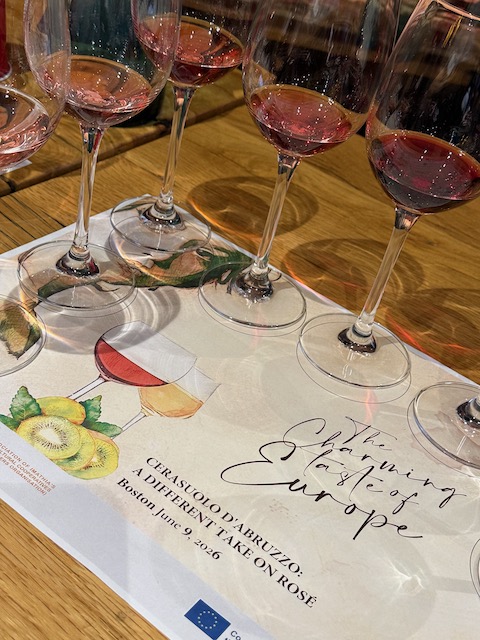
Some wine regions whisper. Abruzzo speaks with clarity.
At a recent trade tasting at City Winery Boston, hosted by the Consorzio Tutela Vini d’Abruzzo at City Winery Boston, I was reminded why this central Italian region is one of the most exciting—and still wonderfully underrated—wine territories in Italy today.
Set between the dramatic peaks of the Apennines and the cooling influence of the Adriatic coast, Abruzzo is a region of striking natural contrast. Mountains, sea breezes, altitude, and wild terrain all shape wines that carry freshness, energy, and unmistakable identity. It’s a place where power and elegance meet.
A Region Defined by Contrast
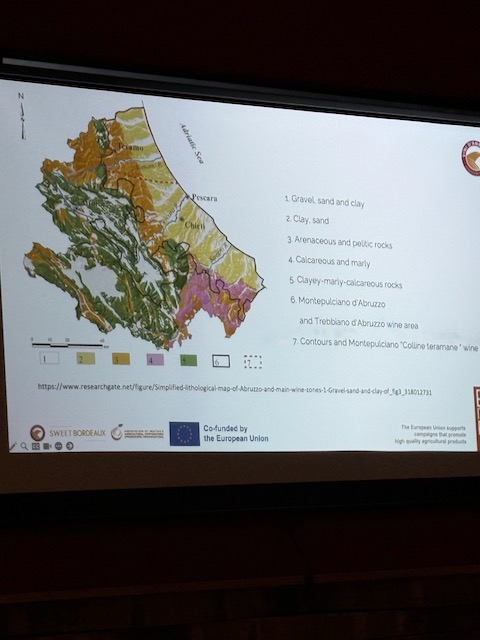
What makes Abruzzo so fascinating is that it isn’t one singular wine region—it’s four distinct provinces, each with its own personality, shaped by altitude, soils, and proximity to the Adriatic.
Together, they create one of Italy’s most dynamic terroir mosaics.
Teramo (North)
This is where Montepulciano reaches some of its most profound expressions, particularly in the prestigious Colline Teramane DOCG.
The soils here are rich in clay and limestone, giving the wines structure, depth, and ageability. Vineyards stretch from the rolling hills toward the foothills of the Gran Sasso, often reaching 250–400 meters in altitude.
The climate is cooler than the south, with strong mountain influence preserving acidity and freshness.
What shines here:
Montepulciano with darker fruit, firmer tannins, and greater longevity. Cerasuolo here often feels more vinous, structured, and savory.
Think: power with polish.
Pescara (Central Coast)
Pescara sits in the heart of Abruzzo and often delivers some of the most balanced and versatile wines of the region.
Its soils are a patchwork of clay, sand, and marine sediments, shaped by ancient seabeds. The Adriatic influence is strongest here, bringing cooling breezes and moderating the warmth.
Altitude ranges from sea level up to 350 meters, allowing producers to play with ripeness and freshness.
What shines here:
Montepulciano with juicy fruit and softer tannins, vibrant Cerasuolo, and increasingly exciting Pecorino.
Think: generosity meets freshness.
Chieti (South Coast)
Abruzzo’s largest and most productive province, but don’t mistake scale for simplicity.
Chieti benefits from warmer temperatures, lower elevations, and more Mediterranean influence. The soils here are often sandy clay with limestone pockets, giving approachable, fruit-forward wines.
This is where much of Abruzzo’s commercial heartbeat lies, but there’s also a growing movement toward quality-driven terroir wines.
What shines here:
Accessible Montepulciano, bright Trebbiano, aromatic Passerina, and textured Pecorino.
Think: warmth, generosity, and incredible value.
L’Aquila (Inland Mountains)
The wild card.
This mountainous inland province is less associated with volume and more with altitude, extremes, and freshness. Here, vineyards can climb beyond 500 meters, with dramatic diurnal shifts and rugged calcareous soils.
It’s cooler, harsher, and more unpredictable—but that tension creates wines of incredible energy.
What shines here:
Fresh whites like Trebbiano and Pecorino, and increasingly elegant reds with lifted acidity.
Think: mountain tension and purity.
Eight Shades of Cerasuolo
Leading the masterclass was Jeff Porter, who guided us through what makes Abruzzo so compelling—not just geographically, but stylistically. The focus? Eight distinct expressions of Cerasuolo d’Abruzzo, the region’s historic rosato that continues to challenge expectations.
And what a category it is.
Cerasuolo sits in a world of its own: deeper in color than most rosés, built from Montepulciano, and packed with vibrant red fruit, savory lift, and mineral tension. It has the structure of a light red, the refreshment of rosé, and the gastronomic versatility of both. Tasting eight examples side by side revealed just how broad and nuanced this category can be.

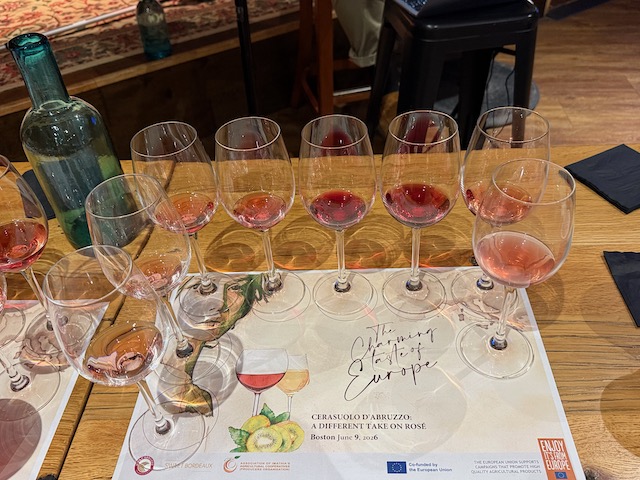
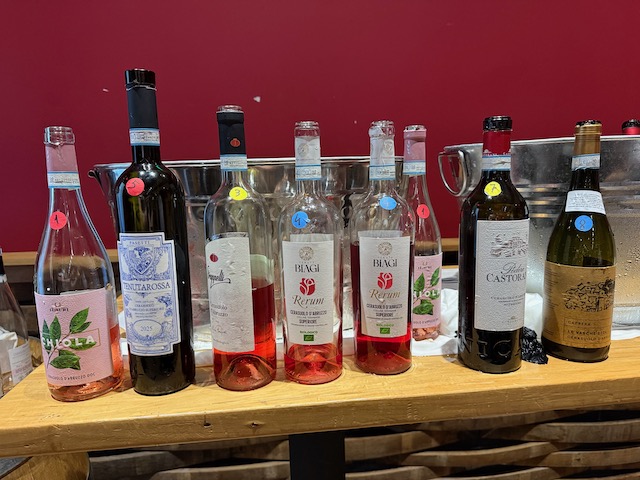
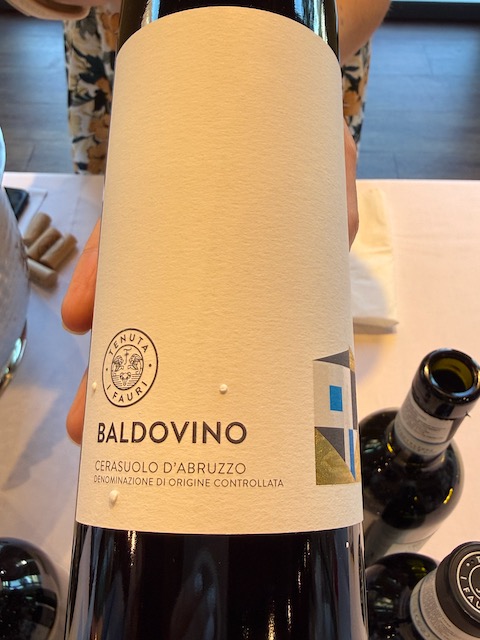
Tenuta I Fauri — Chiola Cerasuolo d’Abruzzo DOC 2025
The lightest in the lineup, but far from simple. Wild strawberry, watermelon rind, and crushed rose petals leap from the glass, followed by citrus-driven tension and saline lift. Sleek, energetic, and refreshing—this is Cerasuolo in its most vibrant form. It drinks like a savory, earthy Gamay with a finish of almond skin.
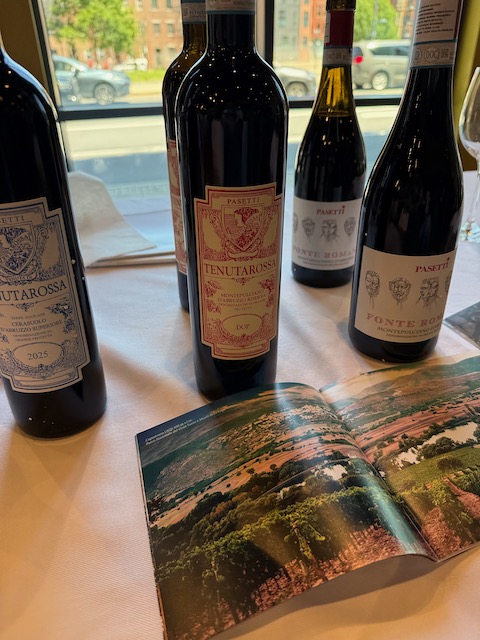
Pasetti — Tenuta Rosa Cerasuolo d’Abruzzo Superiore 2025
A darker and more structured expression. Sour cherry, blood orange, and pomegranate layered with savory herbs and wet stone. Fuller-bodied with real texture and grip. This is where Cerasuolo begins to show its serious side.
Biagi — Campelli Cerasuolo d’Abruzzo
Juicy and immediate, loaded with ripe raspberry, red currant, and cranberry skin. A subtle herbal lift and bitter almond edge bring complexity. Charming, bright, and dangerously drinkable.
Biagi — Rerum Cerasuolo d’Abruzzo Superiore Biologico 2025
Deeper, broader, and more layered. Wild cherry, macerated strawberry, orange peel, and dried thyme unfold across the palate with gentle phenolic grip. More contemplative, more vinous—built for food.
Castorani — Cerasuolo d’Abruzzo Superiore 2025
One of the most vinous in the flight. Dark cherry, hibiscus, rhubarb, and crushed stone. Deeper concentration and almost red-wine-like presence, yet still lifted by freshness. Serious and gastronomic.
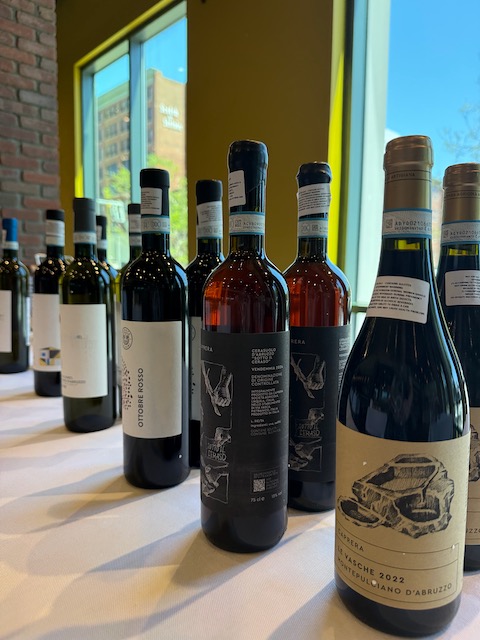
Caprera — Le Vasche 2024 Cerasuolo d’Abruzzo 2025
A standout for precision and polish. Bright red berries, pomegranate, bitter orange, and Mediterranean herbs. Silky yet electric, with chalky minerality and beautiful tension. Modern, vibrant, and highly expressive.
More Than Montepulciano
But Abruzzo’s story stretches far beyond rosato.
Long beloved for the generous fruit and savory depth of Montepulciano d’Abruzzo, the region is increasingly earning international recognition for its quality, value, and deep sense of place. These are wines that overdeliver—bold yet approachable, serious yet easy to love.
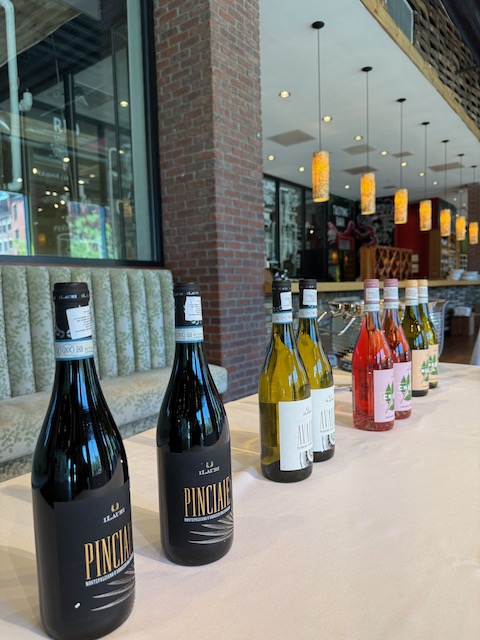
The walk-around tasting offered an impressive snapshot of the region’s breadth, with standout wines from NAE, Pasetti, Talamonti, Castorani, Caprera, Biagi, Tilli, Strappelli, and Tenuta I Fauri.
Beyond Montepulciano and Cerasuolo, the whites were equally compelling: crisp, expressive wines from Trebbiano, Pecorino, Passerina, and other indigenous varieties, each carrying Abruzzo’s signature tension between ripeness and freshness.
What makes Abruzzo so relevant right now is that it meets the modern drinker exactly where they are: authenticity, value, food-friendliness, and indigenous character.
It’s a region without pretense—but with enormous substance.
For trade professionals, tastings like this are a reminder that Abruzzo is no longer simply a “great value” region. It’s a serious conversation. A place of diversity, energy, and evolving identity.
And perhaps most importantly—it still feels like discovery.
That may not last much longer.