
History, redemption, and a remarkable sense of place. Three days in Piedmont revealed a sparkling wine region defined as much by the determination of its people as by the extraordinary wines they produce.
A Different Side of Piedmont
Some places announce themselves. Others reveal their beauty slowly.
Alta Langa belongs to the latter.
I arrived in Piedmont in November, when autumn had softened the hills into shades of gold, rust, and muted green. I have long associated this region with extraordinary wines, unforgettable food, and families whose histories are deeply entwined with the land.
Yet this journey revealed another side of Piedmont.
Beyond the celebrated vineyards of Barolo and Barbaresco lies a sparkling wine region defined by altitude, patience, and determination. As part of the tenth-anniversary Alta Langa International Press Tour, I discovered a place whose story reaches far beyond the glass.
What stayed with me wasn’t simply the quality of the wines, impressive as they were. It was the conviction of the people behind them, their connection to the land, and the pride with which they spoke about Alta Langa’s evolution.
Three words kept returning to me: history, redemption, and story.
And each glass seemed to reveal another chapter.
The Courage to Believe in a Place
There’s something compelling about a wine region that has had to rediscover its potential.
Traditional-method sparkling wine production was already taking shape in the cellars of Canelli during the mid-nineteenth century. Yet Alta Langa’s modern identity emerged through a deliberate effort to revive the potential of Piedmont’s higher hills.
Seven pioneering sparkling-wine houses, working alongside approximately forty growers, laid the foundations for an ambitious project. Following years of research, the Consorzio Alta Langa was formally established in 2001.
Their conviction was simple: these elevated vineyards could produce exceptional sparkling wines with an identity entirely their own.
Today, that vision has become a thriving community of producers and growers united by a shared commitment to quality and place.
And patience remains at the heart of it all.
Altitude, Attitude, and the Art of Waiting
My four words capture Alta Langa for me: altitude, attitude, elegance, and timelessness.
Across the provinces of Cuneo, Asti, and Alessandria, vineyards begin at a minimum elevation of 250 meters, averaging approximately 440 meters.
Here, Pinot Noir and Chardonnay benefit from cooler growing conditions, varied exposures, and complex soils that contribute to the freshness, structure, and longevity of the wines.
Alta Langa DOCG is exclusively vintage-dated and produced using the traditional method, with a minimum of 30 months of aging on the lees.
That vintage requirement is particularly meaningful. Each wine must express the character of its growing season rather than blend away its individuality.
The result? Sparkling wines that can be vibrant and beautifully poised in their youth, developing greater depth, texture, and complexity with age.
These are wines that reward attention, not haste.
When Two Treasures Share the Same Soil
If Alta Langa’s sparkling wines express the character of the hills above ground, the Alba white truffle reveals something extraordinary about what lies beneath.
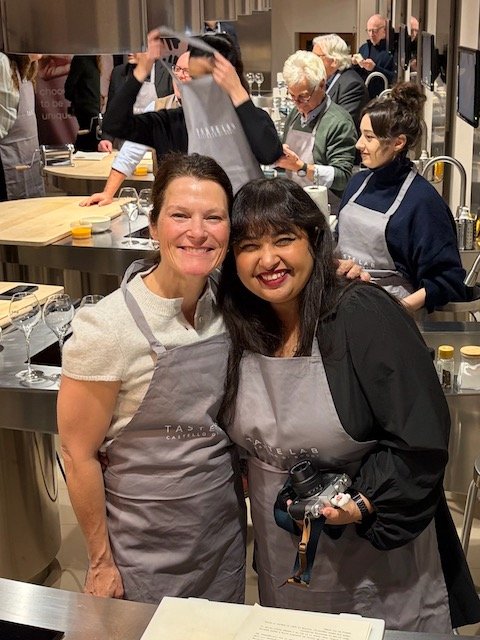
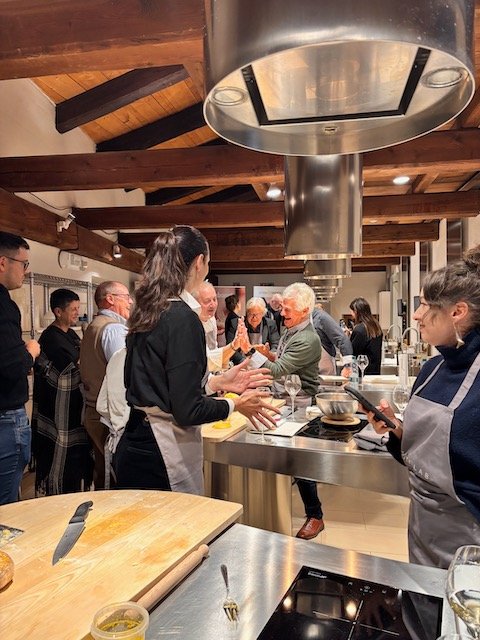
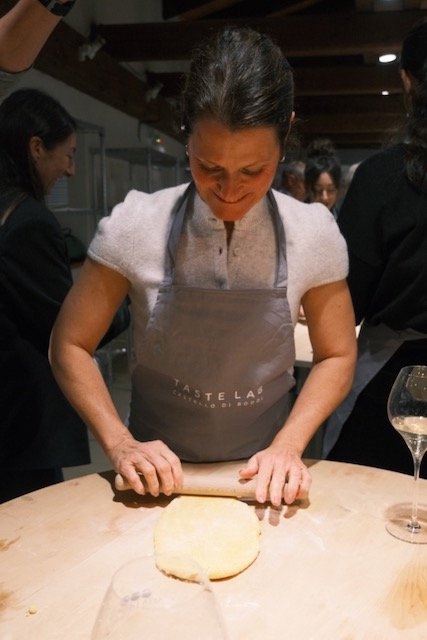
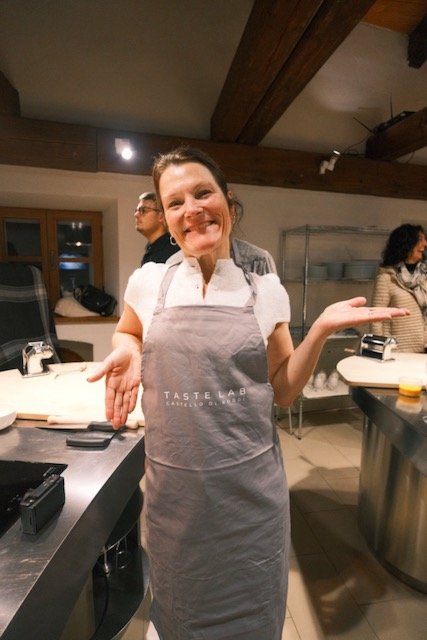
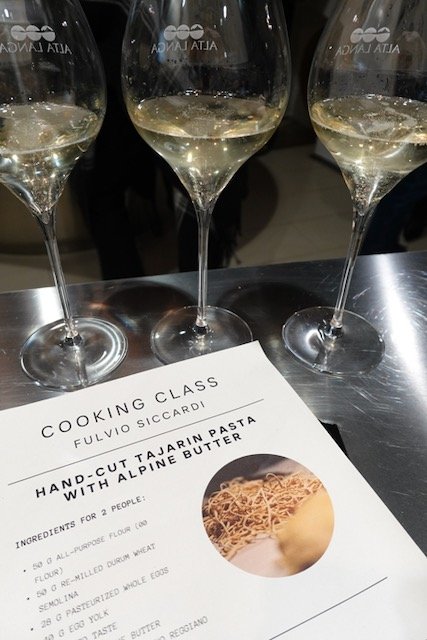
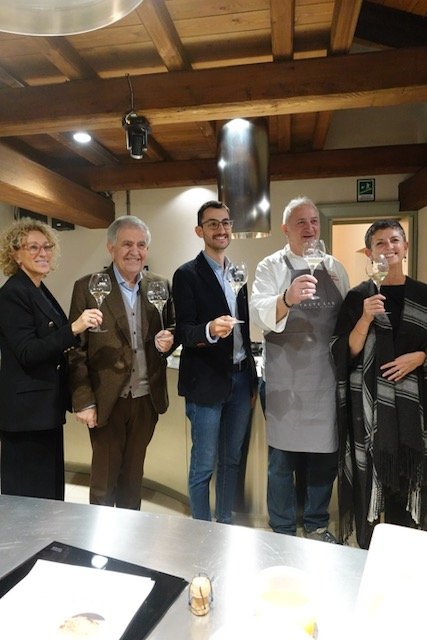
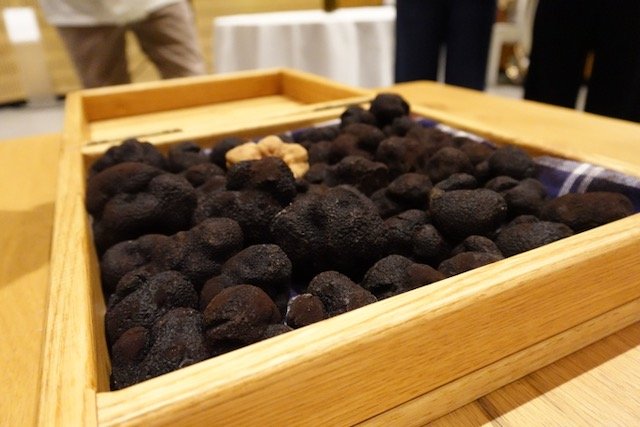
Our journey began at the historic Castello di Roddi, where the Taste Lab brought together two of Piedmont’s greatest treasures: Alta Langa DOCG and the legendary Alba white truffle.
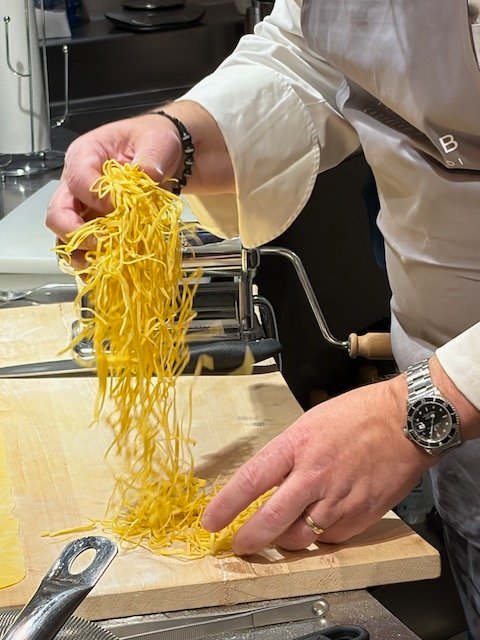
Under the guidance of Chef Fulvio Siccardi, we rolled up our sleeves to prepare fresh tajarin pasta before gathering around the table to enjoy our creations.
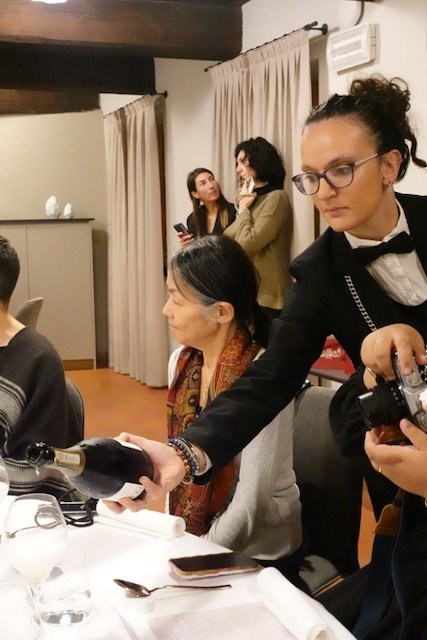
Seven Alta Langa sparkling wines, with a particular focus on Blanc de Blancs, accompanied the evening. Rather than following prescribed pairings, we were encouraged to taste, compare, and discover our favorites.
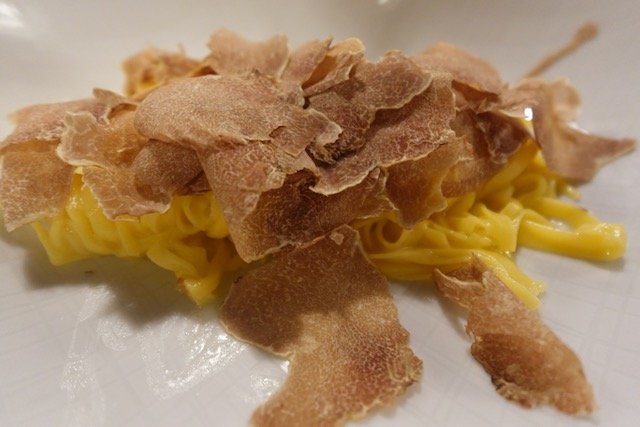
Our handmade tajarin, dressed simply in butter and Parmigiano Reggiano, became the perfect canvas for freshly shaved white truffle. The menu continued with guinea fowl cooked in Alta Langa wine and concluded with a decadent chocolate bonèt.
Among the evening’s discoveries, Deltetto Alta Langa Riserva Blanc de Blancs Pas Dosé 2021, aged 48 months, was my standout alongside the tajarin.
Its vibrant freshness balanced the richness of the pasta, while its savory complexity complemented the truffle’s intoxicating perfume without overwhelming it.
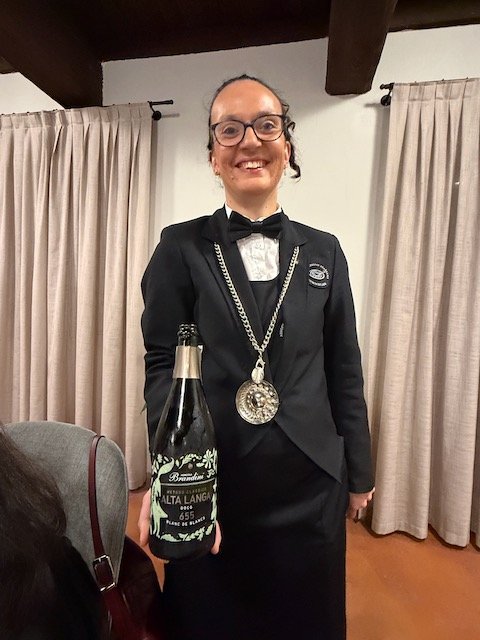
Bera Blanc Extra Brut 2021 and Brandini 655 Brut 2021 offered contrasting expressions alongside the guinea fowl, demonstrating how beautifully these wines can accompany a meal.
What made the experience memorable was the freedom to experiment.
After all, some of the most compelling food and wine pairings are born from the same place.
And I quickly discovered that Alta Langa is far too interesting to save for a toast.
67 Wines, 67 Expressions of Alta Langa
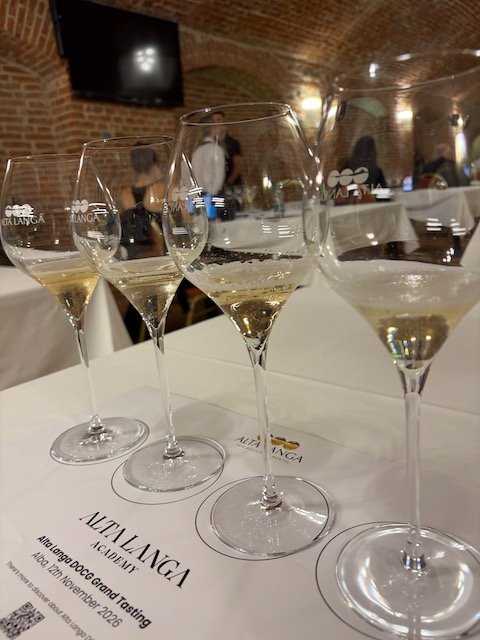
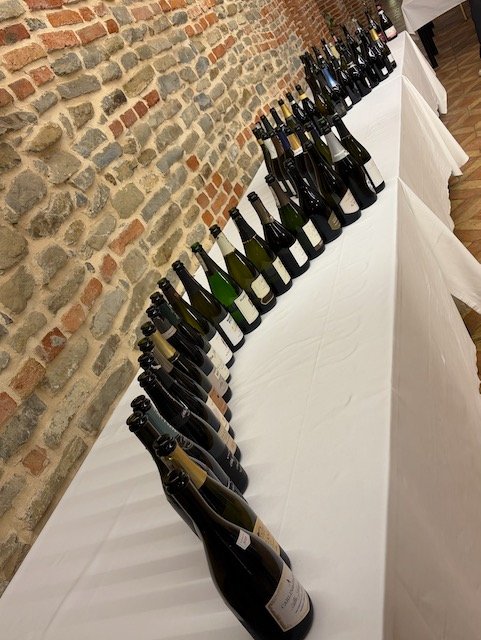
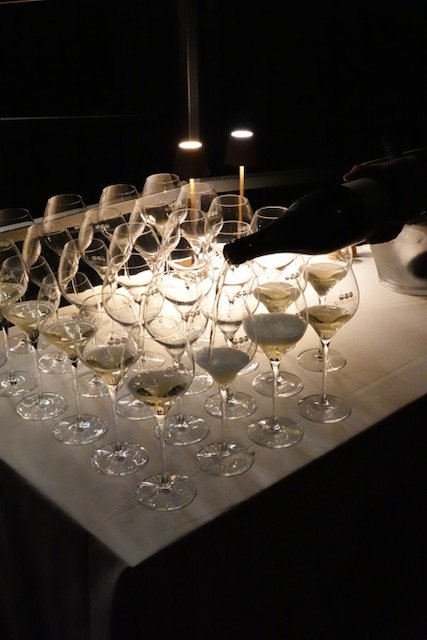
The following morning brought an extraordinary opportunity: a grand blind tasting of 67 Alta Langa sparkling wines.
Sixty-seven interpretations of Pinot Noir, Chardonnay, and their blends. Sixty-seven expressions of altitude, terroir, and time.
What fascinated me most was the diversity.
Some wines were vibrant and immediately expressive. Others were restrained, layered, and contemplative. Extended lees aging brought savory complexity, while younger vintages revealed remarkable energy and precision.
A few discoveries particularly captured my attention:
- Ettore Germano Extra Brut 2022 — Precise. Vibrant. Poised.
- Marco Capra Seitremenda — Playful. Spirited. Expressive.
- Anna Maria Abbona San Barto — Graceful. Refined. Harmonious.
- Avezzà Alta Langa — Bold. Structured. Distinctive.
- Il Cascinone Riserva 60 Mesi Extra Brut — Layered. Savory. Persistent.
- Bava Brut 2020 — Elegant. Polished. Balanced.
- Caterina Rivella 2019 — Delicate. Nuanced. Captivating.
- Sivà Riserva — Rich. Textured. Sophisticated.
- Contratto Riserva — Powerful. Complex. Enduring.
- Marco Capra Seitremenda 52 — Energetic. Characterful. Memorable.
The tasting challenged any notion of Alta Langa as a single style. What emerged instead was a remarkable spectrum of personalities, united by a commitment to expressing the region.
After discovering Alta Langa through 67 glasses, it was time to understand the ground beneath our feet.
Reading the Land
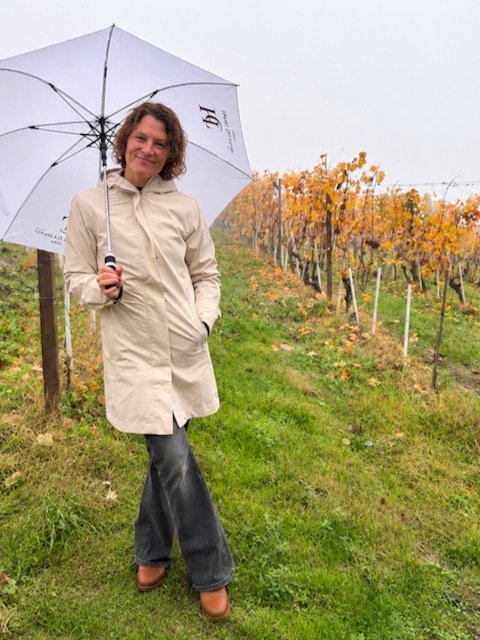
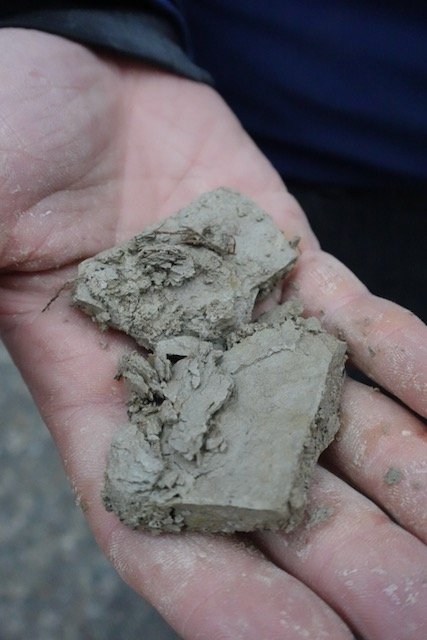
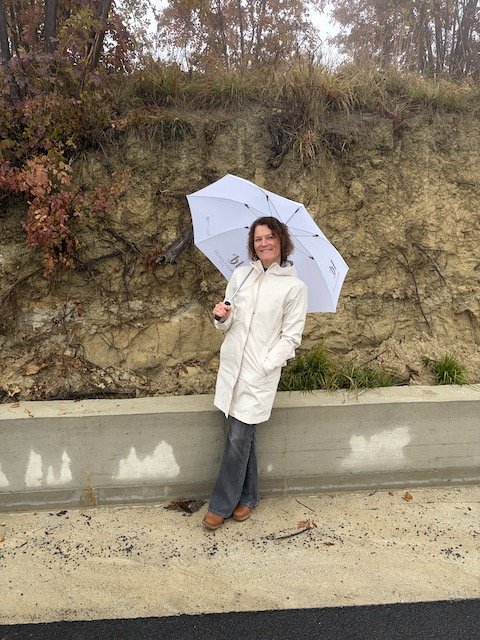
Our afternoon with geology and botany expert Edmondo Bonelli offered a different perspective on terroir.
At Cascina Cerutti in Cassinasco, we explored the relationship between the soils of the Langhe, their microclimates, and the delicate conditions that support the celebrated Alba white truffle.
Limestone, potassium, moisture, and the surrounding ecosystem all contribute to an intricate natural balance.
Yet even with scientific understanding, nature retains the final word.
The same holds true for the vines.
Differences in elevation, exposure, and soil composition can create remarkably distinct expressions from vineyards separated by relatively short distances.
What fascinated me was the connection between two of Piedmont’s most prized products.
The vine responds to its environment. The truffle depends upon it.
Both remind us that terroir is far more than a convenient explanation for flavor. It is a living relationship between nature and the people who work with it.
Beneath Canelli: Where History Still Breathes
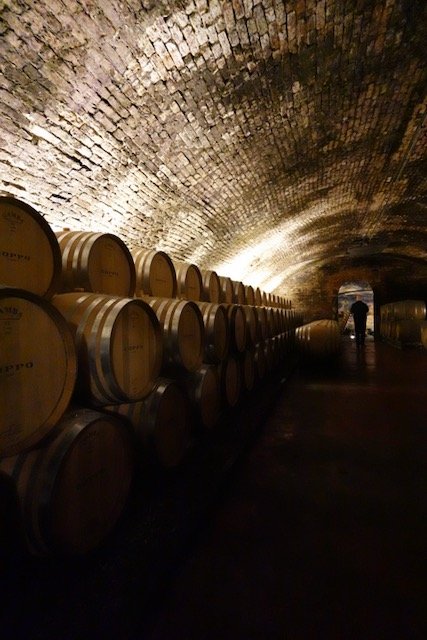
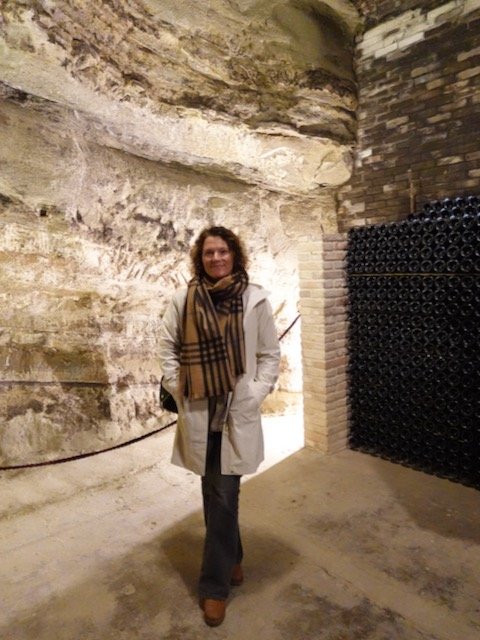
From the hills, our journey continued underground into the extraordinary cellars of Cantine Coppo in Canelli.
Founded in 1892 by Piero Coppo, the winery occupies an important place in Piedmont’s sparkling-wine heritage.
Its remarkable underground tunnels, carved by hand into the earth, provided naturally stable conditions for aging wine. Today, these historic cellars form part of the UNESCO-recognized Vineyard Landscape of Piedmont: Langhe-Roero and Monferrato.
Descending into these so-called Underground Cathedrals felt like entering another dimension.
Above ground, vineyards and villages follow the rhythm of the seasons. Below, everything becomes still.
Standing in those vast passages, I couldn’t help reflecting on how much the wine world has changed—and how much remains the same.
Technology advances. Styles evolve. Markets expand.
But developing a truly memorable sparkling wine still demands patience.
These cellars are more than monuments to the past. They are reminders of the knowledge and craftsmanship upon which Alta Langa continues to build its future.
The Table Is Where It All Comes Together
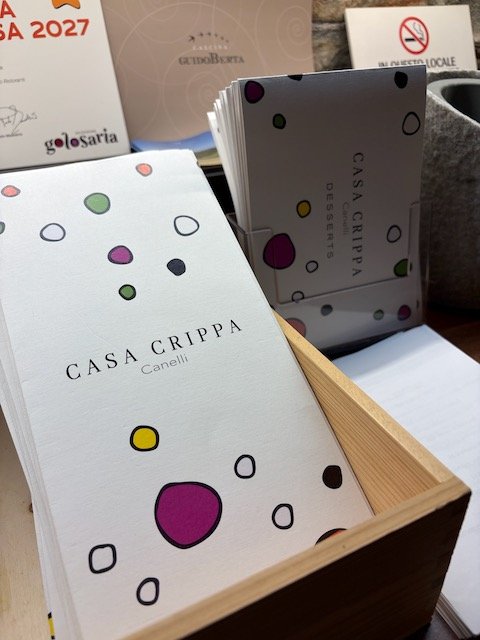
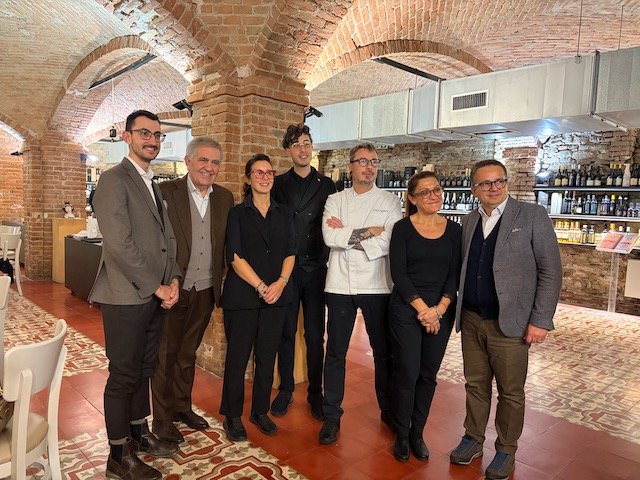
Our final evening at Casa Crippa in Canelli brought the journey full circle.
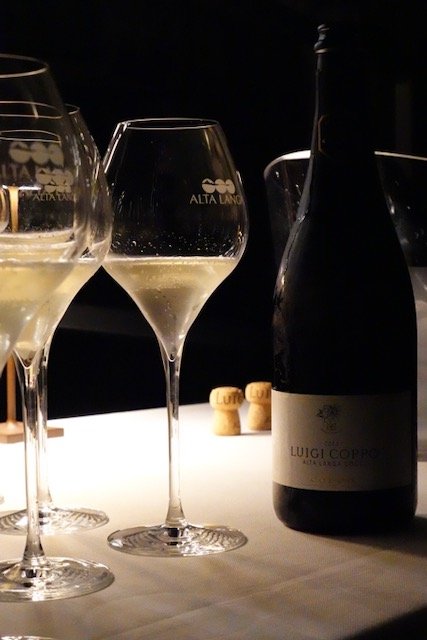
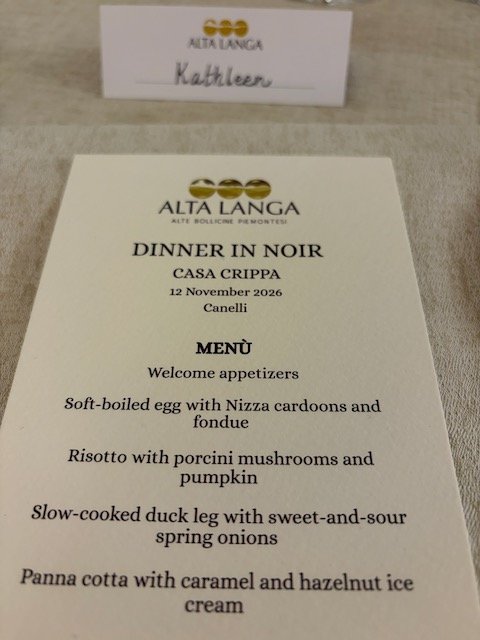
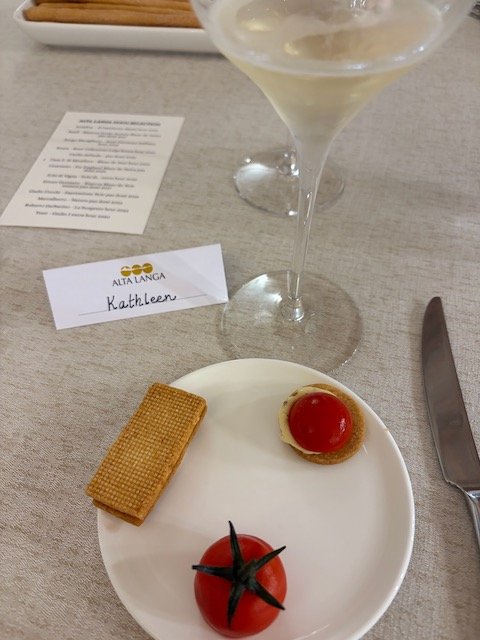
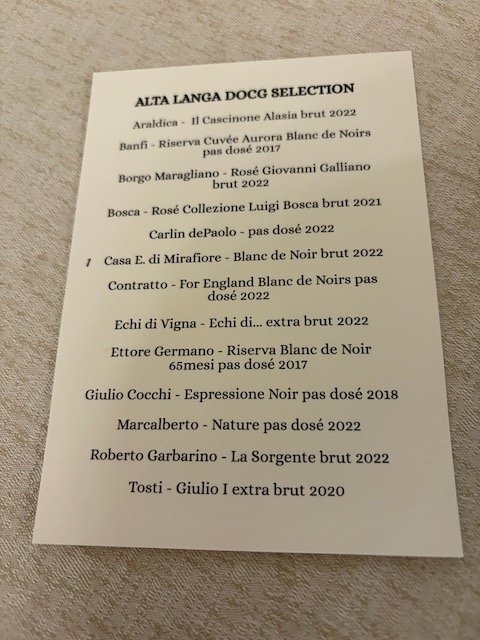
Appropriately named Dinner in Noir, the experience paired a contemporary interpretation of traditional Piedmontese cuisine with a selection of Alta Langa Blanc de Noirs.
Once again, the pleasure was in experimenting.
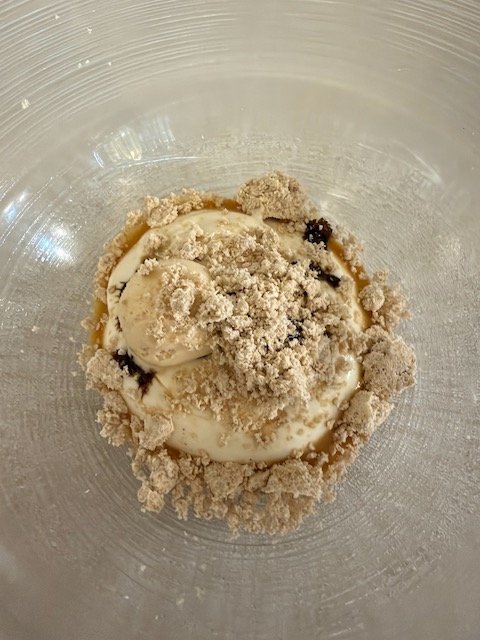
A delicate soft-boiled egg with Nizza cardoons and fondue was followed by porcini mushroom and pumpkin risotto, then slow-cooked duck with sweet-and-sour spring onions. Panna cotta with caramel and hazelnut ice cream provided a fitting finale.
Four wines particularly stood out:
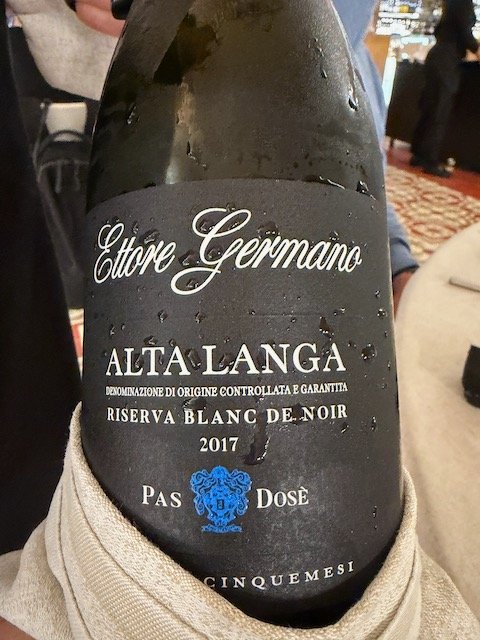
- Ettore Germano Riserva Blanc de Noir Pas Dosé 2017, 65 Mesi — Toasty. Layered. Persistent.
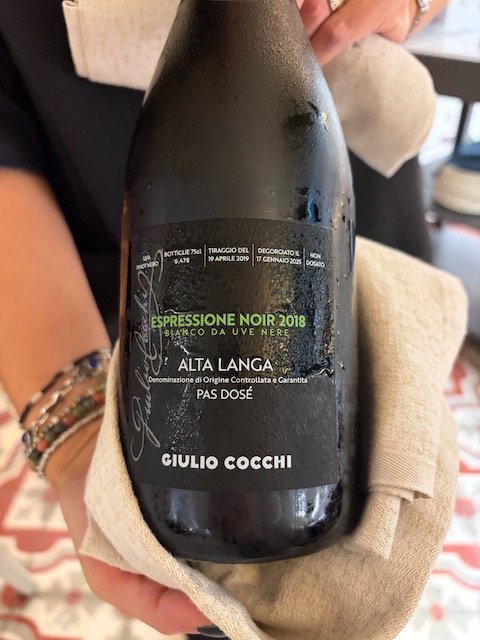
- Giulio Cocchi Espressione Noir Pas Dosé 2018 — Precise. Savory. Vibrant.
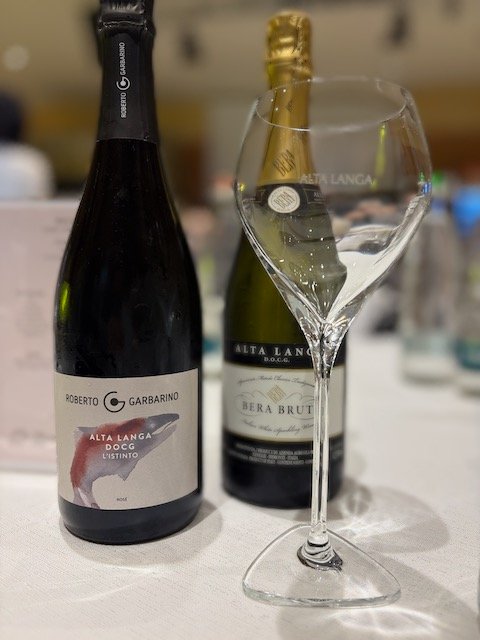
- Roberto Garbarino La Sorgente Blanc de Noir Riserva — Generous. Textured. Elegant.
- Marcalberto Nature Pas Dosé 2022 — Crisp. Mineral. Energetic.
The richer, more developed wines complemented the earthy depth of the porcini risotto, while younger expressions offered a lively contrast to the richness of the duck.
It was a delicious demonstration of how acidity, texture, and maturity can transform a pairing.
By this point, the wines were no longer simply individual expressions of Pinot Noir. They had become connected to the vineyards, soils, cellars, and people we had encountered.
And understanding those connections made every glass more meaningful.
One Last Taste of Piedmont
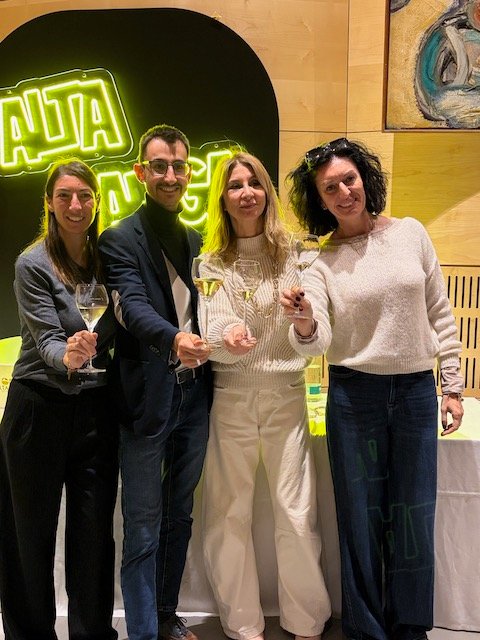
Our final morning in Alba offered a fitting conclusion: an Italian brunch celebrating Alta Langa’s wines alongside the region’s culinary craftsmanship.
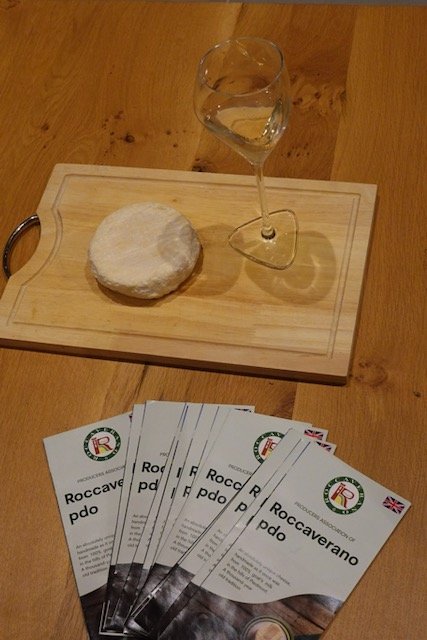
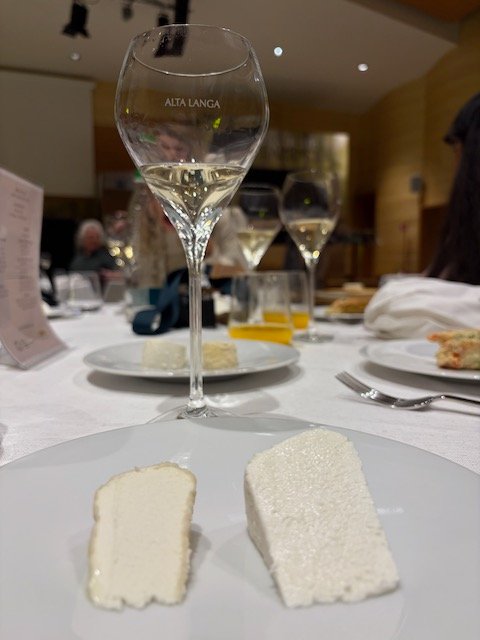
A tasting of Roccaverano PDO goat’s milk cheese revealed two expressions of the same product—one fresh and delicate, the other aged for six months, developing greater depth and savory complexity.
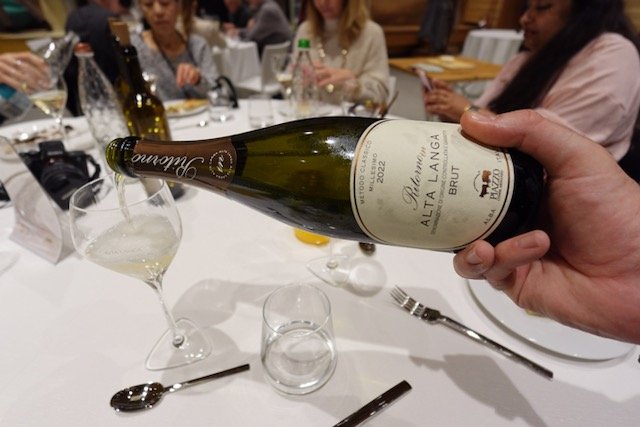
Paired with Alta Langa Blanc de Blancs, the contrast was fascinating.
Two cheeses transformed by time. A beautiful reflection of the wines we had spent three days exploring.
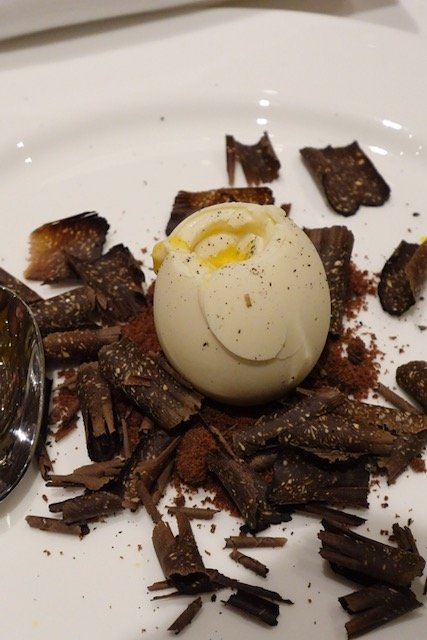
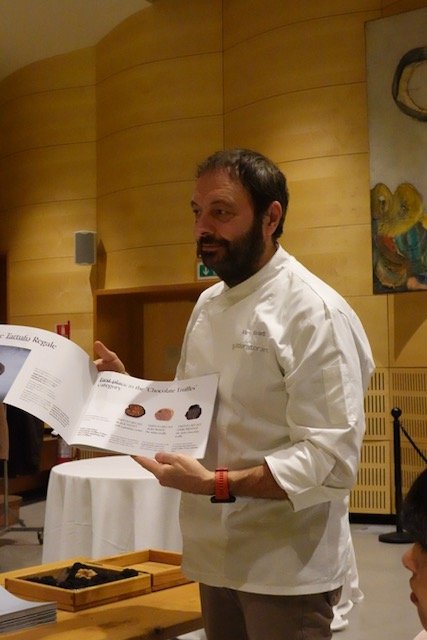
Then came an unexpected indulgence: Tartufo Regale, an artisanal chocolate creation conceived by chef Ugo Alciati.
Crafted with rare Venezuelan Criollo cacao and Tonda Gentile Piemonte IGP hazelnuts, its remarkable resemblance to a black truffle celebrates the creativity and meticulous craftsmanship for which Piedmont is known.
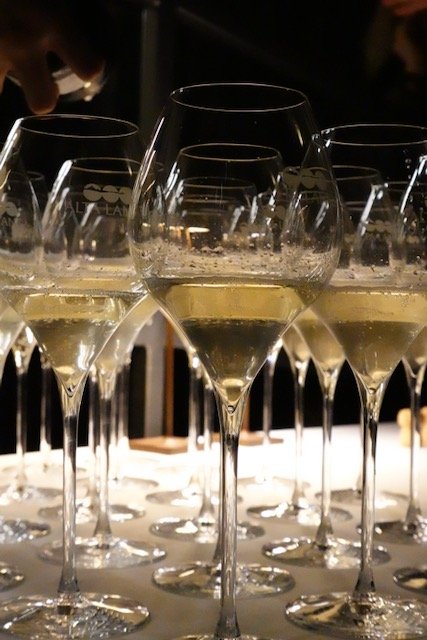
Even the glassware had a story.
The Consorzio’s distinctive TERRA glass, designed by Italdesign and handcrafted by Collevilca, features a three-lobed design representing Alta Langa’s three provinces: Cuneo, Asti, and Alessandria.
As someone who believes the glass plays an essential role in the wine experience, I appreciated this thoughtful connection between design, craftsmanship, and regional identity.
Wine, cheese, chocolate, and glassware—each telling its own story, yet all connected by a profound respect for place.
The Beauty of What Time Reveals
As our journey drew to a close, I found myself returning to those three words: history, redemption, and story.
History, because the roots of Italian sparkling wine run deep beneath these hills.
Redemption, because a landscape whose potential was once overlooked has found renewed recognition.
Story, because behind every bottle are the decisions, risks, and hopes of the people who believed in this place.
I arrived curious about Alta Langa’s wines. I left with a deeper appreciation for the landscape, the traditions, and the quiet determination that connects them.
What makes Alta Langa compelling is not an ambition to imitate another sparkling-wine region. It is the confidence to express its own identity.
And perhaps the most beautiful thing is that its story is still unfolding.
Some stories, like great wines, become more compelling with time.
With heartfelt thanks to Consorzio Alta Langa, the participating producers, chefs, and hosts for the opportunity to discover this remarkable corner of Piedmont.