
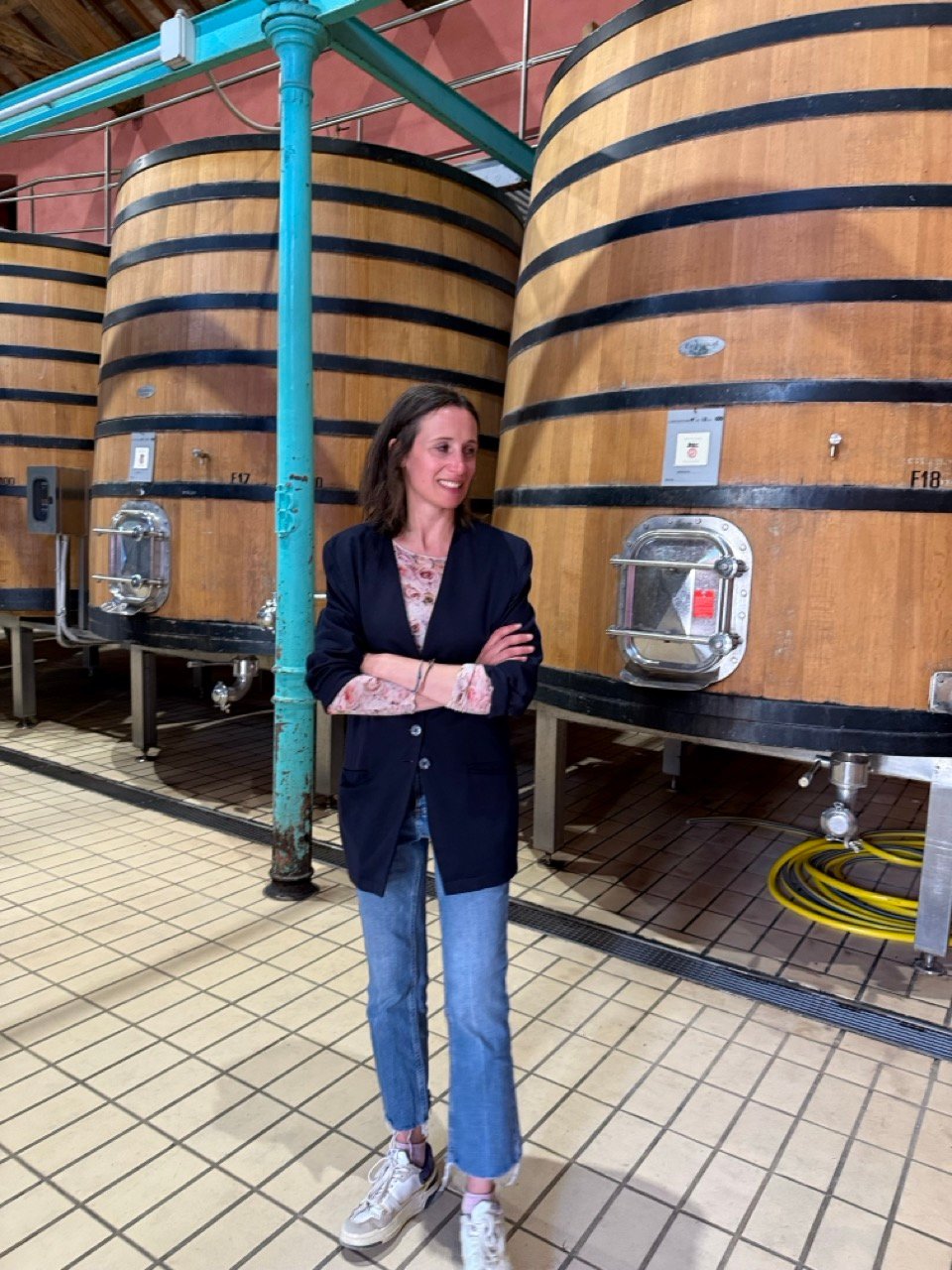
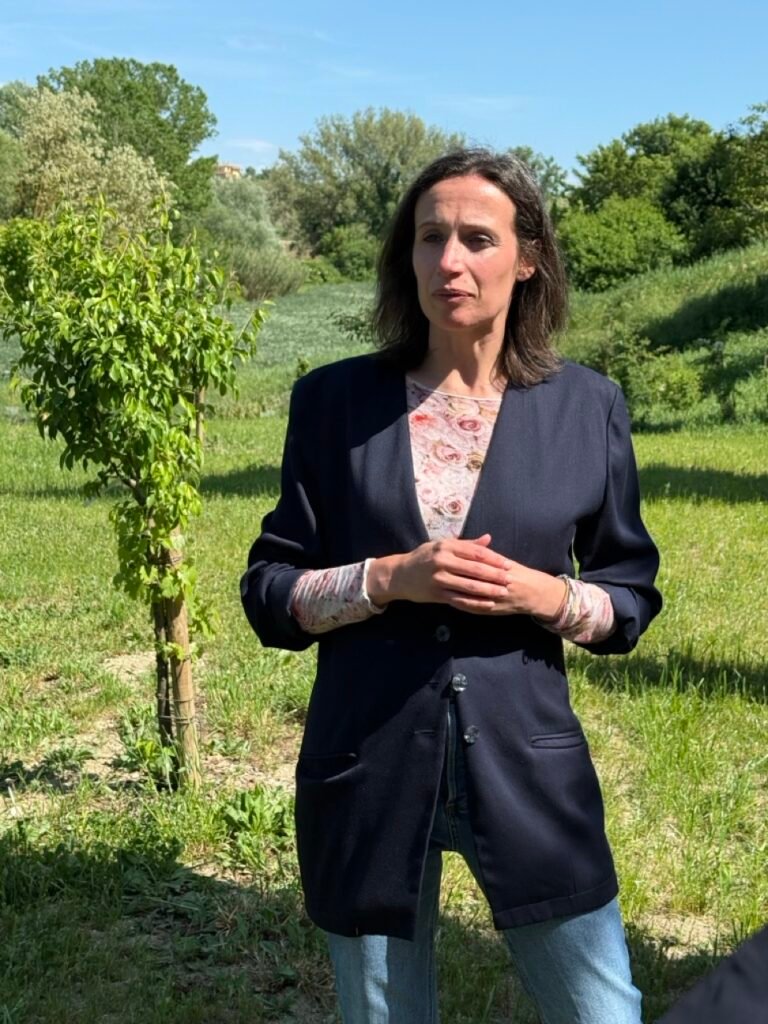
Some conversations feel like catching up with a friend you have only just met. Within minutes of speaking with Liù Pambuffetti of Scacciadiavoli, we discovered a shared early love of ancient Greek literature, archaeology, and the old myths. In her, I found someone who had carried that fascination with beginnings into a life of stone walls, vineyards, and a four-generation-deep family history.
Early on, she told me that Montefalco feels like a protected nest. Hills, mountains, and valleys gather the villages and vineyards close, as if cupping them in two hands. The image stayed with me. It is where she comes from, and it shapes how she moves through her world.
The Winery
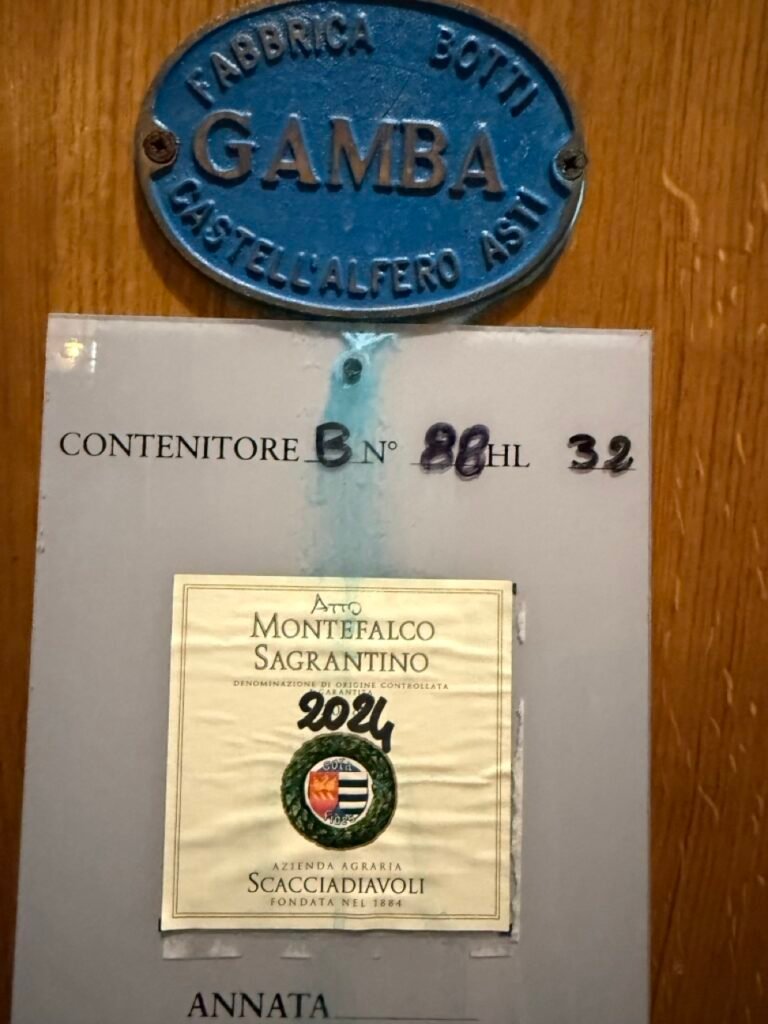
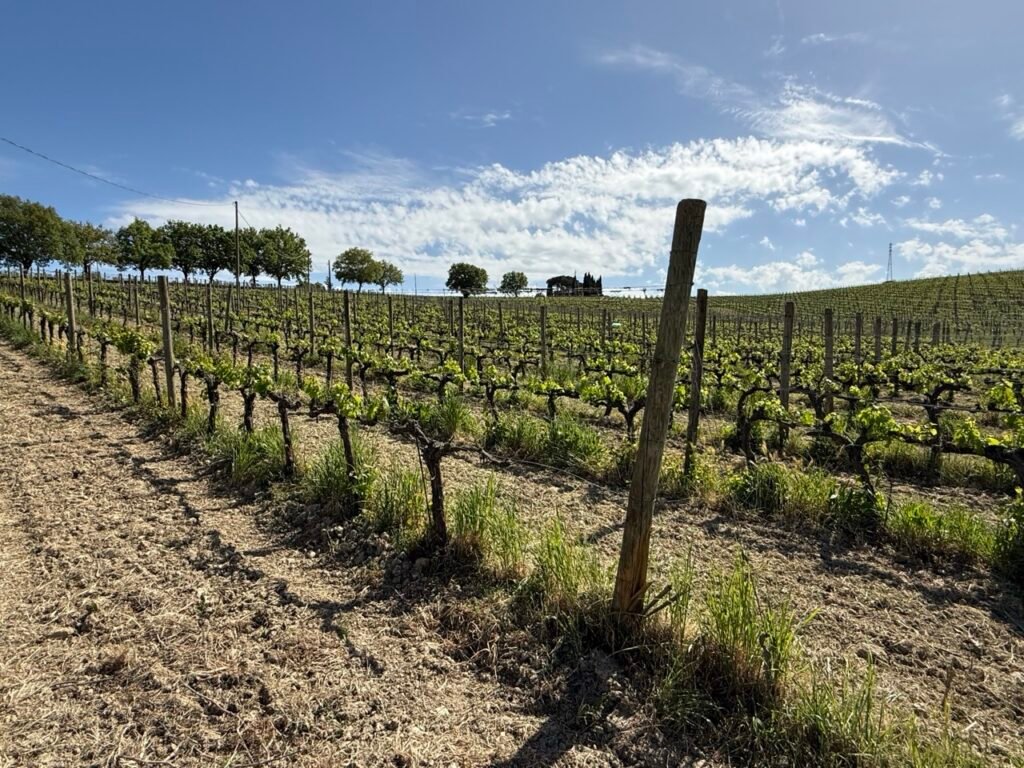
Scacciadiavoli sits in the hills of Montefalco, a historic estate whose name recalls a local legend of an exorcist who used the region’s wine to free a young woman from a demon. Founded in 1884 and long in the Pambuffetti family’s hands, the winery is now guided by Liù and her cousin Iacopo. They continue to work with native varieties—Sagrantino foremost among them—on clay soils at about 400 meters.
For more on the estate’s history, the vineyards, and my visit during the Montefalco press trip 2026
From the Classics to the Cellar
Liù grew up visiting the winery, but wine was not her first love. She studied the classics, Greek literature and archaeology, the same world that once captured me. Only later did the estate call her back.
She went to Bordeaux and stepped into a wine culture built on structure, hierarchy, and complexity. Then she came home to a place still rural, still run by farmers and families. Bordeaux gave her systems and rigor; Montefalco gave her a sense of home. The region saw a wave of French influence in the 1960s through estates like Adanti, she notes, but its real character belongs to the families who work the same hillside year after year.
A Plant in the Cement
One of her strongest memories is of a university tutor in Bordeaux who also owned an estate. No matter how busy he was, he noticed small things. Once he stopped to admire a plant pushing up through cement. For Liù that kind of attention became the true measure of passion for wine. Technique matters, but so does seeing what other people walk past.
When I asked what strikes her most in the vineyard, she skipped the skyline and the rows. She pointed to the soil—every shade of brown, dark to light, changing with the clay and the organic matter. She called it an earthy rainbow. The land, she said, is never just one color. You have to learn to read it.
Strength in a Traditional World
Montefalco is traditional and rural, and men have long run its wine business. After eighteen years in the industry, Liù knows what it takes for a woman to stay and slowly shift the room’s mood. Strength matters. So does time. Change comes slowly here, but she trusts that persistence and clarity will open doors for the women who follow. She does not dramatize the difficulty. She names it plainly, then goes back to work.
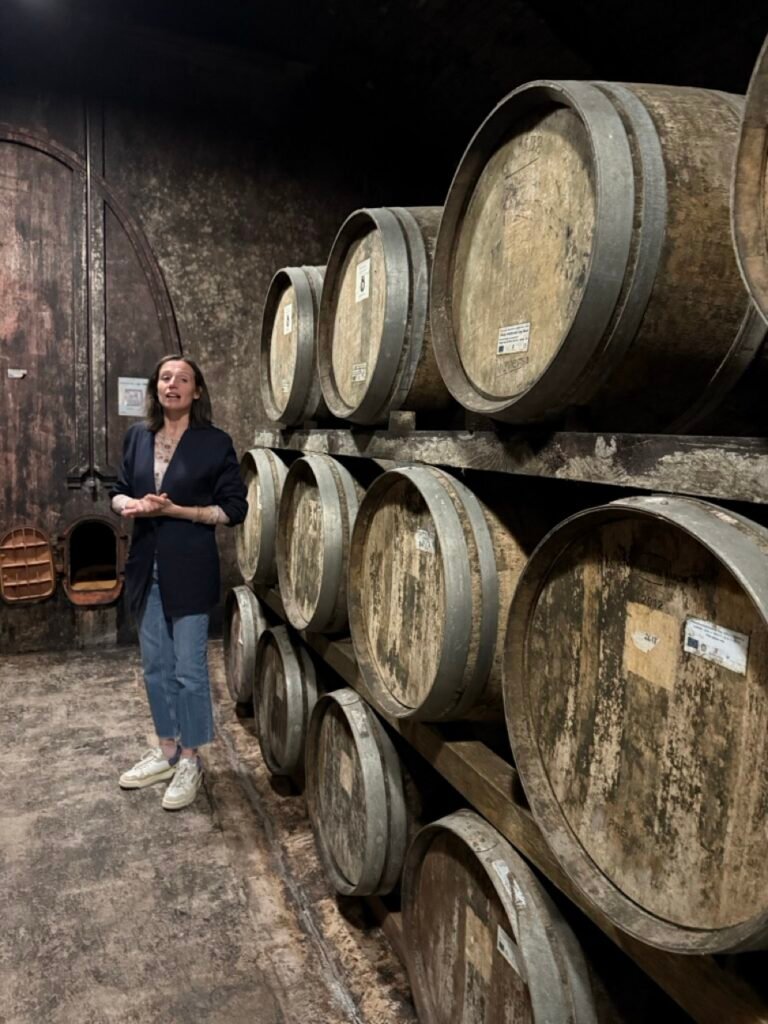
A Wine Like Zorro
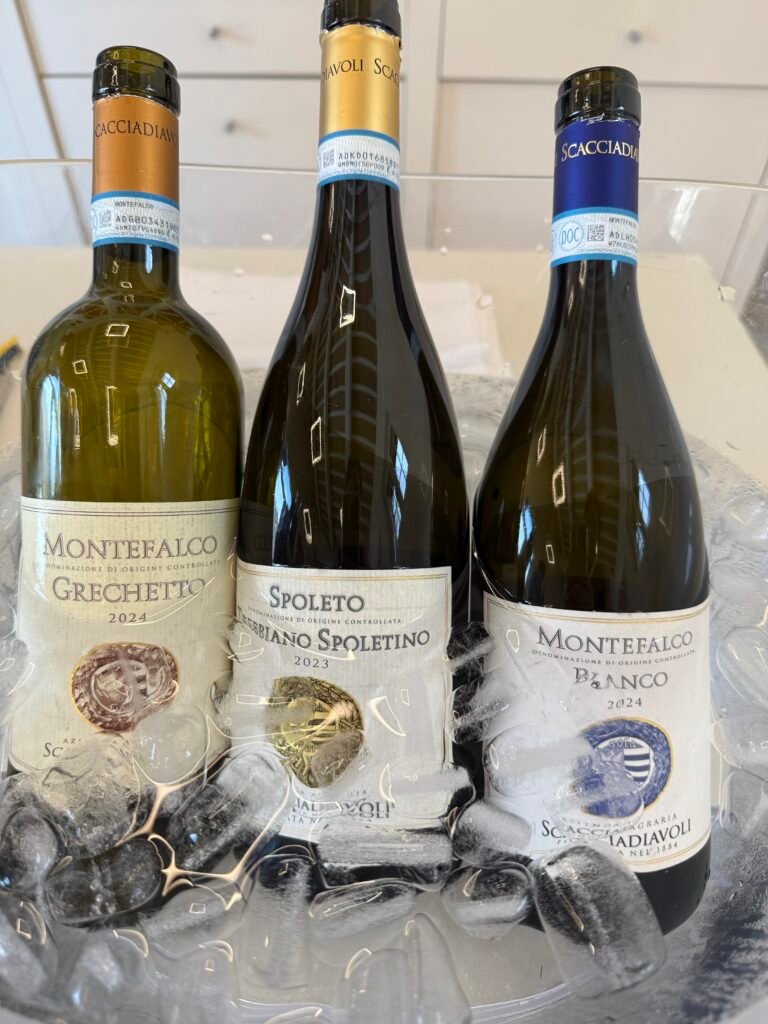
When I asked Liù to describe Montefalco’s wines without using a single wine word, she answered in pictures. She said Sagrantino is Zorro: charming, mysterious, and lasting. Trebbiano Spoletino is sage green, the color of a calm mind.
Sagrantino seemed closest to her. Dark, tannic, and patient, it does not give itself away all at once. It asks for time and attention, then slowly reveals a character that is both powerful and graceful. In that glass, I heard the same steady presence I had been listening to all afternoon. Like Liù, it fills the room without ever needing to announce itself.
The Sparkling That Stopped Me
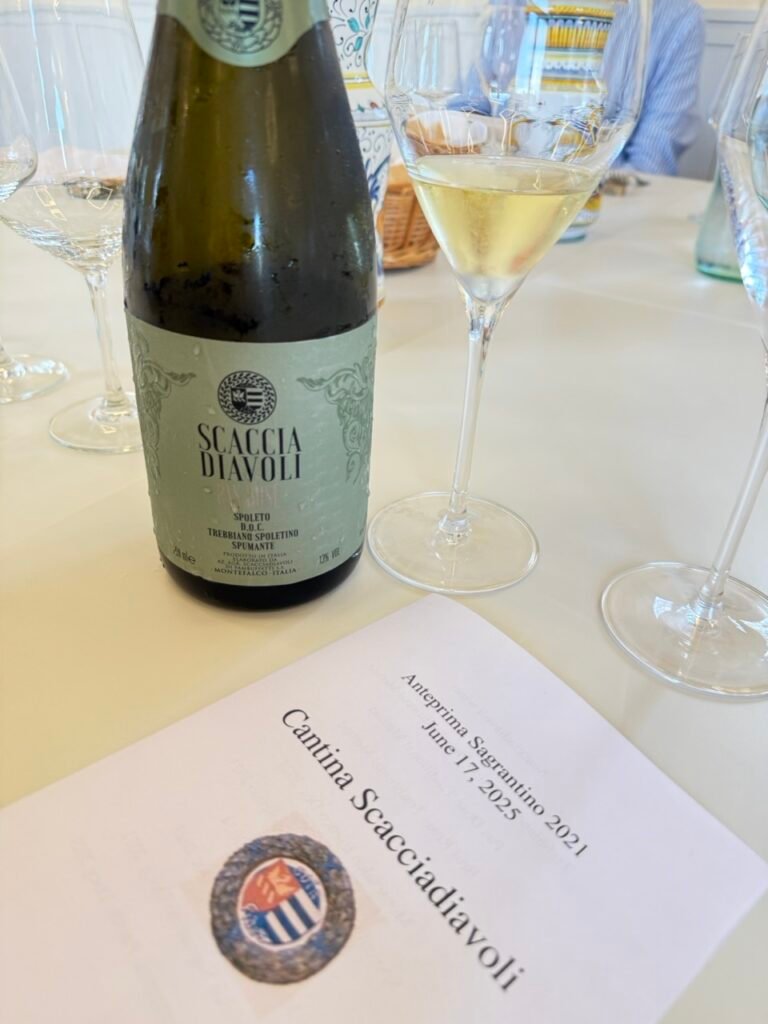
The wine that truly took me somewhere else was the 2021 Pas Dosé Spoleto DOC Spumante. I had never tasted a sparkling Spoleto before. It opened with a firm, clear minerality that stopped me in my tracks—the kind of wine that taps you on the shoulder and says, notice me. Few would think to turn this grape into sparkling wine at all. Liù went further, making it Pas Dosé, with nowhere for the wine to hide. It stood on its own fruit, its own acidity, its own ground. With every sip it unfolded another layer, and in that quiet opening I felt the same patience and integrity that run through her work and the life she has chosen.
Objects That Hold Memory
The first is an old map of the estate as it looked on the day the founder arrived: the shape of the land, the placement of the original buildings, the plan Prince Ugo brought with him from Rome. Studying it, she can trace a past that still shapes the present—proof that someone laid out this place with care long before her generation arrived.
The second is a wooden game called Ruzzolone, which her great-grandfather once played. You roll a wooden piece down Montefalco’s steep streets. It is a simple, almost childlike game, but it holds the memory of the town’s slopes and of everyday life here. For Liù, it connects her to a man she never met, through an object that still knows the ground he walked.
One Guest for Dinner
If Liù could invite one woman to dinner, it would be Agnes’s Borghese, mother of the winery’s founder. She wants to know what moved a wealthy noble family to leave Rome in the 1800s for a still-rural, undeveloped Montefalco. I suspect it’s also a question about herself: what moves someone to leave one life for another, and what do they find when they arrive?
In the Protected Nest
Liù Pambuffetti came to Scacciadiavoli through family. She stayed by choice—through study, through persistence, and through a clear sense of what it means to be a woman in a traditional wine region. She holds on to the map and the game, to Bordeaux and Montefalco, to the legend of the exorcist and the everyday work of harvest.
In the hills she calls a protected nest, she changes things her own way—not by force, but by staying, noticing, and holding the door open for whoever comes next.