After days immersed in the volcanic soul of Campania, the road shifted north toward Lazio.
And suddenly, the story changed again. The landscape softened. The air carried more Mediterranean warmth. The wines became broader, saltier, sunlit in a different way. But what I did not expect was just how revolutionary Casale del Giglio would feel. Because this is not simply a winery. It is one of the estates that fundamentally changed the conversation around modern Lazio wine.
Lazio Beyond Rome
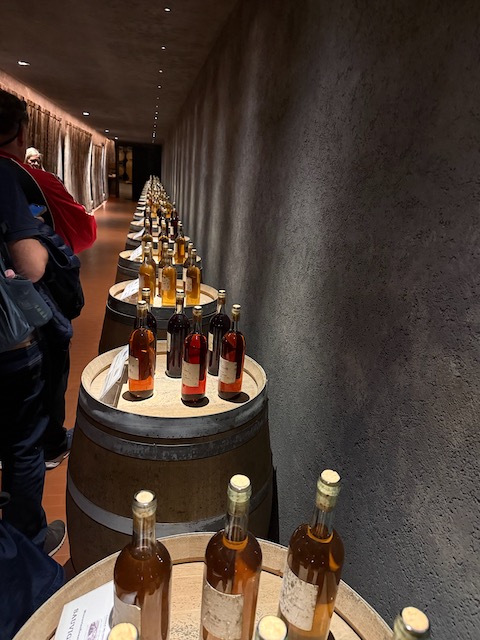
For decades, Lazio lived quietly in the shadow of Italy’s more celebrated wine regions. People thought of Rome. Not fine wine. Yet south of the city, in the Agro Pontino near Latina, the Santarelli family saw something entirely different: untouched potential. When Antonio Santarelli’s father began seriously exploring the territory, the region had very little established viticultural identity compared to the rest of Italy. Rather than following tradition blindly, the family approached the land almost like a scientific experiment — studying which grape varieties truly belonged in this warm coastal microclimate, 65 to be exact.
Dozens of varieties were planted and observed over years of trial, adjustment and experimentation. It was not about copying Tuscany or Piedmont. It was about discovering what Lazio itself could become. That philosophy still defines Casale del Giglio today. And honestly, tasting through the wines felt like watching a region slowly uncover its own identity.
The Wines of Agro Pontino: Sunlight & Salinity
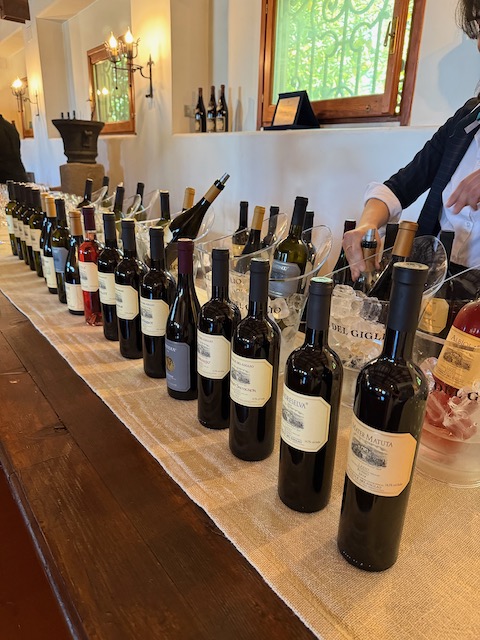
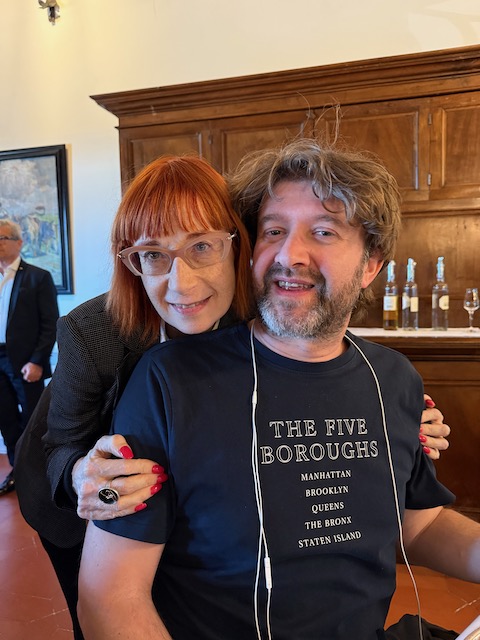
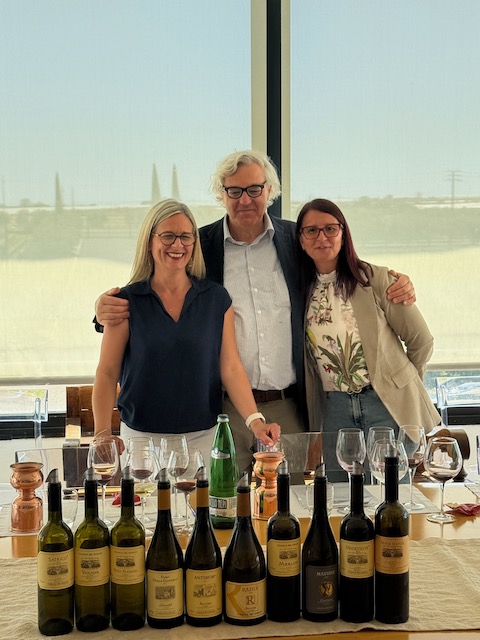
Our tasting opened with Elaine and Linda as our guides through a carefully selected lineup. The Agro Pontino differs dramatically from Campania. Here, the Mediterranean defines everything.
Sea breezes preserve freshness. Sandy and calcareous soils create salinity. Warm days ripen the fruit generously without sacrificing acidity. The wines feel expansive yet lifted. There is brightness. Texture. Maritime energy.
The Satrico 2025 — blending Chardonnay, Sauvignon Blanc and Trebbiano — carried aromatic ripeness balanced by mineral freshness. Ripe fruit without heaviness. Polished yet energetic. Then came the Viognier 2025. And this was not the oily, overblown Viognier many people expect. Instead: maritime salinity, freshness, yellow fruit ripeness, but remarkably restrained.
The Petit Manseng 2025 followed with herbal lift and freshness, showing how naturally certain international varieties have adapted to this coastal environment. But then the tasting shifted toward Lazio’s indigenous soul. And this is where Casale del Giglio became truly fascinating.
Bellone: The Ancient Grape of the Sea
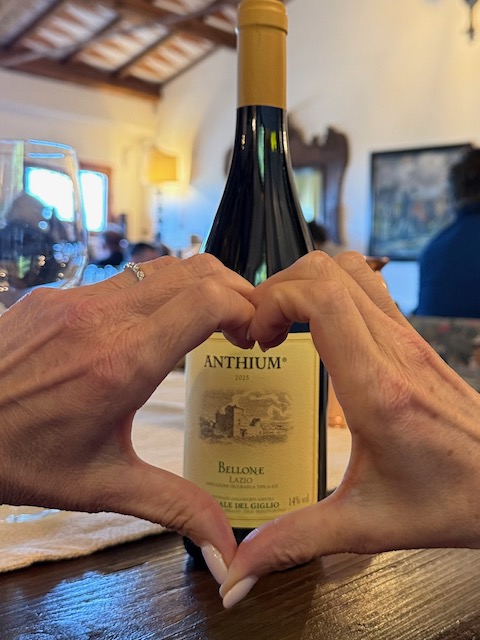
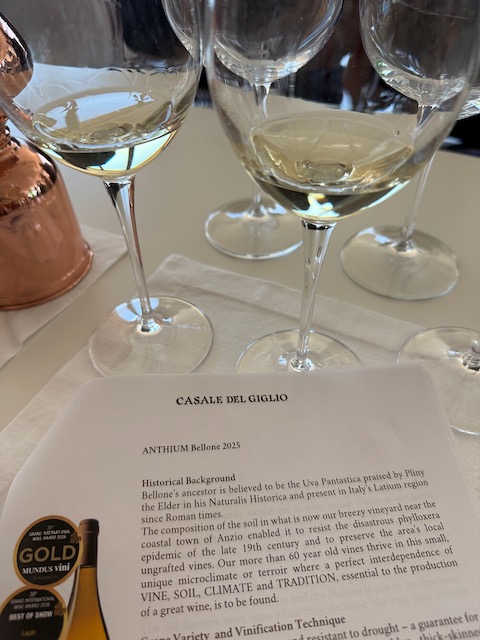
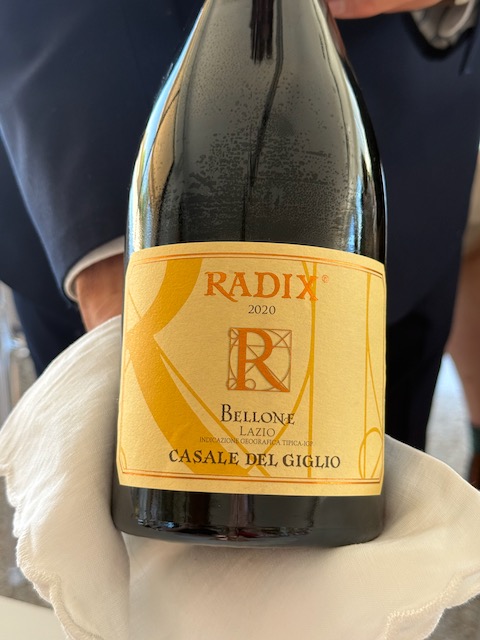
Bellone may be one of Italy’s most underrated white grapes. The Romans once referred to it as Uva Pantastica — a grape deeply connected to Lazio’s ancient agricultural history. At Casale del Giglio, Bellone becomes something entirely profound. The Anthium Bellone 2025 comes from old ungrafted vines planted in sandy soils near the Mediterranean coast, where constant sea breezes shape the grape’s naturally saline character. And you could feel the sea immediately. Green citrus. White florals. Delicate tropical fruit. Grapefruit tension. High acidity despite the warmth. At 14% alcohol, it somehow remained completely balanced and alive. Antonio explained that Bellone truly thrives when grown close to the coast. Honestly, after tasting it, I understood exactly what he meant. Then came Radix Bellone 2020. And suddenly Bellone transformed entirely. Creamy texture. Ripe yellow fruit.
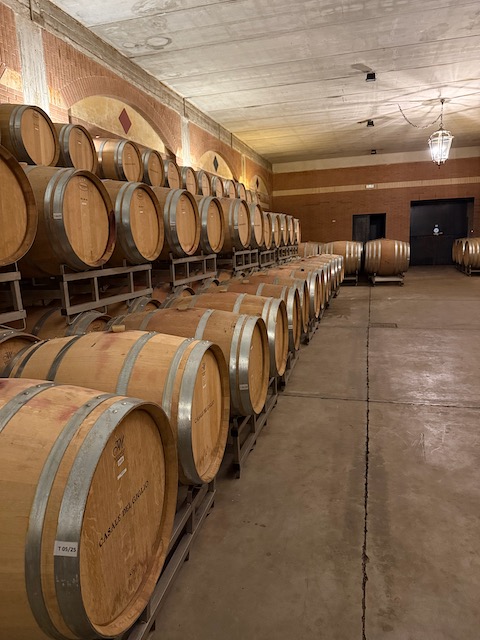
Mineral breadth. Almost Chardonnay-like complexity. Yet underneath it all remained unmistakable Lazio salinity. The wine spends years evolving through old wood and amphora before release, gaining remarkable texture and depth without losing freshness. The name Radix means “roots.” And that felt appropriate. Because this wine seemed connected not just to terroir, but to history itself.
The Island Wines of Ponza
Then came one of the day’s biggest surprises: Faro della Guardia Biancolella 2025. The grapes are grown on the island of Ponza, where steep vineyards cling dramatically to cliffs overlooking the Tyrrhenian Sea. And the wine tasted exactly like that landscape. Salty. Wind-swept. Raw. Yellow fruit and white flowers carried by smoky herbal minerality and intense maritime freshness. One sip felt like standing on a cliff above the Mediterranean.
Cesanese: Lazio’s Quiet Red Soul
Then the tasting turned toward red wines. And once again, Lazio revealed another personality entirely. Cesanese does not behave like Aglianico.
Or Sangiovese.
Or Nebbiolo.
It feels softer. Earthier. More herbal.
The Matidia Cesanese 2024 — sourced from volcanic limestone vineyards in the hills outside Rome — unfolded through graphite, dried herbs and savory earthiness wrapped around soft yet present tannins. There was restraint here. Subtlety. A wine whispering rather than shouting. Part of the grapes are lightly dried before fermentation, while aging in cherrywood tonneaux adds another layer of texture and spice. And honestly, it felt uniquely Lazio.
The Bordeaux Varieties That Found a Home
Casale del Giglio also proved something few expected decades ago:
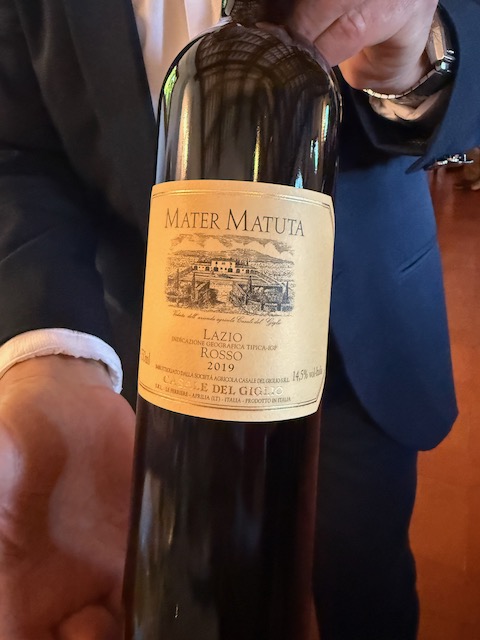
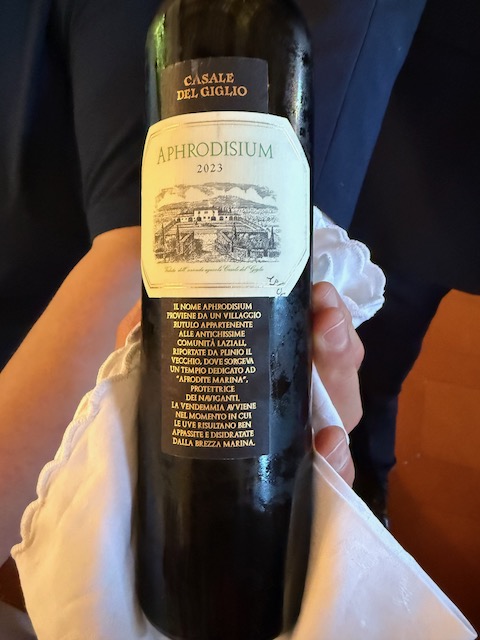
That Bordeaux varieties could thrive in Lazio. The 2019 Madreselva — named after the wild honeysuckle growing throughout the Agro Pontino countryside — blended Merlot, Cabernet Sauvignon and Petit Verdot into something vibrant and savory rather than heavy. Ripe red berries. Crushed herbs. Lifted spice. But the flagship Mater Matuta 2019 was another level entirely. Mainly Syrah with Petit Verdot, the wine unfolded through dark berry fruit, coffee, menthol, anise and deep spice carried by remarkable structure and freshness. Powerful, yes. But polished. The wine takes its name from an ancient Italic fertility goddess once worshipped in the area surrounding the estate — another reminder of how deeply history runs through this land. And somehow the wine felt worthy of that mythology.
Lunch at the Villa
Then came lunch.
And once again, Italy reminded me that wine is never meant to stand alone.
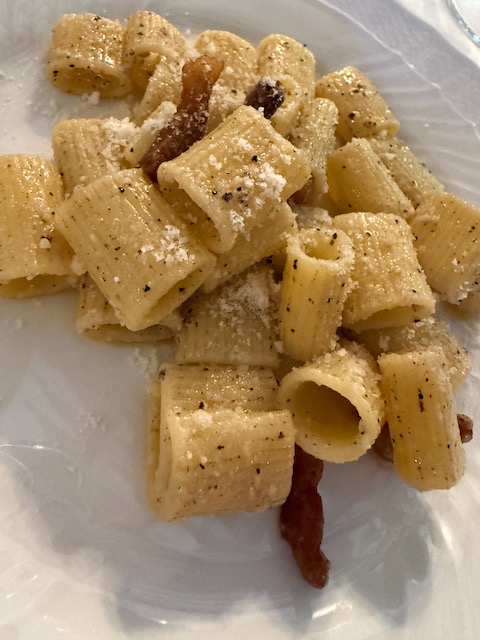
Inside the historic villa, mezze maniche alla gricia arrived alongside Anthium Bellone, followed by spaghetti all’Amatriciana and local pecorino cheeses.
Simple dishes.
Perfect pairings.
Long conversation.
And that is when the wines opened even further.
The salinity sharpened.
The textures broadened.
Everything became more complete.
Because wines like these are not built for isolated tasting notes.
They are built for tables.
For stories.
For connection.
Why Casale del Giglio Matters
What stayed with me most after leaving Casale del Giglio was not simply the quality of the wines.
It was the courage behind them. This estate challenged assumptions about Lazio long before the region received serious international attention.
They experimented.
They researched.
They adapted.
And in doing so, they helped redefine what Lazio wine could become. Not imitation Tuscany. Not imitation Bordeaux. But something unmistakably its own. Coastal. Saline. Sunlit. Experimental. Deeply tied to history while still looking forward.
And honestly? That tension between innovation and identity is exactly what made these wines unforgettable.