
Giorno 3 — Caserta
Villa Matilde Avallone • Fattoria Pagano
By Day 3, Campania no longer felt like a region.
It felt like a living conversation.
Every subregion carried its own rhythm, its own accent, its own emotional temperature. After the mountain tension of Irpinia and the rustic soul of Sannio, the road led us toward Caserta — where volcanic soils meet sea air, where Falerno still echoes through history, and where hospitality arrives as naturally as wine at the table.
The morning returned us to the pulse of Vega Palace for another day of focused tastings and exchange, this time centered around reds with a scattering of rosé. But it was the late afternoon that stayed with me most.
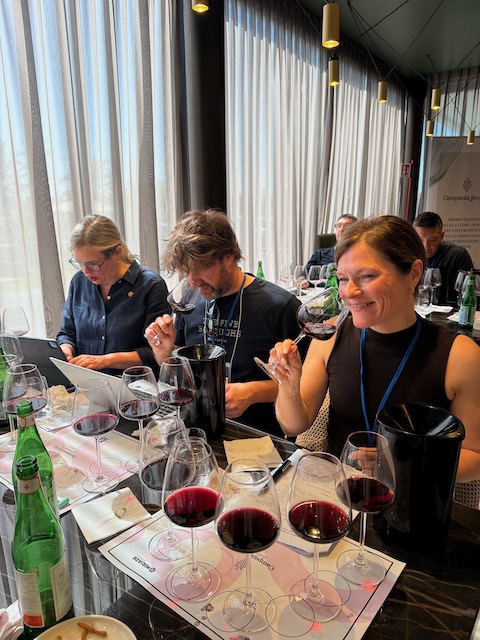
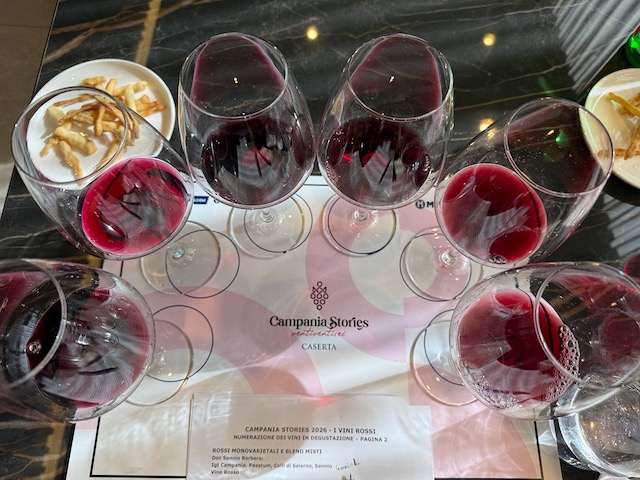
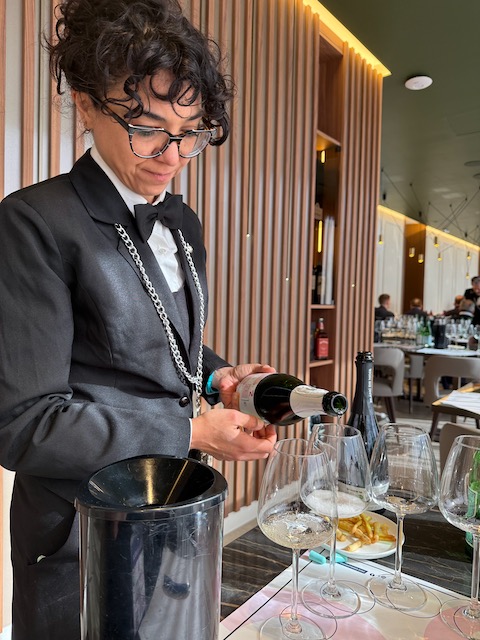
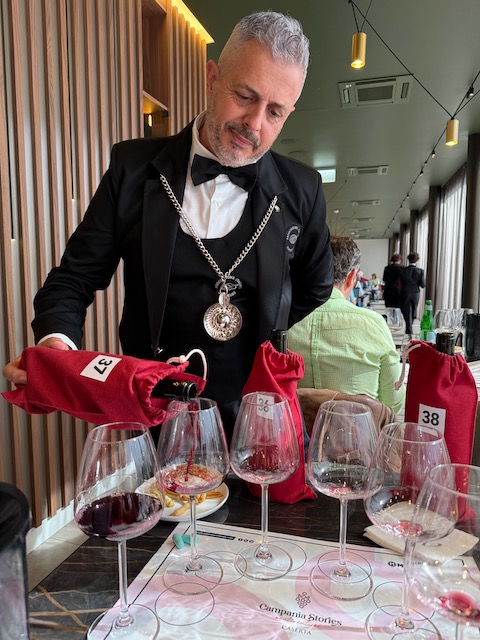
Golden light.
Warm air.
Cellars beginning to quiet as evening approached.
And producers leaning across the table to explain not just a wine, but a decision, a vintage, a piece of family history.
Falerno del Massico: The Ancient Voice of Campania
Long before Barolo, Brunello or Super Tuscans existed, there was Falerno.
The legendary wine of ancient Rome.
The wine of Caesar and Cleopatra.
Produced along the volcanic slopes surrounding Monte Massico near the Tyrrhenian coast, Falerno del Massico remains one of Campania’s most historic appellations. But unlike the elevated freshness of Irpinia or the earthy rusticity of Sannio, the wines here carry something broader and warmer.
Sun-warmed fruit.
Salty minerality.
Mediterranean herbs.
Volcanic depth softened by sea breezes.
The climate here changes everything.
Warm coastal air ripens the fruit generously, while cold winds descending from the Apennines preserve freshness and tension. Combined with volcanic soils, the result is wines that feel simultaneously rich and lifted — structured yet deeply convivial.
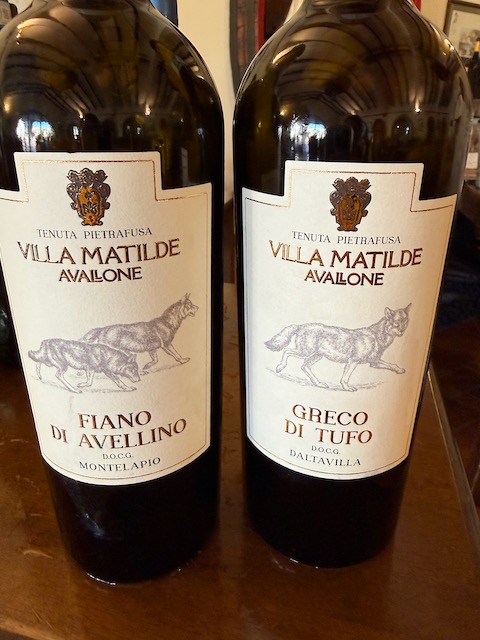
This was the world of Villa Matilde Avallone.
Villa Matilde Avallone: Reviving the Wine of the Romans
Villa Matilde is not simply a winery.
It is an act of resurrection.
Founded by Francesco Paolo Avallone, the estate spent over a decade researching and reviving the ancient terroir and varieties connected to Falerno del Massico. What began as a passion project eventually became one of Campania’s most important modern estates.
Today the winery is guided by siblings Salvatore and Maria Avallone, continuing their father’s vision with deep emotional attachment to the land.
And that emotion is impossible to miss.
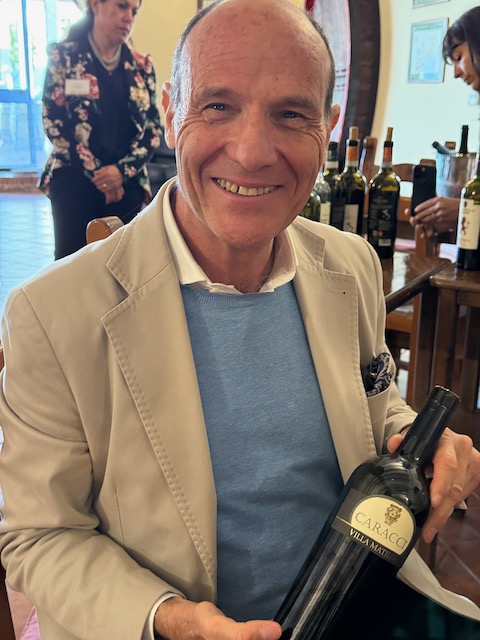
At one point during the tasting, Salvatore smiled and said:
“We, the people from Campania, are completely crazy. We live our land. We want to communicate our passion through the wine.”
And honestly, that sentence captured the entire visit.
Emotion.
People.
Land.
Everything here revolves around that connection.
The tasting began with Falanghina.
The 2024 carried fresh citrus, apple, pear and saline minerality — bright and coastal in feel. Then came the Mata 2015 Falanghina, and suddenly the conversation shifted entirely.
Ten years old and completely alive.
Ripe peach.
Biscuit.
Dough.
Dried florals.
A wine proving once again how beautifully Campanian whites evolve with time.
Salvatore compared the grapes almost like iconic Italian women.
The 2025 Fiano di Avellino?
“Audrey Hepburn.”
Elegant.
Refined.
Silky.
The Greco?
“Sophia Loren.”
More character.
More presence.
A touch of rustic edge.
And honestly, he was right.
The Contrada 127 Greco 2022 — produced with amphora, as the estate has done since the 1960s — carried remarkable grip and minerality, like “a hand on your shoulder,” balancing freshness with texture and serious aging potential.
Then came Carracci. And this is where Villa Matilde truly revealed its soul.
The 2020 Carracci Falerno del Massico single vineyard unfolded through honeyed dried stone fruit, herbs, salinity and lemon curd wrapped around subtle tannic grip.
The 2008 broadened even further into caramel, dried grapefruit and toasted nuts while still retaining freshness.
These wines felt ancient somehow.
Meditative.
Completely tied to place.
The reds carried the warmth of the coast but never lost their freshness.
The 2025 Roccamonfina Piedirosso was pure glou-glou energy — crunchy red fruit, bright acidity and white pepper spice.
The 2020 Falerno del Massico Rosso — 80% Aglianico, 20% Piedirosso — felt closest to Salvatore’s heart. He described it as the wine that “communicates the voice of the land.”
And it did exactly that.
Savory.
Volcanic.
Layered with spice and lifted fruit.
The Taurasi wines brought more structure and smoke, while Cecubo 2018 — blending Primitivo, Aglianico and Piedirosso — moved into darker, richer territory without losing Campania’s signature freshness.
What struck me most was how clearly Caserta differentiated itself from the previous days. The wines here carried sunlight inside them.
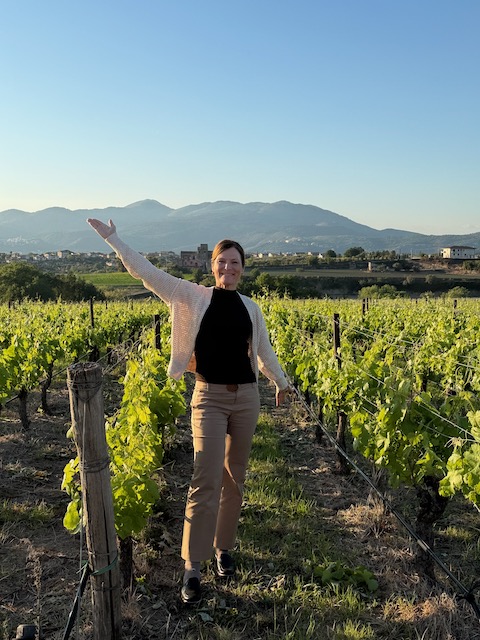
Fattoria Pagano: Drink the Terroir
As evening deepened, we continued toward Fattoria Pagano.
And suddenly everything became even more intimate.
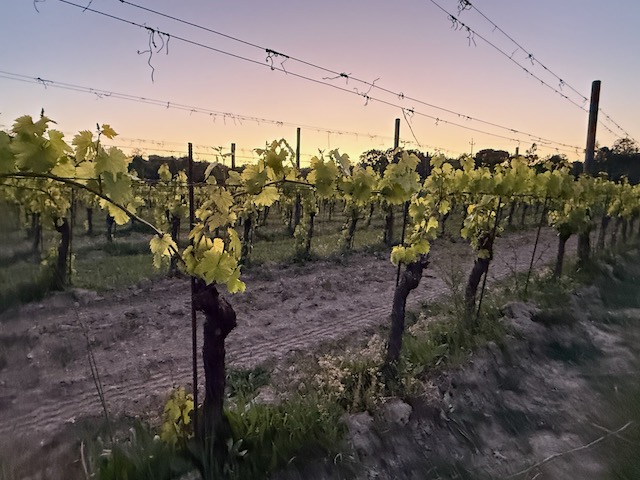
Founded in 2001 by Antonio Pagano, the organic estate stretches across roughly 24 hectares, with vineyards both in Falerno del Massico and Irpinia. The philosophy here is simple:
“Drink the terroir.”
Nothing polished for international style.
Nothing overworked.
Just wines tied honestly to volcanic soils, hand harvesting and the rhythm of Campanian hospitality.
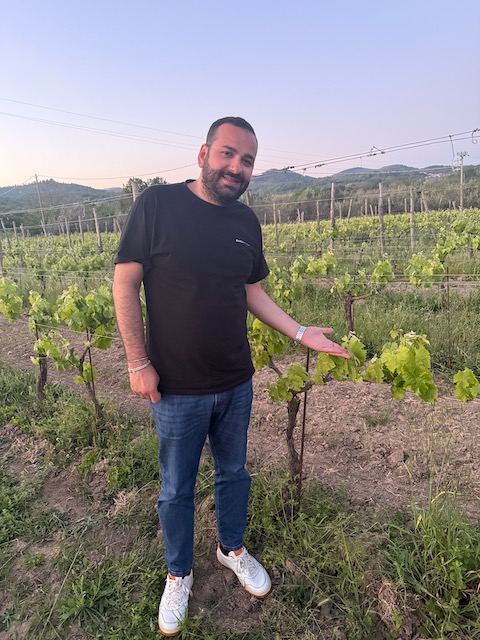
Antonio and Angelo welcomed us alongside tables already filling with local dishes and buffalo mozzarella made by Antonio’s uncle — firmer in texture than most mozzarella di bufala, originating from nearby Casedici.
And once again, the food and wines became inseparable.
The evening began with a 120-day Charmat sparkling blend of Greco and Falanghina — biscuit notes, fine bubbles and remarkable freshness.
The labels themselves carried stories too, decorated with musical instruments representing the musicians who once gathered here.
Even the rosé held personal meaning, dedicated to Antonio’s mother Rosa: 40% Aglianico, 40% Piedirosso and 20% Merlot carrying bright fruit and unmistakable volcanic minerality.
The whites leaned generous yet precise.
The Falanghina 2025 shimmered with bright minerality, while the late-harvest Falanghina carried rounder floral concentration.
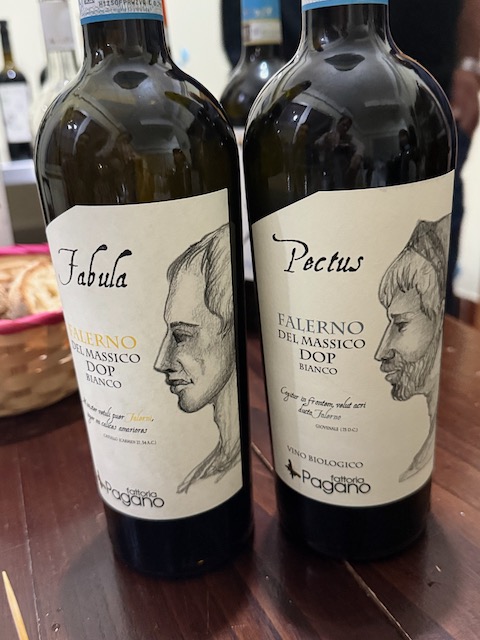
The Greco 2025 moved beautifully from tropical softness into rising minerality, while the Fabula Falerno del Massico Bianca 2025 showed serious elegance and structure.
Then came the reds.
The Piedirosso 2023 carried smoky violets, savory earth and elegant ripeness.
The Aglianico bottlings balanced fruit intensity with remarkably soft tannins.
But the standout was Gaurasi Falerno del Massico Rosso 2025 — delicate tannins wrapped around volcanic depth and savory freshness, once again proving how different coastal Campanian reds feel from the more austere mountain expressions of Taurasi.
Then came Angelus Falerno del Massico 2019.
Powerful.
Spiced.
Darkly layered.
“A Taurasi near the sea,” Angelo explained.
And honestly, that description felt perfect.
The evening closed with Seducion 2021, a southern-style Primitivo passito carrying richness, warmth and spice like the final notes of a long dinner conversation.
By the end of Day 3, Campania had revealed yet another side of itself. If Irpinia speaks through tension and longevity, and Sannio through rustic warmth and earthy charm, then Caserta speaks through history, generosity and coastal energy. These are wines shaped by volcanic soils, sea air and ancient memory. Wines carrying sunlight, salinity and emotion in equal measure. And perhaps that is what makes Campania so unforgettable.
Every subregion feels entirely distinct.
Yet every glass still speaks the same language:
Land.
People.
Passion.
And with every passing day, Campania continued pulling me deeper into its story and into my heart. Until next time….