Giorno 2 — Benevento: Sannio & Aglianico del Taburno
Terre Stregate • Fontevecchia
By Day 2, Campania had already begun to reveal its rhythm.
Not polished.
Not predictable.
But deeply alive.
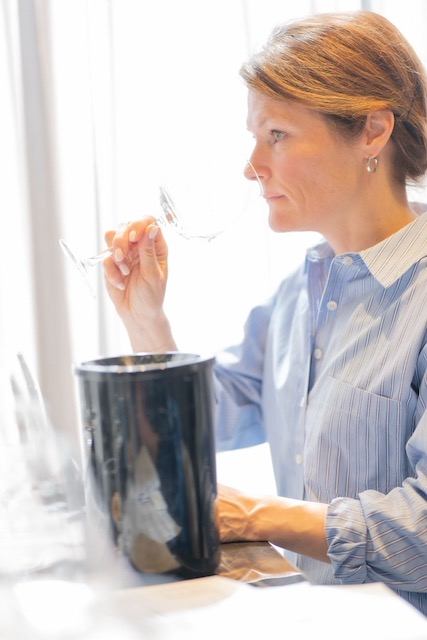
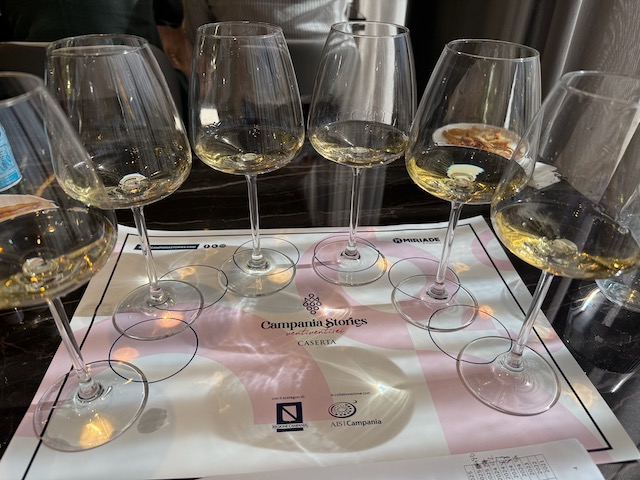
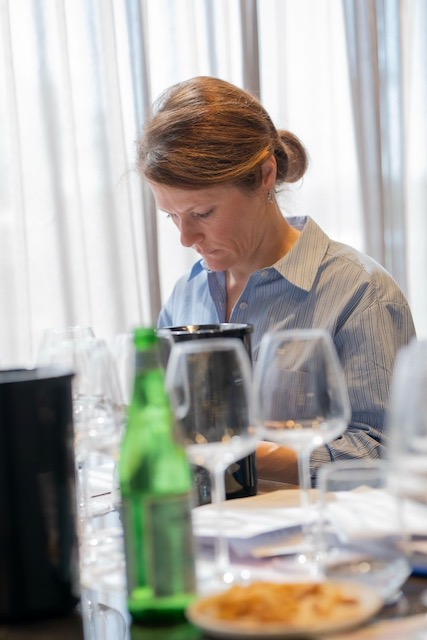
The morning began with Campania Stories tastings focused on sparkling wines and whites — glasses filled with Falanghina, Fiano and Greco carrying the tension of volcanic soils and mountain air. Yet as we moved deeper into Benevento and the hills surrounding Taburno, the mood shifted once again.
Rustic charm replaced coastal energy.
The wines became earthier.
More grounded.
More quietly powerful.
This was Sannio.
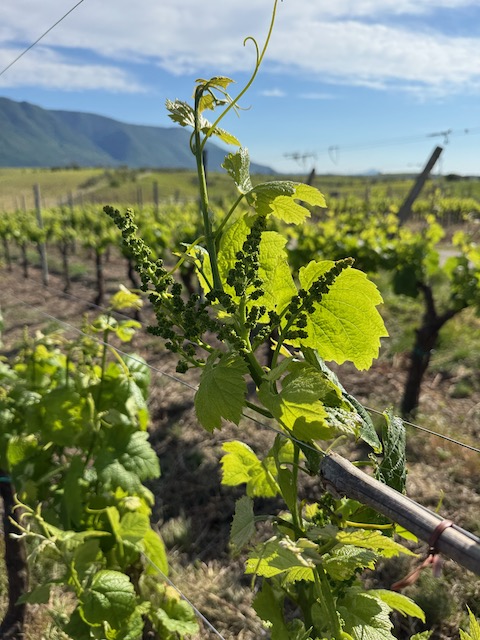
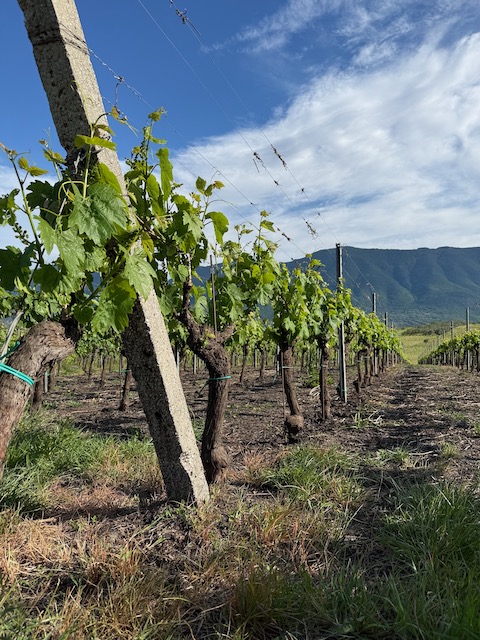
A vast inland area surrounding Benevento that has quietly become one of southern Italy’s most important wine-producing zones. Unlike the dramatic volcanic landscapes of Campi Flegrei or the elevated mountain tension of Irpinia, Sannio feels warmer, softer and more agricultural — rolling hills, olive groves, grain fields and vineyards woven together across the countryside.
And the wines reflect that generosity.
Falanghina from Sannio tends to be rounder and more approachable than the sharper, saline expressions from Campi Flegrei. The fruit becomes riper, the texture broader, while still maintaining freshness thanks to altitude and limestone-rich soils.
Then there is Taburno.
Centered around Mount Taburno itself, Aglianico del Taburno carries a different personality from Taurasi. While Taurasi often leans toward darker structure, tension and austere longevity, Taburno tends to show more immediate savory charm — earthy spice, softer tannins and a slightly more approachable elegance in youth while still retaining the ability to age beautifully.
This was Sannio.
A place where Falanghina feels less polished and more rooted.
Where Aglianico trades sheer force for savory depth and drinkability.
Where food, wine and history still feel inseparable from everyday life.
Terre Stregate: The Land of Witches
The name alone tells you this is not an ordinary place.
Terre Stregate — “Land of the Witches” — sits at roughly 400 metres above sea level in the Benevento valley, surrounded by calcareous stone soils touched by volcanic influence drifting inland from Vesuvius.
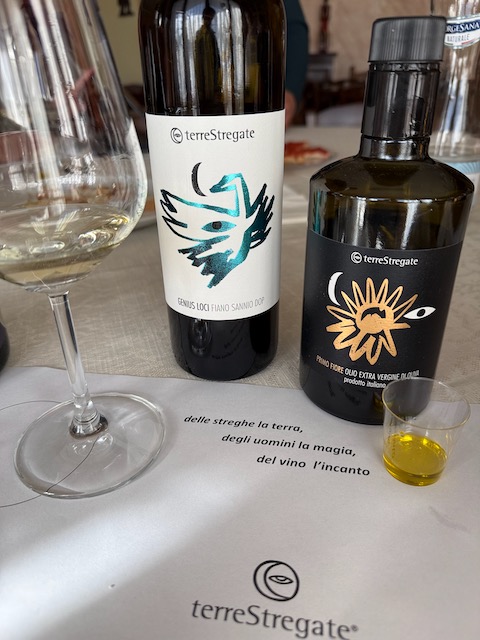
The symbol of the estate — moon, sun and eye — represents protection, an echo of the folklore and ancient legends woven throughout this part of Campania. Benevento has long been associated with stories of witches gathering beneath walnut trees, casting spells carried by the wind through the valley.
And honestly, standing there among the vines, it does feel slightly enchanted.
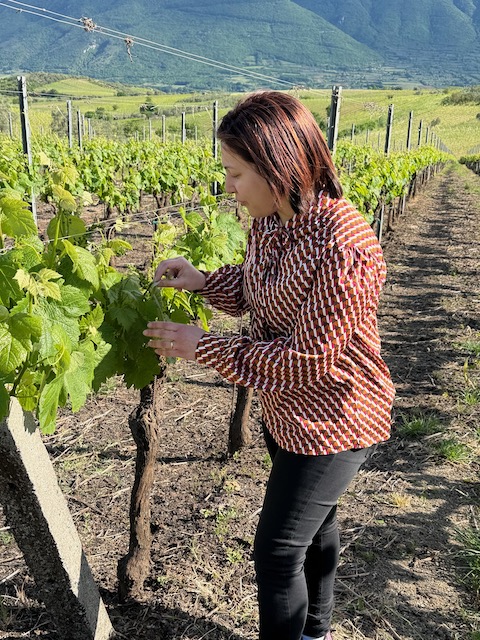
The estate is led by Filomena Iacobucci and her brother, fifth-generation custodians of a family deeply rooted in Sannio agriculture. Today they farm roughly 25 hectares of vines alongside four hectares of olive groves, using the olive leaves themselves as mulch to nourish the vineyard soils naturally.
Everything here feels connected to the land.
Filomena explained that Falanghina remains the beating heart of the estate, accounting for roughly 65% of production. Their goal is not simply to make Falanghina, but to tell the story of where Falanghina was born — through multiple styles and expressions.
And the tasting revealed exactly that.
The Caledonio Brut Falanghina DOC opened the morning with freshness and roundness, carrying vibrant citrus and soft orchard fruit wrapped in delicate mousse.
Then came the Genius Loci Fiano Sannio DOP 2025 — fresh peach, light on its feet, yet quietly full of character and salinity.
The Aurora Greco 2025 followed with round stone fruit and softness, its label inspired by the estate’s new cellar building rising from the hills.
But the wines became increasingly compelling as depth and texture entered the conversation.
The Svelato Falanghina del Sannio DOP, aged six months on lees, carried savory breadth and mineral tension, while the Caracara 2020 Late Harvest unfolded through caramel, stone fruit compote, lemon curd and toasted nuts.
Rich.
Layered.
Yet still alive with freshness.
The rosé, Attimo 2025, brought the mood back toward brightness — cherry, violet, raspberry leaf and mineral lift wrapped into something playful yet beautifully balanced.
Then came Aglianico.
The Idillio 2025 IGP Benevento carried bright cherry, tea leaf, earth and violets with soft tannins and spice, while the Manent 2023 — vinified partly in barrel and partly in stainless steel — balanced fresh cherry fruit with earthy structure, dark chocolate and fine acidity.
Filomena explained the meaning behind the name:
“Everything written stays forever.”
And that sentiment lingered long after the glass was empty.
The Arcano 2020 Riserva — “deep secret” — moved further into savory territory with leather, dried violets, clove and earthy spice wrapped around remarkably fine tannins.
Then came Costa del Duca Late Harvest 2018, full of juicy cherry, leather and earthy depth, before the tasting closed with the Malaca Passito.
Dried stone fruit.
Toffee.
Caramel.
Christmas spice.
A wine built for slow endings and long conversations.
At Terre Stregate, wine feels inseparable from story.
From folklore.
From family.
From land.
And perhaps that is what made the visit so memorable.
Nothing felt manufactured.
Only deeply, proudly Campanian.
Fontevecchia: Quiet Confidence Beneath Mount Taburno
As evening approached, we continued deeper into Taburno toward Fontevecchia.
If Terre Stregate felt folkloric and expressive, Fontevecchia carried a quieter kind of confidence.
Rustic stone walls.
Old cellars.
A sense of time moving slowly.
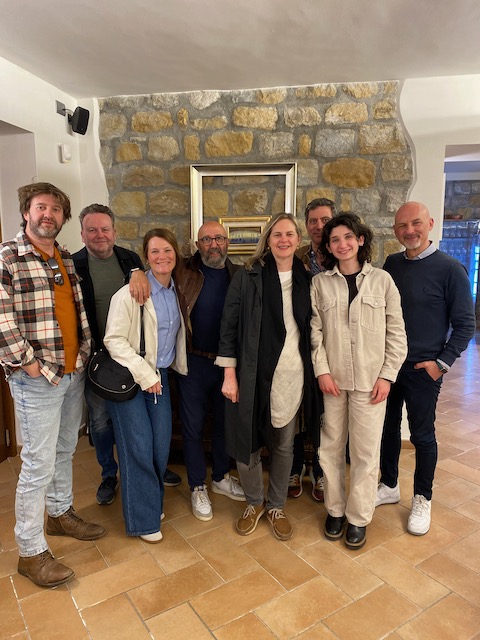
The estate, now over 150 years old, welcomed us with warmth from Libero, Lucio and the next generation already quietly stepping into the story.
Here, the philosophy is simple:
Pay attention to the soil, not the winemaking.
And everything at Fontevecchia revolves around Mount Taburno itself.
The vineyards surrounding the mountain produce Falanghina del Sannio and Aglianico del Taburno shaped by varied soils — clay and limestone, volcanic zones and tufaceous pockets — now carefully separated under oenologist Emiliano Falsini, who joined the estate in 2020.
The wines are divided according to soil type:
C for clay and limestone.
F for tuff.
B for volcanic soils.
Precision without losing identity.
Lucio explained how the Aglianico clones in Taburno naturally differ from Taurasi, producing smaller, less compact bunches better suited to the warmer conditions. Macerations are handled more gently here — more infusion than extraction — creating wines of elegance rather than brute force.
That philosophy showed itself immediately in the glass.
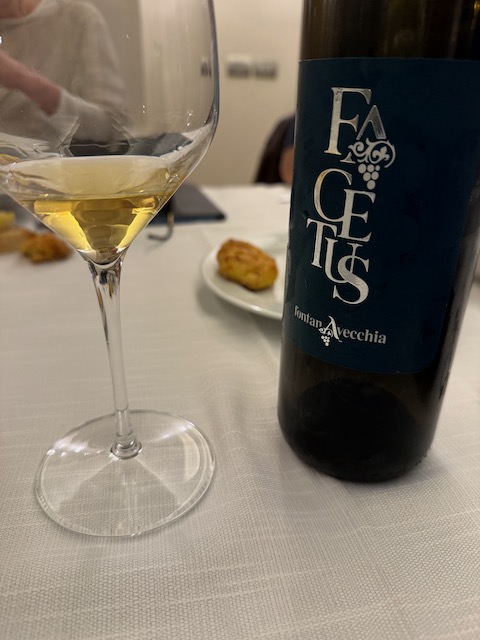
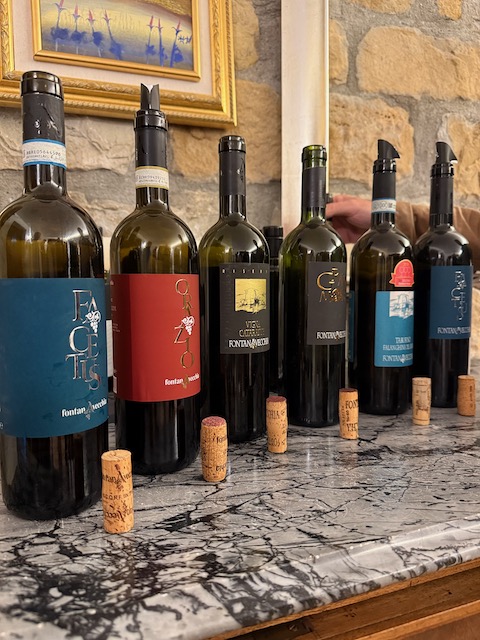
The 2015 Facetus Falanghina carried remarkable maturity and energy, while the 2016 Taburno Falanghina del Sannio completely surprised me.
Crème brûlée.
Lemon custard.
Candied pineapple.
And yet still incredibly fresh.
Proof once again that Campanian whites age far beyond what many people expect.
Then came the reds.
The 2022 Orazio showed cherry, earth and pencil shavings wrapped around grippy yet supple tannins.
The 2009 Vigna Cataratte was silky and evolved, unfolding through dried cherry, leather, licorice and remarkable length.
But the 2006 Vigna Cataratte was unforgettable.
Soy sauce.
Porcini.
Truffle.
Worcestershire.
Mint.
Savory.
Layered.
Wildly complex.
The kind of wine that completely silences the table for a moment.
At dinner, mountain beans grown at 800 metres arrived alongside rustic gougère-like pastries and deeply traditional dishes that seemed designed specifically for these wines.
And once again, Campania reminded me that here, wine is never isolated from food, family or place. Everything belongs together.
By the end of Day 2, one thing had become increasingly clear: Campania is not a region you simply taste.
It is a region you feel.
From the volcanic tension of Campi Flegrei to the rustic soul of Sannio and the mountain power of Taburno, every subregion carried its own distinct voice. Campi Flegrei spoke through salt, smoke and volcanic energy. Irpinia through altitude, tension and longevity. Sannio through warmth, generosity and rustic charm. Taburno through savory elegance and quietly structured Aglianico.
Different landscapes.
Different soils.
Different personalities.
Yet all unmistakably Campanian.
These are wines built not for trends, but for tables. For aging. For storytelling. For connection.
And with every glass, Campania continued pulling me deeper into its spell.
Day 3 would lead even further into the region — where ancient vineyards, dramatic coastlines and unforgettable meals continued revealing why Campania leaves such a permanent mark on everyone willing to slow down and truly listen.