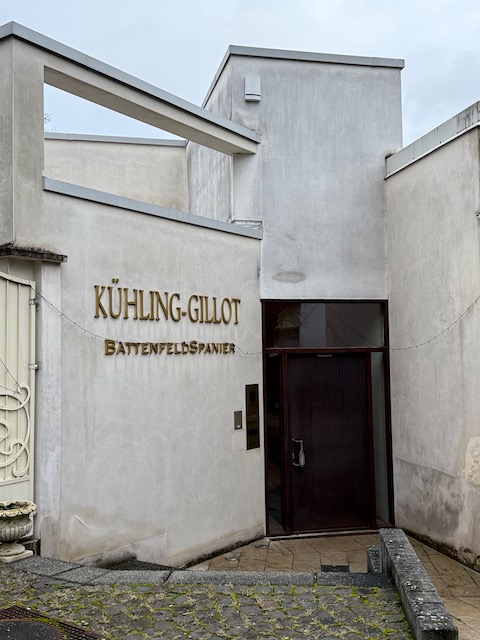
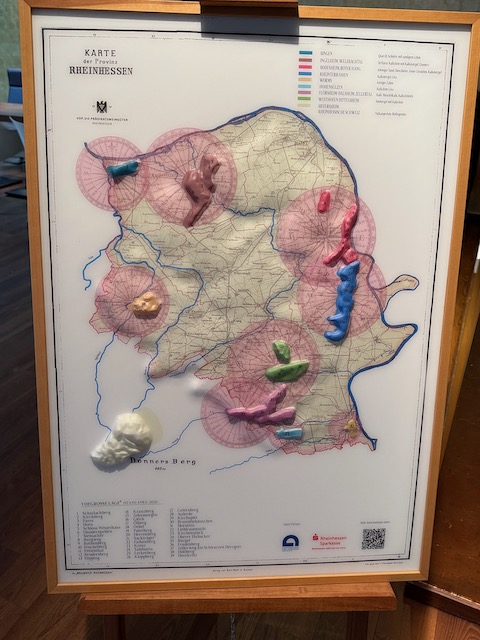
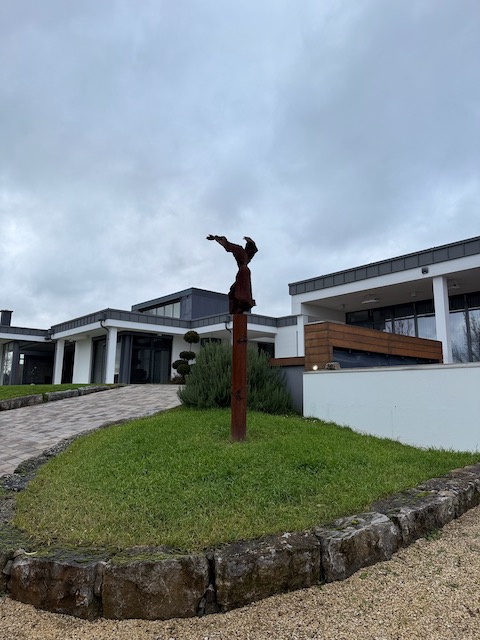
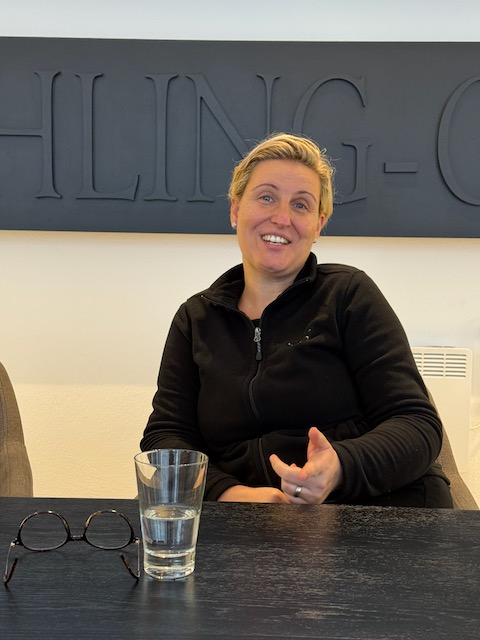
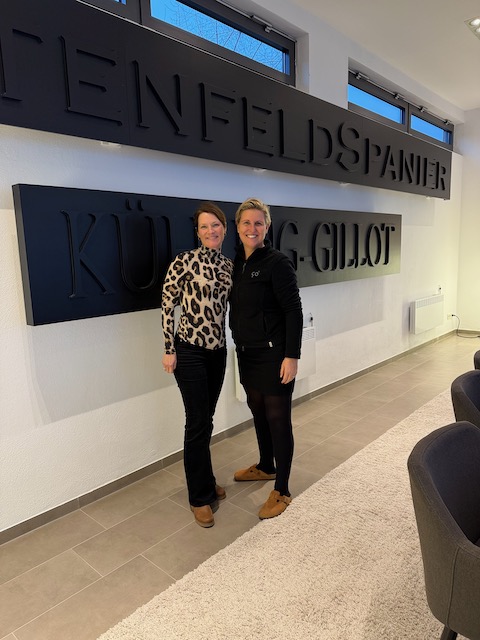
The day had already been long and deliciously intense. Our visit at the previous estate had—true to the unpredictable rhythm of wine trips—run far later than planned, with glasses multiplying and conversations stretching into the afternoon. By the time we arrived at Weingut Kühling-Gillot in Bodenheim, the light was fading over the Roter Hang. There was simply no time left for a proper tasting of Carolin Spanier-Gillot’s acclaimed biodynamic Rieslings and Pinot Noirs. Instead, we sat down for an unhurried chat in the warm glow of the estate over coffee and her special Christmas cake, and what was meant to be a quick visit turned into a memorable conversation with the most super positive, charming optimist in the world of wine (myself being a close second).
Carolin Spanier-Gillot helms two esteemed VDP estates: Weingut Kühling-Gillot in Bodenheim and, alongside her husband H.O. Spanier, Battenfeld-Spanier. With a philosophy rooted in “Origin Excellence,” she crafts wines that speak unmistakably of their terroir. In our candid interview, Carolin shared pragmatic insights on market shifts, personal sacrifices, and why chasing trends is a fool’s game.
Their focus on authenticity defines her estates’ niche. In a competitive landscape, Carolin warns against trend-hopping—like orange wines or non-alcoholic options, which she bluntly calls “juice.” “If it’s not fermented with alcohol, it’s not wine,” she asserts. “Invest energy in other fermented products like kombucha instead.” Her estates stick to a strict profile of core varieties, centered on Riesling, with no experimental clones. “Fifteen years ago, you could sell discount supermarket wine for €60; now, only brands with a clear profile survive.” By blending tradition with modernity, they thrive on storytelling and sustainability—hosting educational events in their wine cellar to teach food pairings, or positioning accessible premiums like their €28 “Age Riesling” as gateways to memorable experiences.
Carolin’s path to winemaking was anything but planned. Growing up on the family’s modest 6-hectare estate, she dreamed of becoming a pilot or doctor. But at 16, when her mother fell ill, family duty called. She stepped in, starting with simple tasks like labeling bottles. Today, she juggles roles as manager, CFO, and “trouble fixer,” clocking 65-hour weeks while prioritizing her team’s well-being. “I put my own needs last,” she admits, a testament to her dedication.
Carolin’s rise has been groundbreaking in Germany’s traditionally male-dominated wine industry. In 2015, she made history as the first woman to be named **Winemaker of the Year** by the prestigious Falstaff WeinGuide Deutschland—a major accolade that recognized her exceptional talent and the outstanding quality of her wines. This honor underscored her success in elevating the estates to new heights, proving that determination and vision could shatter glass ceilings in winemaking.
Her admiration for strong, trailblazing women shines through in her inspirations. When asked who she would most like to share a bottle of wine with—dead or alive—Carolin didn’t hesitate: Tina Turner. “A great woman and a real epicurean,” she says with enthusiasm. Carolin also holds Gaia Gaja in high esteem for similar reasons of determination and balance, making her choices reflect a pattern of admiring iconic women who conquer challenges with grace.
One persistent myth in the wine industry is that “younger generations are not drinking wine.” Carolin dismisses this outright. “It’s inaccurate,” she says firmly. She points to packed wine events buzzing with young attendees, drawn not by gimmicks but by authenticity—particularly organic and biodynamic practices that align with their values of sustainability. Looking ahead to 2030, succession is a priority. Her children—a 16-year-old son keen on winemaking (who’ll gain external experience first) and 21-year-old son potentially handling marketing—are poised to take over. Market-wise, she’s eyeing expansion: exploring Greek varieties like Assyrtiko from Santorini and pushing U.S. distribution beyond coasts into cities like Chicago, fueled by growing demand (a recent 7,000-bottle order). Yet diversification remains key—”We don’t live off the U.S. market.”
Carolin also shapes Germany’s evolving wine laws through the VDP, pushing for classified vineyards and transparency. Her critique of dogmatic “natural wine” advocates—who brand critics as “enemies”—underscores her no-nonsense stance: preserve wine’s true identity.
In an industry rife with fads, Carolin Spanier-Gillot’s message is clear and inspiring: “The best way to reach new generations is to be true to your story.” By championing quality, sustainability, and family legacy, she’s proving that small estates can not only survive but shine—pouring authenticity into every glass.
And one day soon, I’ll be back to finally raise one of those glasses myself.