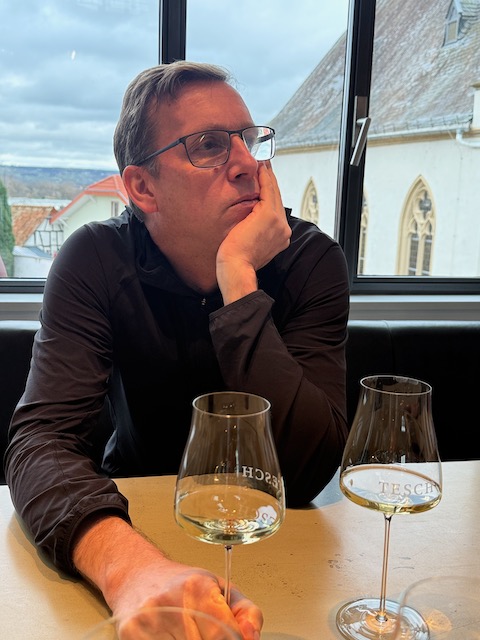
My recent trip to Germany had a twofold purpose: first, to demystify the often misunderstood world of German wine, peeling back layers of complexity beyond labels and classifications; and second, to dive deeper into the nuances of its signature grape, Riesling, in hopes of converting me—a devoted Chenin Blanc lover—into an even greater Riesling devotee. What better place to start than in the Nahe region, where I spent an enlightening day with the visionary winemaker Martin Tesch.
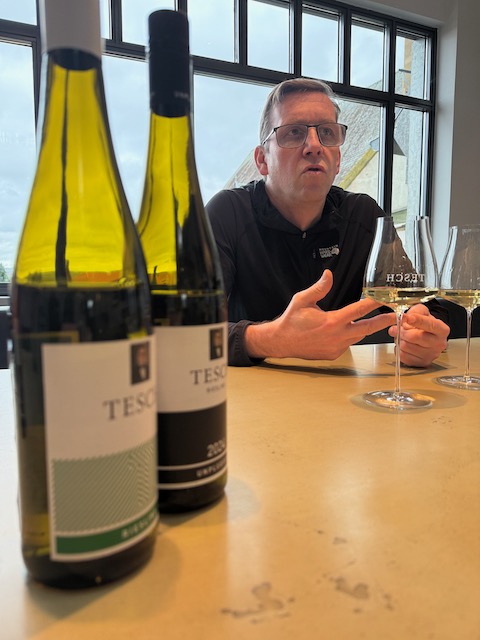
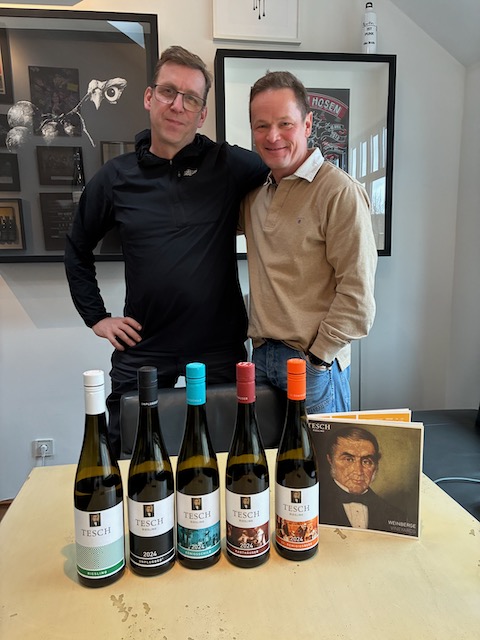
Meeting Martin was like chatting with a philosopher who just happens to make exceptional wine. Charismatic and deeply thoughtful, he’s the driving force behind Weingut Tesch’s evolution. As he put it quite simply, I describe my wines as New Old School, Innovative & Rebellious.
Nestled in the picturesque Nahe valley in the village of Langenlonsheim—one of the region’s largest winegrowing municipalities with around 187 hectares of vineyards—Weingut Tesch is more than just a winery—it’s a living testament to Germany’s rich viticultural heritage.
Born into a family with centuries of winemaking tradition, Martin’s path to becoming a winemaker was both scientific and serendipitous. He studied microbiology, where he discovered his enthusiasm for fermentation processes of all kinds. This academic background led him back to the family estate, which he has run since 1997. In 2001, he embarked on a transformative journey, reinventing the winery by focusing primarily on dry Rieslings produced with minimal intervention, reducing the family’s portfolio from plus 50 to 6 wines. Often seen as a trailblazer who “follows the science,” even if it means bucking traditions that some peers view as unconventional, Martin’s journey reflects a blend of heritage and innovation.
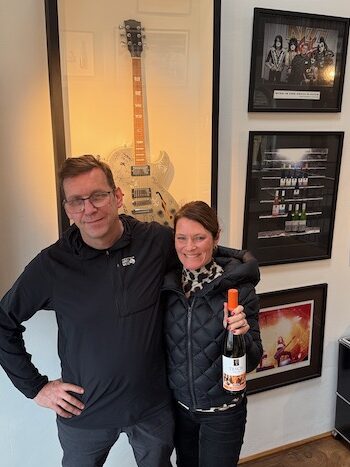
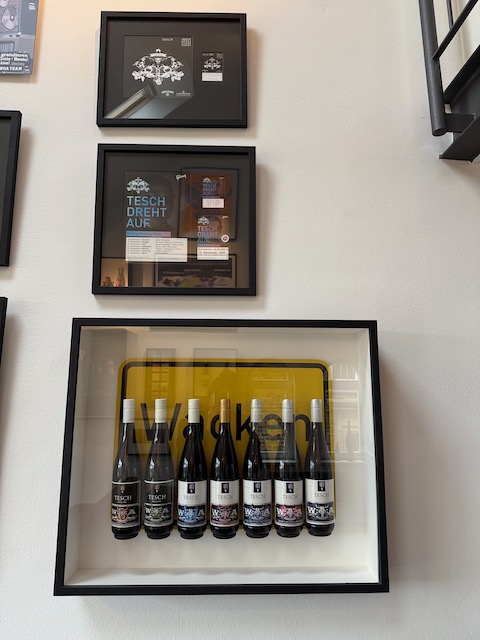
Martin’s independence is the key to his success. From an early age, Martin was fascinated by punk music. He befriended the famous German punk band Die Toten Hosen at their second concert outside Düsseldorf and later created several private-label wines with them. He left the VdP (Germany’s prestigious wine association which his grandfather founded in 1901) to forge his own path, emphasizing individuality over conformity. “The road to success is not a group travel. You need to be individual,” he told me, and it’s paid off. His customer base now includes young, educated wine lovers who crave authenticity and stories over fleeting trends.
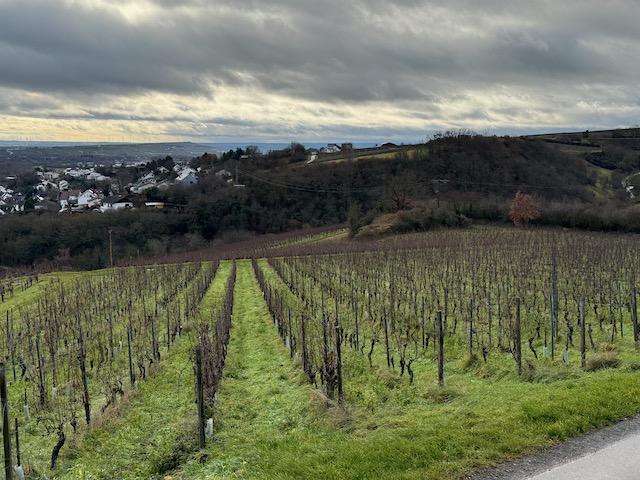
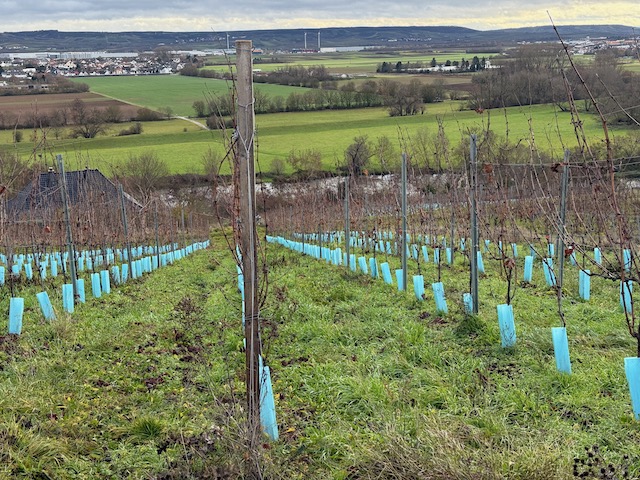
But wait, Martin said, to have a better understanding of my wines, you need to see where they come from. Immediately, Martin Tesch took us up to his vineyard, wanting us to really feel the story behind his wines before we started tasting. From a stunning viewpoint high above the steep, terraced slopes of the Nahe Valley, he introduced us to his pride and joy: the legendary St. Remigiusberg vineyard.
First planted by Benedictine monks centuries ago and long considered one of the Nahe’s greatest sites, this parcel was split apart during the turmoil of the 16th-century Reformation. After hundreds of years divided, it’s only recently been brought back together through the passion and perseverance of Martin’s family and six families from the Netherlands. Now whole again at 4 hectares, the reunification is so much more than just gaining land. It’s a powerful, deeply symbolic “major step” in protecting a viticultural heritage that stretches back generations. Martin said it best, with real emotion in his voice: “You have a step every 300–400 years, and this was only three steps… you got to live one of the major steps.” Standing there among vines planted in ancient volcanic soil, you can’t help but feel the weight of history—and the quiet thrill of being part of its next chapter.
Driving through the Nahe, Martin explained the empty plots—a stark sign of ongoing production reduction in the region as growers adapt to changing markets and climates. But the magic of Nahe isn’t lost.
At the core of Weingut Tesch is Martin’s “new old school” philosophy—a brilliant blend of tradition and innovation. It’s about honoring the past while adapting to the present, ensuring the wines remain timeless yet relevant. Riesling, of course, takes center stage here, but Martin’s dry styles are a revelation.
Sustainability is woven into every practice, though Martin shuns certifications. “People want to understand deeper than just a stamp… ‘organic’ isn’t a guarantee of taste,” he explained. Instead, it’s about handwork, minimal copper use, and a genuine respect for the land. This approach yields wines that are pure expressions of Nahe’s terroir—crisp, mineral-driven, and endlessly fascinating. Tasting them side by side, I felt the “new” in modern techniques like screw caps harmonizing with the “old school” essence of ancient vines and historical insights. His wines are crafted from 60-year-old vines, aged on lees for added complexity, and bottled under screw caps—a bold move Martin adopted in 2005 despite initial controversy. He also minimizes sulfites (down to 25 ppm post-bottling) and focuses on spicy, intricate profiles, like the “Unplugged” Riesling, which boasts lower sugar but heightened depth.
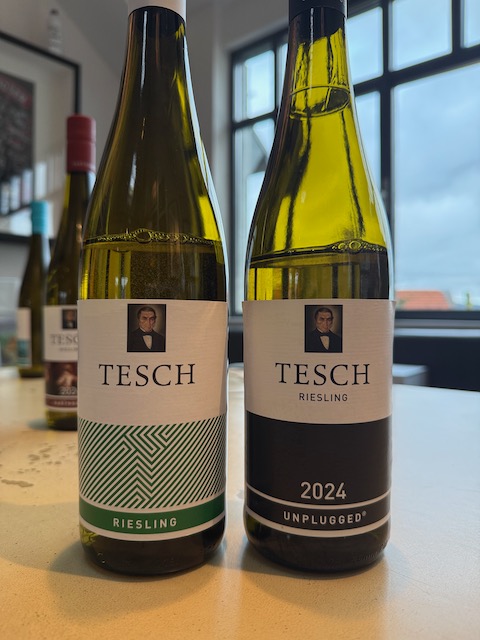
Martin shared amusing anecdotes about label designs: an angel on one bottle raised eyebrows in the US for not being “fully clothed” enough, while Sweden questioned its age-appropriateness. His bold, modern labels—featuring vibrant color-coding inspired by the London Underground map, unique artwork for each vineyard (often with playful motifs like a king frog), and a consistent portrait of his great-grandfather—earned a prestigious Red Dot Design Award. These stories underscore the cultural tightrope of exporting authentic German wine, maintaining both traditional and modern art influences on each label.
His son, set to carry the torch, plans to “stay small” and keep the “fun in winemaking” alive, rejecting mass-market temptations like “2 million bottles of alcohol-free wine.” In Martin’s words, “History means nothing… you can lose it in every generation. It’s just a starting point.” This mindset ensures Weingut Tesch isn’t resting on its laurels but building a future rooted in values: individuality, sustainability, and that unbreakable bond between people, place, and wine.
How to promote Riesling, the issue with success of Riesling -Martin said Give Riesling a role – that doesn’t work- perfect for food pairings acid with fat and richness no matter what country or region the cuisine is from
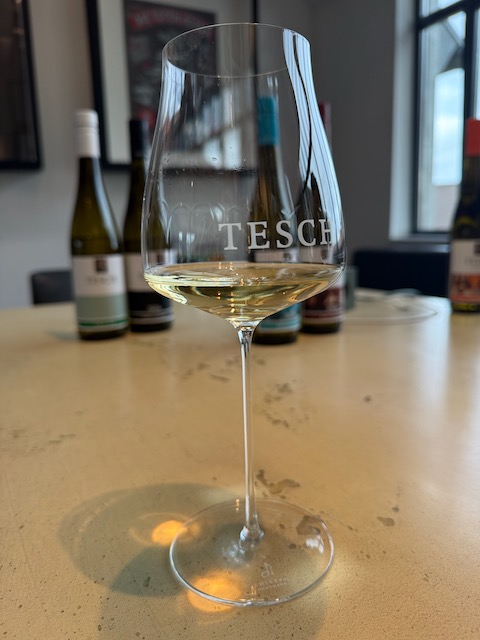
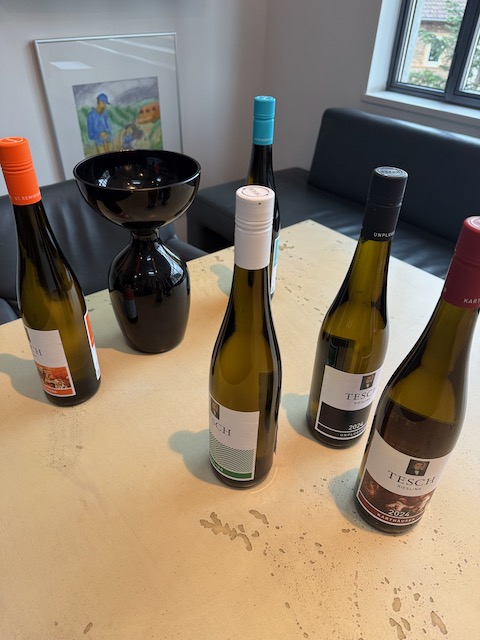
We tasted the following 2024 Rieslings:
- Riesling (designed by a local artist; label features a row of vines with the “T” for the estate building in the vineyard): Lively and vibrant, with marked acidity, steeliness, and cool lime-streaked freshness—lightweight, transparent, and juicy.
- Unplugged: Saline, floral, and spicy; rounder and creamier from older vines, with juicy white peach, mineral grip, and stimulating acidity.
- Königsschild: Riper citrus on the nose; linear, spicy, with hints of petrol and pithy minerality—elegant, refined, and persistently saline.
- Karthäuser: Riper, with spätlese-like (SP) character; spicy late harvest (LF) notes, honeyed floral aromas, and subtle green hints—generous, juicy, yet crystalline and elegant.
- St. Remigiusberg: A cross between Königsschild and Karthäuser—ripe yet electric, with density, salinity, edgy citrus, and vibrant tension.
As a Chenin Blanc devotee, I have to admit: Martin and his Rieslings are winning me over. If you’re craving authentic, story-driven wines that challenge conventions, Weingut Tesch is a must-discover. On to the Rheingau & Rheinhessen.